


Mendocino fire becomes biggest in modern California history as weary firefighters brace for more

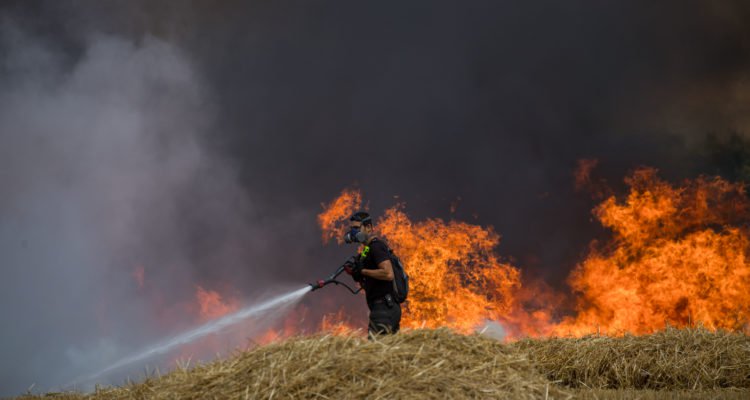
Mendocino Complex fire (Los Angeles Times)
It’s been that kind of year on the California fire lines. Since October, the state has experienced unprecedented devastation as fires burned thousands of homes and killed more than 40 people in wine country. Two months later, the Thomas fire in Santa Barbara and Ventura counties became the largest fire in recorded state history.
But that record was shattered in just eight months, as a pair of fires burning on both sides of Clear Lake raced into the record books, fueled by extreme heat and bone-dry vegetation. Of the five largest wildfires in modern state history, four have occurred since 2012.
“It’s been pretty crazy — they’re calling this the new norm,” Estorga said. “In years past, there were one or two big fires a year. Now they’re doing three to four huge fires in a week.”
The Ranch and River fires, which at 235,000 and 48,800 acres make up the stubborn complex fire, have frustrated firefighters as flames continue to leap across creeks, roads and bulldozer-cut fire lines. While the two blazes have not touched, they broke out an hour apart and fire officials have been treating them as one event.
Years of drought have created ripe conditions for large-scale wildfires that spread rapidly. The complex was only 30% contained by Monday night. If there were any silver lining, the Mendocino Complex fire is burning mostly in forest areas in three counties and largely away from communities. Fewer than 100 homes have been destroyed, and there have been no reported fatalities.
The Carr fire, where Estorga is stationed, has caused far more damage but is finally slowing down. Firefighters increased containment to 47% by Monday night. The blaze chewed through about 1,200 more acres Monday as crews continued to build up containment lines. That fire has proved to be the deadliest in the state this year, claiming the lives of four residents, a Redding firefighter, a private bulldozer operator and a Pacific Gas & Electric utility worker.
Devastating drone images show neighborhood hit by Shasta County fire
Source: The Los Angeles Times