Mazal Tov to
Sarah Zulauf & Dovid Zulauf on the engagement of their daughter,
Shaina Bracha Zulauf to JJ Baron,
son of Joan Baron.

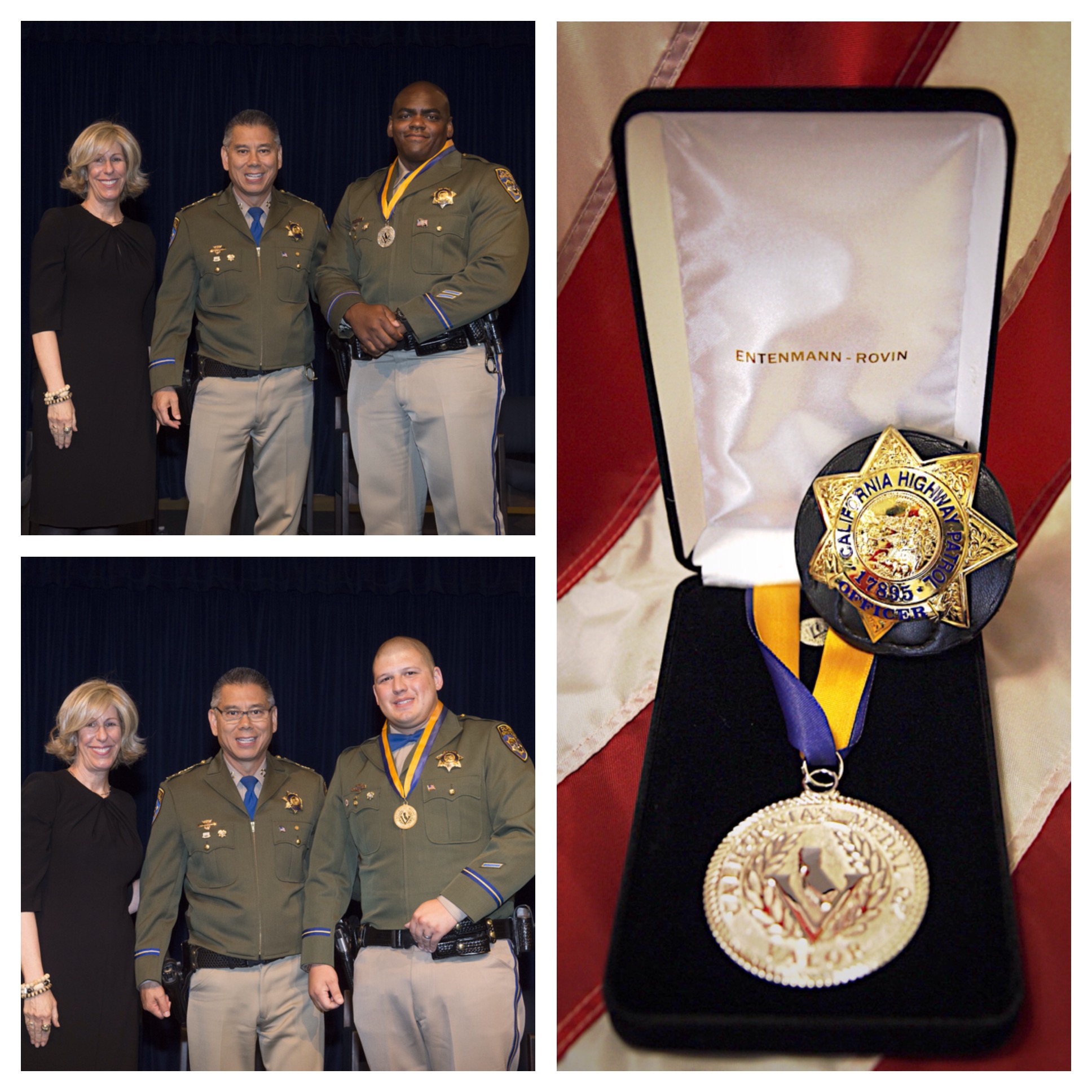
Two Southern Division CHP Officers awarded the Medal of Valor.
The Governor’s State Employee Medal of Valor is the highest honor California bestows upon its employees. Since the program began in 1958, more than 500 medals have been awarded. In a public ceremony the Governor awards Gold or Silver medals to State employees who risked their lives to save others or State property. Among this year’s 52 recipients of the medal of valor is 10 California Highway Patrol (CHP) officers, one CHP sergeant, and one CHP lieutenant. These individuals were recognized for their acts of heroism extending far above and beyond the normal call of duty during a ceremony last Thursday, April 23, 2015, at the CHP Academy in West Sacramento.
The following are summaries of two heroic actions performed by CHP personnel:
Officer Jacob Moniz, #18366
On April 7, 2011, at approximately 5:35 p.m., California Highway Patrol Officer Jacob Moniz encountered a man walking on the right shoulder of the busy eastbound Interstate 10 in West Covina. Using the patrol vehicle’s public address system, Officer Moniz instructed the man to stop. The man stopped initially and then walked into the far right lane.
Officer Moniz left his vehicle, walked to the right shoulder, and gave the man several clear instructions to come back to the right shoulder. The man seemed to comply by taking a few steps towards the Officer, then he suddenly turned and ran straight into traffic.
Without hesitation, Officer Moniz ran after the man, grabbed the back of his clothing, and prevented him from running directly into the path of a passing big rig. Upon questioning, the man revealed he intended to commit suicide.
Officer Michael Burton, #17895
On July 20, 2014, at approximately 9:35 a.m., California Highway Patrol Officer Michael Burton was off duty and traveling with his family in Kern County when he encountered a traffic collision involving a pickup truck that had gone off the road and overturned onto its roof.
Officer Burton pulled over to assist. He realized the driver was trapped inside the cab, but he could not reach him because the roof was crushed and the doors would not open. The engine compartment was smoldering and igniting. Two men arrived and with Officer Burton bearing the brunt of the effort, they were able to roll the truck back on its wheels. Officer Burton tried to reach the driver, but the fire increased and smoke filled the cab, eventually becoming so thick he could no longer see the driver. A Kern County deputy arrived and attempted unsuccessfully to put the fire out with his fire extinguisher.
Suddenly, the driver reached through the shattered rear window and cried for help. Officer Burton climbed into the truck bed, grabbed the driver’s arm and began pulling. Before long he was able to free the driver’s other arm, head and shoulders, and then pulled him out. With the assistance of the deputy, Officer Burton carried the man to safety seconds before the truck became fully engulfed in flames.
CHP Officers perform countless selfless acts every day that go unnoticed. Today, we honor two officers who uphold and maintain the reputation of serving both on and off duty the people of California. Their loyalty, dedication and willingness to lay down their lives is deserving of much more. Please join the California Highway Patrol in honoring these brave officers who work on Southern California Freeways
Having sent their children to the safety of Israel, Chani and Chezki Lifshitz, the Chabad emissaries based in Kathmandu have stayed behind to continue spearheading recovery efforts in light of the massive earthquake to hit the Nepal on April 25.
Rabbi Chezki Lifshitz travelled by helicopter on Wednesday, helping to rescue 25 stranded Israelis, who were stuck without food, water, or electricity in remote villages of Nepal. The Chabad House of Thamel Kathmandu is also bringing food to Nepalese refugee camps.
The Chabad House has also been working to track down stranded Israelis and keeping the Chabad House Thamel Kathmandu Facebook page updated with reports for worried families, while making sure hot meals are available for those Israeli trekkers returning.
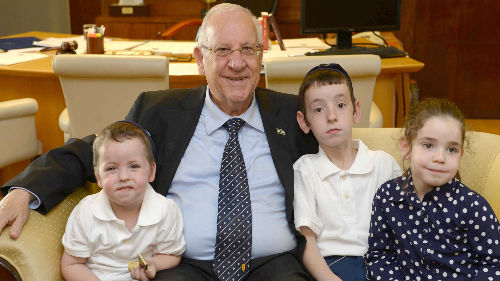
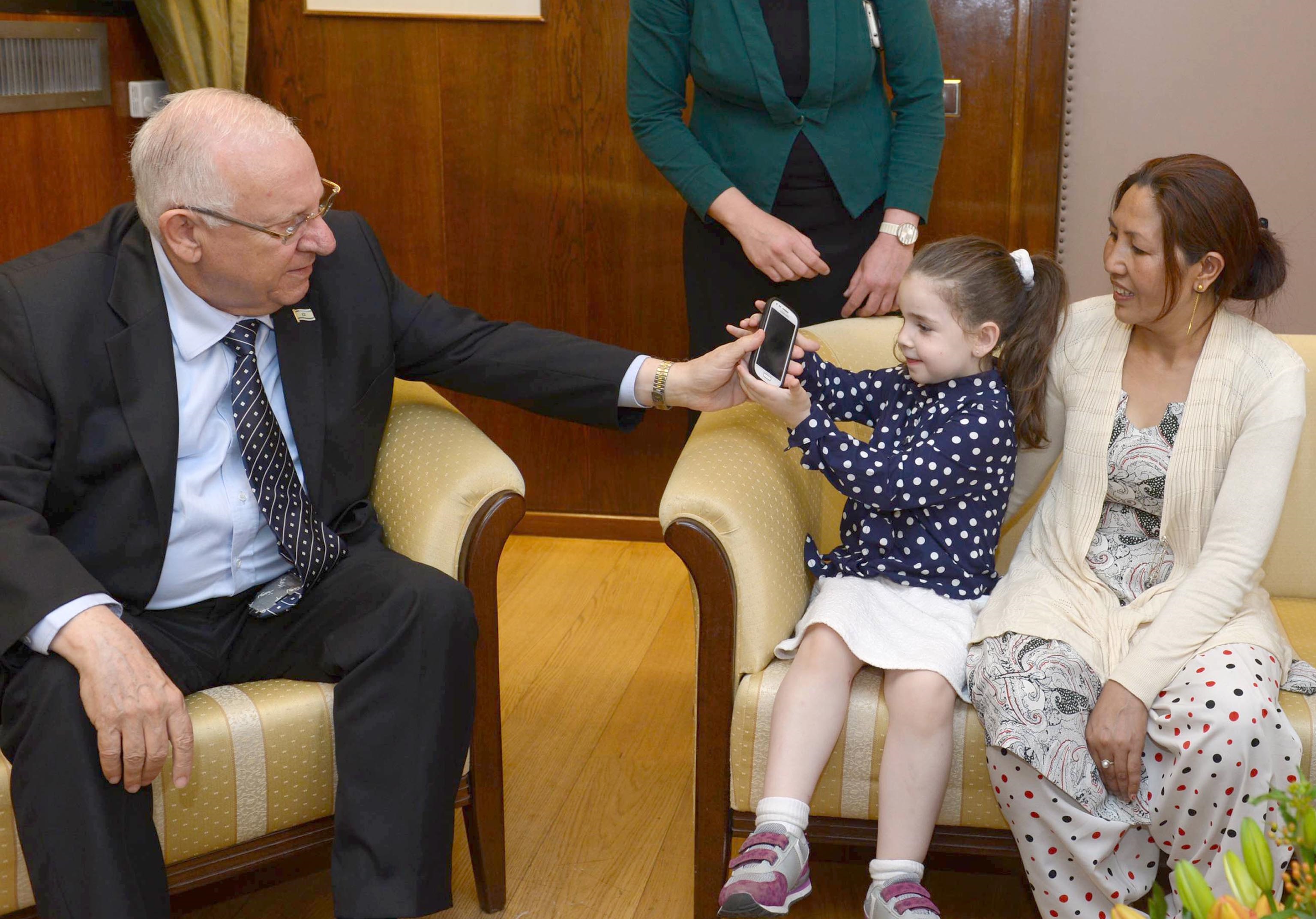
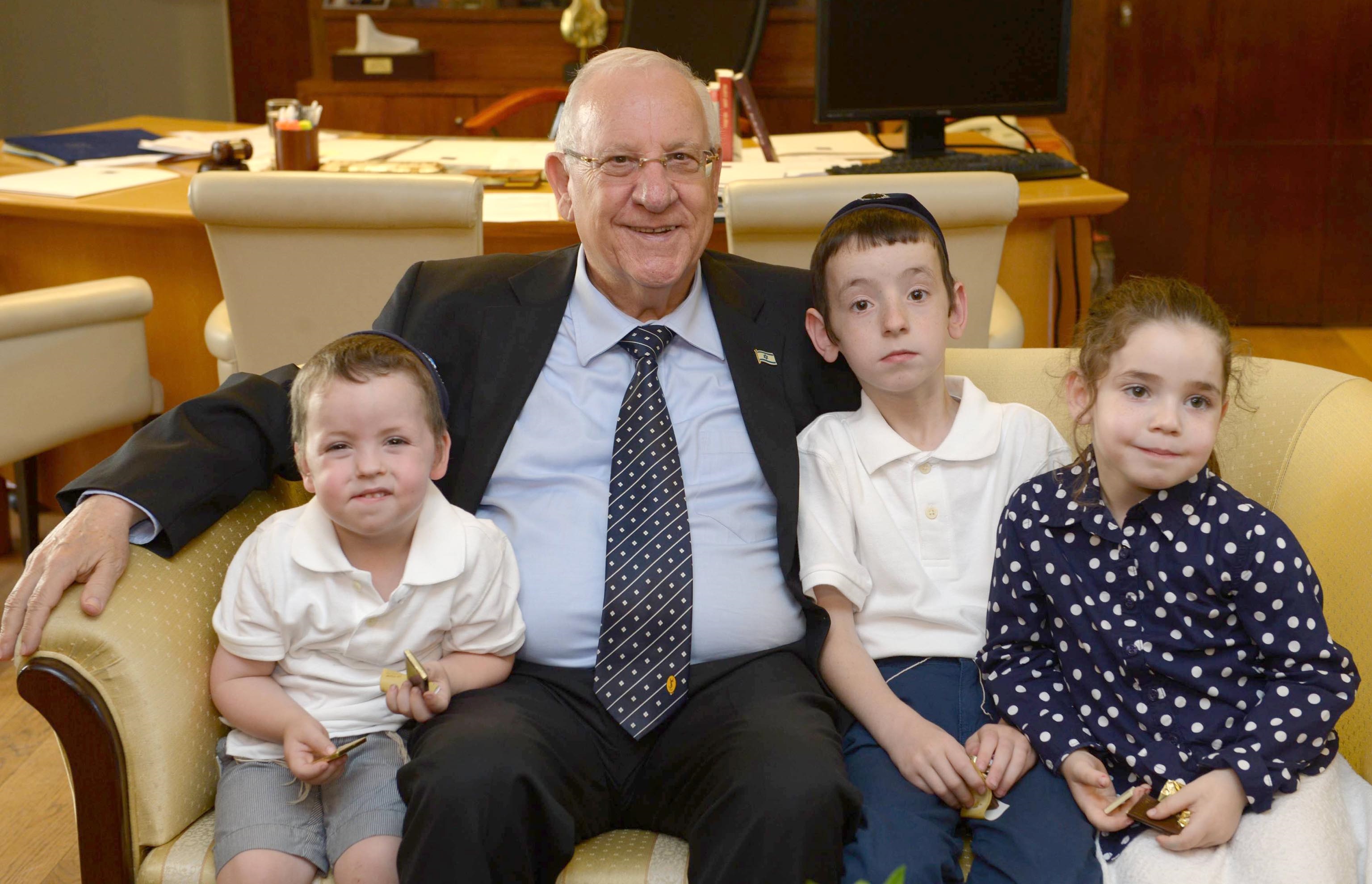
Meanwhile, the Lifshitz couple’s three children were sent to Israel on a special flight with rescued Israelis on Tuesday, along with their Nepalese carer Lolita, who lives with the family at the Chabad house in Katmandu. The children, Shmuel, Rivki, and Yitzchak, aged four to six, were hosted by Israeli President Reuven Rivlin at the President’s Residence together with their grandmother Yehudit Fleischman and Lolita.
During their visit, the President gave them chocolate and heard their experiences over the recent days. Rivlin also telephoned Rabbi Chezki and his wife in Nepal and had their children speak with them.
The Lifshitzs were very moved by the phone call, and thanked the President for the warm welcome he gave their three small children. “We are all one nation! Although dad and mom stayed behind in Nepal to help, the President of the State of Israel took care of our children personally,” wrote the Lifshitzs in a Facebook post following the conversation.
“The work you are doing for the whole world, and of course for the Israelis in Nepal, is extraordinary, from a Jewish, Israeli, and universal perspective,” President Rivlin told the Chabad couple during the phone call.
“Just as you open your home to the whole world, we are delighted to open our home to your children. We will look after them, and through them extend to you our thanks,” he said.
By Anav Silverman
Tazpit News Agency
It appears that world powers are closer than ever to a nuclear deal with Iran, which U.S. Secretary of State John Kerry described to the UN on Monday as a “good, comprehensive deal,” and if accomplished, one that “will make the entire world safer.”
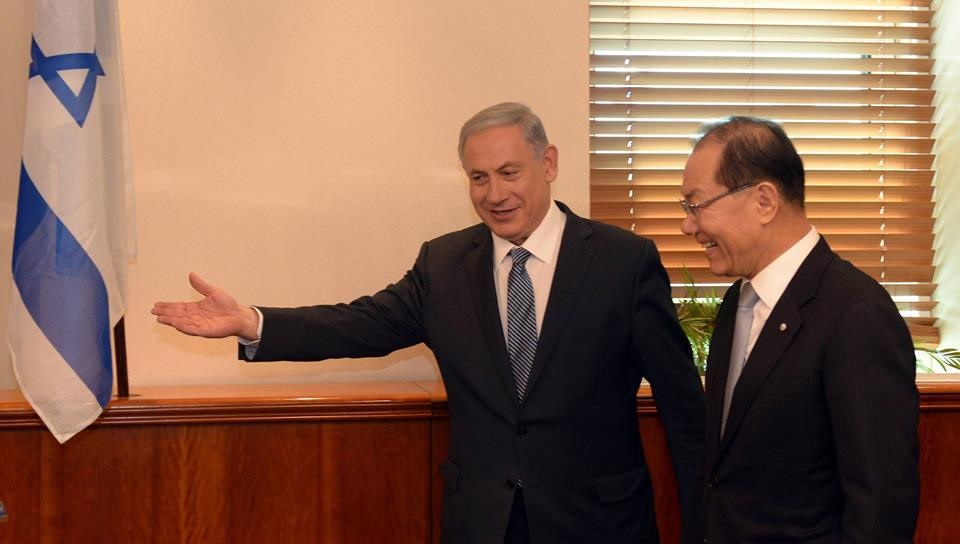
Hosting South Korean Deputy Prime Minister and Minister of Education Hwang Woo-yea, Israeli Prime Minister Benjamin Netanyahu said on Wednesday that he was concerned over the nuclear negotiation talks in Lausanne, Switzerland between Iran and the six world powers and cited North Korea’s nuclear history.
“We have a great deal to learn from each other and be inspired by each other,” Netanyahu said in regard to South Korea and Israel’s relations. “But we also heed the example of the negotiations with North Korea, the nuclear negotiations,” said the Israeli prime minister.
“It was said that the inspections would prevent proliferation. It was said then that they would moderate North Korea’s aggressive behavior,” said Netanyahu. He also noted that there were expectations that North Korea would eventually integrate into the family of nations following negotiations.
In 1994, North Korea pledged to freeze and dismantle its nuclear weapons program in a nuclear agreement signed with the United States in exchange for international aid to create two power-producing nuclear reactors.
Four years later, North Korea fired a rocket over Japan, which landed in the Pacific Ocean, and the U.S. demanded inspections of North Korea’s suspected construction of an underground nuclear facility. U.S. inspectors found no evidence of nuclear activity several months later, and in 1999, then-U.S. President Bill Clinton agreed to ease economic sanctions against North Korea.
In the same year, the U.S.-led international consortium signed a $4.6 billion contract to build two nuclear reactors in North Korea, which by 2001, North Korea declared that it was unsatisfied with U.S. progress on the project and threatened to restart its nuclear program again.
In 2002, following U.S. accusations of violations of the 1994 nuclear agreement, North Korea admitted that it had been operating a uranium enrichment facility. At the end of the year, North Korea expelled International Atomic Energy Agency (IAEA) inspectors and reactivated its nuclear power facilities in 2003. North Korea also officially withdrew from a 1992 agreement with South Korea to keep the Korean Peninsula free of nuclear weapons.
In the span of the next decade, nuclear talks between the U.S. and North Korea floundered as more agreements were made and broken. At one point in October 2008, the U.S. State Department announced that North Korea would be removed from the U.S. list of states that sponsor terrorism.
But by February 2013, North Korea had conducted its third underground nuclear test and a year later, according to the South Korean Defense Ministry, North Korea launched four scud missiles in the direction of Russia, all of which fell into the sea.
In January 2015, the US imposed new sanctions on North Korea.
During the meeting with the South Korean deputy prime minister, PM Netanyahu noted that he believes the current Lausanne framework would repeat the mistakes made with North Korea.
“I think freeze and inspect is not an adequate substitute for dismantle and remove. Under the Lausanne framework, Iran is left with the ability to develop with R&D advanced centrifuges that actually advance its nuclear program. And needless to say, I don’t think there’s any effective inspection,” said PM Netanyahu.
“I think we can learn all the good things that have happened on the Korean peninsula, but also the bad things that have happened in the nuclear negotiations,” he said.
“So I think a repetition of these mistakes is a great historic blunder,” emphasized the Israeli prime minister.

It is with great sadness that we inform the community of the passing of Roberta (Bobbie) Ross, Rochel bas Shlomo, Beloved Mother of Dr. Arnold (Atara) Ross, Linda (Tyler) Draa, Gary (Nancy) Ross, Beloved Sister of Jerry (Freyda) Miller, Grandmother of Lauren (Avi) Mann, Sam (Rivka) Ross, Eliezer (Cori) Jones,Justin (Lily) Draa, Erica Draa, Ben Draa, Jack Ross, Eric Ross
LEVAYA & KEVURA
Thursday 4/30/15 at 3PM
Hillside Memorial
6001 West Centinela Ave. Los Angeles 310.641.0707
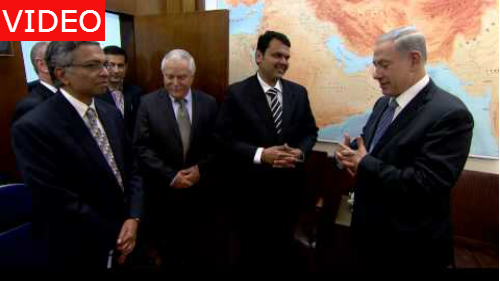
Prime Minister Benjamin Netanyahu’s meeting with Chief Minister of Maharashtra state, India, Devendra Fadnavis
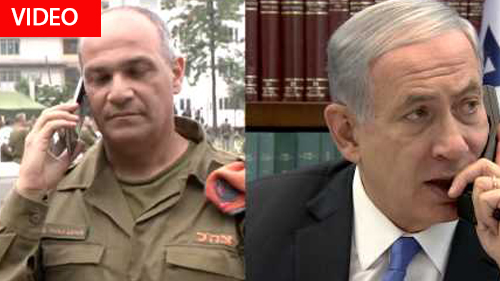
Prime Minister Benjamin Netanyahu speaks with the head of the IDF aid mission to Nepal, Col. Yoram Larado.

The Foreign Minister of Nepal, Mahendra Bahadur Pandey thanked Israeli Foreign Minister Avigdor Liberman today for the humanitarian aid that Israel has sent in the wake of the country’s devastating earthquake. Pandey noted that the Nepalese people deeply appreciate the aid being sent from Israel.
Liberman spoke with Pandey on Tuesday morning, April 28 and thanked Nepalese authorities for their assistance in sending out helicopters to evacuate stranded Israelis in more remote areas of Nepal. Nepal agreed to Israel’s request to use helicopters chartered in India and China to rescue those stranded Israelis.
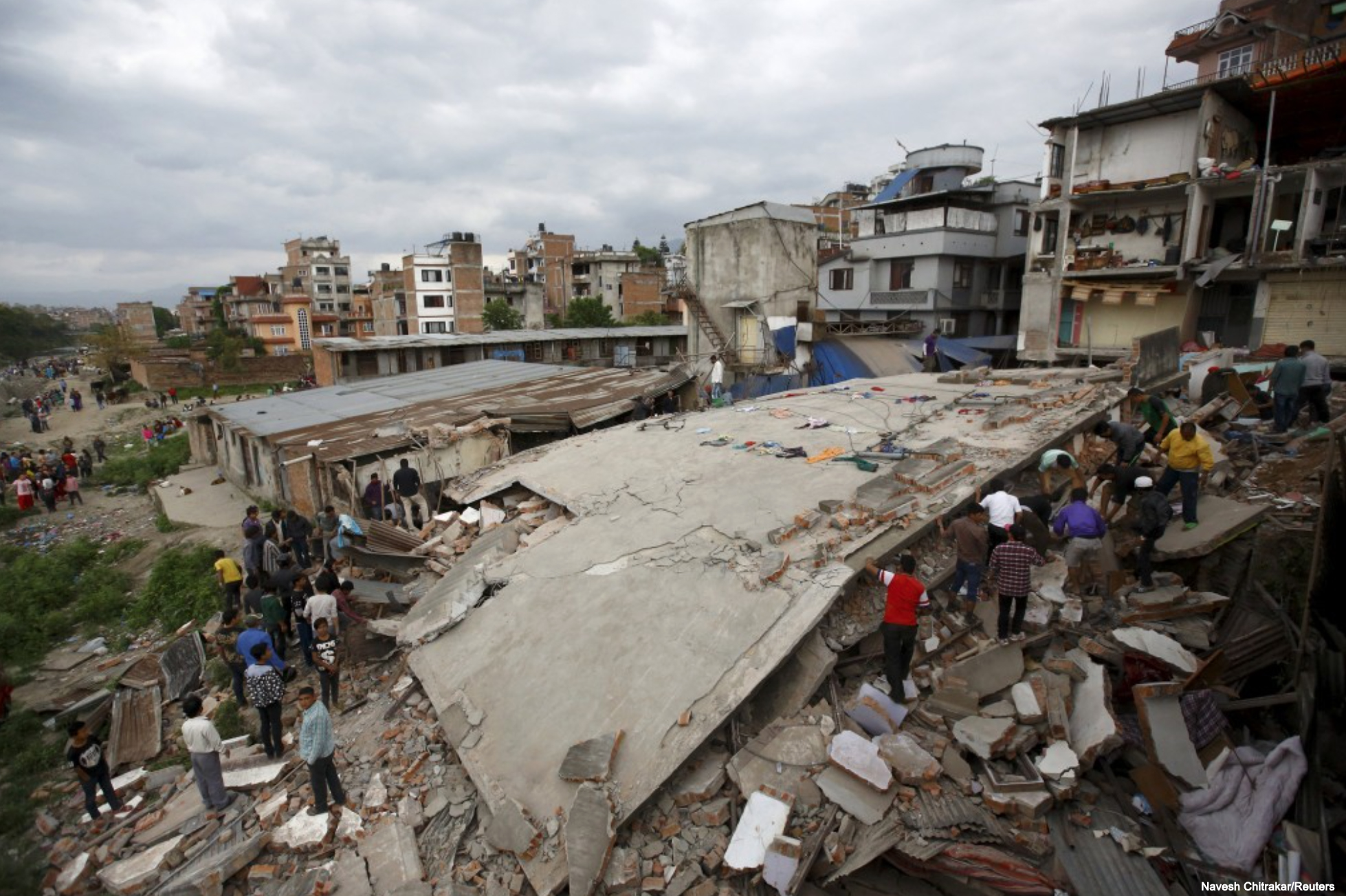
The massive earthquake that hit Nepal on Saturday has killed at least 4,000 people and left nearly 8,000 people injured. According to the United Nations, eight million people have been affected, more than a quarter of the south Asian country’s population. The 7.8-magnituted quake has wreaked devastation across the country, with leaving countless inhabitants without electricity, water, and food.
Israel sent its first rescue plane from Home Front Command on Sunday, April 26 and later on, three more air force planes full of emergency aid. A delegation of Israeli doctors and paramedics flew out on a Magen David Adom plane on Sunday as well. The planes have also brought back groups of Israelis back home.
On Monday, April 27, two El Al planes flew out carrying out more than 200 doctors, sanitation engineers, machinery technicians, as well as medical equipment including oxygen tanks, medical ventilators, X-ray machines, medicines and engineering equipment.
In the coming two weeks, IDF search and rescue teams will set up near the capital, Kathmandu in order to find survivors in the rubble of collapsed buildings. The Israeli teams will also set up a field hospital for the local population to provide much needed medical services. The field hospital will have 80 hospital beds, two operating rooms, four intensive-care rooms and specialists in neonatal and adult care, with dozens of IDF physicians from the regular army and reserves at hand.
In light of the country’s most deadly earthquake in 81 years, the Nepal government has urged for overseas aid. “We urge foreign countries to give us special materials and medical teams. We are really desperate for more foreign expertise to pull through this crisis,” said Chief Secretary Leela Mani Paudel.
In addition to Israel, other countries coming to Nepal’s aid include India, China, Japan, Bhutan, Pakistan, Malaysia, Sri Lanka, United Kingdom, United Arab Emirates, US, Canada, Australia, and others.
Other Israeli disaster response organizations providing their expertise in Nepal include ZAKA and IsraAID.
Israel is also making plans for long-term assistance to Nepal. The head of Israel’s Agency for International Development Cooperation (MASHAV), Ambassador Gil Haskel held a meeting on Monday to discuss the second stage of Israeli aid to Nepal with a concentration on long-term assistance to the country.
By Anav Silverman
Tazpit News Agency


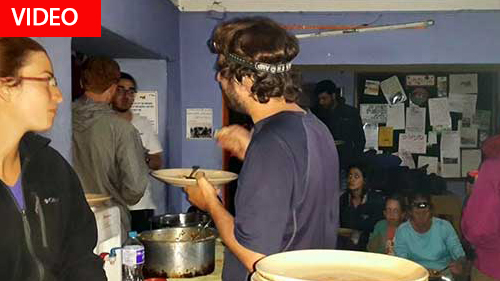
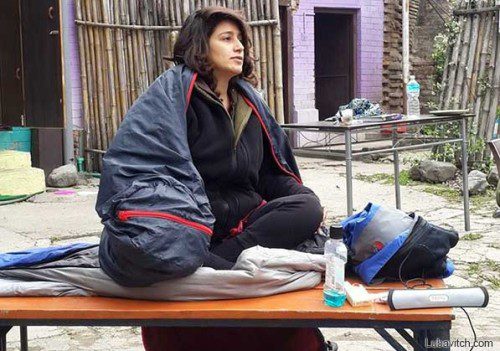
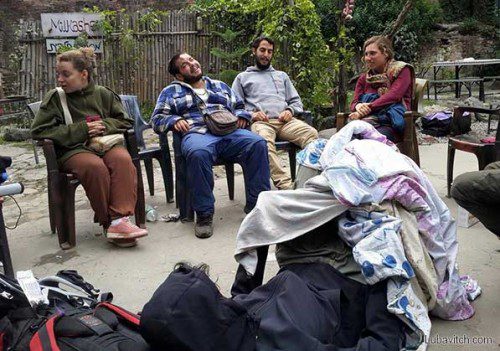
As aftershocks from the 7.8 earthquake that rattled Nepal this past Saturday begin to wear off, the search to find and locate survivors has intensified. Chabad representatives Rabbi Chezki and Chani Lifshitz who have taken a lead in locating the missing, sheltering and feeding survivors, are also communicating with families abroad, updating them about their loved ones.
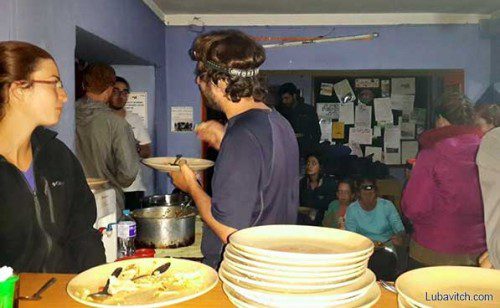
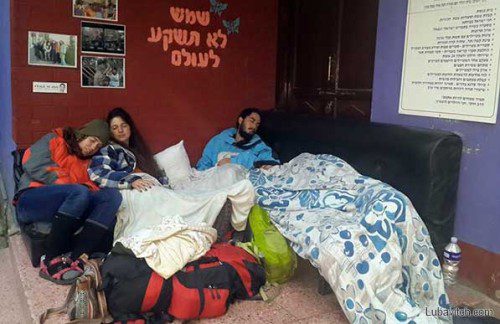
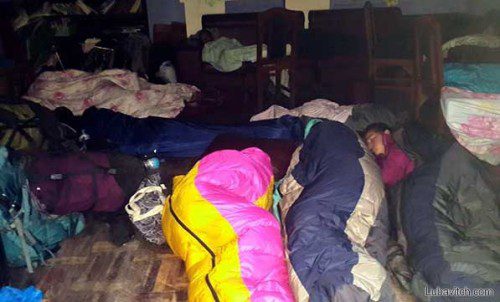
“With rain pouring the entire night, everyone piled into the Chabad House and slept here. The building is sound,” said Chani, who slept under one blanket with four of children. “We did not get much needed sleep, but we did wake up early in order to continue our efforts.”
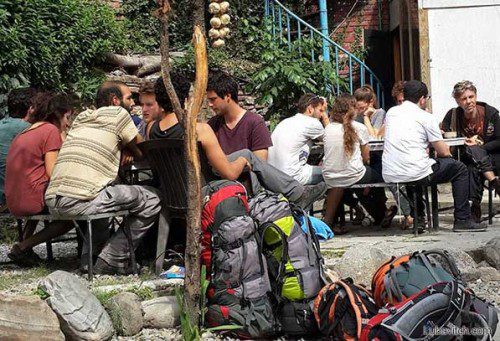
Absent basic staples of rice, eggs or flour that locals depend on for their regular sustenance, local Nepalese, many with young children in their arms, have turned to the Chabad center for food. With the assistance of the Nepal Jewish Relief Fund, Chabad is trying to provide food for anyone who comes knocking.
“Our greatest worry now is to make sure that anyone who comes to the Chabad House should have a hot meal,” the Chabad representative says.
While Israeli trekkers pitch in making and serving the food to the locals, the Lifshitzs continue to field calls from abroad asking about their loved ones. “With the telephones working sporadically, I asked everyone on Facebook to be patient while trying to reach us,” she says, noting that Facebook has become the best way to communicate with them.
Chabad of Nepal and the Lifshitz’s Facebook has also become the place for trekkers to check to see if their family knows that they are well and for friends to communicate with each other.
“There are still scores of people who have not made the connection with their family and friends,” says Chani.
Families are utilizing comments and others posting directly onto their pages. “Our son Saar… went on the Tamang Heritage Trail, if anyone is on that trail and has telephone access, please update us,” one father writes.
One sister posted photos of her 24 year old brother Avi, saying that she has no clue exactly where he is on the Himalayan ridge. “If anyone know where he is, please contact us,” she writes. When her brother was found, she updated everyone that her brother was on the way on a jeep.
Meanwhile all the information is being updated on the walls of the Chabad House. When additional information comes up of those that were missing, they updated by Chabad on their Facebook page.
“These individuals were found safely,” Rabbi Chezki writes, as he goes back to assisting the many who continue show up at the Chabad House in need of material, physical and emotional support from the recent trauma.
To assist relief efforts visit the Nepal Jewish Relief Fund.
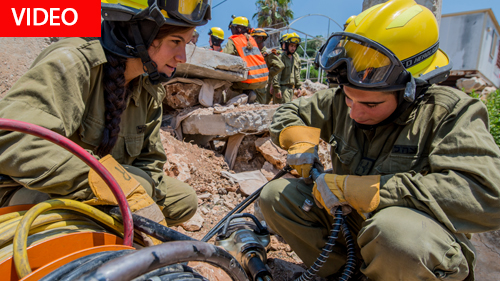
Three Israeli rescue and medical teams are responding to the disastrous earthquake that hammered Nepal on Saturday, Ministry of Foreign Affairs (MFA) Deputy Spokesperson Alon Lavi told the Tazpit News Agency.
The MFA would be coordinating Israel’s efforts on the ground and liaise with the Nepalese government, Lavi said Sunday morning.
A six-man forward response team from the Israeli Defense Force (IDF) was sent to Kathmandu early Sunday, to be followed by over 200 soldiers from the Home-Front Command.
The forward team will establish a triage post, while MFA officials and an IDF military attaché’ from India scout out a site for a field hospital.
The IDF response is reminiscent of the actions taken in the aftermath of the Haiti earthquake in January 2010. There, Israeli forces were first on the ground, treating over 1000 Haitians and delivering 16 babies in a similar triage and field hospital operation.
Along with soldiers to man the field hospital, the IDF will send a team from its elite Unit 669 Search and Rescue forces to help in the effort to find survivors in the Himalaya mountain range.
Hikers on Mt. Everest who survived quake-caused avalanches said they were running out of food and other supplies, according to news reports.
Some 250 Israeli nationals – many of them hikers in the popular destination’s mountainous regions – have yet to make contact with local or Israeli authorities. The IDF task force will make tracking them down a priority, Israeli officials said.
The second of the three missions to Nepal consists of a joint team consisting of Zaka, the largely ultra-Orthodox volunteer victim recovery organization among other Israeli aid organizations.
Zaka are renowned for their dedication in the task of collecting human remains, a particularly grisly task in the aftermath of suicide bombs and other terrorist attacks. The organization have participated in a number of international rescue operations, travelling to India, Haiti and Japan among other locations.
Motti Elimelech, team leader of the mission, told Tazpit he expected the group to treat a significant number of people who are dehydrated, due to contaminated water.