Home Blog Page 148

Magen Am Update – Los Angeles Shooting

0

The LAPD has put out an update.  The victim was shot in the arm leaving a Jewish synagogue at the intersection of Bedford & Pickford, and is in stable condition.


The suspect is a White Male, black mask, black glasses, black sweater, armed.


Vehicle: Older Model Hundai Sedan.


WLA PD are looking for information from witnesses, video surveillance, and any information that will identify the suspect.


PLEASE CONTACT WEST LA POLICE DEPARTMENT IF YOU HAVE ANY INFORMATION:

(310) 444-0701

BREAKING IN LOS ANGELES: Another Jewish Person Shot Leaving Shul – SECOND VICTIM IN TWO DAYS

0

A Jewish man has just been shot in Los Angeles – just 24 hours after another Jewish victim was shot.

Los Angeles Scoop is reporting that the victim was shot while leaving a Shul in the area of S. Bedford and Pico Boulevard. Los Angeles Hatzalah was on the scene along with EMS and LAPD. Thursday’s shooting happened exactly 24 hours after another Jewish man was shot.

The victim was reportedly shot in the arm, and is in stable condition.

On Wednesday YWN reported that a Jewish man was shot while leaving a Shul at around 9:56 am PT near Cashio and Shenandoah in Pico-Robertson, an area of Los Angeles densely populated with Orthodox Jews. That victim was also shot in the arm and is stable condition.

Source: The Jewish World

Knesset Passes Law to Strip Citizenship of Terrorists

0
By Pesach Benson • 15 February, 2023

The legislation was passed with 94 votes, with 10 Knesset members, all from Arab parties, voted against. The legislation was supported by the opposition and was widely expected to pass.

The bill empowers the Interior Minister to revoke citizenship or temporary residence status for people convicted of terror and other security offenses. It could also be applied to families that receive terror stipends from the Palestinian Authority.

The Interior Minister will also be empowered to act against terror convicts who do not have a secondary citizenship elsewhere, as long as they have a permanent residence status somewhere outside of Israel. It also enables individuals to be deported to the Palestinian Authority.

The Interior Minister is required to hold a hearing before revoking anyone’s citizenship.

MK Oded Forer of the opposition Israel Beiteinu party, who was one of the law’s initiators, said, “Today we took another step in the fight against terrorism. The law I passed today is a closure order for the terrorist camp funded by Abu Mazen! From now on every terrorist will know that he will pay a heavy price for harming the citizens of Israel.”

The Palestinian Authority is legally mandated to allocate seven percent of its annual budget for its so-called “Martyr’s Fund,” which provides stipends to Palestinian terrorists in Israeli prisons, and the families of terrorists killed in attacks. The size of the monthly payouts depends on various factors such as how many Israelis were killed, how long the terrorist has been incarcerated and family size.

Ramallah has been paying out stipends for years, but the issue came under a spotlight following the murder of Taylor Force, a U.S. citizen killed by a Palestinian who went on a stabbing rampage in Jaffa in 2018. Congress


California loses 500,000 residents in 2 years as Americans flee high costs, COVID restrictions

0

Residents are fleeing the state to Utah, Nevada and even Texas

California’s population fell by 500,000 people between April 2020 and July 2022 as residents fled the state in droves to find greener pastures.

Census data showed migration out of the state surpassed those coming into the state by more than 700,000 throughout the two-year period, according to the Los Angeles Times. California’s major cities have been plagued with homelessness, crime and skyrocketing housing costs, causing many residents to flee to nearby states like Utah, Nevada and even Texas.

Despite the shrinkage, California remains the most populated U.S. state with some 38 million residents.

Only New York came close to matching California’s exodus, with the Empire State losing roughly 485,000 residents between 2020 and 2022.


Tents and homeless people line the street near the San Francisco City Hall.
Tents and homeless people line the street near the San Francisco City Hall. (Tayfun Coskun/Anadolu Agency via Getty Images)

Californians who remain in the state are also likely to face frequent power outages and failures in the coming years as state leaders continue to push for renewable energy.

The state’s grid is undergoing a major shift from natural gas and coal power to renewable power like wind and solar. Simultaneously, state officials are pushing an electrification of the economy, particularly in the transportation sector through electric vehicle mandates, which is expected to increase pressure on the power grid.

“They’re going to have to build an outrageous amount of wind and solar in a very short time if they want to accomplish their objectives of electrifying – our whole transportation sector and our whole home heating and cooling and residential sector,” Edward Ring, a senior fellow with and co-founder of the California Policy Center, told Fox News Digital on Tuesday.

California is pushing a drastic shift toward renewable energy that is likely to hurt consumers.
California is pushing a drastic shift toward renewable energy that is likely to hurt consumers. (2013 Getty Images)

“There’s a burden to the consumer that’s going to get very heavy,” he continued. “Even if they can pull it off without blackouts, the burden to the consumer is going to be ridiculous.”

Fox News’ Thomas Catenacci contributed to this report.

Watchdog: U.K.’s Labour Party Has Taken Steps to Drive Out Antisemitism

0

LONDON (Reuters) – Britain’s opposition Labour Party has made sufficient changes over the last two years to drive out antisemitism from its ranks, the equalities watchdog said on Wednesday, as leader Keir Starmer pledged zero tolerance towards discrimination.

The party, which opinion polls indicate has a strong chance of forming Britain’s next government in two years, was forced to come up with an action plan by the equalities watchdog to address allegations of discrimination and harassment against Jewish people.

“Today is an important moment in the history of the Labour Party,” Starmer said in a speech. “It has taken many, many months of hard work and humility to get here. We can say firmly, proudly, confidently: The Labour Party has changed… under my leadership there will zero tolerance of antisemitism, of racism, of discrimination of any kind.”

Starmer also said Jeremy Corbyn, under whose leadership of Labour the allegations of antisemitism first emerged in 2019, will not stand for election as a Labour Party candidate.

Corbyn, who has consistently denied allegations of antisemitism, was suspended from the Labour party in 2020 after he downplayed a report that detailed serious failings in the party’s handling of persistent antisemitism complaints during his leadership up to 2019.

“Let me be very clear about that. Jeremy Corbyn will not stand for Labour… What I said about the party changing, I meant we are not going back,” Starmer told reporters.

Britain’s Equality and Human Rights Commission had launched a formal investigation in 2019 to determine whether Labour, then led by Corbyn, had discriminated against, harassed or victimized people because they are Jewish.

Source: Hamodia

Thousand-Year-Old Chumash Goes on the Block—for $30 MILLION

0

A Chumash known as the Codex Sassoon—the oldest nearly complete volume in the world—will be auctioned this spring by Sotheby’s, which expects it will bring between $30 million and $50 million.

The 1,100-year-old tome in Lashon Kodesh is owned by Jacqui Safra, the Swiss investor from the famous banking family.

Safra, who is reportedly worth $500 million, also owns the Encyclopedia Britannica and a vineyard that filed for bankruptcy last year. Read more at Sotheby’s.

Source: Matzav

Rabbi Lord Jonathan Sacks zt”l – Doing and Hearing – MISHPATIM • 5776, 5783

One of the most famous phrases in the Torah makes its appearance in this week’s parsha. It has often been used to characterise Jewish faith as a whole. It consists of just two words: na’aseh venishma, literally, “we will do and we will hear” (Ex. 24:7). What does this mean and why does it matter?

There are two famous interpretations, one ancient, the other modern. The first appears in the Babylonian Talmud,[1] where it is taken to describe the enthusiasm and whole-heartedness with which the Israelites accepted the covenant with God at Mount Sinai. When they said to Moses, “All that the Lord has spoken we will do and we will hear,” they were saying, in effect: Whatever God asks of us, we will do – and they said this before they had heard any of the commandments. The words, “We will hear,” imply that they had not yet heard – neither the Ten Commandments, nor the detailed laws that followed as set out in our parsha. So keen were they to signal their assent to God that they agreed to His demands before knowing what they were.[2]

This reading, adopted also by Rashi in his commentary to the Torah, is difficult because it depends on reading the narrative out of chronological sequence (using the principle that “there is no before and after in the Torah”). The events of chapter 24, according to this interpretation, happened before chapter 20, the account of the revelation at Mount Sinai and the Ten Commandments. Ibn Ezra, Rashbam, and Nachmanides all disagree and read the chapters in chronological sequence. For them, the words na’aseh venishma mean not, “we will do and we will hear,” but simply, “we will do and we will obey.”

The second interpretation – not the plain sense of the text but important nonetheless – has been given often in modern Jewish thought. On this view na’aseh venishma means, “We will do and we will understand.”[3] From this they derive the conclusion that we can only understand Judaism by doing it, by performing the commands and living a Jewish life. In the beginning is the deed.[4] Only then comes the grasp, the insight, the comprehension.

This is a signal and substantive point. The modern Western mind tends to put things in the opposite order. We seek to understand what we are committing ourselves to before making the commitment. That is fine when what is at stake is signing a contract, buying a new mobile phone, or purchasing a subscription, but not when making a deep existential commitment. The only way to understand leadership is to lead. The only way to understand marriage is to get married. The only way to understand whether a certain career path is right for you is to actually try it for an extended period. Those who hover on the edge of a commitment, reluctant to make a decision until all the facts are in, will eventually find that life has passed them by.[5] The only way to understand a way of life is to take the risk of living it.[6] So: Na’aseh venishma, “We will do and eventually, through extended practice and long exposure, we will understand.”

In my Introduction to this year’s Covenant and Conversation seriesI suggested a quite different, third interpretation, based on the fact that the Israelites are described by the Torah as ratifying the covenant three times: once before they heard the commandments and twice afterward. There is a fascinating difference between the way the Torah describes the first two of these responses and the third:

The people all responded together, “We will do [na’aseh] everything the Lord has said.” (Ex. 19:8)

When Moses went and told the people all the Lord’s words and laws, they responded with one voice, “Everything the Lord has said we will do [na’aseh].” (Ex. 24:3)

Then he took the Book of the Covenant and read it to the people. They responded, “We will do and hear [na’aseh venishma] everything the Lord has said.” (Ex. 24:7)

The first two responses, which refer only to action (na’aseh), are given unanimously. The people respond “together.” They do so “with one voice.” The third, which refers not only to doing but also to hearing (nishma), involves no unanimity. “Hearing” here means many things: listening, paying attention, understanding, absorbing, internalising, responding, and obeying. It refers, in other words, to the spiritual, inward dimension of Judaism.

From this, an important consequence follows. Judaism is a community of doing rather than of “hearing.” There is an authoritative code of Jewish law. When it comes to halachah, the way of Jewish doing, we seek consensus.

By contrast, though there are undoubtedly principles of Jewish faith, when it comes to spirituality there is no single normative Jewish approach. Judaism has had its priests and prophets, its rationalists and mystics, its philosophers and poets. Tanach, the Hebrew Bible, speaks in a multiplicity of voices. Isaiah was not Ezekiel. The book of Proverbs comes from a different mindset than the books of Amos and Hosea. The Torah contains law and narrative, history and mystic vision, ritual and prayer. There are norms about how to act as Jews. But there are few about how to think and feel as Jews.

We experience God in different ways. Some find Him in nature, in what Wordsworth called “a sense sublime / Of something far more deeply interfused, / Whose dwelling is the light of setting suns, / And the round ocean and the living air.[7] Others find Him in interpersonal emotion, in the experience of loving and being loved – what Rabbi Akiva meant when he said that in a true marriage, “the Divine Presence is between” husband and wife.

Some find God in the prophetic call: “Let justice roll down like a river, and righteousness like a never-failing stream” (Amos 5:24). Others find Him in study, “rejoicing in the words of Your Torah…for they are our life and the length of our days; on them we will meditate day and night.”[8] Yet others find Him in prayer, discovering that God is close to all who call on Him in truth.

There are those who find God in joy, dancing and singing as did King David when he brought the Holy Ark into Jerusalem. Others – or the same people at different points in their life – find Him in the depths, in tears and remorse, and a broken heart. Einstein found God in the “fearful symmetry” and ordered complexity of the universe. Rav Kook found Him in the harmony of diversity. Rav Soloveitchik found Him in the loneliness of being as it reaches out to the soul of Being itself.

There is a normative way of performing the holy deed, but there are many ways of hearing the holy voice, encountering the sacred presence, feeling at one and the same time how small we are yet how great the universe we inhabit, how insignificant we must seem when set against the vastness of space and the myriads of stars, yet how momentously significant we are, knowing that God has set His image and likeness upon us and placed us here, in this place, at this time, with these gifts, in these circumstances, with a task to perform if we are able to discern it. We can find God on the heights and in the depths, in loneliness and togetherness, in love and fear, in gratitude and need, in dazzling light and in the midst of deep darkness. We can find God by seeking Him, but sometimes He finds us when we least expect it.

That is the difference between na’aseh and nishma. We do the Godly deed “together.” We respond to His commands “with one voice.” But we hear God’s presence in many ways, for though God is one, we are all different, and we encounter Him each in our own way.


[1] Shabbat 88a–b.

[2] There are, of course, quite different interpretations of the Israelites’ assent. According to one, God “suspended the mountain over them,” giving them no choice but to agree or die (Shabbat 88a).

[3] The word already carries this meaning in biblical Hebrew as in the story of the Tower of Babel, where God says, “Come let us confuse their language so that people will not be able to understand their neighbour.”

[4] This is the famous phrase from Goethe’s Faust.

[5] This is similar to the point made by Bernard Williams in his famous essay, “Moral Luck,” that there are certain decisions – his example is Gauguin’s decision to leave his career and family and go to Tahiti to paint – about which we cannot know whether they are the right decision until after we have taken them and seen how they work out. All such existential decisions involve risk.

[6] This, incidentally, is the Verstehen approach to sociology and anthropology; namely that cultures cannot be fully understood from the outside. They need to be experienced from within. That is one of the key differences between the social sciences and the natural sciences.

[7] William Wordsworth, “Lines Composed a Few Miles Above Tintern Abbey, on Revisiting the Banks of the Wye during a Tour, July 13, 1798.”

[8] From the blessing before Shema said in the evening prayer.

NORAD conducts air defense exercise days after Russian aircraft intercepted over Alaska, objects shot down

0

Air defense exercise happening off coast of Washington state, British Columbia

The North American Aerospace Defense Command (NORAD) said Wednesday it is carrying out a “live-fly air defense exercise” off the coast of Washington state and British Columbia, just days after it intercepted Russian aircraft near Alaska and multiple airborne objects were shot down.

The four Russian planes were detected and intercepted over the Alaska Air Defense Identification Zone on Monday in what NORAD called a “routine” incident.

As part of Wednesday’s exercise, a variety of American and Canadian planes, “including fighter aircraft, will operate at high altitude,” it said.

“To test responses, systems and equipment, NORAD routinely conducts air defense exercises using a variety of scenarios, including airspace restriction violations, hijackings and responding to unknown aircraft,” it also said.

A U.S. defense official told Fox News on Wednesday that the exercise has been planned for months.

The U.S. recently has shot down three objects, including a Chinese spy balloon near South Carolina.


A Russian Tu-95 Bear long-range bomber aircraft is seen in a file photo released by the U.S. Navy.

A Russian Tu-95 Bear long-range bomber aircraft is seen in a file photo released by the U.S. Navy.

Two F-16 fighter jets were dispatched by NORAD to intercept the Russian aircraft Monday, which included a TU-95 BEARH-H and SU-35 fighter jet.

“Russian aircraft remained in international airspace and did not enter American or Canadian sovereign airspace. This Russian activity in the North American ADIZ occurs regularly and is not seen as a threat, nor is the activity seen as provocative,” NORAD said Tuesday in a statement.

A Russian Tu-142 maritime reconnaissance aircraft, top, is intercepted near the Alaska coastline In this March 9, 2020, photo.

A Russian Tu-142 maritime reconnaissance aircraft, top, is intercepted near the Alaska coastline In this March 9, 2020, photo. (North American Aerospace Defense Command/AP)

Since 2007, Russian aircraft have been intercepted in the North American ADIZ six to seven times a year.

The latest incursion comes amid increased tensions between Russia and the West over the war in Ukraine. Two Dutch F-35s intercepted Russian military aircraft near Polish airspace on Monday, according to defense officials.

Fox News’ Liz Friden and Paul Best contributed to this report. 

Source: Fox News

Antisemitic attacks target three University of Denver students

0

Jewish ritual objects were desecrated and pork was affixed to a student’s door.

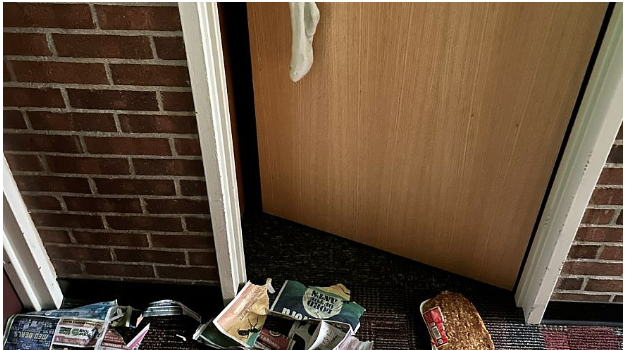
 From Feb. 9 to 12, three Jewish University of Denver students were targets of antisemitic attacks, including pork left at one student’s doorstep and smeared on the door, and mezuzot ripped off two students’ door frames. (Some news reports referred to the pork as “glued” to the door.)

mezuzah is a ritual object that contains the Shema prayer written on parchment, affixed to Jewish doorposts. The attacker tampered with the scrolls in the students’ mezuzot, destroying one of them, according to StandWithUs.

“The students are all identifiable Jews or Jewish leaders on campus,” the international nonprofit stated.

StandWithUs said that vandalism of mezuzot is on the rise in the county but these attacks were particularly shocking given the way they centered on Jewish religious practice, including the prohibition against consuming pork.

The private, nearly 160-year-old university, which has an enrollment of about 14,000, condemned the incidents and opened an investigation. “We stand together in deploring these acts and in committing ourselves to promoting a warm, welcoming campus in which all community members can thrive,” the school stated on Twitter.

statement on the university website mentioned the attacks were antisemitic but generalized about its commitment to “a warm, welcoming campus in which all community members can thrive.”

The university’s undergraduate student body is estimated to be about 10% Jewish, CBS Colorado reported. “Small acts of hate lead to bigger ones and make life unsafe for all students,” the university’s Hillel stated.

Roz Rothstein, the CEO of StandWithUs, said that as a daughter of Holocaust survivors she is “shocked and horrified by the religious nature of these antisemitic assaults taking place in 2023.” That both anti-Israel and antisemitic incidents are on the rise is not a coincidence, she added.


Biden admin pulls pick for rights post who called Israel ‘apartheid state’

0

James Cavallaro also said House Minority leader Hakeem Jeffries (D-N.Y.) was “Bought. Purchased. Controlled” by pro-Israel groups.

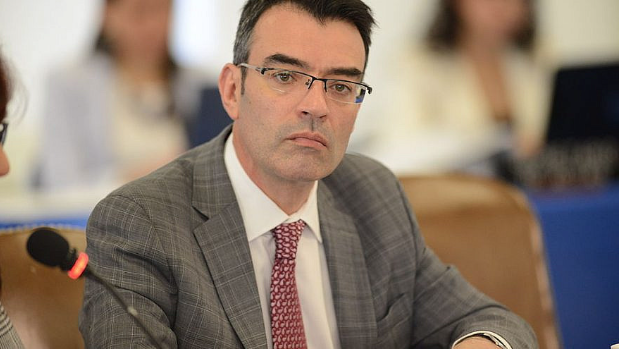
 Just days after announcing his candidacy, the Biden administration on Tuesday withdrew support for James Cavallaro as an independent member of the Inter-American Commission on Human Rights over his anti-Israel statements, according to the Associated Press.

In its Friday announcement of his candidacy for a post with the watchdog group, the White House described Cavallaro as a “leading scholar and practitioner of international law.” Cavallaro has previously served as both vice chairman and president of the IACHR. He is a professor of Law at Stanford Law School and was prior to that a clinical professor of law at Harvard Law School. He also served as director of the Brazil offices of Human Rights Watch.

On Tuesday, the State Department said his candidacy was nixed in the wake of an article by the Algemeiner, which revealed Cavallaro’s history of anti-Israel posts on social media.

In a December tweet, Cavallaro accused House Minority leader Hakeem Jeffries (D-N.Y.) of being “Bought. Purchased. Controlled” alongside a link to an article about his donations from the pro-Israel AIPAC lobbying group. He has also referred to Israel as an “apartheid state.”

State Department spokesman Ned Price said that the Biden administration had been unaware of Cavallaro’s past comments on Israel.

“They are not a reflection of what we believe, and they are inappropriate to say the least,” said Price.

Last month, Sarah Margon withdrew her nomination for assistant secretary of state for democracy, human rights and labor following Republican pushback against her anti-Israel record at Human Rights Watch (HRW) and George Soros’ Open Society Foundations.

Among her anti-Israel activities, Margon used her position as head of the HRW in Washington, D.C., to promote the anti-Israel BDS movement by pressuring Airbnb to remove its listings in Judea and Samaria. When Peter Beinart put out his infamous “I No Longer Believe in a Jewish State” op-ed in The New York Times, Margon highlighted an excerpt calling for the destruction of Israel.

Margon was nominated by U.S. President Joe Biden in April of 2021 with the support of all committee Democrats, but her appointment was held up in the Foreign Relations Committee by Sen. Jim Risch (R-Idaho).

WP Twitter Auto Publish Powered By : XYZScripts.com