Home Blog Page 505

Report: IAEA head says no turning back the clock on Iran’s nuclear program

0

“The Iranian program has grown, become more sophisticated, so the linear return to 2015 is no longer possible,” says International Atomic Energy Agency head Rafael Grossi.

Amid ongoing talks in Vienna regarding a possible U.S. return to the 2015 nuclear agreement with Iran, the head of the United Nations’ nuclear watchdog warned in an interview published on Tuesday that “you cannot put the genie back in the bottle.”

International Atomic Energy Agency director general Rafael Grossi told the Financial Times that while most of the measures taken by Iran since the United States unilaterally exited the Joint Comprehensive Plan of Action (JCPOA) in 2018 could be reversed, the level of research and development that has taken place since then is an “issue.”

“The Iranian program has grown, become more sophisticated, so the linear return to 2015 is no longer possible. What you can do is keep their activities below the parameters of 2015,” he said.

The only way to accomplish this, he said, is through verification.

Grossi noted that Iran has now stockpiled 10 times the 300 kilograms (661 pounds) of enriched uranium stipulated by the accord, including some to near-weapons grade.

Iran announced on April 13 that it had notified the IAEA of its intent to begin enriching uranium to 60 percent purity, far above the 3.67 percent level stipulated by the JCPOA.

Iran had already begun enriching uranium to the 20 percent level in the preceding months. The nuclear watchdog confirmed just days later that Iran had indeed begun the process of enriching to 60 percent, at its Natanz nuclear facility.

“A country enriching at 60 percent is a very serious thing—only countries making bombs are reaching this level,” Grossi told the Financial Times. “Sixty percent is almost weapons grade, commercial enrichment is 2, 3 [percent].”

While it is Iran’s “sovereign right” to develop its nuclear program, he said, “This is a degree that requires a vigilant eye.”

“It’s obvious that with a program with the degree of ambition, sophistication that Iran has, you need a very robust, very strong verification system?…?otherwise it becomes very fragile,” he added.

Iran restricted its cooperation with IAEA inspectors in February, although it agreed to allow some monitoring to continue for a three-month period that was extended this week until June 24, six days after Iran’s presidential elections.

Grossi told the Financial Times that the arrangement would ultimately be “unsustainable.”

“We are entering a phase where we have to take?[things] … ?one week at a time and see how the other process [the Vienna negotiations] evolves,” said Grossi.

(JNS).


The Flagship Case Against Netanyahu Is Falling Apart

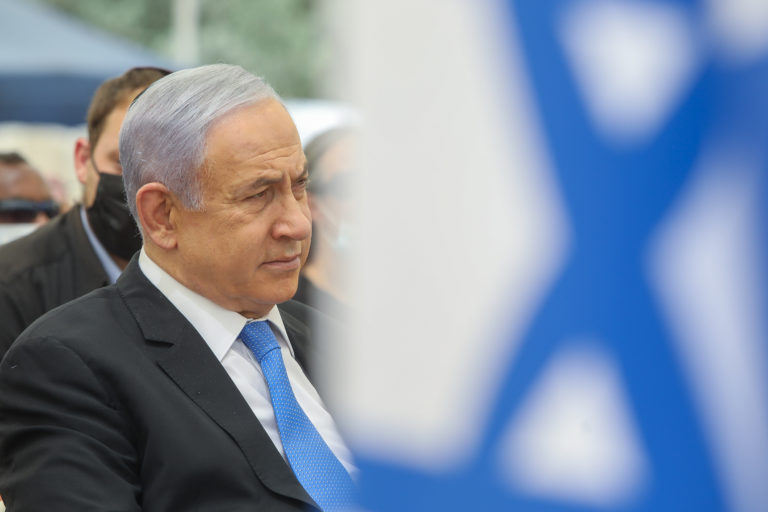
On April 4, attorney Liat Ben-Ari, chief prosecutor in Prime Minister Benjamin Netanyahu’s trial, presented the prosecution’s opening argument at the beginning of the evidentiary stage of the proceedings.

That morning, I had published an article that focused on the huge holes in the prosecution’s basic thesis that Netanyahu had asked for unusual coverage on the Walla news site in exchange for regulatory benefits for Shaul Elovitch, the controlling shareowner of Bezeq, which owns Walla.

In case you missed it, the word on which the entire case hangs is “unusual.”

Amazingly, even before the evidentiary stage of the trial began, it was already known that the prosecution had not troubled itself to set any criteria that would determine a norm, deviation from which would potentially cross into the area of criminality.

On Tuesday, however, during the cross examination of former Walla CEO Ilan Yeshua, it turned out that the prosecution had failed to deliver to the defense evidence proving the close contact between Yeshua and other prominent politicians—contact that pulled the rug out from under the thesis that Netanyahu’s requests were “unusual,” and also exposed Yeshua’s blatant lie to the court that he had supposedly not intervened in the site’s content when it came to other politicians.

Correspondence between Yeshua and former Zionist Union leader Isaac Herzog—Netanyahu’s main rival in the 2015 election—was presented, which showed that Yeshua had gone out of his way to assist Herzog. According to the material, even while he was on vacation in Hawaii, Yeshua had instructed Walla’s lead editor to post a headline dictated by Herzog against his then-rival in the Labor primaries, Shelly Yachimovich.

Astonishingly, due to a “mistake,” this correspondence reached the defense team only a month ago, during Yeshua’s initial questioning. Judges were amazed that such dramatic evidence could have been categorized as “irrelevant” and asked the prosecution if there was any other material that had not been delivered to the defense. The prosecutor, Yehudit Tirosh, responded, “I don’t know how to answer.”

Incredible.

And that’s not all: It turned out that Yeshua had held at least 14 meetings with various politicians (including Moshe Kahlon, Naftali Bennett, Avigdor Lieberman, Dalia Itzik and others), but not a single meeting with Netanyahu. Yeshua also confirmed that Elovitch and his wife prevented the publication of negative items about Kahlon, fearing retribution from the former minister.

Another “unusual” issue has to do with publishing tycoon Ilan Shiloah. Yeshua admitted that he had taken care to provide positive coverage of Shiloah because the latter had made hefty ad purchases on the Walla site, and was a friend of Elovitch’s son. But Yeshua also had a personal reason to help him out—his son worked for Shiloah, and on Tuesday it turned out that Yeshua and his son had earned $400,000 from the IPO of Shiloh’s company.

The broader picture is becoming clear: The prosecution prided itself on having set up a battery of 40 attorneys to file the indictment against Netanyahu—but reasonable thinking by a single person would have prevented it from making a mockery of its flagship case, in what could be the most important trial in the history of Israel.

The Netanyahu trail is just starting, but even now, when a major witness for the prosecution falls apart on the witness stand—along with the prosecution’s basic thesis—the question arises of whether the judges will find the courage to admit that the case before them was stitched together carelessly, and continues to fray.

(Vosizneias / JNS)

Rivlin accepts Biden’s invitation to visit Washington

0

Israeli president thanks the US for condemning antisemitic incidents during the Gaza hostilities.

US President Joe Biden invited his Israeli counterpart, President Reuven Rivlin, to visit the White House as the latter enters his final weeks in office.

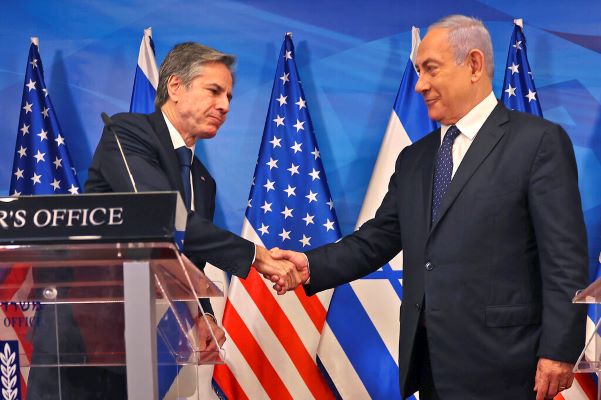
US Secretary of State Antony Blinken extended the invitation to Rivlin when the two met in Jerusalem on Tuesday.

Rivlin said he was honored by the invite and was planning to visit Washington before his term expires on July 9.

During their meeting, the two leaders discussed the spike in antisemitism worldwide, and in the US in particular, and Operation Guardian of the Walls in Gaza earlier this month.

Rivlin thanked the US for taking a strong stance against antisemitism during the Gaza hostilities.

Blinken condemned the recent rise in antisemitism in the world and the US, and said: “As you know, President Biden asked me to come to Israel this week, this week in particular, to underscore the commitment of the United States to our partnership, to our alliance, to Israel’s security and to the work that we need to do together and continue and try to bring peace, to bring communities together.”

The secretary of state arrived in Israel on Tuesday morning, the first stop on his first visit to the Middle East, during which he hopes to bolster the recent ceasefire between Israel and Hamas.

(Israel Hayom).


US State Department bypasses Congress, approves arms sale to Israel

0

The State Department issues export license for precision armaments despite attempt by left-wing Democrats to block the $735 million sale.

The U.S. State Department has already issued export permits for the sale to Israel of advanced precision-guided weapons in a move that appears to have bypassed attempts by progressive Democrats to block the sale in Congress, Jewish Currents reported Tuesday.

A congressional staffer told the left-wing Jewish news website that the State Department approved the $735-million sale of smart bombs to Israel by granting an export license to the Boeing company.

Boeing will provide its Joint Direct Attack Munitions (JDAM) and another laser-guided bomb similar to those used by the Israel Air Force in attacking military targets in Gaza this month.

The license allows Boeing to sell the weapons to Israel, despite a move in Congress led by Representatives Alexandria Ocasio-Cortez and Rashida Tlaib to block the sale.

Both Ocasio-Cortez and Tlaib are known for their radical anti-Israel stances and their criticism of the sale centered on the damage caused in Gaza, while failing to comment on the unprovoked rocket attack on Jerusalem by the Hamas terror group that sparked an 11-day military confrontation.

The anti-Israel faction within the Democratic Party claims that the weapons were used to kill Palestinian civilians, although on Tuesday the head of the United Nations body in charge of providing services to Gaza admitted that the precision weapons were indeed accurately used on military targets and reduced civilian casualties.

“I’m not a military expert but I would not dispute that,” UNRWA director Matthias Schmale said in a Channel 12 interview. “I also have the impression that there is a huge sophistication in the way the Israeli military struck over the last 11 days” of the conflict.

Schmale said that although the attacks had “ferocity,” he acknowledged that “they didn’t hit – with some exceptions – civilian targets.”

In Congress, Ocasio-Cortez, Tlaib and Rep. Mark Pocan submitted a resolution last week calling for the sale to be blocked, while Senator Bernie Sanders filed a similar resolution in the Senate.

Sanders and Ocasio-Cortez have been loud in their condemnation of Israel, while ignoring Palestinian violence and the deliberate targeting of Israeli civilians by Hamas and the Islamic Jihad who fired over 4,300 rockets and mortars at Israeli towns and cities.

With both Houses of Congress solidly supporting Israel, the resolutions were likely to be defeated by a large majority anyway.

But the moves highlighted the split in the Democratic Party between the mainstream and the radical left that backs the Palestinians while ignoring the abuses by the Palestinian governments in Ramallah and Gaza City.

(World Israel News).

For now, ceasefire prompts calm as Israel institutes ‘Law and Order’ campaign

0

Tensions are still simmering in places like Jerusalem, and in Judea and Samaria, following violent riots that took place at the start of Ramadan in April, which carried over during the Gaza operation, spilling into in mixed Jewish-Arab cities throughout the country.

BY JOSH HASTEN

 Even though the Egyptian-brokered ceasefire between Israel and Hamas went into effect on May 21, the fact that Hamas isn’t launching rockets and the Israeli military isn’t striking back at terror targets in the Gaza Strip doesn’t mean that peace has broken out between Israelis and Arabs.

Some experts believe that while the situation has certainly calmed down in the past few days, the sense of uneasiness remains higher than usual.

Others, however, have indicated that tensions are still simmering in places like Jerusalem, and in Judea and Samaria, following violent riots that took place at the start of Ramadan in April, which carried over during the Gaza operation, spilling into in mixed Jewish-Arab cities throughout the country.

Concern is also focused on hostility and anti-Semitic sentiment expressed among the Arab youth that could resurface at the next opportune moment if the incitement-laced tirades falsely accusing Israel of “storming the Al-Aqsa mosque” in Jerusalem are reintroduced.

“A,” the security commander over a highly populated region of Judea who works hand in hand with the Israel Defense Forces, told JNS that until this past Monday, “all of Judea and Samaria was on the highest alert there is,” with several potentially major terrorist attacks thwarted. One included an Arab woman who opened fire with an M16 rifle at a bus stop outside the community of Kiryat Arba near Hebron. She was shot and killed by quick-acting IDF soldiers. No injuries were reported on the Israeli side.

“A” also said that one of his biggest concerns is the fact that “towards the end of last week, we saw more armed Arab militants in the villages showing their rifles publically than we had seen in the past 10 years,” referring to armed wings of Fatah (the party that controls the Palestinian Authority) that were threatening to relaunch terror attacks.

“But over the last several days,” he added, “the ‘DEFCON level’ has gone down. There are still threats of attacks, but our area always had threats of attacks.”

Natalie Sopinksy, director of Fundraising for “Rescuers Without Borders”—an emergency first-response organization dedicated to saving lives in Judea, Samaria, the Old City of Jerusalem and other parts of the country—also keeps track of daily terror attempts and told JNS that “the attacks on the roads have severely decreased since the ceasefire.”

Sopinsky added that until then, “the situation was just crazy. We were seeing all kinds of attacks carried out by the Arabs—pipe bombs thrown at cars on the road, burning tires hurled, rock attacks—it was constant and too hard to keep track of. But now it’s much quieter.”

Jerusalem saw some violence on the Temple Mount this past Friday following Muslim prayers, as Hamas declared a “Day of Rage” in Israel’s capital city. The Israel Police Department spokesperson told JNS by email that they were able to quickly control the situation, writing: “After the riots on Friday and the arrest of some of the rioters, we did not see further disturbances, and the Temple Mount was reopened to visitors.”

The spokesperson added that “Israel’s police acts firmly and deals with all acts of violence in order to bring anyone to justice who tries to disrupt the normal routine of life [in the city] and disturbs public order.”

Clashes between the Israeli army and Palestinians in the West Bank city of Bethlehem on May 21, 2021. Photo by Wissam Hashlamoun/Flash90.

‘Everything now is a war between Fatah and Hamas’

At the same time, the Temple Mount was reopened to Jewish visitors on Sunday for the first time in 20 days. Ironically, on that same day, the quiet on the mount was disturbed by violent clashes between Arab supporters of the P.A.’s Fatah and followers of Hamas.

A security expert who asked not to be identified told JNS that “the quarrel between Fatah and Hamas is the real story here.” He explained that “when Palestinian Authority head Mahmoud Abbas canceled the elections”—the elections to the Palestinian Legislative Council, which were scheduled for May 22 and canceled by Abbas at the end of April—“Fatah supporters in Jerusalem were very angry and decided to demonstrate. When the demonstrations reached the Temple Mount, a place involving religion which is sentimental, that’s when they turned violent and they blamed Israel.”

He explained that by launching rockets at Jerusalem and the subsequent firing of more than 4,000 rockets towards Israel, “Hamas won on the streets. The violence you saw on Sunday is Fatah acknowledging that loss, so everything now is a war between Fatah and Hamas.”

Even as a 17-year-old Arab terrorist stabbed two Israelis near Jerusalem’s French Hill neighborhood on Monday, including a soldier and a civilian—moderately wounding them both before border police killed the assailant—the same security expert does not believe that the attack is a prelude to an increased level of violence targeting Israelis in the city.

He predicted that while Fatah and Hamas might continue to go after each other, “Ramadan is over, so the Arabs in the city are going back to making a living.”

He added, “The Arabs in Jerusalem don’t want to live under the P.A. or under Hamas in Gaza. They have rights here, and a good life here. Therefore, things will be calm.”

In terms of the post-ceasefire potential for further violence in mixed Arab-Jewish such as Lod, Ramle, Jaffa, Bat Yam, Akko, Haifa and Tiberias, the police are confident in their ability to maintain calm. According to the Israel Police Spokesperson, “at the moment, quiet and order are prevailing.”

The spokesperson added that “the Israeli Police are continuing ‘Operation Law and Order’ throughout the country. As part of the operation, there is a large police presence—using all of the means at our disposal in order to settle the score with the rioters and bring them to justice.”

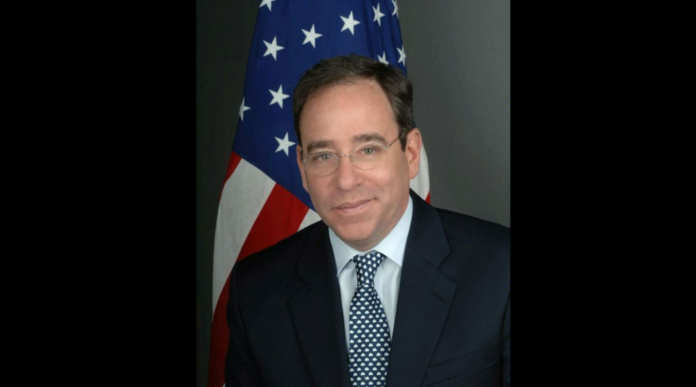
Biden Taps Tom Nides, An Obama Administration Official, To Be Ambassador To Israel

0

WASHINGTON (JTA) — President Joe Biden will name Tom Nides, a deputy secretary of state in the Obama administration, to be his ambassador to Israel.

The Times of Israel first reported the decision. Multiple sources close to the Biden administration confirmed to the Jewish Telegraphic Agency that Nides was the pick for ambassador and would be announced soon. The White House said it had nothing yet to announce.

It was down to Nides and Robert Wexler, a former Florida congressman who for years has helmed the Center for Middle East Peace, a group that advocates backchannel diplomacy between Israel and the Palestinians.

A number of centrist and liberal pro-Israel figures were pushing Wexler, believing he had the deeper experience because of his ties and frequent visits to the region. Both Nides and Wexler are Jewish.

Nides, a banker, was the deputy secretary of state for management and resources from 2011 to 2013 and had good relations with Israeli diplomats, although he was less involved in substantive diplomacy. Michael Oren, the Israeli ambassador in his book “Ally” chronicling his ambassadorship, described Nides as “irreverent, hard-working, highly intelligent, and warm.” Oren said Nides quickly earned his “affection and trust.”

Wexler in an interview said he called Nides to congratulate him and was ready to assist him in any way he needed.

The former congressman said his experience in the region, which included outreach to actors on both sides perceived to be extremist, was that the United States would have to accommodate more “illiberal” elements if it wanted to advance peace.

“It’s critical that the policymakers of the U.S. government engage with illiberal actors in the Palestinian territories and in Israel,” Wexler said. “That’s how we will alter the political dynamics in a favorable manner.”

Florida Gov. DeSantis signs law to fight Big Tech censorship

0

“We will be the first state to hold Big Tech accountable so that everyday people who use their platforms have an ability to fight back,” said DeSantis.

By Josh Plank, World Israel News

Florida Governor Ron DeSantis signed the “Big Tech Bill” on Monday, making Florida the first U.S. state to give its citizens the legal power to hold social media companies accountable for unfair censorship practices.

“When Big Tech censors enforce their rules inconsistently to discriminate in favor of the dominant ideology in Silicon Valley, they will be held accountable in the State of Florida,” said DeSantis at the bill signing ceremony.

“With the reform we will sign today, we will be the first state to hold Big Tech accountable so that everyday people who use their platforms have an ability to fight back,” he said.

According to DeSantis, the power of social media companies has been effectively unchecked up to this point.

“They evade accountability by claiming they’re just neutral platforms, even as they amplify partisan agendas and censor dissent. So every day, they act as the proverbial Big Brother, and 2021 looks an awful lot like the fictitious 1984,” he said.

The new law will allow Floridians who have been deplatformed to sue social media companies for damages, and courts may award up to $100,000 for each proven claim.

It will also allow Florida’s attorney general to bring legal action against technology companies under the state’s Unfair and Deceptive Trade Practices Act.

In addition, the law prohibits Big Tech from deplatforming Florida’s political candidates. The state’s election commission will impose fines of $250,000 per day on any social media company that deplatforms any candidate for statewide office, and $25,000 per day for deplatforming candidates for non-statewide offices.

However, the law is not retroactive, so social media bans on former President Donald Trump and former congressional candidate Laura Loomer, who are both Florida residents, remain in effect.

DeSantis did comment on the deplatforming of the former president, however, saying, “When you deplatform the President of the United States but you let Ayatollah Khamenei talk about killing Jews, that is wrong,” he said.

Loomer, who is running again for U.S. Congress in Florida’s 21st District, said in a statement, “I want to thank the Governor of the Great State of Florida, Ron DeSantis, who truly understands that Big Tech tyranny is an existential threat to our Constitutional Republic, to free and fair elections, and to free speech – which is the bedrock of our Constitution.”

Irish parliament to vote on motion to expel Israeli ambassador

0

Motion by socialist party not expected to pass and does not have support of government.

A motion by several members of the lower house of the Irish parliament to expel the Israeli ambassador will be voted on this week.

The motion, led by Ireland’s socialist party, People Before Profit, claims that Ambassador Ophir Kariv is an affront to Ireland and alleges that “Israel’s military actions in Gaza and similar murderous attacks over recent years and the siege of Gaza amount to war crimes,” according to the Algemeiner.

It urges the government to expel Kariv in response to “violence against Palestinians.” So far, the motion has only been signed by 11 Irish MPs out of 160 members of the lower house.

Irish Foreign Minister Simon Coveney said that expelling Kariv “won’t save a single Palestinian child or Israeli.”

Expelling an ambassador is not within the purview of the lower house, but something only the government could enact.

Coveney and the country’s Prime Minister Michael Martin are not expected to support the motion.


Source: Arutz Sheva

Blinken in Jerusalem: US Will Aid Gaza Without Helping Hamas

0

Secretary of State Antony Blinken said the U.S. would work with its partners “to ensure that Hamas does not benefit from the reconstruction assistance” to Gaza.

U.S. Secretary of State Antony Blinken vowed Tuesday to “rally international support” to aid Gaza following a devastating war there – while keeping any assistance out of the hands of its rulers, members of the Hamas terror group.

Hamas and Palestinian Jihad launched the 11-day war, murdering Israeli civilians, including a five-year-old boy, with indiscriminate rocket fire at Israeli population centers.

The truce that came into effect Friday has so far held, but it did not address any of the underlying issues in the Israeli-Palestinian conflict, something Blinken acknowledged after meeting with Israeli Prime Minister Benjamin Netanyahu.

“We know that to prevent a return to violence, we have to use the space created to address a larger set of underlying issues and challenges. And that begins with tackling the grave humanitarian situation in Gaza and starting to rebuild,” he said.

“The United States will work to rally international support around that effort while also making our own significant contributions.” He added that the U.S. would work with its partners “to ensure that Hamas does not benefit from the reconstruction assistance.”

“There will be no peace until the Palestinians recognize Israel as a Jewish state.”

Blinken will not be meeting with Hamas, a genocidal Islamic terror group that does not recognize Israel’s right to exist.

Blinken addressed the larger conflict, saying “we believe that Palestinians and Israelis equally deserve to live safely and securely, to enjoy equal measures of freedom, opportunity and democracy, to be treated with dignity.”

Netanyahu warned of a “very powerful” response if Hamas breaks the cease-fire.

Netanyahu spoke of “building economic growth” in Judea and Samaria, but said there will be no peace until the Palestinians recognize Israel as a “Jewish state.” The Palestinians have long objected to that language.

On Monday, an Arab terrorist stabbed two Israelis in Jerusalem. Police shot and killed the assailant.

Blinken will head to Ramallah later Tuesday to meet with Palestinian President Mahmoud Abbas, who has no power in Gaza and was sidelined by recent events.

Abbas heads the internationally backed Palestinian Authority, which administers parts of Judea and Samaria but whose forces were driven from Gaza when Hamas seized power there in a bloody coup in 2007.

Abbas, who called off the first Palestinian elections in 15 years last month when it appeared his fractured Fatah movement would suffer an embarrassing defeat, is seen by many Palestinians as having lost all legitimacy.

Blinken will also visit neighboring Egypt and Jordan, which have acted as mediators in the conflict. Egypt succeeded in brokering the Gaza truce.

(United with Israel).

Mysterious Air Base Being Built On Volcanic Island Off Yemen

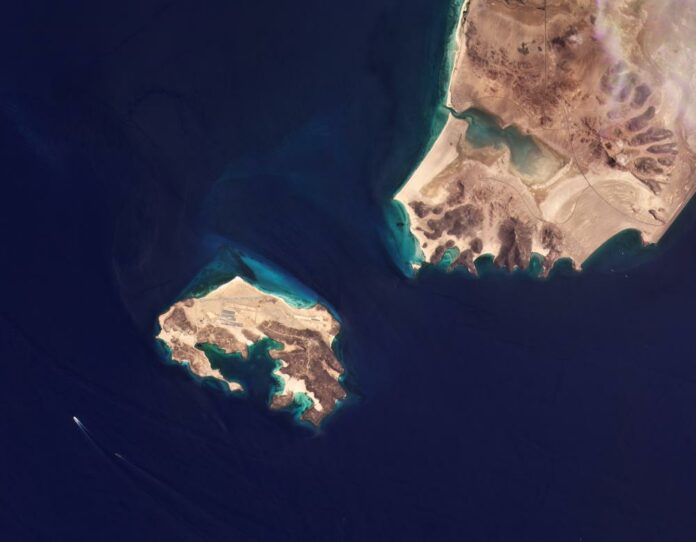
A mysterious air base is being built on a volcanic island off Yemen that sits in one of the world’s crucial maritime chokepoints for both energy shipments and commercial cargo.

While no country has claimed the Mayun Island air base in the Bab el-Mandeb Strait, shipping traffic associated with a prior attempt to build a massive runway across the 5.6-kilometer (3.5 mile)-long island years ago links back to the United Arab Emirates.

Officials in Yemen’s internationally recognized government now say the Emiratis are behind this latest effort as well, even though the UAE announced in 2019 it was withdrawing its troops from a Saudi-led military campaign battling Yemen’s Houthi rebels.

“This does seem to be a longer-term strategic aim to establish a relatively permanent presence,” said Jeremy Binnie, the Mideast editor at the open-source intelligence company Janes who has followed construction on Mayun for years. It’s “possibly not just about the Yemen war and you’ve got to see the shipping situation as fairly key there.”

Emirati officials in Abu Dhabi and the UAE’s Embassy in Washington did not respond to requests for comment.

The runway on Mayun Island allows whoever controls it to project power into the strait and easily launch airstrikes into mainland Yemen, convulsed by a years long bloody war. It also provides a base for any operations into the Red Sea, the Gulf of Aden and nearby East Africa.

Satellite images from Planet Labs Inc. obtained by The Associated Press showed dump trucks and graders building a 1.85 kilometer (6,070-foot) runway on the island on April 11. By May 18, that work appeared complete, with three hangars constructed on a tarmac just south of the runway.

A runway of that length can accommodate attack, surveillance and transport aircraft. An earlier effort begun toward the end of 2016 and later abandoned had workers try to build an even-larger runway over 3 kilometers (9,800 feet) long, which would allow for the heaviest bombers.

Military officials with Yemen’s internationally recognized government, which the Saudi-led coalition has backed since 2015, say the UAE is building the runway. The officials, speaking to the AP on condition of anonymity as they didn’t have authorization to brief journalists, say Emirati ships transported military weapons, equipment and troops to Mayun Island in recent weeks.

The military officials said recent tension between the UAE and Yemeni President Abed Rabbo Mansour Hadi came in part from an Emirati demand for his government to sign a 20-year lease agreement for Mayun. Emirati officials have not acknowledged any disagreement.

The initial, failed construction project came after Emirati and allied forces retook the island from Iranian-backed Houthi militants in 2015. By late 2016, satellite images showed construction underway there.

Tugboats associated with Dubai-based Echo Cargo & Shipping LLC and landing craft and carriers from Abu Dhabi-based Bin Nawi Marine Services LLC helped bring equipment to the island in that first attempt, according to tracking signals recorded by data firm Refinitiv. Satellite photos at the time show they offloaded the gear and vehicles at a temporary beachside port.

Echo Cargo & Shipping declined to comment, while Bin Nawi Marine Services did not respond to a request for comment. Recent shipping data shows no recorded vessels around Mayun, suggesting whoever provided the sealift for the latest construction turned off their boats’ Automatic Identification System tracking devices to avoid being identified.

Construction initially stopped in 2017, likely when engineers realized they couldn’t dig through a portion of the volcanic island’s craggy features to incorporate the site of the island’s old runway. The building restarted in earnest on the new runway site around Feb. 22, satellite photos show, several weeks after President Joe Biden announced he would end U.S. support for the Saudi-led offensive against the Houthis.

The apparent decision by the Emiratis to resume building the air base comes after the UAE dismantled parts of a military base it ran in the East African nation of Eritrea as a staging ground for its Yemen campaign.

While the Horn of Africa “has become a dangerous place” for the Emiratis due to competitors and local war risks, Mayun has a small population and offers a valuable site for monitoring the Red Sea, said Eleonora Ardemagni, an analyst at the Italian Institute for International Political Studies. The region has seen a rise in attacks and incidents.

“The Emiratis have been shifting from a power-projection foreign policy to a power-protection foreign policy,” Ardemagni said. It increases “their capacity to monitor what happens and to prevent possible threats by non-state actors close to Iran.”

The expeditionary Quds Force of Iran’s paramilitary Revolutionary Guard was said to run a similar operation on a cargo ship long stationed nearby off Yemen before being apparently targeted by an Israeli attack.

Mayun, also known as Perim Island, sits some 3.5 kilometers (2 miles) off the southwestern edge of Yemen. World powers have recognized the island’s strategic location for hundreds of years, especially with the opening of the Suez Canal linking the Mediterranean and Red Seas.

The British kept the island up until their departure from Yemen in 1967. The Soviet Union, allied with South Yemen’s Marxist government, upgraded Mayun’s naval facilities but used them “only infrequently,” according a 1981 CIA analysis. That’s likely due to needing to bring water and supplies onto the island. That will affect the new air base as well as Mayun has no modern port, said Binnie, the Janes analyst.

The base still may interest American forces, however. U.S. troops operated from Yemen’s al-Anad Air Base running a campaign of drone strikes targeting al-Qaida in the Arabian Peninsula until the Houthi advance forced them to withdraw in 2015. The Defense Department later acknowledged on-the-ground American troops supported the Saudi-led coalition around Mukalla in 2016. Special forces raids and drones also have targeted the country.

The U.S. military’s Central Command did not respond to a request for comment. The CIA declined to comment.

(AP)

Source: The Yeshiva World

WP Twitter Auto Publish Powered By : XYZScripts.com