Home Blog Page 1118

Postal Service Proposes 5 Cent Increase To First-Class Stamp

Postal Service Proposes 5 Cent Increase To First-Class Stamp

The U.S. Postal Service is seeking to increase the price of its first-class stamp by 5 cents to 55 cents to help stem its mounting red ink.

If approved by regulators, the 10 percent increase to the cost of mailing a 1-ounce letter would be the biggest since 1991. The price of each additional ounce would go down, from 21 cents to 15 cents.

The proposed increase would take effect in January. It comes as President Donald Trump has criticized the Postal Service for “losing a fortune” by not charging higher shipping rates for online retailers such as Amazon.com.

The Postal Service has seen years of financial losses as an unrelenting drop in mail volume and costs of its health care and pension obligations outweighed strong gains in package deliveries.

(AP)

Rabbi Lord Jonathan Sacks – A Drama in Four Acts (Noach 5779)

0

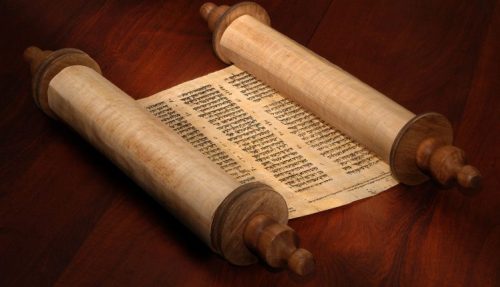
The parsha of Noach brings to a close the eleven chapters that precede the call to Abraham and the beginning of the special relationship between him and his descendants, and God. During these eleven chapters, the Torah gives prominence to four stories: Adam and Eve, Cain and Abel, Noah and the generation of the Flood, and the Tower of Babel. Each of these stories involves an interaction between God and humanity. Each represents another step in the maturation of humanity. If we trace the course of these stories, we can discover a connection that goes deeper than chronology, a developmental line in the narrative of the evolution of humanity.

The first story is about Adam and Eve and the forbidden fruit. Once they have eaten, and discovered shame, God asks them what they have done:

And He said, “Who told you that you were naked? Have you eaten from the tree that I commanded you not to eat from?”

The man said, “The woman You put here with me – she gave me some fruit from the tree, and I ate it.”

Then the Lord God said to the woman, “What is this you have done?”

The woman said, “The serpent deceived me, and I ate.” (3:11 –13)

Faced with primal failure, the man blames the woman, the woman blames the serpent. Both deny personal responsibility: it wasn’t me; it wasn’t my fault. This is the birth of what today is called the victim culture.

The second drama is about Cain and Abel. Both bring offerings. Abel’s is accepted, Cain’s is not – why this is so is not relevant here.[1] In his anger, Cain kills Abel. Again there is an exchange between a human being and God:

Then the Lord said to Cain, “Where is your brother Abel?”

“I don’t know,” he replied. “Am I my brother’s keeper?”

The Lord said, “What have you done? Listen! Your brother’s blood cries out to Me from the ground (49:9-10).

Once again the theme is responsibility, but in a different sense. Cain does not deny personal responsibility. He does not say, “It wasn’t me.” He denies moral responsibility. “I am not my brother’s keeper.” I am not responsible for his safety. Yes, I did it because I felt like it. Cain has not yet learned the difference between “I can” and “I may.”

The third is the story of Noah. Noah is introduced with great expectations: “He will comfort us” (5:29), says his father Lamech, giving him his name. This is the one to redeem man’s failure, to offer comfort for “the earth which God cursed.” Yet though Noah is a righteous man, he is not a hero. Noah does not save humanity. He saves only himself, his family and the animals he takes with him in the ark. The Zohar contrasts him unfavourably with Moses: Moses prayed for his generation, Noah did not. In the end, his failure to take responsibility for others diminishes him as well: in the last scene we see him drunk and exposed in his tent. In the words of the Midrash, “he profaned himself and became profaned.”[2] One cannot be a sole survivor and still survive. Sauve-qui- peut (“let everyone who can, save himself”) is not a principle of Judaism. We have to do what we can to save others, not just ourselves. Noah failed the test of collective responsibility.

The fourth is the enigmatic story of the Tower of Babel. The sin of its builders is unclear, but is indicated by two key words in the text. The story is framed, beginning and end, with the phrase kol ha’aretz, “the whole earth” (11:1, 8). In between, there is a series of similar sounding words: sham (there), shem (name), and shamayim (heaven). The story of Babel is a drama about the two key words of the first sentence of the Torah: “In the beginning God created heaven (shamayim) and earth (aretz)” (1:1). Heaven is the domain of God; earth is the domain of man. By attempting to build a tower that would “reach heaven,” the builders of Babel were men trying to be like gods.

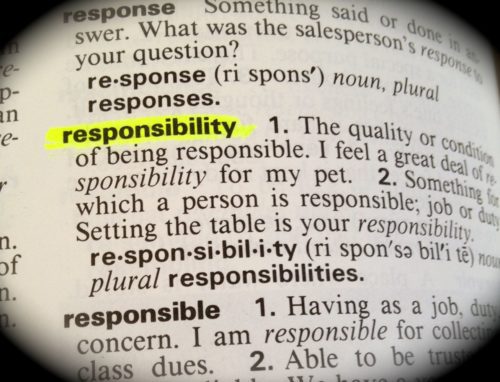
This story seems to have little to do with responsibility, and to be focusing on a different issue than do the first three. However, not accidentally does the word responsibility suggest response-ability. The Hebrew equivalent, ah?rayut, comes from the word ah?er, meaning “an other.” Responsibility is always a response to something or someone. In Judaism, it means response to the command of God. By attempting to reach heaven, the builders of Babel were in effect saying: we are going to take the place of God. We are not going to respond to His law or respect His boundaries, not going to accept His Otherness. We are going to create an environment where we rule, not Him, where the Other is replaced by Self. Babel is the failure of ontological responsibility – the idea that something beyond us makes a call on us.

What we see in Genesis 1–11 is an exceptionally tightly constructed four-act drama on the theme of responsibility and moral development, presenting the maturation of humanity, as echoing the maturation of the individual. The first thing we learn as children is that our acts are under our control (personal responsibility). The next is that not everything we can do, we may do (moral responsibility). The next stage is the realisation that we have a duty not just to ourselves but to those on whom we have an influence (collective responsibility). Ultimately we learn that morality is not a mere human convention, but is written into the structure of existence. There is an Author of being, therefore there is an Authority beyond mankind to whom, when acting morally, we respond (ontological responsibility).

This is developmental psychology as we have come to know it through the work of Jean Piaget, Eric Erikson, Lawrence Kohlberg and Abraham Maslow. The subtlety and depth of the Torah is remarkable. It was the first, and is still the greatest, text on the human condition and our psychological growth from instinct to conscience, from “dust of the earth” to the morally responsible agent the Torah calls “the image of God.”

Shabbat Shalom,


[1] For more on Cain and Abel, see the essay “Violence in the Name of God”, Covenant and Conversation: Genesis, p29.

[2] Bereishit Rabbah 36:3.


An international religious leader, philosopher, award-winning author and respected moral voice, Rabbi Lord Jonathan Sacks was awarded the 2016 Templeton Prize in recognition of his “exceptional contributions to affirming life’s spiritual dimension.” Described by H.R.H. The Prince of Wales as “a light unto this nation” and by former British Prime Minister Tony Blair as “an intellectual giant”, Rabbi Sacks is a frequent and sought-after contributor to radio, television and the press both in Britain and around the world.
Since stepping down as the Chief Rabbi of the United Hebrew Congregations of the Commonwealth – a position he served for 22 years between 1991 and 2013 – Rabbi Sacks has held a number of professorships at several academic institutions including Yeshiva University and King’s College London. In addition to his writing and lecturing, he currently serves as the Ingeborg and Ira Rennert Global Distinguished Professor at New York University. Rabbi Sacks has been awarded 17 honorary doctorates including a Doctor of Divinity conferred to mark his first ten years in office as Chief Rabbi, by the then Archbishop of Canterbury, Lord Carey.
Rabbi Sacks is the author of over 30 books. Among them, Rabbi Sacks has published a new English translation and commentary for the Koren Sacks Siddur, the first new Orthodox siddur in a generation, as well as powerful commentaries for the Rosh HaShana, Yom Kippur, Pesach, Shavuot and Sukkot Machzorim. His most recent work, Not in God’s Name: Confronting Religious Violence was awarded a 2015 National Jewish Book Award in America and was a top ten Sunday Times bestseller in the UK. Past works include: The Great Partnership: God, Science and the Search for Meaning; The Dignity of Difference: How to Avoid the Clash of Civilizations, winner of the Grawemeyer Prize for Religion in 2004 for its success in defining a framework for interfaith dialogue between people of all faith and of none; To Heal a Fractured World: The Ethics of Responsibility; and A Letter in the Scroll: On Being Jewish, winner of a National Jewish Book Awards in 2000. His Covenant & Conversationcommentaries on the weekly Torah portion are read in Jewish communities around the world.
In recognition of his work, Rabbi Sacks has received, among others, the Jerusalem Prize in 1995 for his contribution to diaspora Jewish life, The Ladislaus Laszt Ecumenical and Social Concern Award from Ben Gurion University in Israel in 2011, The Guardian of Zion Award from the Ingeborg Rennert Center for Jerusalem Studies at Bar-Ilan University in 2014, and The Katz Award in recognition of his contribution to the practical analysis and application of Halakha in modern life in Israel in 2014. He was named as The Becket Fund’s 2014 Canterbury Medalist for his role in the defence of religious liberty in the public square; won a Bradley Prize in 2016 in recognition of being “a leading moral voice in today’s world”; and in 2017, he was awarded the Irving Kristol Award from the American Enterprise Institute for his “remarkable contributions to philosophy, religion, and interfaith discourse… as one of the world’s greatest living public intellectuals.” In 2018, he was given the Lifetime Achievement Award by The London Jewish News in recognition of his services to the Jewish world and wider society.
Rabbi Sacks was knighted by Her Majesty The Queen in 2005 and made a Life Peer, taking his seat in the House of Lords in October 2009. Born in 1948 in London, he has been married to Elaine since 1970. They have three children and several grandchildren.


Powerful Hurricane Michael Slams Florida And It Isn’t Done Yet

0

Powerful Hurricane Michael Slams Florida And It Isn’t Done Yet


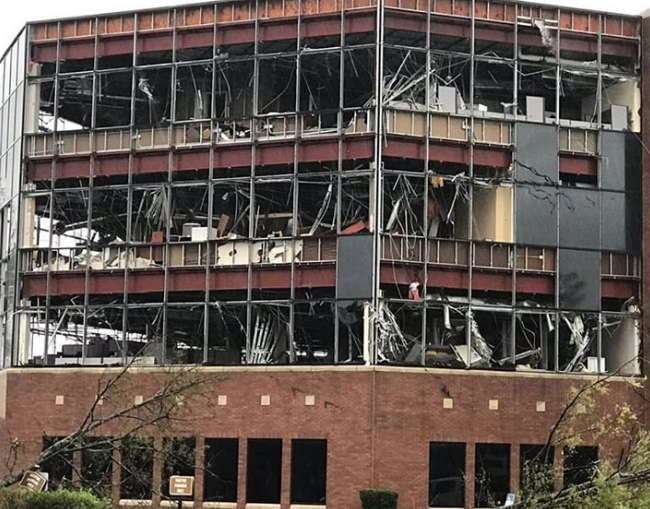
The third-most powerful hurricane to hit the U.S. mainland in recorded history left a wide path of destruction, destroying homes and shopping centers and felling trees that killed at least two people in Florida and Georgia. And it’s not done yet.

Hurricane Michael finally weakened to a tropical storm on Thursday, no longer a Category 4 monster packing 155 mph (250 kph) winds. But it was still menacing the Southeast with heavy rains, blustery winds and possible spinoff tornadoes, soaking areas swamped by epic flooding last month from Hurricane Florence.

By 5 a.m., Michael’s eye was about 45 miles (72 kilometers) west of Augusta, Georgia, packing top winds of 50 mph (80 kph) and moving at 21 mph (33 kph) into South Carolina, the National Hurricane Center in Miami said.

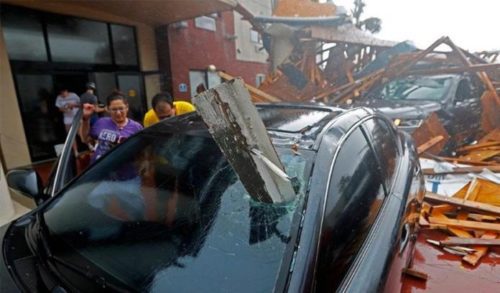
Thousands of law enforcement officers and search and rescue teams rolled out in its wake to find survivors amid the wreckage of homes where people defied evacuation orders. Michael washed away white sand beaches, hammered military bases and destroyed coastal communities, stripping trees to stalks, shredding roofs, toppling trucks and pushing boats into buildings.


Many homes were ripped apart or washed away altogether in Mexico Beach, a town of 1,000 where the hurricane made landfall and the storm surge pushed lead-grey water up to the rooftops. Authorities said falling trees killed a man outside Tallahassee, Florida, and an 11-year-old girl in southwest Georgia.

It will take some time for residents of north Florida to take stock of the enormity of the disaster. Reaching the worst-hit areas wasn’t easy: Authorities closed Interstate 10, the main east-west route along Florida’s Panhandle, for 80 miles to clear debris, the Florida Highway Patrol said.

Damage in Panama City, just west of where Michael came ashore Wednesday afternoon, was so extensive that broken and uprooted trees and downed power lines lay nearly everywhere. Roofs were peeled away, sent airborne, and homes were split open by fallen trees. Twisted street signs lay on the ground. Palm trees whipped wildly in the winds. More than 380,000 homes and businesses were without power at the height of the storm.

Vance Beu, 29, was staying with his mother at her home, Spring Gate Apartments, a complex of single-story wood frame buildings where they piled up mattresses around themselves for protection. A pine tree punched a hole in their roof and his ears even popped when the barometric pressure went lower. The roar of the winds, he said, sounded like a jet engine.

“It was terrifying, honestly. There was a lot of noise. We thought the windows were going to break at any time,” Beu said.

Sally Crown rode out Michael on the Florida Panhandle thinking at first that the worst damage was the many trees downed in her yard. But after the storm passed, she emerged to check on the cafe she manages and discovered a scene of breathtaking destruction.

“It’s absolutely horrendous. Catastrophic,” Crown said. “There’s flooding. Boats on the highway. A house on the highway. Houses that have been there forever are just shattered.”

A Panhandle man was killed by a tree that toppled on a home, Gadsden County Sheriff’s Office spokeswoman Anglie Hightower said. But she added emergency crews trying to reach the home were hampered by downed trees and debris blocking roadways. The debris was a problem in many coastal communities and still hundreds of thousands of people were also left without power.

Gov. Rick Scott said search and rescue efforts would be “aggressive.”

“Hurricane Michael cannot break Florida,” Scott vowed.

Michael sprang quickly from a weekend tropical depression, going from a Category 2 on Tuesday to a Category 4 by the time it came ashore. More than 375,000 people up and down the Gulf Coast were ordered or urged to evacuate, but it moved so fast that people didn’t have much time to prepare, and emergency authorities lamented that many ignored the warnings , thinking they could ride it out.

In Panama City, plywood and metal flew off the front of a Holiday Inn Express. Part of the awning fell and shattered the glass front door of the hotel, and the rest of the awning wound up on vehicles parked below it.

“Oh my God, what are we seeing?” said evacuee Rachel Franklin, her mouth hanging open.

Based on its internal barometric pressure, Michael was the third most powerful hurricane to hit the U.S. mainland, behind the unnamed Labor Day storm of 1935 and Camille in 1969. Based on wind speed, it was the fourth-strongest, behind the Labor Day storm (184 mph, or 296 kph), Camille and Andrew in 1992.

The storm is likely to fire up the debate over global warming. Scientists say global warming is responsible for more intense and more frequent extreme weather, such as storms, droughts, floods and fires, and Michael was fueled by abnormal water temperatures in the Gulf — 4-to-5 degrees above the historic norm for this time of year. But without extensive study, they cannot directly link a single weather event to the changing climate.

After Michael left the Panhandle late Wednesday, Kaylee O’Brien was crying as she sorted through the remains of the apartment she shared with three roommates at Whispering Pines apartments, where the smell of broken pine trees was thick in the air. Four pine trees had crashed through the roof of her apartment, nearly hitting two people.

Her biggest worry: finding her missing 1-year-old Siamese cat, Molly.

“We haven’t seen her since the tree hit the den. She’s my baby,” a distraught O’Brien said, her face wet with tears.

 

Source: The Yeshiva World

New Israeli-US Startup Harnesses AI To Help Cancer Patients Find The Right Clinical Trials

0

New Israeli-US Startup Harnesses AI To Help Cancer Patients Find The Right Clinical Trials


Cancer patients often face long and difficult battles against the disease, ranked by the World Health Organization as among the top ten causes of death worldwide. Starting the process of finding appropriate treatment can be a trying, difficult experience as patients navigate traditional chemotherapy, radiation, and surgery treatments, as well as thousands of clinical trials for experimental cancer drugs, and alternative treatment offerings.

Some companies are developing ways to facilitate patients’ efforts to find the right treatment. Using artificial intelligence, machine learning, and automation, they develop matching services and search engines to help patients find an appropriate course of action, especially when it comes to clinical trials through which doctors hope to find and improve on new treatments and drugs for cancer.

Belong, for example, a New York-based company founded by two Israeli entrepreneurs, has built a social network for cancer patients that enables easier access to health professionals and patients with similar conditions. The Belong app serves as a platform through which patients can receive responses by professionals, converse with other patients, and use Belong’s clinical trial matching service.

However, clinical trial matching has proven a particularly complex business. Google searches can easily overwhelm cancer patients seeking the right experimental treatment. Personal physicians and oncologists have limited knowledge about the thousands of options available around the globe. According to a 2007 report in the magazine Applied Clinical Trials, even companies specializing in clinical trial matching can “introduc[e] additional complexity” into patients’ lives and bring with them the “obvious conflict of interest potential with matching services being provided by sponsors.”

Perhaps because of these difficulties, clinical trial enrollment is now declining.


To continue reading this article on NoCamels.com, click here.”


Amazon Draws Fire For ‘Wildly Irresponsible’ Scheme Supporting Islamic Extremists

0

Amazon Draws Fire For ‘Wildly Irresponsible’ Scheme Supporting Islamic Extremists


Amazon has enabled customers to donate to a hard-line Islamist charity whose founder supports child marriage, female genital mutilation and believes men should be allowed to hit their wives, an investigation by The Times of London has found.

According to the newspaper, the company agreed to host the Muslim Research and Development Fund (MRDF) as part of its charitable scheme Amazon Smile, which launched in the U.K. last November.

The program allows Amazon customers to donate 0.5 percent of the money they have spent on a product using the online store to a charity of their choice.

The Times revealed that MRDF is one of 6,000 charities to have joined the Amazon Smile program despite its founder Haitham al-Haddad’s extremist views.

These include describing homosexuality as a “crime against humanity,” stating that all Western women should wear the niqab and calling Christians and Jews the “enemies of Allah,” as well as warning Muslims not to integrate, according to a report by the neoconservative foreign policy think tank Henry Jackson Society.

Haddad, originally from Saudi Arabia, has also been described as the “one of the most dangerous men in Britain” by the head of the Quilliam Foundation, an anti-extremism think tank. Sara Khan, who leads the U.K.-based Commission for Countering Terrorism, described MRDF as “the main Salafist organization in the UK.”

“Haitham al-Haddad’s views are misogynistic, racist and homophobic,” Khan told The Times. “They promote a supremacist ‘us versus them’ world view that wrongly makes Muslims feel that they can’t be fully British.”


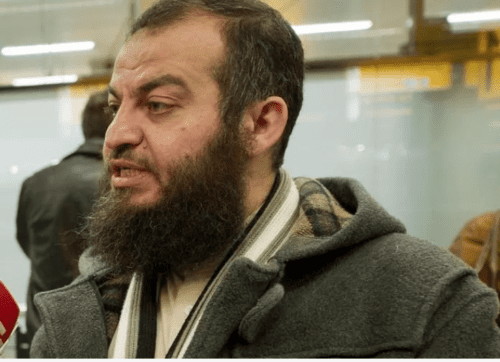
British Islamic scholar Sheikh Haitham al-Haddad arrives at Amsterdam’s Schiphol airport to take part in a debate about Islam, at De Balie, a center for politics, culture and media, in Amsterdam, on February 17, 2012. Amazon gives charitable support to Haddad’s charity despite his backing child marriage and female genital mutilation.
MARCEL ANTONISSE/AFP/GETTY IMAGES .


British Islamic scholar Sheikh Haitham al-Haddad arrives at Amsterdam’s Schiphol airport to take part in a debate about Islam, at De Balie, a center for politics, culture and media, in Amsterdam, on February 17, 2012. Amazon gives charitable support to Haddad’s charity despite his backing child marriage and female genital mutilation.

According to The Times, al-Haddad said “the younger the better” with regard to teenage girls getting married. “It’s not necessarily a problem, biologically, if a girl of 12 or 13 becomes pregnant,” he added.

He also believed “a man should not be questioned why he hit his wife,” and has stated, “Men should toil outside the house. Women should be devoted wives and mothers.”

In the wake of the catastrophic 2011 tsunami in Japan, Haddad said Allah allowed thousands to die to “punish the Japanese for their refusal to submit to him.”

Haddad also declared his support for stoning as a punishment for adultery and mandatory capital punishment for apostasy.

The Henry Jackson report “Wolves in Sheep’s Clothing: How Islamist Extremists Exploit the U.K. Charitable Sector,” states Haddad does not call for a violent creation of an Islamic state and has spoken out against terrorist attacks in the past.

“In other words, he has condemned the use of violence and terrorism, but advocates establishing political Islam through the existing political process,” the report says.

In a statement, Amazon said they relied on the official charity regulator, The Charity Commission for England and Wales, to determine which organizations would be allowed to take part in Amazon Smile.

“If a charity no longer has charitable status because that organization supports, encourages or promotes intolerance or discrimination and has been removed from the Commission’s register, we will remove them from the service,” a spokesperson told Newsweek.

“Due to the serious nature of these concerns, we have referred these allegations to the Commission and will be conducting a full review to ensure they do not violate our policies.”

Amazon has not said how much money MRDF received through their charity scheme, but it is believed that the total figure is likely to be small.

Emma Webb, a research fellow with Henry Jackson Society’s Centre on Radicalisation and Terrorism, criticized Amazon for “channelling ordinary shoppers’ money into the hands of intolerant extremists” by supporting MRDF with the scheme. “That’s wildly irresponsible. It’s giving charities like MRDF a veneer of respectability they don’t deserve.”

Source: Newsweek


Russian Space Rocket Fails In Mid-air, Two-man U.S.-Russian Crew Lands Safely

0

Russian Space Rocket Fails In Mid-air, Two-man U.S.-Russian Crew Lands Safely


Baikonur, Kazakhstan – Two astronauts from the U.S. and Russia were safe Thursday after an emergency landing in the steppes of Kazakhstan following the failure of a Russian booster rocket carrying them to the International Space Station.


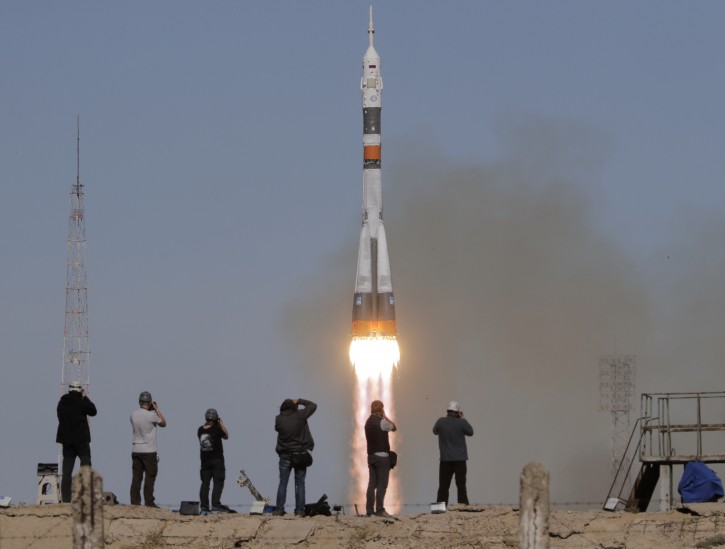
NASA astronaut Nick Hague and Roscosmos’ Alexei Ovchinin lifted off as scheduled at 2:40 p.m. (0840 GMT; 4:40 a.m. EDT) Thursday from the Russian-leased Baikonur cosmodrome in Kazakhstan, but their Soyuz booster rocket failed about two minutes after the launch.

The rescue capsule automatically jettisoned from the booster and went into a ballistic descent, landing at a sharper than normal angle and subjecting the crew to heavy gravitational force.

NASA Administrator Jim Bridenstine, who watched the launch at Baikonur along with his Russian counterpart, tweeted that Hague and Ovchinin are in good condition. He added that a “thorough investigation into the cause of the incident will be conducted.”

The capsule landed about 20 kilometers (12 miles) east of the city of Dzhezkazgan in Kazakhstan. The astronauts were flown by helicopter to Dzhezkazgan and will later be taken to Star City, Russia’s space training center outside Moscow.

The launch failure marks an unprecedented mishap for the Russian space program, which has been dogged by a string of launch failures and other incidents in recent years.

“Thank God, the crew is alive,” Russian President Vladimir Putin’s spokesman, Dmitry Peskov, told reporters when it became clear that the crew had landed safely. He added that the president is receiving regular updates about the situation.

It was to be the first space mission for Hague, who joined NASA’s astronaut corps in 2013. Ovchinin spent six months on the orbiting outpost in 2016.

The astronauts were to dock at the International Space Station six hours after the launch, but the three-stage Soyuz booster suffered an unspecified failure of its second stage. Search and rescue teams were immediately scrambled to recover the crew and paratroopers were dropped from a plane to reach the site and help the rescue effort.

Dzhezkazgan is about 450 kilometers (280 miles) northeast of Baikonur, and spacecraft returning from the ISS normally land in that region.

Russian Deputy Prime Minister Yuri Borisov said all manned launches will be suspended pending an investigation into the cause of the failure. He added that Russia will fully share all relevant information with the U.S.

Earlier this week, Bridenstine emphasized that collaboration with Russia’s Roscosmos remains important.

Relations between Moscow and Washington have sunk to post-Cold War lows over the crisis in Ukraine, the war in Syria and allegations of Russian meddling in the 2016 U.S. presidential vote, but they have maintained cooperation in space research.

U.S. astronaut Nick Hague, right and Russian cosmonaut Alexey Ovchinin, member of the main crew of the expedition to the International Space Station (ISS), walk prior the launch of Soyuz MS-10 space ship at the Russian leased Baikonur cosmodrome, Kazakhstan, Thursday, Oct. 11, 2018.  (AP Photo/Dmitri Lovetsky, Pool)
U.S. astronaut Nick Hague, right and Russian cosmonaut Alexey Ovchinin, member of the main crew of the expedition to the International Space Station (ISS), walk prior the launch of Soyuz MS-10 space ship at the Russian leased Baikonur cosmodrome, Kazakhstan, Thursday, Oct. 11, 2018.  (AP Photo/Dmitri Lovetsky, Pool)

The Russian Soyuz spacecraft is currently the only vehicle for ferrying crews to the International Space Station following the retirement of the U.S. space shuttle fleet. Russia stands to lose that monopoly in the coming years with the arrival of SpaceX’s Dragon v2 and Boeing’s Starliner crew capsules.

Thursday’s failure was the first manned launch failure for the Russian space program since September 1983 when a Soyuz exploded on the launch pad. Soviet cosmonauts Vladimir Titov and Gennady Strekalov jettisoned and landed safely near the launch pad, surviving without injuries.

Russia has continued to rely on Soviet-designed booster rockets for launching commercial satellites, as well as crews and cargo to the International Space Station.

While Russian rockets had earned a stellar reputation for their reliability in the past, a string of failed launches in recent years has called into doubt Russia’s ability to maintain the same high standards of manufacturing.

Glitches found in Russia’s Proton and Soyuz rockets in 2016 were traced to manufacturing flaws at the plant in Voronezh. Roscosmos sent more than 70 rocket engines back to production lines to replace faulty components, a move that resulted in a yearlong break in Proton launches and badly dented Russia’s niche in the global market for commercial satellite launches.

In August, the International Space Station crew spotted a hole in a Russian Soyuz capsule docked to the orbiting outpost that caused a brief loss of air pressure before being patched.

Roscosmos chief Dmitry Rogozin has raised wide consternation by saying that the leak was a drill hole that was made intentionally during manufacturing or in orbit. He didn’t say if he suspected any of the current crew of three Americans, two Russians and a German aboard the station.


Source: VosIzNeias

Swedish Jewish politician’s house burned in suspected anti-Semitic attack

Swedish Jewish politician’s house burned in suspected anti-Semitic attack

Victim had been previously subject to hate crime; incident is the second arson attack this year on home of someone ‘active on Jewish issues’; no suspects arrested

10 October 2018, 5:43 pm


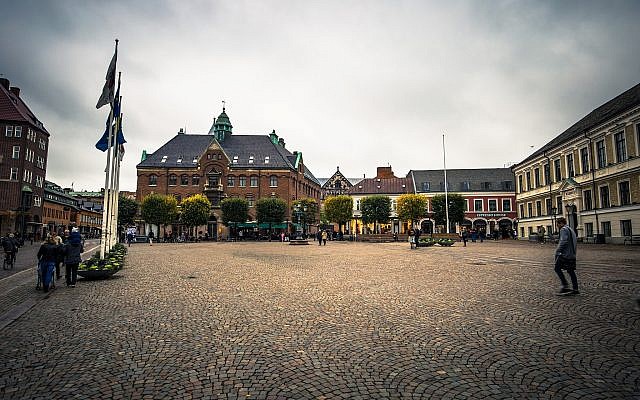
The house of a Swedish politician who has been the target of anti-Semitic harassment was set on fire, in what his community is calling a hate crime.

The incident occurred on Tuesday night in the southern city of Lund, the Council of Swedish Jewish Communities wrote in a statement.

Police have no suspects in custody in connection with the incident, which resulted in extensive damage to the property.

The incident Tuesday, in which no one was hurt, follows an earlier arson in summer, wrote Aron Verstandig, the council’s president. In the earlier attack, the victim’s home also was targeted. Both homeowners have been “active on Jewish issues” over the past few years, Verstandig wrote.

Both victims wished to remain anonymous, Verstandig added.

“There is strong suspicion that these attacks are targeted against these people because they are Jews. The latest incident has the extra dimension of an attempt to intimidate a politician into silence,” Verstandig also wrote.

He called the arson “an attack on Swedish democracy.”

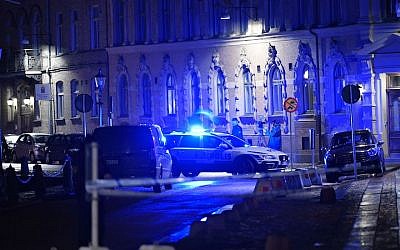
Police arrive after a synagogue was attacked in Gothenburg, Sweden, December 9, 2017. (Adam Ihse/AFP/Getty Images/via JTA)

In December, several men participated in riots during which a firebomb was hurled at the synagogue of Gothenburg in southern Sweden. Three of the culprits who were tried for the attacksaid it was payback for the United States’ recognition of Jerusalem as Israel’s capital.

In addition to Muslim extremist violence, which is common across Western Europe, Swedish Jews are exposed to violence and intimidation by far-right groups on a scale that is rare in that part of the world.


Two Israelis wounded in West Bank Stabbing Attack

0

Two Israelis wounded in West Bank Stabbing Attack


The IDF says a manhunt is underway for a terrorist who stabbed a 30-year-old reserve soldier in the face and chest at a bus stop near the Huwara Junction in Samaria, Thursday. IDF soldiers opened fire on the attacker, who fled the scene in a vehicle. The incident is the third major terror attack in the West Bank in the past month.


 The IDF says a manhunt is underway for a terrorist who stabbed a 30-year-old reserve soldier in the face and chest at a bus stop near the Huwara Junction in Samaria between the Jewish communities of Itamar and Har Bracha. Thursday. IDF soldiers opened fire on the attacker, who fled the scene in a vehicle.

The victim is listed in moderate to serious condition.  A second victim, a 26-year-old woman was lightly injured in the leg by shrapnel when the IDF opened fire on the escaping vehicle.

An ongoing manhunt remains underway for the Barkan attacker, identified as Ashraf Na’alowa, a 23-year-old from the Palestinian village of Shuweika, near Tulkarem.


WP Twitter Auto Publish Powered By : XYZScripts.com