Home Blog Page 1117

2,000-Year-Old Decapitated Skeletons Found in Downtown Jerusalem Dig

2,000-Year-Old Decapitated Skeletons Found in Downtown Jerusalem Dig

By Ilanit Chernick • 14 October, 2018

The skeletons lay in a chaotic fashion. They had once belonged to mothers, wives, children and in some cases were even unborn fetuses. There were very few men among them.

They were slaughtered in a violent swoop, gathered up and thrown into a massive cistern, and left to be undiscovered for over 2,000 years.

On Sunday, the Israel Antiquities Authority announced that the remains of 125 decapitated skeletons, were found at archaeological dig in in Jerusalem’s Russian Compound.

The skeletons, mostly found to be women and children, were from the Pharisee community,  an ancient sect of Jews who were well known for opposing the Hasmonean King Alexander Yannai in the first century BCE.

Based on the coins and pottery found at the site, it believed that the massacre took place during the period in which Yannai ruled over the ancient kingdom of Judea, between 103 and 76 BCE.

According to the Israel Antiquities Authority, the skeletons were discovered in an ancient water cistern, which was found during a recent salvage excavation, close to the Jerusalem Municipality offices.

IAA archaeologists Kfir Arbiv and Tehila Lieberman, along with authority anthropologist Dr. Yossi Nagar, found three layers in the large cistern.

The earliest layer, from the first and second centuries BCE – dated according to the ceramic shards and coins found at the site– contained the remains of at least 125 individuals, including men but also mostly women, children and infants, among which that three tiny skeletons were found there.

“We discovered an alarming finding,” said Nagar, “We removed more than twenty cervical vertebrae… [and] bodies and body parts of babies and adults, women and men, who were apparently the victims of a cruel massacre, were thrown into the pit.”

“It’s presumed to be fetuses from the wombs of murdered women,” the archaeologists said. “A large number of the skeletons had marks showing that neck vertebrae and skulls had been cut or severed. There were no other injuries found on the skeletons hands or feet, following extensive examinations.”

It was also evident that the cuts on the neck and vertebrae and skulls had never healed, which the IAA established must have been cause of death – evidently decapitation.

Due to their being no other wounds, on the bodies, the IAA said it can be assumed they were killed execution style and did not fall in battle.

The skeletons were found lying, and not in the usual burial position, so the researchers assumed the bodies had been thrown in after the execution.

Yannai’s reign was marred with numerous wars, and notably violent internal clashes between the Pharisees and the Sadducees – both ancient Jewish sects that had deeply conflicting views of Judaism, its laws, the laws of purity and the afterlife.

Yannai was a staunch supporter of the Sadducees. During the Feast of Tabernacles holiday, the king, while officiating as the High Priest at the Temple in Jerusalem, demonstrated his support of the Sadducees by refusing to perform the water libation ceremony properly: instead of pouring it on the altar, he poured it on his feet. The crowd responded with shock at his mockery and showed their displeasure by pelting Alexander with the etrogim (citrons) that they were holding in their hands. Outraged, he ordered soldiers to kill those who insulted him, more than 6,000 people in the Temple courtyard were massacred.


Phyllis Shallman – 4 easy tips to build your emergency fund

0

Nearly one quarter of Americans have no emergency savings, according to a recent report.[i]

Without an emergency fund, you can imagine that an unexpected expense could send your budget into a tailspin.

With credit card debt at an all-time high and no meaningful savings for many Americans, it’s important to learn how to start and grow your emergency savings. 2 

You CAN do this!

  1. Where to keep your emergency fund

Keeping money in the cookie jar might not be the best plan. Mattresses don’t really work so well either. But you also don’t want your emergency fund “co-mingled” with the money in your normal checking or savings account. The goal is to keep your emergency fund separate, clearly defined, and easily accessible. Setting up a designated, high-yield savings account is a good option that can provide quick access to your money while keeping it separate from your main bank accounts.3


  1. Set a monthly goal for savings

Set a monthly goal for your emergency fund savings, but also make sure you keep your savings goal realistic. If you choose an overly ambitious goal, you may be less likely to reach that goal consistently, which might make the process of building your emergency fund a frustrating experience. (Your emergency fund is supposed to help reduce stress, not increase it!) It’s okay to start by putting aside a small amount until you have a better understanding of how much you can really “afford” to save each month. Also, once you have your high-yield savings account set up, you can automatically transfer funds to your savings account every time you get paid. One less thing to worry about!


  1. Spare change can add up quickly

The convenience of debit and credit cards means that we use less cash these days – but if and when you do pay with cash, take the change and put it aside. When you have enough change to be meaningful, maybe $20 to $30, deposit that into your emergency fund. If most of your transactions are digital, mobile apps like Qapital let you set rules to automate your savings.4


  1. Get to know your budget

Making and keeping a budget may not always be the most enjoyable pastime. But once you get it set up and stick to it for a few months, you’ll get some insight into where your money is going, and how better to keep a handle on it! Hopefully that will motivate you to keep going, and keep working towards your larger goals. When you first get started, dig out your bank statements and write down recurring expenses, or types of expenses that occur frequently. Odds are pretty good that you’ll find some expenses that aren’t strictly necessary. Look for ways to moderate your spending on frills without taking all the fun out of life. By moderating your expenses and eliminating the truly wasteful indulgences, you’ll probably find money to spare each month and you’ll be well on your way to building your emergency fund.

[i] https://money.cnn.com/2018/06/20/pf/no-emergency-savings/index.html
[ii] https://www.experian.com/blogs/ask-experian/credit-card-debt-hits-an-all-time-high-how-much-do-you-owe/
[iii] https://www.nerdwallet.com/blog/banking/life-build-emergency-fund/
[iv] https://www.qapital.com/


Dr. Mindy Boxer – Eliminate Depression Naturally

Suffering from Depression can make you feel hopeless, frustrated and like your quality of life will never get better. Many feel that prescription medications don’t help, and simply mask the problem instead of helping solve it. If you are dealing with Depression, it is easy to get discouraged about your treatment options. Below are ways that you can naturally reduce your Depression and get you back on a road to a healthier mind and body.

Acupuncture
Acupuncture can be just as effective as Anti-Depressants in helping Depression. Weekly Acupuncture treatments can  address the underlying causes of your Depression, the Organ Systems that are stuck or stagnated, and bring you back to a state of homeostasis and Emotional balance. Acupuncture points can help stimulate the body’s production of Endorphins and aid the release of Serotonin and Dopamine, which can improve one’s mood.

Omega-3s
Taking a daily Omega- 3 Fish Oil supplement can do more good than you think. It is believed that being deficient in Omega-3s can cause mood swings and depression. Omega-3s are found in fish like Salmon, Tuna and Herring and are not only good for your overall physical health but your mental health as well.

Meditation
Meditation has been proven to have many benefits. Not only does it bring the heart rate down, calm the mind and reduce stress, but it can also bring the mind to a healthier place.  Studies have found that those who practice Meditation have a lower rate of relapsing than those who take medication alone.

Get outside
Spending time outdoors and in the sun can have great effects on your mood. When one doesn’t get enough sunlight, it can strongly affect how you feel and is one of the main causes of Seasonal Affective Disorder. Try spending even just 15 to 30 minutes outside every day whether it is walking, gardening or just simply sitting outside.

Exercise
There is nothing better than the natural high you get after a good workout. Exercise, whether it is running, swimming or yoga, releases Endorphins that can give you a mood boost. Try spending 30 minutes a day doing some sort of exercise. One study found that patients who worked out regularly saw a decrease in their symptoms of Depression by half in 12 weeks. Not only does exercise improve your body physically, but mentally as well.

Avoid alcohol and drugs
People suffering with Depression often consume damaging substances like Alcohol and Drugs to help mask their symptoms. It is recommended that those with depression should not have more than a drink on occasion. Alcohol and drugs affect Brain chemistry and can later intensify your mood for the worse.

Take a break
Depression can often worsen when you are feeling stressed and overworked. Try to take some time off to relax. If it isn’t possible to take vacation time, try to fit in at least an hour a day of relaxation time. Whether it’s meditating, taking a bubble bath, reading or closing your eyes for a bit, take some away from your electronic devices, and make time for a bit of relaxation, deep breaths and a way to shut off from the rest of the world.

Alternative Treatments For Depression

About 19 million American adults suffer from Depression and most find their current treatment options ineffective along with a slew of unwanted side effects. Many who are prescribed Antidepressants find that the medication only masks the problem, and does not cure it. However there are alternative treatments that have been proven effective without harmful side effects.

Homeopathics: Finding the right Homeopathic remedy for you can help increase mood and decrease feelings of sadness and anxiety. These natural substances can help bring balance and harmony back in to your life.

Chinese Herbal Medicine: I have successfully treated many patients who are anxious and depressed with a variety of Herbal formulas, preventing the need to go on Anti-Deressant medications.  The combination of weekly Acupuncture treatment, combined with Chinese Herbal Therapy works wonders!  When the body is in balance, we tend to feel physically, as well as mentally, healthy.

Yoga & Meditation: When practiced regularly, yoga and meditation have a profound effect on decreasing stress and boosting mood. Through deep breathing and poses, these practices help focus and clear the head and lower heart rate, which in turn can decrease stress levels and put thoughts and mood in a better place.

Depression is not something that is easy to deal with, nor is it something you have to go through alone.

Washington – Social Security Checks Will Grow In 2019 As Inflation Rises

Washington – Social Security Checks Will Grow In 2019 As Inflation Rises


Washington – Tens of millions of Social Security recipients and other retirees will get a 2.8 percent boost in benefits next year as inflation edges higher. It’s the biggest increase most retired baby boomers have gotten.

Following a stretch of low inflation, the cost-of-living adjustment, or COLA, for 2019 is the highest in seven years. It amounts to $39 a month for the average retired worker, according to estimates released Thursday by the Social Security Administration.

The COLA affects household budgets for about one in five Americans, including Social Security beneficiaries, disabled veterans and federal retirees. That’s about 70 million people, enough to send ripples through the economy.

Unlike most private pensions, Social Security has featured inflation protection since 1975. Beneficiaries also gain from compounding since COLAs become part of their underlying benefit, the base for future cost-of-living increases.

Nonetheless many retirees and their advocates say the annual adjustment is too meager and doesn’t reflect higher health care costs for older people. Federal budget hawks take the opposite view, arguing that increases should be smaller to reflect consumers’ penny-pinching responses when costs go up.

With the COLA, the estimated average monthly Social Security payment for a retired worker will be $1,461 a month next year.

“For more recent retirees, the 2019 COLA will be the largest increase they have gotten to date,” said policy analyst Mary Johnson, of the nonpartisan Senior Citizens League.

But retiree Danette Deakin, of Bolivar, Missouri, said she feels as though her cost-of-living adjustment is already earmarked for rising expenses.

Her Medigap insurance for costs not covered by Medicare is going up, and so is her prescription drug plan. She expects her Medicare Part B premium for outpatient care will also up.

“It isn’t enough of an increase that it takes care of all of the increases from health care, plus rent — our rent gets increased every year,” said Deakin, 70, who worked in the finance department at a boat dealership.

Health care costs eat up about one-third of her income, she estimated.

“I appreciate the COLA adjustment, and in no way am I complaining,” Deakin added. “It’s just that every single thing you can talk about goes up. It doesn’t go down.”

By law, the COLA is based on a broad index of consumer prices. Advocates for seniors claim the general index doesn’t accurately capture the rising prices they face, especially for health care and housing. They want the government to switch to an index that reflects the spending patterns of older people.

“What the COLA should be based on is still a very real issue,” said William Arnone, CEO of the National Academy of Social Insurance, a research organization not involved in lobbying. “Older people spend their money in categories that are going up at a higher rate than overall inflation.”

The COLA is now based on the Consumer Price Index for Urban Wage Earners and Clerical Workers, or CPI-W, which measures price changes for food, housing, clothing, transportation, energy, medical care, recreation and education.

Advocates for the elderly would prefer the CPI-E, an experimental measure from the government that reflects costs for households headed by a person age 62 or older. It usually outpaces general inflation, though not always.

COLAs can be small or zero, as was the case in several recent years. People often blame the president when that happens. However, the White House can’t dictate the COLA, which is calculated by nonpolitical experts.

President Donald Trump has repeatedly vowed not to cut Social Security or Medicare. But the government is running $1 trillion deficits, partly as a result of the Republican tax cut bill Trump signed. Mounting deficits will revive pressure to cut Social Security, advocates for the elderly fear.

“The revenue loss in the tax bill contributes to much higher deficits and debt, and that is where the threats begin to come in,” said David Certner, policy director for AARP. “Social Security, and in particular the COLAs, have been the target.”

Former President Barack Obama floated — but ultimately dropped — a proposal called chained CPI, which would have slowed annual COLAs to reflect penny-pinching by consumers. Behind it is the idea that when the price of a particular good or service rises, people often respond by buying less or switching to a lower-cost alternative.

Because of compounding, smaller COLAs would have a dramatic effect over time on the federal budget and Social Security finances. But if inflation continues to rise, proposals to scale back cost-of-living adjustments carry greater political risk.

Beyond federal budget woes, Social Security faces its own long-term financial problems and won’t be able to pay full benefits starting in 2034.

Social Security is financed by a 12.4 percent tax on wages, with half paid by workers and the other half paid by employers. Next year, the maximum amount of earnings subject to the Social Security tax will increase from $128,400 to $132,900.

About 177 million workers pay Social Security taxes. Of those, nearly 12 million workers will pay more in taxes because of the increase in taxable wages, according to the Social Security Administration.

In addition to retirees, other Social Security beneficiaries include disabled workers and surviving spouses and children. Low-income disabled and elderly people receiving Supplemental Security Income also get a COLA.


Source: VosIsNeias


Rescuers Comb Rubble of Florida Beach Communities for Hurricane Survivors

0

Rescuers Comb Rubble of Florida Beach Communities for Hurricane Survivors

PORT ST. JOE, Fla. (AP) – Rescuers will pick through the rubble of ravaged beach communities searching for survivors on Friday after Michael, one of the most powerful hurricanes in U.S. history, slammed into the Florida Panhandle, killing at least seven people.

Michael struck Florida’s northwest coast near the small town of Mexico Beach on Wednesday afternoon with top sustained winds of 155 miles per hour (249 kmh), pushing a wall of seawater inland and causing widespread flooding.

The storm tore entire neighborhoods apart, reducing homes and businesses to piles of wood and siding, damaging roads and leaving scenes of devastation that resembled the aftermath of a carpet-bombing operation.

U.S. Army personnel used heavy equipment to push a path through debris in Mexico Beach to allow rescuers through to search for trapped residents, survivors or casualties, as Blackhawk helicopters circled overhead. Rescuers from the Federal Emergency Management Agency (FEMA) used dogs, drones and GPS in the search.

“We prepare for the worst and hope for the best. This is obviously the worst,” said Stephanie Palmer, a FEMA firefighter and rescuer from Coral Springs, Florida.

Much of downtown Port St. Joe, 12 miles east of Mexico Beach, was flooded after Michael snapped boats in two and hurled a large ship onto the shore, residents said.

“We had houses that were on one side of the street and now they’re on the other,” said Mayor Bo Patterson, who watched trees fly by his window as he rode out the storm in his home seven blocks from the beach.

Patterson estimated 1,000 homes were completely or partially destroyed in his town of 3,500 people.

Jordon Tood, 31, a charter boat captain in Port St. Joe, said: “There were mandatory evacuation orders, but only idiots like us stuck around.”

“This was my sixth (hurricane), so I thought I was prepared,” he said.

In Apalachicola, about 30 miles east of where the storm made landfall, a little less than half of the 2,200 people stayed and rode out the storm, residents said.

With a low barometric pressure recorded at 919 millibars, a measure of a hurricane’s force, Michael was the third-strongest storm on record to hit the continental United States, behind only Hurricane Camille on the Mississippi Gulf Coast in 1969 and the Labor Day hurricane of 1935 in the Florida Keys.

Michael weakened overnight to a tropical storm.

Fast-moving Michael, a Category 4 storm on the five-step Saffir-Simpson hurricane scale when it came ashore, was about 15 miles northeast of Norfolk, Virginia, at 10 p.m., with top sustained winds of 50 mph as it headed for the Atlantic coast, the U.S. National Hurricane Center said.

It was toppling trees and bringing life-threatening flash flooding to areas of Georgia and Virginia, which are still recovering from Hurricane Florence, as it marched northeast.

At least seven people were killed by falling trees and other hurricane-related incidents in Florida, Georgia and North Carolina, according to state officials.

Emergency services carried out dozens of rescues of people caught in swiftly moving floodwaters in North Carolina.

Many of the injured in Florida were taken to hard-hit Panama City, 20 miles northwest of Mexico Beach.


Almost 1.2 million homes and businesses were without power from Florida to Virginia on Thursday because of the storm.

The number of people in emergency shelters was expected to swell to 20,000 across five states by Friday, said Brad Kieserman of the American Red Cross.

Brad Rippey, a meteorologist for the U.S. Agriculture Department, said Michael severely damaged cotton, timber, pecan and peanut crops, causing estimated liabilities as high as $1.9 billion and affecting up to 3.7 million crop acres.

Michael also disrupted energy operations in the U.S. Gulf of Mexico as it approached land, cutting crude oil production by more than 40 percent and natural gas output by nearly a third as offshore platforms were evacuated.

Source: Hamodia

STUDY: Wearing Tefillin May Reduce Risk of Heart Attacks

STUDY: Wearing Tefillin May Reduce Risk of Heart Attacks

A pilot study led by researchers at the University of Cincinnati (UC) College of Medicine suggests Jewish men who practice wearing tefillin, which involves the tight wrapping of an arm with leather banding as part of daily prayer, may receive cardiovascular health benefits.

The researchers propose that benefits may occur though remote ischemic preconditioning that results in protection during heart attacks. The results are available online in the American Journal of Physiology-Heart and Circulatory Physiology.

Jack Rubinstein, MD, associate professor in the Division of Cardiovascular Health and a UC Health cardiologist, says he enrolled 20 Jewish men living in Greater Cincinnati—nine who wear tefillin daily and 11 non-users of tefillin—in the study. His team of researchers recorded baseline information on all participants during the early morning and then additional data after wearing tefillin for 30 minutes.

They measured the participants’ vital signs, drew blood for analysis of circulating cytokines and monocyte function and also measured blood flow in the arm not wrapped with tefillin.

The men participating in the study were between the ages of 18 and 40 and all in good health.

“Tefillin is used for morning prayers for Jewish men over the age of 13 on an almost daily basis,” says Rubinstein. “It is placed on the non-dominant arm around the bicep and the forearm in a pretty tight manner. It is never worn in a fashion as to preclude the blood flow. This is worn for about 30 minutes continuously. Prayers are sitting and standing so often you have to retighten the strap around your arm.”

The usage of tefillin, also called phylacteries, dates back to scriptural commandments in the books of Deuteronomy and Exodus urging the faithful followers to comply with religious law and to “bind them as a sign upon your arm.”

Rubinstein says the binding of the arm and the discomfort users often report may serve as a form preconditioning and offer a substantial degree of protection against acute ischemic reperfusion injury (a section of the heart is deprived of oxygen and then damaged when re-oxygenated) that occurs as a result of a heart attack.

“One of the ways that protection occurs is through pain,” says Rubinstein, also a member of the UC Heart, Lung and Vascular Institute. “Feeling pain is actually a preconditioning stimulus.

“We found people who wear tefillin in either the short or long term, recorded a measureable positive effect on their blood flow. That has been associated with better outcomes in heart disease,” says Rubinstein.

Blood flow was higher for men who wore tefillin daily and improved in all participants after wearing it just once as part of the study, explained Rubinstein. Men who wore tefillin daily also had fewer circulating cytokines—signaling molecules that can cause inflammation and negatively impact the heart—compared to non-users, suggesting that near daily use elicits an effect similar to that observed with other methods of eliciting remote ischemic preconditioning-like effect.

For years researchers have studied preconditioning by inducing small heart attacks in animal models and found that they protected the animal from larger, more serious heart attacks in the future. This same preconditioning could be used by partially occluding blood flow in one part of the body and thus serving as a protective element in another part of the body to lessen the injury, says Rubinstein.

“The problem with translating this to people is we don’t know when someone will have the heart attack,” says Rubinstein. “It is almost impossible to precondition someone unless they are willing to do something daily to themselves. Tefillin use may in fact offer protection as it’s worn on an almost daily basis.”

Rubinstein says there are studies out of Israel that have found Orthodox men have a lower risk of dying of heart disease compared to non-Orthodox men. This protection is not found in Orthodox women who usually don’t wear tefillin.

(Source: Medical Xpress)

Gaza balloon bomb lands in central Israel

0

Gaza balloon bomb lands in central Israel

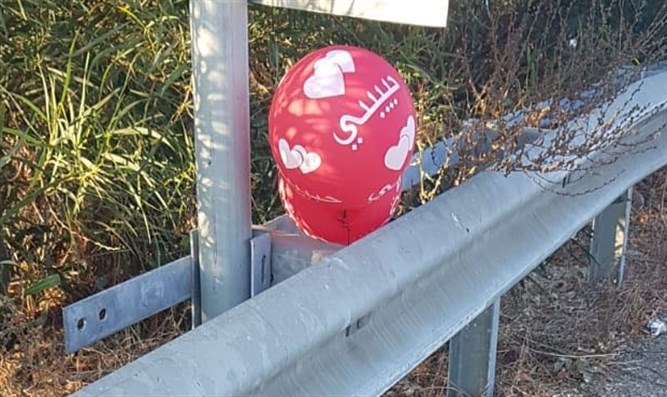
Balloon with Arabic writing carrying incendiary device falls in central Israeli city day after similar incident south of Tel Aviv


Arutz Sheva Staff, 12/10/18 09:26

An incendiary device attached to a balloon with Arabic writing on it was spotted in the central Israeli city of Rishon LeZion Friday morning.

According to a police spokesperson, the balloon was found next to the road on Sprinzak Street in Rishon LeZion.

After authorities were notified of the balloon bomb, a police sapper squad was dispatched to the scene to disarm the device.

The bomb was neutralized at the scene, and no injuries or damage were reported.

The balloon which had carried the firebomb into Rishon LeZion was likely launched from the Gaza Strip, where tens of thousands of firebombs and ‘terror kites’ carrying explosive and incendiary devices have been launched towards Israeli territory in recent months.

On Thursday, a balloon bomb was spotted in the city of Bat Yam, just south of Tel Aviv.

No injuries were reported, and police successfully neutralized the device.

In addition, a number of suspicious balloons were found Thursday morning by a woman in the “Emek Hamatzleva” area of Jerusalem, the second time in two days that incendiary balloons have been found in Jerusalem, after another such balloon was found in the German Colony area of Jerusalem on Wednesday.

At the beginning of the week, two balloons were found near the capital, one in the community of Givat Ze’ev and another in the community of Beit Horon. Another two balloons were found in the area of Modi’in.

According to Hadashot 2, in light of growing number of balloons that have been found recently in central Israel, the defense establishment fears that incendiary balloon attacks emanating from Judea and Samaria will soon become routine occurrences, just as such attacks emanating from Gaza already have been for months.


Source: Arutz Sheva


North, South Korea to Hold High-Level Talks on Oct. 15

0

North, South Korea to Hold High-Level Talks on Oct. 15


SEOUL (Reuters) – North and South Korea will hold high-level talks on Monday at the border village of Panmunjom to discuss follow-up steps to their recent summit, Seoul’s Unification Ministry said on Friday.

At their third summit in Pyongyang last month, South Korea’s President Moon Jae-in and North Korean leader Kim Jong Un agreed to resume economic cooperation, including relinking railways and roads and reopening a joint factory park and tours to the North’s Mount Kumgang resort, when conditions are met.

Moon also said Kim said he would invite international experts to watch the dismantling of a key missile site and close the main Yongbyon nuclear complex if Washington took reciprocal actions.

The latest talks will take place on the south side of the Panmunjom within the Demilitarized Zone and be led by the South’s Unification Minister Cho Myoung-gyon, the Ministry said.

The North has yet to confirm its delegation but previous sessions were steered by Ri Son Gwon, chairman of the Committee for the Peaceful Reunification of the Country in charge of cross-border affairs.

“Through the high-level meeting, we will discuss ways to implement the Pyongyang agreement overall and finalize the schedules for follow-on talks on each area,” the Ministry said in a statement.

The announcement comes amid U.S. concerns that inter-Korean relations may be warming too fast relative to negotiations to dismantle North Korea’s nuclear and missile programs.

U.S. Secretary of State Mike Pompeo has expressed “discontent” with an inter-Korean military pact reached during last month’s summit in a rare sign of disagreement between the allies.

The two Koreas agreed in that accord to halt military drills, set up a no-fly zone near the border and gradually remove landmines and guard posts within the Demilitarized Zone, among other steps.


Source: Hamodia

Yad Vashem Posthumously Honors Righteous Among the Nations

Yad Vashem Posthumously Honors Righteous Among the Nations

By TPS • 11 October, 2018

Yad Vashem, the World Holocaust Remembrance Center, hosted a ceremony Thursday, to posthumously honor Miko?aj and Helena Sajowski and Aniela Debi?ska from Poland as Righteous Among the Nations, recognizing their deeds and adding their names to the Wall of Honor in the Garden of the Righteous Among the Nations.

Yad Vashem Chairman Avner Shalev presented the medal and certificate of honor to Barbara Rybczy?ska, Aniela’s daughter, on behalf of Yad Vashem, the State of Israel and the Jewish people.

The ceremony took place in the presence of members of the rescuers’ family including survivor Sala Armel-Goldhar and her son Mitch, as well as a representative of the Canadian and Polish Embassy to Israel.

The Rescue Story

Sala Armel-Goldhar lived with her parents, Israel Ber and Feiga (née Leibenhaut) Armel, in the town of Stryj, near Lwów (today Lviv), Poland. Israel was a furrier.

When Sala was five years old, World War II broke out, and the area was occupied first by the Soviets and then by the Germans. In order to save her, little Sala’s parents gave her, along with two or three family photos and a few addresses abroad, to a Polish woman named Aniela Dembi?ska. Though she came from the city of Czortków, Aniela worked as a teacher in Stryj. She brought Sala to the farm belonging to her mother and stepfather, Helena and Miko?aj Sajowski.

On her first night with the Sajowskis, Sala slept on the floor between the two parents, who wanted to calm her after days of fear. Despite their old age, they treated Sala well and made efforts to protect her. Aniela took the risk of presenting Sala as her own child, even though she had a daughter of her own in Stryj. This was possible because Sala had blond hair and blue eyes, like most Poles and Ukrainians in the area.

Still, it was very hard for the five-year-old girl. The cold, the darkness, the foul smells from cows and goats on the farm, and missing her parents deeply all made her very unhappy. She managed to run away once, but returned immediately after seeing a gallows with the bodies of Jews hanging from it. She spent approximately two years with the Sajowskis.

After the war, Sala was entrusted by the Sajowskis to a Jewish man by the name of Dr. Schorr. He lived in Czortków with his wife, and the two of them took in several Jewish children so that they would have a home with a Jewish family. The Schorrs raised these children, along with their own son, Emanuel.

Sala stayed with the Schorrs for two years, until their departure to Israel. She decided to stay in Poland, in case her parents should come looking for her; but they never did. Sala managed to contact her mother’s aunt in Toronto, and left for Canada in April 1948.

On 27 December 2017, Yad Vashem recognized Miko?aj and Helena Sajowski and Aniela (Zachariasiewicz) Dembi?ska as Righteous Among the Nations.

Bashing Israel, UNESCO also calls tombs part of ‘Occupied Palestinian territory’

Bashing Israel, UNESCO also calls tombs part of ‘Occupied Palestinian territory’

Some analysts called the decisions a continuation of a longtime anti-Israel policy at UNESCO, which included resolutions rejecting Israel’s connection to Jerusalem and the Temple Mount.


 The United Nations Educational, Scientific and Cultural Organization (UNESCO) PX Commission of the Executive Board voted on Wednesday to adopt a pair of “decisions” titled “Occupied Palestine,” which call the ancient Cave of the Patriarchs and Matriarchs in Hebron, and Rachel’s Tomb in Bethlehem integral parts of “Occupied Palestinian territory” and slam Israel for “other measures aimed at altering the character, status and demographic composition of the Occupied Palestinian territory,” like building a security fence.

Decision 28 and Decision 29, which were sponsored by Jordan, Lebanon, Egypt, Morocco, Qatar, Oman and Sudan, took just minutes to pass, and called Israel an “occupier,” accusing Israel of “army violations against Palestinian universities and schools,” and expressing disapproval of Israeli archaeological work in the eastern part of Israel’s capital, Jerusalem.

Yet some officials found a silver lining in the decisions, stating that they were actually indicative of a compromise between Israel, the Palestinians and Jordan since they were intended to be voted upon as resolutions, but instead were passed by a consensus as a non-binding annex, an accomplishment Israel has celebrated in the past as a diplomatic success.

UNESCO’s Executive Committee has included similar text in previous years. But new UNESCO Director General Audrey Azoulay, France’s former Minister of Culture and the daughter of a Jewish family, has said to be dedicated to depoliticizing the body and took a role in preventing the decisions from becoming resolutions.

Despite the softening, Israel will still be exiting the body in December along with the United States, until “UNESCO ends its bias against Israel, stops denying history and starts standing up for the truth,” according to Israeli Prime Minister Benjamin Netanyahu.

Israeli Ambassador to the United Nations Danny Danon responded by saying, “This is further evidence—for anyone who did not understand why the United States and Israel withdrew from UNESCO—that again proves that UNESCO is a body based on lies and biases, and is deliberately acting against us. The State of Israel will not be a member of an organization that is trying to rewrite history and willing to be manipulated by our enemies.”

The United States withdrew from UNESCO last year.


WP Twitter Auto Publish Powered By : XYZScripts.com