It is with great sadness that we inform the community of the passing of Habochur Dovid Moshe ben Yoel Kuptzik a”h
LEVAYA TONIGHT 2/14/15 10:30PM
Kollel Yechiel Yehuda 444 N. La Brea

February 13, 2015-24 Shevat 5775
The Eruv is sponsored this week by Mount Sinai Memorial Parks.
Mount Sinai provides generous support to keep our eruv available this week and every week.
Thank you to Mount Sinai for your service to the Los Angeles Jewish Community.



Parshas Mishpatim
“Holy people you shall you be to Me: you shall not eat flesh of an animal that was torn in the field; to the dog you shall throw it.” — Exodus 22:30
The Torah tells us that if a sheep or goat is killed while grazing, it is called a treifa and should be given to the dogs to eat. Rashi explains that this is a reward for what the dogs did. When the Jewish people left Egypt, not a single dog barked. Since that was a miracle and a testament to G-d’s existence, for generations all treifas are to be fed to the dogs in repayment for what they did.
How Can a Dog Be Entitled to Reward?
This Rashi is difficult to understand as we are dealing with animals. Animals are instinctual in their reactions. Granted, they can be trained to act in a particular manner, but they don’t have a conscious “I” that can weigh the different options and decide to act or not to act. They don’t have free will. In all of the physical Creation, only man was given that capacity. So how can a dog receive reward for its actions?
February 13, 2015-24 Shevat 5775
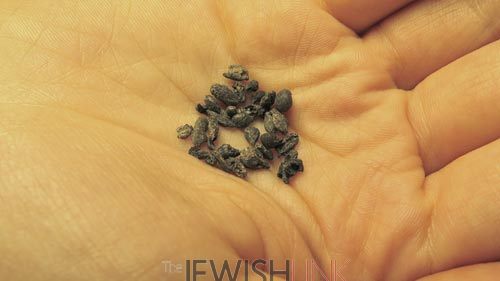
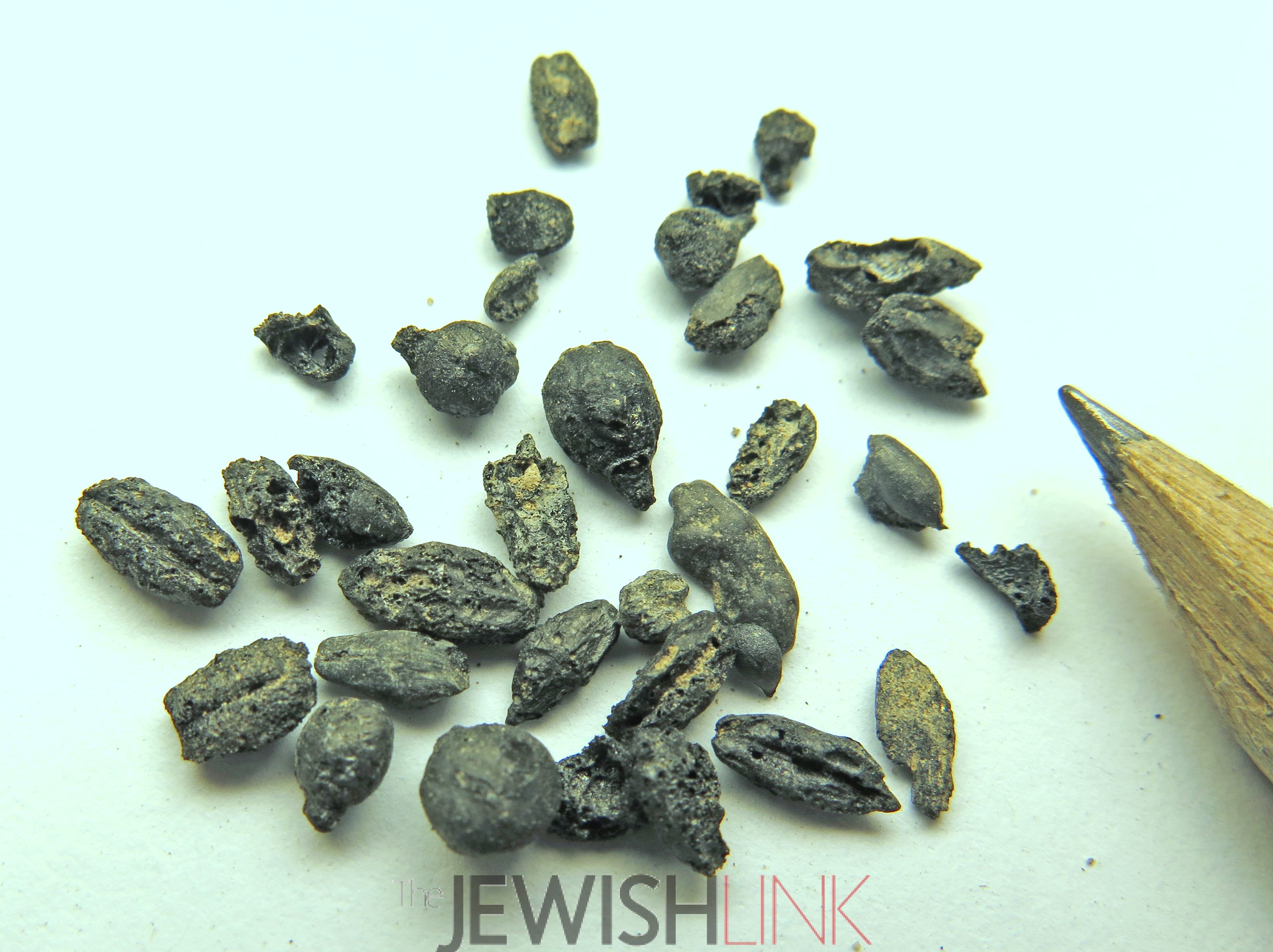
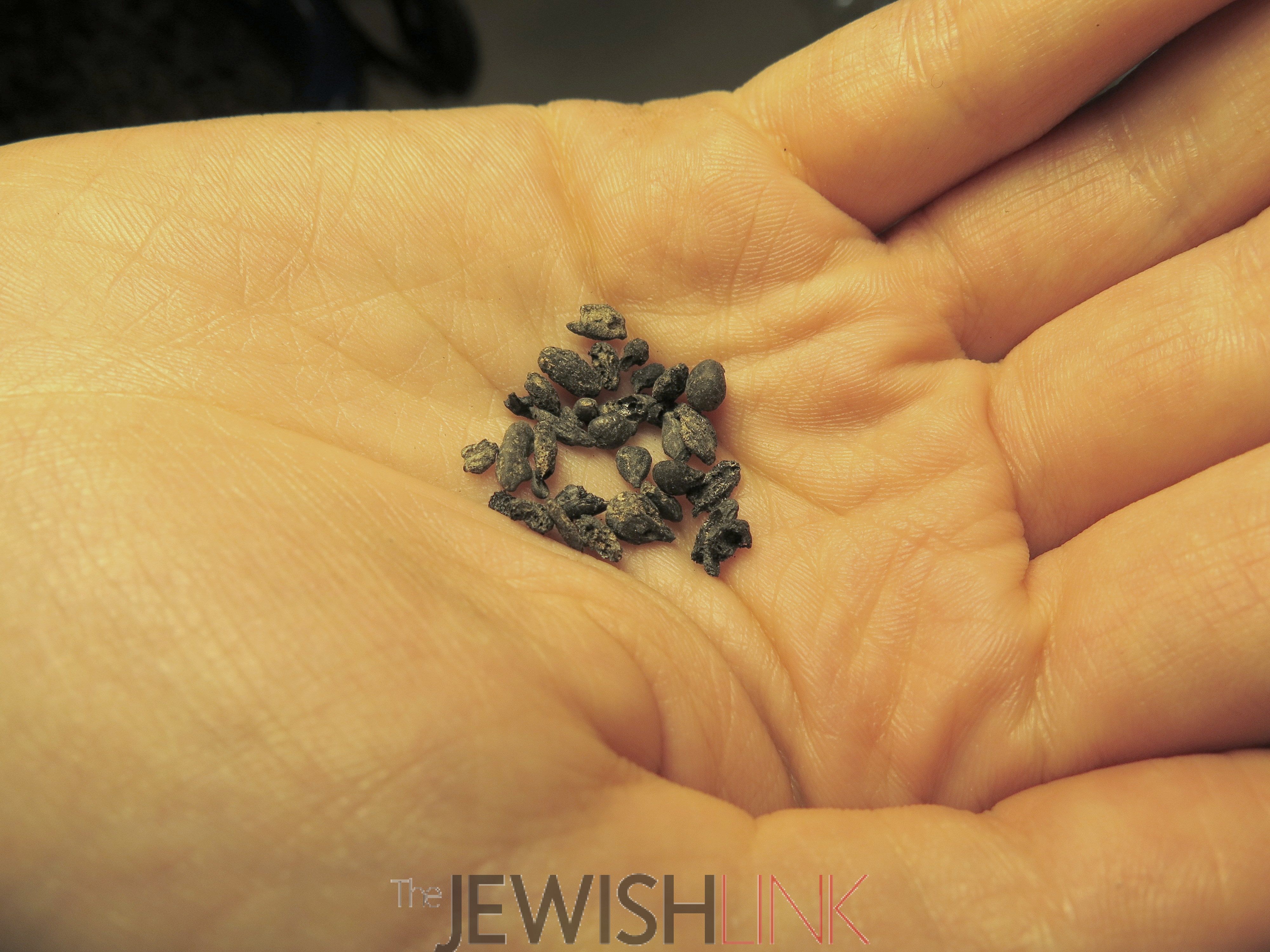
Charred grape seeds dating back 1,500 years were discovered recently in an archeological excavation in the ruins of the ancient Byzantine city of Halutza, about 19 miles southwest of Beersheba.
In its heyday, in the 6th and 7th centuries A.D., Halutza or Elusa as it was called in Greek, was the most important Byzantine city of the Negev area.
The excavation is part of a broader bio-archeological research examining the rise and fall of the Negev Byzantine society, in the seventh century A.D. The research is conducted by the The Zinman Institute of Archeology form the University of Haifa, and the Israel Antiquities Authority.
Tazpit News Agency interviewed Professor Guy Bar-Oz, one of the researchers participating in this project. Prof. Bar-Oz explained there are three main explanations for the fall of the Byzantine society in the Negev. “Climate change, Muslim conquest, and plagues all contributed to the fall. But until now there were no physical evidence to support any of these, only historical sources, Bar-Oz told Tazpit.”
“Though historical sources might provide a lot of useful information, they are very subjective to the writer’s agenda and premises. There is also different current interpretation to each source. It’s very much like a modern day newspaper, it gives you a certain perspective but it’s not enough when looking for conclusive evidence,” elaborated Prof. Bar-Oz.
The charred grape seeds were found in Halutza’s refuse dump, as the city itself was ruined over time due to stone theft. Prof. Bar-Oz explains the importance of what he calls garbage-archeology, “for an archeologist, garbage is like a time capsule. We can extract a lot of useful information from garbage, like what the people of Halutza ate and drank, the pots and tools they used, and what livestock they kept,” he told Tazpit.
In regard to the broader research, Prof. Bar-Oz explained that “a change in diet or even pottery can imply a change in the culture and ethnicity of the population of Halutza. In addition, we can analyze the remains of dead animals such as rats, and through that find out whether the city was hit by plague,” Prof. Bar-Oz told Tazpit.
The charred grape seeds are a very interesting finding. According to historical sources from the Byzantine era, wine from the Negev or “Gaza wine”, named after the port from which it was sent to all corners of the Byzantine Empire, was considered to be of very high quality, and very expensive.
The Halutza grape seeds could be of great importance to the wine industry, because they indicate that wine was produced in the harsh desert climate of the Negev and was almost certainly grown with scarce usage of water.
“Wine production can be very much affected by changing climates. Therefore, finding a strain of seeds that can grow using only a little bit of water in a warm climate, could be a great revelation to the wine production industry,” Prof. Bar-Oz further told Tazpit News Agency.
According to Prof. Bar-Oz, the Halutza grape seeds will be recreated through DNA reconstruction. And though it won’t explain the downfall of the 7th century A.D. Byzantine society of the Negev, it could explain why the wine of the Negev was so renowned in the Byzantine Empire.
By Yotam Rozenwald
Tazpit News Agency


Reversing The Tide of Assimilation
Study Shows Success of RAJE in Reducing Intermarriage to 6%
Assimilation is like the weather. Everyone discusses it, but no one does anything about it. Well, it appears that another supposedly inviolate axiom may have fallen by the wayside. A front page article in the January 7th issue of ‘The Jewish Week’ reports that of the 35% of RAJE alumni who have married since completing the RAJE Fellowship program, a remarkable 94% found spouses within the faith. This 6% intermarriage rate is far better than the 17% found among Russian Jews in New York and a dramatic improvement over the 28% for Birthright alumni. Currently, about 11% of Russian Jews in Brooklyn, males and females between the ages 18-30 have participated in the program, and if the organization receives the needed backing, there is every reason to believe that the vast majority can be reached. These results come from an extensive study by the Research Institute for New Americans led by Sam Kliger, director of Russian Jewish Community Affairs at the American Jewish Committee. In addition to the heartening marriage statistics, the study found that RAJE alumni were also heavily involved in Jewish philanthropy, observing religious practices and were active supporters of Israel; http://www.ajpa.org/news/211141/Research-Institute-for-New-Americans-RINA.htm all indexes of connection to the faith.
The influence of the RAJE initiative extends beyond curbing rampant intermarriage. The study also found that 22% of the alumni had become fully Shabbat observant, a very impressive figure, when considering that virtually all the students entered the program with almost no religious background. In all, 67% of RAJE alumni consider Shabbat observance integral to Jewish practice, a major attitude shift for a community quite removed from any form of Mitzvah observance. In addition, 59%have attended some Jewish educational program or class in the past year. Another telling statistic is that 38% celebrated Shavuot at RAJE’s all night learning program. Truth be told, the assorted cheesecakes and ice creams were also quite appealing and really that’s the key to RAJE’s success, understanding how to reach their young charges.
Before crunching the numbers, let’s take a closer look at this incredible institution which has; in just its first decade, bucked the odds and demonstrated that its paradigm, bringing people closer to Judaism through Jewish education, is a model that works. RAJE, which stands for Russian American Jewish Experience, was founded in Brooklyn in 2006 by Rabbi Mordechai Tokarsky a product of the Rabbinical Seminary of America (Chofetz Chaim), who was born in the former Soviet Union. Rabbinic Ordination in hand, he recognized the need to reach out to his fellow émigrés, most of whom had scant knowledge of their Jewish heritage. Rather than trying to reinvent the wheel, Rabbi Tokarsky took inspiration from the existing Birthright program, which offered free trips to Israel and used a similar incentive to attract college aged Russian Jews. What he added however, was a structured curriculum of Jewish education disseminated by a staff of carefully culled educators who present the religion in an extraordinarily positive light. Most of the staff have a similar Russian immigrant background so they are acutely attuned to the needs and interests of the students. It’s also important to note that the RAJE Israel trip is both longer, 15 days, versus 10 for Birthright and is far more educational, with many hours of classes and interactive learning experiences. Essentially, those who enroll in the RAJE program experience a half a year of Jewish education, as opposed to Birthright which is a 10 day engagement largely devoted to Israeli sightseeing.
As for the numbers themselves, well they don’t lie and they behoove us to ask, ‘Why haven’t other outreach organizations followed RAJE’s approach?’ I would suggest that many such organizations don’t have the proper attitude towards the beauty and relevance of true Judaism. As the renowned school administrator Marvin Schick noted in his analysis of the Pew Report, the message of love and acceptance without educational substance, has made little inroads into curbing the scourge of assimilation. Rather than providing more than 250 hours of Jewish learning, as does RAJE, others provide “bread and circuses” focusing on social events such as Challah baking, Purim parties and the like, with an occasional simplistic lecture of little substantive content. What they’re really selling is ‘bagels & lox’ Judaism, lacking real depth an approach which doesn’t resonate in our turbulent times.
As to be expected some would seek to dismiss the evidence of RAJE’s phenomenal results. The powers that be often feel threatened when a new approach works better than the “accepted system.” Some have tried to claim that the 11% of all 18 -30 year old Russian Jews in the NY area who were attracted to RAJE since its inception, are not representative of their peers. The Jewish Week article quotes the opinion of unnamed experts who suggest that perhaps ‘the RAJE cohort is a small segment of the Russian Jewish community here, the majority of whom are not drawn to its intensive program’. This skeptical attitude is plainly contradicted by the study, as Sam Kliger asserted, in a recent interview for eJewish Philanthropy, “Data analysis (comparing data from Birthright participants of Russian background to RAJE participants) suggests that RAJE participants have Jewish backgrounds similar to their Birthright Israel counterparts, with the notable exception that RAJErs actually have significantly less formal Jewish education than those participating in the Birthright Israel trip. Only 32% of RAJE participants had any formal Jewish education vs. 55% for Russian Birthright alumni. For more than two thirds of those who enroll at RAJE this program is their first exposure to Judaism, but as we’ve demonstrated the experiences engender for most a lifelong commitment to the faith. Given these results, it’s time for the establishment to reconsider its objectives and reevaluate its assumptions regarding what works best in Jewish outreach.
To be sure it’s not easy to stem and actually reverse the tide of assimilation. There’s a second factor which must be addressed; to wit the negative stereotyping of Judaism promulgated by the entertainment media for the better part of a century. Whether it’s “Seinfeld’s” mocking of Jewish ritual, Woody Allen’s glorification of the gorgeous gentile, and going all the way back to Al Jolson rejecting his faith in the 1920’s to make it as an American icon, the message has always been clear – being Jewish is a nuisance, an onus no Jew asked for, and one which he’d be rid of, if the opportunity presented. To be sure, these attitudes die hard, but they can only be combated by taking the offensive and this is RAJE’s tack. Instead of being apologetic, it avers that being Jewish is a privilege, that it’s an enormous honor to be one of the Chosen Few and here’s the kicker, Torah study is tremendously enjoyable when properly presented.
If I disagreed with one point in the Jewish Week article, it would be Rabbi Tokarsky’s opinion; seconded by Steven Bayme of the AJC, that RAJE’s success within the Russian Jewish community can not be replicated among mainstream Jews. While it’s true that Russian Jews who were deprived of their heritage for much of the 20th century, are often receptive to learning about the faith while American Jews; having been inculcated with distorted versions of the religion believe that it has little to offer, but I believe we can reach all disenfranchised Jews, if we fully understand, as does RAJE, that pure unadulterated Judaism is its own best selling point. Whether it’s Talmud, philosophy Kabbalah you name it everyone can and must find his particular Torah niche and through it create a bond which no force can tear asunder
By Dr. Yaakov Stern
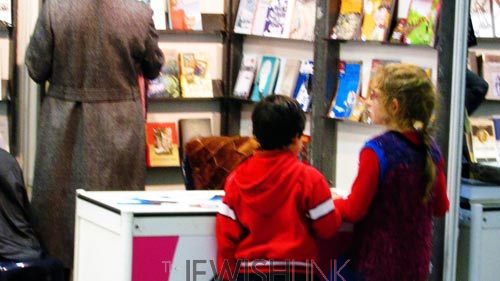
Jerusalem International Book Fair Draws International Authors, Publishers, and Book Lovers
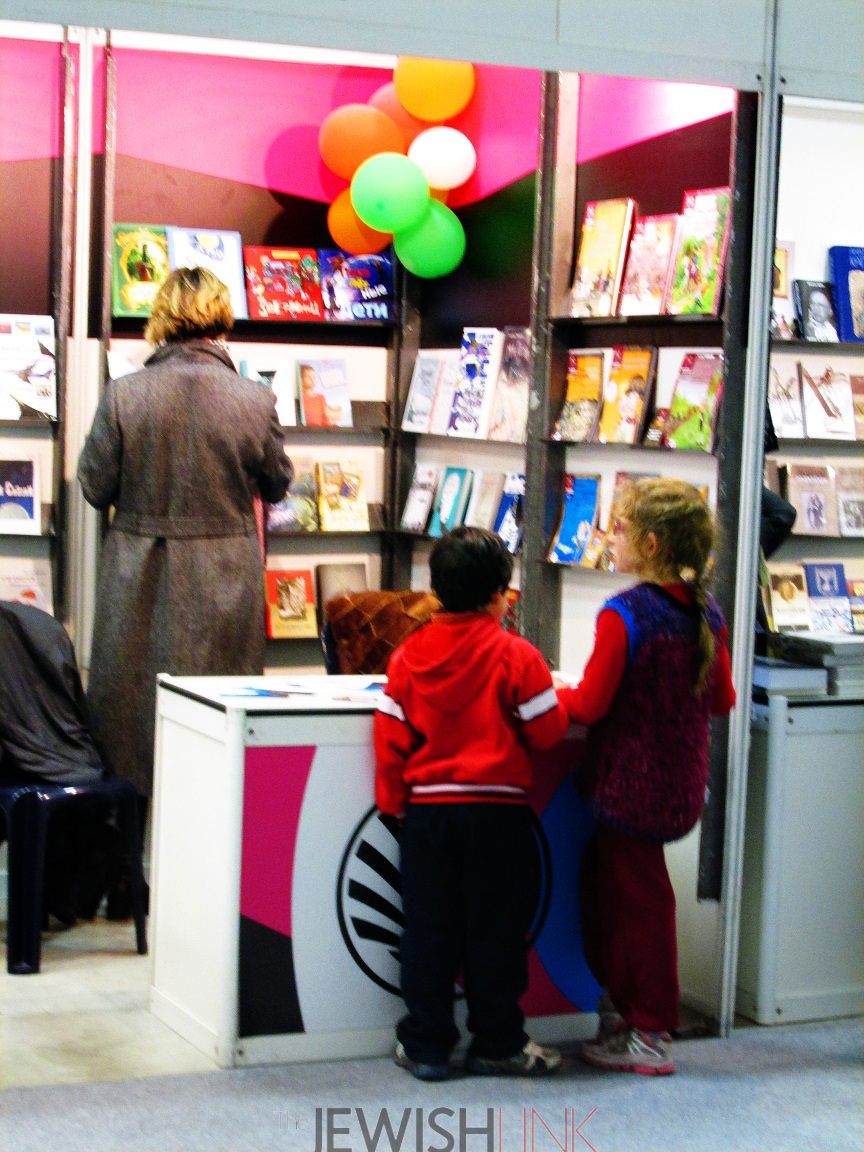
Thousands of books have made their way to Israel’s capital this week, as the Jerusalem International Book Fair opened its doors from February 8-12, in a tradition that has now gone on for 27 years. Since 1963, the Jerusalem book fair has served as a connection point between the world of Israeli literature and the global community of publishing houses, book dealers, editors and hundreds of renowned authors.
“The Jerusalem International Book Fair is a combination of an international trade-fair and a public celebration of literature,” noted the organizers. “There are tens of book stalls offering the latest titles and bestsellers from Israel and beyond.”
The book fair, held at the First Station complex on David Remez Street, and all of the surrounding events including writing workshops and sessions with famous authors, are free-of-charge to the general public.
From its inception, the event has drawn the attendance of 600 publishers and authors from more than 30 countries, and has displayed more than 100,000 books in tens of languages.
This year, around 25 international authors hailing from the Ukraine, USA, Netherlands, Argentina, Italy, Poland, Germany, and France are attending the fair as are publishers from Switzerland, France, Germany and the United States. Iraqi poet, Salah al-Hamdani, who has been living in France for the past 30 years is also among those attending. Al-Hamdani published a joint collection of poetry with Israeli writer, Ronny Someck, also originally from Iraq, in 2012. The two spoke about their work during a literary session at the Jerusalem Cinematheque.
One of the main highlights of the prestigious cultural event is the awarding of the Jerusalem Prize, a $10,000 award given to a writer whose work emphasizes freedom of the individual in society. Past winners include Bertrand Russell, Arthur Miller, Simone de Beauvoir, Haruki Murakami and Ian McEwan. Five international writers who received the prize in the past went on to receive the Nobel Prize in Literature.
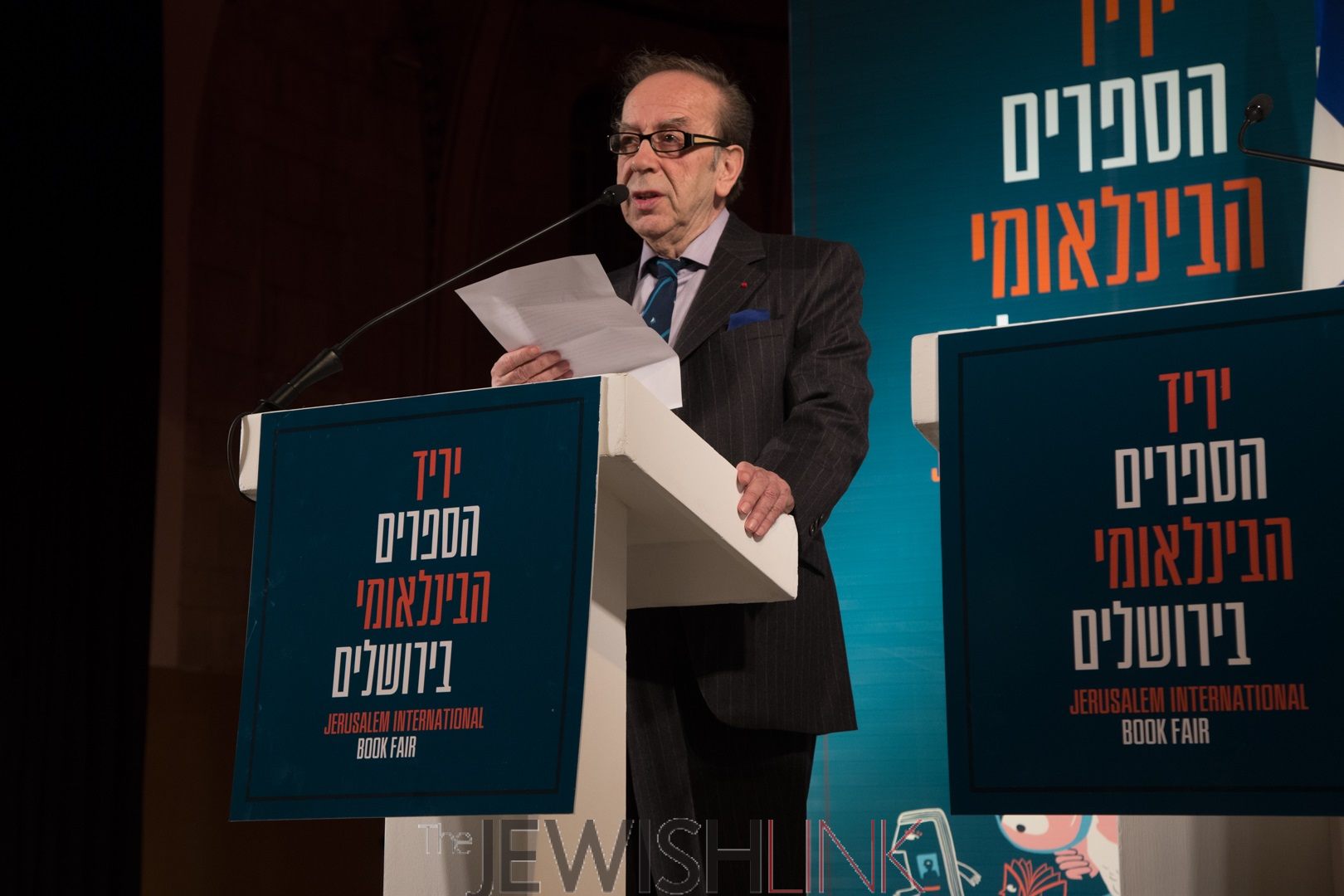
This year, Jerusalem mayor, Nir Barkat presented the prize at a ceremony held at the Jerusalem YMCA to Albanian human rights writer and poet, Ismail Kadare of Muslim origin, whose works have been published in more than 30 languages including Hebrew. Kadare’s well-known novels include The Pyramid and The Palace of Dreams.
Kadare, 79, who has been a literary figure in Albania since the 1960s, delivered his speech in his native Albanian, where he noted Albania’s role in protecting the Jewish people during the Holocaust. “When the number of Jews throughout Europe had been drastically reduced a result of genocide, in Albania the Jewish population had actually increased considerably,” said Kadare.
In addition, the book fair also featured an exhibit called “The Hidden Wall” in honor of the jubilee year of Israeli-German diplomatic relations. The two meter-high wall is filled with 5,000 removable wooden bricks with quotes from leading German philosophers, musicians, politicians, and academics. The idea behind the Hidden Wall is to create a bi-cultural communal dialogue between Israelis and German according to its creator, German architect Prof. Werner Sobek.
The Jerusalem International Book Fair has also coordinated a special platform for Israeli authors looking to reach the international community with their works. A special event organized by Penguin Random House and the Israeli Ministry of Foreign Affairs will be held for a select group of 30 Israeli authors that will enable them to pitch their ideas to hundreds of international publishers, distributors and literary experts.
But the best part of the Jerusalem International Book Fair for book lovers of all ages is of course the books.
“It was a really interesting experience to see books from different parts of the world that otherwise I would have never seen before,” said Jerusalem resident, Shira Fisher. “I’ve been to many book fairs in Jerusalem and this one was very definitely different,” she told Tazpit. “I also didn’t expect to see so many books on sale!”
By Anav Silverman
Tazpit News Agency

NORTHFIELD, Ill. – February 11, 2015 – Kraft Foods (NASDAQ: KRFT) announced today that its entire line of Polly-O brand string cheese is now certified kosher by the Orthodox Union (OU). Polly-O is the only mainstream string cheese brand to be kosher certified by the OU across its entire line of products. Kosher consumers can now enjoy the well-known quality and taste of Polly-O String Cheese that is 100% real cheese, with no artificial flavors.
“We’re always listening to our fans, including those in the kosher community, and we know they are looking for premium, mainstream brands with OU certification,” said Camille Vareille, Sr. Brand Manager for Polly-O. “With high-quality ingredients and delicious flavors to choose from, we’re excited to offer Polly-O to kosher string cheese lovers,” Vareille added.
The Polly-O production facility in Campbell, NY underwent numerous rabbinical inspections and a full koshering process to attain the OU certification. The plant now has a team of kosher supervisors, one of whom is always on-site during production to meet the OU’s strict standards. The OU, the world’s largest kosher certifying agency, is seen as the hallmark kosher certification by many consumers.
“Bringing a beloved brand such as Polly-O to the kosher community and increasing options for the kosher consumer is what the OU is all about,” remarked Rabbi Menachem Genack, CEO of OU Kosher. “Working with the Polly-O team, and their enthusiasm towards the project, has been a pleasure,” Rabbi Genack added.
Polly-O String Cheese and Polly-O Twists are available in seven varieties and are a favorite of moms and kids alike. Widely available in the Eastern U.S., Polly-O is made with no artificial flavors or preservatives, is a good source of protein and calcium and contains 0g lactose.
Polly-O sister brand Kraft String Cheese, available in the Western U.S. states, has attained OU kosher certification on many of its varieties, as well. Consumers should look on Kraft String Cheese packages for the OU symbol.
Polly-O and Kraft String Cheese products bearing the OU-D symbol are available at retail outlets nationwide, but as always, observant consumers should be sure to check for the OU-D certification symbol prior to purchase or consumption.
ABOUT KRAFT FOODS GROUP
Kraft Foods Group, Inc. (NASDAQ: KRFT) is one of North America's largest consumer packaged food and beverage companies, with annual revenues of more than $18 billion. With the spirit of a startup and the soul of a powerhouse, Kraft has an unrivaled portfolio of products in the beverages, cheese, refrigerated meals and grocery categories. The company's iconic brands include Kraft, Capri Sun, Jell-O, Kool-Aid, Lunchables, Maxwell House, Oscar Mayer, Philadelphia, Planters and Velveeta. Kraft's 22,500 employees in the U.S. and Canada have a passion for making the foods and beverages people love. Kraft is a member of the Standard & Poor's 500 and the NASDAQ-100 indices. For more information, visit www.kraftfoodsgroup.com and www.facebook.com/kraft.
ABOUT ORTHODOX UNION
The Orthodox Union, known by the OU symbol, is the world’s largest kosher and best-known certification organization. Founded in 1898, the OU and its more than 500 employees certify 914,722 products and ingredients in 10,540 plants in more than 83 countries. The OU impacts the larger Jewish world through its youth and educational programs like NCSY, NCSY Alumni, JLIC (Jewish Learning Initiative on Campus), Israel Free Spirit-Taglit Birthright and others, Yachad and its disability support networks, theOU Job Board, the OU Advocacy political action arm, Community Engagement and Synagogue Services, OU Israel, the OU Press publishing division, OU.org, OUtorah.org, andJewish Action Magazine. Each and every day, countless Jewish individuals and families around the world are positively impacted by the work of the Orthodox Union.