Home Blog Page 15

Skyscraper-Size Asteroid Buzzes Earth On Friday, Safely Passing Within 1.7 Million Miles

0

An asteroid as big as a skyscraper will pass within 1.7 million miles of Earth on Friday.

Don’t worry: There’s no chance of it hitting us since it will pass seven times the distance from Earth to the moon.

NASA’s Center for Near Earth Object Studies estimates the space rock is between 690 feet and 1,575 feet (210 meters and 480 meters) across. That means the asteroid could be similar in size to New York City’s Empire State Building or Chicago’s Willis Tower.

Discovered in 2008, the asteroid is designated as 2008 OS7. It won’t be back our way again until 2032, but it will be a much more distant encounter, staying 45 million miles (72 million kilometers) away.

The harmless flyby is one of several encounters this week. Three much smaller asteroids also will harmlessly buzz Earth on Friday, no more than tens of yards (meters) across, with another two on Saturday. On Sunday, an asteroid roughly half the size of 2008 0S7 will swing by, staying 4.5 million miles (7.3 million kilometers) away.

(AP)

Source: The Yeshiva World

Tesla Recalls Nearly All U.S. Vehicles Over Font Sizes On Warning Lights

0

For the second time in less than two months, Tesla is issuing an over-the-air software update after a safety recall of almost all its vehicles in the United States.

The maker of electric cars, SUVs and trucks is recalling nearly 2.2 million vehicles because the font sizes on its warning lights are too small, the National Highway Traffic Safety Administration said this week. A recall notice on NHTSA’s website Tuesday said the font size on the instrument panel for the brake, park and anti-lock brake system is smaller than what is required by federal regulations. The regulations say the letter font sizes must be at least 3.2 millimeters, or ? of an inch.

“Warning lights with a smaller font size can make critical safety information on the instrument panel difficult to read, increasing the risk of a crash,” wrote Alex Ansley, chief of NHTSA recall management division, in a letter to the company.

The company has already started to distribute an over-the-air software update to all owners, free of charge. The recall applies to nearly every Tesla model dating as far back as the 2012 Model S, and as recently as the 2024 Cybertruck pickup. Not only is it Tesla’s biggest recall ever, but it’s also the first product recall affecting the recently released Cybertruck.

The issue was discovered in a routine compliance audit on Jan. 8, according to a chronology released by NHTSA, after which point Tesla initiated a voluntary recall. Regulators say they are not aware of any injuries or deaths associated with this problem, but the company did identify three related warranty claims.

This week’s announcement follows a recall in December, when Tesla issued an over-the-air software update for the safety controls on the Autopilot system installed in most of its vehicles.

(c) 2024 , The Washington Post · Aaron Gregg 

Source: Matzav

North Korea Tests More Cruise Missiles as Leader Kim Calls for War Readiness

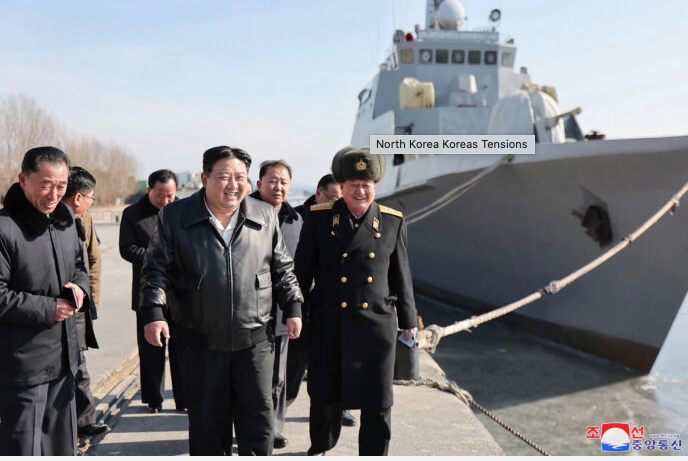
SEOUL, South Korea (AP) — North Korea on Friday extended a provocative series of weapons tests by firing cruise missiles into the sea, as leader Kim Jong Un called for his military to step up war preparations and toured a shipyard.

South Korea’s Joint Chiefs of Staff said the U.S. and South Korean militaries were analyzing the North Korean launches into its western sea. It said South Korea’s military detected multiple missiles but it did not immediately provide a specific number or an assessment of their flights.

The launches, which were North Korea’s fourth round of cruise missile tests in 2024, came hours after state media reported that Kim reiterated his focus on strengthening his naval forces as he inspected unspecified naval projects at a shipyard in Nampho on the west coast.

Kim in recent months has emphasized efforts to build a nuclear-armed navy to counter what he portrays as growing external threats posed by the United States, South Korea and Japan, which have stepped up their military cooperation in response to Kim’s nuclear weapons and missile program.

North Korea’s official Korean Central News Agency did not specify when Kim visited Nampho. It paraphrased Kim as saying that the strengthening of the navy “presents itself as the most important issue in reliably defending the maritime sovereignty of the country and stepping up the war preparations.”

KCNA did not specify the types of warships are being built in Nampho, but said they were related to a five-year military development plan set during a ruling party congress in early 2021. During those meetings, Kim revealed an extensive wish list of advanced military assets, which included nuclear-powered submarines and nuclear missiles that can be launched from underwater.

During the inspection, Kim was briefed on the progress of his naval projects and remaining technological challenges and ordered workers to “unconditionally” complete the efforts within the timeframe of the plan that runs through 2025, KCNA said.

Kim Inae, a spokesperson for South Korea’s Unification Ministry, said it was the first time the ministry was aware of that state media reported on Kim Jong Un conducting a military inspection in Nampho. That could suggest an expansion of naval projects from the country’s eastern shipyard of Sinpo, which has been the North’s base for submarine construction. Kim didn’t provide a specific answer when asked whether Seoul believes the North is using Nampho for its efforts to build nuclear-powered submarines.

“By making military threats routine, North Korea is trying to create a sense of insecurity among South Korean people to undermine trust in their government and to attract international attention to build an atmosphere in which its demands must be accepted to resolve the crisis on the Korean Peninsula,” she said.

South Korea’s army said its special operation troops wrapped up a 10-day training with U.S. Green Berets on Friday in a region near the country’s capital, Seoul, in the allies’ latest combined military exercises. The countries in past months had staged larger drills, including trilateral exercises involving Japan.

Kim Jong Un also called for naval might on Sunday while inspecting a test of a new nuclear-capable cruise missile, the Pulhwasal-3-31, designed to be fired from submarines. The North also last month conducted tests of a long-range cruise missile, which it has described as nuclear-capable and can cover ranges of up to 2,000 kilometers (1,240 miles), which would potentially put U.S. military bases in Japan within reach.

While North Korea has demonstrated quick progress in expanding its lineup of land-based nuclear-capable missiles, experts say Kim’s naval ambitions may require significant more time, resources and technology breakthroughs. Most of its aging, diesel-powered submarines can launch only torpedoes and mines, and experts say Kim’s stated pursuit of nuclear-propelled submarines is largely unfeasible without significant external assistance.

North Korean military scientists and engineers in recent months have been making progress on Kim’s 2021 list of goals, testing for the first time last year a solid-fuel intercontinental ballistic missile, named Hwasong-18, which added to the North’s arsenal of weapons targeting the U.S. mainland.

The North on Jan. 14 also tested a new solid-fuel intermediate-range missile, which underscored its efforts to advance its weapons that could target U.S. assets in the Pacific, including the military hub of Guam.

The North also plans to launch three more military spy satellites in 2024 after sending its first one into orbit in November, as Kim has described space-based reconnaissance as crucial for monitoring U.S. and South Korean military activities and enhancing the threat of his nuclear-capable missiles.

Tensions on the Korean Peninsula are at their highest point in years, after Kim accelerated his weapons development to an unprecedented pace while issuing provocative nuclear threats against the United States, South Korea and Japan. The United States and its Asian allies in response have strengthened their combined military exercises and updated their deterrence strategies.

There are concerns that Kim, emboldened by the steady advancement of his nuclear arsenal and strengthened ties with Russia, would further ramp up pressure against his rivals in an election year in the United States and South Korea. Experts say Kim’s long-term goal is to force the United States to accept the idea of the North as a nuclear power and negotiate security concessions and sanctions relief from a position of strength.

While most analysts downplay Kim’s threats of war, some say there’s a possibility that he can attempt a direct military provocation he can likely contain without letting it escalate into a full-blown conflict. One of the potential crisis points is the disputed western sea boundary between the Koreas, which had been the site of several bloody naval skirmishes in past years.

Source: VosIzNeias

Rabbi Lord Jonathan Sacks zt’l – Deed and Creed YITRO • 5771, 5784

The parsha of Yitro records the revolutionary moment when God, Creator of Heaven and Earth, entered into a mutually binding agreement with a nation, the Children of Israel, an agreement we call a brit, a covenant.

Now, this is not the first Divine covenant in the Torah. God had already made one with Noah, and through him all of humanity, and He made another with Abraham, whose sign was circumcision. But those covenants were not fully reciprocal. God did not ask for Noah’s agreement, nor did He wait for Abraham’s assent.

Sinai was a different matter. For the first time, He wanted the covenant to be fully mutual, to be freely accepted. So we find that – both before and after the Revelation at Sinai – God commands Moses to make sure the people do actually agree.

The point is fundamental. God wants to rule by right, not might. The God who brought an enslaved people to liberty seeks the free worship of free human beings.

God does not act toward His creatures like a tyrant.

Avodah Zarah 3a

So at Sinai was born the principle that was, millennia later, described by Thomas Jefferson in the American Declaration of Independence, the idea that governors and governments derive “their just powers from the consent of the governed.” God wanted the consent of the governed. That is why the Sinai Covenant was conditional on the people’s agreement.

Admittedly, the Talmud questions how free the Israelites actually were, and it uses an astonishing image. It says that God suspended the mountain above their heads and said, “If you agree, well and good. If you don’t, here will be your burial.” That is another topic for another time. Suffice to say that there is no indication of this in the plain sense of the text itself.

What is interesting is the exact wording in which the Israelites signal their consent. To repeat: they do so three times, first before the Revelation, and then twice afterwards, in the parsha of Mishpatim.

Listen to the three verses. Before the Revelation:

All the people answered as one and said, ‘All that God has spoken, we will do [na’aseh].’

Ex. 19:8

Then afterward:

Moses came and told the people all of God’s words and all the laws. The people all responded with a single voice, ‘We will do [na’aseh] every word that God has spoken.’

Ex. 24:3

He took the Book of the Covenant and read it aloud to the people. They replied, ‘We will do [na’aseh] and we will hear [ve-nishma] all that God has declared.’

Ex. 24:7

Note the subtle difference. In two cases the people say: all that God says, we will do. In the third, the double verb is used: na’aseh ve-nishma. “We will do and we will hear, (or obey, or hearken, or understand).” The word shema means ‘to understand’, as we see in the story of the Tower of Babel:

“Come, let us descend and confuse their speech, so that one person will not understand another’s speech.”

Gen. 11:7

Now note that there is another difference between the three verses. In the first two cases there is a clear emphasis on the unity of the people. Both phrases are very striking. The first says: all the people answered as one. The second says, The people all responded with a single voice. In a book that emphasises how fractious and fissiparous the people were, such declarations of unanimity are significant and rare. But the third verse, which mentions both doing and listening or understanding, contains no such statement. It simply says: They replied. There is no emphasis on unanimity or consensus.

What we have here is a biblical comment on one of the most striking features of all in Judaism: the difference between deed and creed, between asiyah and shemiyah, between doing and understanding.

Christians have theology. Jews have law. These are two very different approaches to the religious life. Judaism is about a community of action. It is about the way people interact in their dealings with one another. It is about bringing God into the shared spaces of our collective life. Just as we know God through what He does, so God asks us to bring Him into what we do. In the beginning, as Goethe put it, was the deed. That is why Judaism is a religion of law, because law is the architecture of behaviour.

When it comes, however, to belief, creed, doctrine, all the things that depend on shemiyah rather than asiyah, understanding rather than action: on this Judaism does not call for unanimity. Not because Judaism lacks beliefs. To the contrary, Judaism is what it is precisely because of our beliefs, most importantly the belief in monotheism, that there is, at least and at most, one God. The Torah tells us in Bereishit about creation, in Shemot about redemption, and in this week’s parsha about revelation.

Judaism is a set of beliefs, but it is not a community based on unanimity about the way we understand and interpret those beliefs. It recognises that intellectually and temperamentally we are different. Judaism has had its rationalists and its mystics, its philosophers and its poets, its naturalists and its supernaturalists: Rabbi Ishmael and Rabbi Akiva, Judah Halevi and Maimonides, the Vilna Gaon and the Baal Shem Tov. We seek unanimity in halachah, not in aggadah. Na’aseh, we act in the same way, but nishma, we understand each in our own way. That is the difference between the way we serve God, collectively, and the way we understand God, individually.

What is fascinating is that this well-known feature of Judaism is already signalled in the Torah: in the difference between the way it speaks about na’aseh, “as one,” “with a single voice,” and nishma, with no special collective consensus.

Our acts, our na’aseh, are public. Our thoughts, our nishma, are private. That is how we come to serve God together, yet relate to Him individually, in the uniqueness of our being.


Iran Begins Building 4 More Nuclear Power Plants

0

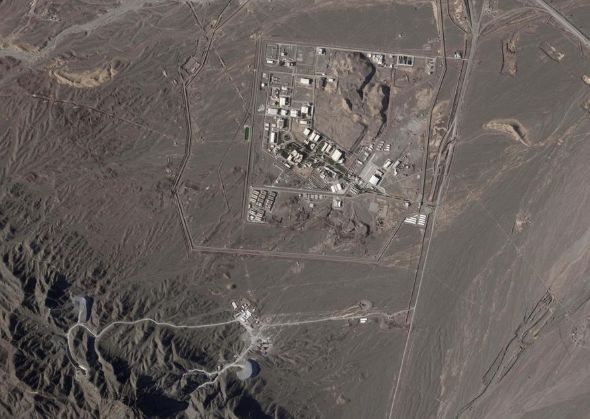
Iran began construction on four more nuclear power plants in the country’s south, with expected total capacity of 5,000 megawatts, the official IRNA news agency reported Thursday.

Iran seeks to produce 20,000 megawatts of nuclear energy by 2041.

The country has one active nuclear power plant, a 1,000 megawatt plant that went online with help from Russia in 2011. It’s also building a 300-megawatt plant in oil-rich Khuzestan province, near the western border with Iraq.

The UN’s nuclear watchdog said last year that Iran has increased the rate at which it is producing near-weapons grade uranium.

Director General Rafael Mariano Grossi said in the report that Iran “in recent weeks had increased its production of highly enriched uranium, reversing a previous output reduction from mid-2023,” according to an IAEA spokesperson. Iran had previously slowed the rate at which it was enriching uranium to 60% purity, which is just a short technical step away from the weapons-grade level of 90%.

The West has long suspected that Iran is acquiring nuclear weapons. Iran denies it is seeking such weapons.

IRNA quoted Mohammad Eslami, the head of Iran’s atomic agency, saying it will take up to nine years to complete the new plants.

The report said the four new plants are being built in the port town of Sirik on Iran’s east coast, some 1,150 kilometers (715 miles) south of the capital, Tehran.

Nasser Shariflou, the head of the project, told IRNA that the project will cost some $20 billion and will create 4,000 jobs. Each plant is expected to use 35 tons of nuclear fuel per year.

(AP)

Hamas ‘catfishing’ to lure Israelis into delivering explosives

0

Participating in the catfishing operation were terrorists released in exchange for IDF captive Gilad Shalit in 2011.

By Vered Weiss, World Israel News

The Shin Bet, Israel’s internal security agency, uncovered strategies employed by Hamas terrorists to lure Israelis on social media into delivering packages, often containing explosives.

Using fake profiles on Facebook, Hamas convinced unwitting people that they were fellow Israelis who were willing to pay to have packages delivered.

Inside many of these packages were explosives intended for “quality targets” inside Jerusalem as well as Judea and Samaria.

They also intended to cultivate a connection with the other person to encourage them to make multiple deliveries.

Hamas terrorists used fake profiles of men and women with Israeli names and communicated with Israelis in Hebrew.

This type of fraud known as “catfishing” involving the use of fake identities to fool victims, was used by Hamas before the war.

A number of terrorists active in the catfishing operation were Palestinian terrorists released to free IDF captive Gilad Shalit in 2011.

The operation was discovered with the IDF and Shin Bet raided Hamas offices in the Gaza Strip and recovered computers and documents outlining details of the plan.   

Many of these catfishing tactics were carried out as recently as September 2023, a month before the beginning of the war.

“The Israelis were asked to perform tasks including transferring shipments, receiving money, purchasing gifts and leaving them at various points, without coordinating a meeting with the recipient of the package,” Shin Bet explained.

“Among the places where they were asked to leave the gifts – a synagogue, a cemetery and the doorsteps of private apartments throughout Israel,” it added.

This revelation comes days after a hospital raid on Jenin to target Hamas terrorists who were plotting an attack “inspired by the October 7th massacre.”

In the raid, during which IDF troops were disguised as nurses and patients, Mohammed Jalamneh was killed along with two brothers in Islamic Jihad, Mohammed and Basel Al-Ghazawi.

Mohammed Jalamneh was deeply involved in terrorist activity and was found with a pistol inside the hospital.

Source: World Israel News

23andMe Data Breach Targeted Jews

0

A class action lawsuit against the DNA-testing company claims it didn’t notify customers that their personal information had made it onto the dark web.

For five months last year, hackers penetrated the security of the DNA-sequencing company 23andMe, resulting in customer data appearing for sale in “curated” lists that focused on Chinese customers and Ashkenazi Jews.

A new class action suit filed in San Francisco on Jan. 26 seeks to hold 23andMe responsible for not protecting users’ private information and not notifying them of the breach. The company apparently didn’t learn about the crime until a hacker posted on Reddit revealing some of the stolen information.

The alleged hacker goes by the name “Golem” and uses an avatar of the villain from “The Lord of the Rings” films. He claimed to have 350,000 profile records for Chinese users. On Oct. 17, he said he possessed data on “wealthy families serving Zionism” that he offered to sell.

“The leaked data could empower Hamas, their supporters and various international extremist groups to target the American Jewish population and their families,” said Rep. Josh Gottheimer (D-N.Y.).

The breach reportedly resulted from the “recycling” of passwords. Other websites that leaked passwords enabled hackers to use those passwords to gain access. Through this method, hackers gained access to data from some 6.9 million accounts.

Elon Musk Says The First Human Has Received An Implant From Neuralink

0

According to Elon Musk, the first human received an implant from his computer-brain interface company Neuralink over the weekend.

In a Monday post on X, the platform formerly known as Twitter, Musk said that the patient received the implant the day prior and was “recovering well.” He added that “initial results show promising neuron spike detection.”

The billionaire, who co-founded Neuralink, did not provide additional details about the patient. When Neuralink announced in September that it would begin recruiting people, the company said it was searching for individuals with quadriplegia due to cervical spinal cord injury or amyotrophic lateral sclerosis, commonly known as ALS or Lou Gehrig’s Disease.

Neuralink is one of many groups working on linking the nervous system to computers, efforts aimed at helping treat brain disorders, overcoming brain injuries and other applications. There are more than 40 brain computer interface trials underway, according to clinicaltrials.gov.

Neuralink reposted Musk’s Monday post on X, but did not publish any additional statements acknowledging the human implant. The company did not immediately respond to The Associated Press’ requests for comment Tuesday.

Neuralink previously announced that the U.S. Food and Drug Administration had approved its “investigational device exemption,” which generally allows a sponsor to begin a clinical study “in patients who fit the inclusion criteria,” the FDA said Tuesday. The agency pointed out that it can’t confirm or disclose information about a particular study of this kind.

Neuralink’s device is about the size of a large coin and is designed to be implanted in the skull, with ultra-thin wires going directly into the brain. In its September announcement, Neuralink said the wires would be surgically placed in a region of the brain that controls movement intention. The initial goal of the so-called brain computer interface is to give people the ability to control a computer cursor or keyboard using their thoughts alone.

In a separate Monday post on X, Musk said that the first Neuralink product is called “Telepathy” — which, he said, will enable users to control their phones or computers “just by thinking.” He added that intial users would be those who have lost use of their limbs.

It’s unclear how well this device or similar interfaces will ultimately work, or how safe they might be. Clinical trials are designed to collect data on safety and effectiveness.

(AP)

Source: The Yeshiva World

Investigators Detail How American Airlines Jet Crossed Runway in Front of Delta Plane

0

(AP) — The pilots of an American Airlines plane taxied across the wrong runway last year in New York — into the path of another jetliner that was taking off — after the captain became distracted and confused about takeoff instructions and the co-pilot lost track of their plane’s location, according to documents released Monday.

Disaster was averted because an air traffic controller shouted at pilots of the other plane, a Delta Air Lines flight, to abort their takeoff.

The National Transportation Safety Board released documents related to its investigation of the Jan. 13, 2023, incident at John F. Kennedy International Airport. The investigation is continuing, and the board said it has not yet determined a probable cause for the close call.

The nighttime incident was among several close calls at U.S. airports that alarmed the public and lawmakers and led the Federal Aviation Administration to hold a “safety summit” last year.

The pilots of the London-bound American Airlines Boeing 777 took a wrong turn on a taxiway alongside two perpendicular runways. The crew had first planned for a takeoff from runway 31L. However, they later got instructions from a controller and a message on their cockpit computer telling them to taxi across 31L and take off from runway 4L.

In later interviews, “all three pilots (on the American Airlines plane) said they understood at that time that (the flight) would be departing runway 4L,” according to the NTSB.

Instead, they crossed 4L just as a Delta Boeing 737 began its takeoff roll down the same runway.

The captain, Michael Graber, said that as the plane crossed the middle of runway 4L, he saw red runway lights turn on — the lights warn pilots when it’s not safe to be on the runway.

“All of a sudden I saw that red glow and I just — right away I said something — that ain’t right,” he told investigators. “I didn’t know what was happening, but I was thinking something’s wrong.”

The captain added power to speed across.

Graber told investigators that he heard and understood the directions from the controller but got distracted by a heavy workload and, in his mind, might have gone back to thinking they were taking off from the other runway.

The co-pilot, Traci Gonzalez, said she knew the entire time that they were supposed to cross runway 31L, “but she was unaware of the airplane’s position when the captain taxied onto runway 4L,” investigators wrote. “She knew they were approaching a runway, but she did not realize they were approaching runway 4L.”

The co-pilot also blamed distractions, including an unusually high number of weather alerts.

The third person in the cockpit, Jeffrey Wagner, a relief pilot for the long international flight, said he was “heads down” and didn’t know where the plane was as it taxied on to the runway. He said that when they crossed the wrong runway and he saw a plane to his right, he initially thought it might be taxiing behind them.

The Delta pilots, warned by the air traffic controller, were able to brake to a stop. The planes were never closer than about 1,000 feet (300 meters) apart — not a comforting margin in aviation-safety terms.

A controller warned the American crew about a “possible pilot deviation,” and gave them a phone number to call, which the captain did. After a delay, they took off for London — this time on runway 31L. The crew did not report the incident to American Airlines before taking off.

The cockpit voice recording from inside the American plane was taped over during the six-hour flight to London and lost forever.

Investigators said they tried several times to interview the American pilots, but the pilots refused on advice of their union, which objected to the NTSB recording the interviews. The NTSB then took the highly unusual step of issuing a subpoena to compel the crew members to sit for recorded interviews.

The pilots’ union, the Allied Pilots Association, had no immediate comment Monday on the NTSB documents.

The report renewed recommendations that the Federal Aviation Administration require better preservation of cockpit voice recordings. They run on loops that typically tape over old sounds after two hours. The FAA finally bowed to NTSB pressure late last year, announcing that it would propose that recordings not be overwritten for 25 hours — but only on new planes.

Source: Hamodia


WP Twitter Auto Publish Powered By : XYZScripts.com