
Great video by Mendy Pellin of jewbellish.com
Israeli Medical Journal Admitted into NIH International Research Database
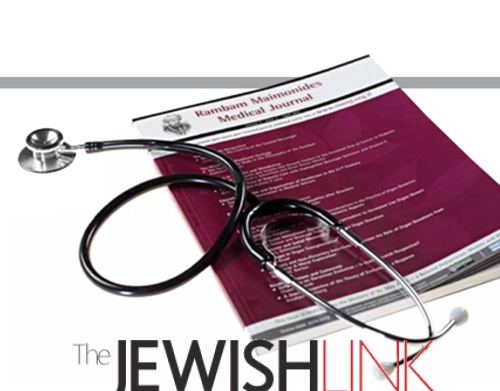
Rambam Maimonides Medical Journal (RMMJ), a quarterly online medical research journal from Rambam Health Care Campus in Haifa, Israel, recently was entered into PubMed, an international database of life science and biomedical research maintained by the U.S. National Library of Medicine at the National Institutes of Health. PubMed entries include bibliographies and full research articles available for database search through a free online portal. According to its website, PubMed has at least 23 million citations available.
While many science and medical journals are available to subscribers only, RMMJ was created in July 2010 as a free platform for leading medical and science researchers from across the world to incorporate their articles and research into an online forum of expertise. RMMJ includes research and data on clinical studies related to patient care, disease prevention, public health, laboratory and hospital innovations, as well as articles on medical ethics and current events in Israel and the world. Entries are authored by internationally renowned researchers, including seven Nobel Prize winners.
“We want to deliver medicine with emotion and medicine with compassion,” said Prof. Shraga Blazer, founder and editor of RMMJ and director of Rambam’s neonatal and infant intensive care unit. “The idea is to give access to medicine to the general public.” The journal has been read by at least 37,400 people in 137 countries. There have been approximately 157,600 downloaded articles from the site to date.
RMMJ’s inclusion to PubMed is sure to expand the reach of Israeli medical research and amplify the access to high-quality data for researchers, scientists and practitioners across the world.

Website Traffic and Server Changes

B”h due to the overwhelming response of our new website www.thejewishlink.com there has been some issues with our servers handling the traffic. Over the next 24-48 hours we will be switching over to a new server /company better suited to handle a web based news site. During this transition there will not be any posts on the site. you may reach us at anytime at info@communitylinks.info or the office at 323-965-1544.
Wishing you a great day!
Dov Blauner
Community Links Media
323-965-1544
Relaxed Parking Enforcement Arranged for Yom Tov
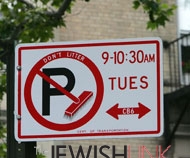
Once again this year Paul Koretz has arranged fro relaxed parking enforcement of street cleaning, time limit, and preferential parking restrictions for the Jewish community this Yom Tov season. For a full list please click full story below.

Israeli Hospitals: A Model for Coexistence
By Daniela Feldman
A true melting pot of cultures, Israel’s population is comprised of immigrants from the four corners of the earth. Often international news reports are filled with clashes and curtailed hopes of peace, staggered by the inability for productive dialogue and intolerance to difference. Nonetheless, in every major city in Israel there is at least one place where religious and political tensions are set to rest, because life is at stake: the hospital.
Haifa, a true multicultural city, is known to be Israel’s bastion of tolerance – with historic significance for Jews, Muslims, Christians and Baha’i’s. Haifa residents are known for their friendly nature, and the city has a long history of integration. Bordered by a stunning port, Haifa, with its calm and unique culture, is a fair alternative to the bustling cities of Tel Aviv and Jerusalem and ranks as Israel’s third largest city. In recent years, the municipality has invested millions of shekels in revamping many of Haifa’s neighborhoods, adding in new housing, classy cafes and international shops.
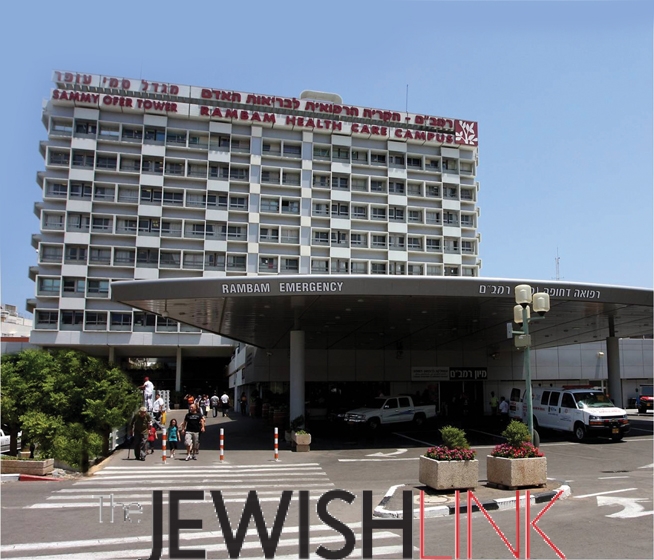
The streets of Haifa vibrate from the rhythms of its eclectic residents and the breathtaking views of beaches and mountains illuminate the city, where local residents roam on their daily business. Like in most places in Israel, Haifa’s residents come from all over the world and represent a variety of political, religious and personal outlooks on life. This is especially evident in the corridors of Haifa’s largest hospital, Rambam Health Care Campus — a microcosm of the city it is nestled in.
At Rambam, patients and staff come from all walks of life. As the largest full-service facility in Northern Israel, it is the major treatment hospital with state-of-the-art tools for surgery and revolutionary innovations to care for the entire region. Its practitioners provide the utmost attention to patients, moving the institution to the status of an international frontrunner in medical research and development.
According to 2009 census data, more than 2,130,000 people live within Rambam’s regional span. At least 1,175,000 of these people are Jewish, but 655,000 are Muslim, 123,000 are Christian, 123,000 are Druze and another 75,000 are not affiliated with a religion.
Specifically at Rambam, employees represent the different populations of Northern Israel and bring a diverse set of perspectives and experiences to treat patients, indiscriminately, within the hospital’s walls. Of the hospital’s 4,600 employees in 2012, 80 percent were Jewish, 9 percent were Muslim, 7 percent were Christian and 1 percent was Druze, according to the hospital’s 2012 annual report.
“Rambam is committed to spreading universal Jewish values by delivering the highest standards of health care for everyone,” said Prof. Rafi Beyar, CEO and director general of the Rambam Health Care Campus. “We treat all of Israel’s residents, regardless of religion or background, with thorough and compassionate care,” Beyar explained. “At Rambam, developing cutting edge innovations and advancing medical research are also among our top priorities and we have many research groups working on population-specific diseases.”
Despite the negative reputation of Israel among international news agencies, this June the Israeli Health Ministry announced an initiative that is yet another step toward complete equality within the health care system. The law now requires that all Israeli hospitals open Muslim prayer rooms within the next 18 months, in response to a petition submitted to the High Court. Both Rambam in Haifa and Soroka University Hospital in Beer Sheva have Muslim prayer rooms already in use, while all of the other hospitals will need to allocate space on site to meet the national requirement.
Meanwhile, as tensions have been brewing on the northern front, Israel has reaffirmed its commitment to humanitarian aid. Some 100 wounded Syrians have crossed into Israel for health care since the fighting began in 2011. Many Syrians are treated at Ziv Medical Center in Safed, while others are treated by an Israeli Defense Forces field hospital in the Golan. According to Israeli news sources, a small number of more severe cases are transferred to larger hospitals, like Rambam, though government and hospital officials prefers to keep these events quiet for security reasons.
This is not an exceptionally unique situation for Israeli hospitals. While rockets from Gaza fell into Southern Israel last fall, pediatricians at Rambam were busy treating four Gazan children who were awaiting kidney transplantation and had severe complications from organ failure. Mahdi Tarabia, head nurse at the pediatric nephrology unit, said the children received “lifesaving” treatment while at Rambam.
“The hemodialysis treatment that these children were given before their arrival at Rambam was associated with medical complications, resulting in a worsening of their condition and many hospitalizations,” he explained. “Now [after care at Rambam], these families have the skills to administer peritoneal dialysis, which represents a significant improvement in the children’s circumstances and will enable them to function almost normally.” Tarabia added that there was great cooperation between the staff at Rambam and the local medical authorities in Gaza.
In February, a 27-year-old man from Nablus was transported to Hadassah Medical Center in Jerusalem, following clashes between Palestinians, Israeli residents and IDF soldiers. Originally treated in a Nablus hospital, the man’s condition, caused from his severe gunshot wounds, deteriorated significantly and doctors suggested he get more sophisticated care at Hadassah. However, the patient needed to be transferred with an accompanying physician to monitor his anesthetics and respirator. Palestinian doctors did not have access to the appropriate equipment and called upon Hadassah for assistance. The situation got more complicated due to security restrictions for travel within Palestinian-controlled areas of the West Bank.
Dr. Micha Shamir, a senior Hadassah anesthesiologist, agreed to do the transfer. First, Shamir was driven and escorted by Palestinian security personnel to the Nablus hospital. The patient was put into a Palestinian ambulance and met Shamir prior to crossing a checkpoint outside of Nablus, where an Israeli Air Force helicopter flew them to Hadassah’s intensive care unit in Ein Kerem.
Such situations are not uncommon for medical professionals in Israel, according to Dr. Aaron Krom, a resident in anaesthesiology and intensive care at Hadassah’s Ein Kerem facility. “On the simplest level, by working side by side with Palestinians from the West Bank in the hospital, I’ve gotten to build relationships with people who I would not usually meet or talk to,” said Krom, who studied at Oxford and made aliyah from England last August.
“One of the most fascinating aspects of working in a multicultural team is the ability for the hospital to treat everyone equally and yet benefit from their differences,” he said. “On the one hand, we rarely discuss politics, and doctors from all different backgrounds care for Jewish and Arab patients the same. On the other hand, a hospital policy arranges that Jewish employees provide more coverage during Muslim festivals so that Muslims can take leave, and likewise, Muslim physicians cover patients during Jewish holidays for Jewish employees to take vacation.”
Cooperation is key in medicine, and there are countless stories of Israelis ignoring religion or race for the sake of saving a life and giving top health care. One such story occurred in May, when physicians at Rambam performed Israel’s first-ever “crossover kidney transplant.” In this procedure, one patient’s family member donates a kidney to another recipient whose relative donates a kidney in return to the first patient. It is a revolutionary alternative transplant surgery when no blood relative is a suitable match for donation.
Haifa residents Muhammad Akrat, 32, and David Ben-Yair, 57, had never met before they shared a hospital room following a kidney transplant. In a three-hour surgery, Akrat’s wife Rasha gave her kidney to Ben-Yair, and in return, her husband received a kidney from Ben Yair’s son Shmuel.
“Whoever saves a life is sacred, whether Jewish or Arab. G-d’s blessing will prevail,” said Muhammed Akrat about this extraordinary procedure.
This cooperation and commitment to providing aid reaches the burgeoning field of medical research. In conjunction with last year’s Ramadan holiday, Prof. Naim Shehadeh, director of Rambam’s pediatric unit and the pediatric diabetes and obesity clinic, released new research that found that fasting spurs health complications among diabetics. In his clinical study of patients using three types of insulin, Prof. Shehadeh found that the risk of health complications, such as dizziness, fatigue and low sugar levels, among diabetics is 7.5 times higher during the fast itself than during the non-fast period. This research has obvious implications for the Jews as well, given the occurrence of religious fast days throughout the year.
Overall, Israeli physicians, researchers and caregivers recognize that all residents – no matter what beliefs they hold, where they live and what their socioeconomic status is – have shared experiences. Even the worst of situations provide a platform for strangers to join together.
As a testament to Israel’s integrity and compassion, children battling cancer are given respite and support among their peers and with the help of social workers. At the Akko Beach Hotel, the not-for-profit organization To Fight Together hosted 17 children diagnosed with cancer and receiving treatment at Rambam for a therapeutic weekend camp.
In the program were workshops on issues, such as self image, fears, future planning, intimacy and interpersonal relationships, as well as fun activities. The staff, comprised of social workers from Rambam’s pediatric hematology-oncology department, remarked how the group of Jews and Arabs between ages 11 and 20 became so cohesive by the end of the weekend, and that they are sure that this program forged relationships among the participants.
These stories are just a sampling of what leaders in Israeli health care are doing to positively impact the country’s residents and its sometimes hostile neighbors. In a time when the news is constantly criticizing Israel, these leaders are shining light on how the country’s roots in the Jewish values of compassion, justice and integrity percolate the medical field. Tikkun olam – the Torah-based principle of repairing the world – and pikuach nefesh – saving a life — reach hospital wards and research laboratories both in times of crisis and calm.
The Observant Jew: Straight A’s
By Rabbi Jonathan Gewirtz
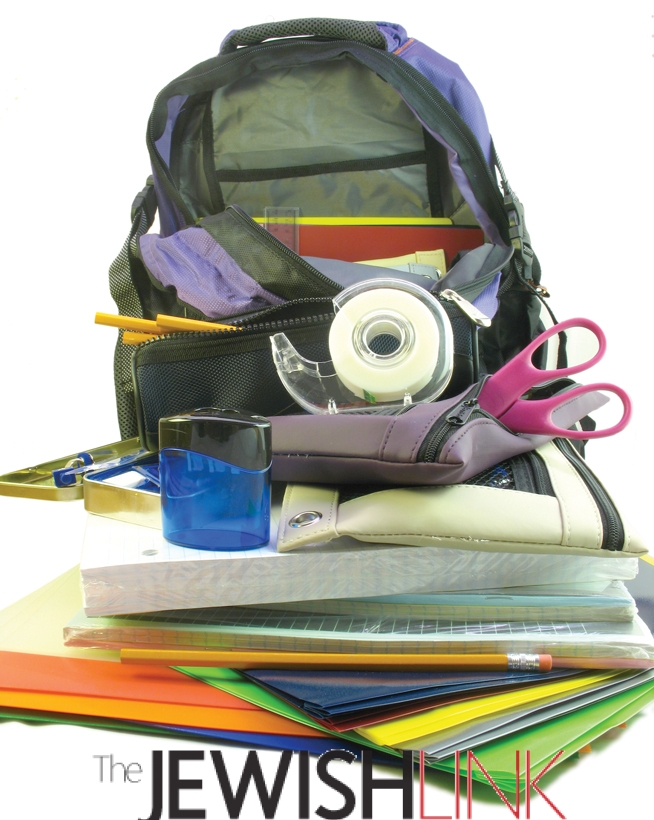
The editor of one of the magazines that publishes my articles asked me for a “Back to School” theme. I thought about it and was hard-pressed to come up with anything. I’m not going to write a humorous perspective about the difficulties of finding all the items teachers dream up that the kids will never use, nor about the tumult of running to ten different stores to save a nickel on #2 pencils, or how all the mothers do a happy dance on the first day of school when they can finally reclaim some peace and quiet and maybe get around to doing two months of cleaning that didn’t happen when they had the kids on their heads.
That’s not my style, and I’ve got readers who may not have kids going back to school. I was drawing a blank until I saw a Dvar Torah written by Rabbi Dovid Lewin of Ramat Beit Shemesh in his weekly sheet “Yesodos m’Hasedra,” [You can sign up through www.ahavasyehonoson.com.]
It quoted a famous question from R’ Yitzchak Blazer z”l. If on Rosh HaShana the righteous are instantly sealed for good while the wicked are instantly sealed for bad and the ten days between Rosh HaShana and Yom Kippur are just for the people with the same amount of mitzvos and sins, [called a “bainoni,” or in-between person], why do we need to repent? Let’s just do a few more mitzvos, tip the scales in the right direction and move on!
The answer floored me. Rabbi Lewin suggested the following: The bainoni’s problem is not that he had the same amount of mitzvos and aveiros. If that were the case then perhaps doing a few more mitzvos would suffice. The bainoni is faulted, though, for allowing himself to enter Rosh HaShana as a middling fellow. How could he have approached Rosh HaShana without scrambling for a few more mitzvos, more time guarding his tongue, and making efforts to be a tzaddik? For THAT, one must do Teshuva. And that’s when I got the inspiration for my “Back to School” topic.
Before a new school year, we go out and buy clothes, knapsacks, pencils, paper and notebooks galore. Why? So our child is prepared for the year ahead, ready to do well, study hard, and get good grades. We want straight A’s, or as close to that as possible, and we want to give our children the tools they need to succeed.
I doubt anyone would ever decide, “I’m not getting school supplies this year; let my son use a shopping bag to carry his things.” We don’t figure they can use just pens that we swipe from banks or write notes on pads we get from hotel rooms we’ve visited. You don’t hear people say, “I’m hoping my daughter doesn’t take school too seriously and only picks up about half of what the Morah says.”
That’s because we realize that education is important, that we WANT our children to learn, and we WANT them to be excited about the opportunities they have.
Not coincidentally, right around the time we’re doing all this preparation for them to be successful students comes Elul, when we are supposed to be preparing ourselves to be successful Jews. We should be prepared for the New Year just as we prepare for the new year.
Back to School isn’t a crazy tumultuous affair for naught. Perhaps HaShem rigged it to be a clarion call for those of us who didn’t quite get the message of the Shofar that we need to be ready to start the new year on the right foot. Nobody thinks they can start the school year and then pick up supplies over the next week or two. OK, maybe some people do, but I’m guessing the school Social Worker will have a particular interest in their children.
Just as you wouldn’t send your child to school without pencils, paper, or their school uniform, you shouldn’t enter the new year on Rosh HaShana without at least trying to start out as a tzaddik. Some parents start shopping for school supplies in August, while others have been shopping since January. It’s the same here. Don’t wait until the last minute to get ready. Start as early as you can, and aim for success.
You wish people, “Good Morning,” not, as a slightly-jaded teen might wish someone, “Boker Mediocre.” You want to have a great day, not one with equal parts of happiness and aggravation.
Maybe that’s the lesson we can share in preparation for the Yemei HaDin. Go for the gold, aim to be a tzaddik from day one, and don’t wait until later. Go back to school and see what you can pick up to help yourself get not just a passing score, but straight A’s, on the biggest exam day of the year.
Jonathan Gewirtz is a freelance writer whose work has appeared in publications around the world. He also operates JewishSpeechWriter.com, where you can order a custom-made speech for your next special occasion.For more information, or to sign up for the Migdal Ohr, his weekly PDF Dvar Torah in English, e-mail info@JewishSpeechWriter.com and put Publication Sponsorship or Subscribe in the subject. © 2013 by Jonathan Gewirtz. All rights reserved.
This Elul, join over 10,000 women aspiring for change.The Ohr Naava Avinu Malkeinu Event.
It’s that time of year again. Jewish men and women worldwide are charged with a mission: take stock of your spiritual inventory. Face your flaws; set goals; make resolutions. But in the freneticism of our daily lives, does it really happen? Do we manage to prepare ourselves before meeting the King—or do we stumble into shul on Yomim Noraim empty-handed?
Ohr Naava—the legendary worldwide network of Jewish women’s education founded in memory of Naava Katlowitz a”h—has once again stepped up to the plate. Galvanized by Rabbi Zechariah Wallerstein, its beloved founder and director, the innovative organization launched its first Avinu Malkeinu evening of inspiration eight years ago, offering women of the tri-state area a transformative, large-scale event of awakening. Since that hugely popular start, attendance at the gathering has shot up each year, and Avinu Malkeinu has been duplicated in nearly every major Jewish community across America—including Los Angeles.
“People were thirsting for this kind of program,” says Avivit Mikhli, Ohr Naava’s Director of Operations. “It provides the impetus—the drive—you need to engage in real change.”
This year, the Los Angeles Avinu Malkeinu event will take place on Wednesday, August 28 in the Nessah Synagogue, sponsored l’iluy nishmas Mrs. Avigayil Rechnitz a”h. The legendary wife, mother and
community doer who revived the Ladies Bikur Cholim and spent her days steeped in chessed, Avigayil was the driving force behind LA’s very first Avinu Malkeinu event three years ago—and it’s therefore particularly fitting that the evening of inspiration will be dedicated in her memory.
Doors are scheduled to open at 7:30 pm, followed by the program—open to both men and women—at 8:00, featuring two internationally-renowned speakers known for hard-hitting, riveting presentations: Rabbi Zechariah Wallerstein and and Mr. Charlie Harary.
“For many women, it’s become a mainstay of their Yom Tov preparation,” says Sarit Rubinstein of the event. “They won’t go into Yom Kippur without it.”
Parallel Avinu Malkeinu events are scheduled in Baltimore, Lakewood, Toronto, Monsey, and Yerushalayim, all spotlighting dynamic speakers who masterfully combine charisma and content, including Rabbi Paysach Krohn, Rebbetzin Esther Jungreis, Rabbanit Yemima Mizrachi, Rabbi Moshe Tuvia Lieff, and of course, Rabbi Wallerstein. (With the exception of the Baltimore, LA, and Toronto gatherings, where the entire program is open to men, the events are for women only.)
For women in all other locations worldwide, the Brooklyn and Israel programs can be viewed live from the comfort of their own home, or at a satellite location arranged in advance with Ohr Naava. For more information about the event call 323.899.5390 or visit www.ohrnaavaevents.com