July 19, 2013, 12 Av 5773
Parshat Va’etchanan – Shabbat Nachamu – the Eruv is UP
The ERUV is UP
www.laeruv.com


Los Angles, CA – One of the four remaining original copies of Schindler’s list hit the international mega-auction website eBay last night at 9 p.m. EDT, launching a ten day window in which the public will be able to bid for ownership of the legendary piece of history.
The NEW YORK POST (http://bit.ly/15tnE96) reports that reserve window for starting bids reads, “Enter US $3,000,000.00 or more.”
The document is being sold by two collectors from California, Gary Zimet and Eric Gazin, who say they hope to fetch as much as $5M for the prized piece.
There were originally seven versions of the list, but only four remain accounted for, with two now residing at Yad Vashem, the Israeli Holocaust Memorial Museum, and the other at the U.S. Holocaust Museum in Washington.
This marks the second time this particular version has hit eBay—-opening bids started at $2.2M back in 2010 when it was put on auction by the nephew of Schindler’s accountant Itzhak Stern.
Though the name of the current owner is not listed, information on the listing states “Free local pick-up,” and “Item location: Israel.”
The document’s new owner will also receive an affidavit from Stern’s nephew guaranteeing its authenticity.
Gary Zimet said that because a great number of the survivors and their descendants moved to the U.S., “There are names on this list which will sound very familiar to New Yorkers.
Source: vosizneias.com

To celebrate the building of a new state-of the-art inclusive playground for the greater Los Angeles community, Friendship Circle of Los Angeles is hosting a groundbreaking ceremony at 11:00 am, Sunday July 21, at 1952 S. Robertson Boulevard.
The event will mark the beginning of construction for “My Backyard”, a playground designed specifically for children who have physical disabilities and other special needs. Among the new features, the playground will have California’s first integration carousel – a carousel designed specifically to allow wheelchair-bound children to roll right on! Long term plans include curriculum to utilize each component of the yard to its full potential. Jewish values, rituals and lifestyles will play a part in the plans to make the yard interactive and a place for physical, spiritual and communal growth. For example, the children will learn about the Jewish harvest holidays and then go outside and work in the Friendship Garden. These plans include opening up the yard to local schools and youth groups where they can be a part of this place of inclusion and life-long learning.
The Friendship Circle of Los Angeles was created by Rabbi Michael Rav-Noy and his wife Miriam in 2003 to address the social needs of Jewish children with special challenges. Its mission is to provide these children opportunities to engage with others through social, recreational, and educational experiences. At the heart of all Friendship Circle programs are teen volunteers from 58 schools around LA that are paired with participating children to provide mentorship and friendship. It’s a win-win for everyone as the teens give of themselves and children are the recipients of all that love.
If you would like to RSVP for the ceremony, become a volunteer or to register your child for one of Friendship Circle’s programs, please call 310.280.0955 or visit their website at www.fcla.org


The BHPD is urging residents to stay safe and make alternate travel plans all Wednesday evening.
The Beverly Hills Police Department is urging drivers coming into, or heading out of Beverly Hills this evening to avoid certain areas of the southern part of the City if possible.
A large-scale protest related to the George Zimmerman-Trayvon Martin murder trial is planned to begin at 5 p.m. on Wednesday evening at La Cienega Park.
The BHPD says traffic may be affected on both La Cienega Boulevard and Wilshire Boulevard.
According to a Facebook page created for the event shows that 7,557 people were invited to attend the self-described “peaceful protest.” 327 of those confirmed they would be attending on the Facebook page.
Since a not guilty verdict was reached on the trial on last weekend, several peaceful protests have turned violent across Los Angeles with many people taking the opportunity to loot retail stores, destroy vehicles or combat the police.
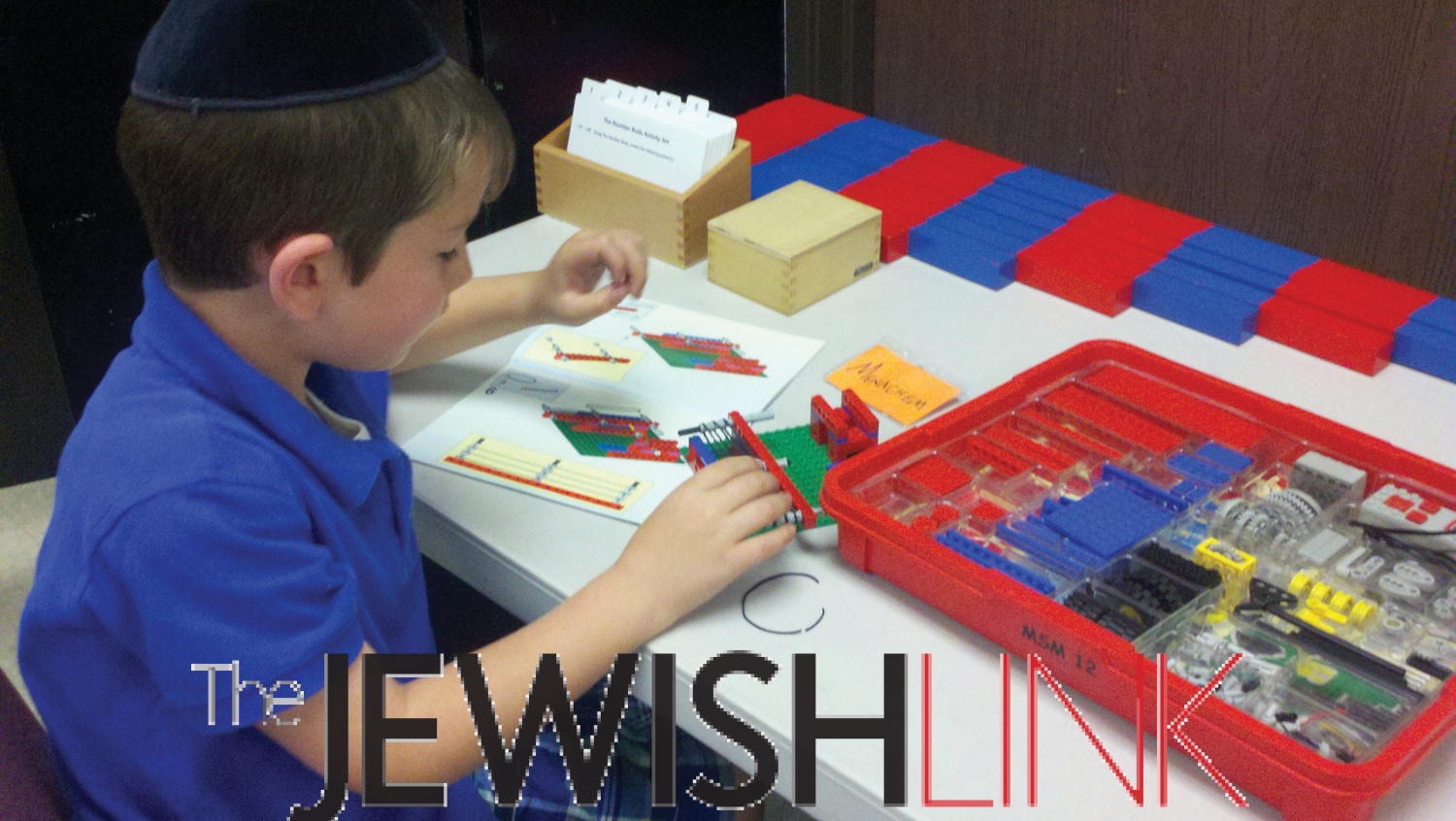
For the past few years Los Angeles has seen a changing landscape in the area of Jewish education. Older institutions changed formats, such as Shalhevet expanding its doors to include a lower school and then again reformatting back to a high school. Recently, we have seen educators experiment with new models in the cases of Yeshiva High Tech and Chabad of South La Cinega’s very own Jewish Montessori preschool. The latest contender to challenge our educational paradigm is Darko.
Darko is the brainchild of Shimon Shain, a local educator and the founder of MasterMind LA, a well known tutoring and coaching company that mentors students and teachers alike on the latest cutting edge developments in Jewish Education. MasterMind LA is responsible for bringing Rabbi Jonathan Rietti to Los Angeles and implementing the Lashon HaTorah program at Darko, Yavneh and many other local Jewish schools.
Unlike a traditional day school, the Darko learning center breaks the mold with its innovative and collaborative approach to education. Student’s benefit from full time, half day or opt-in classes based on availability and fall under their parents Private School Affidavit, thus, taking the concept of homeschooling to the next level. Rather than merely thinking outside of the box this allows students and educators to ponder the shape of Jewish education.
Darko prides itself as being Jewish Montessori where students participate in hands on learning and spend more time actively engaged in curriculum, than sitting at desks. This past year the students participated in science courses offered at the L.A. Science Center, learned about spatial relationships with Lego robotics enforced by a trip to Legoland, and re-enforced mathematical skills through working on fractions during challah making. Additionally, the students focused on pre-geometry concepts during woodworking and technical skills, including computers and graphics put to use during Claymation classes.
Darko’s Judaic and general studies curriculum is fully integrated. When the children learn about the first day of creation (when Hashem created light), the teachers take the opportunity to teach all about the science of gravity and light. When the children learn about day three of creation (when Hashem created land and oceans), the teachers take the opportunity to teach geography…
For more information on Darko, to get involved or to schedule a tour of their Pico Robertson campus call (323)-244-4136 and be sure to check out their virtual tour at DarkoLA.org




By Rabbi Jonathan Gewirtz
Recently I heard a story about Robin Williams. Robin Williams is a world-famous comedian and actor who has been in the business for decades. While he is not Jewish, he has said that growing up he gravitated towards the Jewish kids in school because they, like he who moved to the area from another city, were seen as outsiders. He even called himself an honorary Jew because he attended 14 Bar Mitzvahs in a single year!
While being interviewed on a German talk show, a woman asked him, “Mr. Williams, why do you think there is not so much comedy in Germany?” He replied, “Did you ever think you killed all the funny people?”
When a friend related this story, one woman who heard it was very upset. She said, “If he really said this, it is a terribly cruel and insensitive response to someone not responsible for the horrific acts of a previous generation.”
Now, I’ve often said that when given the choice between good taste and a good line, a good line will win every time. I’m not going to discuss whether his comment was tactful or not or whether it was funny or not. (OK, I think it was funny!)
What I’d like to focus on is this: The woman who was incensed by the cruelty of his comment may have jumped the gun. She was obviously feeling defensive for the interviewer, who was seemingly attacked by this American, born after the Holocaust, who stereotyped Germans as indiscriminate murderers.
I wondered: how did he deliver the punchline? What was said before that question? How did the interviewer take the line? In truth, we can’t rush to judgment because we don’t have all the facts. We just have a snapshot in time where we see an interaction, but we’re seeing it out of context. In that light, I don’t think it’s fair to condemn him.
Unfortunately, though, this woman’s behavior is not uncommon. All too often we see people do things wrong and we condemn them. We assume they are insensitive, sinful, callous, and any other adjectives that fit for someone who does something wrong and maybe even hurtful.
Chazal tells us, “Don’t judge your fellow until you reach his place.” In American vernacular, we say, “Don’t judge a man until you’ve walked a mile in his shoes.” Both expressions highlight something key.
If we want to judge someone, we first need to not only be in the same place as he is, physically, emotionally, spiritually, or otherwise, but to have gotten to that place on the same path as he arrived there. Just as one who helicopters to the top of a mountain cannot gauge the skills necessary or the challenges faced by one who climbed to the summit himself, so can we not judge others when we’ve not experienced exactly what they have. And here’s a little secret: That will never happen!
No too people are alike, so we can’t know what someone else is thinking, how each experience affected them, or how they got to where they are. In other words, we can NEVER judge people. In fact, it’s a posuk, ‘ki hamishpat l’ailokim hu,’ for judgment is G-d’s.
Once we’re on the topic of judging though, let’s take this example one step further. Just as we can’t judge people because we don’t know what they’ve gone through and why they do what they do, so too can we not judge HaShem and question His actions.
Now, before somebody stands up and says, “That’s the problem with you people,” (what does he mean by that?!) “you just believe everything the Rabbis tell you and you don’t allow people to think for themselves or ask questions,” let me stop you. I’m not saying that we can’t wonder why HaShem did something, or that we shouldn’t discuss how and why “bad” things happen.
What I mean is that the point of the questioning should be to reach some level of understanding of why HaShem might have done something and what message He is sending, but we can’t second-guess Him or say that He made a mistake, or lost control G-d forbid. We are only seeing an instant in human history, and only from the very limited perspective of our personal life experiences. We don’t see the ripple effect, the consequences, good or bad, that are taking place.
A friend took his daughter and two grandchildren to the airport. His daughter was traveling abroad and the airline told her that one of her bags was too large. She had to call her father to come back to get it, and have a brother-in-law come get it from her parents’ home later. Surely this was a frustrating experience that was just “bad.”
What she couldn’t know was that her father was a bit misty-eyed, having dropped off the kids and wondering when he would see them next. When she called him to come back, he was pleasantly surprised to be able to hug them again so soon, courtesy of something “bad,” which G-d had planned all along.
So, before you rush to judgment next time, think of Robin Williams’s joke, and how we don’t know what took place before and after it was said. It might make you withhold your opinion, and realize you’re just getting a glimpse through a keyhole. That’s how wise people look at the world. No kidding.
Jonathan Gewirtz is a freelance writer whose work has appeared in publications around the world. He also operates JewishSpeechWriter.com, where you can order a custom-made speech for your next special occasion. HELP PUBLISH THESE ARTICLES! We are currently gearing up for publication of a book of Obervant Jew articles. Reread your favorites; laugh, cry, scratch your head in confusion, just like the very first time! Sponsorship opportunities are available and necessary. For more information, or to sign up for the Migdal Ohr, his weekly PDF Dvar Torah in English, e-mail info@JewishSpeechWriter.com and put Publication Sponsorship or Subscribe in the subject. © 2013 by Jonathan Gewirtz. All rights reserved.
In light of recent sessions with clients, I thought it might be a good idea to write an article about the relationship between husband or wife and his or her in-laws, the parents of our spouse. These relationships seem to be quite complex and dynamic with many layers. Not only are us married folk dealing with the dynamics of our own spouse and possibly our own children, but the additional impact and influence on the marriage of the parents (grandparents) can be quite cumbersome. To get us started, here are some real-life examples that I have heard of conflicts that have arisen between couples and their parents:
Bride chooses dark navy as the color for her bridesmaids dress. Mother-in-law-to-be insists there are no dark navy dresses available in her city and instead she chooses a bright emerald green dress to wear for the wedding;
Parents of husband plan a couple vacations a year to visit from out of the country. Both husband and parents expect that wife will become the tour guide for the duration of their visit waiting on them hand and foot and driving them to wherever they wish to go. . . on top of all of the usual family responsibilities she has going on. She was never asked if this is okay or if it works with her already jam-packed schedule of responsibilities;
Every time wife’s parents visit, mother of wife constantly criticizes parenting abilities of husband to the point of threatening, “If you ever speak with my granddaughter that way again . . .” (fill in the blank);
Mother of husband comes to visit for weeks on end and kicks wife out of her own kitchen claiming her food and cooking is not good enough for her or her son;
Father of wife constantly criticizes husband for not being able to make enough money to sustain previous lifestyle of wife prior to her marriage;
Couple asks parents to babysit and grandparents are never available or desire to help;
Grandparents are over almost every day and do not respect the boundaries of the couple and children;
Grandparents feed child whatever they wish when child is in their care, despite strict instructions from the parents on what they deem as acceptable;
Mother of husband blames bad parenting on the parents for the fact that the child is autistic;
Husband or wife “sides” with his or her own parents on marital issues or family conflicts causing a rift in the unity of the husband and wife;
Mother-in-law tells daughter she is fat and needs to lose weight;
Husband or wife cannot handle hearing any criticism about his or her parents from the spouse and immediately gets defensive and attacks the spouse instead of listening with care about what is going on and attempting to rectify the situation to keep shalom bayit.
The list is endless. There are, of course, couples who have very good relationships with their in-laws; however no one comes to therapy because things are so good. When someone has landed in my office as a result of in-law troubles, it is usually because the pot has boiled over and now the issues with the in-laws are threatening the marriage. In light of this, I’ve decided to come up with a basic universal list of behavior suggestions for each member of the family to follow in order to maintain healthy relationships in the marriage as well as with the imposing parents of the bride and/or groom.
Suggestions for the wife: Conflict between wife and mother-in-law is without question the most popular issue when it comes to in-law troubles. Your husband will always be his mother’s son. You may never be good enough in his mom’s eyes. Your cooking may stink, your laundry or home not clean enough, your parenting not good enough. The sooner you accept these facts as irrelevant the easier your life will become. Your mother-in-law is entitled to her opinions, but she is not entitled to share them with you or your husband, especially if it is causing problems in the marriage. However, it is also not your job to ask her politely to back off. This is your husband’s job. If you are struggling with your relationship with your mother-in-law then lovingly enlist your husband’s help to buffer the relationship. If he is unwilling or unable to do this, then silent buffering is in order: answer her calls less, less frequent invitations to come over, perhaps even less contact with grandchildren until the behavior improves. If all else fails, a nice, caring, and brief written note to her asking her to adjust her behavior may work . . . or may not. But your primary concern in your marriage is your husband—not his parents. This may simply mean grinning and biting your cheek, showing great respect even if it is difficult. This is especially true if you see your husband is in fact trying to help but things are not changing. I cannot express enough how important it is for husband and wife to be on the same page supporting one another in cases of in-law strife. Finally, when your husband comes to you about your own parents’ behavior, listen with care and help when possible.
Suggestions for husband: Your wife will always be daddy’s little girl. You may not be good enough, you may not make enough money, your job may not be prestigious enough, and your manners may not be polished enough. But your wife chose you for a reason and it may be a reason her parents may never understand. Your job in this case is to simply be as polite and respectful as possible to her parents. Share with your wife how you feel. If there is something specific that is being done or said, address it with her—not her parents—and give her the opportunity to have a gentle conversation with her parents about how their actions are impacting you and the marriage. Avoid direct conflict where possible and understand that direct confrontation only makes things worse unless handled in the proper way. Finally, when your wife comes to you about your own parents’ behavior, listen with care and help when possible.
Suggestions for the parents of the bride and groom: Yes, you are the matriarchs and patriarchs of the family. Yes, your children and grandchildren should acknowledge this with respectful behavior. However, please know your boundaries and respect that your son or daughter has chosen his or her partner for a reason you may not accept or understand. Please know that you have had your chance to choose a spouse and have had your chance to build a home. Now provide your child with the freedom to do the same without unwanted comments or criticisms from you. Marriage is hard enough without the additional pressure from in-laws’ expectations, demands, and judgments. It is the hope that your desire and intention is for your child to be happy in his or her union so please, with all due respect, keep your opinions to yourself unless they have been specifically asked for. Please do not tell them how to raise their children or live their lives. Please allow them the space to make their own successes and mistakes. If they give you the privilege of babysitting and playing an active role in their lives and the grandchildren’s lives, please respect their guidelines for how they chose to do things. You may not agree, but HaShem gave these particular children to them to raise. In general, be as supportive as possible to encourage a happy home for them—even if it means biting your tongue and refraining from commentary.
Of course, the exception to all of this is if any true abuses are taking place—physically, sexually, verbally, financially, or otherwise—causing danger to any members of the family. In all circumstances these matters need to be reported and dealt with with the proper authorities.
Overall, and as a general rule, try not to take things personally. Each human being carries with them years of baggage that they themselves are dealing with, and most often when behaviors arise it is much more a reflection of that person’s issues and not your own. At that same time, it is always wise to ask yourself if there is anything you are doing specifically to attract this conflict into your life and also ask if there are any simple things that can be done to simply avoid the conflicts entirely. In the big picture, what matters most is your spouse and your children and the home you are building together to be a place of harmony, peace, safety, love, and hopefully Yiddishkeit. Wishing all of you shalom bayit in your immediate homes and expanding out to encompass your in-laws and extended family as well.
By: Mia Adler Ozair
Mia Adler Ozair, MA, LPCC, NCC is a licensed clinical psychotherapist and educator with a private practice in Beverly Hills, California. Mia is licensed in both California and Illinois and she can be reached through her website at www.bhcounselingcenter.com or followed on Twitter @MiaAdlerOzair.