Home Blog Page 452

FOUR SUSPECTS ARRESTED IN MURDER OF SHMULI SILVERBERG Z”L; Police Still Not Saying Truth About Murder

0

Denver police on Thursday announced the arrest of four suspects after a crime spree on Tuesday in which one person was hurt and Shmuel Silverberg was killed. A fifth suspect remains at large.

The suspects were arrested on Wednesday night. They are all 21 or younger. They were identified as:

Seth James Larhode, 21, Isaiah James Freeman, 18, Aden Sides, 18, and Noah Loepp-Hall, 19, are all in custody facing multiple charges, including murder, burglary, aggravated robbery, aggravated motor vehicle theft, menacing and assault.

Police insist that this was not a bias crime.

Meanwhile, Denver Police Chief Paul Pazen continues to say that the shooting occurred outside the Yeshiva, when YWN knows it happened inside.

Silverberg was shot just outside the school and ran back inside the building, Pazen said, with the suspects following him before fleeing, Pazen said.

Why the Police are not stating the facts is unknown.

Israeli scientists offer innovative approach to battle COVID

0

Molecular ‘super cork’ jams Covid’s entry port into cells, preventing
the virus from attaching itself.

A new therapeutic approach developed by Weizmann Institute scientists could spell new hope in the battle against the Coronavirus (COVID-19) pandemic.

Though vaccines may be steering the world toward a post-pandemic normal, a constantly mutating SARS-CoV-2 necessitates the development of effective drugs.

In a new study published in Nature Microbiology, Weizmann Institute of Science researchers, together with collaborators from the Pasteur Institute, France and the National Institutes of Health (NIH) in the US, offer a novel therapeutic approach to combating the notorious virus.

Rather than targeting the viral protein responsible for the virus entering the cell, the team of researchers addressed the protein on the human cells’ membrane that enables this entry.

Using an advanced artificial evolution method that they developed, the researchers generated a molecular “super cork” that physically jams this “entry port,” thus preventing the virus from attaching itself to the cell and entering it.

Most potential therapies and present vaccines for SARS-CoV-2 target the “spike protein” found on the virus’s outer envelope. This protein, however, is prone to mutations that erode the efficacy of these treatments.

“Since the virus is constantly evolving we have, instead, focused on the non-evolving human receptor called ACE2 that acts as the entry site for the virus,” said Prof. Gideon Schreiber, of Weizmann’s Biomolecular Sciences Department, who supervised the new study.

This approach is not susceptible to new emerging virus variants, which is one of the main challenges in fighting the pandemic.

ACE2, attached to the membrane of lung epithelial cells and other tissues, is an enzyme important for regulating blood pressure. Therefore, as tempting as it may be to simply block this receptor to prevent the entry of SARS-CoV-2, any such strategy must not interfere with ACE2’s function.

Schreiber, whose lab specializes in studying interactions between proteins, set out to develop a small protein molecule that could bind to ACE2 better than SARS-CoV-2 does but without affecting the receptor’s enzymatic activity.

The researchers, led by Dr. Ji?í Zahradník, a postdoctoral fellow in Schreiber’s group, began by identifying SARS-CoV-2’s binding domain, the relatively short sequence of building blocks within the larger spike protein that physically binds to ACE2.

Using the virus’s own receptor binding domain as a weapon against it, Zahradník performed several rounds of “evolution-in-a-test-tube,” developed in Schreiber’s lab, on a genetically engineered strain of baker’s yeast.

Since yeast can be easily manipulated, Zahradník was able to rapidly scan millions of different mutations that accumulated in the course of this artificial evolution, a process that imitates natural evolution at a much faster pace.

Ultimately, the goal was to find a small molecule that would be significantly “stickier” than the original viral version.

During this scanning process, Schreiber’s team supplied strong evidence in favor of the hypothesis that SARS-CoV-2 becomes more contagious when mutations improve its fit to ACE2.

The researchers found that already after the first round of selection, the lab-made variants with tighter binding capabilities to ACE2 mimicked the mutations present in the binding domains of the most contagious SARS-CoV-2 strains that had occurred by means of natural evolution, such as the British variant (Alpha), the South African variant (Beta) and the Brazilian variant (Gamma).

Surprisingly, the now widespread Indian (Delta) variant relies on a different trick to be more infectious – by partially evading detection by the immune system.

Eventually, Zahradník isolated a small protein fragment with a binding capability 1,000 times stronger than that of the original binding domain from which it evolved.

This “super cork” not only fit ACE2 like a glove, it was also found by Maya Shemesh and Shir Marciano, PhD students in Schreiber’s lab, to conserve the enzymatic activity of ACE2 – just as the researchers had intended.

Furthermore, owing to the strong binding, very low concentrations of the newly engineered molecule were needed to achieve the desired blocking effect.

To develop a potential method for administering the molecule as a drug, Schreiber and his team collaborated with Prof. Yinon Rudich of Weizmann’s Earth and Planetary Sciences Department.

Together with Dr. Ira Marton and Dr. Chunlin Li, they created an aerosol-based spray that would allow the developed molecule to be administrated by inhalation to patients.

So far, the researchers have tested at the NIH the developed formulation in hamsters infected with SARS-CoV-2. Preliminary results indicate that this treatment significantly reduces disease symptoms, suggesting that it could be a potential drug.

More preclinical studies are planned to take place at the NIH in the near future.

(World Israel News / TPS).
LA Times: Kamala Harris ‘owns’ Afghanistan policy after touting her role in withdrawal decision

0

‘The execution of the withdrawal will also be added to Harris’ resume’.

Vice President Kamala Harris “owns” the execution of America’s withdrawal from Afghanistan following her touting the role she played in President Joe Biden’s decision,
The Los Angeles Times reported Wednesday.

“Vice President Kamala Harris has been, at least visually, front and center as President Biden has overseen America’s retreat from Afghanistan,” the newspaper wrote in a story headlined, “Kamala Harris has touted her role on Afghanistan policy. Now, she owns it too.”

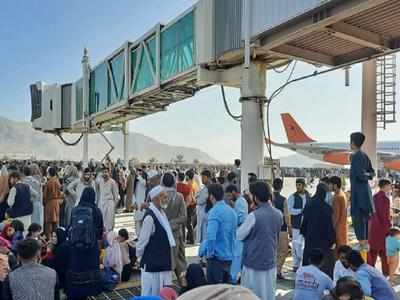
“The harrowing images of the United States’ retreat from Kabul this week, with desperate Afghans futilely chasing a packed Air Force plane, is likely to be a defining moment in Biden’s presidency,” Times writer Noah Bierman added.

“But the execution of the withdrawal will also be added to Harris’ resume, underscoring the complex challenge she faces as Biden’s understudy.”

The Times noted that following Biden’s decision in April to withdraw U.S. troops, Harris boasted during an interview on CNN “that she was the last one in the room before Biden made his decision, and felt comfortable with the plan.”

It added that because of her desire to “erase any daylight between her and Biden,” it would become difficult to separate herself from any of his decisions that might go awry.

“Neither Harris nor administration officials would say what – if any – questions, concerns or reservations Harris raised about the withdrawal plans or the fate of thousands of Afghans who aided U.S. forces,” The Times wrote.

“It is also unknown whether she expressed any skepticism about intelligence assessments that a Taliban victory was more than a year away.”

The Biden administration has been crushed from both sides since armed Taliban fighters swept into Afghanistan’s capital of Kabul on Sunday, forcing the Afghani president to flee the country while his government collapsed.

Scenes of chaos and panic at Kabul’s airport have captured the globe’s attention as the United States’ 20-year military presence in the country ends.

“Most observers expect the Taliban will treat women harshly, returning to rules that exclude them from schools and the rest of society and subject them to violence and death if they resist. The country’s president has fled. Intelligence experts worry it will become a haven for terrorists,” the Times wrote before quoting a Harris advisor who said the vice president had been a “champion for women” throughout her career.

In June, the same newspaper said Harris had been ineffective in her role – only five months after fawning over her so extensively that the paper’s coverage was labeled “inappropriate and disappointing.”

The Times was ridiculed on social media in January when it announced “Covering Kamala Harris,” a project described as “a beat dedicated to her historic rise to the White House” that was loaded with complimentary content.

The Times has since dialed back the praise, even abandoning an Instagram account dedicated to Harris.

(Fox News).

CNN Reporter In Kabul Blisters Biden: ‘If This Isn’t Failure, What Does Failure Look Like?’

0

CNN reporter Clarissa Ward, who has been covering the situation on the ground in Kabul, Afghanistan, since the city fell to the Taliban on Sunday, blasted President Joe Biden on Thursday.

She appeared to question the president’s conclusion that the Afghan withdrawal was “not
a failure.”


In his interview with ABC News’s George Stephanopoulos Wednesday night, Biden was asked whether, given that the Taliban have now taken over the country and the United States is struggling to evacuate American citizens and Afghan nationals with special visas, the withdrawal could be considered a “failure.” Biden became visibly angry.

Stephanopoulos asked whether the withdrawal was a failure of “intelligence, planning, execution, or judgment,” to which Biden responded, “Look, I don’t think it was a failure. Look, it was a simple choice, George.”

“When you had the government of Afghanistan, the leader of that government getting on a plane taking off and going to another country, when you saw the significant collapse of the Afghan troops we had trained — that’s what happened, that’s simply what happened,” he said.

“I don’t think it could have been handled in a way that, we’re gonna go back in hindsight and look… but the idea that somehow there’s a way to have gotten out without chaos ensuing, I don’t know how that happens. I don’t know how that happened.”

Clarissa Ward spoke about a New York Times report that noted that Taliban soldiers are now going door-to-door seeking Afghans who assisted the United States and its coalition partners, with a list of people to “question and punish.”

Ward launched into a diatribe about the things she’s witnessed over the last several days, asking “if this isn’t failure, what does failure look like?”

“The lack of clear information, the rumor mill is in overdrive,” Ward said on CNN Thursday morning. “There’s hysteria. You have Taliban fighters with whips, with guns. You have U.S. and U.K. soldiers who are not allowing people in. You have mixed messaging coming through about what kind of paperwork you need and how you can get on a flight and where you can go.”

“It is just an absolute mess,” Ward snapped.

“And we heard President Biden say yesterday in his comments to ABC News that this is not a failure,” she continued.

“I think a lot of people outside their airport, particularly those taking the kinds of extreme actions … would like to know if this isn’t failure, what does failure look like, exactly.”

President Joe Biden said yesterday that, despite having no formal plan to extricate Americans trapped in Afghanistan, that troops would stay in the country until all United States citizens had been evacuated. So far, that is moving slowly, with just around 2,000 people rescued so far.

There are an estimated 10,000 to 15,000 Americans in Afghanistan, most of whom are in and around the capital city of Kabul.

The Pentagon was pressed on Thursday over why American troops are not being allowed to go into Kabul city to rescue Americans trapped outside of the airport. It would say only that the priority is to “secure and hold” the military side of Hamid Karzai International Airport.

(Daily Wire).

Biden says ‘no one’s being killed’ in Afghanistan, can’t ‘recall’ advisers telling him to delay withdrawal

0

Report says top generals told Biden to leave troops in Afghanistan – Biden says he “doesn’t remember.”

President Biden, in an interview with ABC that aired Thursday, said “no one’s being killed” in Afghanistan despite reports of at least seven deaths amid the chaos at Kabul’s airport – and of Taliban beating people on their way to the airport, as he defended his handling of the American withdrawal from the country.

Biden further told ABC’s George Stephanopoulos that intelligence did not indicate the Afghan government would quickly collapse – despite reports that’s exactly what the intelligence said.

And the president said his advisers did not tell him to delay the troop withdrawal, despite reports that’s exactly what his advisers did.

“Oh, there is,” Biden said when asked about “pandemonium” near the airport by Stephanopoulos. “But, look – but no one’s being killed right now, God forgive me if I’m wrong about that, but no one’s being killed right now.”

Biden added: “People are – we got 1,000-somewhat, 1,200 out, yesterday, a couple thousand today. And it’s increasing. We’re gonna get those people out.”

But just two days before the Wednesday interview, seven civilians died at the Kabul airport, including multiple individuals who were clinging onto an American jet as it departed, and then fell from the sky.

Meanwhile, the Taliban has set up several checkpoints around the airport and according to sources who spoke to Fox News is arbitrarily beating and denying entry to people who are attempting to get to the airport.

Nevertheless, Biden alleged to Stephanopoulos that the Taliban is providing “safe passage for Americans to get out.”

Biden also more broadly defended his decision to leave Afghanistan, including by claiming that “none of his advisers told him” it was a bad idea to leave the country.

Stephanopoulos said in his conversation with the president that Biden’s top military advisers wanted about 2,500 troops to remain in Afghanistan, likely citing a Wall Street Journal report that Gen. Mark Milley and Defense Secretary Lloyd Austin warned against a full withdrawal.

But Biden said that was not the case.

“No, they didn’t. It was split. That wasn’t true. That wasn’t true,” Biden said.

Pressed further on whether his advisers told him to keep troops in country, Biden added: “No. Not at – not in terms of whether we were going to get out in a timeframe all troops. They didn’t argue against that.”

“So no one told – your military advisors did not tell you, ‘No, we should just keep 2,500 troops?’” the ABC anchor retorted.

“No. No one said that to me that I can recall,” Biden replied.

The president also said that intelligence did not indicate Afghanistan would quickly fold to the Taliban once Americans abandoned their mission there.

“If you go back and look at the intelligence reports, they said that it’s more likely to be sometime by the end of the year,” Biden said.

“But you didn’t put a timeline on it when you said it was highly unlikely. You just said flat out, ‘It’s highly unlikely the Taliban would take over,'” Stephanopoulos replied.

“Yeah,” Biden said. “Well, the question was whether or not it – the idea that the Taliban would take over was premised on the notion that the, that somehow, the 300,000 troops we had trained and equipped was gonna just collapse, they were gonna give up. I don’t think anybody anticipated that.”

However, NBC News reported that the CIA’s worst-case estimate of what could happen if the U.S. left Afghanistan “was pretty close to what happened” according to a former official.

The New York Times reported essentially the same thing, saying that many intelligence reports questioned whether the Afghan military could stand up on its own. A July report, according to the Times, forecasted significant risks to Kabul itself.

Biden also said in the ABC interview other American allies should not lose trust in the U.S. despite the fact many who worked with the American government were abandoned in Afghanistan.

The president said America’s commitment to Article 5 of the NATO treaty, South Korea and Taiwan are significantly different than the nation’s commitment to Afghanistan.

Evacuations from the Kabul airport are continuing Thursday, with thousands of troops and even U.S. special operations forces on the ground.

(Fox News).

Satellite Images Show Jerusalem Forest Fire Was Caused By Arsonists

0

NASA satellite images obtained by Ynet show three fires in distant locations started simultaneously.

Israel’s largest forest fire in a decade was almost certainly caused by arson, according to NASA satellite images obtained by Ynet.

Meanwhile, firefighters returned to the hills outside Jerusalem on Thursday after one fire reignited.

A statement by the Israeli Fire and Rescue Service said the fire, located on Har Eitan between Hadassah Hospital and Givat Yearim, was contained. Har Eitan was the site of some of the heaviest fires of the week. Kan News reported it was not a fresh conflagration.

The NASA images indicate that three fires in distant locations erupted at the same time — on Sunday at 3:00 PM.

Amitai Dan, an information security researcher and intelligence analyst, told Ynet the distance between each of the focal points of the three fires was roughly four kilometers (2.4 miles).

Further raising the likelihood of arson, a joint investigation by the police and the Fire and Rescue Authority found that the focal point of the fire by Beit Meir was “in a place full of brushes and thorns and regular tourists are unlikely to pass through it [and the fire was therefore highly unlikely to have been caused accidentally – Ed.],” Ynet reported.

According to Ynet, police are using triangulation technology to determine if and where any smartphones were in those areas when the fires broke out.

The blaze consumed 25,000 dunams (more than 6,000 acres) of forest and brushland west of Jerusalem, a larger swath of destruction than the Mt. Carmel forest fire of 2010.

The fires raged for 52 hours before the 1,500 firefighters finally got them under control on Tuesday. Four firefighting teams sent by the Palestinian Authority assisted the Israelis.

The fire forced the evacuation of Ein Kerem, Givat Yearim, Ramat Raziel, Kibbutz Tzova, Ein Nakuba, Beit Meir, Shoresh, Eitanim, Ein Rafa and Shoeva.

(United with Israel).

Iran Goes on the Offensive as the U.S. Retreats From Afghanistan and Elsewhere

0

Tehran’s proxies unleash violence on several fronts in the Mideast as it senses weakness in adversaries.

The Taliban’s seizure of power in Afghanistan, while swift and dramatic, is neither the first nor the sole challenge to the U.S. and its allies taking place in and around the region. Iran is mounting another, no less significant push. Behind both offensives is the perception that the regional order is failing and the U.S. is retreating.

The factor underlying the Mideast violence earlier this summer seems clear: Iran is trying to assert power across several fronts. It is wielding a variety of assets, proxies and franchises against the full range of enemies it perceives in the region.

Part of the escalation was last month’s fatal drone attack on the merchant vessel Mercer Street in the Gulf of Oman. The Liberian-flagged oil tanker belongs to Zodiac Maritime, a London-based firm owned by Israeli shipping magnate Eyal Ofer. Two people were killed: a British crewman and the Romanian captain.

Responsibility for the attack “clearly points to Iran,” according to a Group of Seven statement Aug. 6. Foreign Ministry spokesman Saeed Khatibzadeh called the accusation “baseless.”

Lebanese Hezbollah’s launch of 20 Katyusha missiles at Israel on Aug. 6 represents a sharp breach of the de facto rules that have largely held along the border since the end of the Second Lebanon War 15 years ago.

The launch itself and the claim of responsibility by Hezbollah—Iran’s proxy—reflect an apparent willingness on the part of the Lebanese Islamic Revolutionary Guard Corps franchise to provoke Israel.

Iran’s IRGC-trained death squads have been busy in remote areas seldom covered by Western media.

On July 14, Iranian dissident, activist and environmentalist Behrouz Rahimi was killed in Suleimania, an Iraqi city near the border with Iran.

Closed-circuit television footage shows a BMW with tinted windows and no license plate tailing Mr. Rahimi. Gunmen then opened fire from the car. Mr. Rahimi died from his wounds in the hospital. His wife later cited recent threats against her husband from Iran’s Intelligence Ministry.

Iran hasn’t made a statement on the killing.

This month, Musa Babakhani, a leader of an Iranian Kurdish opposition party, went missing and days later was found dead in the Guli Suleimani Hotel in Erbil, in northern Iraq. His body showed signs of torture. Mr. Babakhani’s Kurdistan Democratic Party of Iran accused the Islamic Republic of the murder. No one has been arrested for either killing.

Further south in Iraq, IRGC-supported Shiite militias are continuing to attack U.S. facilities. There are 2,500 U.S. service personnel in the country, stationed at Iraqi military positions such as the Al Asad air base. Twenty strikes have happened since April, including eight on U.S. facilities using Iranian-made drones.

On the Syrian front, an offensive is under way in Daraa province, intended to strengthen the Iranian presence in the country.

The offensive on the town of Daraa Al-Balad is being spearheaded by the Iran-allied Fourth Division of the Syrian Arab Army. It is directed against the remnants of the Syrian rebels in the area, who now work in cooperation with Russia. Iran maintains influence there through the Fourth Division, the Air Force Intelligence Branch and also the presence of IRGC and Lebanese Hezbollah personnel.

This is strategic real estate, facing the border with Israel and the Golan Heights as well as the border with Jordan. The former rebels are fighting back, and the situation in Daraa is more strained than at any time since the Syrian regime returned to the area in mid-2018, according to an Aug. 5 statement by the United Nations High Commissioner for Human Rights.

We have a drone attack, Katyusha bombardment, killings of dissidents, strikes on U.S. forces in Iraq, and an offensive to consolidate control near the Syria-Israel-Jordan border. Why is all this happening now?

First, hard-line Iranian President Ebrahim Raisi, who took office Aug. 5, appears eager to demonstrate his sway. More broadly, Iran sees this an auspicious moment thanks to a confluence of events.

The new government in Israel lacks strategic heft and experience and is dealing with a fourth wave of Covid. The Iranians seem keen to put Prime Minister Naftali Bennett to the test.

Iran sees the U.S. administration completing a headlong flight from Afghanistan. This will reinforce the sense of a crumbling regional order.

Washington also may be looking to end commitments in Iraq and Syria, in line with bringing down the curtain on the so-called forever wars. On July 26 President Biden committed to removing all U.S. combat troops from Iraq by year-end.

U.S.-allied Kurdish leaders in Syria, Mazloum Abdi and Ilham Ahmed, made subsequent statements hinting at an imminent American withdrawal from Syria.

Tehran senses it is time to push forward, against weakened and isolated enemies hesitant to push back.

Jonathan Spyer is director of the Middle East Center for Reporting and Analysis and a research fellow at the Middle East Forum. He is author of “Days of the Fall: A Reporter’s Journey in the Syria and Iraq Wars.”

(Middle East Forum / Wall Street Journal).

Hezbollah warns Israel, US not to interfere with shipment of Iranian oil to Lebanon

Nasrallah’s warning came less than a week after an Iranian vessel caught on fire while docking at the port of Latakia in Syria, in what some believe to have been Israeli retaliation.

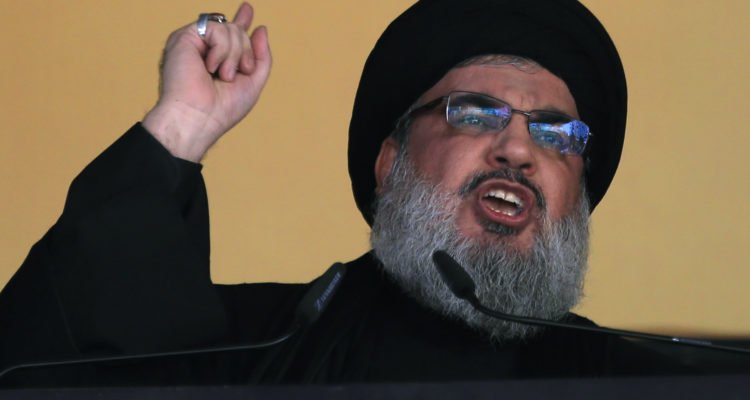
Hezbollah leader Hassan Nasrallah has warned Israel and the United States against interfering with an oil tanker that was set to leave Iran for Lebanon on Thursday.

In a televised address commemorating the Shi’ite Ashura holiday, Nasrallah said that the ship would be considered Lebanese territory from the moment it set sail, according to Reuters.

“God willing, this ship and others will arrive safely,” he added.

Nasrallah’s warning came less than a week after an Iranian vessel caught on fire while docking at the port of Latakia in Syria, following a mysterious explosion.

Two crew members were lightly injured after inhaling smoke caused by the fire.

Some have speculated that the incident was a covert operation carried out by Israeli forces as an act of retaliation for recent attacks carried out by Iran in the Gulf of Oman on maritime vessels affiliated with Israel.

Lebanon is in the midst of a severe economic crisis and experiencing widespread shortages, not only of fuel but also of food, electricity and essential medicines. The oil tanker is ostensibly on its way to alleviate the crisis.

Najat Rochdi, the United Nations Humanitarian Coordinator for Lebanon, said in a statement on Aug. 17 that the fuel shortage required an “immediate solution,” as it was jeopardizing public health.

“I am deeply concerned about the impact of the fuel crisis on access to health care and water supply for millions of people in Lebanon,” said Rochdi, adding, “A bad situation only stands to get worse unless an instant solution is found.”

Lebanon’s largest hospitals have reduced their activities due to fuel and electricity shortages, which have also left millions without access to public water supplies, according to the statement. Essential medicines are unavailable, and hundreds of healthcare workers have left the country due to the deteriorating economic situation.

The situation is made even more critical in light of the fact that Lebanon, like most countries in the world, is facing a new wave of COVID-19 cases, noted Rochdi.

In his Ashura address, Nasrallah said that Hezbollah wasn’t looking for a showdown.

“We don’t want to get into a challenge with anyone; we don’t want to get into a problem with anyone. We want to help our people,” said Nasrallah, according to Reuters.

Nasrallah did not specify when or where the ship would arrive, saying this would be discussed when it reached the Mediterranean.

However, based on many incidences in the past, Israel may well suspect that “oil” tankers also clandestinely transport advanced weapons such as guided missiles, to be used by Hezbollah against Israel.

Hezbollah has been preparing fuel-storage facilities in Lebanon as far back as April, according to Reuters.

Lebanese troops deployed to petrol stations in the country last week, forcing owners who had been hoarding fuel to sell, according to Al Jazeera. The Lebanese army has also been cracking down on fuel smuggling along the Syrian border.

At least 28 people were killed and 79 injured when a fuel tank exploded in northern Lebanon early on Sunday, Reuters reported.

The report cited military and security sources who said that the Lebanese army had seized a fuel-storage tank hidden by black marketeers and was distributing gasoline to residents when the explosion occurred.

It was the largest explosion in Lebanon since the Beirut Port blast on Aug. 4.

(World Israel News / JNS).

HORRIFIC TRAGEDY: Crime Spree Ends With Yeshiva Bochur Shot And Killed In Front Of Denver Yeshiva

0

A Yeshiva Bochur was R”L shot and killed in front of the Denver Yeshiva, YWN has learned.

Police say the horrific incident unfolded early Wednesday morning, in front of Yeshiva Toras Chaim, located at 1555 Stuart Street in Denver.

Sources tell YWN that a vehicle drove up and opened fire. The vehicle immediately fled the area. The boy was rushed to a local hospital where he was R”L Niftar.

The victim has been identified as HaBochur Shmuel (Shmuli) Silverberg Z”L (son of Reb Mordechai) from Cleveland. He was 19 years old.

Misaskim was notified in middle of the night, and was working with the authorities and the family.

The Levaya and Kevura will be held in Lakewood, NJ.

The Denver Police Department is searching for three vehicles connected to the shooting which Detectives say was a deadly crime spree.

The crime spree started near Colfax Ave. and Grape St. at 10:50 p.m. with a car jacking. No injuries were reported.

Next, a shooting and car jacking took place in the 1500 block of Lafayette St around 11 p.m. One person was critically injured.

The crime spree ended with the fatal shooting of the Yeshiva Bochur at 11:30PM.

Police are looking for three vehicles connected to the crime spree.

  • 2018 maroon Honda CRV, Colorado License Plate: CGOW44
  • 2020 dark blue Toyota Camry, Colorado License Plate: AGNZ29
  • 1998 black Toyota Rav 4, Colorado License Plate: QFO701

Source: The Yeshiva World

Chief Rabbis lead protest against kashrut reforms

0

Rabbis from all over Israel gather to protest against reforms they say would ‘destroy’ kashrut system in Israel.

Arutz Sheva Staff , Aug 18 , 2021

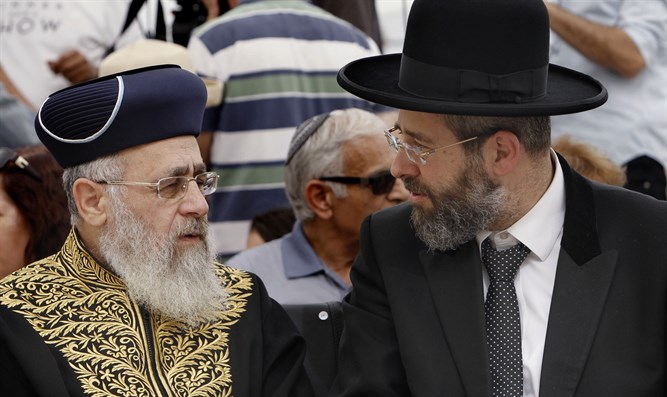
Rabbi David Lau and Rabbi Yitzhak Yosef, the Chief Rabbis of Israel led a protest Wednesday evening against the kashrut reforms of Religious Affairs Minister Matan Kahana.

The protest was attended by municipal and leading rabbis from all over the country.

The rabbis called on the government to cancel the kashrut reforms. According to them, “the meaning of the reforms is the destruction of the kashrut system in Israel.”

In addition, the rabbis also warned against the planned conversion reforms and said: “There is an existential war of the people of Israel.”

“We will in no way allow the conversion system to be taken out of the hands of the Chief Rabbinate and conversions that are not performed by them will not be recognized by the rabbis of Israel,” the rabbis said.


WP Twitter Auto Publish Powered By : XYZScripts.com