Home Blog Page 458

CIA director to visit Israel as U.S. considers returning to Iran nuclear deal

0

With a new hardline president in Iran, accelerated uranium enrichment, and stalled talks, some American officials say a comprehensive return to the JCPOA is unlikely.

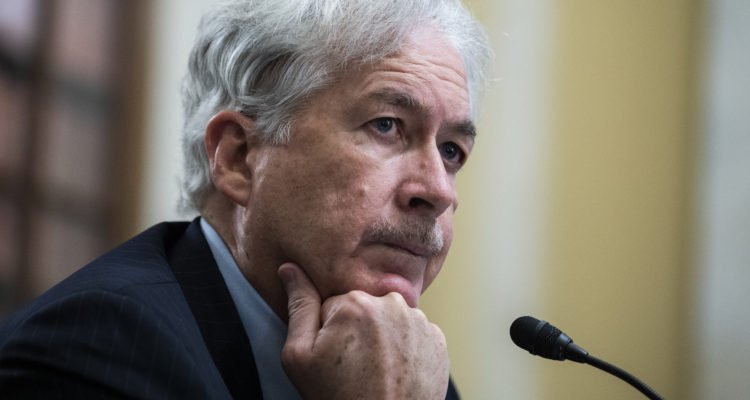
CIA Director William Burns arrived in Israel on Tuesday amid reports that the U.S. is seeking alternative solutions regarding the Iran nuclear deal, as negotiations surrounding the deal have stalled.

Initial reports have indicated that Burns will meet with Prime Minister Naftali Bennett and Mossad Director David Barnea as well as with Palestinian Authority (PA) officials, including PA intelligence chief Majed Faraj and PA President Mahmoud Abbas.

However, his visit is reportedly expected to focus on the Iranian issue.

The Biden administration is reconsidering its push for a full return to the nuclear deal with Iran, as uncomfortable truths are getting in the way, Bloomberg reported Monday.

According to “people familiar with the discussions,” the financial daily said that the U.S. is now thinking of alternative interim deals. One proposal under discussion is the removal of certain sanctions in return for Iran freezing its most recent moves towards producing nuclear weapons.

This is because there is serious concern in Israel, Europe and the United States that if the Iranians are not stopped soon, all the knowledge they have gained through their serious breaches of the accord will make it pointless to return to it.

The rational behind the deal had been to keep Iran at least a year away from being able to produce the bomb. By now, however, Tehran is perhaps only 10 weeks away from that point, as indicated by Israeli Defense Minister Benny Gantz last week.

Such a turnabout would be a blow to President Biden, who had made re-entering the deal with Iran a central component of his foreign policy, seemingly thinking that Iran would be eager to agree since the strict snapback sanctions ordered by former president Donald Trump in 2018 have severely crimped the Persian economy.

Iran started steadily breaching the accords several months after the U.S. walked away.

It first began stockpiling hundreds of tons of uranium and then slowly started enriching it to 20% purity. In April, they announced that they had started raising the level to 60%, albeit only a few ounces a day. This is far beyond the 3.67% level allowed under the nuclear accord and a very short technical step below the 90% needed for weapons-grade material.

“There is no credible explanation or civilian justification for such an action on the side of Iran,” EU spokesman Peter Stano said at the time, clearly implying that such a level of enrichment can only be useful or necessary for building the bomb.

Then, in early July, the International Atomic Energy Agency (IAEA) reported that Iran had begun producing enriched uranium metal. This is “a key step in the development of a nuclear weapon,” according to the foreign ministers of Germany, France and Great Britain, who slammed the move as a “threat” to the “progress” made so far in the negotiations over re-signing the JCPOA.

There have been six rounds of indirect talks between the U.S. and Iran so far, but the seventh was put on hold last month in anticipation of the Iranian presidential elections. On August 3 Ebrahim Raisi was elected – and he is a hardliner who has opposed the Joint Comprehensive Plan of Action (JCPOA) since its inception.

Perhaps even more dire for the future of the negotiations, the person who really runs the country, Supreme Leader Ayatollah Ali Khamenei, came out against the deal last week.

“In this government, it was shown that trust in the West does not work,” he said, adding, “Westerners do not help us, they hit wherever they can.”

The U.S. is also convinced that Iran has been behind several attacks on Western vessels in recent months, including sending two kamikaze drones into an Israeli-managed oil tanker, the Mercer Street, on July 29 in the Gulf of Oman. The subsequent explosion killed two crewmembers, one British and one Romanian.

Iran has denied any connection to the incident, although American experts who examined debris recovered from the site have evidence that the UAVs were of Iranian origin.

(World Israel News).

Chinese targeted Israel in massive cyber attacks, stole sensitive data and trade secrets

0

Hackers acting on behalf of the Chinese government also targeted
Iran and Saudi Arabia.

Hackers acting on behalf of the Chinese government carried out massive cyber attacks against Israel, Saudi Arabia, Iran and other countries in recent years, stealing sensitive information relating to trade and business, a bombshell report revealed Monday.

FireEye, a cybersecurity company based in California, said that they’d been tracking the “operational tactics, techniques, and procedures of a Chinese espionage group” since 2019.

In one huge attack that took place from 2019 to 2020, dozens of Israeli defense and private security companies were compromised by Chinese hackers who stole hundreds of documents, along with emails and data.

The purpose of the attacks was not sabotage, FireEye clarified– rather, China exploited loopholes in the companies’ servers to obtain business intelligence and technology and trade secrets.

After an analysis of the tools used for the hacking, FireEye determined that the Chinese State Security Ministry and intelligence bureau were the originators of the attack.

The Chinese focus on Israeli technology underscored “China’s consistent strategic interest in the Middle East,” the report noted.

“This cyber espionage activity is happening against the backdrop of China’s multi-billion-dollar investments related to the Belt and Road Initiative (BRI) and its interest in Israeli’s robust technology sector.”

As China investment in Israeli business grows, including infrastructure deals worth billions of dollars, the hacking may be seen by the Chinese as simply a part of doing their due diligence.

“Their goal isn’t necessarily always to steal intellectual property; it’s possible that they’re actually looking for business information,” Sanaz Yashar, one of FireEye’s lead investigators into the hacking, told Haaretz.

“In the Chinese view, it’s legitimate to attack a company while negotiating with it, so they will know how to price the deal properly.”

Israel wasn’t the only Middle Eastern company targeted by state-backed hackers. Saudi Arabia, Iran, Uzbekistan and a number of other countries were also found to have been the victims of cyber attacks launched by China.

The Chinese embassy in Tel Aviv flatly denied the report in a statement.

“The FireEye report’s baseless accusations against China on cybersecurity issues are defamation for political purposes,” the embassy said.

“China is a staunch upholder of cybersecurity. It has always firmly opposed and combated cyber attacks launched within its border or with its network infrastructure.”

(World Israel News).

Big Tech is censoring Americans using UN law

White House spokeswoman Jen Psaki warned that her administration was “flagging problematic posts for Facebook” and urged, “you shouldn’t be banned from one platform and not others.”

Psaki was not just advocating a theoretical approach, but discussing the shared infrastructure built by Big Tech monopolies, the United Nations and assorted governments for doing just that.

In his PJ Media article, Tyler O’Neil dug into the Global Internet Forum to Counter Terrorism (GIFCT), which is funded by Google, Facebook and Microsoft and currently chaired by Twitter. Its advisory committee members include the United Nations, the European Union, the British, French and Canadian governments, as well as the U.S. National Security Council.

GIFCT was set up by the industry in response to pressure from governments to remove jihadist propaganda, but its Hash Sharing Consortium, a secret database of content to be immediately removed when its 13 dot-com companies come across it, is secret, and so there’s no way for anyone to know if they’ve been targeted, let alone appeal to be removed from the secret list.

The creation of a secret “No Fly List” for the Internet by monopolies which control over 80 percent of social media content and much of the self-created video content on the Internet would be troubling enough.

But by 2019, Facebook, Twitter, Google, Microsoft and Amazon had joined the Christchurch Call, which advocates not just banning terrorist material, but also fighting its root causes by strengthening “inclusiveness” and fighting “violent extremism.”

To that end, the Dynamic Matrix of Extremisms and Terrorism (DMET) was deployed, which comprises four different levels, beginning with “partisanship” and ending with terrorism. DMET defines the initial levels of violent extremism as using “dehumanizing language,” which can be described as nearly any criticism of a group.

Big Tech has built its
own matrix.
And we’re all in it.

As O’Neil documented, the resulting “matrix” is a dangerous and bizarre list which classifies Sinn Fein and the Scottish National Party, alongside NARAL and “Anti-Vaxxers,” as partisans on the first level of DMET. It’s unclear what a top pro-abortion group, the ruling leftist party of Scotland, the political face for the IRA and opponents of vaccination have in common, but out of such confusingly disparate material has Big Tech built its censorship matrix.

At the second level, alongside Neo-Nazi groups like Combat 18, the Bundy Family (a family, not an organization) and the Animal Liberation Front, which actually is a terrorist organization, is Jihad Watch.

The respected counterterrorism blog by historian and researcher Robert Spencer and his associates (I have been among them) has been an invaluable resource for chronicling Islamic terrorism and colonialism and represents the opposite of violent extremism.

As Robert Spencer wrote on Jihad Watch, “This is pure libel. We have never advocated or approved of any violence or any illegal activity of any kind.”

The DMET is just a more sophisticated pseudoscientific database of the kind that the Southern Poverty Law Center, whose materials have contributed to it, has deployed over the years. One such database listed my blog, Sultan Knish, as a hate group, alongside a brand of gun oil and a bar sign in Pennsylvania.

These databases may have a Kafkaesque absurdity, but the consequences to lives, livelihoods and careers are all too real, with my blog showing up on the Color of Change list pressuring Big Tech monopolies to cut off funding and access to my site, as well as to Jihad Watch, the David Horowitz Freedom Center and many other conservative groups.

Big Tech companies have begun building their own databases in coordination with governments.

And these secret databases determine who has access to the public square of the Internet, who can earn a living and who ends up being deplatformed and unpersoned.

“If we are ‘extremist,’ so is the U.S. Constitution, for we are trying to defend the freedom of speech, the freedom of conscience, and the equality of rights of all people before the law,” wrote Spencer.

But DMET, GIFCT and other interfaces between governments and tech monopolies aren’t using the Constitution. They’re censoring based on United Nations law.

When Facebook’s Oversight Board issued its verdict on censoring President Trump, it did not list a single U.S. law, including the First Amendment. It cited the Rabat Plan of Action, and articles of the U.N.’s International Covenant on Civil and Political Rights (ICCPR).

GIFCT’s DMET matrix cites the Rome Statute of the International Criminal Court to declare that preventing “dehumanization” is an “imperative under international law.” Like Facebook’s decision to censor the former president, there’s no mention of the Constitution, but international law is repeatedly cited.

Most disturbingly, a GIFCT attempt to define terrorism collates a variety of definitions, including attacks “against social cohesion,” which the United Nations itself has noted is used to censor speech and political opponents as well as efforts to suppress Mohammed cartoons.

While Americans slept,
Big Tech adopted U.N. standards to bypass the Constitution.

Big Tech monopolies are no longer just enforcing local laws, moderating content in America or in the European Union based on the different standards in each country. Instead all speech on the major platforms is being policed in line with the United Nations and its “international law.” No black helicopters or blue helmets were needed.

U.N. law came to the United States through the Big Tech monopolies that we turned over our speech and economy too.

Facebook now censors a former president in line with U.N. regulations. And censors all of us too.

GIFCT is another example of U.N. regulations controlling our speech. We’re all drones living in the U.N.’s “Matrix” now. as companies more powerful than governments impose international law.

Libertarians and some establishment conservatives keep protesting that private companies have the right to censor whom they please. But the United Nations is the opposite of a private company.

When massive monopolies act in concert with governments and multinational alliances, like the European Union and the United Nations, to eliminate free speech in line with U.N. international law, that’s not private action.

If we don’t have the courage to confront the “matrix” of big governments and Big Tech, of Google and the United Nations, or Amazon and the European Union, we will lose our rights, our identity and our nation.

Daniel Greenfield, a Shillman Journalism Fellow at the Freedom Center, is an investigative journalist and writer focusing on the radical left and Islamic terrorism.
This article was first published by FrontPage Magazine.

(JNS).

17 Jewish Girls Kicked Off Plane in Amsterdam Twice, Spend Shabbos in Antwerp

0

By Reuvain Borchardt


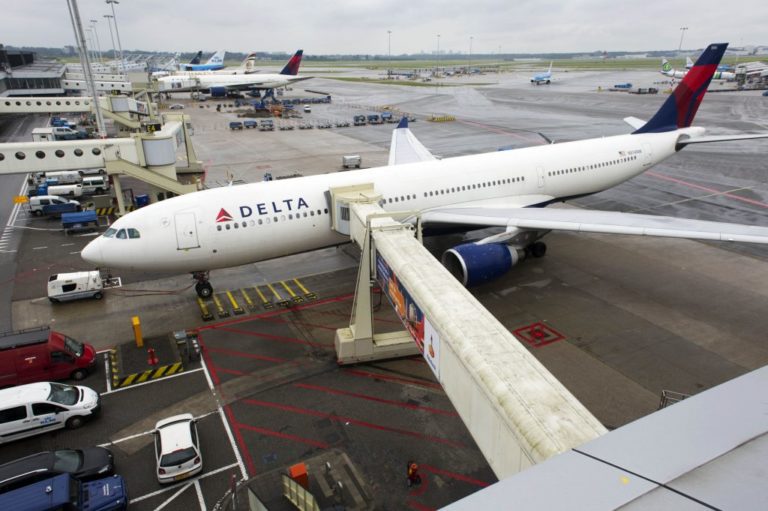
NEW YORK – Seventeen teenaged Orthodox Jewish girls who were twice kicked off flights from Amsterdam to New York were forced to spend Shabbos in Europe, after KLM/Delta Airlines alleged non-compliance with rules, accusations the girls deny and say are antisemitically motivated.

This account of the incidents is based on Hamodia interviews with askanim, including Rabbi Yisroel Kahan of Oizrim Jewish Council in Monsey and Joel Rosenfeld of Bobov in Boro Park; relatives of the girls; and other passengers on the plane. Hamodia asked KLM and Delta for detailed responses, but the airlines only issued statements with broad allegations of “unruly behavior” and “refus[ing] to comply with crew instructions,” and did not respond to Hamodia’s request to describe the girls’ alleged infractions, nor did they respond to the girls’ allegations against airline staff.

The teenagers were part of a group of 56 girls, mostly from New York, who had been touring Jewish sites in Europe with Rebbetzin Shulamis Sternbuch of Israel.

Upon arrival in Amsterdam at the start of their trip on July 20, a KLM/Delta security official at the airport accused the girls of behaving improperly on the flight, cursing at flight crew and failing to follow mask guidelines. The girls denied these allegations, and said they fully complied with all rules and wore masks except when eating. The official threatened the girls with blacklisting. Askanim in New York were contacted and investigated the matter, and determined that no one had been placed on any blacklist.

When their two-week trip concluded, Rebbetzin Sternbuch and the few Israeli girls on the tour returned to Israel, while most of the group and their chaperone had a flight back to New York on Thursday, from Kiev with a stopover in Amsterdam.

On the KLM flight from Kiev, the flight crew was “harassing the girls the entire time,” according to a brother of one of the girls, who had spoken to his sister on the phone about the incident.

“Every few minutes, they were coming over to the girls, saying, ‘Fix your mask,’ even though the masks were on properly the entire time,” the brother, who declined to give his name, told Hamodia. “Then, when the girls started eating, the flight attendants said they were not allowed to eat because it was not the official meal time, but they didn’t say a word about the mask.”

When the group attempted to board the connecting flight in Amsterdam for New York, 17 of them were denied entry and told they could not board the flight. No specific reason was given. All 17 girls have last names beginning with A through K. The girls say this proves they were selected at random; KLM said these girls who were denied entry had booked tickets as one group.

The airline employee who banned the girls from the flight was the same security official who had threatened to blacklist them two weeks earlier.

When the chaperone, already on the plane, realized 17 of her girls were missing, she walked down the walkway toward the airport, pounding on the closed door. Officials did not want to let her back into the airport, but the woman insisted she would not leave her girls behind. Eventually she was allowed to rejoin the 17 girls in the airport. The rest of the group, who had been permitted to board the connecting plane, continued on to New York alone.

At the Amsterdam airport, KLM said it would put the 17 girls on another flight only if each paid a 2,000 euro fine.

The girls tried going to a Delta Airlines counter and book a Delta flight. But Delta, which is a partner airline with KLM, said the girls would need to pay the same 2,000 euros. The girls looked into booking a flight on another airline, but KLM said it would charge 200 euros for release of each piece of luggage.

“The girls are nervous and scared,” the brother told Hamodia as the girls waited in the airport, believing they were victims of antisemitic extortion. While the flight attendants did not make any antisemitic statements, the brother said, “This is obviously antisemitism. They targeted 17 Jewish girls, in alphabetical order, and they didn’t even bother giving a reason.”

Family members in New York then reached out to Jewish activists. Oizrim Jewish Council contacted Orthodox Jewish attorneys in the Netherlands, who worked on the girls’ behalf, racing to try to get the 17 girls and their chaperone on a flight to New York in time for Shabbos. Other activists and organizations, including UJO of Williamsburg and Joel Rosenfeld of Bobov, contacted offices of elected officials including U.S. Sen. Charles Schumer (D-N.Y.), U.S. Rep. Nydia Velazquez (D-N.Y.) and U.S. Rep. Chris Smith (R-N.J.), who intervened with officials at Delta Airlines to get the girls on a flight home. Chabad shluchim brought kosher food to the airport, and intervened with Dutch authorities and airline and airport officials.

Initially, the attorneys said they would buy tickets for a United flight, pay the fees to retrieve the luggage, and sue KLM. But following the intervention by the officials, Delta said it would put the girls on a flight Friday morning, for no fee.

In a statement to Hamodia early Friday morning, KLM said, “Safety is KLM’s top priority. KLM Royal Dutch Airlines does not tolerate any form of unruly behavior towards passengers or crew. When passengers endanger flight safety and thus the safety of themselves, other passengers and the crew, we take this very seriously. This also applies to passengers not adhering to COVID-19 measures. These measures are clearly communicated before and during travel to our passengers.

“On the 20th of July a large group of passengers on flight KL644 from New York JFK to Amsterdam refused to follow crew instructions on board. Upon arrival in Amsterdam this group was again cautioned and explained the possible consequences of unruly behavior by KLM’s security department. It was also made very clear that this was the last warning.

“The same group travelled from Kiev to Amsterdam on the 5th of August and again did not adhere to crew instructions and showed unruly behavior on board. Upon arrival, a group of … passengers (1 booking) was therefore offloaded and not allowed to travel on to New York. This group has been rebooked on a Delta flight from Amsterdam to New York today.”

The brother of one of the girls told Hamodia that the KLM statement is “a blatant lie.”

“Those girls were targeted because they were Jews. They were adhering to their rules and instructions the entire time,” he said. “In fact, many of the girls had slept through most of the flight and had no interactions with the flight staff.”

The girls spent the night in a cordoned-off area of the airport.

In the morning, their attorney brought them food.

At 4:20 a.m. Friday in New York (10:30 a.m. in Amsterdam), the Bobover askan Joel Rosenfeld spoke to the chaperone, who said that they were on the Delta plane, ready to go. But then, at 4:52, Rosenfeld received a call he described as shocking: the group had just been kicked off that plane, apparently due to one or more girls having switched seats.

A woman on the flight (who was not part of the group) had been traveling with her son, but they were assigned seats apart from each other. The woman, Neda Krauss of Long Island, told Hamodia that another man on the plane volunteered to switch seats so that Krauss and her son could sit near each other. Then, two of the Jewish girls nearby who had also been seated apart “asked if we could all switch things around so that the two girls would sit together and I would sit next to my son,” Krauss said. “It would be beneficial for everyone. And it was the most normal thing under any other circumstance. But then we were told by a steward that we not allowed to make any seat switches, and so we all went back to our seats.”

Krauss says that while the other man, and a few other passengers in the area, questioned why the flight attendants were not permitting seat switches, no one was particularly argumentative, and that neither the two girls nor any other members of their group uttered a word of protest, but simply went back to their seats as they were told. Krauss says that the flight attendants did not explain their reason for banning seat switches.

But the group of girls — and not Neda, her son, nor the other man — was then asked to leave the plane. In a statement to Hamodia, Delta said the group was kicked off for “refus[ing] to comply with crew instructions,” but did not elaborate. Delta did not respond to Hamodia’s request for details on the alleged infraction, nor did it respond to Hamodia’s queries about the passengers’ allegations regarding the behavior of airline officials.

Another passenger on the plane, who asked to be identified only as John and sat in a different area and did not witness the incident, told Hamodia that a Delta official later specifically mentioned to him the seat-switching issue as a reason the girls were kicked off. The official also told John that the airline had earlier said that any infraction by one of the girls would result in all of them being ejected. But when John had asked the flight attendants on the plane what the girls had done wrong, “the flight attendant was telling everyone that people in the back were not keeping their masks on and doing other things wrong. I asked them to be more specific, and they said there is a long list of things, but they didn’t elaborate , and didn’t mention a seat-switching issue.”

Krauss and the girls say that other than the switching seats, no one in the group of girls committed any infractions.

“The girls seemed petrified and scared,” Krauss says. “I really don’t know what the reason behind all this was.”

John says that because of the way the flight attendants were speaking about the girls, “everyone on the flight got angry at this group. They riled up everyone to be upset at the group.”

The girls say it was the same KLM/Delta security official who had threatened them with blacklisting the first time, then kicked them off the second flight, that was responsible for now kicking them off this third flight.

The group refused to leave the plane, on advice from their attorney, who was at the airport in Amsterdam and in communication with the chaperone.

All passengers were then forced to deplane, including the group.

While in the airport after deplaning, the chaperone filmed a brief video, which was widely seen on social media, in which Krauss and a girl who had switched seats described what happened.

Other girls took videos as well, including of the official they say is responsible for having them banned from the flights. But then the official forced them to delete the videos, saying they would not be allowed to leave the airport and witholding their passports until they deleted them. When the girls asked the man for his name, he refused to give it, and covered up his name tag.

John says that when he spoke with the girls in the airport and asked what had happened, “I couldn’t believe how divergent their version and the flight attendants’ versions were. While I didn’t see the incidents myself, when speaking with these girls, I didn’t sense any hint of rebelliousness. They were trying to be very compliant and in shock. They seemed really sweet and nice and polite.

“So a flight attendant got angry that these girls had switched seats, and they therefore delay hundreds of people for two hours, and then they blamed it on not wearing masks and not complying with rules.”

After the delay, all passengers — minus the 17 girls and their chaperone, but including the other passengers who had switched seats — were allowed back on the plane, which ultimately landed in New York at 2:30 p.m. Friday.

John says that the captain said on the microphone that “they had done this for our safety. They must have seen this as a PR problem and decided to twist it.”

Delta offered the passengers vouchers “as a goodwill gesture” due to their having been delayed. The girls, on the other hand, have been placed on Delta’s blacklist, pending an investigation.

Meanwhile, askanim once again contacted officials in America and Jewish activists in Europe, and began making arrangement for the girls to spend Shabbos in Antwerp and their eventual flight home.

Since the girls had only been in Amsterdam as an airport stopover, they did not have permission to actually enter the country. Dutch Chief Rabbi Binyomin Jacobs reached out to Gert-Jan Segers, a member of the Netherlands House of Representatives and leader of the governing Christian Union Party, who intervened on the girls behalf, allowing them to enter the Netherlands for the purposes of taking a train to Antwerp, Belgium, for Shabbos.

The girls arrived in Antwerp late Friday afternoon. Several people from the community welcomed them at the train station. Someone who had an empty house allowed them to use it, and a restaurant provided free food. Throughout Shabbos, they were visited by community members, who brought food and ensured that their needs were met.

The mother of one girl told Hamodia that the trip provided an “authentic European experience.”

“This was a group of serious girls, carefully vetted by Rebbetzin Sternbuch, who flew to Europe for an inspiring tour of kivrei tzaddidim, as well as Holocaust sites like Auschwitz, Majdenek, and the forests of Babi Yar,” said the mother, who asked not to be identified. “The girls got a their own small taste of Jew-hatred, too, being mocked and cursed at in Poland, and then being being thrown off flights by antisemitic airline-personnel. On the other hand, they were shown incredible love and warmth by the Antwerp Jewish community, where they spent a wonderful and memorable Shabbos together.

“I call that the authentic European experience.”

Askanim, passengers and relatives say that the airlines must make a thorough investigation into the incidents.

“On the face if it, this sounds like plain and simple antisemitism,” Rosenfeld said. “I am grateful to Sen. Schumer’s staff, who answered my calls at 5 a.m. Friday, and all the other officials and others who assisted as well. Sen. Schumer’s staff has assured us that this story is being investigated by executive-level Delta officials.”

“It is outrageous how these girls were disgraced,” said John, the passenger on the plane. “I don’t want this incident to be forgotten about. Delta needs to do an investigation, and determine what happened.”

On Sunday, the group took a direct flight from Brussels to Newark Airport, arriving at noon without incident — on United Airlines.


Source: Hamodia

Ben & Jerry’s Recruits Pete Beinart, Who Called For Abolition Of Israel, To Defend Boycott

0

After Ben & Jerry’s franchisees sent a letter to the board requesting that it reconsider its boycott on Israel, the ice cream company brought in an extreme anti-Israel activist to defend its decision, The Washington Free Beacon reported.

As Ben & Jerry’s franchisees grapple with the fallout of the boycott, 30 store owners sent a letter to Ben & Jerry’s leadership saying that the decision to end sales in Judea and Samaria “not only distorts the situation on the ground—it has imposed, and will to continue to impose, substantial financial costs on all of us.”

In response, Ben & Jerry’s last week brought in anti-Israel author Peter Beinart, who has called for the abolition of Israel, to talk to store owners about Israel’s “illegal occupation.”

Speaking on a conference call, Beinart claimed that Israeli soldiers are sent into Palestinian villages to abduct minors and that Israel illegally occupies territory “it seized from Jordan in an offensive war in 1967.”

Beinart told the Free Beacon that he was invited to speak because he has publicly encouraged boycotts of Israel’s “occupied territories.”

“I wrote a NYT op-ed calling for settlement boycott in 2012. I’ve espoused this view for a long time,” said Beinart.

In July 2020, Beinart wrote another NYT editorial stating: “I no longer believe in a Jewish state.”

Beinart recently revealed in his newsletter that he has “spoken privately to [Ben & Jerry’s] executives and encouraged their efforts” on the boycott campaign, adding that “no one has produced any independent evidence that the company is hostile to Jews.”

Source: (YWN Israel Desk – Jerusalem)

The ‘Abraham Accords’ prayer

Chief Rabbinate in the United Arab Emirates creates special prayer honoring first anniversary of the Abraham Accords.

As the world marks the first anniversary of the Abraham Accords, highlighting the new relationship between United Arab Emirates (UAE) and Israel, the Chief Rabbinate in the UAE has created a special prayer for synagogues around the world to mark the historic occasion.

The prayer will be distributed to more than 1,000 synagogues around the world, including those associated with the Rabbinical Council of America.

On August 13, 2020, the United Arab Emirates and Israel announced that they would be establishing relations. This announcement was followed by an announcement of a similar agreement between Bahrain and Israel on September 11, 2020.

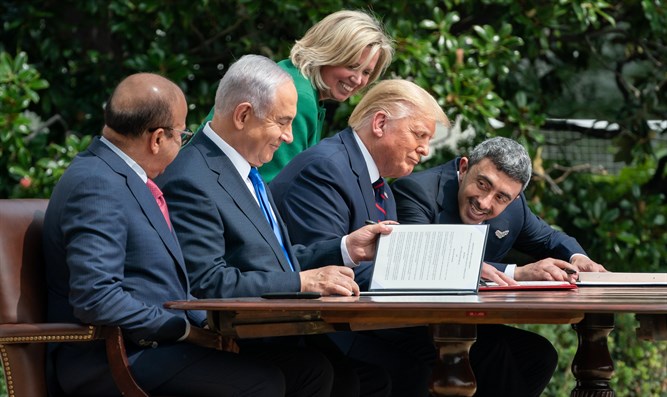
Days later, on September 15th, 2020, the three countries signed the Abraham Accords Declaration which stated their recognition of “the importance of maintaining and strengthening peace in the Middle East and around the world based on mutual understanding and coexistence, as well as respect for human dignity and freedom, including religious freedom.”

“This is a prayer for the region as a whole and focuses on the shared blessings we all hope for – empowered youth, good health, and blooming deserts,” said Chief Rabbi Yehuda Sarna. “It is a prayer for all of the children of Abraham, be they from Sarah, Hagar or Keturah.”

“We are very excited to celebrate the first anniversary with the rest of the region and prayer is one way we can do that,” said Senior Rabbi Dr. Elie Abadie. “Our community has had the opportunity to host many Emiratis for Shabbat (Sabbath – ed.) over the last year and we have had dynamic conversations about our commonalities and what unites us. This prayer furthers that.”

Source: Arutz Sheva


Second Afghan City Falls As Taliban Tighten Hold Over Provinces

0

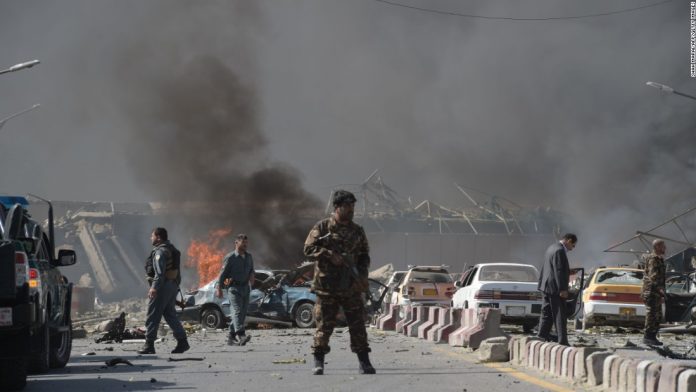
The Taliban seized the stronghold of a notorious Afghan warlord Saturday, officials said, the second provincial capital to fall to the Islamists in under 24 hours.

On Friday, Zaranj city in Nimroz fell “without a fight”, according to its deputy governor, becoming the first provincial capital to be taken.

The deputy governor of Jawzjan province said he was with government forces who had abandoned Sheberghan city and retreated to the airport on its outskirts, where they were preparing to defend themselves.

The city is home to warlord Abdul Rashid Dostum, who only returned to Afghanistan this week from medical treatment in Turkey, but is currently in Kabul.

Read more at i24NEWS.

{Matzav.com}

Israel Begins Work to Make Cave of the Patriarchs Accessible to Disabled

0
By Aryeh Savir/TPS • 9 August, 2021

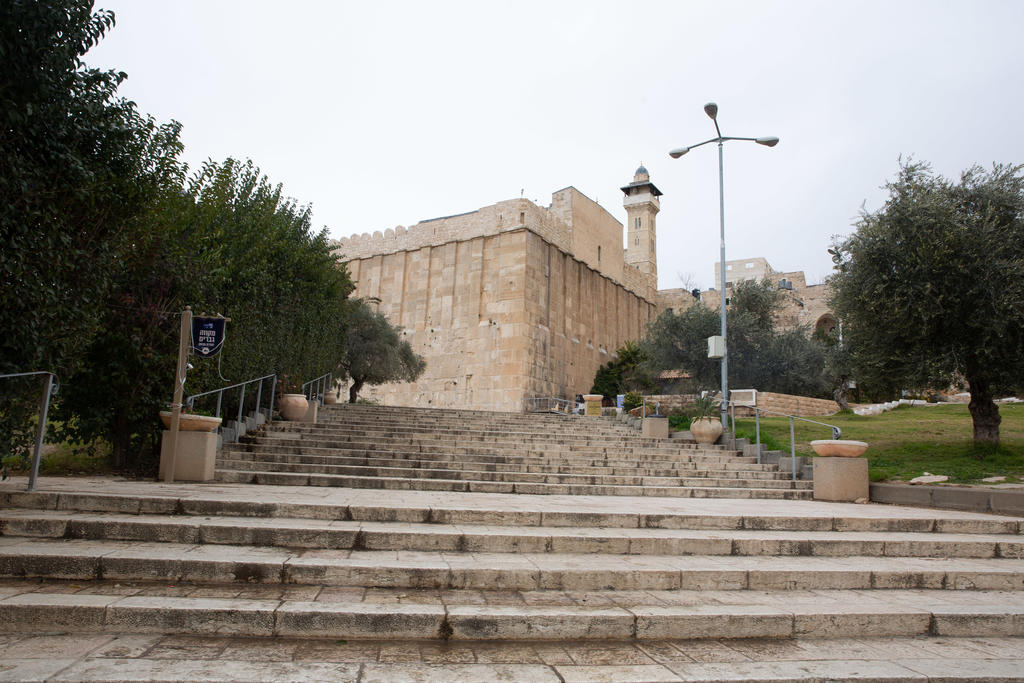
Jerusalem, 9 August, 2021 (TPS) — After years of legal battles and delays, the Ministry of Defense has commenced with construction to make the Cave of the Patriarchs in Hebron accessible to the disabled.

The Cave of the Patriarchs accessibility solution includes the construction of an access road from the parking lot to the cave plaza, and a staircase with a bridge that will allow worshipers of all religions to reach the site, the Ministry of Defense stated Monday.

The construction is expected to last six months.

The holy site is currently accessible only by a long set of stairs.

Member of Knesset Ophir Sofer stated “better late than never. After years of procrastination, Minister of Defense Ganz did well when he approved the accessibility of the Cave of the Patriarchs for the disabled.”

This crucial stage appears to be the last phase in several years of legal battles and stalling by the various governments which were hesitant in moving forward with this relatively small project because of the possible diplomatic fallout.

Palestinian Authority officials have claimed that Israel’s plans to make the site accessible to people with disabilities are “Israeli aggression” and “Judaization,” and the PA’s Supreme Shari’ah Judge Mahmoud Al-Habbash threatened in September 2020 that such “aggression” will “have a cost” and warned that “the Palestinians are prepared to do anything” while describing Israel’s activities at the Cave as “tantamount to igniting a religious war in the region and in the world.”

PA Minister of Foreign Affairs Riyad Al-Malki has described Israel’s improvement of conditions at the Cave of the Patriarchs as a “war crime.”

The Palestinian Authority has denied any Jewish connection to the site.

The California tourist town that’s running out of water: ‘It’s a shock’

0

Lush Mendocino draws nearly 2m visitors a year. But drought is threatening to sink its key industry

On many mornings, the village of Mendocino vanishes into a thick white fog that covers its seaside cliffs, redwood trees and quaint Victorian houses.

Carved into California’s northern coast, the historic hamlet’s rugged beaches, scenic hikes, charming bed-and-breakfasts and boutique galleries draw in 1.8m visitors each year.

“Of course it does. This place is just so beautiful. It’s so lush and moist here,” said Julian Lopez, the executive chef at Mendocino’s Café Beaujolais. “So when you learn about all the water problems, it really comes as a shock.”

For the past century, misty, forested Mendocino – despite being nestled along a number of major rivers, creeks and springs – has relied on shallow wells for water. But amid a historic drought dessicating the US west, the aquifers beneath the town’s damp fog layer have rapidly declined, threatening to sink the region’s tourism industry and the residents who rely on it.

Café Beaujolais, which normally draws all its water for cooking and cleaning from two small wells on its property, has already been shelling out thousands of dollars to have water trucked in from nearby towns and cities.

Because surrounding areas are also facing shortages, the costs of getting tanker trucks full of potable water has nearly doubled over the past few months – from about $350 per 3,500-gallon load to $600, Lopez said.

This is likely to keep getting worse,” he said. “Especially with global warming, as the earth gets hotter and dry seasons get longer.”

Pretty much every business owner in Mendocino is grappling with similar anxieties.

A few minutes from Lopez’s restaurant, the Good Life Café and Bakery recently closed its restrooms. The throngs of tourists who line up down the block to sample the café’s quiches, cappuccinos and organic salads are directed instead to the portable toilets set up in the back parking lot. The owners of the local Harvest grocery market have brought in portable toilets as well.

The managers of the inns and lodging houses up and down the mountain highway that runs through the town have placed placards on the dressers and vanities of each room, asking guests to conserve water by taking shorter showers. But Mendocino depends on the half a billion dollars of annual revenue that visitors bring in, and establishments here aren’t inclined to scare them away with overly dire warnings.

Privately, however, several business owners said they worried that if their water woes continued, they would have to shut down, or scale back. “Businesses are still recovering from the effects of Covid,” said Ryan Rhoades, superintendent of the Mendocino community services district, which manages the town’s water. “The idea that a lack of water could again lead to increased unemployment and fewer jobs – it’s scary.”

So in a town that houses just about 1,000 full time residents and 2,000 daily visitors, many local people are learning to live with much less water.

The coastline near Mendocino, California. The town relies on shallow wells for water that are running low amid a drought.
The coastline near Mendocino, California. The town relies on shallow wells for water that are running low amid a drought. Photograph: Talia Herman/The Guardian

“Right now I’m setting personal hygiene back several centuries,” said Sue Gibson, 82. The well that supplies her picket-fenced yellow house near downtown Mendocino has been spurting up less and less – and she’s had to spend hundreds of dollars to get water delivered.

To conserve, she takes short “navy showers”, turning off the tap while she shampoos and lathers. She wears clothes over and over again, “for longer than I ever would have before”. And except when she’s hosting company, she serves her food on paper plates. “I loathe that – I really do,” she said. “My mother would be horrified!”

Still, compared with some of her neighbors, Gibson said, she felt fortunate. Though she lives on a fixed income, she has so far been able to afford to have water trucked in. “It’s the people with babies and the elderly I feel for the most,” she said. Had her husband been alive, “keeping him clean and cared for would have been very difficult”, she said. “I’m glad he didn’t have to go through this.”

Gibson, who retired to Mendocino 30 years ago, and many of her neighbors have weathered several droughts.

Sue Gibson, at her home in Mendocino. She’s been finding ways to conserve water, including shorter showers.
Sue Gibson, at her home in Mendocino. She’s been finding ways to conserve water, including shorter showers. Photograph: Talia Herman/The Guardian

“But this is the worst year I’ve seen,” said Donna Feiner, whose business Feiner Fixings operates 24 small community water systems across the region. All summer, she has kept a hawk eye on electronic monitors in the well systems she manages, looking for small leaks, and zipping across the region to regularly test how much water remains in the aquifers. At home, she and her partner have taken water conservation to the next level, seldom flushing the toilet and only showering once a week. “A lot of us locals are already really good at saving water,” she said – so it’s unclear how much more they can cut back.

“It’s a challenge,” said John Dixon, who owns lodging houses in the area. He requires guests to reuse towels, and he’s installed water-efficient dishwashers and laundry machines. But last month, one of his properties briefly ran out of water when the city of Fort Bragg, which used to send neighboring coastal towns including Mendocino and Little River regular truckloads of supplementary water, stopped exports. High tides had pushed brackish water up the dwindling Noyo River, which Fort Bragg relies on for its water, and local officials decided to stop outside sales to protect residents’ supply.

“That day that For Bragg cut us off, the wells on one of my properties came up dry,” Dixon said. “And the drivers weren’t going to be able to bring us a delivery.” At about 11am, the taps ran completely dry. After a couple of hours, Dixon was able to convince a different water supplier to send down a tank from the inland town of Ukiah. Since then, he has been paying a premium to continue to do so. Still, like most other residents and business owners in the region, he’s eager for a longer-term solution.

Many of the wells around here are hand-dug and very shallow – but digging deeper isn’t necessarily a solution due to the geology of the region, said Rhoades. Most of the rainwater that seeps into the ground collects in the first eight to 30 feet of soil, he explained. Drilling deeper into the bedrock could reveal more deposits of water – or nothing at all. One local resident acquired a permit to drill down 165ft, “and he came up completely dry”, Rhoades said.

There have been discussions about transporting water by barge, or via the Skunk Train, a historic railway built in 1885 to haul lumber that in recent decades has served as a tourist attraction. Robert Jason Pinoli, the train’s president and general manager, or its “Chief Skunk”, recently proposed using his railway’s diesel locomotives to pull 200,000 gallons of water at a time from the nearby town of Willits to Fort Bragg, where the water could be driven over to homes and businesses in Mendocino and nearby towns. One tanker truck can only carry about 35,000 gallons of water at a time – so using the rail would be faster and more efficient, Pinoli said. “These are my friends and neighbors dealing with shortages,” he said. “I just want to help.”

But Mendocino doesn’t necessarily have the money to cover the operational costs. And the Willits mayor, Madge Strong, said local leaders “would have to look very closely at whether it would have been possible or advisable to send so much over, given our supply of reservoir water and groundwater”.


Source: The Guardian

US Military Has Evidence Iran Committed ‘Kamikaze’ Drone Attack On Ship

0

The U.S. military and the Group of Seven leading industrialized nations on Friday accused Iran of being behind last week’s deadly attack on an oil tanker in the Arabian Sea.

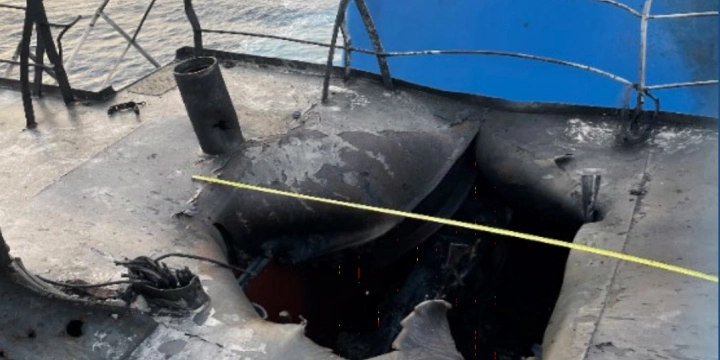
The U.S. Central Command said it had collected and analyzed substantial evidence that the July 29 attack on the HV Mercer Street in international waters in the Arabian Sea off the coast of Oman that killed two people was carried out by an Iranian drone loaded with a military-grade explosive.

“U.S. experts concluded based on the evidence that this UAV was produced in Iran,” it said, using the military term for an “unmanned aerial vehicle.”

Britain’s U.N. Ambassador Barbara Woodward identified the drone as a Shahed-136 UAV, telling reporters after the U.N. Security Council discussed the tanker attack behind closed doors that “these are manufactured only in Iran.”

Meanwhile, the foreign ministers of Britain, Canada, France, Germany, Italy, Japan and the United States said the attack was “a clear violation of international law.” They added that “all available evidence clearly points to Iran.” Iran has denied being involved.

Iran’s deputy ambassador at the United Nations, Zahra Ershadi, told reporters her government “categorically” rejects the accusation, first made by Israel.

She accused Israel of trying to divert world opinion from its “crimes and inhumane practices in the region,” claiming it has attacked over 10 commercial vessels in less than two years, threatening maritime security and disrupting freedom of navigation.

Israel’s defense minister threatened on Thursday to use force against Iran, and Ershadi responded Friday saying: “Iran will not hesitate to defend itself and secure its national interests.”

Central Command said the ship had been targeted by three drones but that the first two were unsuccessful. “The investigative team determined that the extensive damage to the Mercer Street … was the result of a third UAV attack.”

It said the drone attack had caused an approximately 6-foot-diameter hole in the pilot house of the vessel and had badly damaged the interior. It said an analysis of the explosive concluded that the drone had been rigged “to cause injury and destruction.”

Left unsaid in the Central Command report was that the triangle-shaped Delta wing drones used in the Mercer Street attack were also used in 2019 strikes on the heart of the Saudi oil industry, which temporarily halved the kingdom’s production and sent markets spiking.

Yemen’s Iran-backed Houthi rebels claimed those attacks, but the distance from their territory to the two sites hit likely was too great for them to have launched the attacks, analysts and U.N. diplomats said. In January, Iran’s paramilitary Revolutionary Guard appeared to use the same kind of Delta drones in a drill aired on state television.

Friday’s military analysis was released concurrently with a statement from the G-7 foreign ministers condemning the attack that killed a Briton and a Romanian.

“We condemn the unlawful attack committed on a merchant vessel,” the foreign ministers said in a joint statement. “This was a deliberate and targeted attack, and a clear violation of international law. All available evidence clearly points to Iran. There is no justification for this attack.”

The ship is managed by a firm owned by an Israeli billionaire, and Israel — along with the U.S. and Britain — had previously pointed the finger at Tehran.

In their statement, the G-7 countries said “Iran’s behavior, alongside its support to proxy forces and non-state armed actors, threatens international peace and security.”

“We call on Iran to stop all activities inconsistent with relevant U.N. Security Council resolutions, and call on all parties to play a constructive role in fostering regional stability and peace,” they said.

The ministers called for vessels in the region to be able to “navigate freely in accordance with international law.”

“We will continue to do our utmost to protect all shipping, upon which the global economy depends, so that it is able to operate freely and without being threatened by irresponsible and violent acts,” they added.

Woodward, Britain’s U.N. ambassador, asked about possible U.N. Security Council action, said “the door for diplomacy and dialogue remains open, but if Iran chooses not to take that route, then we would seek to hold Iran to account and apply a cost.”

(AP)


Source: Yeshiva World

WP Twitter Auto Publish Powered By : XYZScripts.com