Home Blog Page 531

J&J vaccine to remain in limbo while officials seek evidence

0

By LAURAN NEERGAARD and MIKE STOBBE

Johnson & Johnson’s COVID-19 vaccine will remain in limbo a while longer after U.S. health advisers told the government Wednesday that they need more evidence to decide if a handful of unusual blood clots were linked to the shot — and if so, how big the potential risk really is.

The reports are exceedingly rare — six cases out of more than 7 million U.S. inoculations with the one-dose vaccine. But the government recommended a pause in J&J vaccinations this week, not long after European regulators declared that such clots are a rare but possible risk with the AstraZeneca vaccine, a shot made in a similar way but not yet approved for use in the U.S.

At an emergency meeting, advisers to the Centers for Disease Control and Prevention wrestled with the fact that the U.S. has enough vaccine alternatives to do without the J&J vaccine for a time, but other countries anxiously awaiting the one-and-done shot may not.

One committee member, Dr. Grace Lee, was among those who advocated tabling a vote. She echoed concerns about getting more data to better understand the size of the risk and whether it was greater for any particular group of people.

“I continue to feel like we’re in a race against time and the variants, but we need to (move forward) in the safest possible way,” said Lee, of Stanford University.

The clots under investigation are highly unusual. They occurred in strange places, in veins that drain blood from the brain, and in people with abnormally low levels of clot-forming platelets. The six cases raised an alarm bell because that number is at least three times more than experts would have expected to see even of more typical brain-drainage clots, said CDC’s Dr. Tom Shimabukuro.

“What we have here is a picture of clots forming in large vessels where we have low platelets,” Shimabukuro explained. “This usually doesn’t happen,” but it’s similar to European reports with the AstraZeneca vaccine.

The clot concerns could undermine public confidence in a vaccine many hoped would help some of the hardest-to-reach populations — in poor countries or in places like homeless shelters in the U.S.

“We know we are fighting a war against COVID-19,” Dr. Peter Marks, the Food and Drug Administration’s vaccine chief, said Tuesday. But when it comes to side effects, “we don’t, in the United States, have a lot of tolerance for friendly fire.”

Health officials recommended the J&J timeout in part to make sure doctors know how to recognize and treat the unusual condition. On Wednesday, the CDC said four of the six women with the unusual clots were treated with a blood thinner named heparin — a treatment the government is warning doctors to avoid.

The U.S. set up intensive systems to track the safety of COVID-19 vaccines, knowing that side effects too rare to have occurred in studies of thousands of people could pop up once millions rolled up their sleeves. Shimabukuro said spotting such a rare potential risk amid the nation’s huge vaccine rollout “is an example of a success story for vaccine safety.”

The setback for J&J comes as the worldwide death toll from COVID-19 approaches 3 million, including more than 560,000 who perished in the U.S., which continues to report tens of thousands of new infections every day and an average of almost 1,000 deaths.

So far, the J&J vaccine has been a minor player in U.S. vaccinations. More than 122 million Americans have received at least one vaccine dose, the vast majority with shots made by Moderna or Pfizer, and nearly 23% are fully vaccinated.

Both companies are on track to have delivered 300 million doses each by mid- to late July — and federal health authorities stress that there are no signs of the unusual clots with the Moderna and Pfizer vaccines.

Vaccinations are slower in Europe, where many countries have struggled for supply. J&J delayed some of its European deliveries amid the clot evaluation, but Poland said it would use the batch it already has in hand. European medical regulators plan to issue their own evaluation of the J&J clot issue next week.

When those weird clots were spotted after AstraZeneca vaccinations, scientists in Norway and Germany raised the possibility that some people are experiencing an abnormal immune response, forming antibodies that disable their platelets. That’s the theory as the U.S. now investigates the J&J reports.

Health officials caution against confusing the normal flu-like symptoms that occur a day or two after many COVID-19 vaccination with the clot concern. The problematic clot symptoms, such as severe headache or severe abdominal pain, have occurred about a week to three weeks after the J&J shot.

For vaccine recipients, the headlines can be scary. Holli Vrenon, 35, who got her J&J shot three or four weeks ago in Reno, Nevada, had flu-like symptoms after the vaccination and asked her brother, a doctor, what to think.

He told her to monitor her symptoms but not to worry too much, “but obviously it worries you,” Vrenon said. “If they’re suspending it, obviously people are getting side effects.”

___

Source: AP

The Associated Press Health and Science Department receives support from the Howard Hughes Medical Institute’s Department of Science Education. The AP is solely responsible for all content.

CNN Director: We Worked To Oust Trump, We Create ‘Propaganda,’ Use ‘Fear’ To Pass Climate Agenda

0

EXPLOSIVE: Project Veritas released a video on Tuesday that showed CNN Technical Director Charlie Chester admitting that the network had worked to get President Donald Trump out of office and that the network creates “propaganda” on issues they know little about.

While explosive, the footage likely will not come as a surprise are many; polling has shown that CNN is the least trusted cable news network and is the most divisive media brand in the country.

On CNN and it’s employees working to oust Trump from office, Chester made the following remarks throughout various encounters that he had with an undercover Project Veritas journalist:

“Look what we did, we [CNN] got Trump out. I am 100% going to say it, and I 100% believe that if it wasn’t for CNN, I don’t know that Trump would have got voted out…I came to CNN because I wanted to be a part of that.”

“It’s going to be our [CNN’s] focus. Like our focus was to get Trump out of office, right? Without saying it, that’s what it was, right? So, our next thing is going to be climate change awareness.”

On CNN creating “propaganda” to damage Trump, Chester said:

“[Trump’s] hand was shaking or whatever, I think. We brought in so many medical people to tell a story that was all speculation — that he was neurologically damaged, and he was losing it. He’s unfit to — you know, whatever. We were creating a story there that we didn’t know anything about. That’s what — I think that’s propaganda.”

On having a predetermined agenda to cover climate change and to use “fear” to sell it, Chester said:

“I think there’s a COVID fatigue. So, like whenever a new story comes up, they’re [CNN’s] going to latch onto it. They’ve already announced in our office that once the public is — will be open to it — we’re going to start focusing mainly on climate.”

“I have a feeling that it’s going to be like, constantly showing videos of decline in ice, and weather warming up, and like the effects it’s having on the economy–”

Climate change is the next “pandemic-like story that we’ll beat to death, but that one’s got longevity. You know what I mean? Like there’s a definitive ending to the pandemic. It’ll taper off to a point that it’s not a problem anymore. Climate change can take years, so they’ll [CNN will] probably be able to milk that quite a bit.”

“Be prepared, it’s coming. Climate change is going to be the next COVID thing for CNN.”
When asked if CNN was going to use “fear” to push their agenda, Chester said, “Yeah. Fear sells.”

Project Veritas said that their release today was only the first part out of three on their new round of damaging undercover videos of CNN employees.

(Daily Wire).

Facebook blocks Jewish prayer ad, calling it ‘political advertising’

0

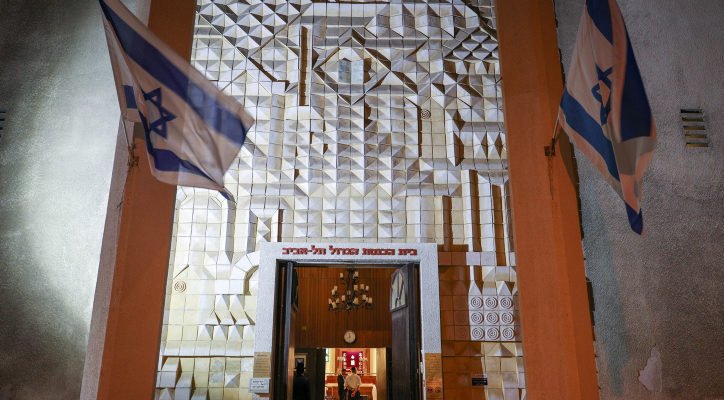
Facebook alleges that ad for Independence Day prayer at Tel Aviv’s main synagogue does not comply with its “community standards.”

Facebook has taken down an ad announcing Israel Independence Day prayers at the Great Synagogue in Tel Aviv, claiming that the posting constituted “political advertising” and was in contravention of the social media giant’s standards, Channel 20 News reported Monday.

With Israel’s economy opening up after the successful coronavirus vaccination campaign and the sharp drop in morbidity, the Ministry of Health eased the restrictions on gatherings. Group prayer is once again allowed in synagogues, but generally limited to less than full capacity and to those who have been vaccinated.

One of the synagogues eager to celebrate both Israel’s Independence Day and the return to group prayer was the Great Synagogue in central Tel Aviv. The synagogue posted an ad on Facebook announcing that the annual special prayers for Independence Day that will be held Wednesday evening.

“The establishment of a Jewish State in the Land of Israel after thousands of years of exile is a miracle, so we open Independence Day with thanksgiving and praise – join us,” says the posting on the synagogue’s Facebook page.

In order to increase the exposure, the synagogue decided go beyond just a regular posting and purchased a Facebook ad for a fee. However, a few hours later, Facebook blocked the ad, saying it did not comply with Facebook’s standards.

“It turns out that this is not an isolated incident,” tweeted Channel 20 reporter Kobi Bornshtein. “I have now received another case in which a page that published a religious event was blocked by Twitter on the pretext of a ‘political event.’”

The festive prayers on Wednesday will be opened by Rabbi Yisrael Meir Lau, former chief rabbi of Israel, and feature two popular Jewish cantors. The poster for the event states
that admission is only for those who have received the coronavirus vaccinations or have recovered from the disease.

(World Israel News).

A Lot of Iranian Work in Natanz Went Down the Drain,’ Say Israeli Observers

0

According to one assessment, the regime is being exposed as unable to defend its critical assets but will try to retaliate when it can.

Threats by Iran to retaliate against what it said was an Israeli sabotage attack on its Natanz nuclear site on April 11 and the reported attack on an Iranian command ship in the Red Sea on April 6 should be taken seriously, observers in Israel say, but they also indicate the distress that the Iranian regime is feeling as it absorbs one blow after another.

Lt. Col. (ret.) Michael Segall, an expert on strategic issues with a focus on Iran, terrorism and the Middle East, and a senior analyst at the Jerusalem Center for Public Affairs, told JNS on Monday that negotiations between the United States and Iran to return the Islamic Republic to the nuclear agreement is the trigger for many recent events.

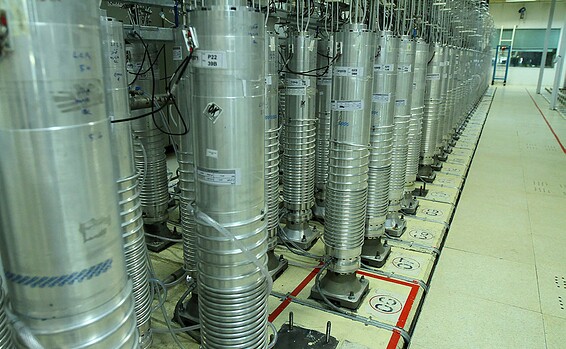
“This isn’t the first time that centrifuges in Natanz have crashed in one way or another.
I’m not sure how many cascades [which hold uranium enrichment centrifuges in place] were destroyed there, and it is not clear what happened, but when a cascade breaks,
this represents years of work that go down the drain,” said Segall.

On Saturday, Iranian President Hassan Rouhani announced that Iran had begun testing its IR-9 centrifuges, which enrich uranium 50 times faster than first-generation IR-1 centrifuges. On the same day, Iran said that 164 IR-6 centrifuges, which enrich uranium 10 times faster than IR-1 centrifuges, had been launched at Natanz. The 2015 nuclear deal restricts Iran to the IR-1 type only.

On Sunday, Natanz experienced a mysterious power blackout following a reported blast. The New York Times reported on Monday that the incident set back production at the site for at least nine months.

“The IR-9 centrifuges really cut down the enrichment time,” said Segall. “It reduces what takes days to do into hours. A power cut without back-up power can cause serious damage if the cascades leave their position.”

‘The Iranian Regime Has Been Exposed’

While some have claimed that the latest incident can strengthen America’s hand in talks by denting Iran’s threat to enrich uranium to the 20 percent level in greater quantities and in less time, Segall was skeptical of that argument.

Such incidents place the regime in a quandary. Segall said social-media messages by Iranians have begun mocking the regime for its claims of being the strongest military in the region with a large missile program, but is unable to defend its most critical assets—whether they are the Natanz nuclear site, nuclear scientist Mohsen Fakhrizadeh or the late commander of the Quds Force Maj. Gen. Qassem Soleimani.

“The regime has been exposed,” he said.

“As it continues to absorb attacks, there is a growing erosion in its perception by the Iranian people, and certainly, by the Iranian diaspora. Both of [these groups] were also highly critical of Iran’s agreement with China, viewing it as a Chinese takeover of Iran’s gas and oil infrastructure,” he added.

But the Islamic Republic already has several previous reasons to take “revenge,” noted Segall, including the reported assassination of Fakhrizadeh last November or the January 2020 U.S. drone-strike assassination of Soleimani, seen by many as the second most powerful man in Iran after Supreme Leader Ayatollah Ali Khamenei.

So far, there have been no “mega responses” by Iran to past incidents, but rather “more of the same,” said Segall.

“They want to respond. They wanted to retaliate after Soleimani and after Fakhrizadeh. They don’t need to wait for more reasons. They’re trying all of the time. If they can, they’ll do it,” he said.

On Monday, the Shin Bet and Mossad intelligence agencies announced in a joint statement that Iranian intelligence elements were attempting to lure Israelis on social-media sites to meetings abroad that could lead to kidnappings or attacks against them.

The Israeli intelligence agencies said the pattern was one also used by Iran against dissidents in Europe.

Bottom Line for Iranians: ‘All Sanctions to be Removed’

Meanwhile, at the nuclear talks in Vienna, Washington has so far displayed a fairly determined stance in talks. The American delegation is headed by Robert Malley, the U.S. special envoy to Iran. But Iran, for its part, has been “highly determined” in its insistence that all sanctions be lifted before it reverses its nuclear steps.

Segall said he observed a well-organized division of labor in the Iranian government, with the foreign ministry reflecting the firm position of Khamenei, and President Hassan Rouhani occasionally displaying a more optimistic tone regarding the possible outcome of negotiations.

“The bottom line of all of the Iranians involved in this is that all sanctions have to be removed, even those linked to non-nuclear issues such as terrorism and human rights,” said Segall.

“Verification is very important for the Iranian perspective—first, Iran wants to verify that sanctions have been lifted, and only then would it reverse its violations of the nuclear deal, including the installation of IR-9 advanced centrifuges.”

Segall stressed in that six weeks, Iran is scheduled to cease sharing videotape footage of its nuclear sites with the International Atomic Energy Agency watchdog—a move that comes after Iran ended live video feeds as part of its ever-escalating nuclear steps to place pressure in negotiations.

Segall said he remains disturbed by the unknown aspects of Iran’s nuclear program.

“They have proven in the past that the nuclear program is spread out in hidden sites,” said Segall, raising the question of whether there are additional sites that are enriching uranium, rather than Natanz that is in the spotlight.

“I think the Iranians will continue in their efforts, and they will seek to put a wedge between Israel, the United States and Europe. They will say that they want to reach an agreement, that they came to Vienna despite the pandemic restrictions, and that the U.S., Europe, China and Russia want a deal while Israel does not,” he assessed.

‘A Change in Strategy has Occurred’

Brig. Gen. (ret.) Shlomo Brom, a senior research associate at the Tel Aviv-based Institute for National Security Studies, said that Israel’s reported campaign against Iran can be divided into two phases: before and after the American elections.

“The sea campaign started long before the U.S. elections,” Brom, who served as former director of the Strategic Planning Division in the Planning Branch of the General Staff, told JNS.

“The Iranian responses were expected. They usually retaliate even if their responses come late and even if the responses are small in proportion to the incidents because of their weakness. The sea campaign is all part of the struggle against Hezbollah and the Iranian presence in Syria.”

The campaign against Iran’s nuclear program, however, is a separate issue, even though it is related to the regional shadow war, and even though both campaigns can influence one another, he stated.

“After the U.S. elections, a change in the American strategy occurred, and Israel responded to this. A new element has been added. This presents an open question: To what extent were the reported actions by Israel since the U.S. elections designed to undermine U.S. plans to negotiate with Iran on a return to the nuclear program, in addition to the ongoing campaign against Iran?” he asked.

The reported sabotage attack in Natanz—whether it was conducted via cyber warfare or an explosives attack—is part of the long-standing campaign against Iran’s nuclear program, he said, a campaign that reportedly included the assassination of Fakhrizadeh and the July blast at Natanz.

“But the latest incident happened after a change of U.S. policy, so the question is: Was this also part of an effort to trip up American plans?”

U.S. President Joe Biden, for his part, is not speaking publicly on the latest Iran-related incidents, making it difficult to know his position, said Brom.

“Based on my knowledge of this administration, I tend to believe that the more dominant approach is opposition to Israeli activities” against Iran at this stage, said Brom, before adding that “whether this is the view that is in control, I can’t determine.”

(United with Israel).

Jason Whitlock defiant after Twitter locks him out for criticizing BLM founder’s ritzy home purchases

0

Sports columnist Jason Whitlock said Monday he would not comply with Twitter’s demand to remove a tweet criticizing a Black Lives Matter co-founder’s purchase of an expensive home after the social media giant locked Whitlock out of his account.

Whitlock, who is Black, took a dig at Patrisse Cullors on Friday after she reportedly bought a $1.4 million home in Topanga Canyon, a ritzy Los Angeles-area enclave where only 1.4% of residents are Black.

“She’s with her people!” Whitlock wrote sarcastically, with a link to a story about Cullors’ purchase from celebrity blog site Dirt.com.

Despite the story not including an address and despite the fact that other outlets had reported on Cullors’ new home — including The Grio and New York Post — Whitlock was told Friday he had violated Twitter’s rules against publishing private information.

“I’m still in Twitter jail because I won’t post bail,” he said in an interview on Curtis Scoon’s YouTube channel. “I’m not sure if I’m going to post bail … We did nothing wrong. I’m not running to go post Twitter bail when I did nothing wrong.”

Whitlock said he posted his tweet because he found Cullors’ conduct hypocritical, given her self-proclaimed Marxist beliefs and her apparent desire to live in a majority-White area in spite of the movement she founded.

Whitlock joked he couldn’t delete the tweet to begin his 12-hour “sentence” anyway, since it had already been removed by the service. Whitlock hasn’t tweeted since Friday and said he was going to wait and see how the story played out.

Cullors, who has called capitalism evil, has two other homes in the Los Angeles area and has reportedly bought four houses for $3.2 million in the past year.

“She’s a grifter. That’s what the f— she is,” Scoon said.

Whitlock, a longtime critic of the Black Lives Matter movement, said it was a “hustle” and its leaders are not “promoting anything real.”

“I’m going to wallow in this victimhood like they like to do,” he said.

Twitter did not respond to Fox News’ request for comment.

Black Lives Matter’s official Twitter account published a lengthy thread on Tuesday in defense of Cullors.

Whitlock stands out in his field for his criticism of progressive athletes like LeBron James and the almost uniformly left-wing sports media world.

Formerly at Fox Sports, he joined the sports and commentary site OutKick last year but left in January over a business disagreement with founder Clay Travis.

(Fox News).


60% uranium: Iran begins enriching to highest level ever

0

The announcement marks a significant escalation after the sabotage, suspected of having been carried out by Israel.

Iran will begin enriching uranium to 60% purity, higher than the program ever has before though still short of weapons grade, after an attack on its Natanz nuclear facility, an Iranian negotiator said Tuesday.

The announcement marks a significant escalation after the sabotage, suspected of having been carried out by Israel. It could result in further action by Israel, whose Prime Minister Benjamin Netanyahu has vowed never to allow Tehran to obtain a nuclear weapon, and further raise tensions across the Mideast.

Already earlier in the day, Iran’s foreign minister had warned that the weekend assault could hurt ongoing negotiations over its tattered atomic deal with world powers. Those talks are aimed at finding a way for the United States to re-enter the agreement, the goal of which is to limit Iran’s uranium enrichment in exchange for relief on sanctions.

“We believe that this round of negotiations is the time for the U.S. to present a list. I hope that I can go back to Tehran with the list of sanctions that will be lifted,” nuclear negotiator Abbas Araghchi said in Vienna, where the talks have been taking place. “Otherwise, I don’t believe we can continue like this. Otherwise, I believe this would be a waste of time.”

Aragchi said informal talks would start Tuesday night, with a formal session beginning Thursday.

Iran had been enriching up to 20% — even that was but a short technical step to weapons-grade levels of 90%.

The International Atomic Energy Agency said it was aware of the media reports of Araghchi’s comment, which was quoted by Iran’s state-run IRNA news agency, but had no comment at the time.

Press TV, the Iranian state television’s English-language arm, separately said that the IAEA had been informed of the move. It said the enrichment would begin as of Wednesday.

The broadcaster also quoted the negotiator as saying Iran would introduce another 1,000 centrifuges at Natanz, without elaborating.

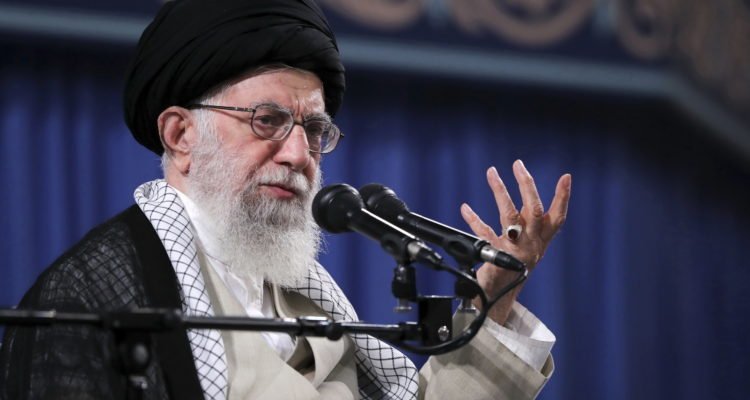
Iran’s Supreme Leader Ayatollah Ali Khamenei had threatened to go to 60% enrichment in February if the country needed to.

“We are determined to develop our nuclear capabilities in line with the needs of the country,” Khamenei said then, according to a transcript of his speech published by his website. “For this reason, Iran’s enrichment will not be limited to 20%, and we will take whatever action is necessary for the country.”

Iran previously had said it could use uranium enriched up to 60% for nuclear-powered ships. The Islamic Republic currently has no such ships in its navy.

Details remained scarce about the weekend attack at Natanz. The event was initially described only as a blackout in the electrical grid feeding above-ground workshops and underground enrichment halls — but later Iranian officials began referring to it as an attack.

The U.S. has insisted it had nothing to do with Sunday’s sabotage. Instead, Israel is widely believed to have carried out the assault that damaged centrifuges, though it has not claimed it.

But earlier Iranian Foreign Minister Mohammad Javad Zarif still issued a warning to Washington.

“Americans should know that neither sanctions nor sabotage actions will provide them with an instrument for talks,” Zarif said in Tehran alongside visiting Russian Foreign Minister Sergey Lavrov. “They should know that these actions will only make the situation difficult for them.”

Zarif separately renewed his earlier warning to Israel over the sabotage, saying that if Iran determines its archenemy was behind it, “then Israel will get its response and will see what a stupid thing it has done.”

Kayhan, the hard-line Tehran newspaper, urged Iran to “walk out of the Vienna talks, suspend all nuclear commitments, retaliate against Israel and identify and dismantle the domestic infiltration network behind the sabotage.”

“Despite evidence that shows the role of the U.S. as main instigator of nuclear sabotage against Iran, unfortunately some statesmen, by purging the U.S. of responsibility, (aid) Washington’s crimes against the people of Iran,” the paper said in Tuesday’s editions.

While Kayhan is a small-circulation newspaper, its editor-in-chief, Hossein Shariatmadari, was appointed by Supreme Leader Ayatollah Ali Khamenei and has been described as an adviser to him in the past.

Such a walkout remains unlikely as the administration of President Hassan Rouhani, whose main diplomatic achievement was the 2015 accord, hopes to get the U.S. to rejoin it and provide desperately needed sanctions relief. However, pressure does appear to be growing within Iran’s theocracy over how to respond to the attack.

The talks in Vienna — between Iran, the world powers still in the deal and the U.S. — are aimed at reviving America’s role in the agreement that former President Donald Trump abandoned and lifting the sanctions he imposed.

Iran, in turn, would return to the limits set by the deal and dilute its growing stockpile of uranium — some of which has been enriched up to a short step away from weapons-grade levels.

Iran insists its nuclear program is peaceful, though the West and the International Atomic Energy Agency say Tehran had an organized military nuclear program up until the end of 2003. However, the deal prevents it from having enough of a uranium stockpile to be able to pursue a nuclear weapon.

Rouhani met later Tuesday with Lavrov and stressed the importance of all parties returning to the deal. Russia is a member of the nuclear deal.

“We are neither ready to accept less than that, nor are we after achieving more than that,” he said.

(World Israel News).

ZOA Slams Troubling Tweet on Holocaust by House Committee & Rep. Omar’s Latest Attack on Jewish State of Israel

0

Zionist Organization of America (ZOA) President Morton Klein blasted the House Foreign Affairs Committee (HFA) as well as Rep. Ilhan Omar (D-MN) on Friday, after tweeting out messages on Holocaust Remembrance Day viewed as “reprehensible,” “hateful” and “antisemitic.”

In an exclusive statement to Breitbart News, ZOA head Morton Klein expressed his “deep concern” over an official HFA tweet that neglected to “mention Jews and antisemitism,” and instead merely recalled “six million (unidentified) lives” and “general forces” of prejudice and injustice, in addition to a “hateful, antisemitic” tweet by Omar which used Holocaust Remembrance Day to attack the Jewish state.

The official HFA tweet reads:

On #YomHaShoah we commit ourselves to remembering the 6 million lives extinguished during the holocaust & millions more who survived its cruelty. To honor their memories, we must remain vigilant against the forces of prejudice & injustice or risk reliving the horrors of the past.

Klein, who was born in a displaced persons camp in Germany and is a child of Holocaust survivors, described the omission as both “incomprehensible and reprehensible.”

“The Nazis and their collaborators murdered six million Jews,” he stressed, “including almost two million Jewish children.”

“Universalizing the Holocaust forgets its victims and ignores the uniquely hateful scourge of antisemitism, which is rearing its ugly head more and more today,” he added, before noting that several Congresspersons also “issued similar tweets, omitting all mention of Jews and antisemitism.”

Klein also slammed Omar for a personal tweet of hers which he also deemed antisemitic.

In the tweet, Omar describes Israel as “a wealthy country that’s getting $3.8 billion a year from America. Yet their Ambassador has the audacity to complain about $150 million going to Palestinian refugees,” before adding, “Shameful.”

“It is deeply troubling that Congresswoman Ilhan Omar (D-MN) chose Holocaust Remembrance Day to issue another of her hateful, antisemitic and insensitive tweets,” Klein wrote, as he elaborated:

In her Yom HaShoa Day tweet, antisemitic BDS-promoter Omar wrongly referred to the Jewish State as “wealthy,” condemned the military assistance that enables Israel to defend herself from Arab/Muslim terrorists, and even condemned Israel for expressing concern that the Biden administration is renewing sending hundreds of millions of dollars to UNRWA (whom Omar misleadingly referred to as “Palestinian refugees”). Israel-hater Omar ignored the fact that UNRWA, which will receive hundreds of millions of dollars of U.S. taxpayer funds, teaches Arab children to hate and commit violence against Jews and Israel, in their textbooks and schools. UNRWA also has operations with the murderous terrorist group Hamas.

Klein then referred to a “shocking” video posted by a Twitter user in reply to Omar’s tweet, showing Arab school children describing the lessons they learned from their UNRWA school education:

They teach us that Jews are bad people”; “I am ready to stab a Jew and drive a car over them”: “I will run a car into the Jews”; “We have to constantly stab [the Jews], drive over them and shoot them”; “Stabbing and running over Jews brings dignity to the Palestinian people”; “I’m going to run [the Jews] over and stab them with knives”; “I am prepared to be a suicide bomber”; and “With Allah’s help, I will fight for ISIS.”

Klein also noted the Nazi collaboration with a Palestinian Muslim leader in Mandatory Palestine.

“Hitler and his collaborator [Palestinian leader] Haj Amin Al Husseini also plotted to murder every Jew in the Middle East,” he wrote. “We must never forget those monstrous facts, painfully unique in human history.”

As a result, the ZOA — the nation’s oldest pro-Israel organization — called for corrections to be published.

“ZOA urges the House Foreign Affairs Committee, and anyone else who omitted the Holocaust’s Jewish victims, or the need to stamp out antisemitism today, to issue a corrected statement,” Klein wrote, adding that Omar should also “publicly rescind her ugly statement insensitively issued on Holocaust Remembrance Day.”

In contrast, Klein personally thanked Senator Robert Menendez (D-NJ), Chair of the Senate Foreign Affairs Committee, the House Foreign Affairs Committee’s GOP members, and its Ranking member, Congressman Michael McCaul (R-TX) and others, both Democrats and Republicans, for their “heartfelt statements.”

“Senator Menendez commemorated the unspeakable horrors that the Jews of Europe endured from 1939-1945, and condemned the dangerous current worldwide rise in antisemitism,” he wrote. “The House Foreign Affairs GOP members’ statement, retweeted by Ranking Member McCaul, made it very clear that the Nazis murdered 6 million Jews and millions of others, and honored the survivors and heroes.”

Follow Joshua Klein on Twitter @JoshuaKlein.

This article was originally published in Breitbart News.

Taiwan reports largest-yet Chinese air force incursion

0

Up to 25 fighters and bombers penetrated Taiwan’s air defense identification zone.

In the latest show of its military might, Beijing sent 25 Chinese air force planes into Taiwan’s air defense identification zone (ADIZ), according to the island’s government Monday.

The formation included fighters and nuclear-capable bombers. While Beijing did not officially comment on the action, it follows the US State Department’s Friday issuing of new guidelines that would make it easier for US officials to meet with Taiwanese officials.

This most recent action is yet further evidence of what appears to be Chinese intimidation of Taiwan. Indeed, a January report showed that Chinese jets made 380 incursions into Taiwanese airspace in 2020.

The latest Chinese mission involved 14 J-16 and four J-10 fighters, as well as four H-6K bombers, which can carry nuclear weapons, two anti-submarine aircraft and an early warning aircraft, Taiwan’s Defence Ministry said, according to Reuters.

It was reportedly the largest daily incursion since the ministry began regularly reporting Chinese Air Force activities in Taiwan’s ADIZ last year.

The ministry added that combat aircraft were dispatched to intercept and warn away their Chinese opponents, while missile systems were also deployed to monitor them.

China is increasingly strident about its intentions toward Taiwan. Beijing views the island as belonging to the mainland and has threatened to take it – by force if necessary – to complete its One China Policy. It says that actions such as these are in response to collusion between Taipei and Washington.

US Secretary of State Anthony Blinken merely and meekly said on Sunday that any attempt to change the status quo by force would be a “mistake.”

(i24 News).


A warning, an error, or something much bigger?

Israel Hayom talks to experts in cyber security and nuclear defenses about the electrical “malfunction” at Iran’s Natanz facility. Was it a move designed to scare Tehran, an attack that targeted something much bigger, or merely user error at the local level?

Was the power failure at Iran’s Natanz nuclear facility on Sunday morning an accident, or sabotage? Was it a cyberattack? Israel Hayom approached experts for their take on the as-yet unexplained incident.

Arik Barbing, former head of the Shin Bet security agency’s cyber department, explained that apparently, Sunday’s incident was designed to create fear, and not expose any Israeli operational capabilities.

“Any facility the size of an active nuclear reactor is a very complex one that includes a lot of parts and requires a lot of support. There are large systems that ultimately, whether you want it or not, depend on external suppliers. Whether it’s the high-tension electrical system, suppliers of air conditioners, or any other infrastructure, even control of the gates,” Barbing says.

“A nuclear reactor is such a big building and system that it will never be a ‘state within a state’ and it will always have weak points. Now what is happening is that some administrative supplier is being attacked, and chaos ensures. It also sends the other side a message that says: We’re here, we’re with you, we know perfectly well what you’re doing behind closed doors. It has a huge psychological effect,’ Barbing continues.

Barbing said that a similar action could be carried out in Israel.

“Let’s say that the Kirya [military headquarters] in Tel Aviv has a 14-story building, and all of a sudden I shut down air conditioners on the 4th and 5th floors. I’m not saying that anything like that has happened, but that it could, and the message to Israel will be clear.

“Similarly, I can get to the nuclear reactor at Nahal Sorek and bring down a high-tension wire that leads to it. The message to Israel will get through loud and clear,” he explains.

When asked what strategy underlies acts like these, Barbing says, “These are ‘soft blows,’ like what happened with the ships. The Iranians haven’t sunk any Israeli ship and Israel hasn’t sunk any Iranian ship. Both sides are fighting at a low level of power, understanding the other side and preserving a balance that won’t dictate a response.

“Therefore, I assume that there was no real damage to the Natanz reactor. But the ‘coincidence’ of the Iranian announcement about increasing its nuclear capabilities and this malfunction indicate that some entity was sending a quiet message warning them [the Iranians] not to cross a certain line.”

“It’s a strong message that essentially says, ‘Right now I just shut off the electricity, but I can do a lot more.’ It’s a message that creates pressure and is well understood. The Iranians obviously know that they are vulnerable.”

Barbing says that every action of this type entails a “certain risk.”

“Because it’s possible that it could expose a dangerous weapon that we are keeping for a real war. But world powers usually know how to deal a blow without their action being revealed, they do so through proxy groups on the dark web and in ways that keep them from being exposed to stronger capabilities. But every action like this carries a certain element of risk,” he says.

Cyber expert Menny Barzilay, a member of the Yuval Ne’eman Workshop for Science, Technology, and Security at Tel Aviv University, thinks that a complex attack that targets a nuclear reactor rather than some other nearby facility was perpetrated to do more than cause a power outage.

Barzilay says that either a more significant target was damaged, or the incident was caused by local saboteurs or was even a genuine error on the Iranians’ part.

“First of all, the generator and electrical systems of a nuclear reactor are a very well-defended system, separate from the general electrics, so it’s not as if you bring down all the electricity in an area and hurt the reactor, too,” Barzilay says.

“Even if you cut of the electricity of an entire area, it won’t make any difference to the reactor’s activity because it has its own internal, independent systems. So if someone got to the reactor alone it’s a more precise capability than just an attack.”

“If it was a cyberattack on the reactor itself, it was done by someone who was on the premises and brought an attack tool into the system programs themselves, a tool that was dormant. Either that, or the malfunction was preprogrammed into the system hardware ahead of time.

“In other words, if it was an attack, it wasn’t a remote cyberattack, it was some entity inserted into the system or an attack tool that was implemented from close range that was capable of connecting to the smart generators of a facility like this and shutting down the entire electrical system,” Barzilay observes.

Barzilay explains that the capabilities in play there would be so complicated that agents would have to be put in on the ground.

“This isn’t a tactic that you use to scare the Iranians, but one you use to cause real damage to the site. So if this was an attack, the Iranians aren’t saying what was damaged, they’re glossing over it. Because if this was just an electrical malfunction, I doubt that we’re talking about an attack by a foreign actor because it entails the exposure extremely extensive and powerful capabilities, for no real purpose.”

Nations don’t carry out such high-precision “scare tactics,” because doing so would burn “very unique” capabilities that they would rather keep secret, Barzilay adds.

Dr. Col. (res.) Ori Nissim Levy, an expert in nuclear defense and chairman of the nuclear forum WNF-193.com, explains that an electrical malfunction does not cause any damage to the facility, but discomfits the Iranians.

“Mainly, an electric outage forces the Iranians to turn everything off and start it again. So if it was a power outage, it’s just a general threat, nothing bigger,” he says.

Levy is of the opinion that the incident appears to be a step designed to “frighten, nothing more.”

Either way, he says, a centrifuge creates a gram of nuclear material per year, so a facility that houses 10,000 centrifuges manufactures 10 kg. (22 pounds) of nuclear material per year.

“In effect, the Iranians have a lot more centrifuges, so we can assume that Natanz alone could make a bomb every two years – and of course, there are other facilities. At the moment, at least, it doesn’t look as if whoever shut off the electricity wanted to damage the reactor, but just wanted to make them uncomfortable,” Levy says.

(Israel Hayom).

Likud, Yamina negotiating teams met in secret

0

Netanyahu and Bennett have been keeping in close contact over the last few days; coalition negotiations began in secret on Sunday.

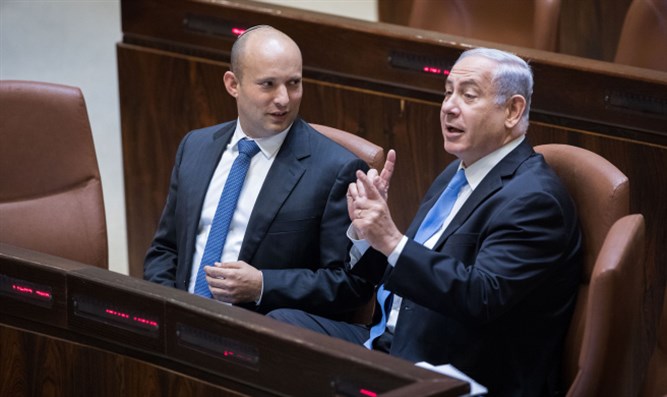
Negotiation teams from the Likud and Yamina parties met secretly this past Sunday, prior to Prime Minister Benjamin Netanyahu’s meeting with Naftali Bennett.

According to an official who is privy to the details of the conversations between Netanyahu and Bennett, the two leaders have been in regular contact over the past few days, after President Reuven Rivlin tasked Netanyahu with forming a governing coalition.

Kan reported Monday night that Bennett has warned the Likud against trying to form the Knesset’s powerful Arrangements Committee without first coordinating the move with Yamina.

According to the report, Bennett told Likud staff that if the formation of the Arrangements Committee is brought to a vote without approval from Yamina, the party will bolt talks with the Likud and will join with the anti-Netanyahu bloc.

Coalition whip MK Miki Zohar (Likud) had planned to bring the committee’s formation to a vote Monday, but caved at the last minute, pulling the vote due to Yamina’s opposition.

Earlier on Monday, Bennett and Netanyahu met in Jerusalem, formally kicking off coalition talks.

“One week ago, the President asked [Israeli Prime Minister Binyamin] Netanyahu to form a government,” Bennett said at a party gathering prior to the meeting with Netanyahu.

Speaking to the Israeli press, Bennett said: “At our meetings, I told Mr. Netanyahu, and I will tell you as well, that the Likud can count Yamina’s MKs as part of a right-wing government.”

He added: “We will do everything possible to prevent fifth elections, and there are a lot of creative ideas.”

“I could have sat in the Prime Minister’s seat, had I wanted to, but my goal is to prevent fifth elections,” he emphasized. “A circus of fifth elections would signal to our enemies that we are breaking apart.”

“There are parties which have already hired advisers and are preparing for fifth elections. I ask all party heads to act responsibly. We will fight anyone who wants fifth elections.”

Earlier on Monday, Bennett was accused of attempting to prevent the formation of a right-wing government.

“Not only is Bennett not helping to form a government, he is trying to prevent the formation of a right-wing government,” sources on the Right told Israel Hayom, adding that were Bennett to proclaim that there will be fifth elections if a right-wing government is not formed, the pressure would move to other parties.

(Arutz 7).

WP Twitter Auto Publish Powered By : XYZScripts.com