Home Blog Page 711

Rabbi Jonathan Gewirtz – Living Life in Reverse

0

Operation Inspiration

I have a friend whose father used to drive a truck for a living. Now I don’t mean a pickup truck, or a small delivery truck. No, we’re talking the real deal, long-haul trucker with an 18-wheeler. One day, as he was driving, he was pulled over by a police officer. I don’t know what the infraction was, but the cop criticized his driving.

The truck-driving Jew retorted, “I’ve driven more miles in reverse than you’ve driven forward.” No word on how much the ticket went up, but the point he was making was that he was very experienced. I’m guessing the officer didn’t find it a humorous or witty comeback, but it does make me think. What would it be like to drive in reverse? Like, ALL THE TIME? OK, so maybe you can’t drive in reverse, but there is a way to take advantage of having been down a certain road before.

“Hindsight is 20-20,” goes the expression, and 2020 would have been a great year to have the benefit of hindsight. Hindsight, referring to looking back at the past and identifying causes and effects, is only beneficial because it can be transformed into foresight for future occasions. Simply looking back and agonizing over decisions or placing blame is a waste of time and basically just harmful.

On the other hand, if you can look in the rearview mirror and see what you’ve gone through, you’ll be better prepared when you pass that way again. So, for example, if someone is admitted to the Hospital with COVID, they are probably less likely to be placed on a ventilator. If the outbreak becomes more aggressive, people may wear masks or wash their hands more frequently to avoid making others sick. The fellow who was COVID-positive but went to shul anyway and infected an elderly man, otherwise healthy but who then died from the disease, might think twice before doing something like that again. But enough about 2020. Let’s take it elsewhere.

When you begin having the same conversation you’ve had a million times, and you know that it’s going to end in hurt feelings and frustration, maybe you look behind you and decide to avoid that pothole so you don’t cause more damage. By looking in the past, you can better navigate the future.

Parents frustrated with their children might look back in time and remember when they were that age. Did you ever act up or get in trouble at school? Ever speak rudely to your sibling? Did you ever forget to clean your room? Any of these things may annoy us to no end, but when we realize that it’s normal, and we did it too, we may be better able to accept things that we consider “unacceptable” by living in reverse.

Sometimes, though, looking in reverse doesn’t show us something we did, but something that was done to us. I know that when my kids talk or tell us stories, sometimes their voices reach a volume level or pitch that makes me recoil in pain, and I urgently remind them to lower their voices. Looking back, I recall a time when I had that exact reaction from my parents, when I was just telling them what happened and being true to life. When I remember that incident I’m a little calmer to my kids when I ask them to be quieter.

Maybe someone hurt you by saying something insensitive. Maybe you thought your new tie was beautiful and someone laughed at it. Maybe your outfit didn’t look as “slimming” as you thought it did and someone told you so. When we look back in the mirror of time and experience, we can learn how to act towards others.

When faced with a crisis, can you think of a time when you faced something similar? What happened? Did the worst-case scenario develop, or was it perhaps something less dire than you imagined? Did the stress and anxiety you went through achieve anything then, or did you maybe get the chance to learn that all they did was drain you and exacerbate the problems?

As we approach Elul and the Yomim Noraim, you can look back at the year you’ve just lived through and ask yourself what you might have done differently, given the benefit of the foresight of hindsight. Though you might not have been able to change anything before, now that you have 2020 as your hindsight, you can make next year very different.

So, keep checking your mirrors and scrutinizing the landscape that’s moving farther away each day. You will find that a life lived in retrospect offers a new roadmap with the potholes and pitfalls more clearly marked, with even the tolls tallied up and identified. Using this new heading, you can try to cruise more comfortably through life, knowing that the choices ahead are the same ones you faced before, but now you already have the right answers.


© 2020 – All Rights Reserved

Did you enjoy this column? Feedback is welcome and appreciated. E-mail info@JewishSpeechWriter.com to share your thoughts. You never know when you may be the lamp that enlightens someone else.


Amazon:

Operation Inspiration: Finding Meaning in the Mundane Paperback


Hezbollah reportedly fires missile at IDF tank during infiltration attempt from Lebanon

A Hezbollah terrorist cell attempted to infiltrate into Israel from Lebanon and were engaged by the IDF in the area of Har Dov.

By Paul Shindman, World Israel News

IDF forces in the area of Har Dov on the Israel-Lebanon border exchanged fire with Hezbollah terrorists on Monday. The terrorist cell was eliminated.

An IDF spokesman said, “We managed to disrupt an attack by a terrorist cell of the size of three or four terrorists who crossed a few meters into the sovereign territory.”

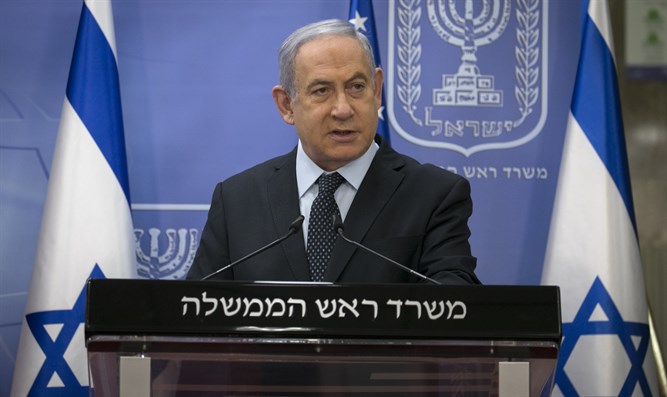
Prime Minister Benjamin Netanyahu, on his way to IDF headquarters in Tel Aviv, said, “We are in a security incident that is not a simple one.”

According to early reports, the terrorist cell attempted an ambush, firing a missile at an Israeli Merkava tank.

No Israeli casualties were reported. Residents said they heard heavy exchanges of fire on the border area.

The incident started around 3:00 p.m. local time and the Army ordered all residents of the Upper Galilee region to remain indoors until further notice. “All activities in the open space are prohibited, including agricultural work, resorts and tourism,” the IDF said.

However, minutes before 5:00 p.m., the IDF announced that all restrictions on movement were lifted and the roads were reopened.

The Iran-backed Hezbollah terrorist group threatened last week they would carry out a revenge attack after a Hezbollah fighter was killed in Syria in an airstrike attributed by foreign sources to Israel.

On Monday, the Israeli news site Walla reported that Hezbollah had called off an attack at the last minute after the IDF sent reinforcements to the northern border. The IDF noted at the time that the threat had not disappeared.

Over the weekend, Israel sent a message via the UN to the Lebanese government, warning that any action from Lebanese soil against Israel would be considered a severe border violation and Israel would retaliate in kind.

Earlier Monday, Prime Minister Benjamin Netanyahu warned Hezbollah and its Iranian sponsors against attacking Israel.

“We are constantly monitoring what is happening on our northern border. When I say ‘we’, that means myself, the Defense Minister, the Chief-of-Staff – all of us together,” Netanyahu said.

“Our policy is clear. First, we will not allow Iran to entrench militarily on our border with Syria. This is the policy that I set years ago; we uphold it consistently.

“Second, Lebanon and Hezbollah will bear the responsibility for any attack against us emanating from Lebanese territory. Third, the IDF is prepared for any scenario. We are active in all arenas for the security of Israel – both close to our borders and far from them.”

Israel’s Gas Rigs Are High-Priority Targets For Hezbollah, Warns Top Israeli Navy Commander

0
Hezbollah wants to attack Israel from the sea and is developing capabilities that will allow it to do so in a future conflict, warns outgoing commander of the Israeli Navy’s Haifa base, Brig. Gen. Gil Aginsky, who last week retired after 32 years of military service.

In an interview with Israel Hayom, Aginsky cited the tension on the northern border and the threats Hezbollah has been making, and said that the Israeli Navy was prepared to confront the challenges awaiting it, no matter how serious.

“The challenge we are grappling with is twofold—from the sea, and from under the sea. On the water, we know how to deal with any scenario, including some very complicated ones. When it comes to the underwater sphere, we are in the process of arming ourselves and dealing with a challenge that is unique to us,” said Aginsky.

“We’re talking about a ‘blue tunnel.’ You can blow up every terror tunnel under the Gaza Strip, but our ‘tunnel’ is enormous. The basic assumption is that Hezbollah wants to infiltrate [Israel] via the sea. They aren’t there to grow flowers. They intend to prevent us from being here, and if they can execute that intention from the sea, they will,” said Aginsky, adding, “Our job is to prevent that. We are holding onto the northern border fast and covering the entire zone.”

Israel is marking the 14th anniversary of the 2006 Second Lebanon War, during which terrorists fired a missile at the INS Hanit warship, which was on operation 16 kilometers (10 miles) off Beirut’s shores. Four Israeli sailors were killed.

Aginsky said that the Israel Defense Forces has learned its lesson.

“We are better prepared and I have absolute faith in our tools. The threat still exists, and it is significant, but we are looking to protect Israel’s gas rigs, above all else. If Hezbollah wants to cause strategic damage, they will try to attack the rigs, but if they hit a ship along the way as well, they won’t be sorry, either. After all, the ship’s goal is to protect the rig,” he said.

“We are expanding our powers in terms of vessels, infrastructure, [and] personnel. Our operational readiness is a top priority, given the changing strategic reality around us, down to the micro-tactical level, which changes every day,” said Aginsky.

In the next few years, the IDF will be receiving a number of new submarines and Sa’ar 6 warships, which Aginsky predicts will double the Israeli Navy’s power.

“A few things that we’ve done with submarines have brought Shayetet 13 [Flotilla 13 naval commando unit] to groundbreaking new places. The new submarines are very important, and the Sa’ar 6 ships are no less important to the Israeli Navy. These tools are nothing less than amazing. I hope we won’t be challenged, but if we are, the enemy will find itself facing the ultimate response,” he said.

With regard to the coronavirus epidemic in Israel, Aginsky says only that the Israeli Navy is studying cases from around the world, and stresses that “coronavirus has not affected the navy’s operational capability.”

The question of whether or not all combat roles in Israel’s military should be open to women has recently been revived in the public discourse. Aginsky thinks they should be.

“Remarks about how women can’t be integrated into the military are infuriating,” he says. “Women serve almost everywhere in the Israeli Navy, and we integrate them wherever it’s possible. Women can do everything.”

(JNS)

{Matzav.com}

Kudlow says next coronavirus stimulus bill will include more checks, extend moratorium on evictions

0
Kudlow’s comments come after a week where the White House’s hoped-for
payroll tax cuts were shot down by Congress.

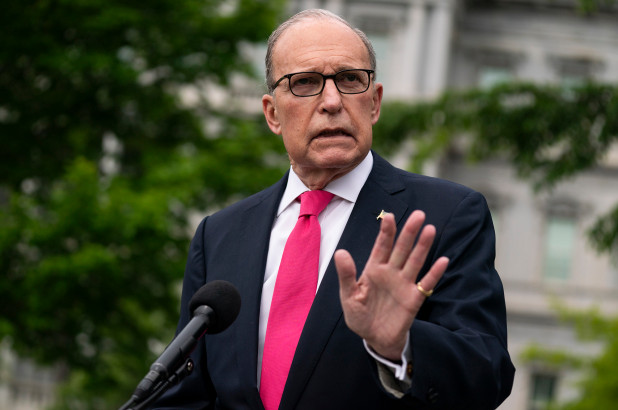
White House economic adviser Larry Kudlow promised on Sunday that the federal government would extend the moratorium on evictions and send out another round of checks as part of the next coronavirus stimulus package.

Kudlow’s comments come after a week where the White House’s hoped for payroll tax cuts were shot down by Congress.

“There’s a $1,200 check coming. That is going to be part of the new package. I would have preferred a payroll tax cut, on top of that check,” Kudlow said on CNN’s “State of the Union. “But, be that as it may, politically, it doesn’t work.”

While no deal has been officially announced, Treasury Secretary Steve Mnuchin and White House chief of staff Mark Meadows have been on Capitol Hill recently to discuss the details of a new relief package with congressional leaders.

On ending the additional $600 in unemployment benefits the federal government was supplying, Kudlow argued that the extra money was hurting small businesses from hiring workers.

“We have had a flood of inquiries and phone calls and complaints that small stores and businesses, restaurants can’t hire people back,” he said. “They went too far. Maybe last March, there was a necessity for that, but, really, there are consequences of people not returning to work.”

Mnuchin earlier in the day on “Fox News Sunday” said it a little more bluntly: “I think workers and Americans understand the concept that you shouldn’t be paid more money to stay home than to work.”

Mnuchin said the new bill would provide additional unemployment benefits, but noted that it will be less than the payments issued under the CARES Act. He said some workers were collecting more than they earned on the job. As a result, when businesses were reopening, many employees did not have an incentive to return to work.

The secretary said the Trump administration and Senate Republicans are on the same page with a $1 trillion package, but noted that in the interest of passing a bill quickly, any issues that are more difficult to negotiate with Democrats could be held off for another bill.

(Fox News).

100 Days Out: Trump looks for game change as Biden makes gains

0
The president’s change of course comes as new COVID-19 cases soar and many states reverse coronavirus steps.

It was a dramatically different approach for a president who’s been accused of downplaying the severity of the coronavirus pandemic.

“It will probably, unfortunately, get worse before it gets better,” President Trump said this past week – as he returned to the White House press briefing room to give his first coronavirus news conference since April.

And putting aside his long-time reluctance to wear a mask or urge Americans to mask up to prevent the spread of the virus, the president stressed “whether you like the mask or not, they have an impact.” He later acknowledged, “I’m getting used to the mask.”

The president’s change of course comes as new COVID-19 cases soar and many states reverse or pause moves to lift coronavirus restrictions. And it comes with just three-and-a-half months to go until Election Day, with public opinion polling that indicates Trump’s increasingly falling behind Democratic challenger Joe Biden.

Sunday marks exactly 100 days until the election. With the clock ticking for the incumbent to shake up his political fortunes, the past two weeks have witnessed the president making other dramatic U-turns. First was Trump’s ouster of Brad Parscale as his reelection campaign manager.

Then, the president abruptly scrapped the large celebratory aspects of the Republican National Convention in Jacksonville as the coronavirus surged in Florida. The move was shocking, as Trump moved the convention to Jacksonville from Charlotte just a month ago after North Carolina’s Democratic governor wouldn’t guarantee a full-fledged convention with an arena packed full of party officials and activists.

This is will be a knock-down, drag-out fight to the very end.’
— Bill Stepien, Trump campaign manager

But while the Trump campaign has long scoffed at polls that failed to predict his victory four years ago, the consistency of their message in recent weeks appears to have had an impact. An average of the latest national polls compiled by Real Clear Politics shows the president trailing the presumptive Democratic nominee by nearly 9 points.

More importantly – the latest surveys in the key battleground states also put Biden ahead. Real Clear Politics averages indicate the president down 7 points in Florida, 6.7 points in Pennsylvania, 8.2 points in Michigan and 6.4 points in Wisconsin. Trump narrowly won all four states in 2016, flipping them from blue to red as he won the White House.

Polling also suggests Biden with the slight edge in Ohio, North Carolina and Arizona, three other important swing states this cycle. And surveys indicate that once reliably red states such as Texas and Georgia are all knotted up between Trump and the former vice president.

Regardless, the president’s new campaign manager publicly remains very optimistic. And Democrats, laden with the searing memory of 2016’s upset, are cautious about overconfidence no matter what the polls show.

“This is will be a knock-down, drag-out fight to the very end,” Bill Stepien predicted on Friday as he held his first briefing in his new role with political reporters.

Stepien said there are “multiple pathways to 270 for the president,” referring to the number of electoral votes needed to win the White House. And he stressed that Texas will remain red, saying, “I would invite the Biden campaign to play in Texas. They should play hard. They should go after Texas really, really, heavily, spend a lot of money in the Houston and Dallas media markets.”

Stepien also pointed to opportunities to expand upon the 2016 map in states narrowly won by Hillary Clinton, such as Minnesota, New Hampshire, Maine and Nevada.

Asked about Minnesota – where a Fox News poll released on Thursday indicated Biden with a double-digit lead – Stepien said “we are bullish that Minnesota is a state that can come around.”

He also advised to “take national polls with a grain of salt” and added that around the Trump campaign headquarters, “We don’t pay a lot of attention to them.”

It was the same message – though less blunt – that’s been repeatedly delivered by the president. Making the case that the surveys under-sample Republican voters, Stepien argued that “national polls keep getting it wrong” and “miscalculate the electorate.”

Asked about the Trump campaign’s full-court press against public opinion polling, Biden campaign pollster John Anzalone told Fox News, “If you are litigating polls in public, you’ve got a problem.”

Stepien harks back to the 2016 election – where an average of the final public opinion polls in the key battleground states of Michigan, Pennsylvania and Wisconsin all showed Democratic nominee Hillary Clinton with the edge heading into Election Day. Trump became the first Republican to carry those states in a quarter-century – as he won the White House.

Who is Bill Stepien, Trump’s new 2020 campaign manager?Video
But there are two significant differences between this cycle and the 2016 contest. Trump’s no longer the outsider and disrupter, but rather the incumbent sitting in the White House. And polling indicates Biden is more popular than Clinton ever was four years ago.

“At some point, the Trump campaign is going to wake up and realize it’s not 2016 and that voters are judging Donald Trump on his performance or lack of performance for the last three-and-a-half years – but really for the last four months – that’s really where the rubber hits the road here,” Anzalone said.

Presidential elections where an incumbent is running for a second term in the White House are often a referendum on that president – and that’s the case right now in the 2020 showdown between Trump and Biden. The top issues are currently the coronavirus and an economy flattened by the pandemic – and the president’s performance and record on both issues.

Anzalone said Trump’s “being judged by how he’s mishandled three big crises – a health crisis, a police brutality protest crisis, and now an economic crisis as well.”

But the president and the Trump campaign are moving to turn the spotlight back onto Biden. They’ve countered charges of racism by highlighting the former vice president’s own history of controversial racial remarks. They’ve hammered the argument that the once-centrist Democrat has allowed his message to be hijacked by far-left forces in the party, while suggesting he would do little to deal with rioters clashing with police in cities like Portland, Ore.

“Joe Biden is largely undefined for most Americans. A lot of Americans know of Joe Biden. Far fewer know much about Joe Biden. Our job here every day is to change that and define him for who he is today,” Stepien emphasized.

The president has repeatedly touted his law-and-order approach to the national protests in cities across the country over police brutality toward minorities and system racism – and Trump’s campaign has tried to tag Biden as a “puppet” of the radical left.

“I think it was radical left people that are totally controlling him, like a puppet,” the president charged Thursday in an interview on Fox News’ “Hannity.”

In ads flooding the airwaves and on digital in key battleground states, Trump’s team is trying to label the former vice president as a supporter of the movement to defund the police. Biden has said on multiple occasions that he doesn’t support such a move, though has supported redirecting some funding. The Trump campaign’s push appears to be a move to try and restore the President’s fortunes with suburban voters he captured in 2016 and who later fled the GOP in the 2018 midterm elections.

But the Biden campaign argues the attacks aren’t working.

“Our numbers went up, they didn’t go down. [Trump’s] numbers went down, they didn’t go up,” Anzalone said.

And he argued that people already “have a really good read on who Joe Biden is.”

Another key metric is fundraising.

The Biden campaign and the Democratic National Committee (DNC) edged the president’s campaign and the Republican National Committee (RNC) in fundraising the past two months. Biden and the DNC have also taken a big bite out of the once vast cash-on-hand advantage enjoyed by Trump and the RNC, though the latter still has a huge war chest.

Stepien pointed to other metrics, touting that “we have many advantages over Joe Biden. We have a better team. We have a better ground game.”

And he highlighted that Trump’s digital and advertising campaigns are “simply second to none. It provides the president such an advantage down the stretch to be able to contact, reach, and touch voters from afar when traveling is a little harder these days.”

The acknowledgment that the coronavirus has dramatically altered campaigning and how both the Trump and Biden teams are able to get their message out is a crucial point. Biden has been repeatedly mocked by Republicans for campaigning from his “basement,” though he’s started to get out more. Whether it’s been a wise strategy remains to be seen.

Longtime Republican strategist and Fox News contributor Karl Rove emphasized on “America’s Newsroom” that “we’ve got to face the fact that we’re not going to have a traditional campaign this fall where candidates are out on bus tours, have four rallies a day in hangers in different parts of states and regions. Without that, we’re not going to have the ability for the press to confront the candidate every day for questions.”

Rove – who was the mastermind behind both of President George W. Bush’s White House wins and remains one of the GOP’s most revered political strategists – acknowledged that the president’s “behind” and that “he’s got a long way to go.”

But Rove, who informally advises the Trump campaign, noted that with 100 days to go, “fortunately he’s got a lot of time to do it.”

(Fox News).

Will Netanyahu try to form a right-wing government?

0
Sources in the Likud claim that the Prime Minister is trying to form an alternative coalition with Zvi Hauser and other MKs.

Sources in the Blue and White party are calling for reconsideration of the party’s insistence on a two-year budget, and are proposing to compromise on the budget after concluding that Prime Minister Netanyahu wants an election, Channel 12 News reported on Sunday.

Blue and White is reportedly considering allowing Netanyahu to approve a one-year budget as per his wishes, in order to deprive Netanyahu of an “excuse” that he had to disband the coalition because of Benny Gantz’s insistence on a two-year budget.

According to Channel 12 News, senior officials in the Likud also estimate that Netanyahu is interested in dissolving the partnership. It is possible that Netanyahu will try to form an alternative coalition with Zvi Hauser (Derech Eretz) and other Knesset members.

Under the coalition agreement, neither Netanyahu nor Gantz can bring down the government by casting a vote of no confidence and then serving as Prime Minister of the new government. Therefore, a creative solution has been found – the Likud is considering appointing Minister Aryeh Deri or Knesset Speaker Yariv Levin as temporary candidates for Prime Minister, the government will then fall, re-emerge and a vote of non-confidence will be held a week later, following which it will be possible to nominate Netanyahu as Prime Minister.

However, the Prime Minister’s Office denied these reports outright.

MK Hauser responded on Twitter, “Anyone who thinks that it will be possible to deal in the winter with the coronavirus, the flu and to take Israel to elections on top of it all – does not understand what we are facing. The wave we are facing now is minor compared to the one that is expected to come. Only a unity government can handle the task. Political certainty must be created and a budget approved as quickly as possible.”

(World Israel News).

Report: Iranian plane’s ‘strange maneuver’ may have tried to hide spy cameras

0

An Asia Times report claims that the pilot of an Iranian jet “made a dangerous move so the F-15’s could not see the underbelly of the jet,” which may have been equipped with spy cameras.

Iranian officials cried foul over the weekend, claiming passengers on a Mahan Air flight were injured in an incident with USAF fighter jets.

The Iranian airline, however, has a dubious record and is banned by several countries for its involvement in terrorism.

American military officials said an F-15 intercepted the Mahan Air flight on Friday from a safe distance, but Iran claimed the pilot had to take emergency action that resulted in several passenger injuries.

Iranian news agencies originally claimed an Israeli jet was involved but later changed their story.

“A closer look at the airline in question suggests a nefarious Iranian purpose,” the Asia Times reported Sunday.

Earlier this year Mahan Air flew supplies to Venezuela and took Venezuelan government gold back to to Tehran.

“Given its past behavior, it is likely that Iranian spies and commandos are also going to Venezuela on Mahan planes,” the Times said.

Despite a 55-mile no-fly zone around the al-Tanf US army base in Syria that pilots of Mahan Air flight 1152 would have known about, published radar tracks show the jet clearly flew right over al-Tanf on the flight from Tehran to Beirut.

“So why would the airliner choose to conduct a flyover? The answer is revealed, to a degree, by the strange maneuver of the jet. There was something the pilot did not want the F-15’s to see. The F-15’s approached the Mahan jet from behind and rapidly overtook it,” the report said.

“The Mahan flight captain, wanting to avoid a “visual inspection” made a dangerous move so the F-15’s could not see the underbelly of the jet,” it continued, adding that the plane may have been equipped with high-resolution spy cameras that would have been on the underside of the aircraft.

Meanwhile, Iranian parliament member Nasser Mousavi Laregani told the Fars news agency the incident represented a “criminal act of the U.S.” that “will not go unanswered.”

In 2011, the U.S. banned Mahan Air and imposed sanctions on it, noting the “infiltration of Iran’s commercial sector to facilitate its support for terrorism.” France, Italy and Germany have also banned Mahan Air, which has been referred to as a “terror airline” and most recently was found to be helping spread coronavirus in the Middle East.

The Iranian aircraft was either not flying in the predetermined corridor for international flights or it deviated from its route, Radio Farda reported, adding that the flight number and the airliner’s name were not registered according to protocols.

Some Iranian Twitter users confirmed that the “Mahan Air flight was in a totally unidentified corridor and refused to respond to incoming radio messages.”

Syrian and Jordanian aviation officials also indicated the Iranian aircraft appeared to have gone “astray” before it was intercepted, Radio Farda said.

(World Israel News).

Betraying Jewish history by watering down the Holocaust

0
Memorials are increasingly being used to promote a self-congratulatory and sometimes self-exculpatory image of the country that erects them.

The British baroness Ruth Deech, whose family were Jewish refugees from Nazism, recently delivered an impassioned address to the Oxford Jewish community about the way the Holocaust is being evacuated of meaning by memorials and museums in its name.

Her concern was prompted by the controversial plan to build a Holocaust memorial and learning center in London’s Victoria Tower Gardens, a small park near the Houses of Parliament.

Westminster council, the local planning authority, has turned down this proposal on environmental grounds. The space is a small, green oasis that would not only be marred by a jarring brutalist structure, but risks becoming submerged by tourist traffic and anti-Jewish vandals alike.

The British government is making extraordinary and arguably irregular efforts to overturn this decision and get this center built. Its insistence is all the more strange given that there are already five major Holocaust memorials in Britain.

Deech’s concerns, however, go far deeper than inappropriate positioning. Her sharpest point is that these memorials tend to shy away from the real causes of Jew-hatred. Instead, they are increasingly being used to promote a self-congratulatory and sometimes self-exculpatory image of the country that erects them.

Britain’s memorials, for example, do not note how in the 1930s and 1940s, the U.K. government blocked the entry into Palestine of desperate European Jews – in flagrant repudiation of the British Mandate to settle Jews there, thus facilitating their extermination in the Nazi slaughter.

The Holocaust didn’t involve “injustices” against the Jews. It involved the attempt to exterminate the entire Jewish people.

Hungary, Ukraine and other Eastern European countries have used Holocaust memorializing to erase their own complicity in the slaughter of the Jews, presenting themselves instead as historic victims of the Nazis or else equating the Nazi killing of Jews with the Soviet killing of other minorities.

As Deech observed, the Holocaust tends to be lumped together with other genocides and examples of racism or persecution, thus watering down its significance. The message becomes a generalized one of avoiding hatred and intolerance.

But that doesn’t address or explain the roots of the Holocaust: “Namely, centuries of Jewish persecution; first, on the grounds of religion, and then on the grounds of race, and now on the grounds of a distorted left-wing view of the State of Israel.”

Of course, governments and nations should stand against all bigotry and persecution. But this kumbaya-esque mush robs Holocaust memorializing of its key point: that the Holocaust was a unique atrocity.

So it’s not surprising that more and more people are viewing it as just one of many equivalent crimes against humanity.

That’s why it’s been used to draw a comparison with the appalling treatment of the Uyghurs by the Chinese regime. Video footage has surfaced of blindfolded and shackled Uyghurs being led onto trains taking them to indoctrination camps. There are reports of forced sterilizations, abortions and rapes.

Many Diaspora Jews run a mile from any suggestion that the Jews are fundamentally different.

This caused Marie van der Zyl, president of the Board of Deputies of British Jews, to protest to the Chinese ambassador to the United Kingdom about the “similarities between what is alleged to be happening in China” and “what happened in Nazi Germany 75 years ago: people being forcibly loaded onto trains, beards of religious men being trimmed, women being sterilized, and the grim picture of concentration camps.”

A London rabbi, Moshe Freedman, agreed and writes in The Jewish Chronicle that Holocaust education “was never exclusively about the survival of the Jews or the injustices that were perpetrated again us. It was about global human decency, morality and justice.”

But the Holocaust didn’t involve “injustices” against the Jews. It involved the attempt to exterminate the entire Jewish people.

The measures against the Uyghurs and other Chinese Muslims amount to an attempt to stop them from practicing their faith and turn them instead into indoctrinated clones of the Chinese Communist Party.

That’s horrific, of course. But it’s not the same as the Holocaust, whose unique characteristic was its aim to wipe the entire Jewish people off the face of the earth.

It took a non-Jewish British MP, Alistair Carmichael, a vice chairman of the All-Party Parliamentary Group on China, to uphold the principle that is in such danger of being lost.

‘ Nothing can be compared to the Holocaust ‘

Observing that states around the world “need to hold the Chinese government to account for their brutal suppression of the Uyghurs,” he added: “It is never a good idea to compare any contemporary incident to the Holocaust. My fundamental rule is that nothing can be compared to the Holocaust.”

Renowned scholars have also stated in the past that the Holocaust was an event without parallel. The philosopher Emil Fackenheim said that, while it belonged to the category of “genocide,” the planned and largely executed borderless extermination of the Jews was “unique.”

Another Jewish philosopher, David Patterson, went further and said that the Holocaust couldn’t be reduced to a case of genocide.

“The Nazis set out to annihilate more than a people. … They set out to annihilate a fundamental principle; to obliterate millennia of Jewish teaching and testimony; to destroy the living God of Abraham, Isaac and Jacob; to eradicate a way of understanding God, world and humanity embodied by the Jews in particular.”

The main driver of the Holocaust was not racism, nor hatred of “the other,” nor a dehumanizing view of certain groups—a view the Nazis shared with much progressive Western opinion in the 19th and early-20th centuries.

It was instead a paranoid and deranged view of the Jewish people as an evil conspiracy of positively supernatural proportions, and who therefore had to be wiped off the face of the earth. This is not recognizable in any other prejudice, bigotry or hatred directed at any other people or group.

But for some, the uniqueness of Jewish suffering is an intolerable fact that must be suppressed. Progressive “post-colonial” scholarship holds—preposterously—that emphasizing the singularity of the Holocaust diminishes and squeezes out other suffering and victimization.

Many Diaspora Jews, moreover, run a mile from any suggestion that the Jews are fundamentally different. They believe their safety and security rest upon not standing out from their surrounding societies.

Anti-Semitism is not “just another form of racism”

Which is why they are so anxious to claim that their historic persecution is on the same level as the suffering of others, and that anti-Semitism is just another form of “racism” or “othering.”

They thus join forces with those who want to deny Jews their true status as the world’s ultimate victims.

And it’s been but a short step from that to the false and malevolent view that the Jews of Israel have ended up doing to the Palestinians what was done to them.

As Baroness Deech observed: “The more the national Holocaust remembrance day events are packed out, the more the calls for sanctions on Israel that would result in her destruction, and the more the Holocaust is turned against the Jews. I hear it in parliament—‘after all you people went through, look what you are doing to the Palestinians; have you learned nothing.’ ”

Many peoples and groups in the world suffer untold horrors at the hands of brutal regimes. Jews and others have a duty to speak out against the persecution of the Uyghurs and all who are being victimized by the Chinese Communist Party.

But there is also a duty to speak up for the uniqueness of the Holocaust: a duty not to betray the facts of Jewish history by minimizing the particular evil of Europe’s darkest moment, a madness that singled out the Jewish people for a fate reserved for them alone.

Melanie Phillips, a British journalist, broadcaster and author, writes a weekly column for JNS. Currently a columnist for “The Times of London,” her personal and political memoir, “Guardian Angel,” has been published by Bombardier, which also published her first novel, “The Legacy,” in 2018. Her work can be found at: www.melaniephillips.com.

(JNS)

Report: Russia taking over Golan Heights in Syria to Israel’s north

0
Jerusalem deems development positive, report says, as Russian-backed militia hostile to Iran.

The Russians have been steadily gaining control over the Syrian Golan Heights region in recent weeks, establishing their own strong militia in the area, Hebrew-language outlet N12 reported Friday.

Dubbed “The Huran Army,” the biblical name of the region, the militia is headed by a local rebel commander, Ahmed al-Ouda, who fought against Syria’s President Bashar al-Assad, according to the report.

This recent development is a positive turn of events as far as Israel is concerned, the report stated, since Russian President Vladimir Putin is interested in keeping the flames between Jerusalem and Damascus low.

The Huran Army, consisting of multiple Muslim officers from the Caucasus, is hostile to both Iran and the Syrian regime, N12 reported.

Taking control over three Syrian provinces adjacent to the Israeli border — Daraa, Quneitra and Jabal al-Druze — the Russian-backed militia may prove to become a safe zone cushion to Israel’s northeastern border.

Moreover, many of the militia recruits are reportedly past rebels who were beneficiaries of Israeli aid with treatment at hospitals, food and medical provisions.

The militia has been curbing Hezbollah influence in local towns and dismantling checkpoints erected by the Syrian military. In addition, the newly-formed military force has even granted a somewhat civilian-autonomy to locals, free from the influence of Syrian authorities.

(i24 News).

Native scholar says Communist China has ‘met its match’ with Trump admin following consulate closure

0

‘They knew China would retaliate but they are willing to take that risk that nobody else in the world is willing to take’

Native Chinese scholar and author Helen Raleigh said the Chinese Communist Party (CCP) has finally “met its match” with the Trump administration, following a raid by federal agents on the consulate in Houston, Texas, suspected of harboring spies.

Raleigh, an immigration policy fellow at the Centennial Institute in Colorado, told Fox News the White House’s aggressive stance has been a wake-up call for China’s government and is not something its officials are used to dealing with.

“The CCP believes the law of the jungle. ‘Might makes right,'” she explained. “So the Trump administration is the first foreign administration the CCP ever met that also believes the law of the jungle and is not afraid to confront the CCP. The people in Trump’s administration are willing to bear those costs.”

She added: “We can see that from the consulate closure, they knew China would retaliate, but they are willing to take that risk that nobody else in the world is willing to take. So the CCP has finally met its match.”

U.S. officials pried open the doors of the Chinese consulate in Houston on Friday and took over the building shortly after Chinese officials vacated the facility on orders from the federal government.

After the Chinese were ordered to vacate, the Houston Fire Department responded to fires at the courtyard of the building, which turned out to be an effort to destroy documents. Chinese officials refused to allow any first responders to enter to extinguish the fires, Fox 26 in Houston reported.

“There are a series of steps that the Trump administration has taken — particularly last week almost on a daily basis — related to new sanctions and new policy changes against the CCP,” Raleigh said. “But the biggest news was the closure of China’s consulate in Houston and then China retaliated, closing the U.S. Consulate in Chengdu.”

She then cited Secretary of State Mike Pompeo’s speech about China this week and said he is leading a reversal in decades-old policy that championed the economic liberation of the Chinese people.

“He identified the problem in the U.S.-China relationship, which are the same problems that China has with the rest of the world,” Raleigh continued. “China has a very different political and ideological system, especially compared to free nations like the United States. For the past several decades, free nations mistakenly thought that as long as they keep engaging China, engaging the CCP, eventually with economic liberation — the CCP would change. The Chinese system would become a more liberal and open society like ours. Secretary Pompeo in his speech recognized that this assumption was wrong and it’s been wrong for several decades.”

She added: “This was not his first speech on the subject and it’s probably one of the only things that people from both parties can agree upon. That the past approach has failed. Sec. Pompeo summarized the Trump administration’s China policy in two words — ‘induce change.’ They want to induce a change of behaviors of the CCP.”

The administration wants to achieve this goal in two steps at the same time, Raleigh explained. The first step involved becoming very confrontational with the CCP in terms of trade negotiations, charges of espionage, the altering of visa policy and the closure of the consulate — all of which represented a “very dramatic, serious step.”

“They’ve basically matched the intensity of the Chinese aggressiveness,” she added. The second step would see China return to the negotiating table on various major issues.

Raleigh, who has publicly spoken out against the Chinese government’s tactics and writes as a contributor for The Federalist, also touched upon how past U.S. administrations were unwilling to bear the cost of a confrontation with China until the most recent push from President Trump.

“In the past four decades, China has been very aggressively pressing the limits. It is single-minded. They want to become the sole world power and change the world order to fit China’s ideology,” she said.

“Past administrations from George W. Bush to Barack Obama worried about the cost of confrontation — on the economic and military front. The cost of confronting them has become so much greater now that past administrations, as well as other countries, didn’t want to deal with it. Until the Trump administration [got involved].

“China is so powerful today, no matter which strategy the United States chooses, it’s going to come with a cost,” Raleigh added. “There’s no way to avoid a cost. So it’s really coming down to how much cost we are ready to bear. And keep in mind, when China and the U.S. confront each other, China bears cost too. Both countries need to calculate how much of a cost they are willing to bear.”

(Fox News).

WP Twitter Auto Publish Powered By : XYZScripts.com