Home Blog Page 713

US Department of Justice Takes Action Against New York Village Targeting Orthodox Jews

0

The U.S. Attorney’s Office for the Southern District of New York sent a letter Monday notifying the Village of Airmont in Rockland County, N.Y., that they plan to file suit against the village on the grounds that are violating terms of the Federal Religious Land Use and Institutionalized Persons Act of 2000 (RLUIPA).

RLUIPA, as the law is commonly referred to, was created in part to ensure that municipalities did not create zoning or landmarking laws that would discriminate against religious institutions or “unreasonably” limit religious structures or assembly within in a jurisdiction.

The U.S. Attorney’s Office said in its letter that the Village’s zoning code “substantially burdens, discriminates against and unreasonably limits the practice of religion by the Village’s Orthodox Jewish community.”

In a statement, Agudath Israel of America said it is “grateful that the [U.S.] Justice Department is prepared to take all steps necessary to fight religious discrimination and ensure religious liberty.”

The Orthodox Jewish Public Affairs Committee also praised the move. In a statement, the OJPCA said that “the Village of Airmont was created three decades ago essentially to abuse government power against Orthodox Jews. Time and again, the DOJ stepped in to stop it, and here we are again because the essence of the village has not changed.”

The Village of Airmont is no stranger to allegations that it discriminates against Orthodox Jews. Its establishment in 1991 was considered by some as a way to take control over local zoning ordinances and limit the construction of houses of worship. Since Torah-observant Jews don’t drive on Saturday (Shabbat) and most Jewish holidays, they often live within walking distance of a congregation.

By denying the construction of synagogues, many believed that village officials were effectively trying to keep out the Orthodox.

In fact, the federal government’s first lawsuit against Airmont was in 1991 under the Fair Housing Act when officials claimed that the village had been “incorporated for the purpose of excluding Orthodox Jews through zoning restrictions on their places of worship.”

The U.S. Attorney’s letter also notes that Airmont is the subject of two federal lawsuits claiming religious discrimination—Central UTA (United Talmudic Academy) v. Village of Airmont and Congregation of Ridnik v. Village of Airmont.

It further states that the village violated a previous judgment against it to “recognize the category of ‘residential place of worship,’ a category which has been removed from the Village’s zoning code.”

“We will briefly delay filing the complaint if the Village is willing to negotiate a resolution of this matter through a consent decree that would be filed simultaneously with the complaint,” Acting U.S. Attorney for the Southern District of New York Audrey Strauss wrote, adding that the lawsuit will be filed no later than Sept. 15. “We hope to solve this matter through an amicable settlement, rather than through potentially costly and protracted litigation.”

Attorney Brian Sokoloff, partner and co-founder of Sokoloff Stern, LLP, which is representing the Village of Airmont, said that it doesn’t comment on pending or threatened litigation. He also replied with “no comment” when asked if he was surprised that issues regarding RLIUPA continue to be at issue.

Sokoloff said that the Village had won a previous lawsuit filed by the United Talmudical Academy in state court. He added that the federal court has dismissed “large portions” of the Central UTA lawsuit. Sokoloff Stern has also made a motion to dismiss the case by the Congregation of Ridnik.

(Vosizneias).


Ted Cruz hits back at Dems allowing ‘mob’ violence: ‘They’re refusing to protect their own citizens’

0

The Texas GOP senator says Dems have allowed mobs to rage because it was in their partisan interests.

Texas Republican Sen. Ted Cruz is introducing new legislation that would help citizens take legal action against their elected officials if they’re “wrongfully denying police protection in the situation of a riot.”

“We’re seeing violence and police cars being firebombed, police officers being murdered, and violent mobs within our cities. But even worse, in the face of that, we’re also seeing Democratic politicians, Democratic mayors, Democratic governors who’ve somehow made the decision it’s in their political best interest to allow the mob to carry out their violence,” he said.

“And, they’re refusing to protect their own citizens. They’re allowing these lawless autonomous zones to exist within their boundaries. That has never happened in modern times.”

Cruz’s new measure says that if an elected official bends their knee to mob rule and denies their constituents police protection, residents can “sue them and get triple damages” for any injuries or any damages to a home or business.

The senator said that while many minority-owned small businesses were looted and “burned to the ground,” his colleagues across the aisle “didn’t care” because it was in their “partisan interests to allow the mob to rage.”

Cruz said that Democrats today were acting in the same way that their predecessors acted in the 1950s and 1960s.

“It’s the same thing [that] Democratic politicians like Bull Connor did. It’s the same thing that you saw Democratic racists who didn’t want to segregate schools. And remember, Eisenhower sent in the Army and said, ‘you’re going to follow Brown versus Board of Education.’ And you had elected Democrats — and they were all Democrats who were enforcing Jim Crow —  who said, ‘get your federal officers out of here,'” he told host Shannon Bream.

“Well, guess what?” asked Cruz. “You don’t have the ability to throw the federal government out. You don’t have the ability to throw federal law enforcement officers out. And, you certainly don’t have the ability to say, ‘we’re going to allow the federal courthouse or the federal building to burn.'”

Cruz said if Chicago’s liberal Mayor Lori Lightfoot wants to “allow the mob to rampage in City Hall and occupy her office, that’s her decision.”

“Knock yourself out if you want to give in to the lawlessness,” he said. “But she doesn’t have the right to give up the federal courthouse and neither does the mayor of Portland or the governor of Oregon or any of these Democrats who — they’ve made a decision: the police are the enemy and the mob are their allies. And it’s just wrong.”

(Fox News).

Israel raises alert levels in north after Hezbollah threat: report

0
Hezbollah, the Shiite terror group, says it’s seeking revenge for the killing of a member in Damascus.

Israel’s alert levels on its northern border with Lebanon have reportedly been raised following the killing of a Hezbollah member in Damascus on Monday night, with the group threatening to respond.

In a new video spread by the terrorist group, a squadron is seen preparing to launch anti-tank missiles, Hebrew-language outlet N12 reported Wednesday.

Moreover, Hezbollah has raised its alert threshold as well, Lebanese daily Al Akhbar reported.

The video follows threats sounded by Secretary-General of Hezbollah Hassan Nasrallah toward Israel.

The last time there was a flare-up on the Israel-Lebanon border, the Iran-backed Shiite organization launched anti-tank missiles at an Israel Defense Forces (IDF) post and at military vehicles near the town of Avivim in the north, on September 1, 2019. The incident ended with no casualties to Israel.

On Monday, according to multiple reports, Israel attacked sites belonging to Hezbollah and several other organizations backed by Iran south of Damascus.

In a mourning statement, Hezbollah confirmed that member Ali Kamel Mohsen was killed by the “Zionist aggression” on the outskirts of Damascus.

(i24 News).

Israel: Election seems closer than ever as government infighting reaches new high

0
Likud minister warns that unless Likud and Blue and White agree on new working relationship, Israel will be ‘on the expressway toward the voting booth.’

The fragile coalition between Likud and Blue and White that brought an end to a year-long political stalemate could unravel within days and force Israeli lawmakers to once again dissolve the parliament.

The latest crisis began on Wednesday noon after Blue and White sided with the opposition and voted in favor of a bill that bans gay conversion therapy. This caused an uproar among the Haredi parties in the coalition and resulted in the trading of barbs between Likud and its main coalition partner.

A Likud minister went so far as to say that an early election, the fourth in just over a year, could be triggered because of Blue and White’s defiance, “If we do not find a new arrangement to govern our relationship within the coalition, we will end up “on the expressway toward the voting booth.”

The minister noted that “it is unacceptable to have half of the cabinet vote against the government.”

He further warned that despite the terms of the unity deal stipulating that Blue and White leader Benny Gantz would become interim prime minister should an election be called, Prime Minister Benjamin Netanyahu is under no legal obligation to follow through on that.

The minister said that even the High Court of Justice cannot enforce the unity deal, as it is not written into law, and hence Netanyahu could remain prime minister.

(Israel Hayom).

Secret Weapon: Israel Honors Top Cyber Spy Shrouded in Mystery

0
An agent only identified as ‘A’ is the recipient of the highest lifetime achievement award for defending the country, but all the details are classified.

Israel’s top defense award was given recently to a Mossad agent described as “genius” who chose to work in secret behind the scenes for Israel’s defense rather than take a lucrative job in high tech, Channel 12 reported.

But who is the secret agent who can only be identified as “A”?

An acquaintance who knows A says that “he is recognized in our intelligence community and by the Americans as a real phenomenon in the cyber field” who is grooming a generation of students under him.

They also say the 40-year-old father is a real character and a unique figure at the Mossad, Israel’s equivalent of the CIA, who chose to work for the secret intelligence organization over a career in the private sector.

The decision to award the lifetime achievement award reads, among other things: “Contribution to state security while demonstrating extraordinary talent.”

The Channel 12 report talked about the recent “very intrusive operation into the heart of a major enemy of Israel” whose secrecy as a counter-terrorism operation means that the release of any detail could compromise the country’s security.

However, the contribution of the operation to Israel’s defense was deemed “extraordinary” and “a unique contribution to Israel’s security.”

Only 40, A is receiving the award “for a long-standing contribution to national security and for initiating many technological solutions, while demonstrating exceptional talent, creativity, curiosity and daring.”

Along with A, three outstanding projects are being recognized for the Israel Security Award that are different joint efforts involving the Mossad, the IDF, the Ministry of Defense, private defense contractors and the Shabak General Security Service – Israel’s equivalent of the FBI.

No details of the three projects could be revealed, other than who were the participating agencies that revealed that one of the project had something to do with the Israel Air Force.

Defense Minister Benny Gantz called the winners to tell them of their achievement, saying he was proud of Israel’s human capital that spans the different organizations.

Those organizations “prove time and time again that we have and will have no borders in the war on Israel’s security,” Gantz said. ” Thanks to their talent, dedication and dedication to the task, the security of the citizens of Israel is guaranteed, and we possess groundbreaking capabilities – in every dimension, and everywhere.”

(United with Israel).

Rabbi Lord Jonathan Sacks: Parshat Devarim: The Time to Follow

In the last month of his life, Moses gathered the people. He instructed them about the
laws they were to keep and reminded them of their history since the Exodus. That is the substance of the book of Devarim.

Early in this process, he recalled the episode of the spies — the reason the people’s parents were denied the opportunity to enter the land. He wanted the next generation to learn the lesson of that episode and carry it with them always. They needed faith and courage. Perhaps that has always been part of what it means to be a Jew.

But the story of the spies as he tells it here is very different indeed from the version in Shelach Lecha (Num. 13-14), which describes the events as they happened at the time, almost 39 years earlier. The discrepancies between the two accounts are glaring and numerous. Here I want to focus only on two.

First: who proposed sending the spies? In Shelach, it was God who told Moses to do so. “The Lord said to Moses, ‘Send men.’” In our parsha, it was the people who requested it: “Then all of you came to me and said, ‘Let us send men.’” Who was it: God or the people? This makes a massive difference to how we understand the episode.

Second: what was their mission? In our parsha, the people said, “Let us send men to spy out [veyachperu] the land for us” (Deut. 1:22). The 12 men “made for the hill country, came to the wadi Eshcol, and spied it out [vayeraglu]” (Deut. 1:24). In other words, our parsha uses the two Hebrew verbs, lachpor and leragel, that mean to spy.

But as I pointed out in my column for Shelach Lecha, the account there conspicuously does not mention spying. Instead, thirteen times, it uses the verb latur, which means to tour, explore, travel, inspect. Even in our parsha, when Moses is talking, not about the spies but about God, he says He “goes before you on your journeys — to seek out (latur) the place where you are to encamp” (Deut. 1:33).

According to Malbim, latur means to seek out what is good about a place. Lachpor and leragel mean to seek out what is weak, vulnerable, exposed, or defenseless. Touring and spying are completely different activities, so why does the account in our parsha present what happened as a spying mission, which the account in Shelach emphatically does not?

These two questions combine with a third, prompted by an extraordinary statement by Moses in our parsha. Having said that the spies and the people were punished by not living to enter the promised land, he then says:

Because of you, the Lord was incensed with me also, and He said: you shall not enter it either. Joshua son of Nun, who attends you, he shall enter it. Strengthen him, because he will lead Israel to inherit it. (Deut. 1:37-38)

This is very strange indeed. It is not like Moses to blame others for what seems to be his own failing. Besides this, it contradicts the testimony of the Torah itself, which tells us that Moses and Aaron were punished by not being permitted to enter the land because of what happened at Kadesh when the people complained about the lack of water. What they did wrong is debated by the commentators. Was it that Moses hit the rock? Or that he lost his temper? Or some other reason? Whichever it was, that was when God said: “Because you did not trust in Me enough to honor Me as holy in the sight of the Israelites, you will not bring this community into the land I give them” (Num. 20:12). This was some 39 years after the episode of the spies.

As to the discrepancy between the two accounts of the spies, R. David Zvi Hoffman argued that the account in Shelach tells us what happened. The account in our parsha, a generation later, was meant not to inform but to warn. Shelach is a historical narrative; our parsha is a sermon. These have different purposes.

As to Moses’ remark, “Because of you, the Lord was incensed with me,” Ramban suggests that he was simply saying that like the spies and the people, he too was condemned to die in the wilderness. Alternatively, he was hinting that no one should be able to say that Moses avoided the fate of the generation he led.

However, Abarbanel offers a fascinating alternative. Perhaps the reason Moses and Aaron were not permitted to enter the land was not because of the episode of the water and the rock at Kadesh. That is intended to distract attention from their real sins. Aaron’s real sin was the Golden Calf. Moses’ real sin was the episode of the spies. The hint that this was so is in Moses’ words here, “Because of you, the Lord was incensed with me also.”

How though could the episode of the spies have been Moses’ fault? It wasn’t he who proposed sending them. It was either God or the people. He did not go on the mission. He did not bring back a report. He did not demoralize the people. Where then was Moses at fault? Why was God angry with him?

The answer lies in the first two questions: who proposed sending the spies? And why is there a difference in the verbs between here and Shelach?

Following Rashi, the two accounts, here and in Shelach, are not two different versions of the same event. They are the same version of the same event, but split in two, half told there, half here. It was the people who requested spies (as stated here). Moses took their request to God. God acceded to the request, but as a concession, not a command: “You may send,” not “You must send” (as stated in Shelach).

However, in granting permission, God made a specific provision. The people had asked for spies: “Let us send men ahead to spy out [veyachperu] the land for us.” God did not give Moses permission to send spies. He specifically used the verb latur, He gave permission for the men to tour the land, come back, and testify that it is a good and fertile land, flowing with milk and honey.

The people did not need spies. As Moses said, throughout the wilderness years God has been going “ahead of you on your journey, in fire by night and in a cloud by day, to search out places for you to camp and to show you the way you should go” (Deut. 1:33). They did however need eyewitness testimony of the beauty and fruitfulness of the land to which they had been traveling and for which they would have to fight.

Moses, however, did not make this distinction clear. He told the 12 men: “See what the land is like and whether the people who live there are strong or weak, few or many. What kind of land do they live in? Is it good or bad? What kind of towns do they live in? Are they unwalled or fortified?” This sounds dangerously like instructions for a spying mission.

When ten of the men came back with a demoralizing report and the people panicked, at least part of the blame lay with Moses. The people had asked for spies. He should have made it clear that the men he was sending were not to act as spies.

How did Moses come to make such a mistake? Rashi suggests an answer. Our parsha says: “Then all of you came to me and said, ‘Let us send men ahead to spy out the land for us.’” The English does not convey the sense of menace in the original. They came, says Rashi, “in a crowd,” without respect, protocol, or order. They were a mob, and they were potentially dangerous. This mirrors the people’s behavior at the beginning of the story of the Golden Calf: “When the people saw that Moses was so long in coming down from the mountain, they gathered against Aaron and said to him…”

Faced with an angry mob, a leader is not always in control of the situation. True leadership is impossible in the face of the madness of crowds. Moses’ mistake, if the analysis here is correct, was a very subtle one, the difference between a spying mission and a morale-boosting eyewitness account of the land. Even so, it must have been almost inevitable given the mood of the people.

That is what Moses meant when he said, “Because of you the Lord was incensed with me too.” He meant that God was angry with me for not showing stronger leadership, but it was you — or rather, your parents — who made that leadership impossible.

This suggests a fundamental, counter-intuitive truth. There is a fine TED talk about leadership. It takes less than three minutes to watch, and it asks, “What makes a leader?” It answers: “The first follower.”

There is a famous saying of the Sages, in Pirkei Avot: “Make for yourself a teacher and acquire for yourself a friend.” The order of the verbs seems wrong. You don’t make a teacher, you acquire one. You don’t acquire a friend, you make one. In fact, though, the statement is precisely right. You make a teacher by being willing to learn. You make a leader by being willing to follow. When people are unwilling to follow, even the greatest leader cannot lead. That is what happened to Aaron at the time of the Calf, and in a far more subtle way to Moses at the time of the spies.

That, I would argue, is one reason why Joshua was chosen to be Moses’ successor. There were other distinguished candidates, including Pinchas and Caleb. But Joshua, serving Moses throughout the wilderness years, was a role model of what it is to be a follower. That, the Israelites needed to learn.

I believe that followership is the great neglected art. Followers and leaders form a partnership of mutual challenge and respect. To be a follower in Judaism is not to be submissive, uncritical, blindly accepting. Questioning and arguing are a part of the relationship. Too often, though, we decry a lack of leadership when we are really suffering from a lack of followership.

Rabbi Lord Jonathan Sacks is the former chief rabbi of the United Hebrew Congregations
of the Commonwealth. The author of over 30 books, he can be followed on social media @RabbiSacks or at www.RabbiSacks.org.

Popular Michigan teacher fired for tweeting: ‘Trump is our president’

0
Teacher said the principal and district superintendent gave him an ultimatum: be fired or resign.

A Michigan school district fired a popular high school teacher and coach after he pointed out that “Trump is our president” on social media.

Varsity baseball coach and social studies teacher Justin Kucera said Walled Lake school district officials hauled him into a closed-door meeting after he indicated his support for President Trump’s speech to reopen schools.

He told the Washington Free Beacon that the Walled Lake Western principal and district superintendent gave him an ultimatum: be fired or resign.

“I was required to meet with [human resources], the superintendent, and my principal [on July 10]. They initially took my statement on why I tweeted those tweets and they told me they would have a decision about my future employment in the upcoming days. When they completed the meeting, I was told I had the option to either be fired or resign.” Kucera said.

Neither the school district nor the principal responded to requests for comment.

Kucera said the statement that cost him his job was intended to unify, rather than divide.

“I know a lot of people are just rooting for Trump to fail, and I don’t think that anybody should do that,” Kucera said. “Agree with him or not, you should want the president to do well. I apologized that [my tweet] brought so much negative attention, but I’m not sorry for what I said.”

Kucera was a popular figure at the high school before the episode, according to parents and former teachers. Even his detractors lauded him on social media as they condemned the tweet. One student said she would need to find a new “favorite teacher” after seeing the missive. Multiple sources said that the teacher never brought politics into the classroom.

Bryant Hixson, a recent Walled Lake Western graduate, said his political views have no impact on how he views his coach and teacher.

“Prior to Mr. Kucera’s tweet, I cannot recall an instance where he shared his political affiliations while teaching or coaching,” Hixson said. “My political views have no impact on how I feel towards Mr. Kucera. Mr. Kucera has always been supportive of me as my AP [Advanced Placement] World History and student leadership teacher and as my baseball and basketball coach.”

A parent of two Walled Lake Western boys told the Free Beacon — on the condition of anonymity for fear of retribution — that Kucera was an apolitical figure who coached
his son in baseball and basketball and taught his sons AP History and student leadership.

“Justin coached my son his entire high school career and also was his AP History teacher and student leadership teacher for two years. I know Justin very well,” the parent said.

“If there’s one thing that I would commend Justin for is, he always tried to stay apolitical. He always tried to stay right down the middle, avoid [political] conversations, and let the students make their own call based on their own life experiences.”

The father of two believes Kucera lost his job because administrators caved to a mob that had little to do with the school district.

Other Walled Lake teachers have expressed their political views without any repercussions. Paulette Loe, a now-retired Walled Lake Western teacher, encouraged students to read an article from the Atlantic about “how to beat Trump” while still employed.

Nicole Estes, a kindergarten teacher in the district, called Trump a “sociopath” and a “narcissist” on Facebook in 2016 and is still employed at Keith Elementary School. Neither Loe nor Estes responded to requests for comment.

The teachers’ union representative that accompanied Kucera at the meeting did not respond to a request for comment.

(World Israel News).

‘Hateful imagery’: Twitter locks out Jewish users for posting Star of David

0
According to a UK anti-Semitism watchdog group, Twitter deemed the traditional Jewish symbol to be “hateful imagery” and is locking accounts of those who post it.

The Campaign Against Anti-Semitism (CAA) announced on Monday that Twitter “has deemed the Star of David, a symbol of Judaism and Jewish pride, to be ‘hateful imagery,’ and is locking the accounts of users who display it.”

According to the CAA, several Twitter users contacted the UK-based watchdog organization in the past several days to complain that their accounts were locked, with the social media giant providing the following explanation: “We have determined that this account violated the Twitter Rules. Specifically for: Violating our rules against posting hateful imagery. You may not use hateful images or symbols in your profile image or profile header. As a result, we have locked your account.”

The CAA added that Twitter told users that deleting the “hateful imagery,” in this case the Star of David, would lead to reinstatement of their accounts.

CAA Director of Investigations and Enforcement Stephen Silverman commented, “It is deplorable enough that Twitter consistently fails to act against anti-Semitism on its platform, but now it is taking action against Jews for the simple crime of showing pride in their identity by displaying a Star of David. It never fails to astound just how low Twitter is prepared to go.”

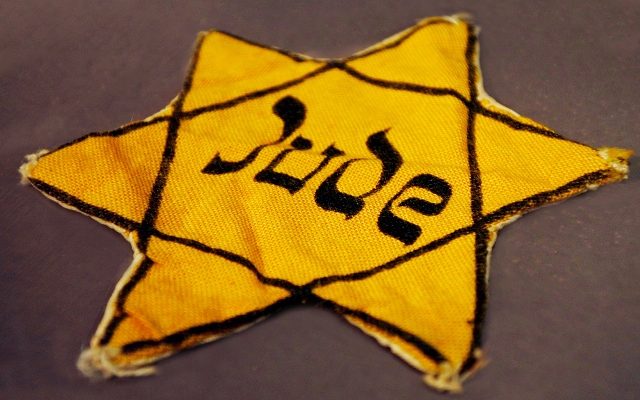
Among the the Stars of David of locked accounts were renderings of blue and white stars, in addition to yellow stars reminiscent of the badges Jews were forced to wear by the Nazis.

Silverman continued, “So often social media companies claim that they lack the resources to tackle hate on their platforms, but Twitter has put the lie to that claim by demonstrating that it does have the resources, but chooses to target the benign symbol of a victimized minority instead of the countless racists who use its platform with impunity.”

The CAA statement also claimed that Twitter earlier this year was “forced to apologize for permitting advertisements to be micro-targeted at neo-Nazis and other bigots.”

Silverman concluded, “Twitter must immediately restore these accounts, apologize to the owners, and pledge finally to take robust action against the anti-Semites whom it has enabled for so long.”

(World Israel News).

US accuses Chinese hackers of stealing COVID-19 research

0

The Chinese hackers also targeted human rights activists in the United States and Hong Kong.

Two Chinese nationals have been indicted for hacking COVID-19 vaccine research and the intellectual property of companies in the United States and other countries, the US Justice Department said Tuesday.

The Chinese hackers also targeted human rights activists in the United States and Hong Kong, Assistant Attorney General for National Security John Demers said.

The hackers were working with China’s Ministry of State Security, Demers said.

The indictments come as US Defense Secretary Mark Esper said Tuesday he plans to visit China this year, as Washington takes a tougher stance against Beijing in the disputed South China Sea.

Secretary of State Mike Pompeo said Monday the United States would treat Beijing’s pursuit of resources in the South China Sea as illegal, ramping up support for Southeast Asian nations with rival claims and triggering a furious response from Beijing.

It was the latest forceful statement by US President Donald Trump’s administration to challenge China, which it has increasingly cast as an enemy ahead of November elections.

“We are making clear: Beijing’s claims to offshore resources across most of the South China Sea are completely unlawful, as is its campaign of bullying to control them,” Pompeo said in a statement.

(i24 News).

WP Twitter Auto Publish Powered By : XYZScripts.com