Home Blog Page 714

Israelis Turn Ultrasound into Powerful Cancer-Fighting Weapon

0
A breakthrough ultrasound technique developed at Tel Aviv University to treat cancer may be applicable to Parkinson’s, Alzheimer’s and other diseases.

A Tel Aviv-based research team has developed a method to fight cancer by shooting microbubbles at cancer cells and then blowing them up using ultrasound.

The microbubbles explode like targeted smart warheads, creating holes in cancer cells’ membranes and enabling gene therapy delivery with tests showing that up to 80 percent of the tumor cells are killed.

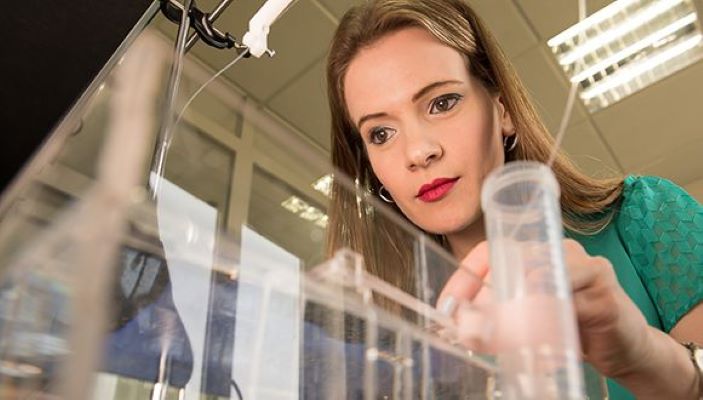
That sounds super cool and super promising, but there’s a ton of science and hard work behind it, says Dr. Tali Ilovitsh from the Biomedical Engineering Department at Tel Aviv University.

Ultrasound has been used for years as a diagnostic tool for different cancers, but now Dr. Ilovitsh has weaponized it in the fight against the “big C” by teaming it up with a gene therapy “Trojan horse.”

She started on the breakthrough technology during her post doctorate research at Stanford University and has continued the work back home in Tel Aviv for the method that will deliver gene therapy treatment directly into breast cancer cells.

“Microbubbles are microscopic bubbles filled with gas, with a diameter as small as one tenth of a blood vessel,” Dr. Ilovitsh explains.

“At certain frequencies and pressures, sound waves cause the microbubbles to act like balloons: they expand and contract periodically. This process increases the transfer of substances from the blood vessels into the surrounding tissue.”

“We discovered that using lower [ultrasound] frequencies than those applied previously, microbubbles can significantly expand, until they explode violently. We realized that this discovery could be used as a platform for cancer treatment and started to inject microbubbles into tumors directly,” Dr. Ilovitsh said.

In lab experiments with mice, “about 80 percent of tumor cells were destroyed in the explosion, which was positive on its own,” she said, but not good enough, because you need to destroy the entire tumor.

“In order to prevent the remaining cancer cells from spreading … we injected an immunotherapy gene alongside the microbubbles, which acts as a Trojan horse, and signaled the immune system to attack the cancer cell,” she said explaining that adding the gene therapy to the bubbles lets them directly enter the remaining 20 percent of the cancer through tiny holes formed by the exploding bubbles.

Once the gene is in it triggers an immune response that destroys the cancer cell.

“The majority of cancer cells were destroyed by the explosion, and the remaining cells consumed the immunotherapy gene through the holes that were created in their membranes. The gene caused the cells to produce a substance that triggered the immune system to attack the cancer cell. In fact, our mice had tumors on both sides of their bodies. Despite the fact that we conducted the treatment only on one side, the immune system attacked the distant side as well,” Dr. Ilovitsh said.

Not only is the new targeted treatment safe and cost effective, it may be able to be used as a noninvasive treatment for brain related diseases such as brain tumors and other neurodegenerative conditions such as Alzheimer’s and Parkinson’s disease.

“The Blood-Brain barrier does not allow for medications to penetrate through, but microbubbles can temporarily open the barrier, enabling the arrival of the treatment to the target area without the need for an invasive surgical intervention,” she said.

(United with Israel).

As Trump slips in polls, Adelson pumps $25m into GOP Senate races

0
The billionaire casino magnate and his wife made their largest 2020 donation last month, funneling millions to a Super PAC helping Republicans keep the Senate.

As US President Donald Trump’s poll numbers drop amid the surging coronavirus pandemic, Republican mega-donors are increasingly directing their funds toward helping the party keep its Senate majority, according to a New York Times report Tuesday.

That includes the Jewish billionaire casino magnate Sheldon Adelson and his wife Miriam, who donated $25 million to a Super PAC aimed at helping Senate Republicans in the November election. The contribution marks the couple’s largest yet donation of the 2020 campaign season.

In February, Adelson pumped $5,600 into Trump’s campaign and another $580,600 to a PAC supporting the president’s reelection, according to the Federal Election Commission’s campaign finance reports.

The New York Times report said that private discussions were ongoing between a number of major GOP donors to shift resources toward the Senate rather than Trump’s reelection.

It’s not clear whether Adelson has been part of those talks.

Republicans cited several reasons why they were considering the strategy, from a “lack of confidence” that Trump will beat former vice president Joe Biden and concern that the president is hurting down-ballot candidates, to an attempt to prevent Democrats from potentially controlling both the legislative and executive branch.

What’s more, sources told The Times that the donors don’t believe money will be the deciding factor in whether Trump wins or loses.

“As Republicans get more and more in tune, it’s hold the Senate at all costs,” Dan Eberhart, an energy executive and GOP donor, told the paper. “The House is gone. And the White House is looking increasingly like an uphill battle. This is not a good picture for us.”

Eberhart gave $100,000 to Trump in June but said he was now trying to bolster Republican Senate candidates.

Another big GOP donor cited in the report was Frank VanderSloot, an Idaho-based entrepreneur. He said he was dismayed by Trump’s tweets and thought the only way to stop the Democratic agenda was to keep the Senate.

“Somebody’s got to protect the country from foolishness,” he said. “The only hope is the Senate.”

The news of the change in Republican giving comes as Trump’s polling continues to drop.

A new ABC News/Washington Post poll released Sunday shows Trump 15 points behind Biden among registered voters, 55 percent to 40 percent.

The same poll, conducted by Langer Research Associates, found Trump’s overall job approval rating at 39 percent — down 9 points in the course of the pandemic, with disapproval up 11.

The survey was published as COVID-19 cases are surging nationally, and states that had re-opened in the spring, like Florida and Texas, are now backtracking as hospitalization rates increase dramatically.

In response, Trump said Monday that he would reconvene regular briefings of the White House coronavirus task force and, for the first time publicly, encouraged people to wear masks.

(JNS).

Report: New Israeli airstrikes in Syria kill five, wound four foreign fighters

0
A missile depot and other weapons warehouses were also destroyed, reported Syrian media.

Israel launched airstrikes on Monday against military targets south of Damascus, killing five foreign fighters and wounding four others, the Britain-based Syrian Observatory for Human Rights said on Tuesday.

It was not known if the killed and wounded fighters were Iranian or were affiliated with the Lebanese Hezbollah, said the opposition affiliated Syrian Observatory for Human Rights. Another seven air-defense forces were injured.

A missile depot and other weapons warehouses were also destroyed, according to the report.

Russian aircraft were launched to the area of attack in Syria but refrained from responding, a report says.

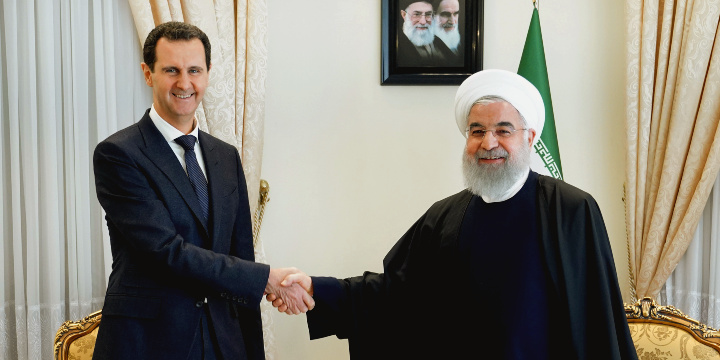
The attack in Damascus Monday night was the first air raid executed in Syria following the defense pact signed between Bashar al-Assad’s regime and Iran.

Over the past few weeks, reports broke about Iran’s intention to beef up Syria’s defense system with self-produced military supplies, particularly for the defense of Syrian, as well as Lebanese, airspace.

According to the news outlet Mako, the Iranians are interested in sending some of their own surface-to-air defense systems after the reported failure of the Russian S-300 and Pantsir surface-to-air missile systems that were deployed in Syria.

The weapons mentioned in the Mako report are the Iranian Bavar-373, which Tehran describes as its version of the S-300, and the Khordad 15 surface-to-air missile system unveiled for the first time on June 9, 2019.

Bavar, unveiled in 2016 after a decade-long development, is said to be able to detect targets or planes at more than 185 miles, and destroy them at 125 miles.

The newer Khordad 15 can allegedly detect fighter jets, drones and missiles at a 93-mile distance.

The Syrian military said on Monday that its air defenses responded to Israeli airstrikes and “intercepted most of the missiles”, reported Syria’s state news agency SANA. The attack injured seven soldiers and caused damage, it said.

Numerous strikes against Iranian and Hezbollah sites in Syria have been reported by foreign sources this year.

(JNS).

Protesters mass outside Netanyahu’s residence, march to Knesset

0
Parallel demonstrations held in Jerusalem, including against virus restrictions and PM’s handling of economic crisis.

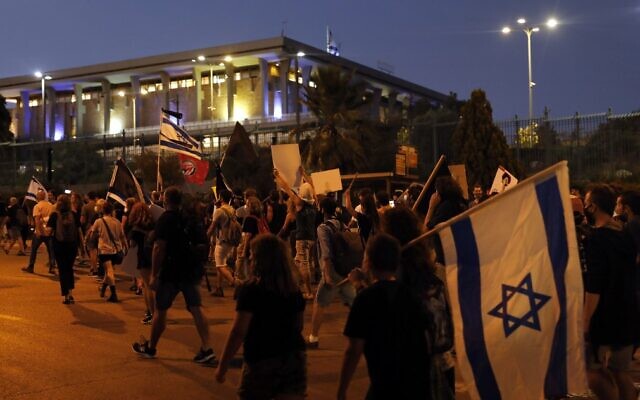
Thousands of Israelis took part in a rally Tuesday outside Prime Minister Benjamin Netanyahu’s official residence in Jerusalem, with some demonstrators railing against the government’s handling of the economic crisis caused by the COVID-19 pandemic and others calling for the premier to resign over his indictment on graft charges.

The protest was organized by several groups, including restaurant owners angry at the repeated closures forced upon them in recent months, self-employed Israelis who say government support has been insufficient, and the so-called “black flag” anti-corruption protesters against Netanyahu.

Additionally, some demonstrators protested against proposed legislation that would allow government measures against the coronavirus to take effect without Knesset approval, saying it would remove vital oversight.

Many of the protesters marched from the Prime Minister’s Residence to the Knesset after receiving police permission.

A small number of Netanyahu supporters held a counter-demonstration nearby and police closed off several roads around the Prime Minister’s Residence due to the protests.

Hebrew-language media outlets put turnout for the rallies at some 2,000.

Adjacent to the Prime Minister’s Residence, restaurateurs handed out food to passersby in protest of restrictions on eateries. Earlier Tuesday, the Knesset’s Coronavirus Committee reversed a cabinet decision that would bar restaurants from serving patrons on site, limiting them to takeout and delivery.

Some 150 restaurant owners also demonstrated in Haifa against the closures forced upon them in recent months.

The restaurateurs, Jewish and Arab and from various areas of northern Israel, blocked roads and called for compensation and for the government to “resign.”

Tuesday’s protest followed several other recent demonstrations outside the Prime Minister’s Residence and elsewhere, amid growing discontent with Netanyahu over his handling of the pandemic and the economic fallout caused by government lockdown measures.

A number of the rallies have seen the blocking of roads by demonstrators and clashes between police and protesters, including over the weekend in Jerusalem and Tel Aviv.

Unemployment in Israel is at some 21 percent — or 850,000 people — and is rising, as restrictions imposed amid record daily coronavirus infections further batter the economy.

(Times of Israel).

EU urges UNSC video teleconference on ‘situation’ in Middle East

0
EU delegation to UN head Olof Skoog seeks to solve Middle East conflict by video teleconference.

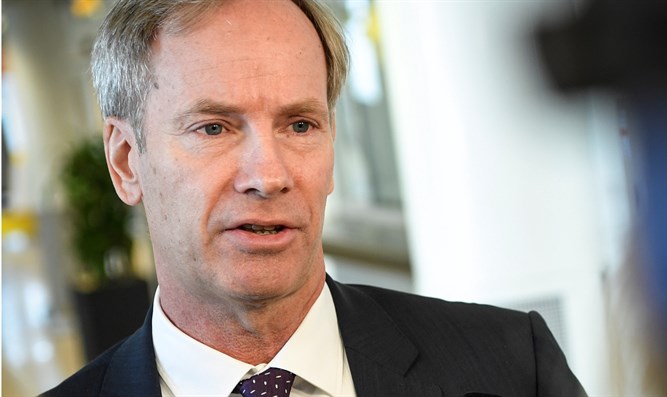
European Union Delegation to the United Nations head Olof Skoog issued a statement urging the United Nations Security Council to open a video teleconference on the “situation” in the Middle East.

Skoog wrote: “The European Union remains united in its commitment to achieving a two-state solution that meets Israeli and Palestinian security needs and Palestinian aspirations for statehood and sovereignty, ends the occupation that began in 1967, and resolves all permanent status issues in order to end the conflict.”

In furtherance of these visions, Skoog reiterated the European Union’s objective of basing their final solution on the relevant UN Security Council Resolutions, the Madrid principles including land for peace, the Roadmap, and agreements previously reached by the parties.

Skoog describes Israel and “an independent, democratic, contiguous, sovereign and viable State of Palestine, living side by side in peace and security and mutual recognition.” Skoog also included a sentence about the EU’s “fundamental commitment to the security of Israel, including with regard to current and emerging threats in the region.”

Hinting at whatever hopes may remain on the Israeli side about sovereignty in Judea and Samaria, the EU delegation head “strongly opposes all actions that undermine the viability of the two state solution and urges both sides to demonstrate, through policies and actions, a genuine commitment to a two-state solution in order to rebuild trust and create a path back to meaningful negotiations.”

The EU representative then announced their intention to “continue to closely monitor developments on the ground and their broader implications” and “consider further action in order to protect the viability of the two-state solution,” deploring without a hint of irony that it is “constantly eroded by new facts on the ground”.

Repeating the discredited claims that “settlements are illegal under international law, constitute an obstacle to peace and threaten to make a two state solution impossible,” and – without providing data to support his assertions – Skoog reiterated the EU’s “strong opposition to Israel’s settlement policy and actions taken in this context, such as building the separation barrier beyond the 1967 line, demolitions, and confiscation – including of EU funded projects – evictions, forced transfers including of Bedouins, illegal outposts and restrictions of movement and access.

The EU calls on Israel to halt continued settlement expansion, including East Jerusalem, especially in sensitive areas such as Har Homa, Givat Hamatos and E1, which severely threatens the two state solution.”

The “illegal outposts” that the EU seeks to protect may refer to Khan al Akmar, Likiya, or any number of EU-supported Palestinian land grab operations.

(Arutz 7).

Dr. Mindy Boxer – Cancer Prevention in Daily Life

Many items in the produce aisle can help, but other foods in the supermarket can also help protect your health and the health of your family.

Carotenoids – Found in produce like cantaloupe and carrots, these plant chemicals act as antioxidants and have been shown to reduce the risk of lung cancer.

Cruciferous vegetables – High in vitamins, fiber, and potent anti-cancer phytochemicals, cruciferous vegetables are widely considered to be one of the healthiest food choices you can make. Studies have shown that this vegetable group is linked to lower rates of prostate cancer and has the ability to stop the growth of cancer cells for tumors in the breast, uterine lining, lung, colon, liver and cervix.

Ellagic Acid – Found in raspberries, strawberries, cranberries, walnuts, pecans and pomegranates, this phytochemical can act as an antioxidant, and may help break down and remove some cancer-causing substances.

Resveratrol – A polyphenol that may have antioxidant properties, resveratrol is found in the skin of red grapes, cocoa, peanuts, blueberries, and cranberries.

Whole Grains – Fiber is rich in antioxidants, helps fight colon cancer, and the phenolic compounds in whole grains may help reduce the risk of certain gastrointestinal cancers.

Folate – Linked to lowered risk for gastrointestinal and pancreatic cancers, folate is found in dark green leafy vegetables, fruits and juices, nuts, beans, peas, dairy products, poultry and meat, eggs, seafood, and grains.

Pomegranate Juice – Extremely antioxidant-rich, this juice helps prevent colon and prostate cancer.


2020 DETOX PROGRAMS

NEW! ORGANIC VEGAN DETOX PROGRAM! Easy to do with your busy schedule! Please contact me when you are ready to Detoxify/Cleanse! I can offer you a one, two, or three week programs that will fit into your lifestyle. Clean up your Gut Health, improve your Energy, Sleep better, enhance your Immune System, feel great!

Mindy Boxer, Ph.D., L.Ac., D.Hom.

3301 Ocean Park Blvd., Suite 201

Santa Monica, CA 90405

310. 450. 9711.

Phyllis Shallman – How Habits Work

0

Hitting the snooze button.Brewing coffee first thing in the morning. Working out right after you leave the office.

Our lives are full of actions that we’re almost unaware of. Many of them just help us get little things done more efficiently. But some habits can have a huge impact on our lives in either a positive or negative way. Here’s a quick breakdown of how habits work and ways to “trick yourself” into better behavior patterns.

Why habits?
We’ve looked at why the brain likes habits in a previous article, but it’s worth reviewing again!

Your brain craves efficiency. It looks for the path of least resistance when it comes to using energy. Making decisions takes a lot of brain power. Too many choices in a day can leave you feeling mentally exhausted, so your brain looks for ways to cut corners. It starts automating little decisions that you make repeatedly. Brushing your teeth, tying your shoes, and checking your social media are choices you’ve made so often that your brain stops consciously weighing in and seems to just spontaneously make you do them.

So that’s why your brain likes forming habits. But the mechanics of how a habit forms is essential if you’re trying to upgrade your unconscious behaviors!

Cues, Routines, and Rewards
A habit can be broken down into three basic components. It starts with a cue. That’s any kind of trigger that makes you want to do something. Actually performing the action suggested by the cue is called a routine. Following the routine usually results in some kind of reward, either physical or psychological.

So let’s say you’ve developed a habit of eating a cookie with your morning coffee. You wake up, put on the pot, and brew a delicious cup of joe. You instantly start craving the cookie when you smell that medium roast goodness. That’s the cue. You reach into the jar, grab the biggest chocolate chip cookie you can get your hands on, and take a bite. That’s the routine. And the tingling joy and comfort you feel when that life-giving treat hits your tongue? That’s the reward that brings you back morning after morning. But the consequence might be that you’ve put on a few unwanted pounds in the last couple of months.

How to use the habit pattern
It’s easy to see how certain habits can lead to some undesirable outcomes. We tend to form habits around anything that rewards our brains, whether it’s junk food, caffeine, or dangerous substances. But our brains also like things such as observing progress and accomplishing goals.

How can we use this to encourage good habits? Here are a few ideas: Start really small: Break your desired habit down into pieces and try to regularly perform each one. You might be surprised by how good it feels to accomplish something, which can prompt you to make more and more progress. Reward yourself: Some activities are very rewarding in the moment. But not everything that’s good for you leaves you feeling accomplished right away. Try something like only playing video games after 30 minutes of reading! Be patient: Habits don’t form overnight. You’ll probably mess up before it sticks. Don’t sweat the little failures and keep trying until that habit becomes second nature!

You can also use this knowledge to break bad habits. Try to identify the cues associated with the habit and avoid or eliminate them. Also, consider ways that you might actually be rewarding yourself for bad behavior. It’s worth asking friends and sometimes professionals for insights into your habits!


Rabbi Jonathan Gewirtz – Three Lashes with a Wet Noodle

0

Operation Inspiration


I know that the Torah says “the names of other gods shall not be heard from your mouth,” but I’m guessing that the prohibition doesn’t include the Flying Spaghetti Monster.

You may not have heard of the Church of the Flying Spaghetti Monster, but this satirical “religion” was founded in 2005 to troll government officials and try to break down the walls between church and state. They say it’s “just as legitimate a religion as any other.”

The Spaghetti Monster’s followers, known as Pastafarians, have been known to wear ritual pasta strainers on their heads and invoke prayer that the Spaghetti Monster rise from its drunken stupor and benevolently wave its noodly appendages over the world. In some countries, these “religious leaders” are even allowed to officiate at marriages.

Of course, none of them really worship this semolina deity. Mostly these are secular people who laugh at religion and basically found the most “ungodly” thing they could think of, spaghetti, and chose it as their symbol of leadership. They use their platform to fight the teaching of Creation or even “Intelligent Design” in schools. While I understand that they think they’re being funny, I’m here to tell you that I disagree with them! I think that even spaghetti can be sanctified and used to express a higher intelligence (Hashem) and I’ll explain what I mean.

One day I was cleaning up the kitchen from a delicious spaghetti and meatball dinner. As I used a fork to scrape the remnants of a bowl of spaghetti into the trash, my world suddenly went into slow motion. It probably didn’t actually slow down, but my brain moved so quickly in the instant I’m about to discuss that it seemed like time was dragging and each second lasted maybe ten.

What happened was that a drop of sauce splashed out of the bowl. I saw it begin a slow arc up into the air and towards me. As it slowly moved through space, my mind screamed on silent terror, knowing that in a moment it would land on me and make me dirty. Why had I been so careless?!

As it continued its flight through the air with its sinister trajectory towards my person, my imagination began running wild with possibilities. Would it splatter the front of my shirt? My arm? Would it be able to be hidden under a jacket or would it land squarely in a highly-visible spot? Why wasn’t I wearing an apron, or at least making my kids do this? OK, so maybe the last one didn’t happen because I’m a guy who takes care of others more than I give them jobs, but you get the point.

You may be surprised that all these calculations could run through my mind in the millisecond it took for the speck of tomatoey goop to fly from bowl to me, but our minds are amazing things. In fact, it was my mind that took the lesson from this experience and told me that I’d be able to capture your attention with the concept of a spaghetti sauce stain, and it worked!

So… After what seemed like an eternity, the reddish droplet finally landed – on my hand! I was so grateful to Hashem because I can wash my hand easily and I didn’t have to change my shirt and send it to the cleaners for this stain. It was like being given a free pass on something, a warning from a police officer instead of a ticket, and a near miss with very happy results.

It made me think about when the Bais HaMikdash was destroyed. (I’ll bet you didn’t see that coming, did you?)

Due to our actions at the time, something had to happen to us. However, instead of destroying our nation, the equivalent in this situation of ruining the shirt, albeit temporarily, Hashem was merciful and took away wood and stones, a physical building of spiritual magnitude to be sure, but more replaceable than Klal Yisrael itself.

I’m sure it happens all the time but we don’t recognize it. Hashem sends something our way and we feel like we’re suffering, but we don’t realize that Hashem may very well be saving us from something worse and irreversible. Instead of lamenting how bad things are, we should think about my flying spaghetti “monster” and appreciate that we may have been saved from a worse fate.

If we see Hashem’s kindness even in “bad” things, we’ll begin to appreciate how He relates to us. The month of the churban, of the first and second Bais HaMikdash, as well as many other destructions, is called Av, the Father. That’s because everything that happens TO us really happens FOR us, and is done with love and concern, even the sometimes distressing flying spaghetti monsters of life.

© 2020 – All Rights Reserved

Did you enjoy this column? Feedback is welcome and appreciated. E-mail info@JewishSpeechWriter.com to share your thoughts. You never know when you may be the lamp that enlightens someone else.

Mendi Baron – OVERCOMING TEEN DEPRESSION

0

Do you often feel powerless, helpless or weak? Are you being pessimistic about most aspects of your life and can’t imagine anything improving? You may be having a depression. Depression puts a negative spin on everything, including the way you see yourself. It drains your energy and makes you feel tired no matter what you do, making it difficult to take the steps that will help you feel better. While overcoming depression isn’t quick or easy, it is far from impossible, and you do have more control over it than you realize. Feeling better takes time, but you can get there by making positive choices for yourself every day.  

Following tips may be helpful in overcoming depression: Get physical exercise. Exercising and getting out into nature lower stress hormone levels rapidly. Sunlight also helps you relax and destress through the release of endorphins. 

Get enough sleep. The quality of your sleep directly affects the quality of your life. Start going to bed and waking up the same time every day and night. It will make you feel more well-rested and better generally. 

Eat right. The food such as salmon, walnuts, and dark chocolate can improve your mood. Reduce your intake of unhealthy foods and products such as sugary snacks and junk food.  

Stop drinking alcohol. While drinking might make you feel better momentarily, it will only make your depression worse. People who drink too much alcohol have more frequent and severe episodes of depression. 

Laugh. As they say, laughter is better than any medicine. Studies have shown that laughter does indeed make you feel better by improving your mood. Laughing also boosts your immune system. So, go out and hit the local comedy store or watch some of your favorite funny movies.   

Maintain social relationships. Though you may wish to be alone and away from others, it is essential to stay sociable and spend time out. Hang out with people who make you feel positive about yourself. 

Stay busy. Fill your schedule with events and activities you love. Keeping a busy schedule will force you to stay active, focused, and thinking about the next thing on your plate. 

Do the things you enjoy. Pick up a hobby or a sport you used to like. Listen to music, attend dancing classes or just go swimming. You can express yourself through creative writing or taking photos in nature too. 

Do not give up and “always remember that after the darkest storm is when the rainbows come out.” 

 You can read more on this subject here:  

https://www.psychologytoday.com/blog/owning-pink/201103/11-natural-treatments-depression-md-s-tips-skipping-the-prozac 


Mendi is a passionate advocate for teens and adults in the mental health and addiction arenas. Mendi envisions and creates programs bringing a unique approach to mental health and substance use treatment.

Clinically trained, Mendi earned a BA with honors in psychology and social work at the University of Maryland and an MSW at the University of Maryland School of Social Work. His extensive experience as a therapist includes individual and group psychotherapy for children, adolescents, adults and families in various settings.

Mendi has gained insight and experience from his work at several treatment centers, which include the Chesapeake Center for Youth Development, the Carroll County Youth Services Bureau, Chabad Crisis Centers and the Center for Discovery and Adolescent Changes.

Prior to launching Hope Street, Mendi conceived and built multiple successful, high end adolescent and adult residential facilities and outpatient programs that include Ignite Teen Treatment, Eden Treatment and Elemental Treatment.

Mendi has appeared on the Dr. Phil show, is regularly featured in mental health and addiction publications and speaks around the country in person, on TV and on Radio shows on these topics.

With his newest ventures, Mendi instills a unique blend of energy, creativity and expertise to the treatment of teens, adults and their families dealing with trauma, addiction and mental health issues.

The son of a Rabbi and eldest of 11 children, Mendi is a part-time rock musician, boxer, cantor and father of four.


China Stakes Its Flag in Syria, and Expands Its Influence in the Region

0

On the eve of the Syrian civil war, Muhammad Jarah and Ahmad Bustati’s warehouse in Damascus symbolized China’s emergence as Syria’s largest supplier of industrial and consumer goods. The dilapidated warehouse was stocked with everything from Chinese laser cutting machines to plastic toys for children.

A decade of fighting dashed the two Syrian entrepreneurs’ hopes. However, things seemed to be looking up for businessmen like Jarah and Bustati once Syrian president Bashar al-Assad gained the upper hand in the war through the assistance of Russia and Iran. China sees longer-term economic potential in Syria as a regional node of what the Belt and Road Initiative (BRI) will eventually look like, irrespective of the coronavirus pandemic and its devastating economic consequences.

Syrian officials have sought to drive home China’s competitive advantages and perceived interest in taking a lead in the reconstruction of their country. “The Silk Road is not a silk road if it does not pass through Syria, Iraq, and Iran,” said Buthina Shaaban, Assad’s media advisor, referring to the BRI.

Chinese access to the Syrian Mediterranean Sea ports of Tartus and Latakia is an attractive prospect for China’s multi-billion-dollar infrastructure, telecommunications, and energy-driven initiative, which seeks to link Eurasia to the People’s Republic. It would complement Beijing’s footholds in Greece’s Piraeus and the Israeli harbors of Haifa and Ashdod, and would anchor Syria as a key point on the ancient Silk Road.

Closely connected to Chinese interest in Syrian ports is the exploration by the China Harbour Engineering Company (CHEC) of a possible upgrading of the deep seaport of Tripoli, Lebanon, to allow it to accommodate larger vessels. Unlike the Syrian ports, Tripoli would grant China greater freedom of action because it would not have to share control with Russia. Together with the Syrian ports, Tripoli would serve as an alternative to passage through the Suez Canal.

Last year, Russia appeared to be anticipating potential Chinese moves when it negotiated with the Assad government an extension of its access to military bases including what it describes as a “logistics support facility of the Russian Navy” in Tartus.

As the agreement has not been made public, it remains unclear what Russia’s intentions are. However, a modernization of Tartus for military purposes would guarantee Russia a role in controlling the Eastern Mediterranean. Tartus would have to be upgraded to be able to accommodate all types of vessels, including aircraft carriers.

In a further move, Russian president Vladimir Putin ordered his foreign and defense ministries in May to reach an agreement with Syria on an additional expansion of a 2015 accord that governs Russia’s naval presence in Tartus and allows the Russian Navy to base up to 11 ships in the port for 49 years. Putin wants the life of the agreement to be extended by an additional 25 years.

“From the coast of Syria, there is an opportunity to control not only the eastern part, but the entire Mediterranean Sea,” said Captain 1st Rank Anatoly Ivanov, a Moscow-based naval expert. “The United States has in the Mediterranean Sea not only the ships of its Sixth Fleet, but also an extensive ship repair base and training centers of the Navy. For Russia, the Mediterranean Sea is much closer not only geographically, but also geopolitically. Therefore, to use the opportunity to establish [itself] more densely in Syria seems to be a reasonable measure.”

Qingdao Haixi Heavy-Duty Machinery Co. has already sold Tripoli Port two 28-story container cranes capable of lifting and transporting more than 700 containers a day, while a container vessel belonging to China’s state-owned COSCO Shipping Lines docked in Tripoli in December 2018, inaugurating a new maritime route between China and the Mediterranean.

Major Chinese construction companies are also looking at building a railroad to connect Beirut and Tripoli in Lebanon to Homs and Aleppo in Syria. China has suggested that Tripoli could become a special economic zone within the BRI and serve as an important trans-shipment point between the People’s Republic and Europe.

Adding to China’s expansion in the Eastern Mediterranean, COSCO acquired in 2015 a 65% stake in Turkey’s Kumport Terminal on the Ambarli coast of Istanbul. To round off the circle, last year Egypt’s navy signed an agreement with China’s Hutchinson Ports to build a terminal in Abu Qir, a port 23 kilometers northeast of Alexandria. Chinese companies already operate Alexandria’s own port as well as that of El Dekheila, 10 kilometers west of the city.

Chinese influence in at least 10 ports in six countries bordering the Eastern Mediterranean — Israel, Greece, Lebanon, Turkey, Egypt, and Syria — could complicate the US and NATO’s ability to maneuver in the region.

This was one reason why the Trump administration warned Israel that Chinese involvement in the Haifa port area, where the Chinese have built their own pier, could jeopardize continued use of the port by the US Sixth Fleet.

Forming US thinking is China’s Military Strategy white paper, published in 2015, which emphasizes the “strategic requirement of offshore waters defense and open seas.” It raises the specter of Chinese-managed or owned ports in the Eastern Mediterranean serving the People’s Republic’s economic, commercial, and military interests.

Chinese sway over multiple ports in the Eastern Mediterranean could also encourage Turkey to bolster its grip on the energy-rich waters in violation of international law. Turkish military support for the internationally recognized Libyan Government of National Accord produced a maritime agreement between the two entities that created an Exclusive Economic Zone (EEZ) in the Eastern Mediterranean favoring expansive Turkish claims.

China’s interest in Mediterranean ports is part of a larger effort to integrate the Middle East into the maritime leg of the BRI that also includes the Gulf, the Arabian Sea with the Pakistani port of Gwadar as its focal point, and the Red Sea with the establishment of the People’s Republic’s first military outpost in Djibouti. The integration is further advanced by Chinese investment in ports and logistics facilities in, among other locations, Dubai and Oman, as well as industrial parks linked to maritime infrastructure. China’s moves have been embraced by Gulf States, several of which have incorporated them in their long-term plans to diversify and streamline their economies.

Qi Qianjin, China’s ambassador in Damascus, spelled out China’s interest in Syria when he stressed, in a 2018 statement to the People’s Republic’s state-run news agency Xinhua as well as in a letter, Beijing’s intent to expand its economic, political, and military footprint in the country.

“I think it’s about time to focus all efforts on the development and reconstruction of Syria, and I think China will play a bigger role in this process by providing more aid to the Syrian people and the Syrian government,” Qi said during a visit to a hospital in the Syrian capital.

Chinese donations in recent years of at least $44 million to Syria for humanitarian purposes back up Qi’s statements.

In a letter written in August 2019, the ambassador focused on the development of Syrian railways and seaports. The letter was published a month after Chinese President Xi Jinping promised to lend $20 billion to Syria, Yemen, Lebanon, and Jordan for reconstruction and economic development.

Few doubt that China, even prior to the coronavirus pandemic and its devastating economic fallout, is best positioned to be a key, if not the key player in the post-war reconstruction of Syria. That project is estimated to require between $250 billion and $400 billion in investment.

This is even more the case as other potential funders, including the US, Europe, Russia, and the Gulf Cooperation Council states, will either refuse to work with the government of Assad or be consumed with fighting a domestic and global recession and substantial loss of revenues in the wake of the pandemic.

Moreover, in opposition to Western states, China has, on six occasions, backed Russian vetoes at the UN Security Council that blocked condemnations of the Syrian government and its backers, Russian and Iran; calls for ceasefires; and sanctioning of alleged war criminals.

One of China’s comparative advantages in heavily sanctioned Syria is the experience it has garnered in circumventing US and UN sanctions imposed on Iran and North Korea.

China further benefits from alternative institutions it has built like the Asian Infrastructure Investment Bank and the Shanghai Cooperation Organization. Beijing either controls these institutions outright or has considerable influence over them.

That has not stopped the US Justice Department from accusing Chinese telecommunications giant Huawei of operating in Syria in violation of US sanctions. The department is seeking the extradition from Canada of Meng Wanzhou, the company’s chief financial officer and daughter of its founder. Meng was detained in Canada at the request of the US.

Seemingly oblivious to the risk of being targeted by the long arm of US justice, some 200 Chinese companies in 2018 and 58 in 2019, active in sectors such as telecommunications, oil and gas, and transportation, attended the Damascus International Fair where they discussed deals ranging from car manufacturing to development of mobile hospitals.

China has so far refrained from responding in any real way to Syrian urging to kick-start reconstruction of critical national infrastructure even before remaining rebel strongholds in the country have been reconquered. It has, however, exploited commercial opportunity.

The vast majority of Syrian exports go to China, and Chinese goods are ubiquitous in Syrian markets. Hama, Syria’s most important industrial region after the collapse of manufacturing in Aleppo and Damascus as a result of the war, is awash in Chinese-made car parts as well as machine tools and equipment for the automobile, motorcycle, and shoe industries.

Multiple delegations of Chinese investors and businessmen have visited Syria in recent years. Assad’s ability to regain control of most of Syria, with the exception of the rebel-held northern region of Idlib, not only created economic opportunity but also heightened already existing Chinese security concerns. As Syrian government forces rolled back rebel fighters, China feared their battle-hardened Uighur and Central Asian contingent would gravitate toward Afghanistan, Tajikistan, and Pakistan from where it would be easier to target China.

The presence of Uighur fighters in Syria was one driver for a brutal crackdown on Turkic Muslims in China’s troubled northwestern province of Xinjiang. It also persuaded China to step up border security cooperation with Tajikistan and Afghanistan, where militants of the Uighur jihadist Turkistan Islamic Party, an Al-Qaeda-affiliated group, allegedly fight alongside the Taliban. The Uighur presence in Syria prompted China to consider sending Chinese troops to join the fight for Idlib in violation of its foreign and defense policy principles. China ultimately dropped the idea, which would have amounted to the People’s Republic’s first military intervention beyond its borders in recent memory.

Repeated unconfirmed media reports have, however, suggested that China has been sharing intelligence with Syria and has been sending military advisors for the past four years to help in the fight against Uighur militants. Discussion about an intervention followed a pledge in 2016 by Rear Admiral Guan Youfei of the People’s Liberation Army Navy (PLAN) to increase military cooperation with the Syrian government.

Two years later, a Syrian state-controlled newspaper, Al Watan, cited Mr. Qi, the Chinese ambassador, and China’s military attaché, Wong Roy Chang, as saying that China wanted to contribute “in some way” to the Syrian military campaign against the rebels in Idlib. The PLAN took nine days to deny Chinese interest in getting involved in the fighting, calling the report a “misunderstanding.”

Though it is supportive of efforts to negotiate an end to the Syrian war, China has studiously avoided taking a leading role. Its sole initiative to shape the outcome of the conflict was a four-point plan that never gained much traction. China’s dilemma in Idlib lies partially in sensitivity to Turkish opposition to an all-out assault on Idlib. Ankara fears it could spark a renewed refugee exodus and is concerned that Chinese involvement in an assault could whip up pro-Uighur sentiments in Turkey despite growing anti-refugee sentiment in the country.

Turkey has long supported Uighur rights and has frequently turned a blind eye to Uighur militants. An Uighur dressed in a Turkish military uniform and sporting an automatic weapon, claiming in a video clip posted on Twitter that he was fighting in the northern Syrian district of Afrin alongside Turkish-backed rebels, advised Han Chinese residents of Xinjiang to leave the area.

Beyond its reluctance to become embroiled in the Syrian war, China, despite its consistent backing of the Syrian government as a secular bulwark against Islamic extremism, feared that greater involvement in Syria could jeopardize its successful efforts to remain aloof in the conflict between Saudi Arabia and Iran that has influenced multiple disputes in the Middle East. That fear has receded with states in the GCC ending their longstanding support for anti-Assad rebels and cozying up to the Syrian leader in an effort to counter Iranian and Turkish influence.

Chinese aloofness also shielded it from entering into direct competition with Russia and Iran in the post-war reconstruction phase. Deepening Chinese-Russian ties in the wake of the pandemic and perceived greater Iranian dependence on China may allow for a divvying up of the pie in ways that turn Syria into an important BRI node.

Dr. James M. Dorsey, a non-resident Senior Associate at the BESA Center, is a senior fellow at the S. Rajaratnam School of International Studies at Singapore’s Nanyang Technological University and co-director of the University of Würzburg’s Institute for Fan Culture.

A version of this article was originally published by The BESA Center.

(Algemeiner).
WP Twitter Auto Publish Powered By : XYZScripts.com