Home Blog Page 716

Israel and the Sino-Iranian alliance

0

In the midst of the global recession caused by China’s export of the coronavirus, the preposterous has become reality. Op-ed.

When Chinese President Xi Jinping visited Tehran in 2016, most observers dismissed the significance of the move. The notion that Beijing would wreck its relations with America, the largest economy and most powerful global superpower, in favor of an alliance with Iran, the world’s greatest state sponsor of terrorism, was, on its face, preposterous.

But despite the ridiculousness of the idea, concern grew about Sino-Iranian ties as Iranian political leaders and military commanders beat a path to China’s door. Now, in the midst of the global recession caused by China’s export of the coronavirus, the preposterous has become reality.

Following weeks of feverish rumors, Iran and China have concluded a strategic accord. Last weekend, The New York Times reported on the contents of a final draft of the agreement.

In its opening line, China and Iran describe themselves as “two ancient Asian cultures, two partners in the sectors of trade, economy, politics, culture, and security with a similar outlook and many mutual bilateral and multilateral interests.”

Henceforth, they “will consider one another strategic partners.”

Substantively, the deal involves Iran supplying China with oil at below-market prices for the next 25 years and China investing $400 billion in Iran over the same period. China committed to expanding its presence in the Iranian banking and telecommunication sectors. Among dozens of infrastructure projects, China will construct and operate ports and train lines. China will integrate Iran into its 5G internet network and its GPS system.

The implications of the deal are clear. China has opted to ignore U.S. sanctions. Beijing clearly believes the economic and diplomatic price it will pay for doing so will be smaller than the price the U.S. will pay for the diminishment of its position as the ultimate arbiter of global markets.

For Iran, China is a life raft saving it from total economic collapse under the weight of U.S. economic sanctions.

The Sino-Iranian pact is also a military accord. According to the New York Times report, the agreement commits the sides to intensify their joint military exercises. Since 2014, China and Iran have carried out three joint military exercises, the most recent one being a naval exercise in December 2019. Russia also participated.

Following the naval maneuvers, Iranian Navy commander Rear Admiral Hossein Khanzadi told the Chinese media the exercise showed, “The era of American invasions in the region is over.”

The draft agreement speaks of intelligence cooperation, joint research, the development of weapons systems and Chinese use of Iranian ports in the Gulf of Oman.

Diplomatically, the deal places the United States on a collision course with the United Nations Security Council. Washington’s efforts to extend the U.N. arms embargo on Iran past its expiration date in October will not succeed.

This leaves the United States with only one option for diplomatic efforts to prevent Iran from importing advanced weapons platforms: Triggering the “snapback sanctions” clauses in U.N. Security Council Resolution 2231 which set the conditions for implementing the 2015 nuclear deal between Iran, the permanent Security Council members and Germany.

The “snapback sanctions” clauses enable parties to the resolution to force the automatic reinstatement of all the Security Council sanctions against Iran which were suspended with the implementation of the nuclear deal in 2015. In light of Iran’s extensive breach of the deal’s limitations on its nuclear work, as a party to Resolution 2231, the United States has the power to activate the clause.

China, Iran, Russia and the European Union argue that despite the clear language of 2231, the United States is no longer authorized to trigger the reinstatement of sanctions because it left the nuclear agreement in 2018. Consequently, if the United States triggers the restoration of the sanctions, the move is liable to precipitate a diplomatic struggle within the United Nations and beyond as states are compelled to choose sides. Either they will align themselves with the United States and actual international norms and laws or they will stand against the United States and with China and Iran and fake “international law.”

For Israel, the Sino-Iranian pact is a strategic inflection point. The deal has two immediate implications from Israel’s perspective. The first is operational:

Iran’s new alliance with China will provide it with new options for developing nuclear weapons. China after all is no stranger to nuclear proliferation. It played a central role in Pakistan’s nuclear weapons program. As for North Korea, at a minimum China facilitated
its nuclear weapons program by preventing effective international action to stop North Korea’s race to the bomb.

The possibility that China will soon be actively assisting Iran in its pursuit of nuclear weapons makes the continuation and expansion of the various unexplained explosions at Iranian nuclear and other strategic facilities a matter of highest urgency.

Some of the Iranian opposition reports regarding the Iranian-Chinese deal claim Iran agreed to the permanent deployment of Chinese military forces on its territory. If these reports are accurate, it means those forces may become a tripwire. Any attack against Iran’s strategic facilities could set off a much wider war in which China would be directly involved and fighting on behalf of Iran.

The second immediate implication of the Sino-Iranian pact for Israel is that it requires Israel’s government to change its approach to Chinese involvement in infrastructure development and management and to Chinese investment in Israeli technologies and technological research and development.

In May, U.S. Secretary of State Mike Pompeo arrived in Jerusalem for a brief and unexpected visit. In public appearances over the course of his lightning trip, Pompeo warned of the dire implications for U.S.-Israel relations if China continues to participate in infrastructure and technology projects in Israel.

“We don’t want the Chinese Communist Party to have access to Israeli infrastructure, Israeli communication networks,” he said, calling them “the kind of things that endanger the Israeli people and the ability of the U.S. to cooperate with Israel.”

Two weeks after Pompeo’s visit, Israel awarded an Israeli firm a contract to build a desalination plant in Ashdod. The government had initially planned to award the tender
to a Chinese firm.

U.S. pressure continues apace. The Americans are maintaining their efforts to persuade Israel to cancel or limit the agreement it concluded with a Chinese firm last year to build and operate a new port in Haifa and other projects.

In the wake of China’s strategic pivot to Iran, Israel has little choice but to cancel the port contract along with several other infrastructure projects and academic and technological cooperation deals. The same Chinese firms that are supposed to build national infrastructures including rail lines here, are now committed to building similar projects in Iran. The danger to Israel’s critical national infrastructures is obvious.

Until now, Israel viewed the possibility of removing Chinese firms from major construction projects and other deals as a regrettable price of its alliance with the United States rather than an Israeli interest.

The Sino-Iran pact changed the calculus. Canceling technological and infrastructure deals with China—Iran’s superpower sponsor—is now an Israeli national interest regardless of Washington’s position.

In response to the deal, Israel should consider replacing Chinese firms with U.S. ones, which at a minimum will not be compromised by ties with Iran. If U.S. firms are able to produce competitive bids, or develop strategic partnerships with Israeli firms to produce large-scale infrastructure projects at reasonable prices, the move would rebound to the economic and strategic benefit of all sides. Certainly, efforts to develop cost-effective alternatives to Chinese contractors would firmly integrate Israel into the Trump administration’s post-coronavirus efforts to reduce U.S. and allied supply chains’ exposure to China.

Globally, the Sino-Iran pact will compel new strategic alignments. Europe is likely to split around the choice between the United States and China. Some European governments will choose to align themselves with Iran and China. Others will prefer to remain allies of the United States.

As for Russia, with its weak and sputtering economy now largely integrated into the Chinese market, at least in the short term Russia will continue to stand on China’s side while winking at the United States. Things could change though, as time passes.

China’s decision to initiate a direct confrontation with the United States over Iran was a gamble. It wasn’t a crazy move, given China’s growing economic and technological power. But bets against America are far from safe. The ultimate outcome of China’s Iran gambit will be determined in large part by the shape of the American and Chinese economies in the coming months and years as they emerge from the coronavirus pandemic. And as things now stand, the United States is well positioned to emerge from the pandemic in a sounder economic position than China.

Corporations large and small from countries across the globe are either considering or actively working to relocate their production lines out of China. One of the Trump administration’s key efforts today is securing U.S. and allied supply chains away from China by moving as many factories as possible either to the United States itself or to allied states. Japan’s Sony and South Korea’s Samsung are both reportedly planning to move their manufacturing bases from China to Vietnam.

The impact of these moves on China’s economic growth prospects and global influence are likely to be profound. As things stand, China’s only ally in its neighborhood is its client state North Korea.

India, which is now in a border conflict with China, has already taken steps to limit China’s technological penetration of its territory. Indian strategists both inside and outside government are taking a hard look at their military dependence on Russian platforms in light of Russia’s growing economic dependence on China.

The United States has not hidden its interest in developing a strategic alliance with India and replacing Russia as India’s main supplier of air defense and other platforms. Israel, which is already a major arms supplier and ally to India, could play a positive role in advancing that goal.

How the Arab states respond to China’s decision to stand with Iran will be determined both by the economic power balance between China and America and by the status of Iran’s nuclear program. If Iran achieves nuclear capability, the Arabs will feel compelled to view China as their shield against Iran. If Iran’s nuclear program is dramatically diminished, the Arabs are likely to feel more secure turning their backs on Beijing, siding with the United States and strengthening their ties with Israel.

For decades, U.S. warnings notwithstanding, Israel perceived China as a neutral power and a highly attractive market. Unlike the Europeans, the Chinese never tried to use their economic ties with Israel to coerce Israel into making concessions to the Palestinians. The Chinese didn’t work with radical Israel fringe groups to subvert government and military decisions. They just seemed interested in economic ties for their own sake.

Now that China has chosen to stand with Iran, Israel must recognize the implications and act accordingly.

Caroline Glick is an award-winning columnist and author of “The Israeli Solution: A One-State Plan for Peace in the Middle East.”

(JNS – This article first appeared in Israel Hayom).

Sea+Air Drone: New Israeli Sea Robot Becomes Mini-aircraft Carrier Too!

0
Elbit Systems is integrating an aerial drone to its Seagull unmanned surface patrol vessel, turning it into a mini-robot aircraft carrier.

Israel’s Elbit Systems, a major defense contractor, has added aircraft capabilities to the  operations of its Seagull Unmanned Surface Vessel (USV), a remotely piloted military patrol boat that also does anti-submarine warfare and mine sweeping, the company announced Thursday.

Elbit has decades of experience building and perfecting unmanned systems, and the Seagull gives navies a “force multiplier” that provides high performance at sea while reducing the risk to human life and dramatically cutting procurement and operating costs.

While one might be tempted to jump aboard and try it out, the twin-engined Seagull actually has no onboard crew and is controlled remotely, just like an air force drone. It can stay on mission for up to four days at a time, and the addition of the mini-drone gives the it an eye-in-the-sky capability, further enhancing its intelligence gathering capabilities by making the robot patrol boat a mini-aircraft carrier.

The airborne visual feed generated by the drone can be transmitted to the Seagull’s land-based control or to the Combat Management System of a navy ship.

While the Seagull was specially designed as a multi-role vessel for underwater warfare, the drone has a switchable payload module that includes Electronic Warfare and Electro-Optic/Infra-Red payloads to provide situational awareness and facilitate intelligence gathering.

Elbit says one example of the enhanced capabilities the drone gives the remotely-operated Seagull is that maritime forces can use it for shore exploration to gather intelligence without putting personnel in danger.

As an operational tool for navies, the Seagull with its drone has the ability to go into dangerous waters where it can get the job done via remote control, protecting lives by “taking the sailor out of the mine field,” Elbit says.

The company says the Seagull was deployed in several exercises over the last few years that were conducted with NATO maritime forces, including British and Spanish navies.

(United with Israel).

Israel approves next phase of massive gas pipeline to Europe

0
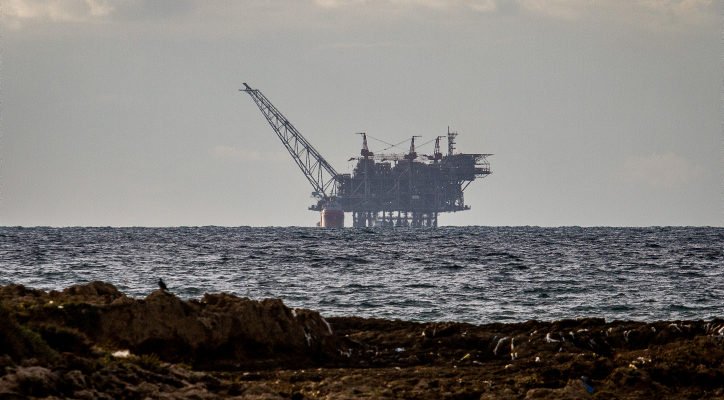
East Med 1900-km-long pipeline will export Israeli offshore natural gas to Europe in project estimated at almost $7 billion.

The government on Sunday approved the advancement of the Eastern Mediterranean gas pipeline project, a massive 6 billion Euros ($7 billion) venture that will carry gas from Israel’s offshore oil fields to Europe, the news website The Marker reported.

Following two years of negotiations, in 2018 Israel signed an agreement with Italy, Greece, and Cyprus to lay the mostly underwater gas pipeline that will traverse a distance of 1,900 kilometers (1,242 miles).

Energy Minister Yuval Steinitz, who promoted the project, said that “the approval of the framework agreement in the government is another historic milestone in our efforts to make the State of Israel an energy exporter – a move that will generate tens of billions in revenue for the state and its citizens in the coming years.”

Although still in the initial planning stages, the pipeline is expected to generate a new gas supply route from Israel and Cyprus to Europe in order to reduce European dependence on Russian gas. The project gained momentum after Turkey, the largest gas consumer in the region, balked at purchasing the gas from Cyprus, with which it is in conflict, and also from Israel, the report said.

Exporting gas from the eastern Mediterranean to Europe is an ambitious project, whose economic viability is still in doubt in light of high cost and currently depressed energy gas prices due to the corona pandemic. The main challenge is the economic one: low gas prices may make it difficult to market gas in Europe at competitive prices. That means the cost of infrastructure, treatment facilities and transmission pipelines require the sale of gas at a relatively high price – probably $ 8-9 per unit of heat – while gas prices in Europe have now dropped to $ 1.7 per unit of heat.

The project also faces geophysical challenges of passing through very deep water, about 3 kilometers (1.8 miles) deep, in an area know for its seismic activity. Despite the challenges, the lack of customers in Israel and Cyprus for gas discovered in the eastern Mediterranean is now pushing the project ahead.

A feasibility study of the project, which enjoys EU support, should be finished by 2021, and a final decision to approve the pipeline is expected by 2022 with pipeline completion currently scheduled for 2025.

(world Israel News).

Spillover of regional strife in the Caucasus could make its way to Israel

0
An ongoing escalation between Azerbaijan and its neighbor Armenia is threatening
to spill over into an all-out conflict that could draw in regional powers like Russia, Turkey, Iran and maybe even Israel.

One of the most unexpected, lesser known and not often reported bilateral relationships is the ties between Israel and Azerbaijan. While both countries are small, Israel is constantly garnering global headlines and attention for better or worse. The same cannot be said for Azerbaijan, which generally stays out of the news despite its strategic importance.

However, an ongoing escalation in violence between Azerbaijan and its neighbor Armenia is threatening to spill over into an all-out conflict that could draw in several regional powers, such as Russia, Turkey, Iran and maybe even Israel.

Azerbaijani Ambassador to the United States Elin Suleymanov told JNS that the international community is ignoring Armenia’s aggression against his country, which is a close ally of the Jewish state.

“Israel is clearly disproportionately targeted for criticism while Armenia is doing things much worse,” said Suleymanov, referring to Armenia’s “ethnic cleansing” of some 1 million Azerbaijanis in the disputed territory of Nagorno-Karabakh that is occupied by Armenia.

In recent days, the long-simmering conflict between the two countries has erupted with some fearing the escalation could spiral into a war between the neighbors. Fighting broke out last weekend on the border between Tavush in northeastern Armenia and the Tovuz district in Azerbaijan. At least 11 Azerbaijani soldiers and one civilian have been killed, according to the country, while Armenia reported that four of its soldiers have died.

“Unfortunately, the Armenia side decided to launch a cross border attack against Azerbaijan itself. We don’t know exactly the motivation for it. One can only guess,” said the ambassador.

Azerbaijani Ambassador to the United States Elin Suleymanov.
Credit: Wikimedia Commons.

Nevertheless, Armenia has accused Azerbaijan of initiating the hostilities and accused Azerbaijan of a buildup of military forces in the region over the past months, including conducting training exercises.

According to a statement from the Armenian National Committee of America, “Azerbaijan has launched a military offensive against Armenia starting on July 12, deploying tanks, heavy artillery and drones against civilian and military targets alike.”

While the exact cause of the recent escalation remains unclear, the fact that it occurred not in Nagorno-Karabakh, but along the internationally recognized boundaries between the two countries raises concern. At the same time, that area is also close to several strategic oil pipelines running from the Caspian Sea to the Black Sea and the Mediterranean, which also supply some 40 percent of Israel’s oil.

Urging an ‘immediate de-escalation’

Azerbaijan is one of the largest purchasers of arms from the Jewish state. According to the Stockholm International Peace Research Institute, the country had purchased $127 million in 2017. Israeli Prime Minister Benjamin Netanyahu said in 2016 that Azerbaijan had bought $5 billion worth of weapons from Israel. So far, Israel has not weighed in on the flareup between the two countries.

“We are always in touch and engaging in dialogue with Israel, especially on defense,” said the ambassador. “They are major contributors to Azerbaijan’s security and defense production.”

Both Armenia and Azerbaijan are former Soviet Republics, regaining their independence following the collapse of the Soviet Union in the early 1990s. Since then they have been stuck in an unresolved conflict over the disputed Nagorno-Karabakh region, which is internationally recognized as part of Azerbaijan, but now controlled and occupied by ethnic Armenians.

U.S. Secretary of State Mike Pompeo called for calm, saying America was “deeply concerned” by the violence and urged an “immediate de-escalation.” Russian President Vladimir Putin has also urged restraint and a resumption of peace talks, while Turkish President Recep Tayyip Erdo?an said his country would defend Azerbaijan.

Situated in the southern Caucasus Mountain region, Azerbaijan is the only country that borders both Iran and Russia, making it strategically important to regional powers. A Turkic people who are Shi’ite Muslim, Azerbaijanis are also in the singular position of sharing religious and ethnic ties with both the region’s two other major powers: Turkey and Iran. In fact, it is estimated that more Azeris live in Iran than in Azerbaijani itself.

Due to its geo-strategic importance, Azerbaijan seeks to maintain friendly relations with its neighbors and even countries farther away.

“Azerbaijan is a friend of Israel and the Jewish people,” affirmed Suleymanov. “We have had the Jewish community in our country for 2,500 plus years. Jewish people are part in parcel of the Azerbaijani mosaic.”

Today, an estimated 30,000 Jews live in that country of 10 million.

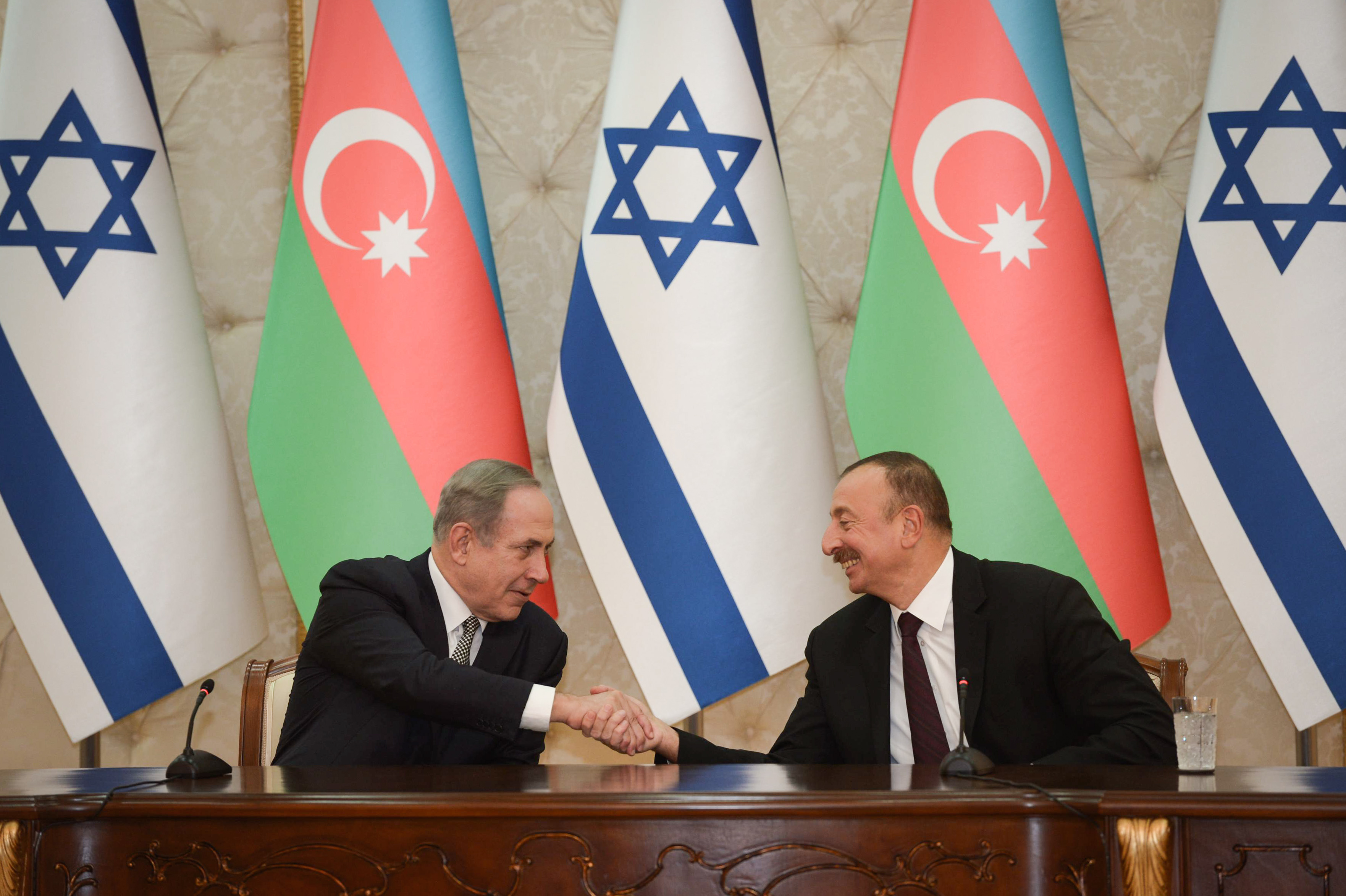
Israeli Prime Minister Benjamin Netanyahu visits Azerbaijan on Dec. 13, 2016. Credit: Haim Zach/GPO.

Headed towards conflict?

In March, Azerbaijan’s finance minister, Samir Sharifov, became the first country with a Shi’ite majority to have a cabinet-level minister give a speech at the annual AIPAC Policy Conference.

At the same time, Israel has also sought to develop warmer ties with Armenia, one of the world’s oldest Christian countries. Armenia recently announced the opening of its embassy in Tel Aviv.

Relations between Israel, Azerbaijan and Armenia are also complicated by Iran.

Due to its border with Iran and the fact that many Azeris reside there, Azerbaijan maintains ties with the regime, despite Iran also having warm ties with Armenia.

Similarly, by having close defense ties with Israel, Azerbaijan has placed itself on both sides of the conflict between Jerusalem and Tehran. “We maintain our relationship bilaterally with both countries; it’s not dependent on each other,” explained the ambassador. “We always openly have a strong partnership with Israel. It is not directed against anybody. It is in support of each other. Our relationship with Iran is not against anybody either.”

With thousands of Azerbaijanis taking to the streets of the country’s capital of Baku on Wednesday demanding the government to mobilize its troops to retake Nagorno-Karabakh, despite restrictions related to the ongoing coronavirus pandemic, it remains unclear if the country is headed for war in the near future.

“On this day when Azerbaijan is attacked and does not get the same coverage as other cases around the world, what I would urge to our friends in Israel and the Jewish community is to make our friendship stronger to reach out to Azerbaijan and to tell the world the story of our successful partnership,” said Suleymanov. “They should know they have a friend in the south Caucasus.”

(JNS).

Senior Likud officials planning rebellion against Netanyahu

0
The officials say Netanyahu’s continued tenure as PM could destroy Likud, whose agenda “is being dictated by his personal affairs”.

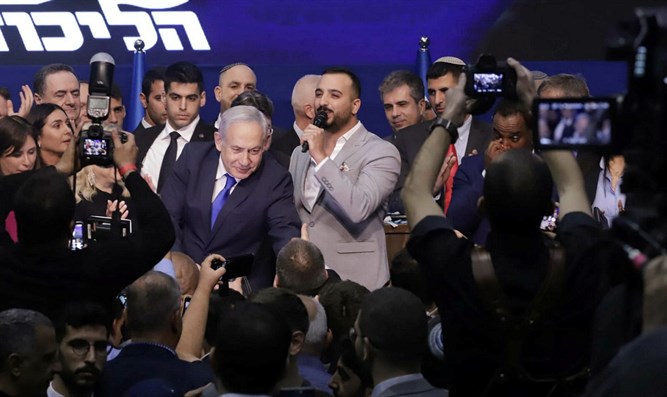
Current and former senior Likud officials, some of whom are current Knesset members, are currently coming together in an effort to bring about the replacement of the party’s chairman, Prime Minister Benjamin Netanyahu, Arutz Sheva has learned.

According to those senior officials, Prime Minister Netanyahu has abandoned the goals of the party and the right-wing agenda, in favor of dealing with his personal affairs, and therefore it is necessary to bring the Likud back to its true path.

The officials mention that despite the green light he received from the US administration, Netanyahu chose not to apply sovereignty in Judea and Samaria, and in addition did not act to change the face of the justice system and did not do the necessary things to create change in the media.

“Netanyahu presented himself as a right-winger and a right-wing leader, but in fact acted to promote left-wing policy,” they added.

Members of the emerging group claim that if Netanyahu remains at the helm of the Likud, the party is likely to disintegrate. Therefore, they are addressing two possibilities: ousting Netanyahu or establishing a right-wing movement that will take the Likud’s place and adopt its original platform, if Netanyahu does not resign and his ouster does not succeed.

The group claims that the prime minister’s main preoccupation these days is his personal survival. “MKs and ministers are busy with the war over Netanyahu and his political survival.”

Recall that in the past week, tension within Likud has intensified around the issue of the run for the presidency of World Likud, and the confrontation between Mickey Zohar, Netanyahu’s candidate and the leading candidate for the position, and Yaakov Hagoel, an associate of Danny Danon and MK David Bitan.

At the same time, members of Gideon Saar’s group in Likud is sharpening its tone against the prime minister’s positions, apparently out of an assessment that his political demise is not far away.

(Arutz 7).

Seattle rioters seen damaging, looting stores; 2 arrests, 12 cops injured

0

Police blocked off entrances to Interstate 5 so protesters could not enter, according to local media.

At least two people were arrested in Seattle and a dozen police officers were injured – including one who was hospitalized – on Sunday, after a march through downtown devolved into property damage and looting, police say.

Police said the demonstrators had broken out several windows of the East Precinct, then threw a device into the lobby that ignited a small fire.

The fire was later extinguished and it caused no injuries, police said.

The demonstration started between 2 p.m. and 3 p.m. near the intersection of 3rd Avenue and Pine Street. A photo posted on Seattle’s DOT traffic channel showed crowds blocking an intersection.

Around 2:30 p.m., Seattle journalist Katie Daviscourt tweeted a video of a crowd of people outside an Amazon Go building. Several people were seen spray-painting the building while others tried to smash the windows.

“Antifa Militants and Black Lives Matter rioters are breaking into Amazon Go Downtown Seattle,” Daviscourt tweeted. “This protest has turned into a riot.”

Seattle police tweeted shortly before 5 p.m. that the crowd had continued to march on Pike Street from downtown and two people had been arrested outside of the West Precinct.

Police said demonstrators had thrown rocks, bottles and other items at officers. A dozen police officers were injured, including one who was hospitalized with neck injuries, KOMO reported.

A video clip posted on Twitter by Elizabeth Turnball shows the smashed doors to a Walgreens on Pine before Broadway.

Seattle police were working to block off the entrance to Interstate 5 so protesters could not enter, Seattle’s KING-TV reported.

Police said demonstrators had gone from Westlake Park to the Municipal Courthouse and then headed back north to the West Precinct “leaving behind a trail of property destruction.”

“These are criminal acts, not peaceful protests,” police said.

The demonstration came amid ongoing nationwide protests sparked by the police-involved death of George Floyd, a Black Minneapolis man, in late May.

Seattle drew national attention after activists set up an “occupied” zone dubbed “Capitol Hill Organized Protest,” or CHOP, that occupied several blocks around a park for about two weeks after police abandoned a precinct station following standoffs and clashes. They later changed its name to the “Capitol Hill Autonomous Zone,” or CHAZ. Seattle’s mayor ordered the zone cleared after two deadly shootings.

(Fox News).

Tensions roil Netanyahu government as corona crisis deepens

0
Arguments within the government over its corona response have bubbled to the surface.

Israel’s newly appointed corona czar will have his work cut out for him. The Israeli government is not only facing criticism from without but also from within. One of the disagreements, in fact, is who the corona czar will be.

Early reports Sunday pointed to Prof. Gabi Barbash, former deputy director of the Sheba Medical Center at Tel Hashomer Hospital. He has been a regular face on television explaining the ins and outs of Covid-19 to the public.

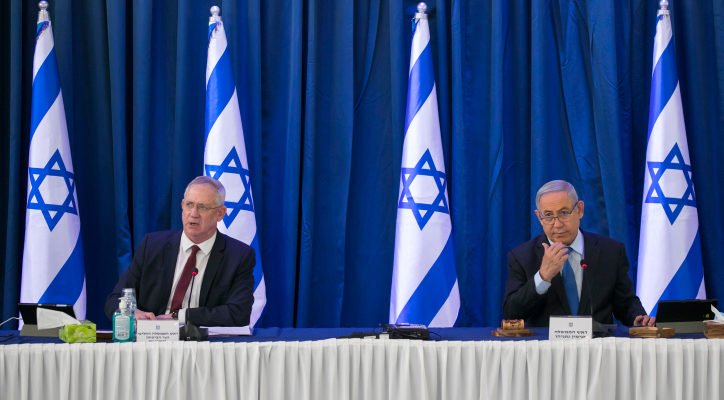
Later in the day it emerged that there were disagreements about appointing Barbash. While Prime Minister Benjamin Netanyahu was for it, Health Minister Yuli Edelstein and former Mossad Head Danny Yatom are opposed. They say there are better candidates.

The argument over the corona czar is one of several ripples disturbing the smooth sailing of the unity government in its efforts to curb the pandemic as infections continue to rise. There were 1,414 new cases Saturday and a total of 27,729 active cases overall.

The government attempted to impose a complete lockdown this weekend to slow the rate of infection. The lockdown was only partially put into effect after restaurant owners revolted, saying they had already purchased food for the expected weekend rush and would suffer steep losses.

The government, which had wanted restaurants to switch over to takeout only, relented but will likely impose a more comprehensive lockdown next weekend.

A lockdown may not be enough.

Deputy Director General of the Health Ministry Itamar Grotto told the Knesset’s coronavirus committee on Sunday that those needing hospitalization will continue to rise even if a full lockdown is imposed immediately.

“We have over 550 coronavirus patients hospitalized and the crush is creating a crisis. From the moment someone is infected until they degrade to serious condition is about two weeks. We can look ahead with worry because even if we shut the whole economy and force everyone to remain at home, we will see the spread continuing,” he said.

While the government faces protests, which have turned violent at times, the biggest revolt may have been internal, when Likud MK Yifat Shasha-Biton, who heads the coronavirus committee, last week broke with her party and refused to close pools and gyms, saying the data didn’t support it.

Threatened at first with being ousted by the party for her insubordination, she defended her decision on Sunday. “It’s okay to disagree and argue. It’s not clear that a full lockdown is the right move,” she said.

“There is a lot we can do before we decree a lockdown on citizens,” Sasha-Biton said. “The question is not if we are remaining open, but rather how and under what conditions.”

Adding to the general friction was an argument that reportedly broke out at the Sunday cabinet meeting between Environmental Protection Minister Gila Gamliel of the Likud and Minister of Economy Amir Peretz of Labor about the corona plans.

Also on Sunday, Netanyahu’s proposal, which he announced on Wednesday, to funnel money to every Israeli to the tune of some 6 billion shekels was criticized by members of the unity government. Minister of Justice Avi Nissenkorn of the Blue and White party tweeted:

“A monetary grant that will go directly to the public is the right move to propel the wheels of the economy, but will not be distributed as a blind grant. We will support a differential assistance program, one which is socially sensitive. One that first and foremost emphasizes those whose livelihoods have been harmed and prioritizes assistance to families in financial distress.”

Netanyahu has argued that if the government tried to decide who needed the money and who didn’t, it would take too long to get the cash to those who needed it.

(World Israel News).

American Airlines To Revive Flights Between New York And Tel Aviv

0

American Airlines is scheduled to revive direct flights between New York’s John F. Kennedy International Airport and Tel Aviv’s Ben-Gurion International Airport next winter as part of a partnership with JetBlue Airways, announced the air carriers on Thursday.

The new nonstop flight is part of the first long-haul international flights that American has launched from New York in more than four years.

American Airlines will also have nonstop service between New York JFK and Athens International Airport and New York JFK and Rio de Janeiro/Galeão-Antonio Carlos Jobim International Airport, in addition to continuing to serve popular long-haul destinations like London’s Heathrow Airport and Madrid-Barajas Adolfo Suárez Airport.

“Pairing JetBlue’s domestic network with American’s international route map creates a new competitive choice in the Northeast, where customers are longing for an alternative to the dominant network carriers,” said JetBlue president and chief operating officer Joanna Geraghty. “This partnership with American is the next step in our plan to accelerate our coronavirus recovery, get our crewmembers and our aircraft flying again, and fuel JetBlue’s growth into the future.”

“This is an incredible opportunity for both of our airlines,” said American Airlines president Robert Isom. “American has a strong history in the Northeast, and we’re proud to partner with JetBlue as the latest chapter in that long history. Together, we can offer customers an industry-leading product in New York and Boston with more flights and more seats to more cities.”

The announcements take place in the backdrop of the ongoing coronavirus pandemic, which has seen air travel plummet in the past few months.

As such, American Airlines’ new Dallas-Tel Aviv route, slated to begin in September 2020, will now be scheduled for September 2021.

American Airlines previously operated flights between Philadelphia and Tel Aviv, but the route ended in 2015.

 (JNS)

{Matzav.com}

Leaky border: Tourists and quarantine cheats threaten Canada amid U.S. COVID-19 surge

0

India-China tensions spell a boom for Israel’s defense industry

0

India wants to stock up on guided bombs and drones as it prepares for more faceoffs with China.

Military tensions between India and China are leading to new deals for the Israeli defense sector, with the Indian military seeking to fill gaps in its precise weapons stockpile and its intelligence capabilities.

According to reports in the Indian press, the military has decided to make an emergency purchase of Spice 2000-guided bombs manufactured by Israeli defense contractor Rafael Advanced Defense Systems Ltd., a deal that is expected to include hundreds of bombs worth tens of millions of dollars.

A year ago, amid heightened tensions with Pakistan, the Indian government purchased about 100 spice bombs worth $30 million.

The reports also reveal that India is interested in expanding its fleet of Heron UAVs, an IAI-made drone that is already in use by the Indian air force, navy and ground units, in order to increase its ability to continuously monitor the contested territory in the Himalayan Mountains.

The Indian press is also reporting that the government is running a project of arming the drones with missiles as part of the so-called “Project Cheetah.”

The two deals are expected to garner the Israeli defense industry sales of more than $100 million.

Despite the urgency, some of the systems will be assembled in India, in accordance with Prime Minister Narendra Modi’s policy of promoting local production as a condition for the acquisition of foreign weapon systems.

India is currently the largest client of the Israeli defense industry. According to figures provided by the Ministry of Defense, defense exports totaled $7.2 billion in 2019. While the ministry does not break down exports by country, exports to the Asia-Pacific region made up 41 percent of the total amount.

Other major purchases currently in the pipeline include an Indian order of Heron-TP AUVs and interest in Elbit-made Hermes UAVs, though neither deal has yet to be completed.


WP Twitter Auto Publish Powered By : XYZScripts.com