Home Blog Page 715

Report: TikTok a growing hotbed of extreme anti-Semitism, Holocaust denial

0

Researchers say that extremists exploit TikTok’s popularity among younger users.

A recently published study reveals that social networking application TikTok – one of today’s fastest-growing – is a hotbed of extreme anti-Semitism and Holocaust denial.

Gabriel Weimann, a professor of communication at the University of Haifa and senior researcher at the Institute for Counter Terrorism (ICT), and Natalie Masri, a research assistant and graduate student at ICT, led the research on the paper entitled, “Spreading Hate on TikTok.”

According to Israeli outlet Arutz7, the authors applied systematic content analysis to scan the application for far-right content. Their findings revealed that after investigating videos from February through May 2020, 196 postings related to far-right extremism.

The plurality of postings on TikTok (43 out of 196) related to anti-Semitism and Holocaust denial. The researchers also discovered 14 postings of Adolf Hitler’s speeches; 11 postings of the Sieg Heil victory salute used by Nazis; 17 videos encouraging violence that featured Nazi or neo-Nazi symbols such as the swastika and sonnenrad; and 26 accounts featuring the numbers “88” in their username, the white supremacist numerical code for “Heil Hitler,” revealed the outlet.

Chinese company ByteDance developed TikTok in 2016 within mainland China and then exported it abroad in 2017. The app allows its 1.5 billion users to upload up to 60-second lip-synched videos. Forty-one percent of its users are aged between 16 and 24. It is supposed to be age-restricted to those 13-years and older, but there is some evidence that this rule is not strictly applied.

While TikTok’s Terms of Service also state that users may not upload any content that is inflammatory, offensive, hateful, discriminatory, racist, sexist, antagonistic or criminal, the app has yet to enforce this. However, it does not mean that TikTok is incapable of regulating its content as it is very sensitive to any content critical of China or the ruling regime there.

“We need to create awareness about the dangers of TikTok, but that isn’t easy because most people think it’s just a clean app for kids,” Weimann told the Jerusalem Post. “So the first step is to create global awareness. TikTok is not that clean.”

(i24 News).

AOC praises support of anti-Semitic groups for letter censuring Israeli sovereignty

0
The Defense for Children International-Palestine has been linked to the Popular Front for the Liberation of Palestine, designated a terror group by the United States and European Union.


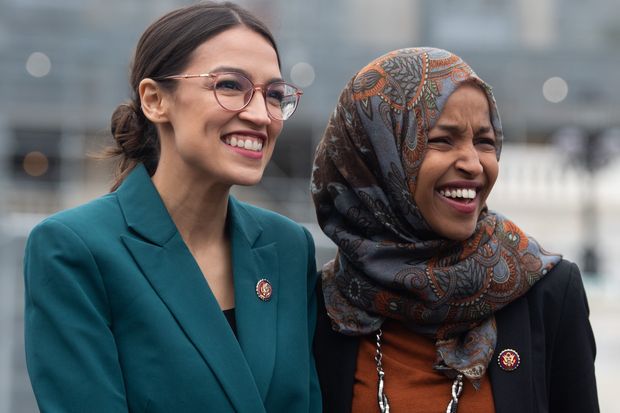
Rep. Alexandria Ocasio-Cortez (D-N.Y.) praised the support by at least 10 anti-Semitic groups for a letter issued by her and signed by other Democrats, The Washington Free Beacon recently reported, citing “an internal email circulated to House Democrats.”

The “supporting organizations” listed on the letter include ones related to the anti-Israel BDS movement, including the U.S. Campaign for Palestinian Rights, American Muslims for Palestine, American Friends Service Committee, Churches for Middle East Peace and Defense for Children International-Palestine.

The Defense for Children International-Palestine has been linked to the Popular Front for the Liberation of Palestine, designated a terror group by the United States and European Union.

The letter last month to U.S. Secretary of State Mike Pompeo threatened the conditioning or even cutting off of U.S. assistance to Israel if the Jewish state goes ahead with its plans to apply sovereignty to—or what they call annex—parts of the West Bank, also known as Judea and Samaria.

In addition to Ocasio-Cortez, 12 other members of Congress signed the letter: Rashida Tlaib (D-Mich.), Pramila Jayapal (D-Wash.), Betty McCollum (D-Minn.), Ilhan Omar (D-Minn.), Ayanna Pressley (D-Mass.), Raul Grijalva (D-Ariz.), André Carson (D-Ind.), Nydia Velázquez (D-N.Y.), Bobby Rush (D-Ill.), Jesús “Chuy” Garcia (D-Ill.), Danny Davis (D-Ill.) and Sen. Bernie Sanders (I-Vt.).

In the letter, the progressive members of Congress, citing unspecified “leading human rights experts,” warn that “annexing parts of the West Bank will perpetuate and entrench human rights violations against Palestinians including limitations on freedom of movement, mass expropriation of privately-owned Palestinian land, further expansion of illegal settlements, continued demolitions of Palestinian homes, and a loss of Palestinian control over their natural resources.”

The letter accuses Israel of “paving the path toward an apartheid system” since it won’t grant citizenship to Palestinians living in annexed territory,” despite the Palestinians being under the control of the Palestinian Authority, which has long been known for corruption, human-rights abuses and supporting terrorism against Israelis.

“The U.S. should work to build a future in which all Palestinians and Israelis live under full equality by upholding a foreign policy that centers human rights and dignity for all people,” states the letter. “We therefore call on you to use a combination of pressure and incentives to stop Israel’s plans to illegally annex the West Bank, which would ensure a worsening of the situation for all Palestinians and Israelis.”

The Congress members warn that if Israel were to go ahead with annexation, which the Israeli government has said it will do some time after July 1, “we will work to ensure non-recognition as well as pursue conditions on the $3.8 billion in U.S. military funding to Israel, including human rights conditions and withholding funds for the off-shore procurement of Israeli weapons equal to or exceeding the amount the Israeli government spends annually to fund settlements, as well as the policies and practices that sustain and enable them.”

The American Israel Public Affairs Committee and other pro-Israel groups have pushed back against the letter.

AIPAC called it “one-sided,” saying it “directly threatens the U.S.-Israel relationship,” “supports conditioning and cutting America’s security assistance commitment to Israel” and “would damage American interests, risk the security of Israel and make a two-state solution less likely.”

In response to the Democratic letter, a group of U.S. House Republicans penned a letter this month to Pompeo in support of Israel possibly extending sovereignty to the West Bank.

(JNC).

Kanye West submits signatures to appear on presidential election ballot in Illinois

0

The rapper made the cut four minutes before the deadline in his home state.

Voters in rapper Kanye West’s home state of Illinois could see him on the presidential ballot come November running as an independent.

Four minutes before the Illinois State Board of Elections 5 p.m. CT deadline, two of West’s representatives filed 412 petition sheets with election officials, a spokesperson confirmed to Fox News.

Election officials will be counting those signatures of registered Illinois voters, of which he was supposed to have had at least 2,500 to get on the ballot. Petition sheets usually contain 10 names per sheet.

Filing before the deadline doesn’t necessarily mean West has a guaranteed spot on the ballot. Officials still need to count how many signatures his representatives have turned in on his behalf.

Furthermore, there is a challenge period starting tomorrow morning and running till next Monday, where anyone can lodge a reasonable objection to West’s candidacy. If there are no credible objections adjudicated by the Board of Elections by August 21 and if West garnered the proper amount of signatures, then he would appear on the ballot as an independent in Illinois.

Earlier today, he missed the deadline in South Carolina, failing to turn anything in. There, he needed 10,000 signatures to mount a run. He will be on the ballot as an independent in Oklahoma, however, after he paid a onetime fee of $35,000 for his name to appear there.

This all comes after an emotional and at-times difficult to watch campaign rally he held in North Charleston, S.C., on Sunday, denouncing abortion and gun violence and criticizing abolitionist Harriet Tubman, falsely claiming she didn’t actually free any enslaved people. That prompted groans and led some people to walk out, as well as a backlash on social media.

The weeks-old effort has seen a lot of ups and downs already amid reports the rapper had already bowed out of a race he hadn’t even started running in. But the inaugural campaign rally held last night seem to offer some level of seriousness for the rapper’s political ambitions, despite the stream-of-consciousness monologue where at one point he admitted to the crowd that he considered aborting his daughter, North, and subsequently began sobbing.

In a tweet on the Fourth of July, West initially shared his dreams of being the third candidate by running against President Trump and Joe Biden

“We must now realize the promise of America by trusting God, unifying our vision and building our future. I am running for president of the United States! #2020VISION,” he wrote.

(Fox News).

Eli Rozenberg submits official bid for El Al

0
Rozenberg is offering $75 million for a 45% stake in the financially troubled airline.


The board of directors of El Al Israel Airlines Ltd. (TASE: ELAL) has received an official bid from Eli Rozenberg to acquire the company. Eli Rozenberg, 30, is an Israeli resident and the son of US businessman Kenny Rozenberg, the New York-based owner of the Centers Heath Care US nationwide chain of nursing homes.

According to the Israeli government’s golden-share in the privately-owned national flag carrier, the controlling shareholder must hold Israeli citizenship and be resident in the country. Rozenberg is in the process of receiving a permit to the control the airline from the Government Companies Authority.

Eli Rozenberg has bid $75 million for a 45% stake in El Al through an Israeli company that he owns. Rozenberg is prepared to make an immediate acquisition, before the government implements its plan to hold a public offering for El Al, as agreed by the board of directors, in which the government has committed to buy all its shares in the airline, which is on the brink of insolvency due to the Covid-19 pandemic.

To show his seriousness, Rozenberg has opened a trustee’s account at Mizrahi Tefahot Bank (TASE:MZTF) and deposited $15 million, 20% of the planned investment.

El Al’s board of directors reacted positively to the bid saying, “We think that all the parties connected to El Al have a major interest in implementing the deal because this deal is ‘the order of the hour’ in the current circumstances in the present circumstances and due to the real danger confronting El Al.”

El Al’s board also stressed that the bid would immediately improve El Al’s capital structure and allow for an immediate injection of capital. “It should be mentioned that the investor has examined the situation of El Al, which is in a challenging situation”

The bid is valid until August 2020.

(Globes).

Trump to resume COVID-19 briefings

0
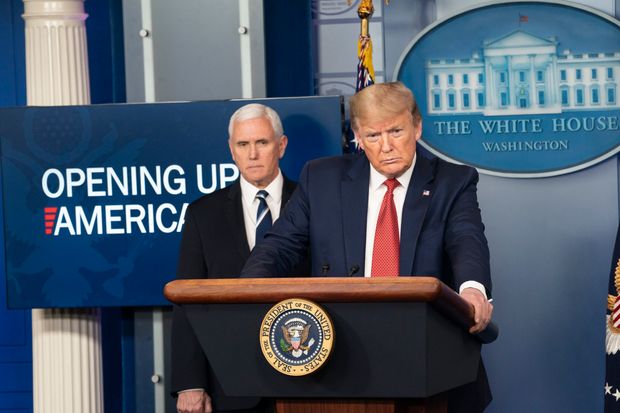
President Trump on Monday said he would resume giving regular coronavirus briefings this week, reviving a practice that is controversial among some aides as infections surge across the United States.

Trump told reporters in the Oval Office he would deliver a briefing at 5 p.m. on Tuesday.
This would mark his first time participating in a coronavirus briefing since late April.

Trump signaled the briefings would be heavily focused on the development of a vaccine and drugs to treat the virus, which has advanced significantly since he last held regular media sessions on the pandemic. He told reporters he may invite the heads of the companies involved in vaccine development to speak to the press.

“I think it’s a great way to get information out to the public as to where we are with the vaccine, with the therapeutics, and generally speaking where we are,” Trump said. “So I think we’ll start that, probably starting tomorrow.”

The president gave daily briefings from the White House through March and April, providing updates on the administration’s response to the pandemic. But the question-and-answer sessions regularly devolved into Trump bashing governors, sparring with the press and making factually inaccurate statements that undercut the federal government’s overall messaging.

The appearances abruptly ended in late April days after Trump sparked widespread backlash by suggesting scientists study whether the injection of light or disinfectants into the body could be used as a cure for the virus.

Some advisers have pushed in recent weeks for him to bring back the briefings, however, as his poll numbers sink and the outbreak worsens. They have argued the briefings would allow Trump to show the public he is taking a leading role in responding to the virus, even as he continues to insist it will eventually “disappear.”

Vice President Pence and members of the White House coronavirus task force have given briefings a few times over the past month, coinciding with a sharp uptick in cases in many parts of the country.

The U.S. has 3.7 million confirmed coronavirus cases, and more than 140,000 Americans have died of the virus. Arizona, Texas, California and Florida have seen significant increases in infections, and Pence on Monday acknowledged the rise in cases in the Sun Belt was “serious.”

But Trump, who fixates on media coverage, hinted that he was motivated to lead the briefings once again in part because of the attention they drew in the early days of the pandemic.

“We had very successful briefings. I was doing them, and we had a lot of people watching. Record numbers watching,” he said. “In the history of cable television — television — there’s never been anything like it.”

The president enjoyed an initial boost in his poll numbers in the early weeks of the pandemic as voters rallied around him. But the bump was short-lived, and he has seen his approval numbers for his handling of COVID-19 dip over the last three months in particular.

An ABC News-Washington Post poll released Friday showed that 38 percent of respondents approve of Trump’s response to the pandemic, down from 46 percent in late May and from 51 percent in late March, when there were relatively few confirmed cases domestically.

Fire engulfs factory in Iran’s 2nd industrial incident within hours

0
Witness says blaze takes place near or at Tabriz thermal power plant, but local media says site is cellophane factory; incident comes after morning blast at another power station.

Footage of a large factory fire in northwest Iran was being widely shared on social media Sunday afternoon, just hours after an explosion was reported at a power station in the central province of Isfahan.

The fire just outside Tabriz appeared to be the latest in a series of unexplained industrial incidents that have been closely watched by Western observers, some of which have been attributed to covert action by Israel or other Western actors.

In the footage of the fire disseminated by a Twitter user, the photographer can be heard saying the incident took place near or in the Tabriz’s Shams Thermal Power Station.

Official state media was not immediately commenting on the fire, but the Iranian Student News Agency reporting on the incident cited a local fire service spokesman who said flammable liquids had spilled inside the cellophane factory, causing the blaze. The spokesman said several squads were working to extinguish the fire and that they had gained control of it.

Earlier Sunday, an explosion was reported at a power station in Isfahan, in what the state news agency IRNA said was the result of faulty equipment and caused no casualties.

A “worn out transformer… at Isfahan’s Islamabad thermal power plant exploded at around 5:00 am today,” the managing director of Isfahan’s electricity company Said Mohseni told the agency.

The facility returned to normal working conditions after about two hours and Isfahan’s power supply was uninterrupted, he added.

“The damaged equipment is also being repaired and replaced,” he said, adding that the facility supplied electricity to the city of Isfahan.

Isfahan is the region in which the Natanz nuclear facility, which was damaged in a July 2 explosion, is located. Israel’s Channel 12 said the affected power station supplies the Natanz facility.

A Middle Eastern intelligence official was quoted earlier this month by The New York Times as saying the fire that badly damaged a building used for producing centrifuges at Natanz was sparked by Israel and was caused by a powerful bomb.

Israeli TV reports, without naming sources, have said the blast destroyed the laboratory in which Iran developed faster centrifuges and set back the Iranian nuclear program by one or two years.

The explosion and fire, however, did not strike Natanz’s underground centrifuge halls where thousands of first-generation gas centrifuges still spin, enriching uranium up to 4.5% purity.

Iran called for action against Israel following the damage to the Natanz facility, and appeared to acknowledge the fire there was not an accident.

The unidentified official who spoke to the New York Times said Israel was not linked to several other recent mysterious fires in Iran over past weeks. photo released July 2, 2020, by the Atomic Energy Organization of Iran shows a building after it was damaged by a fire, at the Natanz uranium enrichment facility some 200 miles (322 kilometers) south of the capital Tehran, Iran. (Atomic Energy Organization of Iran via AP)

Several of recent disasters have struck sensitive Iranian sites, leading to speculation that they could be part of a sabotage campaign engineered by Israel or another Tehran foe.

Most recently on Saturday there was reportedly an explosion at a pipeline in the Ahvaz region in the south of the country, according to reports in local and social media.

Video shared on social media showed a large fire at the scene. There were no reports of casualties in the incident, and it was not immediately clear what the cause was.

On Wednesday, seven traditional wooden vessels caught fire in a factory in the southern Iranian port city of Bushehr.

Other incidents have included gas blasts and explosions in Tehran, as well as in the vicinity of military facilities.

Last month, a large blast was felt in Tehran, apparently caused by an explosion at the Parchin military complex, which defense analysts believe holds an underground tunnel system and missile production facilities.

(Times of Israel).

UK Coronavirus Vaccine Yields Immune Response In Early Test

0

Scientists at Oxford University say their experimental coronavirus vaccine has been shown in an early trial to prompt a protective immune response in hundreds of people who got the shot.

British researchers first began testing the vaccine in April in about 1,000 people, half of whom got the experimental vaccine. Such early trials are designed to evaluate safety and see what kind of immune response was provoked, but can’t tell if the vaccine truly protects.

In research published Monday in the journal Lancet, scientists said that they found their experimental COVID-19 vaccine produced a dual immune response in people aged 18 to 55 that lasted at least two months after they were immunized.

“We are seeing good immune response in almost everybody,” said Dr. Adrian Hill, director of the Jenner Institute at Oxford University. “What this vaccine does particularly well is trigger both arms of the immune system,” he said.

Hill said that neutralizing antibodies are produced — molecules which are key to blocking infection. In addition, the vaccine also causes a reaction in the body’s T-cells, which help by destroying cells that have been taken over by the virus.

The experimental COVID-19 vaccine caused minor side effects like fever, chills and muscle pain more often than in those who got a control meningitis vaccine.

Hill said that larger trials evaluating the vaccine’s effectiveness, involving about 10,000 people in the U.K. as well as participants in South Africa and Brazil are still underway. Another trial is slated to start in the U.S. soon, aiming to enroll about 30,000 people.

How quickly scientists are able to determine the vaccine’s effectiveness will depend largely on how much more transmission there is, but Hill estimated that if there were enough data to prove the vaccine’s efficacy, immunization of some high-risk groups in Britain could begin in December.

He said the vaccine seemed to produce a comparable level of antibodies to those produced by people who recovered from a COVID-19 infection and hoped that the T-cell response would provide even more protection.

“There’s increasing evidence that having a T-cell response as well as antibodies could be very important in controlling COVID-19,” Hill said. He suggested the immune response might be boosted after a second dose; in a small number of people, their trial tested two doses administered about four weeks apart.

Hill said Oxford’s vaccine is designed to reduce disease and transmission. It uses a harmless virus — a chimpanzee cold virus, engineered so it can’t spread — to carry the coronavirus’ spike protein into the body, which should trigger an immune response.

Hill said Oxford has partnered with drugmaker AstraZeneca to produce their vaccine globally, and that the company has already committed to making 2 billion doses.

“Even 2 billion doses may not be enough,” he said, pointing to the ongoing surge of infections worldwide. “I think its going to be very difficult to control this pandemic without a vaccine.”

Hill said researchers were also considering conducting a “challenge” trial by the end of 2020, an ethically controversial test where participants would be deliberately infected with COVID-19 after being immunized to see if the vaccine is effective.

“This has been done before in 19 different infectious diseases to develop vaccines and drugs and is likely to happen for COVID-19 as well,” he said.

Numerous countries including Germany, France, the Netherlands, Italy, U.S. and the U.K. have all signed deals to receive hundreds of millions of doses of the Oxford vaccine — which has not yet been licensed — with the first deliveries scheduled for the fall.

Chinese researchers also published a study on their experimental COVID-19 vaccine in the Lancet on Monday, using a similar technique as the Oxford scientists. They reported that in their study of about 500 people, an immune response was detected in those who were immunized, although they couldn’t tell if people were protected from the disease because they weren’t exposed to COVID-19 afterwards.

CanSino Biologics’ vaccine is made similarly to Oxford’s except the Chinese shot is made with a human cold virus, and the study showed people whose bodies recognized it didn’t get as much of the presumed COVID-19 benefit. Still, China’s government already gave special approval for the military to use CanSino’s vaccine while it explores final-stage studies.

In an accompanying editorial, Naor Bar-Zeev and William Moss of the Johns Hopkins Bloomberg School of Public Health called both the Oxford and Chinese results “encouraging” but said further judgment should wait until the vaccine is tested on much bigger populations.

The World Health Organization’s director-general, Tedros Adhanom Ghebreyesus, called for any eventual COVID-19 shots to be fairly distributed globally, saying it was up to political leaders to ensure the most vulnerable populations also get immunized.

“But one of the worrying patterns we see is some countries moving in the other direction,” he warned.

Britain announced Monday it had secured access to another 90 million experimental COVID-19 vaccines made by Pfizer and others, a move some campaigners warned could worsen a global scramble by rich countries to hoard the world’s limited supply of COVID-19 vaccines.

Last week, American researchers announced that the first COVID-19 vaccine tested there boosted people’s immune systems just as scientists had hoped and the shots will now enter the final phase of testing. That vaccine, developed by the National Institutes of Health and Moderna, produced the molecules key to blocking infection in volunteers who got it, at levels comparable to people who survived a COVID-19 infection.

The vaccine being developed by Pfizer also works to trigger a similar dual immune response as the Oxford shot. Pfizer and its German partner BioNTech also released an encouraging early report Monday.

Nearly two dozen potential vaccines are in various stages of human testing worldwide, with a handful entering necessary late-stage testing to prove effectiveness.

(The Yeshiva World / AP).

Iran-linked sites around Damascus said hit in Israeli strike

0
Monitoring group says ‘at least six Israeli missiles hit several positions’ near Syrian capital belonging to regime forces, pro-Tehran militias; Syrian media says 7 troops injured.

Military sites linked to Syrian regime forces and Iranian militias were targeted Monday in Israeli strikes near Damascus, according to a monitoring group.

The London-based Syrian Observatory for Human Rights said the aerial bombardment caused several explosions around Damascus.

“At least six Israeli missiles hit several positions belonging to regime forces and pro-Iran militias south of Damascus,” Observatory head Rami Abdul Rahman told AFP.

“Air defenses did not intercept a single target,” he said, adding it was unknown if there were casualties and the extent of damage remained unclear.

A military source quoted by Syria’s official SANA news agency said Israeli fighter planes over the Golan Heights fired rockets toward Damascus. The news agency said seven soldiers were hurt and damage was caused, but claimed that most of the rockets were intercepted.

AFP correspondents in Damascus said they heard several loud blasts.

A military spokesman in Israel told AFP that it “does not comment on foreign reports.”

The strikes were the first in Syria to be attributed to Israel since June, when the Observatory said nine fighters were killed in airstrikes targeting positions of Iran-backed militias near the Iraqi border.

Those strikes came hours after a similar raid killed six other Tehran-backed fighters.

Israel has launched hundreds of strikes in Syria since the start of the civil war in 2011. It has targeted government troops, allied Iranian forces and fighters from the Lebanese Shiite terror group Hezbollah.

It rarely confirms details of its operations in Syria, but says Iran’s presence in support of President Bashar Assad and Hezbollah is a threat and that it will continue its strikes.

(Times of Israel).

‘I’m So Disappointed:’ Former NBA Star Charles Barkley Berates Nick Cannon, Other Black Celebrities for Anti-Semitic Remarks

0
Former NBA superstar Charles Barkley voiced his disappointment in black celebrities including Nick Cannon, DeSean Jackson, Stephen Jackson and Ice Cube for their recent antisemitic remarks.

The former Philadelphia 76er — who was inducted into the Naismith Memorial Basketball Hall of Fame in 2006 — called out the four public figures by name during the most recent episode of his podcast “The Steam Room.”

“These black men out here who have been antisemitic, it’s gotta stop, man,” he said. “What the hell are y’all doin? Y’all want racial equality. We all do. I don’t understand how insulting another group helps our cause. I don’t understand this in any shape or form.”

“I’m asking you guys. I’m begging you guys, man. You guys are famous, you got a platform. But I don’t understand how you can fight hatred with more hatred. I’m disappointed in you guys. We gotta do better…Please do better guys,” he added. “We can’t allow black people to be prejudiced also, especially if we’re asking for white folks to respect us, give us economic opportunity and things like that. I’m so disappointed in these men. If you want respect, you got to give respect, but I don’t understand how you beat hatred with more hatred.”

The 57-year-old also criticized what he called “lightweight” and “flimsy” apologies issued by black celebrities, saying they come across as non-genuine. “I think sometimes when you say stuff like that you really mean it,” he explained. “You just got—people called you on it. But I don’t understand how that could be in your vocabulary and in your heart. I don’t understand. I’m never gonna accept it.”

Barkley applauded NBA legend Kareem Abdul-Jabbar for calling out the lack of outrage in the sports and entertainment industries over recent incidents of antisemitism. He also posited that antisemitic comments are not helping the efforts of the Black Lives Matter movement.

“Especially at a time when you’re asking people to respect black people, that black lives matter,” he said. “This whole George Floyd thing has opened up a great dialogue to some of the problems in the black community. And instead of trying to engage and find allies, we’re just trying to alienate more people. I want allies. I don’t want to alienate anybody. And to take shots at the Jewish, the white race, I just don’t like it ’cause it’s not right.”

“Ya’ll want people to respect you but you don’t wanna respect other people. It doesn’t work like that.”

(Algemeiner).

Israeli Arab Living in Germany Calls Out Anti-Semitism

0
In a stinging op-ed in a German language newspaper, Dr. Ahmad Mansour says:
“We all have
to face reality: Anti-Semitism is not ‘back’ – it is still here, it is
getting louder and more aggressive.”

Seventy-five years after the fall of Nazi Germany, an Israeli Arab living in Hamburg is trying to open Germany’s eyes to what he, an expat Arab from Israel living in Europe,
sees clearly: anti-Semitism has not gone away and has to be dealt with up front now.

Ahmad Mansour was born in the Israeli town of Tira, northeast of Tel Aviv, where two decades ago he was working to become a psychologist and one fateful day found himself
in the middle of a terrorist attack.

“Again, a Palestinian, driven by hatred and whipped up by ideology, had set out to murder Yahudis, Jews. So here again someone wanted to kill as many people as possible with a weapon with the aim: “Delete Israel from the map!” I had grown up with such slogans as an Arab Israeli,” Mansour wrote in the German-language Swiss daily newspaper Neue Zürcher Zeitung.

Mansour, who was also exposed in his youth to radical Islam, decided he had enough of living with “upheaval and hatred” and thought that “in Germany of all places I would find peace before the notorious hatred of Jews and everything Jewish.”

“I had heard that in Germany, the past in particular had been dealt with, awareness of anti-Semitism was strong and social peace was certain,” Mansour wrote.

As he settled in Europe, Mansour realized that the hatred from which he wanted to flee was everywhere, and he had to do something about it, asking out loud: “Where does this obsession in criticizing Israel come from?”

He now lives in Hamburg and his encounters with hate have led him to found the organization Mind Prevention – the Mansour Initiative for Democracy Promotion and Prevention of Extremism.

“Today, in 2020, I’m experiencing a new nightmare of anti-Semitism. We all have to face reality: anti-Semitism is not back – it is still here, it is getting louder and more aggressive, in almost all milieus. Hatred of Zionists, hatred of Jews, hatred of Israel … it makes no difference” what you call it, Mansour wrote, calling on his adopted country to take action.

“Germany’s democracy must take its historical responsibility seriously. State-sponsored cooperation with Islamist and other anti-Semites cannot be tolerated,” Mansour said.

Mansour’s work centers on deradicalization – education about anti-Semitism, Islamism
and right-wing radicalism.

“Anti-Semitism, disguised as ‘criticism of Israel,’ is intellectual fashion, especially at universities; questionable post-colonialist theories make Israel the main actor that threatens world peace,” he noted.

But Israel aside, Mansour sees that the old stereotypes of Jew-hatred have not gone away.

‘Their Phantasms Come From the Internet’

“The old distorted images continue to portray Jews as the embodiment of evil…Anti-Semitism is once again coming to light. In Germany, France and many other Western countries, more and more people are daring to speak openly about what they ‘know’
about Jews, Israel and Zionism,” he said

As a psychologist, Mansour says German youth aren’t interested in what Jewish life in Germany really is, but instead, “their phantasms come from the Internet, they have little connection with real life.”

According to Mansour, “Germans of almost all ages are drawn in particular to Israel’s enemies in the Arab world. This anti-Semitic magnetism culminates in the oft-repeated phrase that Israelis are the new Nazis…

“As a psychologist, as an Israeli Arab and historically enlightened Muslim, I am stunned
to hear how Germans say such sentences today,” Manour said. “Where does this German obsession with criticism of Israel come from? Why is one so fixated on the small democracy in the Middle East that has to assert itself against all hostile non-democracies in its neighborhood?”

(United with Israel).

WP Twitter Auto Publish Powered By : XYZScripts.com