Home Blog Page 719

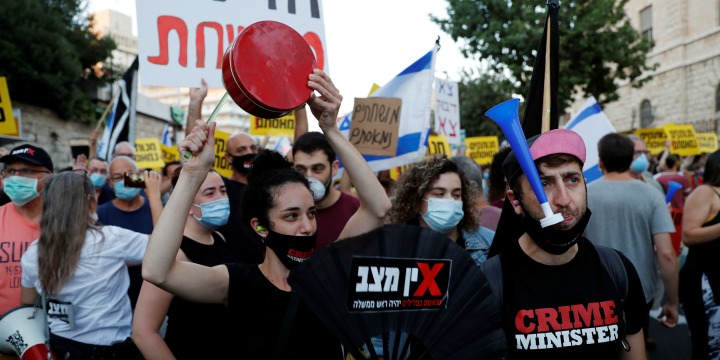
Under Fire Over Coronavirus Policy, Netanyahu Announces Money for All Israelis

0
Prime Minister Benjamin Netanyahu announced on Wednesday a plan for government grants for all Israelis amid growing public anger over his handling of a coronavirus crisis that has taken a sharp turn for the worse.

Critics seized on the 6 billion shekel ($1.75 billion) handout package as a bid to boost the veteran leader’s popularity before a widely expected series of new lockdowns.

Payments will range between 750 shekels ($219) for individuals to up to 3,000 shekels ($875) for families with three or more children, Netanyahu said in a special TV address.

Now in his fifth term, Netanyahu is grappling with new coronavirus transmissions. He said in his television address that he was “doing the utmost” to avoid a new national lockdown and denied street protests had prompted the new aid package.

“Why are we giving this money? We have to get the economy moving,” Netanyahu said, calling on his coalition government to approve the payments. “This money will boost consumer spending and employment.”

The government reopened schools and many businesses in May, lifting restrictions that had flattened an infection curve. With new COVID-19 cases now exceeding 1,000 a day, some public health experts said it had moved too fast.

With unemployment at a record 21%, thousands of Israelis demanding economic relief demonstrated against Netanyahu on Saturday in Tel Aviv. In Jerusalem on Tuesday, police used water cannon on thousands of anti-Netanyahu demonstrators outside his home.

A poll by the non-partisan Israel Democracy Institute on Tuesday found only 29.5% of the public trust Netanyahu’s handling of the health crisis.

Netanyahu’s new cash grant plan followed an announcement on Thursday of a new welfare package for the self-employed, in addition to a payout of $29 billion in aid previously pledged by the state.

Israel, with a population of nine million, has reported nearly 44,000 coronavirus cases and 375 deaths.

(Algemeiner).

EU Again Breaches Peace Agreements, Challenges Israeli Sovereignty, Supports Illegal PA Construction

The European Union (EU) announced that it will continue to fund the Palestinian Authority’s (PA) construction in Area C, areas under full Israeli control and where PA development is illegal, in a challenge to Israel’s sovereignty and in contravention of international accords.

The EU, Denmark, and the PA launched on Tuesday the implementation of a €5.8 million agreement to build 16 social and public infrastructure projects in Area C.

This package is the fifth of its kind and will fund public illegal infrastructure projects in
Area C. These projects include schools, multipurpose buildings, water distribution networks, water reservoirs and rehabilitation of electricity networks.

This EU contribution brings the total amount of its funding to illegal PA construction to €15.2 million for 58 infrastructure projects in 46 localities.

The EU has a designated Area C Programme that is funded by it and Member States.

“The European Union considers Area C an integral part of the occupied Palestinian territories. This position has been voiced for so many years and is translated in projects like the one we are launching today,” said the EU Representative Sven Kühn von Burgsdorff at the launching ceremony.

The EU has inaugurated and celebrated the construction of similar projects in Area C in recent months.

The Regavim organization, which monitors and pursues legal action against illegal Arab construction, stated that “although the press statement lists the projects involved as seemingly innocuous humanitarian aid, today’s announcement tears away the mask that usually covers the political agenda just below the surface.”

“By funding construction and infrastructure projects that neither apply for nor receive permits from the Israeli Civil Administration – as required by international law and as stipulated in the Oslo Accords, to which the EU is a signatory – these ‘humanitarian’ projects are nothing more than illegal land-grabs that target strategic areas of Judea and Samaria,” Regavim charged.

“The absurdity of today’s announcement would be laughable if it weren’t so insidious,” Regavim’s Director-General Meir Deutsch said.

“Claiming, on the one hand, that it condemns unilateral steps -“The European Union’s position on Area C is clear: we will not recognize any changes to the pre-1967 borders, including with regard to Jerusalem, other than those agreed by both sides”, in the very same breath the statement outlines a host of projects that will create facts on the ground and lay the groundwork for the creation of a Palestinian state in Area C – “The EU and EU Member States support to [sic] developmental interventions in Area C initiated and promoted by the Palestinian Ministry of Local Government”. In other words – we will not recognize any changes unless they are changes that we make…”

Regavim noted that the EU’s have no similar designated fund for infrastructure in Areas A and B, which are under full PA control.

Assailing the Israeli government’s inaction on illegal PA construction, Regavim stated that “if the Israeli government allows itself to be treated like a chastised, powerless child and continues to turn a blind eye to blatant violations of international law and signed treaties in the service of the Palestinian Authority’s aggressive takeover of Israel’s heartland, it will be hard-pressed to convince voters that is a nationalist government – or a government at all.”

Regavim has told TPS that the “real story” with these EU-funded projects is that they are part of the Fayyad Plan activity.

“The PA is focusing efforts there in order to choke off the growth and development of Jewish communities in an area that has always been in the Israeli consensus,” Regavim stated.

“According to international law, according to the Oslo Accords, according to Israeli law – no matter how you slice it, the EU is funding illegal activity that is undermining the rule of law and eroding Israeli sovereignty, leading the area down a collision course, and setting the stage for conflict rather than compromise and negotiation,” the Israeli organization added.

In 2009, then-prime minister of the PA Salaam Fayyad laid out the Plan for the Creation of the State of Palestine, a methodical program for seizing control of territory in Area C, under full Israeli control as prescribed by the Oslo Accords, to form a broad and viable basis for a Palestinian state, specifically in the areas under Israeli control.

Fayyad’s plan essentially bypasses all negotiation or compromise with Israel and creates facts on the ground.

According to data collected by Regavim, in 2009 the number of illegal Arab structures in Area C stood at 29,784, while in 2018 the number surged to 58,435.

(TPS).

US appears to change policy on Beijing’s ‘unlawful’ actions in the South China Sea

0

After years of neutrality, the U.S has issued a warning to China over its claims in the region.

The United States and China have long been at odds over maritime freedom in the South China Sea, but this week marked the first time that Washington made an official policy shift to clamp down on Beijing’s activity – calling it “illegal” and thus opening the legal floodgates to a potential military response.

On Monday, Secretary of State Mike Pompeo said in a statement that the U.S. is “making clear: Beijing’s claims to offshore resources across most of the South China Sea are completely unlawful, as is its campaign of bullying to control them.”

“Beijing uses intimidation to undermine the sovereign rights of Southeast Asian coastal states in the South China Sea, bully them out of offshore resources, assert unilateral dominion, and replace international law with ‘might makes right.’ Beijing’s approach has been clear for years,” he continued. “The People’s Republic of China (PRC) has no legal grounds to unilaterally impose its will on the region.”

Pompeo underscored that Beijing has offered no coherent legal basis for its “Nine-Dashed Line” claim in the South China Sea since formally announcing it in 2009.

In a unanimous decision on July 12, 2016, an Arbitral Tribunal constituted under the 1982 Law of the Sea Convention – to which the PRC is a state party – rejected the PRC’s maritime claims as having no basis in international law. The tribunal sided squarely with the Philippines, which brought the arbitration case on almost all claims.

At the time, Assistant Secretary of State for East Asia, David Stilwell, cautioned that Washington could double-down further with sanctions against Chinese officials and businesses involved in maligned South China Sea activity, vowing that the U.S. would “no longer stay neutral on these maritime issues.”

Zack Cooper, a fellow at the American Enterprise Institue (AEI), told Fox News that the legal statements by the U.S. make it clear that it views “most Chinese maritime claims and activities in the South China Sea as illegal.”

placeholder“Making this explicit opens the door to further U.S. moves to penalize destabilizing Chinese behavior, particularly its interference with fishing and oil and gas exploration by the other regional claimants, most notably the Philippines, Vietnam, Malaysia, Brunei, and Indonesia,” he continued.


While the U.S. policy has in the past condemned China’s territorial claims and expansion endeavors in and around the vital body of water, of which some $3 trillion worth of trade passes through annually, it has always called for disputes to be peacefully resolved by regional players. However, analysts note that the wording this week veers into outright rejection and puts the U.S. squarely at the center of the conflict.

 The guided-missile destroyer USS Wayne E. Meyer (DDG 108) is underway in the South China Sea as part of the George Washington Carrier Strike Group. (U.S. Navy photo by Mass Communication Specialist Seaman Justin E. Yarborough/Released)

The guided-missile destroyer USS Wayne E. Meyer (DDG 108) is underway in the South China Sea as part of the George Washington Carrier Strike Group. (U.S. Navy photo by Mass Communication Specialist Seaman Justin E. Yarborough/Released)

To further cap off the seriousness of the situation and demonstrate a commitment to freedom of navigation, the U.S. warship Ralph Johnson also muscled through the territorially challenged waters on Tuesday.

The South China Sea is home to pivotal shipping arteries, billions of barrels of oil and trillions of cubic feet of natural gas deposits and lucrative fisheries. It is dotted with contested islands and reefs, which are also vital to accessing these resources, and are routinely claimed by other countries, including Malaysia, the Philippines, and Vietnam.

“It also serves as one of the world’s most important trade routes, with about 30 percent of maritime trade flowing through the area annually. This is largely why the U.S. government advocates so strongly for freedom of navigation throughout the area – to deny China with an opportunity to potentially be in control of such an important waterway,” noted Craig Singleton, adjunct fellow and an expert on China at the Foundation for the Defense of Democracies (FDD).

However, for more than a decade, the PRC leadership has become increasingly more aggressive in its centuries-old proclamations that the region belongs to them – and has gone on to bolster its military presence there and commands that its vessels have freedom of movement.

In addition, Beijing has been busily building everything from defense locations such as hangars, bunkers, and runways to tourist resorts, schools, and modern apartments to farms, banks, hospitals, and communications capabilities.

placeholder
Chinese President Xi Jinping attends the closing session of China's National People's Congress in Beijing in May. (AP)

Chinese President Xi Jinping attends the closing session of China’s National People’s Congress in Beijing in May. (AP)

Moreover, Beijing has steadily re-settled local fishing communities and sent citizens to the region. In January 2019, the China Academy of Sciences even opened its doors to the “Oceanographic Research Centre” on Mischief Reef. In April this year, Beijing declared two more administrative districts.

Earlier this month, the Communist leadership ignited further fury by sealing off a section of the waterways to conduct naval drills. Ultimately, the region is an essential part of China’s “Greater Bay Area economic development” plan, and since 2012 has been intent on populating a number of islands.

“China would like to control all of the South China Sea, including its oil, gas, and fishing resources,” Cooper conjectured. “That puts it in conflict, however, with the U.N. Convention on the Law of the Sea, which makes clear that China has only limited rights to the maritime zones in the South China Sea.”

And with much of the world distracted by the fallout of the coronavirus pandemic – which originated in the Chinese city of Wuhan last year – the PRC’s activities in the waterways have only escalated in recent months, analysts conclude. Chinese barges have been accused of pursuing Malaysian oil-exploration boats, and at one point, slamming a Vietnamese-flagged fishing boat.

“China has steadily engaged in land reclamation and construction of military outposts throughout the South China Sea, even going so far as to install surface-to-air missiles, jamming equipment, and anti-ship missiles on some of these outposts,” Singleton continued. “China undertook these activities in violation of international law and in spite of a 2015 promise by Chinese President Xi Jinping to then-President Barack Obama that he would not militarize the area.”

of a Chinese military honor guard march during the celebration to commemorate the 70th anniversary of the founding of Communist China in Beijing, Tuesday, Oct. 1, 2019. (AP Photo/Ng Han Guan)

It remains to be seen just how far Washington is willing to go to curb China’s unlawful maneuvers.

Earlier this month, the U.S. deployed two aircraft carrier strike groups – the USS Nimitz and USS Ronald Reagan – for joint operations in the South China Sea. Moreover, there is the P8-Poseidon Maritime Patrol Aircraft that traversed the sea, along with the U.S. Air Force’s B-52 strategic bomber – all while China was conducting its own training nearby. The U.S. Navy is known to have undertaken at least six such operations throughout the first half of 2020 alone.

China’s Ministry of Foreign Affairs predictably dismissed Pompeo’s stinging words on Monday, calling them “irresponsible” and a distortion of international law that “deliberately stokes territorial and maritime disputes, and undermines regional peace and stability.”

It also took aim at the U.S. military presence earlier this month with a state media outlet tweeting that “any U.S. #aircraftcarrier movement in the region is at the pleasure” of the Chinese military.

But despite the ratcheting up of tensions this week – and the subsequent spurring of speculation that conflict could erupt at any moment in the resource-rich waterway – most experts assert that we are still far from an all-out brawl between the two superpowers.

“A war or other military conflict appears highly unlikely at this time,” Singleton added. “Although tensions will likely continue to escalate as the U.S. publicly challenges China’s sovereignty claims over the region and its ongoing efforts to threaten other countries, including Vietnam.”

(Fox News).

‘Go Home!’: US Ambassador to Warsaw Draws Antisemitic Fury From Polish Far Right

0
The US ambassador in Warsaw has been facing a sustained rhetorical attack from Polish right-wing nationalists this week, with one televised missive falling upon classically-antisemitic tropes in denouncing her for allegedly violating the country’s sovereignty.

Georgette Mosbacher — appointed as envoy to Poland by US President Donald Trump in 2018 — has faced a deluge of criticism following a recent Twitter exchange in which she condemned a former Polish defense minister for a “disgusting and deplorable” statement made during the presidential election campaign that resulted in a narrow victory for the incumbent, Andrzej Duda, over the weekend.

The former minister, Antoni Macierewicz, who continues to sit in the Polish parliament, had posted a message on Twitter in which he rounded on the centrist Civic Platform party over its support for the rights of the LGBT+ community, as well as its defense of liberal private media outlets detested by Polish ultra-nationalists.

In vehement language, Macierewicz accused his political opponents of “LGBT and pedophilia propagation” and “demoralization of children and the family.” He charged that Civic Platform was “financing the persecution of Polish priests” accused of sexual abuse, as well as engaged in defending the “lies of TVN” — a private broadcaster that was purchased by American media giant Discovery Inc. two years ago.

In a response a few days later, Mosbacher retweeted Macierewicz’s post with a note castigating his “divisive and hateful commentary.”

“Any decent human being should reject this type of rhetoric!” Mosbacher wrote.

The reaction of Macierewicz’s allies was predictably furious. On Wednesday, Krzysztof Bosak, a far-right parliamentarian, led calls for Mosbacher to be declared “persona non grata” in Poland.

Separately, Robert Winnicki — another far-right MP with links to the Iranian regime — alleged that Mosbacher had violated diplomatic protocols by intervening on Polish domestic issues on nine different occasions.

On social media platforms, meanwhile, supporters of right-wing and nationalist groups echoed Winnicki’s insistence that the Polish government expel Mosbacher, with many posts demanding that she “go home!”

One of the more virulent attacks on Mosbacher was broadcast on Tuesday, replete with antisemitic tropes.

In a televised commentary, far-right journalist Tomasz Sommer assailed Mosbacher using crudely antisemitic and sexist terminology.

Discussing the ambassador’s personal life, Sommer remarked that her second husband
was a Polish-born Jew who had worked with “Jewish movie companies in the US” before
he purchased “a company named Fabergé from another Jew who was from Bialystok.”

Sommer went on to claim that Mosbacher was descended from a family of German Jews who had converted to Protestant Christianity.

“They baptized themselves as Protestants; there are many baptized Jews among Protestants,” he said.

Turning to Mosbacher’s support for restitution of property belonging to the three million Polish Jews exterminated during the Nazi Holocaust, Sommer commented that the ambassador’s stance had been inspired by her being divorced on three different occasions.

“The JUST Act is meant to squeeze money out of Poland just like she got money from her divorces,” Sommer asserted, in a reference to legislation passed by the US Congress which requires the State Department to monitor compliance with Holocaust-era compensation by nearly 50 countries, including Poland.

For her part, Mosbacher remained defiant on Wednesday.

“When I took my oath as Ambassador, I didn’t give up my ethics, values, or sense of right and wrong,” she wrote on her Twitter feed. “When I see history being distorted or interpreted for malign reasons, I speak out regardless of being Ambassador or not.”

In her two years in Poland, Mosbacher has confounded expectations that she would avoid political controversies, not least because of President Trump’s admiration for Duda’s right-wing government.

Instead, she has crossed swords with local politicians on a range of issues, becoming a hate figure for the vocal Polish far right and symbolizing its obsession with supposed “Jewish” designs against the country.

When Mosbacher offered her festive greetings for the Jewish holiday of Passover in April 2019, a wave of antisemitic invective quickly followed.

“Christ also died for you, traitorous Jews,” asserted one reply to Mosbacher’s wish for a “peaceful, joyful” Passover.

(Algemeiner).

Dr. Mindy Boxer – Acupuncture for Integrative Oncology Support

The American Cancer Society has reported that half of all men and a third of all women in the United States will develop cancer during their lifetimes. Although there are many forms of cancer, all forms of the disease begin with abnormal cells that grow out of control.

Unlike other illnesses that are eradicated by the body’s natural defense system, cancer needs to be treated with powerful medical interventions. Unfortunately, most of the current cancer treatments available have some debilitating side effects.

Acupuncture and Oriental medicine have received much attention as an adjunctive therapy in cancer treatments because they address many of the unpleasant symptoms and side effects that come up during and after chemotherapy, radiation, biological therapy and surgery.

If you are currently undergoing treatment for cancer, acupuncture and Oriental medicine can provide real help by decreasing many of the side effects associated with conventional cancer treatments.

Some of the issues acupuncture can help with include pain management, nausea, stress, fatigue, depression, anxiety, dry mouth, fluid retention, night sweats, hot flashes, and weight maintenance.

Acupuncture takes a holistic approach to health care and is particularly useful in providing pain relief, reducing the impact of side effects, accelerating recovery, and improving the overall quality of life.

According to the National Cancer Institute, acupuncture may cause physical responses in nerve cells, the pituitary gland, and parts of the brain. It is proposed that, by stimulating physical responses in these areas, acupuncture positively affects blood pressure and body temperature, boosts immune system activity, and causes the body’s natural painkillers, such as endorphins, to be released.

To learn more about how acupuncture can safely and effectively be incorporated into an oncology treatment plan, call for a consultation today!

Science Provides Proof of Acupuncture’s Helpful Role in Cancer Therapy

Clinical trials have examined the effects of acupuncture on cancer as a disease, as well as the symptoms caused by cancer treatments. Results have shown that, for many patients, treatment with acupuncture relieves symptoms or keeps them from getting worse.

Relief for Nausea and Vomiting:

The strongest evidence of the beneficial effect of acupuncture has come from clinical trials that investigated its use for relieving nausea and vomiting. Several types of clinical trials using different acupuncture methods showed acupuncture reduced nausea and vomiting caused by chemotherapy and surgery.

Boosts the Immune System:

Human studies on the effect of acupuncture on the immune system of cancer patients showed that it improved immune system response, including an increase in the number of white blood cells.

Improves Pain Management:

In clinical studies, acupuncture reduced pain levels for some cancer patients. In one study, most of the patients treated with acupuncture were able to stop taking drugs for pain relief or to reduce their doses.

Relieves Pain and Stiffness during Hormone Therapy:

In 2010, the Journal of Clinical Oncology published the results of a small study that concluded that acupuncture helped relieve pain and stiffness in breast cancer patients who were simultaneously being treated with hormone therapies.

Minimizes Dry Mouth:

In 2009, the medical journal Head and Neck reported the results of a pilot study done at the University of Texas MD Anderson Cancer Center. The subjects were people suffering from head and neck cancer. The authors concluded that the pilot study demonstrated that acupuncture can improve the subjective symptoms of radiation-induced dry mouth as early as two weeks after starting treatment. They found that benefits can last for one month after treatment ends.

A study published in January 2000 in the medical journal Oral Diseases, confirms the efficacy of treating xerostomia with acupuncture and Oriental medicine. Researchers analyzed the data of 70 patients who suffered from dry mouth due to radiation therapies, Sjogren’s disease, and other causes. Researchers discovered that patients who received 24 acupuncture treatments had an outstanding improvement in their salivary flow rate (SFR) for up to six months after treatment. It was also concluded that continued acupuncture treatments could increase one’s salivary flow rate for up to three years.

Reduces Pain and Shoulder Dysfunction:

In 2008, Dr. David Pfister, chief of the head and neck medical oncology service at the Memorial Sloan-Kettering Cancer Center in New York City, reported that patients found significant reductions in both dry mouth and pain and shoulder dysfunction after neck dissection with the help of acupuncture. Dr. Pfister highlighted the potential role of acupuncture in oncology.

Reduces Hot Flashes:

In 2011 a Yale University/University of Pittsburgh study of women with hot flashes brought on by conventional breast cancer treatment found that women who received acupuncture had a 30 percent reduction in hot flashes.


Mindy Boxer is a holistic practitioner who has grown into her specialties in an organic way. Understanding a range of disciplines allows her to integrate the wisdom of Ancient healing in combination with the most recent innovations in Scientific research. This dynamic blend has enabled Dr. Boxer to help patients in the prevention and treatment of disease for over 25 years.

Dr. Boxer has a particularly keen understanding of Women’s Health issues including Gynecological irregularity, PMS, Fertility, IUI & UVF support, Healthy Pregnancy & Delivery, and Menopausal issues. Her interest in the human body as a dynamic system has given her the understanding to deal with such problems as improper Digestion and elimination, Cancer Support, Allergies, back pain, tight neck and shoulders, carpal tunnel syndrome, respiratory distress, chronic fatigue, Insomnia, Stress, Anxiety and Depression.She has also studied the art and science of Homeopathy, earning her Diplomate in Homeopathy from the Hahnemann College of Homeopathy in 1995. This allows her to treat the whole person — physically, mentally, emotionally.Proper Nutrition, Herbs, Acupuncture, and Homeopathic remedies are the tools Dr. Boxer utilizes to allow the body to heal itself and find its way back to balance. She is dedicated to helping her patients find “Radiant Health and Well-Being.”

Video-Conferencing & Phone Consultations available.   Be safe,    Stay Healthy.

At least 7 ships on fire at Iranian port

0
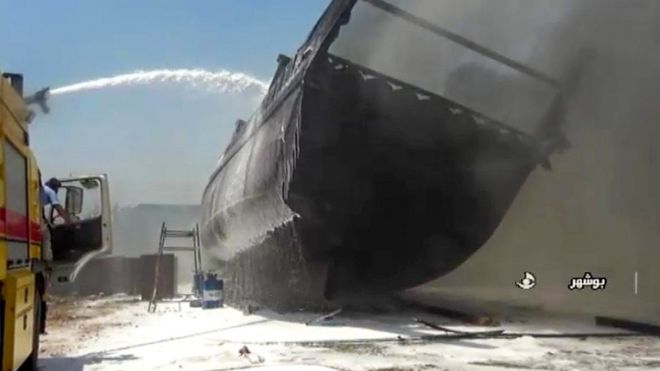
At least seven ships on fire in southern Iranian port city of Bushehr, according to Iranian report. Reason for incident not given.

At least seven ships were on fire in the southern Iranian port city of Bushehr, state-run Islamic Republic News Agency reported on Wednesday, without giving a reason for the incident.

Efforts are underway to bring the fire under control, IRNA cited Jahangir Dehghani, the head of the crisis management organization for Bushehr province, as saying.

The incident follows a series of explosions which have rocked Iran in recent weeks.

Bushehr Province, of which the port city of the same name is the capital, is where Iran’s sole nuclear plant is located.

The incident was the latest in a string of mysterious fires and blasts to rock the country. Several of the recent disasters have struck sensitive Iranian sites, leading to speculation that they could be part of a sabotage campaign engineered by Israel or the US.

An explosion occurred at an Iranian chemical plant Monday, Iranian media reported.

The blast allegedly occurred at a gas condensate plant in the Kavian Fariman industrial zone in the Razavi Khorasan Province in eastern Iran. The explosion was caused by a fire which broke out at one of the gas tanks.

Firefighters were able to put out the blaze before it spread to other tanks and caused additional explosions. The cause of the fire is under investigation.

A gas explosion shook a residential building in Tehran, Iran, on Saturday, injuring one person, Iran’s semi-official ISNA reported.

On Friday, IRIB reported that an explosion was heard in Western Tehran, and electricity had been cut in the area around where the explosion occurred.

Two people were killed in an explosion at a Tehran factory on July 7.

An explosion caused severe damage at the Natanz nuclear facility on July 2.

In June, an explosion near a military complex in Parchin area southeast of Tehran rocked the Iranian capital. Authorities blamed that blast on “leaking gas tanks.”

13 people were killed in an explosion at a “medical center” in Tehran on June 30. Tehran Deputy Governor Hamid Reza Goudarzi told state TV that the explosion was caused by a gas leak.

This a breaking story. Please check for updates.

(Arutz 7).


Anti-Semitism and NYC Mayor Bill de Blasio

0

He has led the charge against Jewish New Yorkers, particularly as
the coronavirus spread throughout New York City. Opinion.

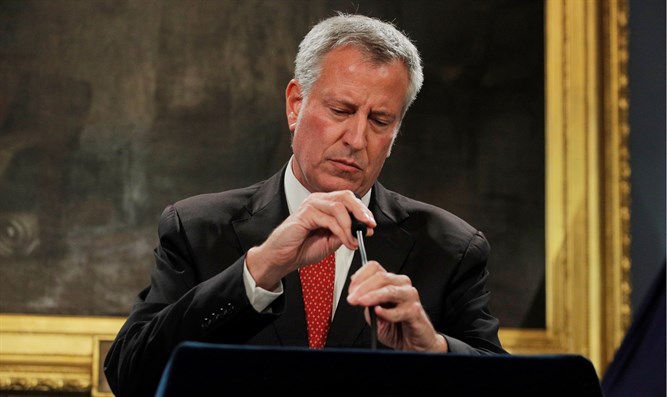
Instead of working towards securing the safety of New York City’s residents after a wave of Black Lives Matter riots targeted businesses, instead of protecting inner-city areas of New York where shootings are at a rise not seen in decades, instead of safely opening up the city to invite back those who originally left for the coronavirus shutdown, Mayor Bill de Blasio chose to have a giant Black Lives Matter banner be painted on Fifth Avenue.

There might as well be a giant “Palestinian” terrorist flag splayed along a stretch of the upscale commercial heart of Manhattan.

Black lives matter, all black people matter—black cops included, black innocent Americans who are being gunned down in certain neighborhoods because of the castration of police departments (their lives matter, too). But the group/movement Black Lives Matter (BLM) is well-known for its blatant anti-Semitism, its anti-Israel rhetoric.

The movement has not been “co-opted” by terrorist supporters and Jew-haters, as many erroneously state. Anti-Israel hate has been in its charter from the very beginning.

Members of BLM incited the Orthodox Jewish targeted pogrom in the Fairfax neighborhood in Los Angeles on May 30. Five synagogues were vandalized, along with three Jewish schools. Anti-Israel messaging was sprayed and “F**k the Jews” was heard in chants as the BLM anti-Semites were seen tearing through the area. That was the first in this year’s round of BLM public anti-Semitism. Most recently anti-Semitic chants were heard at a rally in Washington, D.C., and online anti-Semitic messaging is prevalent on BLM posts.

It is not surprising that de Blasio would support such a Jew-hating movement. For years, he palled around with Linda Sarsour, the original queen bee of anti-Zionist anti-Semitism, and a disciple of Nation of Islam leader Louis Farrakhan. These days she has been eclipsed by Reps. Ilhan Omar and Rashida Tlaib, but her influence has been far-reaching in liberal spheres.

De Blasio has led the charge against Jewish New Yorkers. Last year, when Jews, particularly Orthodox Jews, were being violently assaulted in New York—when at first a month, and then a day, wouldn’t go by without hearing some horrid anti-Semitic attack—de Blasio was blaming it on white supremacists. Even Democrat Councilman Chaim Deutsch, whose district’s residents were the primary targets, refuted that claim: those that targeted Jews were other minorities, mainly black and Hispanic New Yorkers.

De Blasio did not push back against the dangerous new bail-reform law, which essentially gave just a slap on the wrist to criminals; and those who did end up in jail ended up being released shortly after committing crimes. He did nothing to protect his Jewish residents.

When the Iranian-backed, terrorist-in-nature Al-Quds Day event was held last year in Times Square, the anti-Israel groups participating had to get a permit; that was allowed. Not even a few weeks ago, a “Day of Rage” protest/march was held in Brooklyn, these events explicitly target Israel which directly is an attack on Jews and often times leads to anti-Semitic incidents. Yet were there any neo-Nazi marches in New York City? Not that those should ever be encouraged, of course, but de Blasio would not give such an easy permit to white supremacists, as he does to every other Jew-hater.

When New York was in the throes of the COVID-19 pandemic, only the Chassidic Jewish community was the target of de Blasio’s ire. Yet there were issues with overcrowding in
the Bronx and house parties in Harlem. Being vigilant was all in the name of beating the virus, so most Jews did not say much. However, when a legitimate Chassidic funeral on April 28 was planned not only with approval of the New York Police Department but with pre-approval of the Mayor’s Office, de Blasio showed up, “shocked” at the crowd size, and immediately fired off an anti-Semitic tweet directed at the Jewish community.

The Jewish community in New York is not cohesive; dozens of vibrant groups make up the proud fabric of Jewry in New York. and so to blame “all Jews” due to one pre-arranged (and pre-approved) funeral, while ignoring other groups who were gathering in large numbers, was absolutely anti-Semitic.

One would think that letting Chassidic children play in neighborhood playgrounds would be far less a crime than thousands marching, many without face masks – but no: De Blasio ordered the police to fine parents whose children went without masks.

This behavior towards the religious Jewish community was an injustice when major hypocrisy was on full display during the height of the BLM protests and interwoven riots.

Earlier this year, Democrat Councilman Kalman Yeger pointed out the poison of anti-Semitism permeating within the City Council.

A mere days ago, a City of New York tweet reminded residents to fill out the 2020 Census. It included a “Palestinian” flag among other flags representing the homelands of the city’s residents, but omitted the Israeli flag, despite nearly 2 million Jews living in New York City.

To not call out de Blasio as a dangerous anti-Semite is a farce.

Laureen Lipsky is a pro-Israel advocate living in New York and the founder of “Taking Back the Narrative.”

(Arutz 7 / JNS).

28 Hezbollah missile launch sites detected in civilian areas, highlighting its ‘human shield’ tactic in Lebanon

0
Hezbollah’s weapons arsenal is increasingly hidden in densely-populated parts of Lebanon.

Hezbollah is continuing to bolster its cache of weapons by storing them in more urban, densely-populated locations throughout Lebanon, a new study has revealed.

According to a report released this week by the Israel-based Alma Center, 28 new depots have been determined, with the highest concentration in the capital city of Beirut, the Beqaa Valley, and southern Lebanon.

The 28 sites are connected explicitly to the launch, storage, and production of the terrorist group’s medium-range Fateh 110 / M 600 missiles. However, the report underscores that these particular missiles are part of Hezbollah’s “missile precision project,” and their “improved models” – referred to as “D’ Al-Ficar”–have a 435-mile destruction range, compared to their traditional missiles that could hit a maximum 186 miles.

Most significantly, ALMA claims that the locations – which include command and control launch capabilities, bunkers and missile assembly lines – are disguised in routine civilian areas, nestled in and around hospitals, personal residences, golf clubs, offices, soccer fields, churches, schools, and restaurants.

It’s a tactic deemed the “human shield,” which has long been associated with Hezbollah’s operating procedures.

“Hezbollah plans to launch these weapons toward civilian targets and population concentrations in Israel from within or adjacent to residential buildings. Hezbollah believes that this tactic will grant it immunity against IDF’s attacks,” the reports states, referring to the Israeli Defense Force. “As part of its modus operandi, Hezbollah stores its weapons in civilian structures and in the proximity of densely populated areas throughout Lebanon.”

The second, the report continues, is about “forcefully limiting the civilians’ freedom of movement by preventing them from leaving combat zones and directly endangering their lives,” which is said to be “enforced through checkpoints in various locations in Lebanon, particularly in the South and near the Shiite concentration in Beirut, which prohibits civilians from freely leaving the area.”

And it’s a tried and true technique.

“It is not surprising at all that Hezbollah has embedded rocket launchers in civilian areas, even in Beirut. Hezbollah is cynically using Lebanese civilians as human shields against Israeli retaliation,” Josh Lipowsky, senior research analyst, Counter Extremism Project, told Fox News. “It has long used Lebanese civilian structures to shield its arsenals. During the 2006 war with Israel, Human Rights Watch and U.N. humanitarian relief coordinator Jan Egeland both acknowledged that Hezbollah was blending among Lebanese civilians to decrease its own military losses.”

Hezbollah supporters wave Lebanese national flag as Lebanese riot policemen separate them from anti-government protesters during a protest in Beirut, Lebanon, Thursday, Oct. 24, 2019. Lebanon's President Michel Aoun has told tens of thousands of protesters that an economic reform package put forth by the country's prime minister will be the "first step" toward saving Lebanon from economic collapse. (AP Photo/Hassan Ammar)
Hezbollah supporters wave Lebanese national flag as Lebanese riot policemen separate them from anti-government protesters during a protest in Beirut, Lebanon, Thursday, Oct. 24, 2019. Lebanon’s President Michel Aoun has told tens of thousands of protesters that an economic reform package put forth by the country’s prime minister will be the “first step” toward saving Lebanon from economic collapse. (AP Photo/Hassan Ammar).

He also emphasized that Hezbollah’s goals are two-fold.

“By embedding its weaponry into civilian areas, it wants to decrease the likelihood of Israeli airstrikes against it by using human shields. Hezbollah also wants to draw Israeli soldiers into Lebanon on the ground to use the urban landscape as camouflage for snipers and anti-tank missile launchers so it can more easily pick off the Israeli military,” Lipowsky surmised. “Hezbollah continues to demonstrate that it views the Lebanese people as nothing more than the sacrificial pawns in its chess game with Israel.”

Defense analysts noted that the exposure of more than a dozen sensitive sites is hardly a surprise, given that the Iran-backed, Lebanon-based outfit has been steadily building its capabilities.

“Hezbollah currently has an arsenal of around 130,000 missiles. Most of the missiles are locally produced, short-range missiles and rockets. Some of the missiles have been and still are delivered from Iran via three ways–first, taken to Syria by air and then moved to Lebanon by land; second, taken to Lebanon by air; third, via land through Iraq, Syria and then Lebanon,” noted Ashkan Safaei Hakimi, an Israel correspondent at the U.K-based outlet Iran International. “The greatest strength of Hezbollah, besides its vast missile arsenal, is the support they receive from Iran.”

Raphael Marcus, a research fellow in the Department of War Studies, King’s College London and author of the book “Israel’s Long War with Hezbollah: Military Innovation and Adaptation Under Fire,” observed that reports such as the Alma investigation are also Israel signaling and publicly warning Hezbollah that it is aware of the group’s enhanced military capabilities.

“Last August, there were unexplained explosions in Beirut in Hezbollah’s Dahiyeh stronghold, which were attributed to Israel’s secretive effort to counter Hezbollah’s expanding precision missile arsenal,” he said. “Of course, we also saw Hezbollah operating militarily within civilian areas in Beirut during the 2006 Israel-Hezbollah War, and there have been Israeli intelligence reports leaked to the press for years about the locations of known Hezbollah military facilities in Beirut, southern Lebanon, and the Bekaa Valley, where Hezbollah stores missiles.”

Moreover, Hezbollah’s second-in-command,Sheikh Naim Qassem, told Iranian news agency Tasnim this week that their movement “has greatly developed its defense capabilities in the past years, and the Tel Aviv regime is well aware of this fact.”

Miguel Miranda, an expert analyst in military technology across the Middle East and Asia, emphasized that there are three additional types of rockets and missiles that should be of most concern to regional stability, namely Israel.

There is the Fadjr 3/5, best described as “large diameter rockets” of two calibers, 240mm and 333mm, and if equipped with a GPS navigation kit, they become scary accurate missiles. Second, the Fateh-110 – Iranian-made ballistic missiles and proven to be effective at ranges exceeding 150 miles.

“These are extremely dangerous. And then the Zelzal, another class of Iranian large diameter rocket artillery with an effective range between 90 and 125 miles. Because of their size, any deliveries to Hezbollah needs to be overland, from bases in Syria,” Miranda explained. “Hezbollah has limited manpower, but they know how to fight ‘asymmetric’ campaigns that render large conventional forces ineffective.”

And because of the sheer size and variety of Hezbollah’s weaponry stash, conjectured U.S.-based defense analyst, John Wood, it presents a massive threat.

placeholder

“Its degradation is the best one could hope for hence, the almost weekly Israeli air and missile attacks in Lebanon and Syria,” he pointed out. “And as Syria moves ever closer to Russia and accommodation with both Israel, as well as Saudi Arabia and the Gulf States, Hezbollah becomes even more important to Iran.”

Hakimi also stressed that the financial crisis currently crippling Lebanon is forcing Hezbollah to change some of its ways, relying more on internal production rather than external.

“They have also been trying to produce precise missiles in Lebanon after almost all missile shipments from Iran were destroyed by alleged Israeli attacks in Syria,” he said. “There are also reports that the terror group is now more dependent on its network of money laundering and trafficking to support itself financially.”

Aug. 25, 2019: Hezbollah leader Sayyed Hassan Nasrallah lies amid other damage inside the Lebanese Hezbollah media office, in a southern suburb of Beirut, Lebanon. The long shadow war between Israel and Iran has burst into the open in recent days, with Israel allegedly striking Iran-linked targets as far away as Iraq and crash-landing two drones in Lebanon. These incidents, along with an air raid in Syria that Israel says thwarted an imminent Iranian drone attack, have raised tensions at a particularly fraught time. (AP Photo/Bilal Hussein)
Aug. 25, 2019: Hezbollah leader Sayyed Hassan Nasrallah’s picture lies amid other damage inside the Lebanese Hezbollah media office, in a southern suburb of Beirut, Lebanon. The long shadow war between Israel and Iran has burst into the open in recent days, with Israel allegedly striking Iran-linked targets as far away as Iraq and crash-landing two drones in Lebanon. These incidents, along with an air raid in Syria that Israel says thwarted an imminent Iranian drone attack, have raised tensions at a particularly fraught time. (AP Photo/Bilal Hussein)


Lipowsky also detected some operational changes as its role in neighboring Syria has been drawn down as the protracted civil war dwindles, bringing the homefront – and Iraq – back into sharper focus.

“Since Hezbollah has largely withdrawn its fighters from Syria, it has focused on regrouping its forces in Lebanon. Hezbollah has continued to build its deadly arsenal of rockets and medium-range missiles while embedding these weapons around Lebanon. Hezbollah’s expansion into Iraq overseeing the Iranian-sponsored militias there is further proof of its flourishing role as Iran’s trusted enforcer in the region,” he surmised.

“While the Hezbollah leadership openly declares its allegiance to Iran and the support it receives from Iran, the Iranian regime can deny direct responsibility for any Hezbollah action while remaining confident that Hezbollah will work to exert Iran’s influence throughout the region. We see that now in Iraq with Hezbollah’s new position overseeing the Iranian-sponsored militias, and we see that in Lebanon, where Hezbollah and its allies dominate the Lebanese government and promote Iranian positions.”

According to Marcus, Hezbollah knows that its most significant military asset is its rocket and missile stockpile and the group’s ability to target Israel’s civilian home front.

“Rocket fire against Israel’s towns and cities cause the economy to grind to a halt and terrorize the civilian population and causes severe pressure against the Israeli government. While Israel developed an innovative solution with its Iron Dome short-range missile defense system, Hezbollah has also learned that with an expanded arsenal, it will attempt to saturate Iron Dome’s capabilities,” he said. “In a future war, Hezbollah’s also hopes to use precision missiles to target sensitive sites and critical installations in Israel in order to deliver a sharp blow that will impact Israel’s ability to declare a clear victory.”

(Fox News).
Could new treatment massively reduce dangers of the coronavirus?

0
New research at Hebrew University and Mount Sinai suggests that common drug could make coronavirus no more dangerous than the common cold.

Could a simple drug, that has been on the market for decades, be used to treat COVID-19? A research team led by Hebrew University of Jerusalem (HU)’s Professor Yaakov Nahmias says that early research looks promising; their findings appear in this week’s Cell Press’ Sneak Peak.

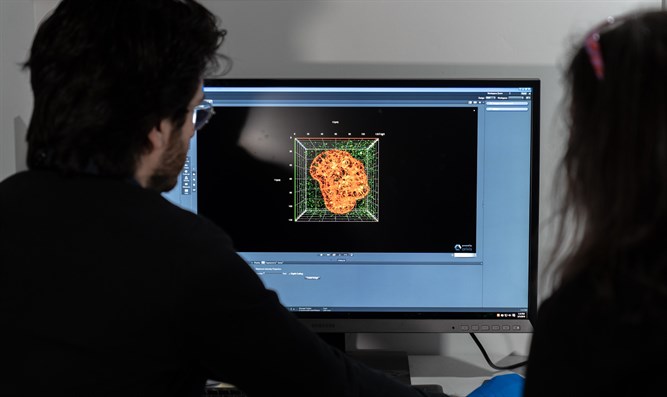
Over the last three-months, Nahmias and Dr. Benjamin tenOever at New York’s Mount Sinai Medical Center have focused on the ways in which the SARS-CoV-2 (aka, the coronavirus that’s causing our current pandemic) changes patients’ lungs in order to reproduce itself.

Major Finding

Their major finding? This virus prevents the routine burning of carbohydrates. As a result, large amounts of fat accumulate inside lung cells, a condition the virus needs in order to reproduce. This new understanding of SARS CoV-2 may help explain why patients with high blood sugar and cholesterol levels are often at a particularly high risk to develop COVID-19.

Viruses are parasites that lack the ability to replicate on their own, so they take control of our cells to help accomplish that task. “By understanding how the SARS-CoV-2 controls our metabolism, we can wrestle back control from the virus and deprive it from the very resources it needs to survive,” Nahmias explained.

With this information in hand, Nahmias and tenOever began to screen FDA-approved medications that interfere with the virus’ ability to reproduce. In lab studies, the cholesterol-lowering drug Fenofibrate (Tricor) showed extremely promising results. By allowing lung cells to burn more fat, fenofibrate breaks the virus’ grip on these cells, and prevents SARS CoV-2’s ability to reproduce. In fact, within only five days of treatment, the virus almost completely disappeared.

Hebrew University Professor Yaakov Nahmias

Daniel Hanoch

“With second-wave infections spiking in countries across the globe, these findings couldn’t come at a better time,” shared Nahmias, and global cooperation may provide the cure. “The collaboration between the Nahmias and tenOever labs demonstrates the power of adopting a multi-disciplinary approach to study SARS-CoV-2 and that our findings could truly make a significant different in reducing the global burden of COVID-19,” tenOever added.

While there are many international efforts currently underway to develop a coronavirus vaccine, studies suggest that vaccines may only protect patients for a few months. Therefore, blocking the virus’ ability to function, rather than neutralizing its ability to strike in the first place, may be the key to turning the tables on COVID-19.

“If our findings are borne out by clinical studies, this course of treatment could potentially downgrade COVID-19’s severity into nothing worse than a common cold,” Nahmias concluded.

(Arutz 7).

WP Twitter Auto Publish Powered By : XYZScripts.com