Home Blog Page 720

‘Proud Jew’ Bari Weiss Resigns from NYT, Slams Paper’s Poor Ethics

0

“Nowadays, standing up for principle at the paper does not win plaudits,” Weiss states in her letter of resignation.

Popular American-Jewish journalist Bari Weiss, author of the award-winning
book How to Fight Anti-Semitism, has resigned from The New York Times, blasting  colleagues for bullying her and what appears to be a lack of integrity and for allowing Twitter to “become its ultimate editor.”

According to Weiss, “Stories are chosen and told in a way to satisfy the narrowest of audiences, rather than to allow a curious public to read about the world and then draw their own conclusions.

“I was always taught that journalists were charged with writing the first rough draft of history. Now, history itself is one more ephemeral thing molded to fit the needs of a predetermined narrative.”

In the resignation letter, Weiss, who in January addressed the “No Hate. No Fear” rally against anti-Semitism at New York City’s Times Square, where she said she was a “proud American,” a “proud New Yorker,” and a “proud Jew,” describes a “bullying” environment at the Times.

“My own forays into Wrongthink have made me the subject of constant bullying by colleagues who disagree with my views. They have called me a Nazi and a racist; I have learned to brush off comments about how I’m ‘writing about the Jews again,’” the pro-Israel writer says.

“Several colleagues perceived to be friendly with me were badgered by coworkers. My work and my character are openly demeaned on company-wide Slack channels where masthead editors regularly weigh in. There, some coworkers insist I need to be rooted out if this company is to be a truly ‘inclusive’ one, while others post ax emojis next to my name,” she continues.

“Still other New York Times employees publicly smear me as a liar and a bigot on Twitter with no fear that harassing me will be met with appropriate action. They never are.

“There are terms for all of this: unlawful discrimination, hostile work environment, and constructive discharge. I’m no legal expert. But I know that this is wrong.”

Revealing what appears to be hypocrisy at the Times, she says:

“I do not understand how you have allowed this kind of behavior to go on inside your company in full view of the paper’s entire staff and the public. And I certainly can’t square how you and other Times leaders have stood by while simultaneously praising me in private for my courage. Showing up for work as a centrist at an American newspaper should not require bravery.”

Furthermore, “the truth is that intellectual curiosity—let alone risk-taking—is now a liability at the Times. Why edit something challenging to our readers, or write something bold only to go through the numbing process of making it ideologically kosher, when we can assure ourselves of job security (and clicks) by publishing our 4000th op-ed arguing that Donald Trump is a unique danger to the country and the world? And so self-censorship has become the norm…

“Op-eds that would have easily been published just two years ago would now get an editor or a writer in serious trouble, if not fired. If a piece is perceived as likely to inspire backlash internally or on social media, the editor or writer avoids pitching it. If she feels strongly enough to suggest it, she is quickly steered to safer ground. And if, every now and then, she succeeds in getting a piece published that does not explicitly promote progressive causes, it happens only after every line is carefully massaged, negotiated and caveated.”

The ‘New McCarthyism’

Weiss charges that the “paper of record is, more and more, the record of those living in a distant galaxy, one whose concerns are profoundly removed from the lives of most people.”

“Standing up for principle at the paper does not win plaudits,” Weiss says. Others there agree with her, she explains, but “too wise to post on Slack, they write to me privately about the ‘new McCarthyism’ that has taken root at the paper of record.”

She finds it “heartbreaking” that there are still talented journalists at the Times but they work in an “Illiberal environment.”

She concludes:

“I can no longer do the work that you brought me here to do—the work that [NYT former owner] Adolph Ochs described in that famous 1896 statement: “to make of the columns of The New York Times a forum for the consideration of all questions of public importance, and to that end to invite intelligent discussion from all shades of opinion.”

Ochs’s idea is one of the best I’ve encountered. And I’ve always comforted myself with the notion that the best ideas win out. But ideas cannot win on their own. They need a voice. They need a hearing. Above all, they must be backed by people willing to live by them.”

(United with Israel; Feature Photo: FoxNews).

Israel’s New Spy Satellite Sends First Top Secret Pictures

0
Launched last week, Ofek 16 helps Israel keep an eye on archenemy Iran, among other regional threats.

One week after the successful launch of Israel’s Ofek 16 spy satellite into orbit, the Ministry of Defense said Tuesday it turned on its super-sensitive observation camera and the first pictures were downloaded.

“This is the most significant milestone since the launch … the images we received from the satellite are of excellent quality,” said Amnon Harari, Head of the Space and Satellite Administration.

“We will continue the orderly process of transferring the satellite to operational use, anticipating that over the years, the system will provide great intelligence to the defense establishment,” he said.

Israel is known as a world leader in advanced optics and the Ofek 16 is equipped with a super high-quality camera developed and manufactured in Israel by Elbit Systems. The in-orbit shakedown testing should be finished in a few weeks and then control of the satellite will be transferred to the IDF’s Intelligence Corps when it goes operational.

“The significant advantage of Ofek is a route that allows greater repetition over Iran… that allows a high-frequency of photography, several times a day, which commercial satellites almost do not allow,” tweeted Dan Harel, an Israeli expert in remote sensing.

Launched from inside Israel, Ofek 16 will give the IDF unprecedented access to data about Iran, whose political and military leaders have repeated for years their goal is the “total annihilation of Israel.”

Not only will the satellite will give Israel’s military intelligence agents high resolution photos of Iranian sites including those associated with its illegal military nuclear weapons program, but also detailed views of the activities of the terror groups supported by Iran around the region including in Syria, Lebanon and Iraq.

(United with Israel).

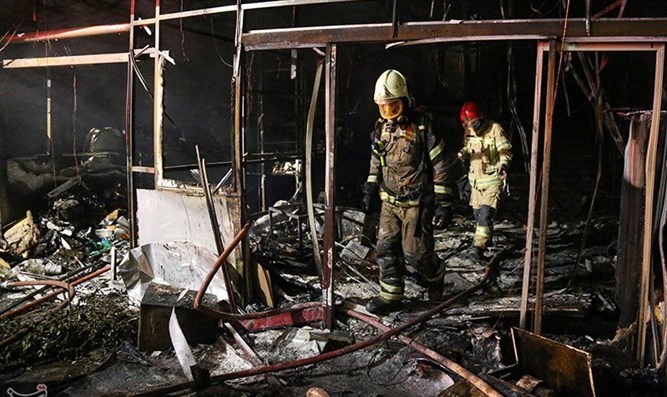
Iranian media quotes dead mayor to cover up Tehran blast

0
Iranian regime caught in a lie about location of explosion as media outlets discover person quoted has been dead for a year.

Iranian media have been caught lying to cover up the true locations of the mysterious explosions which have rocked the Islamic Republic in recent weeks.

On Saturday, Iranian media quoted the former mayor of Garmdareh as saying that an explosion in eastern Tehran occurred “at a factory making gas cylinders.”

However, media outlets outside Iran were quick to point out that the mayor who was quoted has been dead for over a year.

The rolling out of a dead official has spurred further speculation that Iran is covering up the true nature of the explosions. According to other reports, Saturday’s blast occurred at a missile and chemical warehouse.

Many of the explosions which have rocked Iran since last month are believed to have been targeted at the regime’s nuclear weapons program.

Yesterday, Iranian media reported that an explosion had occurred at an Iranian chemical plant.

The blast allegedly occurred at a gas condensate plant in the Kavian Fariman industrial zone in the Razavi Khorasan Province of eastern Iran. The explosion was caused by a fire which broke out at one of the gas tanks.

On Friday, IRIB reported that an explosion was heard in Western Tehran, and electricity had been cut in the area around which the explosion occurred.

Two people were killed in an explosion at a Tehran factory on July 7.

An explosion caused severe damage at the Natanz nuclear facility on July 2.

In June, an explosion near a military complex in Parchin area southeast of Tehran rocked the Iranian capital. Authorities blamed that blast on “leaking gas tanks.”

13 people were killed in an explosion at a medical center in Tehran on June 30. Tehran Deputy Governor Hamid Reza Goudarzi told state TV that the explosion was caused by a gas leak.

(Arutz 7).

As schools go remote, ingenious Israeli app keeps tabs on cheaters

0
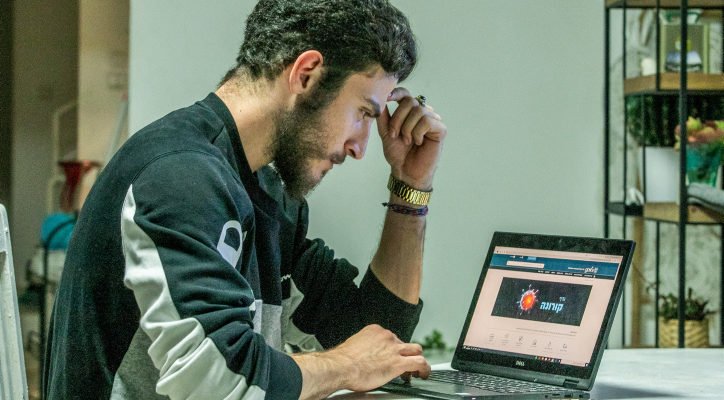
A group of Israeli university students and lecturers have developed an ingenious app to supervise students taking final exams remotely.

As high schools and colleges around the globe transition to remote final exams due to the coronavirus pandemic, a group of Israeli university students and lecturers recently received a patent for an app that prevents cheating, specifically for online tests.

The app was developed by a group from the ORT Braude College of Engineering in the northern Israeli city of Karmiel. The group won first place out of 250 teams from the high-tech industry and academia who competed in a recent Hackathon.

The Hackathon, hosted by the Tel Aviv University Entrepreneurship Center, challenged competitors to create a secure solution for virtual final exams. The solution was required to confirm the test taker’s identity, prevent the test taker from using unauthorized sites, using their mobile phone during the test, and copying the test.

The ORT Braude group proposed an app called “Anansee,’ which utilizes several existing technologies and synchronize them, so that the test takers can be identified, tracked and photographed in real time. One of the biggest benefits of the solution is that it uses devices students already have at home – a computer and a mobile phone.

Test takers will be required to run the app on both their computer and their cell, which will be placed behind their back. The positioning of the two cameras on both the laptop and mobile phone gives a remote exam supervisor a wide enough field of vision to ensure a student is not cheating.

For added security, the supervisor will watch the student through a split window, with live images being broadcast from both cameras, making sure that the student hasn’t manipulated the camera by freezing the image.

Using two cameras also creates a record of issues that may arise during the test, such as internet disconnections and technical failures. During the exam, the test taker will be asked to periodically perform verification moves, such as raising a hand and presenting the exam form to the camera.

The student will hand write the answers to the test on paper, so there’s no risk of directly copying and pasting from the Internet. The app will record the entire duration of the exam as an additional security measure.

Professor Aryeh Mahrashek, President of ORT Braude College of Engineering, praised the group, saying to Israel Hayom, “This is a creative response to an urgent need in the academic system in Israel and around the world.”

(World Israel News).

PHYLLIS SHALLMAN – TRYING TO CHANGE YOUR LIFE? START WITH YOUR ENVIRONMENT

0

Chances are you’ve cooked some pretty elaborate plans to trick yourself into being more productive.

Have you considered the role your surroundings play in your everyday life? It turns out that one of the easiest ways to bring about change in our lives is actually to change our environments. What if the layout of your bedroom or the distance from your desk to the kitchen was impacting your productivity and decision making? There’s plenty of room for each of us to improve. Here’s how and why making some changes to your environment works.

Your brain is efficient
Making decisions is draining. (Heard of “decision fatigue”? It’s real!) We can only make so many choices per day before we start to run out of steam and need a rest. But we’re faced with countless choices every time we wake up! Should I go back to sleep? Should I shower or brush my teeth first? What will I wear to work? Should I try out that new shortcut to the office? It can become stressful for your brain to struggle with a choice every time one of these little prompts presents itself. That’s why we rely on decision shortcuts called habits.

A habit is just a routine that you regularly perform. Most of the time we don’t even notice that we’re engaging in a habit because it’s second nature to us. And there’s a reason for that. It’s your brain saving energy by going on autopilot to perform an action without having to make a decision. That way you can use the bulk of your mental power on unique and important problems that might pop up during the day, not on thinking about when you should brush your teeth!

Trick yourself into making wise decisions
What does your brain’s love of shortcuts have to do with your environment? Let’s look at an example.

Your alarm clock is right next to your bed. It goes off every morning at 7:30am. It doesn’t take you long to figure out that you can smack the snooze button and go straight back to sleep with hardly any effort. Before long you’re hitting the snooze button every time the alarm goes off without even thinking about it. You’ve trained yourself to sleep in later by making your alarm easier to turn off. But what if your alarm was on the other side of your room? What if to silence it you had to stand up, walk over, and hit a button? That simple change could give you the jolt that you need to wake up and get your day started on time!

Take a look at your surroundings and ask yourself what kind of behavior it encourages. Is it more convenient for you to grab a soda from the fridge or fill up your water bottle? When you work at home, are you in the middle of distractions like the kids playing or too close to the TV? At work, does your office layout lend itself to productivity or socializing with your co-workers?

It might take some legwork to get started, but try to arrange your life in a way that makes wise decisions easier. You might be surprised by the results!


Tefillos for Maran Rav Dovid Feinstein

0

All are asked to daven for the posek hador, Maran Rav Dovid Feinstein, who is in need of rachamei Shomayim.

Rav Feinstein has returned to the hospital after experiencing recurring symptoms. The rosh yeshiva, who is in Columbia Medical Center in New York City, needs our tefillos.
Please daven for Dovid ben Shima l’refuah sheleimah.
(Matzav).

Newsom orders closure of indoor activities across California as coronavirus cases increase

0
Cases in the state began rising in early June, have increased by 48 percent in the past two weeks.

California Gov. Gavin Newsom on Monday ordered a halt to indoor activities at certain businesses statewide as cases of coronavirus surge in the country’s most populous state.

Newsom, a Democrat, announced during a press briefing that all bars across the state must close up shop and that restaurants, wineries, tasting rooms, family entertainment centers, zoos, museums and card rooms must suspend indoor activities.

The governor also announced that all gyms, places of worship, malls, personal care services, barbershops, salons, and non-critical offices in counties on the state’s “monitoring list” had to shut down under the new order. The order affects more than 30 counties which are home to about 80 percent of California’s population.

“We’ve made this point on multiple occasions and that is, we’re moving back into a modification mode of our original stay-at-home order,” Newsom said during his press briefing. “This continues to be a deadly disease.”

California, Florida, Texas report record high COVID-19 deaths

As of Monday, the state had reported more than 320,000 COVID-19 cases and more than 7,000 deaths, with 23 people dying from the virus since Sunday. Los Angeles County – the country’s most populous county – leads both the state and the country in number of confirmed COVID-19 cases with more than 133,000, according to the Center for Systems Science and Engineering (CSSE) at Johns Hopkins University.

In March, California became the first state to impose a mandatory stay-at-home order to slow the spread of the virus. Public health officials praised the state’s quick action, marveling at how the nation’s most populous state kept its cases and hospitalizations low while states like New York and New Jersey struggled to contain the highly contagious disease.

By late April, Newsom — under increasing pressure – began allowing businesses and activities to resume, citing the state’s increased hospital capacity to handle a new surge of cases. Cases began rising in early June and have exploded since, increasing 48 percent in the past two weeks, while hospitalizations have increased 40 percent.

Arizona seeing surge in coronavirus cases

Newsom’s announcement comes just hours after the state’s two largest school districts, Los Angeles and San Diego, announced they will not reopen for in-person instruction when the 2020-21 academic year begins next month. The districts said they will plan for in-person learning as health conditions allow.

Also on Monday, the World Health Organization warns that the pandemic is worsening globally and things won’t return to “the old normal” for some time.

(Fox News).

Iran’s nuclear facilities are mysteriously under attack

0
Black smoke rose as flames engulfed the Shahid Tondgooyan petrochemical plant in the Khuzestan province of Iran late Sunday afternoon.

Hours earlier, more than 500 miles away, detonations rocked the basement of an old, nondescript home in a northern pocket of Tehran. The two-story dwelling was said to have housed at least 30 gas cylinders that were used for unclear purposes.

Both incidents came fewer than two days after a string of explosions – and power outages – were reported west of Tehran in the early hours of Friday. Local reports indicated that multiple “mortar-like sounds similar to anti-aircraft missiles” were heard.

The blasts reportedly took place at an Iranian Islamic Revolutionary Guard Corps (IRGC) missile depot.

While some Iranian officials denied the outbursts altogether, and others quoted a former mayor – who reportedly died more than a year ago – as saying it was caused by gas tanks, experts said there is something bizarre at play across the beleaguered country.

These most recent attacks happened on the heels of multiple other mysterious explosions at sensitive sites over the course of the last three weeks – and no one is precisely sure what is going on, other than its rattling of the regime and stymying its controversial nuclear program.

“The tempo and tenor of the recent explosions in Iran have been unusual. There is evidence of a concerted campaign underway to thwart Iran’s nuclear program,” Jason Brodsky, Policy Director of United Against Nuclear Iran (UANI), told Fox News. “The more Iran advances its nuclear program in violation of the Joint Comprehensive Plan of Action (JCPOA), the greater the likelihood for additional strikes.”

He continued: “Additionally, Tehran is distracted by the coronavirus and economic problems. The public is increasingly disenchanted with the regime’s ability to govern the country. The conditions are ripe for additional kinetic activity.”

The first enigmatic hit happened on June 26 at a known liquid fuel production center that makes ballistic missiles in Khojir, near Parchin, southeast of the capital. Despite a downplaying by officials, satellite images later emerged to show extensive damage on an arsenal of gas tanks, along with an entire hillside blackened in the blast.

An explosion, documented in satellite photos, rattled Iran’s capital. Analysts say the blast came from an area in Tehran’s eastern mountains that hides a underground tunnel system and missile production sites. The explosion appears to have charred hundreds of meters of scrubland.

Two days later, on July 2, the notorious Natanz uranium enrichment plant – which became active in 2018 as Iran’s principal place to develop centrifuges required to produce uranium and other nuclear weapons were in-development – was struck by a mammoth blast, as confirmed by the Atomic Energy Organization of Iran (AEOI).

Tehran conceded that a severe attack had impaired an “industrial shed,” and AEOI officials acknowledged to the Iranian media that the blow had “set back Iran’s nuclear program by months.”

According to an analysis by the Kuwait-based publication Al-Jarida, the target of the assault was the UF6 gas – uranium hexafluoride – which Iran uses to infuse into its most advanced IR-6 centrifuges – of which 80 percent has been decimated as a result of the attack.

Then, on July 3, an unexplained fire erupted at a power plant in the southwest city of Shiraz, triggering a power outage in the region.

The next day, yet another explosion and inferno tore through a power plant in Ahwaz, while at the same time, a chlorine gas leak was detected at a Karoun petrochemical plant in Mahshahr, about 75 miles away.

“While one can never ignore the potential for an accident or gross incompetence, the locations of these explosions coupled with the increasing number of things exploding in the last few weeks does make a strong case for this being foreign sabotage,” underscored Behnam Ben Taleblu, a senior fellow at the Foundation for the Defense of Democracies (FDD). “Let’s not forget, they are all occurring on or near, nuclear, missile, or military installations.”

Nonetheless, a swirl of suspicion continues to linger around the series of seemingly harmonized attacks, with many suspecting Israel – and the United States – as pulling strings.

But adding to the peculiarity, BBC Persian reported that just after midnight on June 30, some of its journalists received an email from a group purporting to be the “Homeland Cheetahs” – comprised of anti-government, underground dissidents – claiming credit for earlier attacks. The outlet also said they were informed of the Natanz attack hours before it was documented by officials.

New flagpoles in Iran are sparking fears that the Islamic regime is using them to hide satellite jamming technology that can block Internet, TV and phone communication.
New flagpoles in Iran are sparking fears that the Islamic regime is using them to hide satellite jamming technology that can block Internet, TV and phone communication. (Hassan A. Khosravi)

Several intelligence sources told Fox News that they had never heard of the outfit prior to the BBC’s report, and suspected it to be a ruse or a front for a much more sophisticated operation.

While almost all experts conclude that the attacks that have occurred are physical, some say cyber warfare may additionally play a part – especially given that Natanz was targeted by the infamous Stuxnet malware kindled by Israel and the U.S. in 2010. That attack successfully crippled controls at the site by altering the spin cycles of the centrifuges and left scientists scratching their heads.

“Although many are asking the question, was this a cyber-attack or physical sabotage, the answer could be ‘both.’ The most likely suspects are the U.S. and Israel working in tandem. Both countries have very sophisticated cyber warfare units and significant capabilities when it comes to cyber-kinetic attacks,” explained David Kennedy, CEO of TrustedSec and a former NSA and Marine Corps cyber-intelligence expert. “An attack of this magnitude would require a great deal of planning and preparation, and is very complex because you are exploiting industrial control systems and air-gapped devices.”

In this photo released by the official website of the office of the Iranian supreme leader, Supreme Leader Ayatollah Ali Khamenei delivers his sermon in the Friday prayers at Imam Khomeini Grand Mosque in Tehran, Iran, Friday, Jan. 17, 2020. Iran's supreme leader said President Donald Trump is a "clown" who only pretends to support the Iranian people but will "push a poisonous dagger" into their backs, as he struck a defiant tone in his first Friday sermon in Tehran in eight years. (Office of the Iranian Supreme Leader via AP)
In this photo released by the official website of the office of the Iranian supreme leader, Supreme Leader Ayatollah Ali Khamenei delivers his sermon in the Friday prayers at Imam Khomeini Grand Mosque in Tehran, Iran, Friday, Jan. 17, 2020. Iran’s supreme leader said President Donald Trump is a “clown” who only pretends to support the Iranian people but will “push a poisonous dagger” into their backs, as he struck a defiant tone in his first Friday sermon in Tehran in eight years. (Office of the Iranian Supreme Leader via AP).

Jeff Bardin, CIO of security firm Treadstone 71, concurred that their assessment “indicates this was a physical attack likely with cyber used for reconnaissance and support.”

“The explosion was far beyond what is believed cyber sabotage could have created,” he said. “If Iran complains too loudly that adversaries destroyed their nuclear weapons development, the IAEA and the world will want a local inspection – Iran has claimed they are not creating nuclear weapons. If they complain too loudly, we can confirm those locations for nuclear weapons development. If Iranian authorities claim adversary actions occurred, internally, they look weak, where they already suffer a lack of confidence. If they openly respond, they risk more attacks.”

Experts have also pointed to the glaring holes in Tehran’s intelligence apparatus – essentially allowing its country’s most guarded sites to be slaughtered with convention weapons, with little means of foiling it or fighting back.

“Tehran has not yet retaliated for the Natanz explosion. (But) I would expect to see an uptick in Iranian cyber operations against the U.S., Israel, and our Mideast allies like Saudi Arabia, but I don’t expect a serious conflagration,” Kennedy surmised. “The Iranians have suffered a major setback to their nuclear program and their domestic security. They’ve been badly embarrassed. And the truth is, they may not know the full extent of what happened in that attack. They also don’t know what else is coming.”

(Fox News).

Hamas Ranks in Gaza Shocked After Senior Commander Smuggled to Israel

0
Sources in the Gaza Strip report feverish activity by Hamas’ intelligence services following the arrest of an Islamic State (ISIS) cell that was allegedly activated by Israeli intelligence and the smuggling of a Hamas officer into Israel who was exposed to valuable information.

Muhammad Abu Ajawa, a senior member of the Eastern Brigade in the Gaza Strip, an intelligence expert who is familiar with communications systems and cameras, was arrested by Hamas.

Izz a-Din Badr, a senior member of Hamas’ Naval Commando unit, fled to Israel with valuable intelligence.

The entire squad thought it was working for ISIS, and its commanders concealed that it was operating for Israel.

Hamas’ intelligence mechanisms, shocked by the depth of the intrusion attributed to Israel, are trying to estimate the intelligence damage and detect a leak at the top of the organization and especially in the Naval Commandos and the Eastern Division units.

Last week, sources in the Gaza Strip and Lebanon reported that an ISIS cell had recently been detained in the Gaza Strip. During the investigation, it became clear that while its members thought they were being operated by ISIS, it was determined that they were actually being used by the Israeli intelligence to infiltrate into Hamas.

Sources in Gaza and media outlets reported that Badr has been smuggled out of the Gaza Strip by the IDF in recent days, carrying a laptop with valuable information on Hamas activity.

Those who recruited the leaders apparently did excellent fieldwork and located some of Hamas’s most important activists who are in a position where they are exposed to information of the highest intelligence value.

The Amad agency provides details about ” Abu Ajawa and claims that he is a 32-year-old resident of the Shaja’iya neighborhood, a graduate of computer studies

Abu Ajawa served as a commander in the Izz Din al-Qassam Brigades and in the Hamas internal security apparatus, and it appears that he was recruited as Israeli intelligence in 2009.

“Hamas is now working to assess the damage,” Gaza officials told TPS.

This is the second case in which Israel has succeeded in recruiting senior members of Hamas’ naval commando.

The Amad news agency says, based on Hamas’ sources, that the members of the cell arrested were mostly Hamas operatives who left the organization and moved to serve ISIS following the settling of internal accounts within Hamas’ military wing.

The Lebanese newspaper Al-Akhbar reported last week that the cell was instructed to place explosive devices in government institutions, courts, and damage Hamas’ high-quality weapons depots.

Squad members were arrested in the apartment with large sums of money, equipment, devices, weapons and motorcycles that were to be used for a series of attacks.

The cell was allegedly responsible for a series of explosions that occurred last October near Hamas police checkpoints in the Gaza Strip.

Following Badr’s smuggling out of the Gaza Strip, Hamas intelligence personnel have begun a wave of arrests and investigations in both the Naval Commando and the Eastern Brigade of the Gaza Strip.

These are now examining cameras, maps and documents, Abu Ajwa served as an intelligence instructor and was exposed to cameras and communications systems.

A few weeks ago, sources in the Gaza Strip reported that Masa’eb Matewa, the nephew of Yahya Senwar, the Hamas leader in the Gaza Strip, also joined ISIS, after holding positions in the Naval Commando.

(TPS).

Ukraine to bar Israeli visitors to Uman this Rosh Hashanah

0
Israeli visitors to be barred from flying to Ukraine for annual Uman pilgrimage, says Ukrainian government, citing coronavirus spike.

The Ukrainian government will not permit Israelis to make the annual Rosh Hashanah pilgrimage to the tomb of a 19th century Hasidic rebbe, Ukrainian officials announced Tuesday.

Every year, tens of thousands of Israelis travel to the central Ukrainian town of Uman to visit the resting place of Rebbe Nachman, the founder of the Breslov Hasidic movement whose grave has become a popular pilgrimage destination.

This year, however, Ukraine will not permit the mass pilgrimage, citing the resurgence of the coronavirus pandemic in Israel.

Due to the second wave of the virus in Israel, the European Union has placed the Jewish state on its “red list” of states with whom direct travel is heavily restricted.

Ukrainian officials also said the decision was made due to the lack of adequate hospital facilities in and around Uman to handle a major outbreak of the coronavirus.

“We want to make clear that this has nothing to do with politics or anti-Semitism, and we reject any claims which try to present it as such”, an official said.

(Israel National News).

WP Twitter Auto Publish Powered By : XYZScripts.com