Home Blog Page 8

Israel cuts ties with UNRWA

0

“They perpetuate the conflict rather than try and alleviate the conflict,” said government spokesman David Mencer.

By Batya Jerenberg, World Israel News

Israel has decided to cut off all ties with the United Nations Relief and Works Agency for Palestine Refugees in the Near East (UNRWA) over their terror ties, a government spokesman said Monday.

“UNRWA are part of the problem, and we will now stop working with them,” said David Mencer of the National Public Diplomacy Directorate, which operates out of the Prime Minister’s Office.

“We are actively phasing out the use of UNRWA because they perpetuate the conflict rather than try and alleviate the conflict,” Mencer said at a press briefing.

Jerusalem revealed in January that an investigation into the agency had found that a dozen of its staff members had taken part in Hamas’ October 7 invasion of Israel, when 1,200 people were massacred and 253 abducted into the Gaza Strip.U

Three weeks ago, Israel released phone recordings of UNRWA teachers bragging about taking Israeli women hostage.

In response to the original report, the United States and over a dozen other countries announced their suspension of funding for the discredited agency.

While the EU, Norway and Canada have since renewed their money flow, the Americans are bypassing UNRWA in their newest humanitarian aid package and working instead with the World Food Program.

Israelis have been protesting in front of UNRWA’s Jerusalem office for weeks, demanding that the agency be thrown out of the country for aiding and abetting Hamas.

According to its critics, a huge Hamas terror tunnel recently found under the group’s Gaza headquarters and supplied with electricity and water from the building, is another proof of the agency’s complicity with terrorists.

Ordinary Israelis have also opened a legal front against UNRWA.

In early March, more than 8,000 plaintiffs, including 1,500 dual American-Israeli citizens and 6,500 Israelis, filed a lawsuit in the U.S. demanding its permanent defunding.

One of their representatives, Nitsana Darshan-Leitner, who founded the Shurat HaDin—Israel Law Center that regularly takes terrorists and their state backers to court, has also demanded that Defense Minister Yoav Gallant declare UNRWA to be a terrorist organization, with all the legal consequences that such a designation implies.

“UNRWA is no longer a humanitarian agency – it has become a full-scale jihadi group,” said Darshan-Leitner, and it should be treated as such.

Source: World Israel News

Rabbi Lord Jonathan Sacks zt”l -Why Civilizations Die TZAV • 5771 5777 5784

In The Watchman’s Rattle, subtitled Thinking Our Way Out of Extinction, Rebecca Costa delivers a fascinating account of how civilisations die. When their problems become too complex, societies reach what she calls a cognitive threshold. They simply can’t chart a path from the present to the future.

The example she gives is the Mayans. For a period of three and a half thousand years, between 2,600 BCE and 900 CE, they developed an extraordinary civilisation, spreading over what is today Mexico, Guatemala, Honduras, El Salvador, and Belize, with an estimated population of 15 million people.

Not only were they expert potters, weavers, architects, and farmers, they also developed an intricate cylindrical calendar system, with celestial charts to track the movements of the stars and predict weather patterns. They had their own unique form of writing as well as an advanced mathematical system. Most impressively they developed a water-supply infrastructure involving a complex network of reservoirs, canals, dams, and levees.

Then suddenly, for reasons we still don’t fully understand, the entire system collapsed. Sometime between the middle of the eighth and ninth century the majority of the Mayan people simply disappeared. There have been many theories as to why it happened. It may have been a prolonged drought, overpopulation, internecine wars, a devastating epidemic, food shortages, or a combination of these and other factors. One way or another, having survived for 35 centuries, Mayan civilisation failed and became extinct.

Rebecca Costa’s argument is that whatever the causes, the Mayan collapse, like the fall of the Roman Empire, and the Khmer Empire of thirteenth century Cambodia, occurred because problems became too many and complicated for the people of that time and place to solve. There was cognitive overload, and systems broke down.

It can happen to any civilisation. It may, she says, be happening to ours. The first sign of breakdown is gridlock. Instead of dealing with what everyone can see are major problems, people continue as usual and simply pass their problems on to the next generation. The second sign is a retreat into irrationality. Since people can no longer cope with the facts, they take refuge in religious consolations. The Mayans took to offering sacrifices. Archaeologists have uncovered gruesome evidence of human sacrifice on a vast scale. It seems that, unable to solve their problems rationally, the Mayans focused on placating the gods by manically making offerings to them. So apparently did the Khmer.

Which makes the case of Jews and Judaism fascinating. They faced two centuries of crisis under Roman rule between Pompey’s conquest in 63 BCE and the collapse of the Bar Kochba rebellion in 135 CE. They were hopelessly factionalised. Long before the Great Rebellion against Rome and the destruction of the Second Temple, Jews were expecting some major cataclysm.

What is remarkable is that they did not focus obsessively on sacrifices, like the Mayans and the Khmer. With their Temple destroyed, they instead focused on finding substitutes for sacrifice. One was?gemillat chassadim, acts of kindness. Rabban Yochanan ben Zakai comforted Rabbi Joshua, who wondered how Israel would atone for its sins without sacrifices, with the words:

“My son, we have another atonement as effective as this: acts of kindness, as it is written (Hosea 6:6), ‘I desire kindness and not sacrifice.’”

Avot deRabbi Natan 8

Another was Torah study. The Sages interpreted Malachi’s words, “In every place offerings are presented to My name,” (Malachi 1:11) to refer to scholars who study the laws of sacrifice (Menachot 110a). Also:

“One who recites the order of sacrifices is as if he had brought them.”

Taanit 27b

Another was prayer. Hosea said, “Take words with you and return to the Lord . . . We will?offer our lips as sacrifices of bulls” (Hos. 14:2-3), implying that words could take the place of sacrifice.

He who prays in the house of prayer is as if he brought a pure oblation.

Yerushlami, Perek 5 Halachah 1

Yet another was?teshuvah. The Psalm (51:19) says “the sacrifices of God are a contrite spirit.” From this the Sages inferred that “if a person repents it is accounted to him as if he had gone up to Jerusalem and built the Temple and the altar and offered on it all the sacrifices ordained in the Torah” (Vayikra Rabbah 7:2).

A fifth approach was fasting. Since going without food diminished a person’s fat and blood, it counted as a substitute for the fat and blood of a sacrifice (Brachot 17a).

A sixth was hospitality. “As long as the Temple stood, the altar atoned for Israel, but now a person’s table atones for him” (Brachot 55a). And so on.

What is striking in hindsight is how, rather than clinging obsessively to the past, leaders like Rabban Yochanan ben Zakai thought forward to a worst-case-scenario future. The great question raised by parshat Tzav, which is all about different kinds of sacrifice, is not “Why were sacrifices commanded in the first place?” but rather, “Given how central they were to the religious life of Israel in Temple times, how did Judaism survive without them?”

The short answer is that overwhelmingly the Prophets, the Sages, and the Jewish thinkers of the Middle Ages realised that sacrifices were symbolic enactments of processes of mind, heart, and deed, that could be expressed in other ways as well. We can encounter the will of God by Torah study, engaging in the service of God by prayer, making financial sacrifice by charity, creating sacred fellowship by hospitality, and so on.

Jews did not abandon the past. We still refer constantly to the sacrifices in our prayers. But they did not cling to the past. Nor did they take refuge in irrationality. They thought through the future and created institutions like the synagogue, house of study, and school. These could be built anywhere, and would sustain Jewish identity even in the most adverse conditions.

That is no small achievement. The world’s greatest civilisations have all, in time, become extinct while Judaism has always survived. In one sense that was surely Divine Providence. But in another it was the foresight of people like Rabban Yochanan ben Zakai who resisted cognitive breakdown, created solutions today for the problems of tomorrow, who did not seek refuge in the irrational, and who quietly built the Jewish future.

Surely there is a lesson here for the Jewish people today: Plan generations ahead. Think at least 25 years into the future. Contemplate worst-case scenarios. Ask “What we would do, if…” What saved the Jewish people was their ability, despite their deep and abiding faith, never to let go of rational thought, and despite their loyalty to the past, to keep planning for the future.


Cargo Ship Hits Baltimore’s Key Bridge, Bringing It Down

0

BALTIMORE (AP) — A container ship rammed into a major bridge in Baltimore early Tuesday, causing it to snap and plunge into the river below. Several vehicles fell into the chilly waters, and rescuers searched for survivors.

It was also not clear what caused the cargo ship to crash into the Francis Scott Key Bridge long before the busy morning commute in what one official called a “developing mass casualty event” in a major American city just outside of Washington. Two people were rescued, and it was not clear how many more might be in the waters of the busy harbor near a key port.

The ship crashed into one of the bridge’s supports, causing the structure to snap and buckle at several points and tumble into the water in a matter of seconds — a shocking spectacle that was captured on video and posted on social media. The vessel caught fire, and thick, black smoke billowed out of it.

“Never would you think that you would see, physically see, the Key Bridge tumble down like that. It looked like something out of an action movie,” said Baltimore Mayor Brandon Scott, calling it “an unthinkable tragedy.”

Fire Chief James Wallace said authorities “may be looking for upwards of seven people” but said that number could change, and other officials wouldn’t give figures. It was not clear if the two rescued were included in the seven cited by the fire chief.

Authorities said a crew of unknown size was working on the bridge at the time of the collapse and that sonar had detected cars in the water, which is about 50 feet (15 meters) deep. The water temperature was about 47 degrees Fahrenheit (8 degrees Celsius) before dawn Tuesday, according to a buoy that collects data for the National Oceanic and Atmospheric Administration.

Earlier, Kevin Cartwright, director of communications for the Baltimore Fire Department, told The Associated Press that several vehicles were on the bridge at the time of the collapse, including one the size of a tractor-trailer truck. The bridge came down in the middle of the night when traffic would be lighter than during the day when thousands of cars traverse the span.

Cartwright called the collapse a “developing mass casualty event,” though he didn’t know at the time how many people were affected.

Synergy Marine Group — which owns and manages the ship, called the Dali — confirmed the vessel hit a pillar of the bridge at about 1:30 a.m. while in control of one or more pilots, who are local specialists who help navigate vessels safely into ports.

It said all crew members, including the two pilots on board, were accounted for and there were no reports of any injuries.

As the sun rose Tuesday, jagged remnants of the bridge were illuminated jutting up from the water’s surface. The on-ramp ended abruptly where the span once began.

Cartwright said that some cargo appeared to be dangling from the bridge, which spans the Patapsco River at the entrance to a busy harbor. The river leads to the Port of Baltimore, a major hub for shipping on the East Coast. Opened in 1977, the bridge is named for the writer of “The Star-Spangled Banner.”

Maryland Transportation Secretary Paul Wiedefeld said all vessel traffic into and out of the port would be suspended until further notice, though the facility was still open to trucks.

Gov. Wes Moore declared a state of emergency and said he was working to get federal resources deployed. The FBI was on the scene, but Wiedefeld said terrorism was not suspected. President Joe Biden was briefed.

The Dali was headed from Baltimore to Colombo, Sri Lanka, and flying under a Singapore flag, according to data from Marine Traffic. The container ship is about 985 feet (300 meters) long and about 157 feet (48 meters) wide, according to the website.

Danish shipping giant Maersk said it had chartered the vessel, which was carrying its customers’ cargo. No Maersk crew and personnel were on board. The collapse caused Maersk shares at the Nasdaq Copenhagen to plummet 2% in early Tuesday trading.

In 2001, a freight train carrying hazardous materials derailed in a tunnel in downtown Baltimore and caught fire, spewing black smoke into surrounding neighborhoods and forcing officials to temporarily close all major roads into the city.

Source: Hamodia

Unilever to Cut 7,500 Jobs and Spin off Its Ice Cream Business, Which Includes Ben & Jerry’s

0

LONDON (AP) — Unilever, the company that makes Ben & Jerry’s ice cream, Dove soaps and Vaseline, said Tuesday that it is cutting 7,500 jobs and spinning off its ice cream business to reduce costs and boost profits.

London-based Unilever said its ice cream business, which also includes Magnum bars, has “distinct characteristics” from its other brands and would benefit from separate ownership to increase growth. It said the split is expected to be completed by the end of next year.

The British consumer goods company with 128,000 employees also said it is launching a “productivity program” that is expected to lead to a reduction of about 7,500 mostly office-based jobs worldwide.

Unilever said it will invest in technology to find efficiencies and avoid duplication that it anticipates will help it save 800 million euros ($867 million) over the next three years. The company also laid off 1,500 staffers in early 2022.

“Simplifying our portfolio and driving greater productivity will allow us to further unlock the potential of this business, supporting our ambition to position Unilever as a world-leading consumer goods company delivering strong, sustainable growth and enhanced profitability,” said CEO Hein Schumacher, who took the helm at Unilever last summer.

The company’s shares jumped more than 3% in late-morning trading on the London Stock Exchange.

“The share price bounce goes some way in reversing what has been a difficult last year, as investors have fretted over a company with limited high growth prospects and in need of streamlining despite its reputation as a solid defensive play,” said Richard Hunter, head of markets for interactive investor, an online investment service.

The company behind Hellman’s mayonnaise, Axe fragrances and Cif household cleaners said it is targeting underlying sales growth of mid-single digits after spinning off the ice cream business.

It saw sales volume drop 3.6% in 2022 after jacking up prices 13.3% on average across its brands that year. In response, it raised prices just 2.8% last year, and sales rose 1.8%.

Some analysts pointed out that splitting from Ben & Jerry’s, which is known for social activism that has put it at odds at times with its corporate owner, could have an added upside for Unilever.

“A side benefit of the brand exiting Unilever’s portfolio is it might quieten the ‘go woke and go broke’ noise, but more widely the reasoning for the decision looks pretty sound,” said Russ Mould, investment director at AJ Bell, a financial services company.

He noted that the ice cream spinoff had not been widely anticipated by the market even if “political pronouncements from Ben & Jerry’s had provoked a meltdown among some investors.”

Ben & Jerry’s has supported liberal issues like LGBTQ+ rights, Black Lives Matter, justice for migrants and efforts to fight climate change.

The brand announced in 2021 that it would stop selling its ice cream in the Israeli-occupied West Bank and contested east Jerusalem — territories sought by the Palestinians.

Unilever later announced that it was selling its business interest in Ben & Jerry’s in Israel to its Israeli licensee, which would market the products with Hebrew and Arabic labels. A U.S. judge rejected a lawsuit in 2022 from Ben & Jerry’s to block that plan.

More recently, since the Israel-Hamas war broke out, Ben & Jerry’s independent board chair Anuradha Mittal has called for a permanent ceasefire in Gaza.

Source: VosIzNeias

North Korea Resumes Missile Tests, Raising Tensions With Rivals

0

(AP) — North Korea fired multiple short-range ballistic missiles toward its eastern waters Monday morning, its neighbors said, days after the end of the South Korean-U.S. military drills that the North views as an invasion rehearsal.

The launches — North Korea’s first known missile testing activities in about a month — came as U.S. Secretary of State Antony Blinken was in Seoul for a democracy summit. Outside experts earlier predicted North Korea would extend its run of missile tests and intensify its warlike rhetoric ahead of the U.S. presidential election in November to boost its leverage in future diplomacy.

Japan’s Defense Ministry said North Korea fired three missiles, two together at 7:44 a.m. and the other about 37 minutes later. Japanese Prime Minister Fumio Kishida told a parliamentary session that the North Korean missiles landed in the waters between the Korean Peninsula and Japan, all outside of Japan’s exclusive economic zone, and that no damage or injuries have been reported.

South Korea’s military said it also detected “several” suspected short-range ballistic launches by North Korea on Monday morning. The Joint Chiefs of Staff called the launches “clear provocation” that threaten peace on the Korean Peninsula. It said South Korea will maintain readiness to repel any provocation by North Korea, based on its solid military alliance with the United States.

According to Japanese and South Korean assessments, the North Korean missiles, fired from its capital region, traveled a distance of 300-350 kilometers (about 185-220 miles) and reached a maximum altitude of 50 kilometers (about 30 miles).

Observers say the missiles’ flight distances indicate they are weapons targeting major facilities in South Korea, such as its military headquarters in the central region.

The U.S. State Department condemned the launches, saying they pose a threat to the North’s neighbors and undermine regional security. A State Department statement said the U.S. commitment to the defense of South Korea and Japan remains “ironclad.”

The U.S. stations a total of 80,000 troops in South Korea and Japan, the backbone of its military presence in the Asia-Pacific region.

During the South Korea-U.S. military drills that ended Thursday, North Korean leader Kim Jong Un guided a series of military training exercises involving tanks, artillery guns and paratroopers, and called for greater war fighting capabilities. The 11-day South Korean-U.S. drills involved a computer-simulated command post training and 48 kinds of field exercises, twice the number conducted last year.

The North didn’t perform any missile tests during its rivals’ training, however. Its missile tests are considered much bigger provocations as North Korea has been pushing hard to mount nuclear warheads on its missiles targeting the U.S. mainland and its allies. Many experts say North Korea already has nuclear-armed missiles capable of reaching all of South Korea and Japan, but does not yet have functioning long-range missiles that can strike the U.S. mainland.

Source: Hamodia

Putin Wins Landslide Re-Election To Extend 25-Year Rule In Vote Criticized As A Sham By Protesters

0

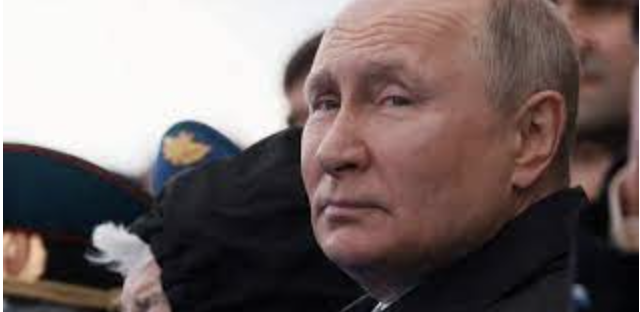
President Vladimir Putin secured a staggering 88% victory in Russia’s presidential election, as indicated by exit polls and initial results, solidifying his dominance in the country.

Despite this apparent triumph, thousands of dissenters staged a symbolic protest at polling stations around noon.

This overwhelming victory positions Putin to potentially surpass Josef Stalin as Russia’s longest-serving leader in over two centuries, assuming a new six-year term. With 87.8% of the vote, Putin achieved the highest electoral margin in Russia’s post-Soviet era, according to an exit poll by FOM.

The Russian Public Opinion Research Centre (VCIOM) similarly placed Putin at 87%, with official results aligning closely with these projections.

The election occurred against the backdrop of heightened tensions, only two years after Putin’s order for the invasion of Ukraine, leading to Europe’s deadliest conflict since World War II, which Putin characterizes as a “special military operation.” Throughout the election period, Ukraine launched attacks on Russian oil refineries, shelled Russian territories, and attempted incursions with proxy forces, actions that Putin vowed to retaliate against.

While Putin’s victory was all but assured given his control over the state apparatus and the absence of credible opposition, the former KGB operative aimed to demonstrate widespread support among Russians. Voter turnout across the nation surpassed 2018 levels, reaching over 67.5% hours before polls closed at 1800 GMT.

Supporters of Putin’s prominent adversary, Alexei Navalny, who tragically passed away in a Siberian prison last month, urged Russians to participate in a “Noon against Putin” demonstration, denouncing him as a corrupt autocrat. Despite tight security involving tens of thousands of law enforcement personnel, there was no independent assessment of the opposition turnout.

Reporters from Reuters observed a surge in voter numbers, particularly among young people, around noon at polling stations in Moscow, St. Petersburg, and Yekaterinburg, with queues stretching hundreds, even thousands, of individuals long. Some voters indicated their protest intentions, although distinguishing them from ordinary voters proved challenging. As noon approached across Asia and Europe, sizable crowds gathered at Russian diplomatic missions’ polling stations. At the Russian embassy in Berlin, Navalny’s widow, Yulia, received cheers and chants of “Yulia, Yulia,” while exiled supporters streamed protests on YouTube from both within Russia and abroad.

“We have demonstrated to Russia and the entire world that Putin does not represent Russia, that he has seized power,” remarked Ruslan Shaveddinov of Navalny’s Anti-Corruption Foundation. “Our triumph lies in overcoming fear and isolation—many realized they were not alone.”

Leonid Volkov, a Navalny aide in exile who recently survived an assault in Vilnius, estimated that hundreds of thousands turned out at polling stations in major cities despite risks of arrest. However, OVD-Info reported at least 74 arrests nationwide on Sunday, underscoring the authorities’ crackdown on dissent. While sporadic protests occurred over the preceding days, including incidents of vandalism against polling booths and ballot boxes, Navalny’s demise has left a significant void within the opposition. Other key figures find themselves either abroad, incarcerated, or deceased. Western leaders, particularly in the United States, have consistently characterized Putin as an autocrat and aggressor.

President Joe Biden’s recent description of him as a “crazy SOB” underscores the deep-seated animosity. The International Criminal Court’s indictment of Putin for alleged war crimes, which the Kremlin denies, further exacerbates tensions. Putin frames the conflict with Ukraine as a historic struggle against a declining West that humiliated Russia post-Cold War by encroaching on its sphere of influence. According to Nikolas Gvosdev of the Foreign Policy Research Institute, Putin’s primary objective is to institutionalize his worldview to ensure continuity beyond his tenure.

The timing of Russia’s election coincides with a pivotal moment in the Ukraine conflict, which Western intelligence agencies view as a broader struggle between democratic and autocratic forces, echoing Biden’s characterization of a 21st-century ideological battle. The question of support for Ukraine becomes entangled in U.S. domestic politics, particularly with the upcoming presidential election. Concerns persist that without increased assistance, Russia may escalate its aggression, potentially emboldening China, as warned by CIA Director William Burns. Putin contends that the West, in collaboration with Ukrainian forces, is waging a hybrid war against Russia, aiming to disrupt the electoral process. Voting also took place in Crimea and other disputed Ukrainian territories, which Moscow annexed in 2014, a move vehemently opposed by Kyiv.

Source:{Matzav.com}

Jewish Organizations File Lawsuit Over Canadian Meat Slaughter Regulations

0

By Hamodia Staff

One of Canada’s main kashrus supervision organizations, the Kashruth Council of Canada (COR), along with other Jewish groups filed a lawsuit last week against the government’s mandate on animal slaughter has severely curtailed the production of kosher meat.

The lawsuit, which was filed by the COR, Jewish Community Council of Montreal, and the Centre for Israel and Jewish Affairs, states that due to the regulations, which require stunning before killing, or the performance of cognitive tests to ensure that animals are unconscious afterwards, shechitah has dropped precipitously in Canada over the past few years, and that the Jewish community has had to rely on imported meats, a situation that they say is not a long-term solution.

“Since these new guidelines have gone into effect, the amount of kosher meat produced in Canada has decreased dramatically,” the three organizations said in a statement earlier this week. “The community has been trying to temporarily supplement this shortfall with imported kosher meat, but this situation is not viable over the long term.”

The laws were passed as part of Canada’s Safe Food for Canadians Regulations by the Canadian Food Inspection Agency.

Shechitah requires animals not to be injured before slaughter; stunning would render the animal non-kosher according to halachah.

As an alternative to stunning, slaughterhouses are permitted to run cognitive tests on animals to make sure that they are unconscious after shechitah or other slaughtering methods are performed before proceeding with meat processing.

But the organizations who filed the lawsuit say that this takes far too long and doesn’t permit the amount of kosher meat needed to supply food to the community and run a business. As a result of the regulations, the organizations say that two of the country’s six kosher slaughterhouses closed down between 2022 and 2023, which has caused the amount of kosher meat produced in Canada to be halved – from 3,400 cows killed weekly, to 1,750.

Bans on shechitah, both successful and attempted, have spread throughout Europe in recent years; Sweden, Denmark, Finland, Slovenia and Estonia have made it illegal, along with two of three regions in Belgium.

The CFIA said in a statement that it “remains open to new scientific findings that can support animal welfare, and to listening to and engaging with stakeholders on the challenges they face as well as on potential solutions.”

The Canadian Jewish organizations say that they have submitted scientific evidence to the government proving that shechitah meets the guidelines of causing immediate unconsciousness, but their appeals have fallen on deaf ears.

“CFIA is supposed to be a science-based organization and to date they have ignored the science,” Rabbi Saul Emanuel, the director of MK Kosher, the Montreal Jewish community’s agency, told the Toronto Star.

Source: Hamodia

1,900-Year-Old Hiding Complex from Bar Kochba Revolt Discovered in Galilee Excavation

0
By Pesach Benson • 18 March, 2024


Jerusalem, 18 March, 2024 (TPS) — Archaeologists unearthed a nearly 1,900-year-old hiding complex near the Sea of Galilee, shedding light on the tumultuous period of the Bar Kochba Revolt, the Israel Antiquities Authority announced on Monday.

The excavation, at Huqoq near the Sea of Galilee, revealed the most extensive hiding complex ever discovered in the region, showcasing dramatic episodes from Jewish history.

“The hiding complex provides a glance on a tough period of the Jewish population in Huqoq and in the Galilee in general,” said excavation directors Uri Berger of the Israel Antiquities Authority and Prof. Yinon Shivtiel of the Zefat Academic College.

“However, the story that the site tells is also an optimistic story of an ancient Jewish town that managed to survive historical tribulations,” they said. “It is a story of residents who, even after losing their freedom, and after many hard years of revolts, came out of the hiding complex, and established a thriving village, with one of the most impressive synagogues at the area.”

At the heart of the discovery lies a converted water cistern from the Second Temple period, repurposed into a complex system of hiding spaces. In times of danger, residents ingeniously utilized the mikvah, or ritual bath, breaking down walls to create escape routes through interconnected tunnels. The labyrinthine design, with tunnels intersecting at 90-degree angles, reflects a deliberate effort to confound and evade pursuit by heavily armed Roman forces.

Among the artifacts unearthed are hundreds of broken clay and glass dishes, hinting at the daily lives of the inhabitants, alongside an impressive ring setting for a precious stone, although the stone itself remains elusive.

Hundreds of participants including school and university students, local residents, soldiers, and volunteers, uncovered a network of underground tunnels and hiding cavities.

“We turned the excavation in the hiding complex into a community excavation as part of the Israel Antiquities Authority’s vision of connecting the public to its heritage,” says Dr. Einat Ambar-Armon, director of the Israel Antiquities Authority Archeological-Educational Center in the Northern Region.

The Bar Kochba revolt was a major Jewish uprising against Roman rule in the ancient province of Judea, which took place in the years 132-136 CE. It was named after Simon bar Kochba, the charismatic leader of the revolt.

Huqoq, known as a Jewish town dating back to the Early Roman period, holds significant historical importance. References in the Jerusalem and Babylonian Talmuds mention prominent sages from the area, underscoring its cultural and religious significance. Nearby, a synagogue adorned with striking mosaics dating to the Byzantine period further enriches the historical tapestry of the region.

The discovery of the hiding complex also reignites scholarly debate regarding the extent of the Bar Kokhba Revolt’s reach. While some argue for a localized uprising, the presence of such elaborate defensive structures in the Galilee suggests a broader conflict. Future excavations hold the promise of further unraveling this historical enigma.

Plans are underway to develop the Huqoq site into a unique archaeological tourism destination to showcase the site’s significance to visitors from around the world.

Dr. Mindy Boxer – Benefits of Adding Acupuncture to Your Wellness Routine

This is the time of year when many are looking to start (or restart) their wellness routines. Self-care days may have fallen by the wayside and now is the time to get back on track. As you examine your health goals and wellness priorities this year, have you considered adding Acupuncture to your wellness routine? If not, here’s why you should and some things to consider to set yourself up for success.

Acupuncture provides numerous health benefits from a holistic approach to wellness. It’s a non-pharmacological approach to health and wellness and addresses a variety of health concerns you might be struggling with. 

Health Benefits

One of the most well-known benefits of regular Acupuncture treatments is its ability to reduce pain and inflammation. By stimulating specific points on the body, Acupuncture can help to reduce headaches, back pain, and arthritis. Acupuncture helps address inflammation by helping the body release more cortisol and stimulating the vagus nerve, activating the body’s natural defense against inflammation.

Acupuncture improves digestive issues like heartburn, lactose intolerance, and irritable bowel syndrome. Even the World Health Organization acknowledges Acupuncture’s role in effectively treating digestive imbalances.

Acupuncture is a great option to help improve the quality of your sleep. As mentioned above, acupuncture is great at treating chronic pain and inflammation which might be one cause of poor sleep. Most sleep remedies treat the symptoms associated with lack of sleep, but acupuncture looks at the core issues to regulate your body’s energy and restore your sleep cycle by reducing stress and inducing a feeling of calm and balance of the mind and body.

Acupuncture also improves the body’s immune system by manipulating energy flow and eliminating any blockages, thus restoring the body’s natural harmony. When meridians or channels are impaired or blocked, you can be much more vulnerable to illness.

Things to Consider

While incorporating Acupuncture into your wellness routine has amazing benefits, there are a few things to consider as you plan. Depending on your health goals, acupuncture can require a time commitment as sessions can be 30 to 60 minutes and could be more than once a week so keep that in mind. Also, acupuncture may not be covered by your insurance company, although more and more companies are starting to cover it …….. please feel free to check with me about this.

Setting Yourself Up for Success

There are a few key things you can do to successfully integrate Acupuncture into your wellness routine. One idea is to create a schedule to plan your regular acupuncture sessions. Consistency is key when it comes to integrating acupuncture. Work with me to plan a schedule that helps you achieve your wellness goals.

Acupuncture can be extremely effective when combined with other wellness practices like meditation, yoga, and a healthy diet. Don’t be afraid to explore different approaches to see what works best for you. Another key is to keep our lines of communication open.  . It’s not only a good idea to discuss your goals, but also communicate any changes you notice as you incorporate Acupuncture into your routine. This will help me  make more personalized adjustments as needed.

With open communication, intentional planning, and consistency, acupuncture can become a valuable addition to your wellness routine, helping you achieve balance in your overall health.


Call and make an appointment today!

Dr. Mindy Boxer is a holistic practitioner who has grown into her specialties in an organic way. Understanding a range of disciplines allows her to integrate the wisdom of Ancient healing in combination with the most recent innovations in Scientific research. This dynamic blend has enabled Dr. Boxer to help patients in the prevention and treatment of disease for over 25 years.
At age 15, Dr. Boxer began her lifelong practice of Yoga & Meditation, read many Nutrition books, began Juicing her Vegetables, and explored and all Raw Diet.  Recognizing the importance of Nutrition in overall health, she earned her Ph.D. in 1986 in Nutrition and Human Behavior, providing her with a solid foundation to counsel and educate patients on how to attain health and vitality.
Her informative Lectures and appetizing Cooking Classes were the perfect forum to educate the community about the effects of food on Mood and Behavior, as well as in innovative ways to balance Body Chemistry in order to achieve overall well being.
Sensing a need to expand her training and understanding of the human body as a whole system, Dr. Boxer continued her studies in Acupuncture & Chinese Herbal Medicine,  and in 1993 earned a Masters Degree in Traditional Oriental Medicine. She is licensed by the Medical Board of the State of California in Acupuncture and Herbal Medicine and is also licensed by the National Certification Commission for Acupuncture & Oriental Medicine.
These diverse disciplines give Dr. Boxer a unique view of the human body and how to keep it functioning in an optimal manner. Her practice of Acupuncture, Chinese Herbs and Functional Nutrition have a profound effect on Hormonal balance, Rejuvenation, and Immune system enhancement.

Dr. Boxer has a particularly keen understanding of Women’s Health issues including Gynecological irregularity, PMS, Fertility, IUI & UVF support, Healthy Pregnancy & Delivery, and Menopausal issues. Her interest in the human body as a dynamic system has given her the understanding to deal with such problems as improper Digestion and elimination, Cancer Support, Allergies, back pain, tight neck and shoulders, carpal tunnel syndrome, respiratory distress, chronic fatigue, Insomnia, Stress, Anxiety and Depression.
She has also studied the art and science of Homeopathy, earning her Diplomate in Homeopathy from the Hahnemann College of Homeopathy in 1995. This allows her to treat the whole person — physically, mentally, emotionally.
WP Twitter Auto Publish Powered By : XYZScripts.com