Home Blog Page 1137

Police, IDF in Final Preparations for Rosh Hashanah Security

0

Police, IDF in Final Preparations for Rosh Hashanah Security


Thousands of IDF soldiers and police will be on alert over the days of Rosh Hashanah, with forces stationed in areas where large groups are expected to congregate, outside shuls, and at the Kosel and around the Old City of Yerushalayim. No specific security alerts have been issued, but a general alert is in force for the entire country. Tens of thousands are expected to visit the Kosel over the holiday. Police will attempt to ensure that tension between Jews and Arabs in the Old City area.

IDF soldiers overnight Motzoei Shabbos seized weapons that were to be used in terror attacks. Soldiers, working with police, discovered a cache of weapons in Chevron and in villages in the area. In a statement, the army said that such weapons were used in terror attacks as well as for criminal activity, and that security forces were determined to seize all weapons that were being held illegally by all people, in order to better protect all Israelis and residents of Palestinian Authority-controlled areas, who are also under threat by terrorists and criminals.

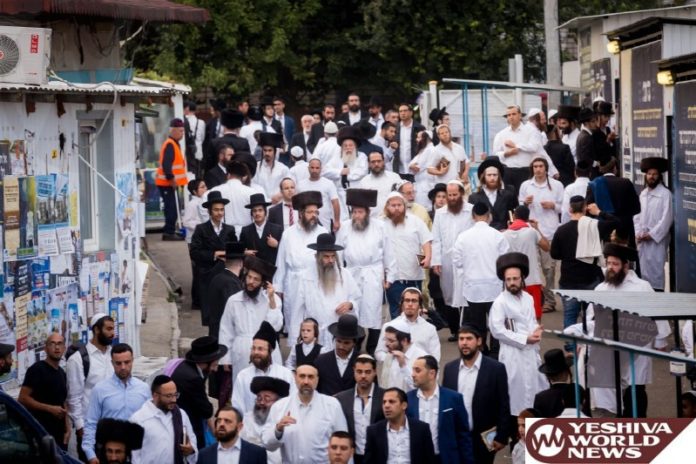
Tens of Thousands at Tikkun Haklali on Erev Rosh Hashanah in Uman

0

Tens of Thousands at Tikkun Haklali on Erev Rosh Hashanah in Uman


Pyongyang – No Long-range Missiles, North Korea Military Parade Features Floats And Flower

0

Pyongyang – No Long-range Missiles, North Korea Military Parade Features Floats And Flower


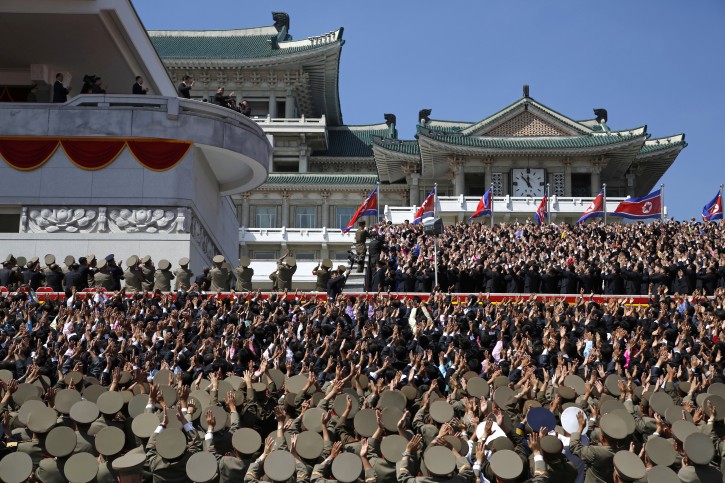
Pyongyang – With no long-range missiles on display, North Korea staged a military parade on Sunday focused on peace and economic development, filled with colored balloons and flowers to mark the 70th anniversary of the country’s founding.

A sea of spectators watched the parade as tens of thousands goose-stepping soldiers and columns of tanks drove past a review stand where North Korean leader Kim Jong Un took the salute.

Unlike in previous years, there were no inter-continental missiles on display. And there were no nuclear tests to mark the day, as has happened in each of the last two years.

North Korea routinely uses major holidays to showcase its military capabilities and the latest developments in missile technology.

But that has been dropped this year, underlining Kim’s stated aim for denuclearizing the Korean peninsula and his recent meetings with South Korean President Moon Jae-in and summits with U.S. President Donald Trump and Chinese President Xi Jinping.

The theme for the celebrations this year was unifying the Korean peninsula, divided since the 1950-53 Korean War. Floats on unification passed by a throng of North Koreans waving unified Korea flags.

“All Koreans should join forces to accomplish unification in our generation. Unification is the only way Koreans can survive,” said an editorial in North Korea’s party newspaper Rodong Sinmun.

Kim and Moon will meet in Pyongyang on Sept. 18-20 for the third time this year and discuss “practical measures” towards denuclearization, officials in Seoul have said.

Kim was seen laughing and holding hands up with a Chinese special envoy as he oversaw the festivities at Pyongyang’s main Kim Il Sung square on a clear autumn day. Kim waved to the crowd before leaving but did not make any public remarks.

North Korea has invited a large group of foreign journalists to cover a military parade and other events to mark the 70th anniversary of its founding.

That includes iconic mass games that Pyongyang is organizing for the first time in five years, a huge, nationalist pageant performed by up to 100,000 people in one of the world’s largest stadiums.

Earlier on Sunday, Kim visited the mausoleum where his grandfather, the country’s founder, and his father lie in state, according to state media.

A concert on Saturday night attended by the titular head of state, Kim Yong Nam, and foreign delegations featured little in the way of martial messaging or images, with only a few shadowy American bombers shown briefly in footage of the 1950-1953 Korean War.


Florence Could Hit East Coast As Powerful Hurricane

0

Florence Could Hit East Coast As Powerful Hurricane


The U.S. East Coast could be hit with a powerful hurricane next week as Tropical Storm Florence continues to strengthen as it moves toward the mainland, forecasters said Saturday.

Florence is expected to become a major hurricane by Monday, the National Hurricane Center said, adding that “a significant phase of intensification” is expected late Saturday.

The Miami-based weather center said although the storm could intensify to a Category 4 hurricane by midweek, its path was still unclear.

“Florence is forecast to be a dangerous major hurricane near the southeast U.S. coast by late next week, and the risk of direct impacts continues to increase,” the hurricane center said Saturday.

Officials in the Carolinas warned residents to prepare and to brace for impact.

Governors in both South Carolina and Virginia declared a state of emergency Saturday to give their states time to prepare for the possible arrival of the storm. South Carolina Gov. Henry McMaster emphasized that there’s no way to know yet when and where the storm will hit land, or when evacuations might be called.

On Friday, North Carolina Gov. Roy Cooper declared a state of emergency and urged residents to use the weekend to prepare for the possibility of a natural disaster.

“We are entering the peak of hurricane season and we know well the unpredictability and power of these storms,” Cooper said.

The U.S. Navy is making preparations this weekend for its ships in the Hampton Roads area to leave port. The U.S. Fleet Forces Command said in a news release Saturday that the ships will get ready in anticipation of getting under way Monday to avoid storm damage.

Adm. Christopher Grady said in a statement that the decision was based on Florence’s current track, which indicates the area could see strong sustained winds and storm surges.

The news release notes that plans could change if forecasts indicate a decrease in the strength or change in the track of the storm.

Swells generated by Florence are affecting Bermuda and could cause dangerous rip currents and coastal flooding Saturday in areas including coastal Delaware and New Jersey, the National Weather Service said.

At 5 p.m. EDT, the hurricane center said Florence’s maximum sustained winds were estimated to be 70 mph (110 kph). The storm was centered about 810 miles (1305 kilometers) southeast of Bermuda and moving west at 5 mph (7 kph).


Source: The Jewish World

Missionaries Are Targeting Baalei Teshuva In Uman

0

Missionaries Are Targeting Baalei Teshuva In Uman

September 7, 2018 10:19 am


Missionary activities in Eretz Yisrael have been increasing over recent years R”L, as these individuals remain committed to their goal, to pull Jews away from avodas Hashem. With Rosh Hashanah approaching, Yad L’Achim is warning the tzibur at large that missionaries are concentrating efforts in Uman, amid the awareness that tens of thousands of Jews from Israel, the US and other countries, will be visiting the tziyun of Rav Nachman of Breslov ZT”L.

Yad L’Achim warns that Christian missionaries are working the streets of Ukraine, handing out literature and speaking with people in order to persuade Jews to leave their religion. Some of the flyers being distributed by missionaries are printed in Yiddish.

A Yad L’Achim representative spoke with BeChadrei Chareidim, and they report the missionaries are quite aware that some of the mispallalim joining the tens of thousands in Uman for Rosh Hashanah are just in the beginning of their baal teshuva process; and are easier targets as persuading them to change direction chas v’sholom may be easier than one who is firm in his Avodas Hashem.

In fact, after last Rosh Hashanah, Yad L’Achim learned missionaries began operating in Uman, but it was too late for last year. However, there is time to make the tzibur aware of the lurking danger this year, ahead of Rosh Hashanah.

Yad L’Achim is not known for taking a passive attitude, and this is the case here as well, as its shluchim will be on the look out in Uman too. The organization urges anyone who may have seen missionaries operating in Uman to phone their Uman number, +38-093-36-36-148. The number is Eretz Yisrael is 03-6154-100.


Source: The Yeshiva World

Throwing it all Away -By Rabbi Jonathan Gewirtz, The Observant Jew

Throwing it all Away

By: Rabbi Jonathan Gewirtz, The Observant Jew

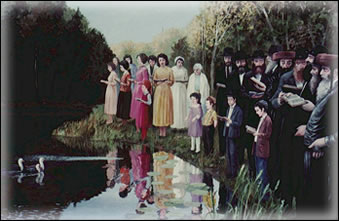
On Rosh HaShana, there is an ancient custom to go to a body of water and recite various pesukim as we “cast off our sins.” At the end of Micha, the Navi speaks of HaShem casting our sins into the depths of the sea (7:19.) People are often careful to go to a place that has fish living in it, for various reasons.

The origins of the custom are as murky as some of the places people practice it, but it is a cleansing ritual and people tend to connect with it, though the Vilna Gaon was suspicious of it and didn’t practice it. What exactly it effects and how is not my focus today though.

Just as Pesach has become a time of “Spring Cleaning” having nothing to do with the Yom Tov itself, Tashlich has become, for many, a time to feed the fish and ducks our old challa or bagels which has no religious significance. Besides for the fact that doing it on Yom Tov may cause halachic problems since these animals are not your pets or possessions, even feeding them during the week can be problematic.

First of all, it can be against the law. Many municipalities have laws against feeding the birds in parks, yet often people seem to overlook these rules in favor of carrying out this custom, which many poskim do not even consider part of the minhag of Tashlich. By insisting on breaking the law to drop a few crumbs, we’re throwing away the benefit of the whole ceremony by acquiring the terrible sin of Chillul HaShem. It appears to onlookers that Jews don’t value laws and can choose to separate themselves from a community, thinking they are above the law. (A great source of anti-Semitism, by the way.)

Some people are even more machmir on Tashlich. They insist on continuing to symbolically throw their sins away by tossing used cans, wrappers, and potato chip bags on the ground during their Chol haMoed trips. The same concept of losing more than you gain applies, but we’ll burn that bridge when we get to it.

A second reason not to feed the ducks or fish is that too much food may harm the animals, leading to tzar baalei chaim. Here’s a sin you figured you’d never transgress and now you’ve got a way to do it while trying to be nice!

Now let’s analyze this a little more. What do we hope to achieve by “casting off our sins” and what’s the connection to water? Why does the Navi ask HaShem to cast our sins to the depths of the sea instead of burning them in a fire? Perhaps we don’t want the sins to “vanish.”

The Gemara talks about throwing things into the sea to prevent a person from benefitting from them. At the bottom of the water, a coin will remain intact but unused. Perhaps the prophet wants the sins to be cast to the depths of the sea where they won’t tempt people to repeat them. In essence, we’re not asking for the sins to be “swallowed up” because the Yetzer Hara will always find ways to go after people. Rather, we’re asking that the sins and opportunities for sin be taken out of our range so we can’t sin again.

There’s another point as well. Imagine you were on a boat and dropped your wallet or camera into the water. It’s gone. You’re not getting it back but every time you pass that place you will think about what happened and what you lost. It happened with me in Florida when a baseball cap from Montana blew off my head and into the waves of the Atlantic Ocean. Sometimes I will still look out to sea and comment, “Somewhere out there is my cap.”

When we go to a body of water, which represents permanence in halacha (they are used as landmarks for Gitin, for example) and we ritually throw away our sins, we don’t expect them to be “gone.” Rather, we desire that whenever we pass that place, we remember that hiding in the depths are the things that caused us to be unfaithful to HaShem. There, beneath the waves, are waiting the mistakes and errors that we do not wish to repeat. They remain there as a warning to ourselves.

The Registrar in my Yeshiva used to have a sign in his office: “The best way to break a bad habit is to drop it.” When we do Tashlich, it’s not the fish eating the crumbs that symbolizes the sins vanishing. Instead, the symbolism of the act of casting our sins to the depths where we won’t be able to reach them again refers back to our decision not to repeat our mistakes.

So, if we’re looking for ways to separate ourselves from sin, let’s make sure that we watch out for the hidden Evil Inclination, who will stoop to anything to get us to sin – even disguising it as a mitzvah. Don’t throw it all away by letting him fool you.


© 2018 – All Rights Reserved

Did you enjoy this column? Feedback is welcome and appreciated. E-mail info@JewishSpeechWriter.com to share your thoughts. You never know when you may be the lamp that enlightens someone else.


Israeli jets hit Gaza incendiary balloon squad

0

Israeli jets hit Gaza incendiary balloon squad

Attack comes after terrorists seen launching flaming balloons and kites into Israeli territory, disrupting a prolonged period of relative calm on Israel’s volatile southern border as Hamas and Jerusalem continue talks to reach a long-term ceasefire.


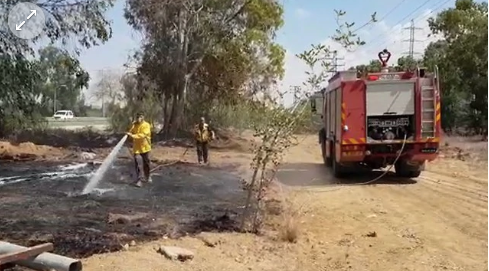
Israeli jets struck an incendiary balloon squad in northern Gaza on Friday morning after terrorists were seen launching flaming balloons and kites into Israeli territory. 

The attack disrupts a prolonged period of relative calm on Israel’s volatile southern border, after the defense establishment recorded a significant drop in the number of incendiary balloons from the Hamas-ruled strip that had terrorized Israel’s southern residents and incinerated thousands of acres of farmland and landscape. 

The latest launch and IAF retaliation is the first to have taken place in recent weeks. 

In August, it was reported that Israel and Hamas had reached a ceasefire under Egyptian mediation, as Israelis living in the south urged the government to stem the daily launching of incendiary balloons and near-daily barrage of rockets that threatened to drag the two sides into yet another conflict.

With details of the progress of the ceasefire talks scant, Gaza’s Hamas leader Yahya Sinwar said on Tuesday that no arrangement has been reached with Israel to put an end to daily hostilities, despite the quiet that has prevailed on the volatile border in recent days.

“I will state clearly: So far there is no agreement and not outline for an agreement for a ceasefire with Israel,” the terror leader during a Hamas conference in the coastal enclave.

More mass protests are expected to grip the Gaza border on Friday afternoon.

Source: YNET News

5 Reasons Pomegranates Are The Crown Jewel Of Fruits

0

5 Reasons Pomegranates Are The Crown Jewel Of Fruits


“This article was re-published with permission from NoCamels.com – Israeli Innovation News.


It’s pomegranate season! This ruby-red super-fruit with a crown is one of the world’s most celebrated foods. Today’s crop varieties are said to have originated in Iran or Afghanistan, but they’ve been growing in Israel and the region for thousands of years.

Israeli horticultural researchers are known for introducing new types of pomegranates to the market, which are shipped to European clients. Of course, some of the local produce is kept in Israel: especially as the pomegranate (“rimon” in Hebrew) is one of the ritual foods for the Rosh Hashana holiday (Jewish New Year), which begins this weekend.

The pomegranate actually has numerous meanings and cultural references and is deemed a healthy – even medicinal – fruit. Already a pomegranate fan? Not one yet?

Here are 5 reasons to love the pomegranate:

They’re nutritional

Pomegranates may very well be the world’s most healthy fruits. These nutrient-rich ruby red orbs are bursting with vitamins, antioxidants, and minerals.

“Pomegranates have an amazing amount of Vitamin C, about a third of the recommended daily amount, and the fruit’s red-colored flesh contains high levels of antioxidants. As such, pomegranates have been shown to have anti-tumor properties and help ward off cancer, support a healthy heart, and lower blood pressure,” Yael Inbar, a health coach in Tel Aviv, tells NoCamels.

“To continue reading this article on NoCamels.com, click here.” 

Crisis on campus: A new generation of galvanized young Jews learns how to fight anti-Semitism

0

Crisis on campus: A new generation of galvanized young Jews learns how to fight anti-Semitism

Equipping a cadre of students with debating tools, historical information, legal support, trips to Israel and more, so that Israel has a place on the university playing fields.

 IfNotNow has a plan. It’s determined, according to its website, to create nothing less than “a movement led by young Jews to reclaim the mantle of Jewish leadership from the out-of-touch establishment.” Or, more specifically, to be “the generation to end our community’s support for the occupation.”

Since the term “occupation” is increasingly equated with the very existence of the State of Israel, these words written by young Jews are chilling to many for whom Israel is at the very least a safety net preventing future Holocausts, and at its height the answer to a prayer by generations of Jews who never had the opportunity to find life-saving sanctuary within its borders.

With a 2016 Pew Research Center report showing 27 percent of American young adults siding with the Palestinians versus 9 percent a decade earlier, the Anti-Defamation League (ADL) reporting a 57 percent climb in reports of anti-Semitism in the United States, including physical attacks and vandalism, last year not one of the 50 states escaped anti-Semitic incidents, many of them on college campuses.INN is not a lone gunman, but it’s emblematic of the explosive growth of the anti-Israel forces on American campuses—one that threatens to take more prisoners as school starts up again. Forces that include not only student groups funded by Arab and Arab sympathizing groups and anti-Israel faculty, many of whose salaries are paid by funded chairs that often bring millions into a university’s coffers.

Meanwhile, with many of its children and grandchildren hesitating to wear a Jewish star or an Israel Defense Forces’ sweatshirt for fear of verbal or physical attack, and many others joining their friends’ and professors’ demonization of Israel, the Jewish world appears to be slowly awakening from its slumber determined to stem the onrushing tide. And a new generation of strong Jews is beginning to emerge forged by the fire.

Determined not to leave Jewish students (and Israel itself) undefended on campus, organizations can be seen spread between three “battalions”:

  1. Information, Organization and Legal Support

Here are some key players, in alphabetical order:

AIPAC. Known for training college students on the intricacies of Israel’s history and current situation, the organization supports efforts on campus to advocate for Israel as part of “building broad coalitions in support of the U.S.-Israel relationship.” Its underlying focus is on “the values of human dignity and freedom shared by our two sister democracies.”

Alpha Epsilon Pi (AEPi). The largest international Jewish fraternity makes it a point to “create a pro-Israel presence,” says Israel department head Julian Markowitz. One potent defense against the BDS movement: encouraging the brothers to run for student government, where they can campaign and vote against it from the inside. “I never expected the magnitude here at Cornell [University in Ithaca, N.Y.],” says incoming senior Jay Sirot. “There was a huge BDS campaign during Pesach and groups of professors in the middle of campus criticizing Israel—a long list of them signed a violently anti-Israel letter in the paper. A pro-Israel stance separates you socially, and if your professors are against it, it’s uncomfortable to be for it. But anti-Israel forces can only win if open dialogue is shut down. That’s why we create opportunities for honest discussion and hearing both sides.”

Students attend Israel’s 70th Independence Day Celebration at University of California, San Diego on April 10, 2018 in La Jolla, United States. Credit: Randy Shropshire/Getty Images for AEPi.

Alums for Campus Fairness (ACF). A little-recognized force for helping students caught in the crosshairs of anti-Israel forces is a school’s alumni base, according to ACF executive director Avi Gordon. “We hear from countless students on our 25 campuses who are bullied for defending Israel, and we believe that by creating a unified alumni voice, they’ll know they’re not alone.” With schools relying on alumni for financial support and their reputation, Gordon adds that “alumni, including the 700 in our UCLA chapter, and a real anti-Israel environment can be the added pressure a school needs to tip the balance to reject BDS and stop the demonization of Israel.”

One fly in the alumni ointment, argues Hamilton College history professor and Alexander Hamilton Institute for the Study of Western Civilization director Robert Paquette, “is that multi-million dollar endowments by Arabs and their sympathizers can render colleges immune to pressure from outside, including their alumni.”

AMCHA Initiative is a watchdog with eyes and ears trained on campuses across North America. Known best for its studies of BDS and other anti-Israel activities, AMCHA is also committed to “defend and protect Jewish students from anti-Semitic harassment on campuses,” says executive director Tammi Rossman-Benjamin. “We want to ensure they can express their identity safely and let them know we have their backs.”

Anti-Defamation League (ADL)’s slice of the campus-advocacy pie may be its interaction with administrations (as in a recent communications with Stanford University in Palo Alto, Calif., following a student resident advisor’s online attack on Jewish students), as well as training campus police to handle anti-Israel and anti-Semitic violence. In addition, the ADL distributes a video “tool kit” for students and parents, featuring students who share their encounter with anti-Israel bias on their campuses, their reactions and how they dealt with it. (See: https://www.adl.org/think-plan-act)

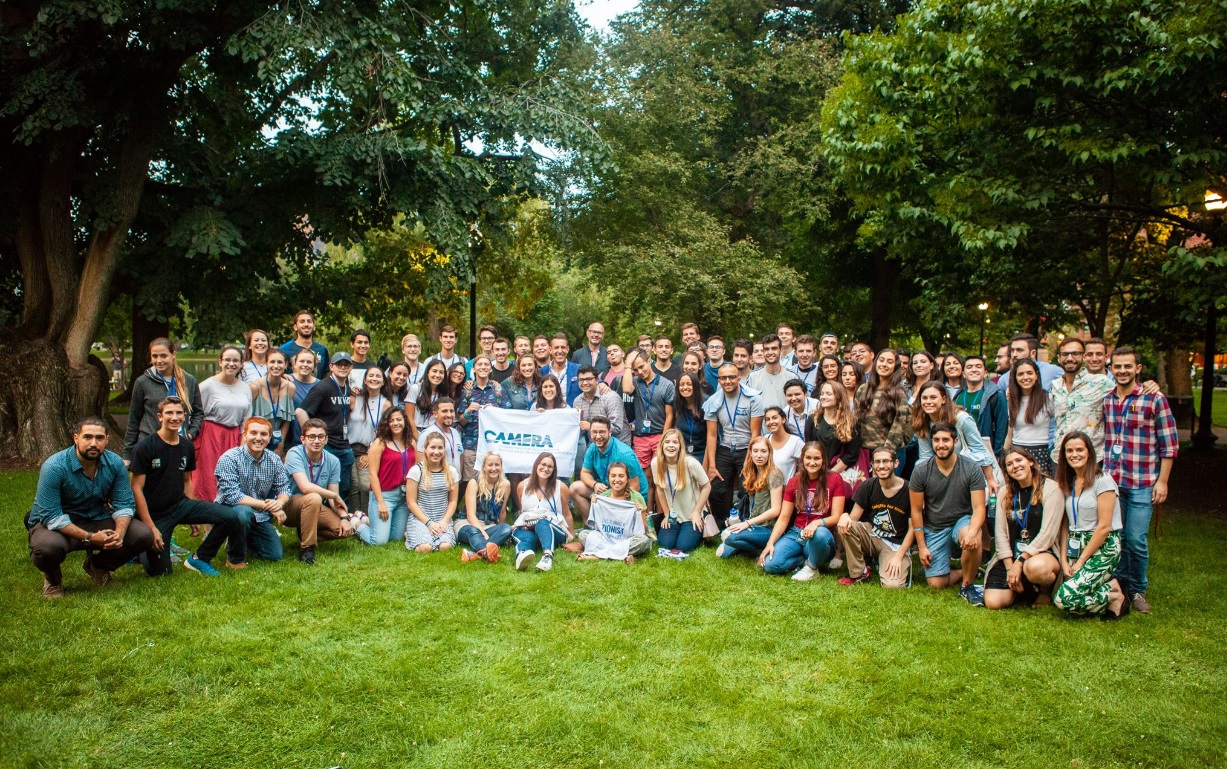
CAMERA, long known as a tireless media watchdog, now brings its expertise to campus with their training program and the dozens of CAMERA Fellows monitoring their campus media, writing op-eds and coordinating programs with other pro-Israel groups. “We go where there is a need,” said CAMERA executive director Andrea Levin. “With a focus on where there’s weak or underfunded pro-Israel structure—or none at all—and the students need support the most.”

More than 80 students from 70 different campuses attended the 2018 CAMERA Conference to learn tools on addressing anti-Israel sentiment on college campuses. Credit: CAMERA on Campus.

Maccabee Task Force (MTF), formerly Campus Maccabees, is focused on building strong coalitions to defeat BDS and other expressions of anti-Israel bias wherever and whenever it raises its head. Funded largely by Sheldon and Miriam Adelson, MTF comes onto each of the 40 campuses with an open mind. “Our job is to listen to the students and the players,” says executive director David Brog. “Then we can help devise a comprehensive strategy—not just a few one-off events—tailored for the realities on the ground there and provide the resources they need to do the job. We then share each success with other schools that might be able to benefit.”

Lawfare is a pro-Israel litigation fund providing pro bono legal services by the 350 lawyers in their network for those dealing with anti-Semitism. And founder and executive director Brooke Goldstein says that Lawfare is increasingly called upon to provide legal services and support to defend Jewish college students against harassment and discrimination. “For too long, the Jewish community has not organized itself to provide basic legal services to Jewish students harassed on campuses,” she says, adding that in their suit against San Francisco State University, for instance, they made the case that “Jewish students have a basic civil right to attend federally funded schools absent unlawful harassment and discrimination … we do everything in our power to defeat this kind of hatred in courts of law.”

StandWithUs (SWU), now in its 18th year of supporting Jewish students and defending Israel, finds itself in increasing demand during this time of mounting tensions on campus. Its Emerson Fellows on 90 campuses bring their peers up to speed on the history and role of the Jewish state, and combat BDS whenever it comes up. SWU also trains high-schoolers each summer to prepare them for the challenges they’re likely to face in college regarding Israel. One focus: how to tell when legitimate criticism of Israel crosses the line into anti-Semitism. “When I saw the first anti-Israel rally at my school, I felt confused and kind of alone,” says Ron Krudo. “But I was lucky; I found a Hillel Israel table and said, ‘Yes, I want to get involved.’ ” Six years later, Krudo heads up SWU’s campus affairs department, where he has a panoramic view of the campus scene and oversees SWU efforts “to proactively share Israel’s story and combat anti-Israel rhetoric. … We work with the students so they aren’t bullied by their anti-Israel professors and friends who are determined to erode support for Israel. A Jewish student who hears someone accusing Israeli soldiers of shooting Arab children needs to be able to counter with the IDF’s code of not shooting defenseless civilians.”

Zionist Organization of America as ZOA Campus works with students on 120-plus campuses across the United States, bringing in speakers, mentoring students and running student leadership missions to Israel. The ZOA’s Center for Law and Justice advocates for Jewish students who face harassment and discrimination on their campuses, including a groundbreaking civil-rights action on behalf of Jewish students following years of harassment at the University of California, Irvine, and has been working on passing other protective legislation.

  1. Strengthening Jewish Knowledge and Identity

A second battalion follows the reasoning that a student who’s strong and secure in his or her Jewish identity—and carries the mantle of Jewish history, tradition and destiny—is more likely to see supporting Israel as an integral part of their Jewish sense of self.

Hillel. Marching in all three battalions is Hillel, the world’s largest Jewish student organization, with a presence on 550 campuses across North America. “We work closely with a wide range of partners, but we’re also the hub of the wheel, pulling together students from around campus,” says spokesman Matthew Berger. Maintaining that Hillel is “not just about responding to anti-Israel attacks, but about year-round advocacy from the moment they arrive on campus,” Berger adds that Hillels do typically find themselves in the center of the fight against BDS. “Even more important, we engage Jewish students and instill an understanding of the true Israel—her culture, people, values and history. That’s the most effective tactic for fighting the misinformation and the hate.”

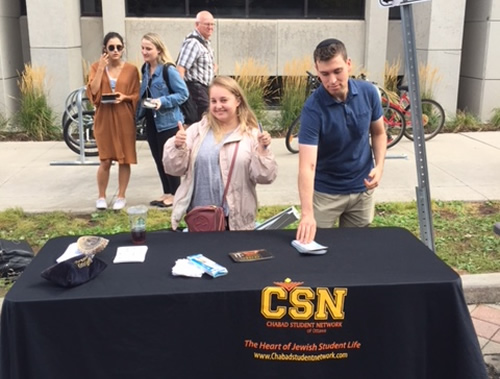
Chabad. With Chabad on Campus centers on 265 campuses in North America, the international Chabad-Lubavitch movement impacts thousands of college students each year. Rabbi Chaim and Yocheved Boyarsky’s home, for instance, is open to the 700 Jewish students at the University of Ottawa. It also serves as informal war room during the school’s BDS campaigns, most recently in March. “All three times they tried to pass it here, many professors were outspoken against Israel, and our students were badly shaken. They saw it as a serious threat to Israel, themselves and Jews in general,” says the rabbi. “And though in the end we’ve able to defeat it, each time it’s a struggle.” Standing up for Israel’s right to exist and defend itself is “a byproduct of what Chabad does on campus,” he adds. “The stronger a student feels about being a Jew, the stronger their love for Israel. It’s that simple.”

Students at a event table for Chabad. Credit: Chabad.

Jews for Judaism is, though much smaller than Chabad, also working on the level of strengthening Jewish students’ love for Israel by building strong Jewish identities. The Los Angeles-based Rabbi Zalman Kravitz got his start fighting against those who missionize Jews. Now, working with bigger campus entities like Chabad and Hillel, “we connect students to an experiential Judaism, and build the critical thinking skills and confidence to challenge accusations with smart questions. When students begin to feel the connection, they’re empowered against attacks on Israel and against missionaries, and they have a tool for life.”

Meor. Jewish education is the way into the Jewish student’s heart and mind for this organization, funded in large part by Olami. “It’s a dangerous formula of one-part liberal notion of victimhood, one-part propaganda and misinformation, and one-part idealistic young people,” says Rabbi Ari Koretzky, who is at the University of Maryland in College Park, Md., one of 20 to have a Meor rabbi on campus. “Jewish education is our real mandate, customized for each student’s background,” he says. “We make sure we support the pro-Israel community, especially in times of BDS, but our basic premise is that by learning Jewishly, you fortify that Israel matters in the broader context of Jewish life and identity.”

  1. Let Them Breathe Israeli Air: Sending Them on Transformational Journeys

With an understanding that a personal experience can turn Israel from theory to reality and is more powerful than fighting hate with facts, many organizations are sending Jewish students, and increasingly, non-Jewish ones as well, to Israel.

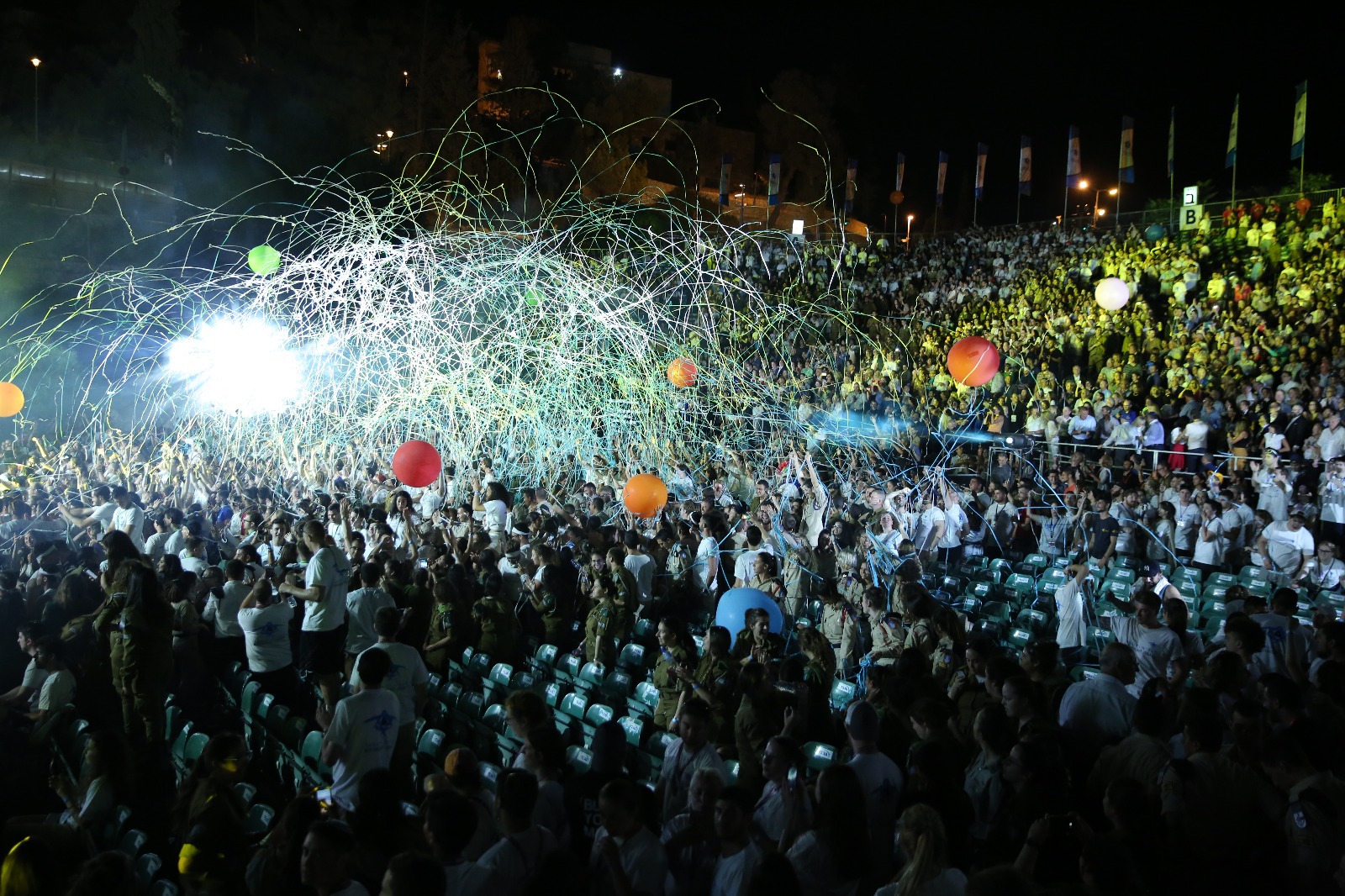
Birthright Israel. Over the past 18 years, Birthright Israel has provided free trips to Israel for a whopping 650,000 Jewish young adults with the $3,000 per-traveler cost covered by donors committed to growing the next generation’s connection to Israel. Many students go on the classic 10-day experience, whereas others choose to follow a special interest, such as active (hiking and climbing, etc.), spiritual, professional, or gay and lesbian culture. (There is also an annual trip for young adults with disabilities.) These specialty Birthrights bring together young Jews who share a passion and, when they succeed, forge a strong bond with Israel both as a country and a people. “Our aim is for participants to become more engaged in Jewish life after the trip, whether through on-campus activities, community groups or even return trips to Israel,” they say in a statement. And, they add, research shows “that participants return home with a better understanding of Israeli society and their own Jewish identity, and feel more comfortable discussing these topics.”  

Other Israel experiences vary in length of time, as well as scope and focus. Such programs as MASA match a student with an internship, volunteer job or course of study, as does Onward Israel, often considered a next-step for Birthright returnees hungry for further engagement with Israel.

Thousands of young Jews attend Birthright mega event. Credit: Yossi Gamzo Latuba.

Over the last 17 years, Hasbara Fellowships, a project of Aish HaTorah, has flown thousands of students to Israel. There they’re trained to be peer educators about Israel when they get back on campus. And each year, TAMID sets up hundreds of business students in summer internships at leading Israeli companies.

“From what I’ve seen this summer, the success of the business community in this little country is astounding—almost a miracle,” said TAMID traveler Columbia University junior Sophia Danzig in the final days of her internship at a Tel Aviv venture-capital firm. “Even though there is a lot of anti-Israel stuff going on my campus, I realized this summer that the people who want to invest in Israel are so much more influential than the ones who want to divest, with companies like Google and Toyota lining up for Israel’s technical know-how.”

Increasingly SWU, Maccabee Task Force and AIPAC are leading trips of mostly non-Jews, including student government reps. Maccabee Task Force for instance took 746 mostly non-Jewish leaders from campuses facing the worst anti-Israel pressures to Israel on dozens of trips. Included were student leaders from African-American, Hispanic and Asian-American groups, along with gays and lesbians—groups that are often themselves marginalized and have historically joined campus anti-Israel coalitions.

“Even the most skeptical among them returned from Israel opposed to the BDS movement’s simplistic scapegoating of Israel,” says MTF chief Brog. “And many of these leaders acted on what they learned by working to oppose BDS at critical junctures upon their return.”

Fighting for Our Generation: Students Standing Up for Israel and Jewish Peoplehood

For Ross Beroff, who just graduated in finance and political science from Northeastern University in Evanston, Ill., the most fulfilling moment of his years on campus had nothing to do with academic achievement. It was when he led the battle cry against the BDS referendum.

“There were a lot of one-on-one conversations and lobbying and telling Israel’s story, and explaining the harm that BDS could do,” he says. “Since I was a senator on the student government at the time, I was able to talk to the other senators and, though it passed at other schools, when it lost at ours by staggering margins … that was a truly great moment for me.”

For Ilan Sinelnikov, the galvanizing process began when his school, the University of Minnesota, held Israel Apartheid Week. “I was very uncomfortable with it, but when I asked other Jewish students, they said to just ignore it. I decided then and there that, if no one else will deal with it, we’re going to have to deal with it ourselves.”

Six years later, Sinelnikov is president of Students Supporting Israel (SSI). With chapters on 40 campuses across the United States, “we’re students supporting Israel, and we need to be visible and proactive, not hiding in a comfortable place,” he says. From bringing in speakers to holding events and counter-demonstrating against anti-Israel student groups like Students for Justice in Palestine, the Jewish Voice for Peace, J Street U and IfNotNow, SSI also focuses on teaching students to “recognize bias and realize that what their professor says isn’t the last word, and that if we don’t speak up for our homeland no one will.”

“Even with anti-Israel forces getting stronger every year and BDS passing at more schools, Jewish students can still make a difference,” adds Sinelnikov. “The only question is how bad do they want it? Bad enough to raise their voice and get yelled at? Bad enough to run for student government, where they can vote BDS down? If we let our enemies win without a fight, it’s going to be much worse, and we’ll be the world’s punching bag again. That much our history has taught us.”

Ever since he witnessed his first anti-Israel demonstration, SWU’s Crudo has seen this as a battle of competing narratives. “Young Jews need to understand who they are, and that Judaism is not just a religion. It’s our story and our narrative—one many of them have never even heard.”

Strong identities can be forged in the hottest of fires. “During the BDS vote, 45 students who never wore kippahs wore them to show solidarity and Jewish pride,” relates Rabbi Boyarsky at Rohr Chabad Student Network at the University of Ottawa. “I told my wife to expect a big crowd that week for Shabbat dinner because BDS reminds us of who we are—that after all these generations, Israel and the Jewish people are still here, that we’re all part of it, and we aren’t going anywhere.”

Hopeful? Yes. But not naive. “It’s very easy for a Jewish student to get lost today, so we have to let each one of them know we need them more than ever,” he says.

“There’s this one Jewish student who always speaks out against Israel. I’ve invited her several times to come to us for Shabbat dinner.” It’s true that she hasn’t shown up yet, the rabbi adds with a sigh. “But I haven’t given up on her.”

Washington – US Adds A Strong 201K Jobs; Unemployment Stays At 3.9 Pct.

0

Washington – US Adds A Strong 201K Jobs; Unemployment Stays At 3.9 Pct.


Washington – Hiring picked up in August as U.S. employers added a strong 201,000 jobs, a sign of confidence that consumers and businesses will keep spending despite the Trump administration’s conflicts with U.S. trading partners.

The Labor Department said Friday that the unemployment rate remained 3.9 percent, near an 18-year low.

Americans’ paychecks grew at a faster pace in August. Average hourly wages rose last month and are now 2.9 percent higher than they were a year earlier, the fastest year-over-year gain in eight years. Still, after adjusting for inflation, pay has been flat for the past year.

The economy is expanding steadily, fueled by tax cuts, confident consumers, greater business investment in equipment and more government spending. Growth reached 4.2 percent at an annual rate in the April-June quarter, the fastest pace in four years.

Most analysts have forecast that the economy will expand at an annual pace of at least 3 percent in the current July-September quarter. For the full year, the economy is on track to grow 3 percent for the first time since 2005.

Consumer confidence rose in August to its highest level in nearly 18 years. Most Americans feel that jobs are widely available and expect the economy to remain healthy in the coming months, according to the Conference Board’s consumer confidence survey.

The buoyant mood is lifting spending on everything from cars to restaurant meals to clothes. Consumers’ enthusiasm is even boosting such brick-and-mortar store chains as Target, Walmart and Best Buy, which have posted strong sales gains despite intensifying competition from online retailers.

In August, factories expanded at their quickest pace in 14 years, according to a survey of purchasing managers. A manufacturing index compiled by a trade group reached its highest point since 2004. Measures of new orders and production surged, and factories added jobs at a faster pace than in July.

Not all the economic news has been positive. Higher mortgage rates and years of rapid price increases are slowing the housing market. Sales of existing homes dropped in July for a fourth straight month.

And wages are still rising only modestly, even after more than nine years of economic expansion and an ultra-low unemployment rate.

Many economists also worry that President Donald Trump will soon follow through on a threat to impose tariffs of up to 25 percent on $200 billion of imports from China. That would be in addition to $50 billion in duties already imposed. That move could shave as much as a quarter-point off growth over the next year, Mark Zandi, chief economist at Moody’s Analytics, has estimated.

For now, there’s little sign that companies are worried enough about a trade war to slow hiring. Businesses are increasingly reluctant to even lay off workers, in part because it would be difficult to replace them at a time when qualified job applicants have become harder to find.

On Thursday, the government said the number of people seeking unemployment benefits — a proxy for layoffs — amounted to just 203,000 last week, the fewest total in 49 years.

WP Twitter Auto Publish Powered By : XYZScripts.com