Home Blog Page 1138

Japan earthquake: death toll rises in Hokkaido

0

Japan earthquake: death toll rises in Hokkaido

Dozens missing after tourist hotspot hit by landslides during Thursday’s 6.7-magnitude quake

The aftermath of a large landslide that occurred after an earthquake hit Hokkaido, in northern Japan. Photograph: Jiji Press/EPA


The death toll from a powerful earthquake that hit Hokkaido has doubled to at least 16, according to Japan’s prime minister, Shinzo Abe, with more than half the island’s 5.3 million residents still without power.

Another 26 people were missing, disaster management authorities said.

The 6.7-magnitude quake, which hit before dawn on Thursday, triggered landslides that buried houses and paralysed Hokkaido with widespread power and transport cuts.

The death toll had been put at eight overnight but broadcaster NHK cited Abe in reporting the new total soon after he held an emergency meeting early on Friday.

The island, a tourist destination known for its mountains, lakes and seafood, lost all power after the quake when Hokkaido Electric Power Co shut its fossil fuel-fired power plants as a precaution.

The quake was the second disaster to hit Japan this week alone after a summer during which the country has been battered by deadly typhoonsflooding and a record heatwave.

Kansai international airport has been shut since Typhoon Jebi ripped through Osaka on Tuesday, although some domestic flights operated by Japan Airlines (JAL) and ANA’s low-cost carrier Peach Aviation resumed on Friday, the carriers said.

At Hokkaido’s main airport, New Chitose, JAL was preparing to restart some flights on Friday, a spokesman said. ANA cancelled all morning flights but would resume operations as normal in the afternoon, a spokesman said.

JR Hokkaido planned to resume bullet train operations from midday. It was also trying to resume other train services on Friday afternoon, a spokesman said.

However, manufacturers were still being affected by power outages. Toyota Motor Corp’s Tomakomai factory, which makes transmissions and other parts, said operations remained suspended indefinitely until power was restored, a spokesman said.

Toppan Printing’s operations at a plant in Chitose, which makes food packages, would remain suspended until it regained power, a spokesman said.

Cultural events were also affected, with a soccer friendly between Japan and Chile scheduled for Friday in Sapporo called off.

Source: The Guardian


Brazil far-right candidate Bolsonaro in serious condition after stabbing

0

Brazil far-right candidate Bolsonaro in serious condition after stabbing

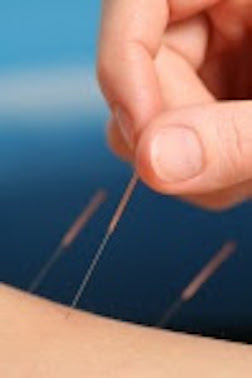
Dr. Mindy Boxer – Treating Autoimmune Disease with Acupuncture


Over 50 million Americans suffer from autoimmune disease including rheumatoid arthritis, lupus, thyroid disease, Addison’s disease, pernicious anemia, celiac disease, multiple sclerosis, myasthenia gravis and Guillain-Barré syndrome. An autoimmune disease occurs when the body’s immune system attacks healthy tissue. Due to the complexity of treating autoimmune disorders, integrative medicine solutions including acupuncture and Oriental medicine have received much attention as successful therapies in their treatment. Acupuncture is specifically noted for its use in pain relief, regulating the immune system, managing symptoms and improving quality of life.

What Causes Autoimmune Disease?

Under normal conditions, an immune response cannot be triggered against the cells of one’s own body. In certain cases, however, immune cells make a mistake and attack the very cells that they are meant to protect. This can lead to a variety of autoimmune diseases. They encompass a broad category of over 100 diseases in which the person’s immune system attacks his or her own cells and tissue.

The exact mechanisms causing these changes are not completely understood, but bacteria, viruses, toxins, and some drugs may play a role in triggering an autoimmune process in someone who already has a genetic (inherited) predisposition to develop such a disorder. It is theorized that the inflammation initiated by these agents–toxic or infectious–somehow provokes in the body a “sensitization” (autoimmune reaction) in the involved tissues.

As the disease develops, vague symptoms start to appear, such as joint and muscle pain, general muscle weakness, possible rashes or low-grade fever, trouble concentrating, or weight loss. Numbness and tingling in hands and feet, dry eyes, hair loss, shortness of breath, heart palpitations, or repeated miscarriages may also indicate that something is wrong with the immune system.

How Acupuncture Treats Autoimmune Disorders

According to Oriental medicine, autoimmune disorders occur when there is an imbalance within the body. Imbalance can come from an excess or deficiency of Yin and Yang that disrupts the flow of Qi, or vital energy, through the body. Acupuncture is used to help the body restore balance, treating the root of the disorder, while specifically addressing the symptoms that are unique to each individual.

Clinical research has shown that acupuncture causes physical responses in nerve cells, the pituitary gland and parts of the brain. These responses can cause the body to release proteins, hormones and brain chemicals that control a number of body functions. It is proposed that, by these actions, acupuncture affects blood pressure, body temperature and the immune system.

In addition to acupuncture, your treatment program to manage your autoimmune disorder may involve a combination of therapies, including stress reducing exercises, moderate physical activity, herbal medicine, nutritional support and bodywork.

Addison’s disease, also known as adrenal insufficiency, occurs when the adrenal gland cannot produce adequate amounts of the hormones cortisol and aldosterone. This can be a serious and potentially life-threatening situation, as the adrenal gland influences many essential functions in the body. The risk of getting this disease is the same for all people, regardless of age and other factors. Signs and symptoms may take months to appear, or they may develop very quickly and unexpectedly.

When determining your diagnosis, all symptoms are assessed, even ones that may not seem directly related to Addison’s disease. This is because acupuncture and Oriental medicine has the unique ability to treat the whole person and not just the disease. This means each patient suffering from Addison’s disease could potentially have a different diagnosis and therefore a different acupuncture treatment plan.

For example, if a patient experiences muscle weakness and diarrhea as the main complaints, an acupuncture and Oriental medicine practitioner may determine that spleen deficiency plays an important role in the way the disease presents itself. Perhaps this patient will receive an acupuncture treatment that emphasizes a strengthening of the spleen.

According to acupuncture and Oriental medicine, some functions of the spleen include keeping the bowel’s movements running smoothly and helping maintain muscle and limb strength. So, no matter what your specific complaints may be, acupuncture and Oriental medicine is equipped to help you manage the signs and symptoms of Addison’s disease.

Anti-Inflammatory Recommendations ~

  1. Eat a whole food, Anti-Inflammatory Diet. Focus on Anti-Inflammatory foods including Wild Fish and other sources of Omega-3 Fats, red and purple Berries (these are rich in Polyphenols), Dark Green Leafy Vegetables, orange Sweet Potatoes, and Nuts. Add Anti-Inflammatory Herbs, including Turmeric (a source of Curcumin), Ginger, and Rosemary, to your diet daily. Eliminate Inflammatory foods such as refined, Omega-6, and Inflammatory oils, including Corn, Soy, and Safflower oils.
  2. Check for hidden infections.These include Yeast, Viruses, Bacteria, and Lyme. Check with me about Functional Testing for these.
  3. Check for hidden Food Allergies.I can do this with IgG food testing. Alternately, we can discuss doing a 10-Day Detox Program, which is designed to eliminate most food allergens.
  4. Test for Celiac Disease.Another Blood Test that can be ordered.
  5. Test for Heavy Metal Toxicity. Mercury and other Metals can cause Autoimmunity.
  6. Fix your Gut. About 60 percent of your Immune System lies right under the single-cell-layer lining of your Gut. If this surface breaks down, your Immune System will get activated and start reacting to foods, toxins, and bugs in your gut. The easiest way to begin healing your Gut involves eating a Whole Food, Anti-Inflammatory Diet and removing Gluten and other Food Sensitivities.
  7. Implement Nutritional Supplements. Nutrients like Fish Oil, Vitamin C, Vitamin D, and Probiotics can help calm your Immune response naturally. Also consider Anti-Inflammatory nutrients like Quercetin, Grape Seed extract, and Rutin.
  8. Exercise regularly.Regular Exercise is a natural Anti-Inflammatory. You don’t have to go to the gym, run on a treadmill, and pump iron to stay in shape. Just start moving around more. Go for walks with your friends or family. Go out and do some gardening. Play Frisbee in the park with your kids. Pick up a tennis racket and just knock a tennis ball around. Anything you can do to get out and move your body can be considered exercise. So don’t think that you absolutely have to go to the gym to get fit. Just use your body more.
  9. Practice deep Relaxation.Stress worsens your Immune response. Calming techniques including regular Acupuncture treatments, Yoga, deep breathing, massage, Meditation CDs can reduce Stress and Anxiety to promote relaxation.

Sleep for 8 hours every night. The research is clear: Lack of sleep or poor sleep damages your Metabolism, causes cravings for Sugar and Carbs, makes you eat more, and drives up your risk of numerous conditions from Diabetes, and AutoImmune Disease. Getting enough sleep and sleeping soundly are essential for vibrant health and reversing Inflammation.


Rabbi Lord Jonathan Sacks -The World is Waiting for You Nitzavim 5778

0


Something remarkable happens in this week’s parsha, almost without our noticing it, that changed the very terms of Jewish existence, and has life-changing implications for all of us. Moses renewed the covenant. This may not sound dramatic, but it was.

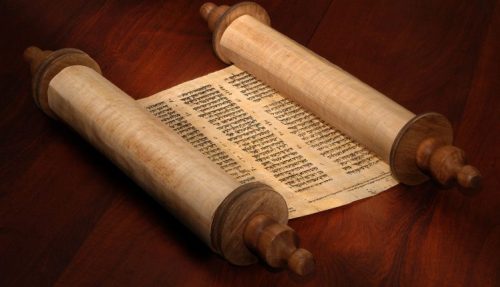
Thus far, in the history of humanity as told by the Torah, God had made three covenants. The first, in Genesis 9, was with Noah, and through him, with all humanity. I call this the covenant of human solidarity. According to the sages it contains seven commands, the sheva mitzvoth bnei Noach, most famous of which is the sanctity of human life: “He who sheds the blood of man, by man shall his blood be shed, for in the image of God did God make man” (Gen. 9:6).

The second, in Genesis 17, was with Abraham and his descendants: “When Abram was ninety-nine years old, the Lord appeared to him and said, ‘I am God Almighty. Walk before Me and have integrity, and I will grant My covenant between Me and you … I will establish My covenant between Me and you and your descendants after you throughout the generations as an eternal covenant.’” That made Abraham the father of a new faith that would not be the faith of all humanity but would strive to be a blessing to all humanity: “Through you all the families of the earth will be blessed.”

The third was with the Israelites in the days of Moses, when the people stood at Mount Sinai, heard the Ten Commandments and accepted the terms of their destiny as “a kingdom of priests and a holy nation.”

Who, though, initiated these three covenants? God. It was not Noah, or Abraham, or Moses, or the Israelites who sought a covenant with God. It was God who sought a covenant with humanity.

There is, though, a discernible change as we trace the trajectory of these three events. From Noah God asked no specific response. There was nothing Noah had to do to show that he accepted the terms of covenant. He now knew that there are seven rules governing acceptable human behaviour, but God asked for no positive covenant-ratifying gesture. Throughout the process Noah was passive.

From Abraham, God did ask for a response – a painful one. “This is My covenant which you shall keep between Me and you and your descendants after you: every male among you shall be circumcised. You must circumcise the flesh of your foreskin. This shall be the sign of the covenant between Me and you” (Gen., 17:10-11). The Hebrew word for circumcision is milah, but to this day we call it brit milah or even, simply, brit – which is, of course, the Hebrew word forcovenant. God asks, at least of Jewish males, something very demanding: aninitiation ceremony.

From the Israelites at Sinai God asked for much more. He asked them in effect to recognise Him as their sole sovereign and legislator. The Sinai covenant came not with seven commands as for Noah, or an eighth as for Abraham, but with 613 of them. The Israelites were to incorporate God-consciousness into every aspect of their lives.

So, as the covenants proceed, God asks more and more of His partners, or to put it slightly differently, He entrusts them with ever greater responsibilities.

Something else happened at Sinai that had not happened before. God tells Moses to announce the nature of the covenant before making it, to see whether the people agree. They do so no less than three times: “Then the people answered as one, saying, ‘All that the Lord has spoken we will do’” (Ex. 19:7). “The people all responded with a single voice, ‘We will do everything the Lord has spoken’” (Ex. 24:3). “The people said, ‘All that the Lord has spoken we will do and heed’” (Ex. 24:7).

This is the first time in history that we encounter the phenomenon enshrined in the American Declaration of Independence, namely “the consent of the governed.” God only spoke the Ten Commandments after the people had signalled that they had given their consent to be bound by His word. God does not impose His rule by force. At Sinai, covenant-making became mutual. Both sides had to agree.

So the human role in covenant-making grows greater over time. But Nitzavim takes this one stage further. Moses, seemingly of his own initiative, renewed the covenant:

All of you are standing today before the Lord your God—your leaders, your tribes, your elders and officials, all the men of Israel, your children, your wives, the strangers in your camp, from woodcutter to water-drawer — to enter into the covenant of the Lord your God and its oath, which the Lord your God is making with you today, to establish you today as His people, that He may be your God, as He promised you and swore to your ancestors, Abraham, Isaac and Jacob. (Deut. 29:9-12)

This was the first time that the covenant was renewed, but not the last. It happened again at the end of Joshua’s life (Josh. 24), and later in the days of Jehoiada (2 Kings 11:17),  Hezekiah (2 Chron. 29) and Josiah (1 Kings 23: 1-3; 2 Chron. 34: 29-33). After the Babylonian exile, Ezra and Nehemiah convened a national gathering to renew the covenant (Nehemiah 8). But it happened first in today’s parsha.

It happened because Moses knew it had to happen. The terms of Jewish history were about to shift from Divine initiative to human initiative. This is what Moses was preparing the Israelites for in the last month of his life. It is as if he had said: Until now God has led – in a pillar of cloud and fire – and you have followed. Now God is handing over the reins of history to you. From here on, you must lead. If your hearts are with Him, He will be with you. But you are now no longer children; you are adults. An adult still has parents, as a child does, but his or her relationship with them is different. An adult knows the burden of responsibility. An adult does not wait for someone else to take the first step.

That is the epic significance of Nitzavim, the parsha that stands almost at the end of the Torah and that we read almost at the end of the year. It is about getting ready for a new beginning: in which we act for God instead of waiting for God to act for us.

Translate this into human terms and you will see how life-changing it can be. Many years ago, at the beginning of my rabbinical career, I kept waiting for a word of encouragement from a senior rabbinical figure. I was working hard, trying innovative approaches, seeking new ways of getting people engaged in Jewish life and learning. You need support at such moments because taking risks and suffering the inevitable criticism is emotionally draining. The encouragement never came. The silence hurt. It ate, like acid, into my heart.

Then in a lightning-flash of insight, I thought: what if I turn the entire scenario around. What if, instead of waiting for Rabbi X to encourage me, I encouraged him? What if I did for him what I was hoping he would do for me? That was a life-changing moment. It gave me a strength I never had before.

I began to formulate it as an ethic. Don’t wait to be praised: praise others. Don’t wait to be respected: respect others. Don’t stand on the sidelines, criticising others. Do something yourself to make things better. Don’t wait for the world to change: begin the process yourself, and then win others to the cause. There is a statement attributed to Gandhi (actually he never said it[2], but in a parallel universe he might have done): ‘Be the change you seek in the world.’ Take the initiative.

That was what Moses was doing in the last month of his life, in that long series of public addresses that make up the book of Devarim, culminating in the great covenant-renewal ceremony in today’s parsha. Devarim marks the end of the childhood of the Jewish people.  From there on, Judaism became God’s call to human responsibility. For us, faith is not waiting for God. Faith is the realisation that God is waiting for us.

Hence the life-changing idea: Whenever you find yourself distressed because someone hasn’t done for you what you think they should have done, turn the thought around, and then do it for them.

Don’t wait for the world to get better. Take the initiative yourself. The world is waiting for you.

Shabbat Shalom.


1] Of course, the Babylonian Talmud argues that at Sinai God did impose the covenant by force, namely by “suspending the mountain” over the people’s heads. But the Talmud then immediately notes that “this constitutes a fundamental challenge to the authority of the Torah” and concludes that the people finally accepted the Torah voluntarily “in the days of Ahasuerus” (Shabbat 88a). The only question, therefore, is:when was there free consent?

[2] See Brian Morton, ‘Falser words were never spoken,’ New York Times, 29 August 2011. The closest he came was, “If we could change ourselves, the tendencies in the world would also change. As a man changes his own nature, so does the attitude of the world change towards him. … We need not wait to see what others do.”




Ancient Torah Scrolls Spared in Devastating Rio Museum Fire

0

Ancient Torah Scrolls Spared in Devastating Rio Museum Fire


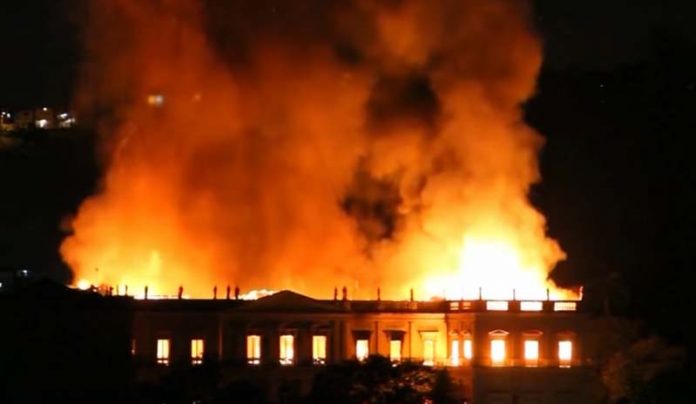
Brazil’s National Museum on Wednesday announced that its exhibit of old Torah scrolls had been removed before the blaze that gutted the place on Sunday, destroying an estimated 90% of its collection.

According to the museum’s deputy director, the building was not insured.

“The Torah is being kept in a safe place,” said a museum statement that was sent to the Associated Press on Wednesday, noting that the scrolls had been removed close to two years ago, but not revealing where.

The scrolls, nine altogether, dating back to the 1400s, are believed to have originated in Yemen. They were acquired in the early 1800s by Brazil’s last king, Dom Pedro II.

The museum’s library of 500,000 books, kept in a separate building, also survived the blaze, according to a museum spokeswoman, who said it was impossible to determine at the moment how much of the collection had survive. “It could be 10%, it could be 15, it could be 20,” she said. “We had a very big loss.”

The museum’s Egyptology collection was completely destroyed, she said.

The blaze at the 200-year-old National Museum of Brazil in Rio de Janeiro, Brazil’s oldest and most important historical and scientific museum, is blamed on cuts in funding and inadequate maintenance. The museum was home to some 20 million items.

According to AP, quoting a Lubavitch official in Rio de Janeiro, the Torah scrolls had been moved to a university library near the museum. The official, Avraham Beuthner, said, “Thank God it’s safe,” noting that the university had promised to let local Jews to see the scrolls.

Source: The Jewish Press

Israeli Wound-Closure Technique Aims To Replace Surgical Suturing Worldwide

0

Israeli Wound-Closure Technique Aims To Replace Surgical Suturing Worldwide


“This article was re-published with permission from NoCamels.com – Israeli Innovation News.


Surgical suturing, commonly known as stitching, has been used for sealing wounds closed as far back as 3000 BC in Ancient Egypt. Since then, this medical technique, using a needle to sew two flaps of skin together, has saved patients recovering from injuries or surgery. But it has remained fundamentally unchanged in the past five millennia.

Four years ago, TopClosure, a mechanism that aids the closure and healing of post-traumatic, surgical, acute and chronic skin wounds, burst onto the scene and generated international headlines. Now, this innovative Israeli-invented device is being used in vital organ surgery to save lives, allowing for speedier recoveries and reducing the risk of infection.

Made with a special polymer that’s been tested to be durable and supportive for suture, TopClosure is specifically designed to collapse just before too much tension starts tearing skin tissues, as stitching big wounds may do. The unique method is likely to improve the current suture practice significantly: it can be used before surgery to prepare the skin incisions, during surgery to relieve tension on the skin, and after surgery as additional fastening support along with stitches.

“To continue reading this article on NoCamels.com, click here.” 


Massive Chilul Shabbos in Ashdod Prevented By Leaked Information

0

Massive Chilul Shabbos in Ashdod Prevented By Leaked Information

September 6, 2018 8:30 am

Following a relative calm in the fight against Chillul Shabbos in Eretz Yisroel, another incident is being prevented in Ashdod, as plans for massive Chillul Shabbos were revealed to authorities ahead of the occurrence. According to a BeChadrei Charedim report, the information about the mass desecration slated to take place at the Ashdod port this coming Shabbos arrived in the hands of the Committee for the Protection of the Shabbos chaired by Yitzchak Goldknoff.

The information was leaked by an anonymous person in one of the government ministries and prompted an emergency letter being sent by Deputy Mayor of Ashdod, Mordechai Lieberman, to the Director of the port and the Minister of Transportation Yisrael Katz. Llieberman demanded that the work planned in the port over Shabbos be cancelled.

The plans called for a large amount of work to take place at the port this Shabbos and on Shabbos Parshas Toldos. The Deputy-Mayor surprised the Minister by providing him with detailed accurate information of the construction work that was planned to be carried out by a Spanish corporation. Even though the corporation is owned by non-Jews, hundreds of Jewish workers, supervisors, and engineers, were contracted to take part in the work.

(YWN Israel Desk – Jerusalem)

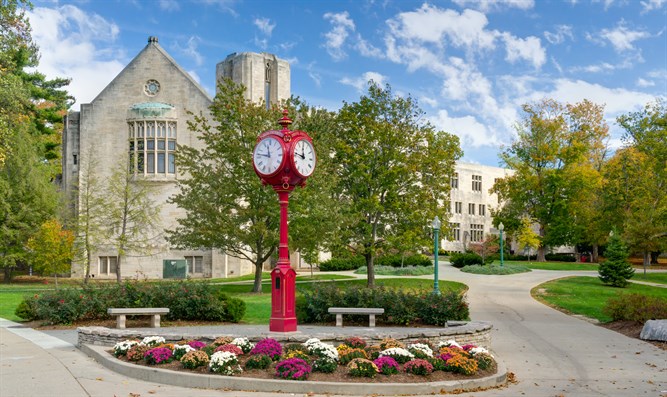
Anti-Semitic online post says Jews are taking over Indiana U

0

Anti-Semitic online post says Jews are taking over Indiana University

Post in student publication complains a ‘bunch of hairy stink rude obnoxious jews’ are overtaking the Indiana University campus.

JTA, 06/09/18 09:51


An online post said a “bunch of hairy stink rude obnoxious jews” are overtaking the Indiana University campus.

The existence of the anonymous post was first reported on Friday by the alternative student publication The Tab on its Instagram account.

The Aug. 29 post had appeared on the Greekrank website about fraternities and sororities on campus. It has been deleted, but screenshots have circulated.

University officials denounced the post in a statement Tuesday, The Indiana Daily Studentreported.

“The language used by these anonymous posters is hurtful and offensive,” the statement said. It also said that “Hoosiers are better than this.”

The post said: “OMG so first of all I don’t want to sound racist or anything.. but like wtf why are there so many jews here at IU now wat happened?” the post said. “where being takin over by a bunch of hairy stink rude obnoxious jews… the girls acts so damn exclusive and if ur not jewish u can’t hang out with them or even talk to them.. they give us looks like were below them and not worthy of talking too…this must end or this school is gonna go to ****!”

Responses included “UR not wrong but you can’t do anything about it” and “Don’t really have a problem with the guys or girls, just the JAPS,” and “seriously there everywhere.”

The editor of The Tab said on Instagram that “to hear that anti-Semitism is alive and well as a Jew on campus makes me mad. We are better than this. Now show it.”

University officials also met with students Friday at Hillel, the Indiana Daily Student reported, citing Hillel director Sue Silberberg, who has worked at the university for 29 years.

“They’re very upset and take it very, very seriously, and that’s been very comforting for the students,” Silberberg said of the university officials.

There are about 4,000 Jewish undergraduates on Indiana University’s Bloomington campus, making up 11 percent of the undergraduate student population, according to the Hillel Guide to Colleges.


Sadiq Khan working to ‘take down’ posters calling Israel ‘a racist endeavour’

0

Sadiq Khan working to ‘take down’ posters calling Israel ‘a racist endeavour’

Mayor of London brands ‘offensive adverts’ acts of unauthorised vandalism, as he commits to removing them from the capital


September 6, 2018, 9:57 am


Mayor of London Sadiq Khan has said a series of posters appearing at bus stops around the capital describing Israel as “a racist endeavour” were not authorised and will be removed and investigated.

Khan’s office confirmed on Wednesday evening that no permission has been sought either by the mayor, Transport for London (TfL) or JCDecaux, the company that operates the advertising spaces around bus stops.


And in an interview with Jewish News this week, Shadow Chancellor John McDonnell said there would be more debate. and consultation over the party’s code of conduct.

The posters were put up by a group called London Palestine Action, which describes itself as “a network of people in London taking creative action against Israeli apartheid through BDS and other effective, participatory Palestinian solidarity work.”

In response, a spokesperson for the mayor said: “These offensive adverts are not authorised and are acts of vandalism.

They added: “We have spoken to JCDecaux and they believe there are six such posters in London. We are working together to take them down as soon as possible.”


Source: Jewish News


S. Korean Officials: N. Korea’s Kim Wants to Denuclearize in Trump’s First Term

0

S. Korean Officials: N. Korea’s Kim Wants to Denuclearize in Trump’s First Term


SEOUL (Reuters) – North Korea’s Kim Jong Un wants to realize denuclearization during President Donald Trump’s first term – giving a timeline for the first time – and has agreed to a third summit with his South Korean counterpart, Seoul officials said.Kim and South Korean President Moon Jae-in will meet in Pyongyang on Sept. 18-20 and will discuss “practical measures” toward denuclearization, Moon’s national security adviser, Chung Eui-yong, said on Thursday after meeting Kim a day earlier.


The summit could in turn provide renewed momentum to talks over denuclearization between North Korea and the United States, after Trump canceled a visit to the North by his secretary of state last month, citing a lack of progress.

Kim told South Korean officials his faith in Trump was “unchanged” and he wanted denuclearization and an end to hostile relations with the United States within Trump’s first term in office, ending in early 2021, Chung said.

“He particularly emphasized that he has never said anything negative about President Trump,” Chung said.

The remarks represent Kim’s first timeline for dismantling North Korea’s nuclear weapons program.

North Korea has said in previous, failed talks over the years that it could consider giving up its nuclear program if the United States provided security guarantees by removing its troops from South Korea and withdrawing its so-called nuclear umbrella of deterrence from South Korea and Japan.

U.S. officials involved in negotiations have said North Korea has refused to even start discussions about defining “denuclearization” or other key terms such as “verifiable” and “irreversible,” and have insisted the United States must first agree to take simultaneous steps to reduce economic pressure.

Chung said Kim had stressed the need for the United States to reciprocate North Korea’s initial moves, which have included dismantling a nuclear test site and a missile engine facility.

The U.S. Embassy in Seoul on Thursday said it had no information to share on the matter.

North Korea’s official KCNA news agency said Kim told Chung and other envoys that it was his “fixed stand” to turn the Korean Peninsula into “the cradle of peace without nuclear weapons and free from nuclear threat.”

Chung said Kim showed “frustration over the doubt raised by some parts of the international community about his willingness to denuclearize, and asked us to convey his message to the United States.”

“He said he would appreciate that such good faith is accepted with good faith,” Chung said. “He expressed his strong will to carry out more proactive measures toward denuclearization if action is taken in response to the North’s preemptive steps.”

The two Koreas also plan to open an inter-Korean liaison office before the third summit in the North’s border city of Kaesong, staffed by officials from both sides to facilitate consultation, Chung said.

Kim and Trump held a landmark summit in Singapore in June, in which they agreed to work toward complete denuclearization. But negotiations have made little headway, while signs North Korea has maintained work on its weapons have emerged.

In this year’s talks, North Korea and the United States have been at odds over whether denuclearization or declaring an end to the 1950-53 Korean War should come first.

The war ended with an armistice, not a peace treaty, meaning U.S.-led U.N. forces, including South Korea, are technically still at war with the North.

North Korea has long sought a formal end to the war but U.S. officials have said an end-of-war declaration could weaken North Korea’s incentive for denuclearization, and raise questions about the 28,500 U.S. troops stationed in South Korea, a legacy of the three-year war.

U.S. officials also say they have already made concessions, such as halting joint military exercises with South Korea.

The United States, however, has said it is committed to building a peace mechanism if NorthKorea denuclearizes.

“Looks like Kim is trying to wash away worries that talks could stall or fail, knowing well that Washington is losing patience,” said Koh Yu-hwan, a professor of North Korean Studies at Dongguk University in Seoul.

“Kim also made it clear that he needs some kind of proof Trump has abandoned the U.S.’s hostile policy before moving toward denuclearization. Kim is trying to prove his sincerity.”


Source: Hamodia

WP Twitter Auto Publish Powered By : XYZScripts.com