
TODAY: Milano Pre-Pesach Shaitel Sale! Visit MilanoWigs.com for a free coupon!
The OFFICIAL MUSIC VIDEO Is Here for Dovid Gabay’s All New- Borei Olam
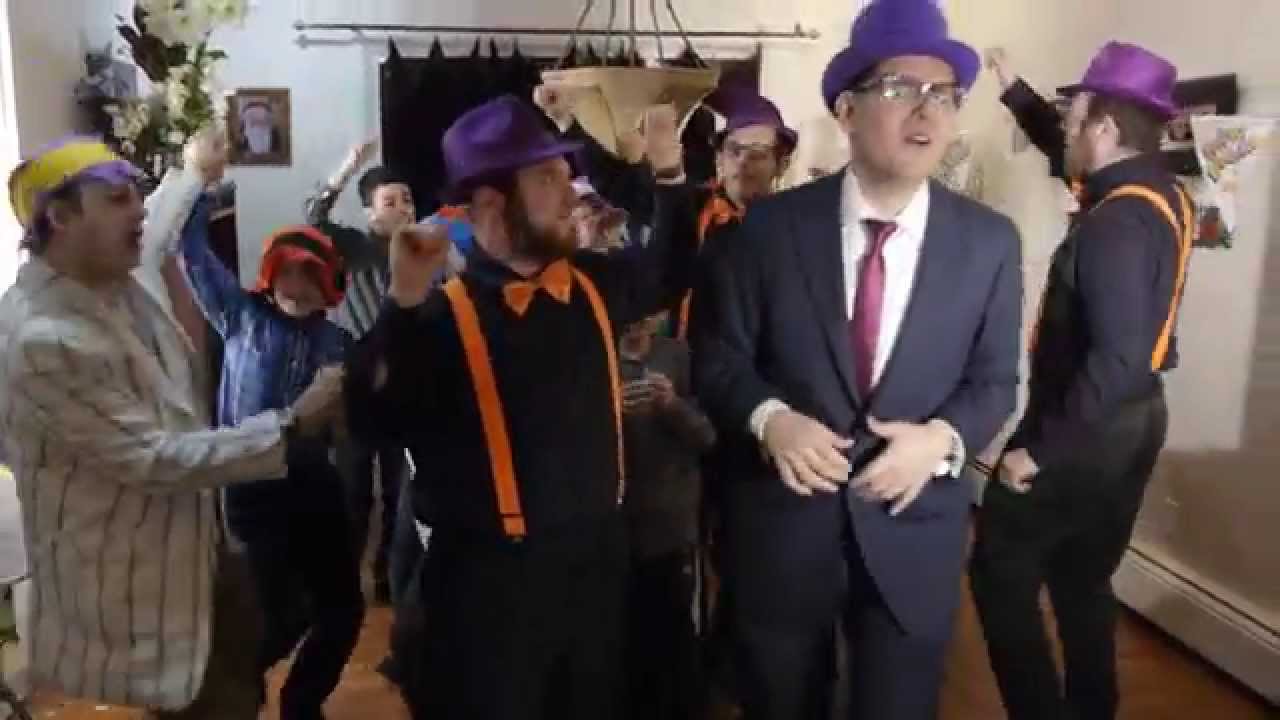
Dovid Gabay has released an all new single, titled, “Borei Olam”. The song was composed by Yitzy Waldner, and arranged by Ian Freitor.
The new single is available as a FREE download at DovidGabay.net. The music video was produced by C.D. Eichler and filmed & edited by Mordy Gilden.
Daily Deal: Two Hours of Home Cleaning only $19

Handybook
Enjoy a premium home cleaning service that’s reliable and convenient to book online. Get a sparkling home with two hours of professional cleaning services, booked instantly for whenever you want. Just select a date and time, enter the number of rooms in your home, and your booking will be confirmed within 90 seconds. Handybook’s experienced cleaners will scrub your house from top to bottom, using premium supplies.
- $19 ($70 value) for two hours of home cleaning
- Team uses state-of-the-art Cyclone vacuums to extract deep-down dirt and grime
- Top-to-bottom cleaning—including your stovetop—from highly vetted cleaners
To purchase this deal click here>>>

Poll Shows: Majority of Israelis Oppose Territorial Concessions

JERUSALEM – a poll conducted for the Knesset TV channel reveals that the majority of Israelis oppose territorial concessions as part of a peace agreement with the Palestinian Authority. 61% of the Israeli public believes that Israel should not relinquish land in Judea and Samaria in exchange for a peace agreement; 39% believe this is the right move to make.
The poll, published last Thursday (Mar. 27), further shows that 70% of the Israeli public does not view PA Chairman Abu-Mazzen as a partner in peace, and only 30% believe he is a potential partner.
Responding to the poll results, Peace Now Director Yariv Oppenheimer said he believes Israel still has a great opportunity in its hands. “Netanyahu is missing this chance. Unlike most of the public, I believe the blame [for the failure of the peace negotiations] rests mostly with the Israeli government.”
The Knesset passed the Referendum Law two weeks ago, requiring a referendum in a scenario in which the government decides to make territorial concessions as part of a peace agreement. In the eventuality that the Knesset itself has 80 members supporting the concessions, a referendum is not required by law.
After the passing of the law, Prime Minister Benyamin Netanyahu said he supported the law “simply because the decision on such an agreement must be received by the people.”
By Aryeh Savir
Tazpit News Agency
Combining the poll’s results with the Referendum Law leaves little room for territorial concessions in the current state of affairs.
VIDEO: Gat Brothers Rehearsing in Studio

Gat Brothers Rehearsing in Studio. Click on full story to view.
Obama to Putin: Pull Back From Ukraine Border
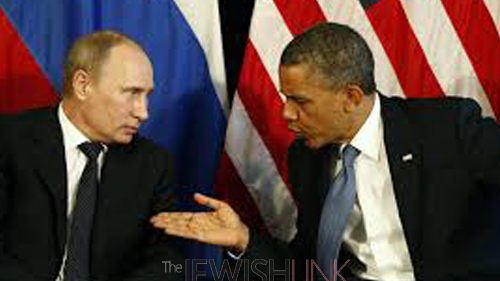
President Barack Obama is urging Russian President Vladimir Putin to pull back Russian troops from the border with Ukraine.
The White House says Putin called Obama on Friday while the president was traveling internationally.
The White House says Obama urged Russia to offer a written response to a diplomatic resolution to the Ukraine crisis that the U.S. has presented. Obama and Putin agreed that Secretary of State John Kerry will meet with Russian Foreign Minister Sergei Lavrov to discuss further steps.
Obama says Ukraine’s government is pursuing de-escalation despite Russia’s incursion into Crimea. He urged Putin to support that and to stop building up troops on its border with Ukraine.
The call comes as Ukraine’s government and the West are concerned about a possible Russian invasion in eastern Ukraine.
(AP)
Parshat Tazria – Shabbat HaChodesh –the Eruv is UP

March 28, 2014-27 Adar II 5774
The ERUV is UP
The eruv is sponsored in honor of Yonatan Zev Ryzman’s Bar-Mitzvah this Shabbos
Visit laeruv.com to sponsership or for your yearly Eruv dues.
Parshat Tazria- LA Candle Lighting 6:52pm
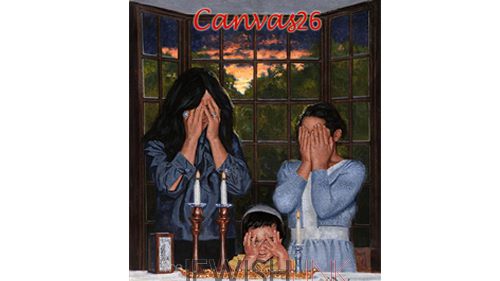
Parshat Tazria
March 28, 2014 – 27 Adar II 5774
Los Angeles: 6:52pm
Click here to purchase a Giclee Print of our featured image from Canvas26.com

Drafting Yeshiva Students into the Military
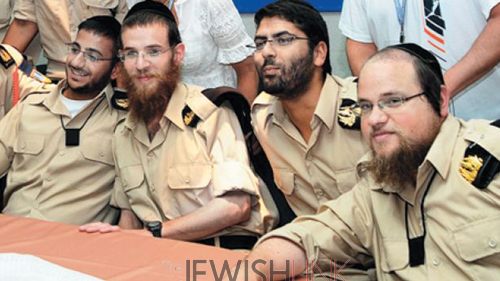
At the time of the birth of the State of Israel, David Ben Gurion decreed that students studying full-time in yeshivot would be exempt from military service. Ben Gurion felt that full-time yeshiva studies did much to advance the religious and cultural values of the Jewish people.
At that time, exemptions numbered in the hundreds. Today, continuing this policy of exemptions exempts tens of thousands of individuals.
Israel’s Supreme Court has ruled that this policy of exempting yeshiva students from service, while demanding adherence to the draft laws by all others, represents an inequity in the system. The Court has ordered the Knesset, Israel’s parliament, to come up with a more equitable solution to this problem.
Yeshiva students were never permanently exempted from military service. While enrolled in a yeshiva, a student gets a temporary exemption. They just stay enrolled until reaching the age of permanent exemption from service.
The Israeli army is a main acculturation instrument. Unlike the American military, recruits into the army study the biblical and modern history of their people. They climb Masada together. They tour other holy sites together. They pray at the Kotel together. They develop a common identity. As military service follows high school, they even enter the work force together. Yeshiva students aren’t part of this process. In a very real sense, they are left behind within their society. That is a main source of distaste for the current system.
As they continue to study, year after year, in yeshivot, they are subsidized by the government. Without the experience and training of the military, most are unemployable. The ranks of the yeshiva students continue to grow as new students come into the system and no older students leave.
We have to ask the traditional question, is this arrangement “good for the Jews”?
The answer to this question is difficult. It is good for Jewish students to engage in Torah Lishmah, the study of Torah for its own sake. It is good for Jewish students to seriously study the classic works of our people. But for how long?
We have far different models for study which have emerged throughout our history. In the generation of Rabbi Akiba, each rabbi had a career. One was a carpenter, one made shoes, one was a farmer. The generation of the Rabbis of the Mishnah had unique insights into the law as practitioners of that law. They didn’t just study the law, they lived the cases they ruled on. For them, the cases of injuring the animals of others, for example, were actual cases from their lives, not abstract cases for the study of legal theory.
We have the case of the Rambam, Maimonides. The Rambam wrote extensively on Jewish law, yet held occupations. He was financial advisor to major world leaders. He was a physician. He also did not study in the abstract. He lived the law.
Rashi, the foremost commentator on the Torah, was a French vintner.
Abravanel, the author of another key commentary on the Torah, was so powerful as an advisor to kings that it is said that he was actually exempted from the edict of Expulsion that applied to all Jews from Spain, but yet not to him or his family because he was so valued.
This is one historical model for students of the Torah. Study the text intensely, while engaged in real world occupations.
We have a differing model which shapes the study of Torah. We have a more modern model which shapes Torah studies. This is the model of studying under great Rabbis in a yeshiva. We know about this model from the 1700’s, if not before. Followers of great Rabbis flocked to study of Torah under their leaders. Yeshivot were formed. This system was followed by Chassidim and Mitnagdim alike. It was followed in both Ashkenazi communities and Sephardic communities. Studies often resulted in S’michah, the ordination of the young Rabbis. Even more recently has come the custom of devoting study in a Kollel-style environment in the year or two following marriage. Freeing young husbands for the intellectual pursuit of Torah is now a custom in many communities.
But how long do these studies continue? Until a male is 20…24…26? Or longer?
What is going on within Israel is relatively a new phenomenon. There does not appear to be a lifelong tradition of yeshiva enrollment. Being paid to study seems a relatively new thing. Being exempt from other work while being paid to study is an Israeli phenomenon.
Wives supporting their husbands, is this the Jewish way? Wealthy businessmen supporting their sons in study may be honorable, but what will happen when these yeshiva students get older? Will they have the funds to support their own sons in study?
The Knesset is faced with a dilemma. Should they pass a new law which orders these yeshiva bochrim into the military at the same time as their mostly non-religious counterparts, around 18 or 19? Should they pass a law which postpones for several years the entry into military service of these yeshiva students? If by the Torah (as indicated in the Gemara), a male is to marry by age 24, should military service be postponed until 26, allowing these religious students to remain in study for two years after their marriage?
There are various options which place value on Torah studies while still not totally exempting yeshiva students from military service. Other options exist. Maybe one option is having students by day commit to some sort of mandatory service, while by night permitting them to still study in yeshivot.
The Supreme Court decision requires action. Who is to say what action may be taken?
The religious bloc within Israel is quite powerful. The side they take most often emerges as the party with the largest coalition and elects the prime minister. When they choose to become involved, they can stage protest rallies attended by hundreds of thousands. For this current issue, they have even mobilized religious women to stage parallel protests. They stop traffic and most business within Jerusalem when they protest. The religious parties do not want to end the status quo. They do not want yeshiva students to serve in the military at all.
There is a need for compromise. However, the sides are becoming more entrenched. The secular wish to end the exemptions for yeshiva students immediately. The religious vow they will never permit their men to serve.
The Solomonic leader who figures out the solution of this issue will truly deserve the Nobel Peace Prize.
By Robert J. Rome, Ph.D.
Robert J. Rome, Ph.D., is a licensed psychologist in clinical practice in Encino, California. He can be reached at RJRome@aol.com.