Home Blog Page 1558

Behind Closed Doors

0

Domestic violence among Jewish families exists right alongside the general population at about 15% of homes.  Using the Jewish Coalition Against Domestic Abuse website as reference (www.jcada.org) here are some statistics about abuse in our communities:

*According to conservative estimates, 1 million women suffer nonfatal violence by an intimate partner. Other estimates state that more than four million women a year experience a serious assault by an intimate partner.
*Violence against women occurs in 20% of dating couples and 25-33% of adolescent abusers reported their violence served to “intimidate, frighten or force the other person to give me something.”
*Each year, approximately 3.3 million children are exposed to violence by family members against their mothers or female caretakers.
*In homes, where partner abuse occurs, children are 1,500 times more likely to be abused and 40-60% of men who abuse women also abuse children.
*Domestic abuse has immediate and long-term detrimental effects on children. Although children may not be physically scarred, they may suffer emotional, behavioral and physical effects from witnessing abuse.
*While relationship abuse is perpetrated by both men and women, most victims are female. According to the National Crime Victimization Survey for 1992-1996, men were the perpetrators in 85% of intimate partner abuse.
(From the American Bar Association Commission on Domestic Violence)

Surveys find that men and women assault one another and strike the first blow at approximately equal rates.  (Sources: Archer, J. (2000). Sex differences in aggression between heterosexual partners: A meta-analytic review. Psychological Bulletin, 126 (5), 651-680.
Dutton, D., Kwong, M., & Bartholomew, K. (1999). Gender differences in patterns of relationship violence in Alberta. Canadian Journal of Behavioural Science, 31, 150-160
Morse, B. (1995). Beyond the Conflict Tactics Scale: Assessing gender differences in partner violence. Violence and Victims, 10 (4), 251-269.
Straus, M. (1993). Physical assaults by wives: A major social problem. In R. Gelles & D. Loseky (Eds.), Current controversies on family violence (pp. 67-87). Newbury Park, CA: Sage.)

When most people think of domestic abuse an image of a drunk man hovering over a feeble woman comes to mind with the children hiding under their beds.  This scenario does take place, however the bulk of domestic abuses are more subtle:  A slap upside the back of the head, a slap of the face, forceful words of “shut up and get out of my face” or blatant name calling and cursing.  Grabbing an arm tightly or grabbing someone by the hair.  Forcing intimacy on a partner when it is not wanted.  Threatening divorce or abandonment.  Manipulating and stealing power in conversations by walking out of the house or room, hanging up the phone mid-conversation, intentionally not answering the phone.  Degrading a spouse or child with berating words.  All of these constitute abuses and all of these leave a mark—if not physically then emotionally and psychologically.  Yet these actions happen every single day in our Jewish homes behind the doors of families we know and love.  Sometimes the abuser is one spouse, sometimes it’s both spouses, sometimes it’s a parent with a child, and sometimes it’s between siblings.  Regardless, abuse is ugly and the impact of abuse even uglier.  The good news is that HaShem created tshuvah—the opportunity for those who have done wrong to right themselves through sincere effort and change at the core.  It’s hard work, but it is the only solution to stopping abuses.

To better understand what constitutes abuse, let’s review the JCADA material:

Physical Abuse — Hitting, kicking, pushing, punching, slapping, choking, grabbing, throwing objects at a partner, threatening with a weapon, driving recklessly with partner in a car, refusing to help a sick partner.
Emotional Abuse — Constant criticism, making humiliating remarks, name-calling, mocking, yelling, swearing, making victim think she is crazy, making victim feel guilty, making impossible rules and punishing victim for breaking these rules.

Economic Abuse — Withholding money, credit cards, keeping a partner from work or school, interfering with partner’s work or school, giving an allowance, withholding information and access to family finances.

Sexual Abuse — Forcing the act on an unwilling partner, demanding  acts that the victim does not want to perform, degrading treatment, being treated as an object.

Threats and Intimidation — Threatening to harm victim, children, family members, and pets. This includes putting partner in fear using looks, actions and gestures, shouting, smashing things and destroying property.

Using “Male Privilege” — Treating partner like a servant, making all the “big” decisions,” acting like the master of the house.

Isolation — Controlling what partner does, who she sees and talks to, where she goes, monitoring phone calls, reading mail, taking car keys.

Ask yourself:  Have I ever done any of these things to someone?
Ask yourself:  Has anyone done any of these things to me?

If I was a betting woman, I would bet that close to 100% of the readers of this column have: been abused, been an abuser, or have been both at some point in their lives and/or marriages.  So why is it that so many people perpetrate and/or experience abuses?  The reasons are endless—temperament, childhood wounds, regrets, deep-seeded resentments, lack of fulfillment, fear, anger, insecurity, inferiority, superiority, poor role models, etc.  Human beings are highly complex creatures who are in a constant state of change.  Life experiences and family dynamics leave their imprint upon us causing shifts.  Our path is often bumpy.  Some people have control of themselves most of the time and lose it once in a rare while.  Other people lose control on a daily

By: Mia Adler Ozair

Mia Adler Ozair, MA, LPCC, NCC is a
licensed clinical psychotherapist and educator
with a private practice in Beverly Hills, California. Mia is licensed in both California and
Illinois and she can be reached through her
website at www.bhcounselingcenter.com or
followed on Twitter @MiaAdlerOzair.


LTB 2013 Business Summit: A Groundbreaking Initiative for the Jewish Business World

0

Revolutionary Event Attracts Overflow Crowd of 500 Jewish Entrepreneurs, Business Owners and Employees Seeking to Learn More About Business Growth


Brooklyn, NY — This past Tuesday, on June 11th, a crowd of over 500 Jewish businesspeople attended LTB 2013, an event billed as the nation’s first-ever Jewish business conference.

Held at the posh Dyker Beach Golf Course in New York, LTB 2013 – which stands for Let’s Talk Business – aimed to create an innovative platform to help people in the community achieve long-term business growth and advance their careers.

“This was the very first conference of its kind,” said LTB 2013 founder and Ptex Group CEO Meny Hoffman. “It really opened people’s eyes by educating them about important business topics like sales, marketing, social media, corporate leadership – things that can spell the difference between success and failure.”

LTB 2013 featured a multi-faceted, content-driven agenda that was graced with a lineup of distinguished speakers, unique networking opportunities and groundbreaking programming.

Noted inspirational lecturer and Founder of H3 & Co., Charlie Harary, moderated the event with a perfect balance of charisma and professionalism, holding the day together and mesmerizing the crowd with his oratory brilliance.

The first keynote speaker was New York Times best-selling business author Gary Vaynerchuk, who began the day with a high-energy speech filled with inspirational insights about why being passionate about business is a must and how to tap into the power of technology to share that passion with others.

The crowd then made a smooth transition into two separate breakaway auditoriums for focus sessions. In one room, Eric Lofholm, a Master Sales Trainer, taught his proven step-by-step sales process. In another room, Bob Prosen shared tips from his Small Business Acceleration Program, focusing on five ways to succeed in leadership.

Up next was Ramon Ray, a longtime expert in online marketing, who enthusiastically explained the concept behind Lifecycle Marketing, which included seven strategies of attracting customers and maximizing profits.

Scott Ginsberg, better known as The Nametag Guy, was the second keynote speaker. Entertaining and engaging, Ginsberg taught the attendees how to strategically connect with others and maximize their networking skills. He then held an exclusive book signing for hundreds of his books that were distributed to the audience for free.

Following a catered gourmet lunch, LTB 2013 presented an Executive Roundtable featuring a special Q&A session, filled with insightful advice from six Jewish leaders in the business world, including: Chesky Kauftheil, Principal at ACG Equities; Abraham Roth, CPA, Founder & Managing Partner at Roth & Company; Seth Farbman, Esq., Co-Chairman of Vcorp Services; Elly Kleinman – CEO at The Americare Companies; Shaul C. Greenwald, Esq., CEO of Riverside Abstract, LLC; and Menachem Lubinsky, CEO of Lubicom Marketing.

Separating into two auditoriums again, focus sessions were held with Jon Goldman, President of Brand Launcher, who discussed how to stand out from the competition, and renowned speaker David Steel, creator of The Steel Method™, who shared how to talk to prospective customers and dominate the industry.

Meny Hoffman, the CEO of Ptex Group and Founder of LTB 2013, then briefed the audience on the pioneering LTB vision and mission. He urged the crowd to begin implementing the many ideas presented throughout the day. “Success is not measured by how big you’ve made it in business,” he stressed to the audience. “Rather, success is measured by making sure that today is better than yesterday.”

A power break followed and allowed the many attendees – some of whom traveled in from places like Baltimore, Florida, California and even Canada – to network with one another and further develop business relationships.

The closing program was The Launch Pad, a reality show-based competition where aspiring Jewish entrepreneurs pitched their ideas to a panel of wealthy investors sitting live on-stage. Featuring celebrity investor Kevin Harrington and four other famous Wall Street-type investors, successful deals were made on-the-spot in front of an awed crowd, and a few lucky members of our community walked away with over $475,000 in secured investment capital.

Action packed and pumping with energy, this event was fueled by groundbreaking ideas and powerful collaboration that made it a truly momentous day.

LTB 2013 was presented by Ptex Group, an award-winning marketing and business services agency headquartered in Brooklyn, NY. As the Title Sponsor of LTB 2013, Fidelity Payment Services – renowned as one of the largest electronic payment providers in North America – partnered with this event, along with other prominent companies, to make this into the reality it became.

“Many attendees expressed how thrilled they were to be at LTB 2013,” noted Meny Hoffman. “Due to the overwhelmingly positive feedback, we’re already planning more LTB events for the future. This is totally changing the way business is done. The people in our community are yearning to get to the next level and succeed. Our goal is to help them get there.”

To receive notifications about future LTB events, please visit www.ltbsummit.com or call 718.513.2222.


UPDATE:Parshat Chukat – the Eruv is DOWN. Emergency Appeal!

0
June 14, 2013
6 Tammuz 5773

The Eruv is Down due to significant construction issues on the 405.

LA Eruv’s coordinator Howard Witkin just completed a walk through with the project managers and field supervisors for the contractors building the 405.

Howard stated “We will not be able to make repairs to the Eruv for this Shabbos.

We hope to have a workaround for next week, but the next three weeks will be problematic as the contractor rushes to finish new and demolish old bridges at Wilshire.  We’ll keep you posted.”

The eruv always runs short of funds in weeks leading up to Rosh Hashanah. This year we are especially short because of the extraordinary expenses of repairs every week as we coordinate with the freeway construction.  We will need at least an additional 10k to get through the summer and keep the Eruv up.

We are hoping that next year will be easier as several shuls step up their support for the eruv and the community it serves.

You can make donations with paypal or credit cards through the website www.laeruv.com  or send checks to

*Los Angeles Community Eruv*
P.O. Box 351360
Los Angeles, CA 90035

For more info please visit www.laeruv.com


SKA and OHEL Team up to Help Provide for Foster Care Children

0

Throughout the month of May, students from SKA high school in Long Island have donated books and school supplies to benefit the children in OHEL’s foster program.

Yedida Holzer, a Junior in SKA, always had a passion for reading. She never took for granted the fact that she had the means to buy herself new books when she wanted, and that she was able to obtain whatever she needed in order to succeed in life. She wanted to find a way to give back, and spoke to her father about different volunteer opportunities. Her father told her about foster care children, and Yedida quickly learnt about OHEL and their award winning foster care program.

Yedida reached out to OHEL, and together they set up the SKA book and school supply drive for foster children. To kick off the drive, Suzy Libin, an OHEL Foster Parent, gave a stirring speech to all of the girls, and told them about her experiences as an OHEL foster parent.

The girls from SKA learnt that foster children come in all shapes, sizes, and ages, and just like everyone else, foster kids just want to feel like normal, regular children. Therefore, the donations would be anonymous, and although they won’t meet the children who benefit from their generous gifts, they can feel good about themselves for doing something important and invaluable, by improving the life of a foster child.

It is important to remember that foster children find themselves in foster care through no fault of their own, but rather from external circumstances. These children don’t need pity, but rather support and encouragement, which the girls from SKA have generously contributed.


For more information about OHEL’s foster care programs, or other OHEL services which you can benefit from, please contact OHEL today at 1800-603-OHEL, askohel@ohelfamily.org or www.ohelfamily.org

Putin Announces Books Return

0

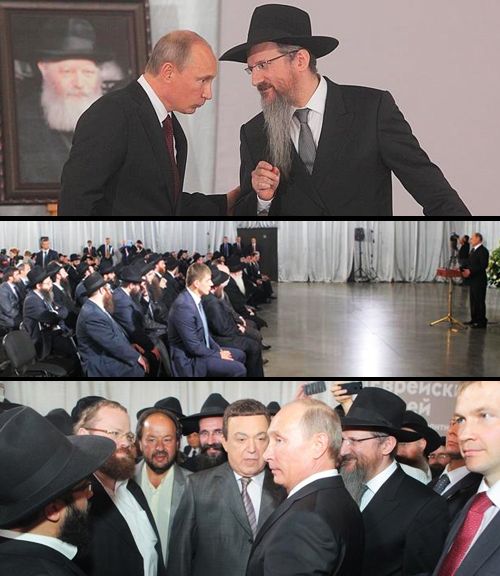
Russian President Vladimir Putin personally came to announce the transfer of the “Schneerson Archive,” but not the Rebbe’s Library in Brooklyn. Chief RabbiBerel Lazar called it “Solomon’s decision.”


A Chabad website, collive.com reports that Russia’s powerful President Vladimir Putin came Thursday to the Museum of Jewish History in Russia, located in Moscow and which he personally helped build by donating a month’s salary.

This visit had another purpose, as he has already toured and seen the $50 million state-of-the-art complex in the past.

With a photo of the Lubavitcher Rebbe and 2 large bouquets of flowers behind him, and a group of black hatted Chabad rabbis seated in front of him, Putin announced that Russia will be transferring a collection of historic Jewish books and manuscripts to the museum.

Otherwise known as the “Schneerson Archive,” the library belonged to the 6th Lubavitcher Rebbe, Rabbi Yosef Yitzchok Schneersonand was nationalized by the Bolsheviks in 1918 and ended up in the Russian State Library. A second part fell into the hands of the Nazis, and later seized by the Red Army and handed over to the Russian State Military Archive.

At the request of his successor, the Rebbe – Rabbi Menachem Mendel Schneerson, Lubavitchers have sought the restitution of the library since the late 1980s. President Boris Yeltsin promisedJames Baker, Secretary of State in the first Bush administration, that the holy documents would be returned.

Refusing to do so since, Putin has insisted the books “belong to Russia” and instead proposed the library be transferred to the museum in Moscow. Businessman and writer Sergei L. Ustinov is cited on its website as its founder and director.

Putin said Thursday: “I hope transferring the Schneerson collection, which undoubtedly not only presents an interest, but is also of great value to Jewish people, and not only Jews living in Russia, but also Jews who live in other countries, to the Jewish Museum and the Moscow Tolerance Center for storage purposes, will put an end to this problem.”

According to the Interfax news agency, the president said any person visiting the center, regardless of his place of residence, can “study and hold in his hands these books and get from them the knowledge that modern people need so much.”


For the full article please visit: Collive-Book return

Lights out and sirens off for Hatzolah?

0

By Jonah Lowenfield

www.thejewishjournal.com

In March 2011, Hatzolah of Los Angeles, the Orthodox Jewish volunteer emergency response corps, celebrated its 10th anniversary in this city. The celebratory dinner offered a chance for the group to thank some of its supporters, and the hundreds who attended — including elected officials and high-ranking civil servants — heard stories of Hatzolah volunteers saving lives, in part by arriving on the scenes of emergencies within minutes of being called.

The principal honoree that evening was California Highway Patrol (CHP) Commissioner Joseph A. Farrow. The state agency had given Hatzolah a permit to operate the lights and sirens on its vehicles when responding to emergencies, a practice known as responding “Code 3.”

Left unmentioned that evening was the fact that Hatzolah lacked any authorization from the City of Los Angeles to operate its ambulances, or to respond Code 3. Three times in the three years leading up to that public event, the city’s Department of Transportation (DOT) had informed the group, in writing, that its basic model violated two separate sections of L.A. County law.

Absent those permits, Hatzolah never stopped working, responding to emergency calls and, in some cases, acting as liaison between members of the Jewish community and mostly non-Jewish first responders. Last summer, the group helped rescue two individuals — in one instance working with Los Angeles County Sheriff’s deputies to find a person just minutes before what would have almost certainly been a successful suicide.

But starting in 2011, and for more than a full year, all of Hatzolah’s vehicles were off the streets; two years after the celebration, its three fully equipped ambulances still sit idle.

Its approximately 80 EMTs still respond to emergencies — mostly using their own, private cars and obeying traffic signals even when en route to an emergency, but occasionally using one of Hatzalah’s four SUVs with the lights and sirens running. But no matter what they’re driving, the EMTs are operating in a manner whose legality is uncertain.

“The current status is ‘hot potato,’ ” Hatzolah spokesman David Bacall said of his organization. “That’s the best way that I can describe it.”

For the full article please click on the link below:

Lights out and sirens off for Hatzolah? | Los Angeles | Jewish Journal.

0

Engagement:

Nissan Zibell – Crown Heights to Shaina Gollub – Long Beach, CA

Rabbi’s regulates bourekas shapes

0

Jerusalem – Israel’s Chief Rabbinate has sent a letter to bakeries and makers of pastry throughout the nation mandating that the production of bourekas now conform to a new set of strict “shape” guidelines aimed at helping customers successfully navigate the selection process.

The regulations are meant to prevent customers from confusing dairy and nondairy products — needed for those who observe the Jewish dietary laws of kashrut, where meat and dairy are separatedy.

The TIMES OF ISRAEL (http://bit.ly/12m0Omd) reports that the Rabbinate’s letter also informs producers that failure to comply with the new guidelines might result in loss of kashrut certification.

A spokesman for the Rabbinate said that the guidelines are warranted because the risks of kashrut violations have been increased through the “creativeness” of bakers and the introduction of new fillings.

The spokesman said that representatives from Israel’s major bakeries were included in the process.

Photo Credits :Burekas and pastries of all shapes (photo credit: Aaron Kalman/Times of Israel

WP Twitter Auto Publish Powered By : XYZScripts.com