Home Blog Page 1563

The Unveiling of the Raoul Wallenberg Gold Medal Design

0

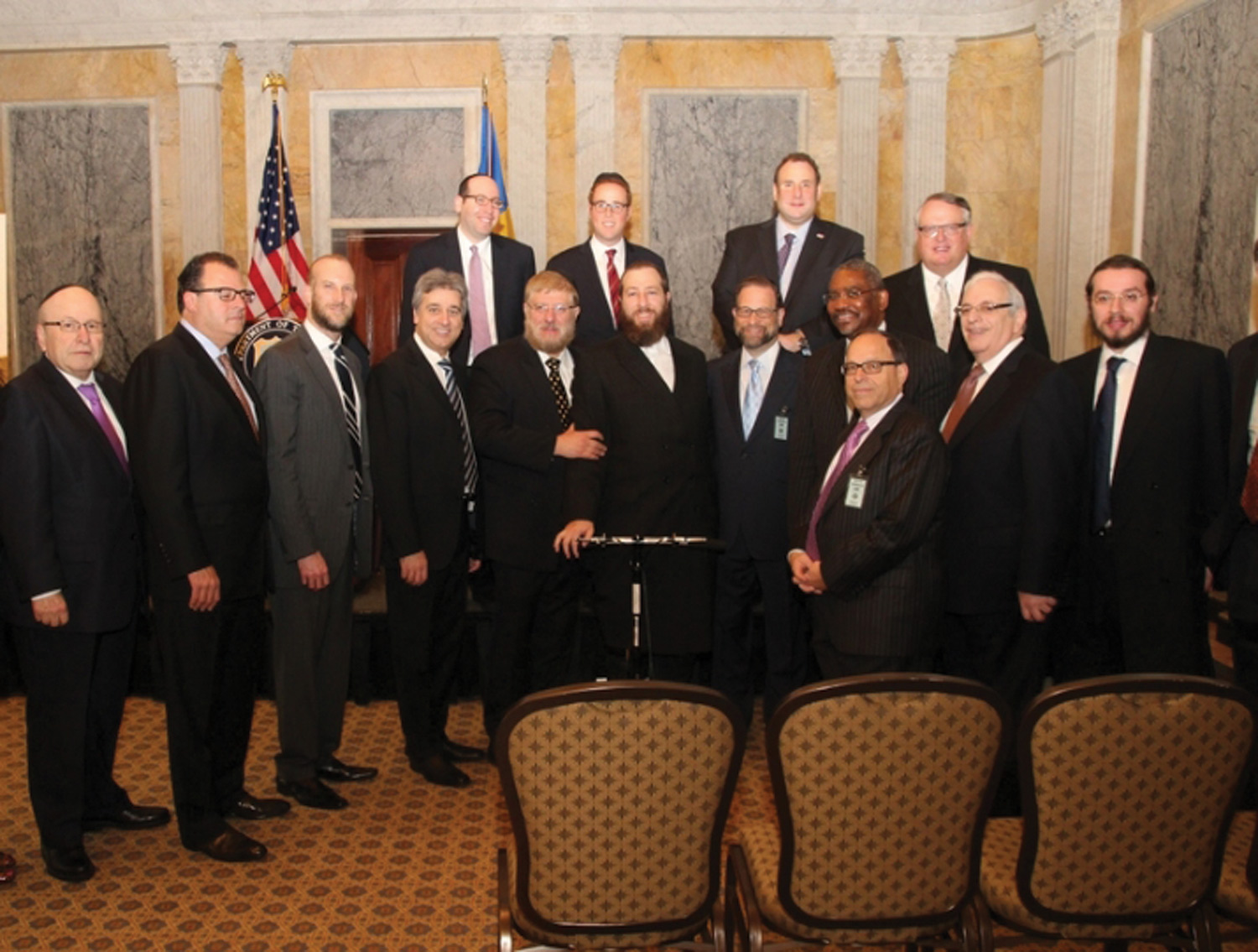
Washington, D.C-On Thursday, May 9, 2013, The United States Mint unveiled the design of the Raoul Wallenberg Congressional Gold Medal in the presence of their Majesties, King Carl XVI and Queen Silvia of Sweden. This event was hosted by The Honorable Jacob L. Lew, Secretary of the United States Treasury. The Congressional Gold Medal recognizes the achievements and heroic actions of Wallenberg during the waning days of the Holocaust.

Congressman Gregory Meeks of New York, the original sponsor of the Wallenberg Gold Medal Legislation in his opening remarks attributed the efforts of Ezra Friedlander, CEO of The Friedlander Group which spearheaded the effort to recognize the heroism of Wallenberg through the creating of the Raoul Wallenberg Centennial Commission established in honor of the centennial of Wallenberg’s birth to the driving force behind awarding Raoul Wallenberg with the Congressional Gold Medal.

Born in Sweden, Raoul Wallenberg graduated from the University of Michigan and returned to Sweden where he became a businessman and then to give him cover for his rescue efforts became a Swedish diplomat. Wallenberg’s is credited with saving 100,000 lives primarily through the issuance of the schutz-pass, a document that was respected by the German Nazi’s that conferred official Swedish protection of the bearer which was handed out to desperate Hungarian Jews. Wallenberg also prevented of the liquidation of the Budapest ghetto by threatening the German General that he would be brought up on War crimes if he allowed the deportation of Jews to Auschwitz, a ploy that was successful.

At the unveiling ceremony, Secretary Lew stated “the War Refugee Board was commissioned two floors above of where we stand today, here in the Cash room”. The War Refugee Board was critical to the success of saving over 100,000 Jews, especially in Hungary, to escape persecution. It was this board that gave Wallenberg authority to commit to a plan of action that would save the lives of many.

The United States Mint worked closely with the Wallenberg Commission, who was dedicated as the liaison to the Mint on the design of the medal.

As prepared by the U.S. Treasury the medal features, on the heads side, a portrait of Wallenberg depicting him as he is last remembered with the inscriptions: RAOUL WALLENBERG, ACT OF CONGRESS 2012 and HERO OF HEROES. The tails side features Wallenberg presenting the schutz-passes and a view of those bound for a concentration camp. The inscriptions read: HE LIVES ON FOREVER THROUGH THOSE HE SAVED around the upper border and ONE PERSON CAN MAKE A DIFFERENCE were inspired byPeter Rebenwurzel, Chairman of the Raoul Wallenberg Centennial Celebration Commission, who is a Hungarian-born child of Holocaust survivors. His father, z”l, worked with Wallenberg to provide food and provisions to residents of the Budapest ghetto, and his father in-law was saved by Wallenberg.

Many of the people Wallenberg saved have been influential citizens contributing to American institutions and culture, including Congressman Tom Lantos (February 1, 1928-February 11, 2008) and the Liska Rebbe, Rabbi Yoizef (Joseph) Friedlander, who carried forth the Liska Chassidic dynasty from Hungary to the United States after being saved by Raoul Wallenberg.

For more information about the Raoul Wallenberg Centennial Celebration Commission, please visit www.TheFriedlandergroup.com/Wallenberg

For more information: Ezra Friedlander – Ezra@TheFriedlanderGroup.com T: (212) 233-5555 x 101

New Torah for LA Cheder

0

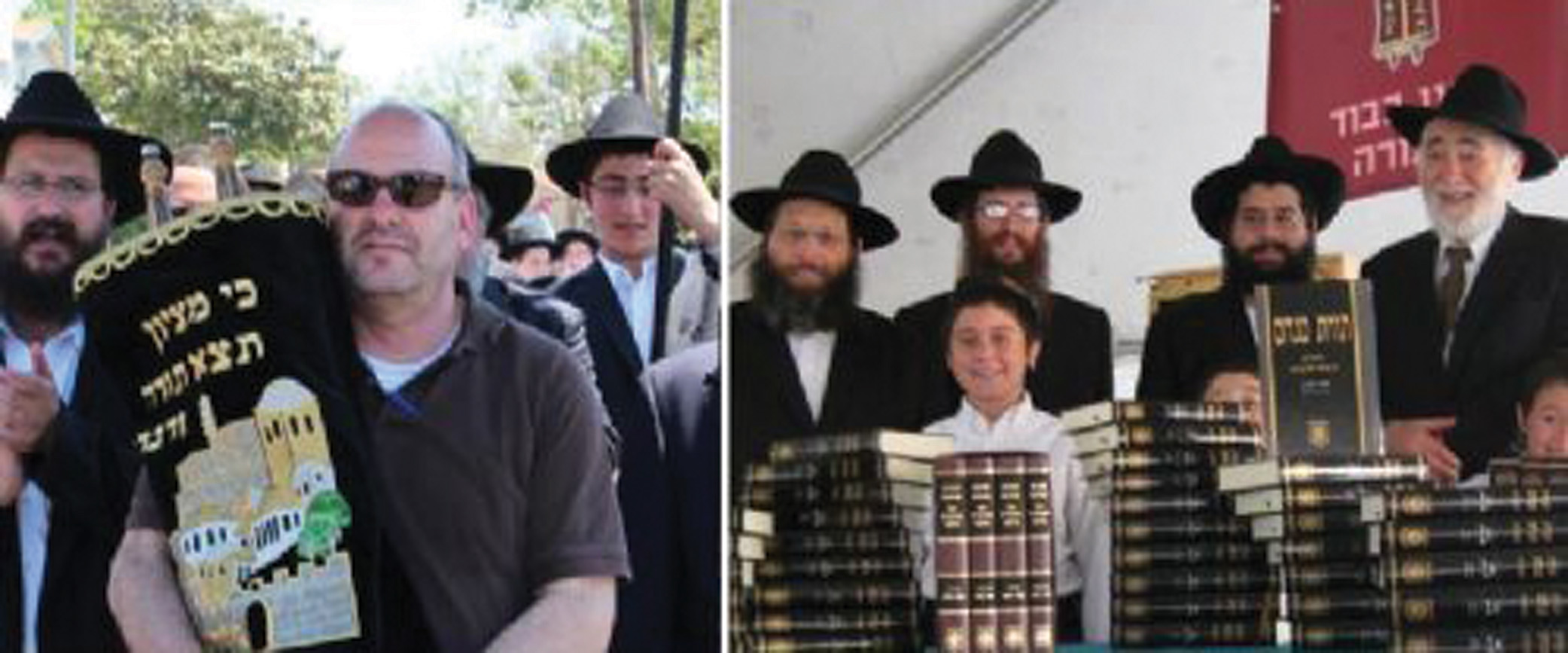
A celebration marking students’ memorizing 118,547 lines of Mishnayos, Tanya and more, a new Sefer Torah was welcomed to the Cheder Menachem of Los Angeles dedicated by the Menlo family.

As in the past 12 years from Yud Shvat through Yud Alef Nissan, talmidim of Cheder Menachem in Los Angeles presented a special and most befitting gift for the Rebbe in honor of Yud Alef Nissan with their annual Mishnayos Baal Peh Program; together, the talmidim learned and were tested on a total of 118,547 lines of Mishnayos, Tanya, Siddur and Yediyos Klaliyos.

This number includes 9,040 Mishnayos – including 153 complete Masechtos and 1,104 Perakim, as well as 176 Perakim of Tanya Baal Peh, totaling 13,040 lines of Tanya Beal Peh

This year’s achievements include, Levi Greenbaum, 8th Grade, who learned the entire Seder Moed, Kodshim, as well as many other Masechtos. Levi Greenbaum also learned 2,000 lines of Tanya Be’al Peh (38 Perokim) in honor of the 200th yahrtzeit of the Alter Rebbe this year. Tanya; Yossi Raeburn, 6th Grade, who learned the entire Seder Moed in addition to many other Mesechtos; Levi Mishulovin, 8th Grade, who learned the entire Seder Moed as well as the first 12 Perakim Tanya.

On Sunday, Gimmel Sivan, a special ceremony was held where the talmidim were awarded Seforim as prizes for their efforts and achievements. This year a special addition to the program was the welcoming of a new Sefer Tortah to the Cheder by the Menlo family, a noted philanthropic family and supporters of Torah institutes in Los Angeles. Rebbonim, Roshei Yeshivos, Shluchim, Mashpiyim, parents and friends joined together to recognize and congratulate the achievements of the students, in a tent erected in the public school yard next to the Cheder, and welcome the Torah.

Rabbi Mendel Greenbaum, Menahel of Cheder Menachem, welcomed everyone with a D’var Torah and giving a Yasher Koach to the talmidim. Words of Bracha were shared by Rabbi Shimon HaLevi Raichik, Rav of Anash in Los Angeles and Chabad Hancock Park.

A special presentation was made to Reb Yankel Ginsburg, the “Zevulun” of the Cheder’s MBP Program, who sponsores the Seforim on a yearly basis, L’iluy Nishmas his father, Reb Dov Reuven ben Dovid HaLevi o.b.m. The Cheder presented Reb Yankel with the new Weiss Edition of the Siddur published by Tzivos Hashem.

Rabbi Sholom Heidingsfeld, the coordinator of the Mishnayos Be’al Peh program, announced the accomplishments of this year’s MBP, which was followed by awarding the Seforim to the 4 talmidim with the highest accomplishments. After this, every talmid received their prize according to their achievements.

After the distribution of prizes, Rabbi Mendel Goldman, member of the board of Cheder Menachem introduced Mr. Frank Menlo to do p’sichas h’aron and begin the procession bringing the Torah to the Cheder Shul. The procession was lead by the Cheder Menachem Marching band, followed by the chupa with the Torah and all assembled escorting the Torah to the Shul, where dancing took place before the Torah was placed in the aron Kodesh by Dr. Zev Rav-Noy.

A BBQ buffet catered by MGM Caterers along with a moon bounce for the children, was enjoyed by all in honor of this festive day.

A special thank you to Mrs. Ruchie Stillman, Rabbi Yossi Burston, R’ Nochum Labkowsky, Rabbi Leibel Cohen, Mr. Sam Kustanovich and the Cheder board for all their help in ensuring the success of the day’s events.

Some of the Rabonim and Shluchim who attended include: Rabbi Shimon Raichik, Rav of Anash and Rabbi of Congregation Levi Yitzchok, Rabbi Ezra B. Schochet, Rosh Yeshiva of Yeshivas Ohr Elchonon, Rabbi Yosef Shusterman, Rav of Anash and Shliach to Beverly Hills, Rabbi Mendel Schapiro, Mashpiya in Yeshivas Ohr Elchonon, Rabbi Mendel Cohen, Mashpiya in Yeshivas Ohr Elchonon, Rabbi Amram Farkash, Menahel of the Mesivta Ohr Elchonon, as well as Rabbonim and Shluchim from all over Southern California.

Etta Israel Center’s 11th Annual Dessert Reception

0

Etta Israel Center’s 11th Annual Dessert Reception, held April 21 at
the home of Steve and Lorraine Spira, celebrated the Center’s
educational programs and new adult services.

Etta provides services that empowers people with special needs 
to live rich, active lives as members of the Los Angeles Jewish
community.

The large turnout was a testament to Etta’s beloved and important role
in LA. In addition to the Ner Shoshana Classroom (in memory of
Shoshana Hayman Greenbaum, hy”d), the Ner Yaakov Classroom (in memory
of Mr. Aharon Yaakov Kornwasser, z”l), and Summer@Etta, Etta is also
providing more and more services for adults — from the four Group
Homes to Independent Living Services, Supported Living Services, and
case management and assisted living management.

Mr. Moishe Streicher was the emcee, and the evening was co-chaired by
Lila Eilat, Tzipporah Coronel, Jackie Kest, Rivka Gross, Tali
Merewitz, Cheryl Nagel, Betty Ryzman and Deena Zyskind.

The guest speaker, Mr. Charlie Harary, inspired the whole audience
with his words, noting: “This is the legacy of our people… to create
light.”

For more information about the Etta Israel Center, please call
818-985-3882 ext 231or visit www.etta.org

Time Out

As usual I was rushing. It was 1:00 PM on a Thursday and I had to drop something off at someone’s home before coming back to pick up my son (#2 of 5 as I affectionately refer to him) at 1:30 PM to take him for a physical at the doctor. As I’m mentally taking stock of all that I need to bring with me I grab things off of the table, grab my purse and head out the door. At the exact moment the door slammed behind me I reached into my pocket for my keys. In that same second the flash of insight in my mind showed me exactly where the keys were—on my dining room table. Expletive.

Checking my watch I start running through the ways in which I can get back into my apartment while simultaneously cursing myself for the stupidity of grabbing everything but my keys. At that moment I still had hope of keeping my schedule. Of course first thing I call the building manager. He’s not in. I call my husband. He’s an hour away at best and has no desire to rescue his damsel in distress. I try calling my son’s school explaining that I need child #2 home at 1 PM instead of at 1:30 PM as the morning’s note indicated and the woman who answered said she would do what she could to track him down. I pause and think: should I risk causing child #2 to have his phone taken away and text him during the day? Surely this counts as an emergency. I do it and wait for a reply. Nothing. I text again, “Hello?” Nothing. I call the school reception again—they still haven’t found him. It’s now 1:10 PM and it has become clear that I am not going anywhere. I lean against the wall and slowly slide down it to sit on the floor with a deep sigh and mutter aloud, “Okay HaShem, I get it. I’m in a 20 minute time out.”

Sure enough at 1:30 child #2 showed up on time with keys. His phone, of course, had been forgotten at home that day. The orchestration of my date with those 20 minutes had been thoroughly planned from the dawn of day. At first I thought perhaps I was being “punished”, then it occurred to me that maybe HaShem wanted me to slow my pace, take some breaths, care more for myself. Or, perhaps HaShem wasn’t punishing me but protecting me from something—seeing someone or something that would have been less than beneficial. Regardless, while sitting there in the silence I rested my head against the wall. I met a neighbor that I’d never seen before—a nice Korean man who doesn’t speak much English and found it a bit odd that I was sitting on the floor. I smiled. He smiled back and entered his home. The elevator beeped and buzzed. A horn honked in the distance. Voices echoed in the stairwell. My other neighbor, a college student, exited his apartment and gave me a funny look. I told him this was my new hangout. He chuckled and wished me luck. But I knew better. I knew luck had nothing to do with it. I knew this 20 minutes was significant and demonstrated to me just how clearly we are not in control and that as a member of the Universe we are all subject to the greater scheme of things.

I’d love to say that during these 20 minutes I had some epiphany, some major realization or light bulb moment, but I didn’t. The 20 minutes came and went with little fanfare. In hindsight I realize it was a test of sorts. Even just a few months ago I would have gotten angry and huffed and puffed and flipped out. I would have taken it out on those around me and tried to blame someone for my actions. I would have let it ruin my day and color all of the events that followed it. But I didn’t. I passed with flying colors if I may say so myself, simply because once I realized I wasn’t going anywhere I surrendered. I gave myself over to the circumstance and accepted that there was nothing I was going to do or say to change what was happening. I immediately showed gratitude for HaShem’s role in my life even though his plan didn’t quite match with my own. And you know what? It felt good. If felt really good.

Now here’s your test: Why is it HaShem has put this article in front of your eyes? Maybe it’s time for a time out . . .

By: Mia Adler Ozair

Mia Adler Ozair, MA, LPCC, NCC is a licensed clinical psychotherapist and educator with a private practice in Beverly Hills, California. Mia is licensed in both California and Illinois and she can be reached through her website at www.bhcounselingcenter.comter @MiaAdlerOzair.


Blessings of Infinite Kindness

This week’s Parsha—Parshas Naso—contains a Mitzvah that I hope all our friends had the opportunity to witness and partake in: Birchas Kohanim—the Blessing of the Congregation of Israel by the Kohanim, the Priestly class, the descendants of Aharon who served in the Temple and who blessed the people every day. In Sephardic communities, the custom is that Kohanim bless the people every day, but among Ashkenazim, the custom is that the Kohanim bless the people only on Yom Tov. Thus, a few days ago, in Ashekenazic synagogues all over the world, the Kohanim blessed the people along with the Kohanim in Sephardic synagogues. The power of the Priestly Blessing is the greatest of blessings and I hope everyone was able to be there on Yom Tov a few days ago to receive BIrchas Kohanim.

This Mitzvah is described in this week’s Parsha—Bamidbar (Numbers), Chapter 6, Verses 22–27— and if we take a close look at the Mitzvah and how the rabbis analyze it, we find some strange goings on. First, the language of the Torah: Verse 23 has Hashem telling Moshe to say to Aharon and his sons, “So shall you bless the Children of Israel, say to them—” and the next three verses contain the text of the blessing. Why the extra words, “say to them”? Without that phrase, we would understand that what follows is the text of what the Kohanim should say. The Rabbis of the Talmud derive from this that the Priestly Blessing must be said in Biblical Hebrew, just as the words appear in the Torah. There are other prayers that can be said in translation—the Shema, for example—but not the Priestly Blessing. That must be recited in Lashon HaKodesh—the “Holy Tonugue,” meaning, Hebrew. Why is that the case? The Shema is, after all, among the most revered and sanctified prayers of our faith. If that can be said in translation (so that it will be well-understood by the person reciting it), why can that not apply to the Priestly Blessing?

Then, at the end of this section, the Torah tells us that after the Kohanim will bless the People, “V’ani ava-re-chem”—“then I [meaning, Hashem] will bless them.” Now, just who is being blessed after the Kohanim bless the people? The Talmud (Hullin 49a) relates a dispute between Rabbi Yishmael and Rabbi Akiva. Rabbi Yishmael says that “them” refers to the Kohanim, so that Hashem is saying that He will bless the Kohanim after they bless the people. Rabbi Akiva, says, no, the “them” referred to here is the Jewish People the Kohanim already blessed, meaning, Hashem will confirm the blessing of the Kohanim. The question arises, what about the Kohanim—are they deprived of a blessing from G-d? Why should that be the case, after they have loving blessed the People? But Rabbi Akiva answers, no, the Kohanim are also blessed by G-d, but that is derived from a different Verse: Hashem says to Avraham (Bereishis 12:3), “I will bless those who bless you,” and Tosafot comments that even people outside the Jewish Faith will be blessed if they bless the Jewish People because Israel is the Chosen People, precious to Hashem. So Rabbi Akiva also believes the Kohanim are blessed, but they are not included in the blessing that the Kohanim bestowed on the people. Rabbi Yishmael, on the other hand, includes the Kohanim in their own blessing, so that all of Am Yisrael, including the Kohanim, receive the blessing they themselves uttered. The Talmud goes further and says that Rabbi Yishmael believed as he did because he himself was a Kohein and so was partial, loving and protective of his fellow Kohanim.

It seems clear from this that, though Hashem has promised Avraham that He will bless those that bless Israel, the blessing of the Kohanim is even greater. (Otherwise, why would including the Kohanim in the Priestly Blessing be a case of Rabbi Yishmael showing favor to the Kohanim?) In order to understand this, we have to take a closer look at the very concept of blessing.

A blessing—a beracha—is an outflowing of kindness and goodness from Hashem. The word “beracha” implies this; the word is used, for example, to describe a grafting of a vine by another vine so that the life of one vine can flow into and give life to another vine. A blessing thus represents the flowing of Chesed—kindness—from above, from the source, to one in need. What flows may be health to one who is sick; a child to a couple who is barren; understanding to one who is confused. This is also why the Mitzvah of blessing the people was assigned to the Kohanim. The Kohanim are the very personification of Chesed, kindness. The Kohein gives the sinner an opportunity to repent and find forgiveness—and he will bestow his blessing on the People “Be-ahava”—“with love,” as the blessing the Kohein recites before he performs this mitzvah says. He bestows the blessing without judgment and without demands—he lovingly blesses the Children of Israel no matter whether the blessing is deserved or not.

Though this quality—the flow of Chesed—is characteristic of all blessings, there is something special and unique about the blessing of Kohanim. The blessings of the Kohanim, say the Kabbalists, are fulfilled with lightening speed—faster than all other blessings; faster, one might say, than even such blessings bestowed by Hashem Himself. But how can this be, and why should this be the case? Why, in fact, do blessings of any kind take any time at all to be fulfilled? Don’t the fruits and fulfillment of all blessing come from the same source—Hashem, the Almighty—and can’t those blessing be fulfilled and granted in the wink of any eye? Human blessings and commitments to help someone may sometimes take time; but shouldn’t a blessing that comes from Hashem be fulfilled immediately?

The deeper understanding of what a blessing from Hashem is, is that such a blessing has a profound effect on the entire scheme of Creation, from the supernal World of Emanation (Atzilut) that is the first world through which Hashem relates to the Universe He created, and then through the many myriad chambers and aspects of the other levels or “Worlds” of Creation, so that the blessing should really be beneficial to the person blessed. In those Worlds, the blessing deals with the many spiritual elements of the world and of life, so that when it ultimately reaches the person, it can be accepted and applied to the material needs that the person has. And this takes time—time for the person to prepare to receive the blessing, and time for the worlds to adjust to what the blessings call upon them to do to make the blessing meaningful, effective—and real.

Here’s something else seemingly strange that that this may clear up: We say that the fate of every person is determined on Rosh Hashanah, down to how much they will have to eat in the coming year. So why do we continue to pray to Hashem for sustenance throughout the year, if the decision has already been made? The answer is: we pray throughout the year that we will make ourselves fit to receive the blessing from the upper World—we pray that the way we live our lives will make the blessing a real blessing, and not a curse in disguise—something we’ll fritter away. And, well, we need time to make ourselves worthy and fit to receive the blessing that is wending its way through the upper worlds to us. We need time and effort to turn the ethereal, spiritual form of the blessing into something material—the material blessings that we need in order to live and enjoy life.

That is how blessings usually work in the Heavenly realm, but the blessings of the Kohanim find their way to their recipients quickly and without the grinding of the wheels of the upper worlds. The Kohanim see us both as we are and as we might be—able to almost miraculously make ourselves fit and suited for the blessings coming from the upper worlds. This is a kind of Chesed—a Midah, characteristic of the Divine—that forgoes the mechanism that demands that recipients of blessing be ready and suited for them. The love of the Kohein for the People of Israel taps into a higher level of Chesed—what the Kabbalists call Rav Chesed: Infinite Kindness. It’s a kindness that sees the great need and the dire straits people are in, and calls upon the material blessings that will save them, heal them, help them, give them what they long for; what they need—even if it’s what they only think they need.

The blessing of the Kohanim taps into a deeper level of Hashem’s love and kindness for His creation, and brings it down—quickly, materially, and lovingly—to help in ways that we human beings can feel the urgent need for. Perhaps the person blessed will be able to handle it and it will truly be a blessing; but perhaps not. The Kohein includes in his blessing a prayer that the blessing will be granted, and the person receiving it will find a way to make good use of it. This is why the Priestly Blessing must be said in the Holy Tongue—because it includes a prayer in it that the Kohein’s “rash” act of circumventing the mechanisms of Creation because of the desperate need of one’s fellow Jew will still result in a true blessing.

Is it any wonder that the Bracha the Kohein makes before he blesses Am Yisroel identifies the Kohein’s motivation and his feeling toward those whom he blesses as Ahava—love for us, his fellow human beings.

By: Rabbi Reuven Wolf

Rabbi Reuven Wolf is a world renown educator and lecturer who has devoted his
life to reaching out to Jews of all ages and circumstances and rekindling their spirit
of Judaism. Raised in the Ropschitzer Chassidic dynasty, he was educated in the
Belz and Bluzhev Yeshivos, and later in the celebrated Yeshivos of Slabodka and
Mir. He is profoundly influenced by Kabbalah and the Jewish Mystical teachings of
Chabad Chassidic philosophy. Since 1995, Rabbi Wolf has taught Jews of all ages, all
across North America. In 2006, Rabbi Wolf and Haki Abhesera founded Maayon
Yisroel as a center dedicated to spreading the profound mystical teachings of Chassidic
Judaism and to fostering the love of Jewish tradition among all Jews, particularly the
young Jewish population of Southern California.

2

Mazel Tov! ~Baby Boy to Dov and Yudi Blauner

Learning to Trust; Living by Faith

The Parsha—Behar—deals with, among other Mitzvot, the rules of Shemita, the sabbatical year, during which the land must lie uncultivated and unworked by the people; and the rules of Yovel, the Jubilee Year. The Shemita was observed every seventh year, and during that year, the ownership of the land was, in a sense, suspended—anyone could eat what grew in the field; even animals could enter the field and eat, though the ownership of the field remained in effect and resumed the following year. As for the Yovel, that was a year that occurred after seven Shemita cycles, so that the fiftieth year was sanctified and, again, the fields were not farmed. Here, the ownership was radically effected in that the land reverted to the original owners (or their heirs) as determined all the way at the beginning of the Israelite settlement in the Land of Israel. Yovel had other aspects that made it a kind of “reset” of the Land of Israel: debts were forgiven, for example, and slaves were freed.

These institutions were practiced during the period when the entire Jewish People lived in the Land of Israel, but the Talmud (Erechin 32) tells us that only then was the Yovel in effect. Once the Jews began to be exiled, as they were 150 years before the Destruction of the First Temple, when Sennacharib exiled the two and half tribes living east of the Jordan, then Yovel—its economic and legal practices, at any rate—ceased to be observed. Shemita, on the other hand, remained in effect and was observed even after the First Temple was destroyed and the Jews were driven out of Israel in 422 BCE. (According to some rabbis, however, Shemita became a rabbinic decree, aimed at insuring that the institution would not be forgotten, but was no longer a Biblical Mitzvah as it had been before.) Yovel, the Sages tells us, will be reinstated only when the Jewish people are brought back to Israel en masse during the Messianic Age. Shemita, however, is in effect even today.

The Torah addresses the question that was very likely on everyone’s mind—“what will we eat on the seventh year” (Vayikra 25:20) and how will we survive if we suspend farming for a year?—by assuring Israel (25:21-23) that the harvest of the sixth year will be so abundant that they will be able to live on it well into the following year when the new harvest is ready.

Two questions arise from the difference between Shemita and Yovel: First, why did the institution of Shemita continue through all the historical ups and downs of the Land of Israel, while Yovel was suspended? Second, if the Jews living in Israel were worried about what they will eat during the year of Shemita, they would be even more concerned about how they will survive the year of Yovel, when the land will lie fallow and be uncultivated for two years. Rashi assures us that the surplus of the year before the two sabbatical years of Shemita and Yovel will be even larger—large enough to ensure the survival of the land’s inhabitants, but shouldn’t such an assurance have been made explicitly in the Torah? Why doesn’t it?

To understand this, we need to take a closer look at the ideas that lie at the core and the foundations of Shemita and of Yovel. Clearly, in both institutions, we are learning to live with faith in Hashem, dedicating ourselves to Him as our primary task in life, and we are letting the land become replenished by resting it, though one year would certainly have been enough rest. In the days of the week, a single day—Shabbos—is enough for us to experience this setting aside of time for service to the Almighty and to sanctify our lives. But in years, a single “year of rest”—Shemita—doesn’t seem to suffice. We need an additional year, Yovel, and it must come right after the land (and, one would think, we ourselves) have rested. What new, additional purpose is served by this additional year, by Yovel?

Looking Deeper at the World

When we look at the world, we see that there are two ways of looking at it—two very different ways of seeing and interpreting the facts and happenings around us. In one of those ways, the world seems to be operating according to “rules of nature,” an order imposed on the physical world. We think, for example, that we survive by the sustenance that we draw out of the earth by planting and harvesting, and that we depend on our own talents, our own initiative to earn a livelihood. The business ventures that we embark on succeed or don’t succeed because of our abilities and the effectiveness of what we come up with in the way of creative ideas, plans and management. And before our actions bear fruits, there are many other people in a chain that leads up to us who likewise are providing what is needed for people to live—the farmer planting the seed and cultivating the crop; the manufacturer processing the food and making it edible and getting it to us; the grocer putting it on the shelves in the super market. And there’s a similar chain leading from us: the people who depend on what we produce; the people who care for our affairs and the doctors who treat our ailments. At each step in the process, each link in the chain, there are people who believe—or at least acting as if they believe—that how well we live, how we survive and enjoy the good things in life, is the product and result of what we and others like us accomplish and succeed in doing through our own talents and abilities.

But there is another way at looking at the world: That clever idea that you thought was responsible for your success—who put it in your head? Hashem! Who was responsible for the chance meeting of the person who appreciated your idea and acted on it? It wasn’t chance at all—it happened as the will of the Almighty. And going back into the chain, what was it that created the food that we are buying from the farmer—not the cleverness of the farmer to plant a seed because he knows that planting a seed results in things growing. It was the Will of G-d that was responsible for it all. The seed doesn’t “just grow” and food doesn’t “just appear”—your business doesn’t “just prosper,” your website doesn’t just appear on the first page of Google because of your talents in “Search Engine Optimization”, and your YouTube video doesn’t “go viral” because you’re a genius. It’s all directed by Hashem, all part of His majestic plan for the world and for each life in it.

It may appear that we are the authors of what happens; this is only an illusion, a game we play—and ruse we play along with. The “laws of nature,” the “forces of the market,” the “chance meetings” and the “lucky breaks”—they are not things that “just happen,” but they are things that are orchestrated, designed and made real by Hashem. And why do we choose this view of the world and not that other, nicely ordered, “scientific” view? Because there are times when those “laws of nature” and those “rules of life” are clearly not working. If we are honest with ourselves, we don’t know why the seed germinates, why food appears out of the ground, why the living cell reaches out for warmth and sustenance, why the plans we cook up in our professions work out. Because sometimes, for no apparent reason—for no reason even deep down no matter how closely we look—the seed doesn’t germinate; food doesn’t come from the ground (sometimes, it comes from above, as it did when Manna fed Israel in the wilderness!); the plans we make don’t work—and the souls in us don’t wake up refreshed and energized. Sometimes, sadly, that soul doesn’t wake up at all, and medical “science” can’t say why.

As King David puts it in the very last verse of Psalms, his concluding statement in Tehillim (150:6): Kol haneshamah tehallel kah, Hallelukah: “Let every soul praise You, Lord, Hallelukah!” And as the Sages interpret the verse, “Le-kol neshima u’neshimah”: “For every single breath” must we thank and praise Hashem. This is a choice we make between these two competing and diametrically opposed views of the world and of life. The “reasonableness” and all the “evidence” (such as it is) that supports that first “rational, scientific” view is itself part of the Divine Design: it makes our choice of the second, G-d-centered view a free choice that we make by a conscious decision. But we make that choice in the dark—as do those who choose the first view, if they are totally honest about it.

But then there are times when we can make that decision “in the light”—when the Presence of the Almighty and His Dominion over the world and the lives we live becomes apparent. This is what happens on Shavu’os, the occasion of our direct meeting with the Almighty at Sinai and our experiencing of the Divine Presence and the Divine Utterance of “Anochi—”: “I am the Lord, Your G-d—”. This occurred (then, after the Exodus from Egypt, and occurs now) after seven weeks of counting and on the fiftieth day. And it occurred in Yovel, the Jubilee Year, after seven cycles of seven years. But it could only occur with all of the Nation of Israel in the Holy Land, and when the miraculous G-dly elements of the First Temple, absent in the Second Temple—that made the presence of Hashem immediate and manifest—existed.

In the year of Yovel, the faith that Israel lives by and the trust the Nation of Israel has in Hashem, is at a higher level than it is on Shemita. That’s why there is no need to assure Israel explicitly that they need not worry about being sustained during Yovel—something they do need to be assured of for Shemita. In the same manner, we seek and aspire to a deeper level of faith that derives from a greater appreciation of the rule and dominion of Hashem over all the goings on in the world—in fact, from an appreciation of the fact that Hashem is manifest and present in the world—through the Torah and through Mitzvot. This is the higher level of our meeting with Hashem that we prepare for by counting the days—fifty days, like the fifty years of the Yovel cycle, and like the “Fifty Gates of Wisdom” through which the Presence of Hashem becomes radiant and apparent—readying ourselves for the Festival of Shavu’os.

 By Rabbi Reuven Wolf
Fully Interactive, Revolutionary App Targets Jewish Youngsters

0

iShtick, a developer of Jewish educational apps for children, has announced the release of its inaugural app, a ground-breaking, fully interactive, musical siddur, designed for children ranging in age from two through nine.

Kids Siddur, which is available for all iOS and Android devices, including smart phones and tablets, is a full featured app designed to appeal to young children with state of the art graphics, interactive features, quality music, over twelve minutes of original, animated content that teaches them to embrace tefila with open arms.

“While there are many very nice Jewish apps out there for adults, there are no apps that are really entertaining for our children, that can stand up next to the higher quality games that are available,” said Netanel Hershtik, creator of iShtik.

The father of three young children under the age of seven, Hershtik saw the need for a line of Jewish educational apps firsthand, as his own children would often commandeer his phone.

“Everyone uses smart phones,” reflected Hershtik. “But there is nothing out there with educational content designed specifically for Jewish children.”

Kids Siddur features the entire davening typically said by the younger set, along with fun activities designed to delight and entertain. As the cantor of the prestigious Hampton Synagogue, with two albums to his credit and a fourteenth generation chazan, Hershtik refused to compromise on the musical quality of the app, enlisting the services of his nephew, Shlomo Zichel, an eleven year old finalist on the renowned Israeli prime time reality show, School of Music. Kids Siddur also allows users to toggle between Hebrew and English modes with just the touch of a finger.

“This app brings the traditional daily prayer to life, with fresh new arrangements,” explained Hershtik. “It is a fun, cool and entertaining Jewish animated app that teaches little ones Jewish values and prayers. There is no other app on the market that does that.”

Kids Siddur is available from both iTunes and Google Play for $2.99 and is just one of several apps being developed by iShtik.


WP Twitter Auto Publish Powered By : XYZScripts.com