Home Blog Page 1564

Israeli Cheese and Wine for Shavuot

0

Part of the joy of living in Israel as opposed to visiting for a short break is that it affords one the opportunity to spend weekends discovering Israel’s hidden gems, only unearthed through opportune conversations or chance encounters on a morning hike.

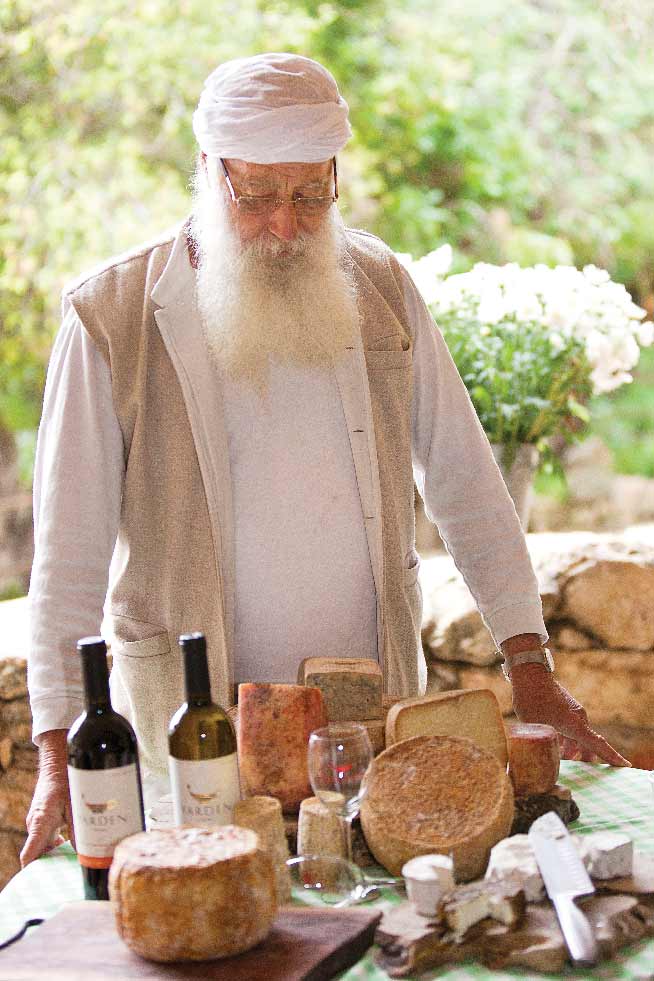
Hiking through the Jerusalem hills, wooden signs adorned with an image of a goat lead the way to a delicious goats’ cheese dairy, nestled in a cavernous hollow close to the Sataf springs. Owned by ‘artist’ Shai Seltzer, together with his sons, he has been creating his mouth-watering goats’ cheeses for close to forty years.

A former Botanist, Seltzer received his first lesson in cheese making from a local monk and has continued to learn about cheese making techniques ever since. He has become somewhat of a jetsetter, attending international conferences on artisanal food from Europe to Africa to Asia, tasting, smelling and learning as he goes. “It is a way of life; we live within the cheese making process.”

Seltzer explains that the process is akin to painting a watercolor. One begins with a wet canvas and slowly but surely, the colors are added to create a masterpiece. Likewise, with artisanal cheese, one begins with the milk and then the specialist enzymes, yeasts and bacteria are added, and slowly but surely, the unique cheese is created. “Milk is the ultimate food and the foundation on which life is developed,” says Seltzer. “We then carefully nurture this base to create our cheeses.”

Seltzer’s cheeses are made with painstaking love, tasting the cheese in every stage of preparation, adjusting and refining the process as he goes.

“The cheese we create is an expression of the land on which it is created,” says Seltzer. “Month to month, year to year, according to the weather, what the goats are eating and the land on which they are grazing , the cheese changes. We can give a name to each type of cheese but it is incomparable to cheeses created elsewhere. Our cheeses are simply an expression of the Judean Mountains.”

Alongside the natural limestone cave in which the cheeses are stored to mature and ripen, over 170 goats graze on the mountainside. These goats have adapted to their lush, mountainous surroundings and produce high quality milk, rich in fat and dry matter (milk content excluding the liquid). The Seltzer family has developed a range of cheeses which they serve to visitors alongside specially selected wines which bring out the unique flavors in the cheese. “Wine and cheese make a wonderful pairing once you discover the perfect match,” explained Shai Seltzer’s son, Omri.

Omri Seltzer produces overflowing cheese platters and the wines with which they are served. “Here in Israel we have wonderful wines but we chose the award winning wines from the Golan Heights Winery both due to their depth of flavor and also, in our opinion, because they are the best kosher wines.” Being a kosher dairy has not limited Seltzer and he says that their farm is one of the few places that observant Jews are able to sample hand crafted, artisanal food served with high quality, internationally acclaimed wines.

Soft cheeses

The first cheese group to be sampled is the Seltzers’ range of soft cheeses. These are deliciously decadent, creamy cheeses whose flavors coat the tongue as it melts in the mouth. There is a scrumptious fresh cheese wrapped in vine leaves which adds yet another dimension to the flavor and then there is the crumbly ‘Mony’ cheese which has a much softer, delicate taste.

The soft cheeses, Omri Seltzer pairs with the Yarden Gewurztraminer. The Yarden White Gewurztraminer is what can be described as an off-dry, fruity wine which noticeably enhances the cheeses’ flavor. The fruitiness and tart acidity of the wine cuts through the creamy cheese, refreshing the palate and allowing the individual flavors in the cheese to be fully expressed.

Hard Cheeses

Proceeding to the hard cheeses, the platter Seltzer produces is laden with cheeses of a range of colors, textures and sizes. These cheeses have tough rinds which absorb the earthy aromas of the cave in which they are stored. One such cheese, ‘Michal’, is a young hard yellow cheese. Its ability to both crumble and melt in your mouth is only half of its charm. An exhale through the nose completes the tasting, leaving the tongue with a robust flavor majestically capturing this rich cream of the goat’s milk and the gentle bitterness and earthy flavors from the seven months of fermentation in the farm’s cave.

These harder cheeses need a fruity, fuller bodied wine to complement them and Seltzer pairs them with the Yarden Cabernet Sauvignon or the Yarden Pinot Noir. The Pinot Noir’s fruity notes of sour cherry and raspberry are delicious on their own but paired with these hard, goat’s cheeses; develop into a well-rounded wine filling the palate with its elegant finish. The Yarden Cabernet Sauvignon is undoubtedly a full bodied wine, fit to pair with the strongest cheese. It is deliciously complex and in addition to its noticeable fruity character, its earthy and oak notes complement the earthy flavors present in the cheese.

Aged Cheeses

Ending the tasting with the special Yarden Heightswine, Seltzer produces their masterpiece, a cheese aged for four and a half years in their cave. This aged cheese, hard like the rind of Italian Parmesan but crumbly like short bread, is an ecstatic collision of sharp nutty flavors with gentle creamy tones. It has a subtle sweetness and for this reason is delightfully paired with the Yarden Heightswine, a sweet desert wine.

The Yarden Heightswine has deliciously concentrated flavors with a long finish leaving aromatic hints of litchi and summer fruits lingering on the tongue and complementing this unique cheese. The Heightswine is a sweet wine that leaves even the most ardent ‘dry-wine fan’ hankering after a second glass and could easily be served with any cheese platter. Paradoxically, sweeter wines are often paired with sharp, blue veined cheeses as they break down the salinity and sharpness of the cheese, creating a perfect balance.

For visitors travelling the beaten paths of the Jerusalem Hills, the Seltzer’s farm is a highly recommended pit-stop to tantalize the taste buds. For those wishing to recreate the experience at home this Shavuot, presenting a smorgasbord of carefully paired cheeses and wines will delight guests and elevate this dairy-themed festival to new levels.

By Anna Harwood

How to get there: From the Sataf Visitor’s center, either park your car and descend by foot or continue on the rocky path following the signs with pictures of a goat until you reach the small farm nestled on the mountainside.
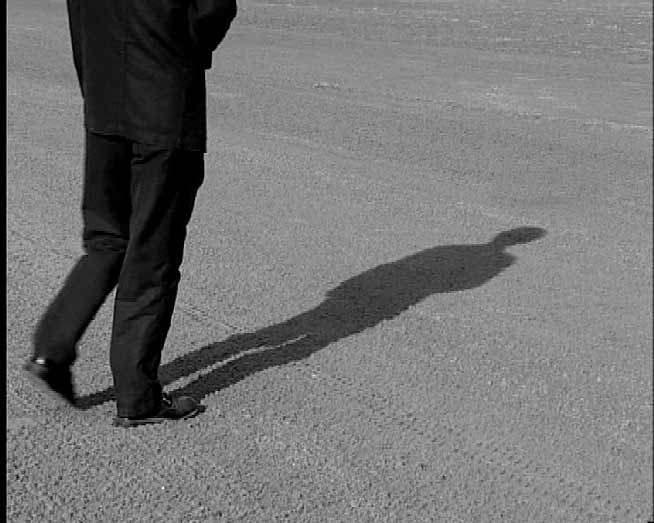

 

Me and My Shadow

Sometimes, people get spooked by things or are easily frightened, and we’ll say they’re afraid of their own shadow. Well, I’m not generally a fraidy-cat (no offense if your name is actually Fraidy Katz) and usually I investigate first. Then I might get scared.

One day I was in my kitchen and I glanced out the glass patio door. That’s when I saw it. A huge monster was on my deck, just a few feet away from my table. I couldn’t actually see the monster; I could just see his shadow. Now, I’m not one to be afraid of a shadow, so I went to check it out. And that’s when I saw it: an eensy-weensy spider who probably couldn’t have climbed up a… up a … well, let’s just say it was tiny.

He was climbing up his web, or maybe going down it, I don’t know, I’m not an expert in things arachnid, and though he was physically barely larger than a speck of dust, the afternoon sun made him cast a huge shadow. Like most things, it got me to thinking.

I thought about the fact that though he was a tiny spider, he was able to make a much bigger impact on me. Though physically small, the shadow he cast was many times larger than he was. How many times have we walked with children who point with glee to their shadows and say, “Look! I’m taller than you!” Now, in my case, at a whopping five feet, seven inches tall, that isn’t a big deal, but for a five-year old, that’s huge.

It would seem, then, that shadows can teach us a lesson about physical limitations. The truth, it turns out, is that empirical evidence is not generally a determining factor in environmental impact. I may be just one person, in a specific locale (currently at my computer with no one else around,) but I can still reach others and my shadow-like sphere of influence is many times greater than my physical sphere would be, for example if I tried speaking or calling out to whoever could hear me.

R’ Moshe Feinstein z”l, was a giant, even though I don’t think he broke the five-foot mark. He said he feared that when he got to Heaven they would ask him if he had spread enough Torah, so he began writing seforim. A book can travel much farther than he could, can be in multiple places at one time, and can last for years, reaching people he couldn’t physically have reached. That’s the shadow effect, helping someone to be larger than life and greater than their physical dimensions.

Say you had to go to the hospital with someone on Shabbos. You might find Kosher food and drink there because someone thought about setting up a hospitality room for such circumstances, even when they wouldn’t be there in person. If you compliment someone, or teach them something, your words could live on in their memories for years or decades, maybe even a lifetime, affecting their behavior, and even what they pass on to others. That larger-than-life result can be attributed, once again, to the shadow effect.

That also got me to thinking about how shadows are made. We don’t have shadows in the dark. That’s because in order to cast a shadow you need a light source. I remember one night when I went to pick my daughter up and left the car running as I walked to her friend’s home. The headlights made my shadow HUGE and I looked taller than the house. It seems that the closer you are to the light source, the bigger a shadow you will cast. And that fits in exactly with my lesson from the spider and R’ Moshe.

Have you ever tried to catch a shadow? You can’t do it because a shadow isn’t tangible. In essence, a shadow is just a measure of how great the object between you and the light source is. It’s the effect that object has in blocking the light and casting its shade on other things.

Throughout the Torah, shade is construed as a form of protection, and a sign of closeness. Lot said the visitors had come to the shade of his roof beam and so he was bound to protect them. Moshe said that Betzalel must have been “in the shadow of HaShem,” i.e. very close to Him, to have such a deep understanding of how to build the Mishkan. In Tehillim, Dovid HaMelech says, “HaShem is your guard; HaShem is your shadow upon your right side.”

The greatest light source in the world isn’t the headlights of a car, it’s not the spotlight on a stage, and it’s not even the sun. In truth, the greatest source of light is HaShem, Himself. And, the closer to Him you get, the bigger your shadow, the bigger your potential influence on others.

Sometimes this influence is misused, when people in leadership positions take their opportunities for guiding people and use them for personal gain either financially, emotionally, or otherwise. You may have people coming to a Rebbe, a Rabbi, or even an entire movement of Judaism seeking enlightenment but simply being put more in the dark then they were before. Those are the people in front of an artificial light source.

The truly great people are the ones who are close to HaShem. The closer they get to the real source of enlightenment, the bigger shadow they cast. Like R’ Moshe, they use their shadow to comfort people, protect them, and guide them. They don’t block the light. They reflect it themselves so it spreads even further and we who see them get a sense of their greatness by how far the shade of their protection spreads.

We all have the ability to cast a shadow, and we all have the ability to make it spread as far as possible by coming closer to the Light Source. We have a responsibility to go beyond our perceived limitations and realize that we can influence more people than we imagined by recognizing how our shadows work.

So, am I afraid of my own shadow? Not at all. I’m in awe of it.

By Rabbi Jonathan Gewirtz

Jonathan Gewirtz is a freelance writer whose work has appeared in publications around the world. He also operates JewishSpeechWriter.com, where you can order a custom-made speech for your next special occasion.

For more information, or to sign up for the Migdal Ohr, his weekly PDF Dvar Torah in English, e-mail info@JewishSpeechWriter.com and put Subscribe in the subject.

© 2013 by Jonathan Gewirtz. All rights reserved.


How do I love thee?

In just a short time Shavuot will be upon us and we will once again rejoice in the marriage of the Jewish people with the Torah and our G-d. The concept of unity—with G-d, as a nation, or as a couple—is foundational to the Jewish experience and to our personal experience in this world. From the time most are little there are dreams of finding our beshert, the one destined for us, and we daydream about who he or she is, how we will meet, and what our lives will look like together. Will there be a big wedding or small? Will there be good familial relations between in-laws? Will there be children? If so, how many? Who will they look like? Where will we live? The questions are endless, as is the subject of marriage and unity throughout the Torah and our most revered texts. Given the importance of marriage both in our personal lives as well as our religious paradigm, I’d like to spend some time with you in this article exploring various facets of Jewish marriage in modern day as I see it through my lens of being a married observant Jewish woman who also works with couples in private counseling practice. Let’s start with one of the most anxiety-producing subjects related to marriage . . .

WHERE IS MY BESHERET??

Or, am I married to my besheret? Or, is he The One? Or, am I The One? The truth is there is only one answer to these questions: Only G-d knows. I know that’s not what we want to hear, but there is no way for us to know who is destined for us, what our soul’s path requires, and if we will merit our true “soulmate.” However one thing I do know for certain is that one of the best ways to draw our partner to us—married or not yet married—is to focus on our own personal spiritual work of becoming the best versions of ourselves and to focus less on what the other person needs to fix (if married) or on what we want our ideal mate to be like (if not married yet). We have no control over others or over G-d’s greater plan, but we do have some control over the person we are and are working to become. Somehow the magic happens and . . .

HURRAY! THE CHUPPAH IS FINISHED, SHEVA BRACHOT DONE!

Mazal tov! You found him or her and you’ve stomped the glass! All was (hopefully) delightful and now it’s time to send thank you notes and start to build a home together. At first things are amazing. You’re sharing time together, learning about each other more, and getting into a married-life rhythm. There are challenges here and there but you face them as a team and feel that together you can take on the world! Until that first major conflict . . .

I HAVE MADE A HUGE MISTAKE.

You are upset. You feel a knot in your stomach. You feel a bit nauseous. How can it be that this person, my other half, my “you complete me”, doesn’t do exactly as I say? How can he be so insensitive? Does she think I’m her child to order around? What happened to that perfect person I fell in love with and married? Was he or she replaced with an evil twin? After the initial shock of a first major argument one comes to realize that in fact our spouse is a person, and like all other people, he or she has strengths and weaknesses. We all have wonderful character traits and some wretchedly awful ones too. The beauty of marriage in its rawest form is that there is no hiding. Mistakes will be made. Words will be said. Regrets will be created. However there are blessings in everything and so the trick is to take those mistakes, words, and regrets and squeeze the lessons from them. It’s important to never get stuck in those less-than-perfect moments and consciously shift your view to see the glass as half-full . . .

OKAY, I’VE GOT THIS.

Somewhere within those first years of marriage the three parties who married under the chuppah—the bride, the groom, and G-d—will start to coalesce and gel into something that becomes its own creation, different and unique than any of the individual parties prior to the chuppah. This new formation or unit must find its own feet to stand on, its own code of ethics, its own pattern of living. For a Jewish couple, this can be done using the technology of Torah and mitzvot as foundations. Once this entity called “couple” begins to have its own unique identity, the work really begins. Much like a person drawing closer to G-d, working to draw closer to a spouse requires focus, dedication, empathy, attachment, vulnerability, willingness to admit wrong-doing, and generally an attitude of “I’ve got this.” In marriage you will be witnessed—for better or worse. You will be tested. You will be elated at times and at times brought down low. Regardless, marriage is the ultimate classroom, your process with your spouse is the ultimate curriculum, and shalom bayit (peace in the home) is your ultimate goal and reward.

HAPPILY EVERY AFTER . . .

Okay let’s just pop this bubble right now: “Happily ever after” is a Disney story, a completely fictitious affair. Got it? Get it out of your head that marriage can be, should be, or is . . . EASY. Most of us have a hard enough time managing our own ups and downs let alone those of our spouse and children. In today’s divorce-ridden society we simply do not know what will be, and the truth is we don’t need to know. What we DO need to know is that it is up to each and every spouse to show up—day in and day out—and to hold on to the idea in our heads that as long as we give 100% in the marriage then whatever the outcome it will ultimately be the best result for all involved. No matter what, if we fail to see that we are accountable to our spouse in marriage, it is imperative to be clear that we are accountable to HaShem in every moment of our lives.

Whether you wish to get married or are married, or wish to get un-married or re-married, take time this Shavuot to appreciate the ultimate marriage—that of HaShem to us, his people—and ask yourself how you are doing with that marriage in order to draw the strength you need to merit meeting and/or building a home with your partner in life. Part of the process of effective personal growth and relationship development is to take time to deeply reflect on lessons learned and lessons yet to be learned. The holiday of Shavuot provides a beautiful time and energy to do just that. Chag sameach!

 By: Mia Adler Ozair

Mia Adler Ozair, MA, LPCC, NCC is a licensed clinical psychothera- pist and educator
with a private practice in Beverly Hills, California. Mia is licensed in both California and
Illinois and she can be reached through her
web- site at www.bhcounsel- ingcenter.com,
e-mail at mia@bhcounseling- center.com, office 310- 464-5226, or followed on Twitter
@MiaA- dlerOzair

All Star Lineup for Concert in LA

1

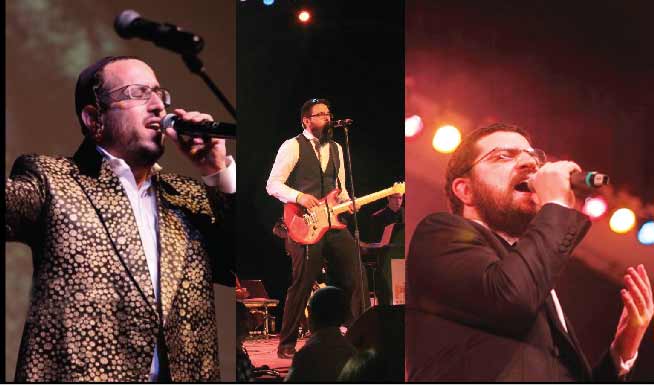
Jewish music superstars Lipa Schmeltzer, 8th Day, and Benny Friedman are teaming up to create one of the hottest shows ever to hit Los Angeles. The concert, which is being presented and sponsored by Bais Chaya Mushka Girls School, will also feature comedian MODI as the MC. The grand event is scheduled for Thursday evening June 20th, 2013 and will take place at The Wilshire Ebell Theatre in downtown Los Angeles.

”This school makes a real difference for our children,” says Shmuel Marcus of 8th Day. ”We’re very excited to be a part of this amazing concert and to rock the house with our hometown crowd.”

With all this incredible talent on one stage this promises to be one spectacular show you don’t want to miss.

Bais Chaya Mushka serves the greater Los Angeles area and has hundreds of students enrolled yearly. They continue to strive to bring top notch education to young girls in the Jewish community. This concert will help raise the much needed funds to keep the school running at a high and well qualified level.

After being asked about the upcoming concert Lipa proclaimed; ”I love going to LA! We are preparing an extra special show. I can’t wait.”

Tickets are available at JewishTickets.com and your local Judaica stores.

For more information and sponsorship opportunities, please email -JewishConcertLA@gmail.com

A $5 Million Grant for Israeli Hospital

0

Rambam Hospital Awarded $5 Million Grant from the Helmsley Charitable Trust.

(New York, NY) – Rambam Hospital in Haifa, Israel, has received a $5 million grant from The Leona M. and Harry B. Helmsley Charitable Trust in order to purchase the necessary medical equipment for its new fortified underground emergency hospital.

The Sammy Ofer Fortified Underground Emergency Hospital is a three-story, 60,000 square meter facility, which is fully fortified against both conventional and unconventional warfare. As the largest hospital of its kind in the world, it can convert from a 1,500-vehicle parking lot into a 2,000-bed emergency hospital within just 72 hours of war being declared. The grant will go towards buying equipment for the hospital, thereby contributing enormously to preparing it for use.

“The initiative for a fortified hospital came about following the Second Lebanon War six years ago,” states Professor Rafi Beyar, Director and CEO of Rambam Health Care Campus. During the course of the war, 45 missiles fell in close proximity to Rambam, and although no one was hurt, it triggered off the thinking among hospital executives that action needed to be taken. “We realized that we couldn’t rely on miracles anymore,” continues Beyar. “We had to prepare for any future threat by having a safe area where patients could be moved to and where staff could function.”

Six years later, the building of the new fortified hospital is almost complete and once all the relevant equipment has been bought, the hospital will be fully functional.

“We are extremely thankful to the Helmsley Charitable Trust for granting us this donation, which we will use in order to procure vital equipment for the hospital,” remarks Beyar. “Unfortunately, the threat of war has grown increasingly strong over recent years. As the main referral hospital for over two million people in the North of Israel, Rambam Hospital is determined to have the capabilities of providing acute and chronic hospital care under fire to all those who need it.”

“As security and health care preparedness are core objectives of our program in Israel, we are pleased to support Rambam in equipping this vitally important new facility,” said Sandor Frankel, a trustee of the Helmsley Charitable Trust.

About The Leona M. and Harry B. Helmsley Charitable Trust:

The Helmsley Charitable Trust aspires to improve lives by supporting effective nonprofits in a variety of selected program areas. Since 2008, when the Trust began its active grantmaking, it has committed more than $800 million to a wide range of charitable organizations. The Trust’s grantmaking program in Israel supports leading institutions and initiatives that seek to strengthen the nation’s leadership in scientific, technological and medical research, its health care preparedness, and its standing in the world. For more information on the Trust and its programs, please visit www.helmsleytrust.org.

About Rambam Hospital:

Rambam Health Care Campus is the largest medical center in Northern Israel, serving more than two million residents. Recognized worldwide as a center of excellence in all medical specialties, its global prominence in trauma and emergency medicine is a direct result of its prodigious experience providing medical treatment to injured civilians and soldiers.

It’s About Time

0

Over Pesach, my daughter told us that we call it Pesach because we’re focused on what HaShem did for us (passing over the houses) while in the Torah it is referred to as Chag HaMatzos, because HaShem focuses on what we did, leaving so quickly that we couldn’t even let our bread rise.  It reminded me that being focused on and proud of the achievements of the other party is a wonderful tool for strengthening any relationship.

It was therefore curious to me that in Shemona Esrai, throughout the Yom Tov, we say Chag HaMatzos.  Shouldn’t we continue the idea of praising what HaShem did for us and call it Pesach?  It was only on the seventh day of Pesach that I was inspired with an answer.

We don’t just call it Chag HaMatzos.  Instead, we have a complete phrase, “Chag HaMatzos, Zman Cheirusainu,” meaning, “the festival of Matzos, the time of our freedom.”  What, I kept asking myself, is the connection between matzah and freedom?  On the contrary, we call it the bread of our affliction, poor man’s bread, and don’t think of it as a shining symbol of liberty like some glorious light-brown circular flag blowing in the wind.

Well, if we define being rich as not one who has a lot, but one who needs little (which we do – check out Pirkei Avos), then freedom could be defined not as one who is in control, but as one who is not controlled by external forces and desires.  In other words, the less I need, the less others have control over me.

Of all foods, I thought, matzah needs the fewest ingredients.  It only needs two, flour and water, and is even missing a key ingredient in all other types of bread – TIME.  Yes, when the Jews took their dough out of Egypt, they didn’t allow time for it to rise.  They were told to go immediately and that’s what they did.  They didn’t worry about the fact that they didn’t have the time they needed so their food would be ready.  They just left, and that is a great aspect of freedom.

People are always complaining that we don’t have enough hours in the day. There’s too much to do and not enough time.  Even Chazal said it, “The day is short and the workload is large.”  It’s easy to get discouraged, but instead of stressing about the fact that there’s not enough time to get it all done, let’s remember the end of the Mishna – “It’s not your responsibility to finish the job, but you are not free to neglect working on it [with whatever time you are given.]”

The freedom we experienced from the matzos was the ability not to worry about the finished product, and just to do what we need to do now.  We left the results up to HaShem and got matzah, which is even better than bread because it can be eaten for much longer without going bad.  In fact, in the desert heat it probably stayed light, crispy and tasty.

I remembered this thought one day as I was driving behind a v-e-r-y s-l-o-w driver.  I was trying to get to shul for Mincha, and this guy was making his way ever so slowly down the one-lane road, with no opportunities to pass him.  He was doing about ten miles an hour below the speed limit.  I started to get annoyed and angry, then told myself, “It’s up to G-d whether I make it in time.  At this moment, I have to recognize that I’m not in control.”  It worked.  I calmed down, and drove without getting road rage or showering him with “blessings.” (I made it to Mincha.)

We’re now in the period of Sefiras HaOmer, and we count each day.  We don’t say, “Today is fifteen of fifty,” we say, “today is fifteen.”  Part of the lesson that we learn from Pesach and Shavuos, including the interim weeks, is that we don’t have to worry about finishing the job, but rather making the most of the time we are given to work with.  Each day should be a goal and each day should be an achievement.  “Am I doing what I am supposed to do at this very moment?”  If I am, then I am free.  I am not beholden to an end result that is beyond my reach, and I am not bound by a need to fill twenty-four hours in a day with thirty-six hours’ worth of work.

In our lives, we will not have the time to do everything that must be done in the world.  However, if we spend time worrying and lamenting that fact, then we’ve wasted some of the precious time we HAVE been given.

This lesson is one we learned from HaShem when we relinquished control and left with the unrisen dough.  It was G-d who gave us the matzah which taught us this special lesson about freedom and life, and that’s why we focus on this gift during Shemona Esrai, seeing it as just one more of the myriad billions and trillions of things He does for us on a daily basis.

Freedom is about time.  It’s about knowing that at this moment I’m exactly where I should be.  This knowledge about time is a gift – that’s why they call it the present.

By Rabbi Jonathan Gewirtz

Jonathan Gewirtz is a freelance writer whose work has appeared in publications around the world.  He also operates JewishSpeechWriter.com, where you can order a custom-made speech for your next special occasion.

For more information, or to sign up for the Migdal Ohr, his weekly PDF Dvar Torah in English, e-mail info@JewishSpeechWriter.com and put Subscribe in the subject.

© 2013 by Jonathan Gewirtz. All rights reserved.


Empowering Change

0

How Kemach is tackling Israel’s socioeconomic problems head on.

 As the social justice protests of 2010 demonstrated, Israel’s citizens have long felt aggravated by certain sectors of society who they believe are not pulling their weight.    With Israel’s growing Ultra-Orthodox population now numbering around 800,000, and just 40% of working age Ultra-Orthodox men employed, the need for a solution has never been more pressing.

But the challenge is not an easy one. Think-tanks, journalists, and regular Israelis discuss the “Hareidi problem,” but very few organizations have actually developed solutions which both respect and empower this fragile community. The Ultra-Orthodox believe that the preservation of Jewish heritage and deep rooted tradition can only occur through continued Torah study, and this is coupled with a deep-seated fear of the secular workplace. Meanwhile, the extreme attitudes from the opposite end of the spectrum, demanding a complete integration into Israeli society, further compound the problem and do nothing to allay these fears.

While the average monthly household income in Israel is a little under $4,000, for the Ultra-Orthodox, this amounts to a little over $2,000. The Ultra-Orthodox have lower rates of employment, unpredictable patterns of work which can leave them in abject poverty. Low earning potential, coupled with government support declining dramatically as soon as employment begins produces an incredibly low incentive to work.

“We needed to find a way to empower the Ultra-Orthodox to strive for better earning potential and, in this day and age, it comes through knowledge and training,” said Moti Feldstein, director of Kemach. Kemach, (whose Hebrew acronym stands for ‘Promoting Hareidi Employment,) was established in 2007 to provide career-appropriate education, enabling community members to work in long-term, decently paid jobs to reverse the cycle of poverty.

Up until 2 years ago, Moshe Shechter’s life path did not diverge from the traditional route of an Ultra-Orthodox male. Born in Haifa 39 years ago, he went to cheider, to yeshivah, and finally to Kollel. He married within the community and together raised seven children. Two years ago, Moshe was devastated to realize he could not provide for his family. “I turned to Kemach, having seen their logo on an advertisement for a course for Hareidi men being offered in conjunction with the Technion,” explained Shechter. Kemach put him through intensive testing to determine suitability and after a day-long battery of tests, they put his name forward for acceptance.

In late 2011, Shechter was accepted to study Geographical Information Systems and Mapping in a brand new Bnei Brak branch of the Technion for religious students. “There is a severe lack of trained professionals in every field of civil and environmental engineering,” said the dean of the faculty at the Technion, Prof. Arnon Bentur. “We will help Haredi students in Bnei Brak acquire a profession that guarantees them a respectable career combining income with a broad vista for advancing in the public and private sectors.”

The decision for Shechter to attend the course was not simple – he had never studied physics or mathematics, and certainly not English. Not deterred by these challenges, he was, however, daunted by the cost. Although his wife worked in between maternity leaves, her saleswomen’s salary was in no way sufficient to support him through school. Kemach agreed to provide a loan to cover tuition fees and living expenses which, upon completion of the course, will turn into a scholarship (Kemach has an exceptional completion rate of over 95% for all their vocational and academic courses).

“I am now approaching the end of the initial year and a half of preliminary studies,” proudly remarked Shechter. “It hasn’t been easy and it is a very different environment to the Beit Midrash [religious study hall], but Kemach ensured that the course was respectful of the requirements of an Ultra-Orthodox community and that the student body was serious and motivated to succeed.”

Social work student Mendy Zilbershlag has also seen first-hand how crucial the whole package offered by Kemach is. “Kemach is a wonderful organization and one that goes a lot further than simply handing out scholarships,” said Zilbershlag. “If they simply handed out money without advice, the money ultimately becomes worthless. With Kemach, I went through evaluations, psychological assessments and received a wealth of career advice before deciding to become a social worker.”

Zilbershlag attends the Hareidi College of Jerusalem, which acts as a campus for courses from a range of Israel’s top Universities. Zilbershlag’s course is provided by Bar Ilan University, and is taught separately for men and women. Despite the adjustments made for the needs of the Ultra-Orthodox community, including alternative course materials, Zilbershlag says that without the additional support of Kemach he would not have succeeded. His course began with 40 students, now just 10 remain.

“Many families are against academic study and exert immense pressure on students to return to Kollel [full time religious study]. Additionally the financial commitments involved in supporting a large family while studying, even part-time, is too great a strain on many students.” Kemach provides both financial and emotional support to all students enrolled on its courses.

The road to advancing meaningful employment in the Ultra-Orthodox community is not simple or one that can be hastened. Change must occur at a steady pace and, as is evident by the 13,000 applicants who have thus far turned to Kemach, it appears change is welcome. Kemach is succeeding in overturning the downward trend of employment afflicting the Ultra-Orthodox community. Upwards of 80% of Kemach’s 2,000 graduates are employed, and 70% state that they have seen a significant increase in earnings. Now, the challenge is how to expand the infrastructure to accommodate this increased demand.


By Anna Harwood


Musings on the bombing in Boston

0

I am sitting at my laptop as the older boys bounce a ball back and forth safely between themselves, and my heart is stopping to race.

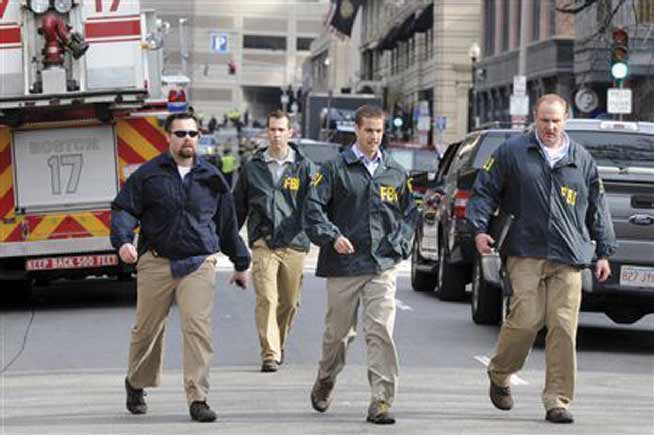
My wife called me at 3:00pm to get the kids right away; there was an explosion at the finish line at the Boston Marathon. The kids go to the Chabad School, New England Hebrew Academy, just a mile or so away from the blasts.

We live in a suburb of Boston, some 15 miles north of the City of Boston, and it is usually a traffic crawl the entire way. Today being a Massachusetts Holiday, Patriots Day, there were thankfully no cars on the road.

The whole way in, driving at speeds I care not mention, my mind kept on going back to my kids. The radio was reporting that there were more bombs found and all I could think of was I hope they are fine. As I crossed the bridge into Boston my cell phone seemed to not be working properly only heightening the anxiety. Thankfully, the phone kicked back in and I saw an email from the school announcing that all the kids were accounted for and safe.

I kept thinking, this stuff doesn’t happen here. After 9/11, though there had been plots and threats, all had been thwarted and no one had been hurt due to terrorism since. And Boston, well it is just safe. Alas, we all have our “reality bites” moments.

After gathering my kids into my car and heading back North, trying to field their thousands of questions, I realized that their world, and mine, won’t ever be the same. The terrible reality that evil exists and can touch them even here at home is heartbreaking.

We associate bombs, sadly, with Israel or Iraq, not Boston. Later, another wise email came from the school nurse; to try to avoid the news and not share too much with the kids so as not to overwhelm ourselves and them. But, the calls and texts kept coming in. Until I heard some positive stories of the greatness of the human spirit and decided that this is a better route to go about when responding to my children.

Rather than focus on how many killed or injured, focus on the people along the parade route who are coming out of their homes to give people water, or food, or a place to rest or stay, since the City was in virtual lock-down and many could not get to their homes or hotels.

An email pops in from Rabbi Posner in Boston, the Chabad center likely closest to the bombing…

The Chabad House and the Posner family are okay, Thank G-d.

Two things:

1. If anybody is in the area that needs help – a runner/family that needs a place to stay, a hot drink, a hug or wants to daven… whatever.

OUR DOORS ARE OPEN.

2. Thank you so much to all that texted, called, emailed, FB messages to see how we are!

We love you.

Shmuel and Chana

It hit me, this is the appropriate response.

Thank GD everyone is OK, now what can I do to help? We will all get past this, the perpetrator/s will be caught and punished, security will never be the same, we will have to live with the new realities that this event has inevitably thrust upon us.

However ,if we can take the positive message, and if we can convey it to our children, that tragedy while very frightening, is an opportunity to grow and give, rather than cower and run, then at least, as a parent I will give them something strong and positive to hold onto. Perhaps that will be the tool to help them get through this.

May Gd comfort those who have lost loved ones, and may he heal all the injured and we speedily be ushered into the era, where “death will be swallowed up forever, and G-d will wipe away tears from all faces. May we know happy times.

 By Rabbi Nechemia Schusterman


WP Twitter Auto Publish Powered By : XYZScripts.com