Los Angeles…February 25, 2013…The new performing arts department of Valley Torah High School’s girls division will present, for women only, “Dreams of Hope,” Sunday, March 10, at 3:00 p.m. and 7:00 p.m. at the Salter Family Theater at Beverly Hills High School.
“Dreams of Hope” was inspired by “The Pianist of Willesden Lane,” a one-woman play based on the book by Mona Golabek, The Children of Willesden Lane. The book and play chronicle Golabek’s mother’s experience as a participant in the Kindertransport during World War II. Golabek is a concert pianist, as was her mother, Lisa Jura, and her maternal grandmother, Malka Jura, who died in Auschwitz.
The play uses music as a vehicle to “celebrate the power and triumph of the children of the Kindertransport,” says Lisa Pietruszka, VTHS director of performing arts and author of the creative adaptation. “It’s about children facing adversity and through adversity being able to triumph.” Directed by Cindy Kania, the play features live classical piano music, dance and choral numbers. To inspire them for their own production, last September, VTHS invited the girls to a moving performance of “The Pianist of Willesden Lane,” at the Geffen Theater in Westwood.
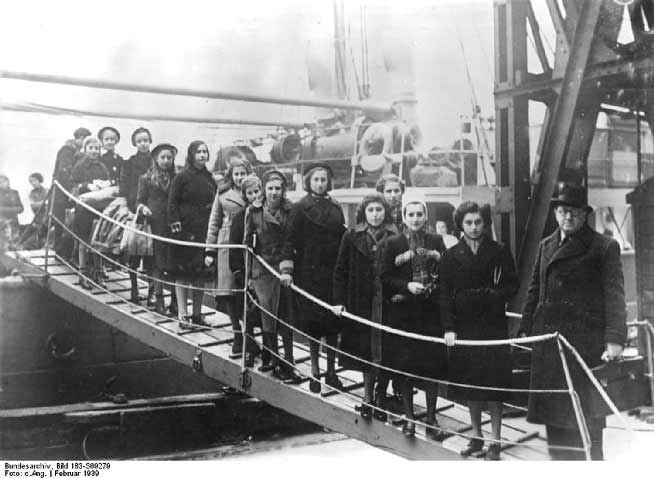
The Kindertransport was a rescue mission of nearly 10,000 predominantly Jewish children from Natzi Germany, Austria, Czechoslovakia, Poland, and the Free City of Danzig prior to the outbreak of the World War II. The Unites Kingdom took in the children and placed them in British foster homes, hostels, and farms. Some of them were the only members of their families who survived the Holocaust.
Introduced last fall, the VTHS performing arts department has five components: vocal music, dramatic arts, creative writing, dance (modern, jazz and ballet) and theatrical production. All the elective disciplines collaborated on this production. Pietruszka, a professional pianist and music teacher, designed and oversees the department. VTHS also has a thriving, award winning visual arts department. Both programs place a strong dual emphasis on fostering a love of the arts and teaching the girls life skills through the arts, such as collaboration, determination, presentation and self-confidence.
Spring may not have come yet to Washington, DC, but on Wednesday, February 27, 2013, the unique relationship between the United States and Israel was in full bloom. Several hundred Jewish leaders from across the U.S. journeyed to our nation’s capital to offer their gratitude to members of the United States Senate and House of Representatives for their staunch support of the U.S.-Israel relationship. Nearly two dozen Members of Congress, whether they are ultra-conservative or extremely liberal in their political ideologies, put partisanship aside and participated in this special program in order to stand united with the State of Israel.
The Iron Dome Congressional Tribute, which was coordinated by Ezra Friedlander and The Friedlander Group, was chaired by Robert Rechnitz, a prominent Los Angeles based Jewish philanthropist and businessman who is the Principal of Bomel Companies.
This historic event was a celebration of the everlasting U.S.-Israel alliance and a tribute to the United States Congress for the Iron Dome Missile Defense System. In addition, there was a special tribute to the memory of Senator Daniel Inouye of Hawaii, who was a courageous defender of the State of Israel, a stalwart supporter of the bond between the U.S. and Israel, and one of the individuals who was instrumental in securing the funding for the Iron Dome.
During the recent conflict in Israel in November 2012, the world witnessed the technological marvels of the Iron Dome Missile Defense System and the unbelievable manner in which it saved the lives of thousands of civilians. With thousands of deadly rockets raining down on Israeli cities, the Iron Dome effectively disabled the overwhelming majority of those rockets and prevented widespread devastation. Since 2009, the Obama administration and the U.S. Congress have allocated an unprecedented $275 million in funding for the Iron Dome.
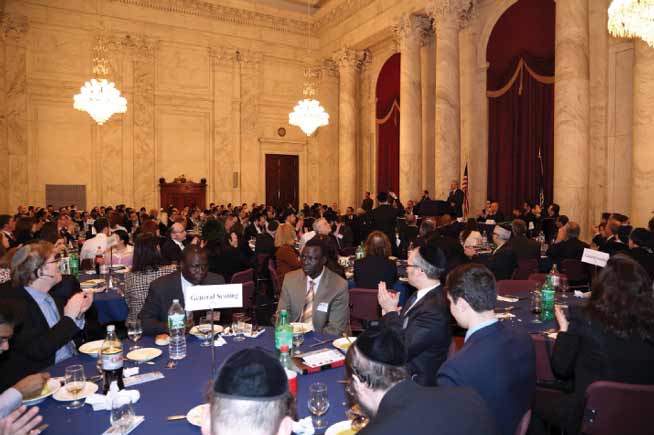
The program began with a gourmet luncheon in the majestic Kennedy Caucus Room of the United States Senate. The emcee was Phil Rosen, Esq., one of the premier corporate and property attorneys in the United States and a prominent Jewish communal leader who is Vice-Chairman of the Republican Jewish Coalition, and the Founding and Current Vice Chairman of the Board of Yeshiva College.
In his introductory remarks, Robert Rechnitz noted that everyone in the room was there to give thanks to the United States. “We have no political agenda,” said Mr. Rechnitz. “We are here to simply offer our gratitude to the United States for its unwavering support of Israel.”
Republican Congressman Ed Royce of California, who is the Chairman of the House Foreign Affairs Committee, spoke about the 90 percent success rate of the Iron Dome in November and how important it was that Americans got the opportunity to see the defense system work effectively. He also recounted how his father was one of the people who liberated Dachau as a member of the American military during World War II. His father took pictures of what he witnessed in the death camp and embarked on a tour of college campuses in order to tell young adults about the horrors of the Holocaust. “My overriding goal as Chair of the Foreign Affairs Committee is to strengthen American allies like Israel and weaken our enemies like Iran and Hezbollah,” said Congressman Royce.
Republican Senator Roger Wicker of Mississippi talked about the great relationship between Israel and the United States over the past 65 years. “Israel lives in a very unwelcoming and hostile neighborhood,” said Senator Wicker. “That is why we need to support the Iron Dome.”
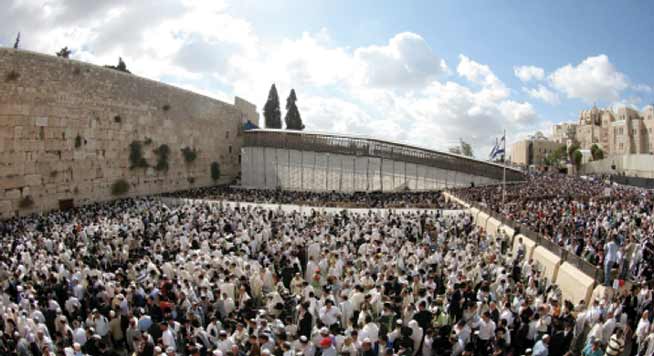
Senator Rand Paul, a Republican from Kentucky, spoke about his trip to Israel and how much he enjoyed being there. He told the crowd how he sang Hebrew songs together with a group of rabbis at the Western Wall, even though he had no idea what the words meant “It is not our job to dictate to Israel every bit of policy minutia,” Senator Paul said. “It is not our job to tell Israelis where they can or cannot build.”
After giving a “shout out” to “the best ambassador in town – Michael Oren,” Republican Congresswoman Ileana Ros-Lehtinen of Florida, a vocal supporter of Israel, noted that she is introducing the Iron Dome Support Act, which is a testament to how much the U.S. values its relationship with Israel. “The Iron Dome saved thousands of lives and it must continue to do so,” said Congresswoman Ros-Lehtinen.
Referring to the United States and Israel, Republican Senator James Inhofe of Oklahoma, who is a Ranking Member of the Armed Services Committee, said that “our interests are the same and I am going to make sure that it stays that way.”
Democratic Congressman Adam Schiff of California got the crowd laughing while discussing his recent trip to Israel. “When your name is Adam and you’re married to a woman named Eve, going to Israel is like coming home. What can I say? It’s bashert.”
When he addressed the crowd, Ambassador of Israel to the United States Michael Oren noted that the Iron Dome is the first anti-ballistic system to prove successful in combat. “It is literally rocket science,” he said. “The Iron Dome doesn’t only save lives, it prevents wars. It’s a game changer,” said Ambassador Oren. “Behind the Iron Dome stands a marble dome – the Capitol of the United States of America.”
Ambassador Oren also discussed President Obama’s upcoming trip to Israel and remarked that his visit “will demonstrate an unbreakable alliance and an iron clad commitment between the United States and Israel.”
In addition, the Ambassador paid tribute to the late Senator Daniel Inouye and introduced his wife, Irene Inouye.
Mrs. Inouye talked about how much her husband had valued the strong bond between the U.S. and Israel. “Dan wanted peace,” she said. “I hope that it will be achieved in our lifetime.”
Bill Thompson, Jr., the former Comptroller of the City of New York, commented that, “the celebration of the Iron Dome is a shared victory.” Referring to the U.S.-Israel relationship, he said that “our futures will be forever linked.”
Chaskel Bennett, a noted community leader from Brooklyn, talked about the scene that unfolds in Southern Israel when the siren sounds to warn of an incoming rocket. “When a siren sounds, you have 15 seconds to get to safety,” he said. “Yes, we believe in G-d and prayer, but the Iron Dome is a game changer.”
Senator Mark Warner, a Democrat from Virginia, spent some time talking about the tremendous vision that Senator Inouye had when it came to the bond between the U.S. and Israel.
R. James Woolsey, the former Director of the Central Intelligence Agency, and currently the Chairman of Woolsey Partners, LLC, discussed the remarkable nature of the Iron Dome System. “The Iron Dome is inventive and successful,” he said. “It avoids wasting defense on incoming rockets that won’t hit anywhere sensitive.”
When Rabbi Joseph Potasnik, the Executive Vice President of the New York Board of Rabbis, introduced Democratic Senator Brian Schatz of Hawaii, he elicited laughter from the crowd when he said, “as they say in Hawaii, ‘shaloa.'”
Senator Schatz talked about his predecessor, Senator Inouye, and the demonstration of his unwavering support of Israel when he secured funds for the Iron Dome. “No one can fill his shoes,” he said, referring to Senator Inouye, “but we have to follow in his footsteps.” He also talked about the significance of maintaining a strong bond with Israel. “Partisan politics cannot get in the way of Israel’s security and our relationship with her.”
Republican Congressman Trent Franks of Arizona said that, “the Iron Dome has become the face of missile defense for the world.” He also discussed the perseverance of the Jewish people. “After the Holocaust, the Jews wiped away their tears and they built a nation. The Nazis are gone, but Israel remains.”
Democratic Congressman Joe Kennedy, III of Massachusetts spoke about his visit to Sderot and the impact that seeing the reinforced bus shelters that doubled as bomb shelters had on him. “The only thing Israel asks for is the right to exist,” he said. “That’s not too much to ask.”
Democratic Congressman Eliot Engel of New York, the Ranking Member on the House Foreign Affairs Committee, said that the Iron Dome “allowed the United States to put its money where its mouth is.””Support for Israel is strong and it’s bipartisan and that’s the way it should be,” Congressman Engel said. “The bond between the United States and Israel is strong and it is unbreakable.” Senator Pat Roberts, a Republican from Kansas, said that, “Israel has a right to exist and we have to defend that right at every opportunity.”
Other individuals who spoke at the tribute luncheon included Democratic Senator Jeanne Shaheen of New Hampshire, Republican Senator Johnny Isakson of Georgia, Democratic Senator Joe Donnelly of Indiana, and Democratic Senator Mark Pryor of Arkansas. In addition, the crowd heard from Tevi Troy, the former Deputy Secretary of the U.S. Department of Health and Human Services and President George W. Bush’s liaison to the Jewish community.
Upon the conclusion of the tribute luncheon, the attendees participated in a White House briefing with members of the Obama administration, including Zachary Kelly, President Obama’s liaison to the Jewish community, and Eric Lynn, a senior policy official on Mideast affairs at the State Department.
The Members of Congress and the White House officials walked away from the event with a clear sense of just how much the Jewish community appreciates their support of the Iron Dome System and their commitment to further cementing and enhancing the U.S.-Israel relationship.
In an environment where partisanship often causes rifts among our elected officials, it was extremely heartwarming to see that our leaders in Washington were able to bridge their partisan divides and stand in unison with American Jewish leaders at the historic Iron Dome Congressional Tribute.
“In an environment where partisanship often causes rifts among our elected officials, it was extremely heartwarming to see that our leaders in Washington were able to bridge their partisan divides and stand in unison with American Jewish leaders at the historic Iron Dome Congressional Tribute” concluded Mr. Rechnitz.
Upon the conclusion of the tribute luncheon, the attendees participated in a special White House briefing with members of the Obama administration, including Zachary Kelly, President Obama’s liaison to the Jewish community, Andy Abel- Director for Israeli, Palestinian and Jordanian Affairs for the National Security Staff and Eric Lynn, a senior policy official on Mideast affairs at the Department of Defense who was presented by Robert Rechnitz with the Iron Dome Medal in recognition of President Obama’s key role in the development of the Iron dome anti-missile defense system.
By: N. Aaron Troodler
Ambassador of Israel to US Michael Oren, Rober Rechnitz -Chairman – Iron Dome Congressional Tribute, Ezra Friedlander – CEO The Friedlander Group, Senator Rand Paul (R-KY)
Robert Rechnitz, Chairman of the Iron Dome Congressional Tribute presents Eric Lynn, Office of the Secretary of Defense, with Commemorative Iron Dome Medal, Ezra Friedlander, CEO -The Friedlander Group
Children who grow up with two or more languages from birth — or shortly thereafter — tend to learn both languages in the same way at the same time. When a child begins developing in one language and a new language is added after about the age of three, the second language learning takes a somewhat different path.
We know that most three-year-olds understand and use a lot of language and understand how language works. Their second language is based on that knowledge. Social and emotional factors influence children’s learning of a second language. Some children might be shy or embarrassed about trying a new language. But, with the right learning environment, child-centered activities and a natural approach to teaching a second language, the child will thrive and love learning. Continuing support in a natural environment provides a solid foundation that makes the learning of the second language successful.
Children in a bilingual environment actually become even more aware of their own language and learn to think and act in more flexible ways. They develop a better ability to understand other people’s way of thinking and have a better understanding for people who speak a different language. Young children between the ages of 2-5 can successfully learn any language in addition to their own.
There are many stages of second language development that helps a child through the learning process. The learning process depends on when the child starts learning the second language, their skills in the first language and the quality of support for learning a new language.
Encourage children to develop rich language vocabulary by building concepts while talking during play or in hands-on learning. During the early years of a child’s development, vocabulary is best learned actively and in context. For example, children are more likes to learn the names of different fruits by holding the actual fruits and talking about their properties, shapes and how they smell and taste. Finding books, games, catalogs, pictures or music enhances the learning experiences.
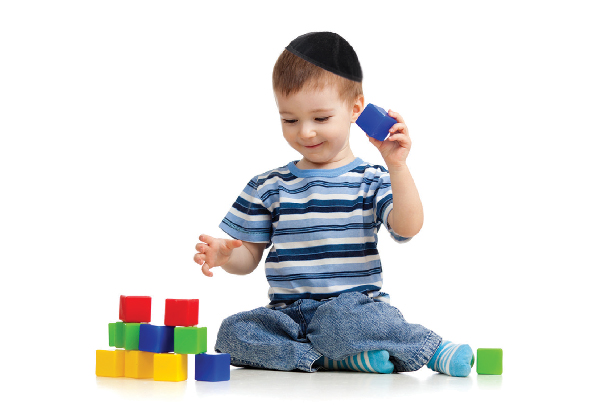
For infants and toddlers, using board books and picture books that show faces, clothes and activities of people help develop meaningful conversations. Infants brains are very well equipped to learn one or more languages. Building on those learning experiences in a fun and natural way will help with their language development and it can be critical to helping the child learn new things. It is a good idea to introduce infants to high-quality language experiences in their second language so they can continue learning in both languages throughout the early years. Singing songs or learning simple greetings will help them gain confidence in speaking. Children can learn simple phrases, sentences and greetings in languages used in the community so they can talk with people they meet.
Toddlers can learn pragmatic skills that help them to be better communicators. When learning to speak, teaching the child to speak slowly, repeat, show what they want, and be gentle and patient when trying to understand others, you are also helping them learn to interact more effectively with friends.
In our Jewish community Hebrew is a part of our very essence. We utilize it in so many ways. The most successful way to ensure our children gain an understanding and a comfort level of Hebrew, we should begin teaching them the language from as young an age as possible.
Being immersed in a second language is the most effective way for young children to learn another language. Early contact with a new language forms the basis for expansive cognitive development and learning.
Article Submitted by the Educational Administration of Harkham Hebrew Academy
This week’s Parsha is a double portion as well as a conclusion to Sefer Shemos, the Book of Exodus. The Parsha starts with Moshe gathering (“Va-yakhel”) Bnei Yisroel into an assembly. He did this, the Midrash and the Zohar tell us, on the day after Yom Kippur, when Moshe brought down the second Tablets of the Ten Commandments, a sign that G-d had forgiven B’nei Yisroel for the Sin of the Golden Calf. Moshe Rabeinu then gathered, the Torah states, kol adas bnei yisroel—“the entire congregation of Israel.” Unlike other instances, when Moshe addressed different groups within B’nei Yisroel, here he gathered ALL of them. The Torah uses the term Vayakhel, even though it seems obvious that Moshe would have to have gathered all B’nei Yisroel in order to address them all. Why is the word (and the act) of assembling the entire congregation mentioned here?
The opening verse further states: eleh ha-d’varim—“These are the things” that G-d commanded. Though the Torah uses the plural, it seems that the only thing discussed in these opening three verses is Shabbos. But then why would there be a need for a whole gathering of B’nei Yisroel; haven’t they been told about the laws of Shabbos before? The Ramban and Ibn Ezra therefore say that this must also be referring to the Mishkan, which follows. “D’varim” is plural because it refers to both the Shabbos and the building of the Mishkan. Further, these commentaries say, there needed to be a huge gathering (hence the word, Vayakhel) because there were so many details to be gone over in this mitzvah of constructing the Mishkan.
The Kli Yakar (Rav Shlomo Ephraim Luntschitz of Prague; 1550–1619) has a few problems with this interpretation. First he points out that the section relating to the Mishkan has its own introduction in verse 35:4: “And Moshe said to the entire assembly of B’nei Yisroel, ‘This is the matter [note the singular] concerning which Hashem has commanded you.” He comes to the conclusion that the “D’varim”—the matters referred to in 35:1—are both the Shabbos and the Mishkan. The Torah emphasizes that the prohibitions of of work on Shabbos apply no less to the work to be done for the Mishkan. In fact, the Torah here calls Shabbos, Shabbos Shabboson L’Ha-shem—“It is a Sabbath of Sabbath to G-d” an unusual phrasing—and then drives the point home by stating, “All who do work on the Sabbath shall be liable to capital punishment.”
But then we finally can’t help noticing that the Torah uses a strange term with regard to work: instead of saying that, during the six days of the week, “tah’aseh melacha”—“you shall do work,” the Torah says, “Tai-oseh melachah”—“your work shall be done,” implying that somehow, the work will get done by itself. In our lives, we know that earning a living can be a hard thing and a complicated process—yet here it seems to be getting done all by itself. What is the Torah telling us by all these unusual phrases and introductions?
In order to understand the great importance of keeping Shabbos and its role in our world in Chassidic thought, one must more fully comprehend the consequences of the sin of both Adam and Chava and of the Chet ha’egel—the sin of the Golden Calf. The Midrash tells us that before these sins, the world was in states of absolute “perfection”—first when it was created by G-d, and then when the taint of the unholiness of the Nachash, the snake (which we understand to be the Yetzer Hara—the Evil inclination) was purged out of B’nei Yisroel in the exile and bondage of Egypt.
In both times, the world was a harmonious place imbued with the total divine presence of Hashem. But when Adam and Chava sinned in Gan Eden, the snake’s venom entered the world and filled it with evil. Generations later, B’nei Yisroel were sent to Egypt, where they went through a kind of “detoxification” and were cleansed. They went on to Sinai where they pledged their commitment to G-d by proclaiming the words, Na’aseh v’nishma—“We will do the commandments without any qualification or reservation.” Unfortunately, B’nei Yisroel committed the chet ha-egel, the Sin of the Golden Calf, and instead of going on to living in Messianic times, that old “venom” of the Nachash entered the heart of man. Of course, we are ever grateful to Moshe Rabeinu for pleading our case before the Almighty and saving our lives. Though we were forgiven, however, we were not without that taint—and not without the need to rectify ourselves.
It’s easy to forget that the second Tablets of the Ten Commandments was not simply a “do-over,” and that we were not able to simply “rewind” ourselves even though we were forgiven. This need to begin the long arduous journey to correcting ourselves and removing the stain of the Nachash required the involve-ment and commitment of everyone—every member of B’nei Yisroel. And so “Vayekhel kol adas b’nei yisroel”—the entire congregation needed to be assembled.
There were no doubt many things Moshe encouraged B’nei Yisroel to do as part of their “rehabilitation,” but the Torah lists only those tasks that are relevant to us today. And the two Mittzvot listed for our benefit are: the building and operation of the Mishkan, and Shabbos—not just the same Shabbat we already knew, but now an extra measure of Shabbos, a “Shabbos of Shabbos to Hashem.” Shabbos now needs to be a day not simply of rest, but of “perfect rest” if we are to make any headway toward our goal of purifying the world. But what is that “perfect rest” and what is a “Shabbos of Shabbos”?
In Chassidus, we say that on Shabbos, it is not enough to simply refrain from work. One must feel that one’s work is “fully done” and the world is complete. It may be difficult to fathom how one can complete large projects and big deals in just six days—look how long it took to put a man on the Moon. So how is it possible to go into Shabbos thinking that all our work is done and we need not devote a single second of thought to what we imagine is still undone and still there for us to do? Isn’t that totally unrealistic?
The answer is really quite simple, though it may appear to be a hard thing to act on. We must invest all our energy into spiritual pursuits of holiness and look upon our work not something as that we must do in order to live—if that were true, the Torah would have used the word Ta’aseh—“you shall do your work”; but the Torah uses the word Tai-oseh—on six days, our work will get done, with or without our efforts, our talents, our genius. To observe Shabbos fully and to turn it into a tool for purifying the world and spreading Kedushah—holiness—in it, we need to look at the world and our work in the workplace in a whole new way.
The Psalmist (Tehilim 128:2) tells us: “When you will eat the labor of your hands, you shall be happy, and it will be well with you.” The Midrash tells us that this repetition is not just poetic: “you shall be happy” means, “in This World”; and “it will be well with you” means, “in the World to Come”. King David is telling us is that the work we do is successful or not, not as a result of our talents. Every gift that we receive from the world and from the work of our hands is really a gift from G-d. So it’s all right to devote one’s physical energies to work—and we will make believe that is how we earn our livelihood. But we need to devote the best of our resources—our minds, our thoughts, our creativity and our study, to the service of G-d, and that means prayer, meditation, learning and seeking understanding and inspiration. This is the game we play with the Almighty: we imagine that the wealth that we accumulate and the success we enjoy are the products of our own efforts and our own talents. How vain and foolish is such thinking—nothing but a fantasy! All our sustenance comes as a gift from Hashem, even with all our efforts and the application of our talents.
If all of our passion, intelligence and emotional commitment go into the toils of life during the work week, then we will be too tired to serve and pray and study when we have “spare time” on Shabbos. For the Shabbos is not “spare time” at all—it’s our “prime time”—when we have set aside a day to devote the best of who we are and what we can do to the service of Hashem.
Now this approach does not get high marks in the business schools of the world. The values that drive people in business or in any other human endeavor are often perseverance, total commitment, uncompromising dedication—and no small measure of “smarts”. Such is the tenor of our times. The great success stories of the modern world are often held up as shining examples of these values paying off. But think about it for a minute. If we are honest with ourselves, we have to admit that there are many thousands of inventors and entrepreneurs every bit as creative and talented as Bill Gates who simply didn’t “make it” the way Gates did. It doesn’t mean they are not brilliant; it simply means that they did not have G-d’s blessings when it came to livelihood.
This reorientation (into this new way of looking at life, and into this little game we play with the Creator) begins as it should: with Moshe Rabeinu assembling the entire congregation, men and women, young and old, to begin the process of correcting Am Yisroel and the world, and making it fit (once again, as it was at Sinai) for the age of Moshi’ach.
With Purim just in our rear view mirror and Pesach around the corner, I felt it time for some fun and levity. It’s not exactly in the psychology books as being one of the major forms of mental health treatment to appreciate animals and all they do for us; however after an important conversation with my 4th grade friend Menucha Rochel, student at the Bais Chaya Mushke school on Pico, I decided she had some valid points that we might all consider. The Torah teaches us that appreciation and gratitude are cornerstones to spiritual wellness, but it just so happens that Menucha Rochel felt specifically as Jews our appreciation for animals should be particularly important. After her explanation I happen to agree. The following are some of the key points Menucha Rochel made followed by my own commentary on how the idea ties with our mental health and well-being.
Point #1: Be thankful for bees and rams because without them our Rosh Hashanah would not feel complete. We need sweetness and purity. Our souls yearn for them. The honey of the bee and the sound of the ram’s horn bring us these things and on Rosh Hashanah these two elements of sweetness and purity wash over us like a cleansing wave preparing us for the year ahead.
Point #2: Animals provide us with food and we need to appreciate them by saying brachot. Menucha Rochel has a major point here. Short of being a vegan, almost all people benefit from the gifts animals give us to sustain and nourish us. So many of our rituals and celebrations rely on what animals provide for us at our beautiful meals. The gift of expressing gratitude and appreciation through recitation of brachot, blessings, makes the animal’s contribution that much more special for us. Further, our consciousness around the food we prepare gives space for us to pause and truly feel a sense of gratitude for having food to eat and share.
Point #3: We are required to treat animals well because they are also HaShem’s creation. There are a variety of ways we are meant to show proper treatment to animals from the way we feed and house them, to the way they are slaughtered for food. Each aspect of care and treatment demonstrates a respect for G-d’s creation and this works as a great example for us. Even though we has human beings are superior to animals, we must still demonstrate care and compassion for even the smallest creatures in His creation. Likewise, we must demonstrate care and compassion for all of G-d’s people and do what we can for the betterment others.
Point #4: Animals teach us about love. Not just any kind of love, but unconditional love. Our pets do not hold grudges, yell at us for our wrong doings, or chip away at our sense of self-worth. Instead, they are just happy to see us and as long as there is food in the bowl and a place to play then life is good. We can learn a lot from this behavior on many levels. As Menucha Rochel so eloquently pointed out, this type of love—unconditional love—is what brings about ahavat chinam and ahavat Yisrael, love for all and love for all of Israel. It was this most poignant point that sold me on Menucha Rochel’s theory of psychology that appreciation of animals really is good for our mental health and wellness.
With Pesach preparations getting underway and our redemption, G-d willing, close at hand, let’s all take Menucha Rochel’s words to heart and express our appreciation not just for animals, but for all the blessings in our lives great and small. I for one will say thank you to Menucha Rochel for helping me come up with a thoughtful concept to write about in this issue of Community Links.
By: Mia adler Ozair, Ma, lPCC, NCC
Mia Adler Ozair, MA, LPCC, NCC is a licensed clinical psychotherapist and educator with a private practice in Beverly Hills, California. Mia is licensed in both California and Illinois and she can be reached through her website at www.bhcounselingcenter.com, e-mail at mia@bhcounselingcenter.com, office 310- 464-5226, or followed on Twitter @MiaAdlerOzair
“I didn’t feel [scared] but my parents were freaking out” says Benjamin Israel about the conversation he had with his parents in November when the Israel Defense Forces began its successful (so far) campaign, Operation Pillar of Defense, to end incessant rocket attacks from Gaza into Israel. “My rabbi said, ‘We are seeing open miracles. We see how G-d controls the world,’” relates Benjamin, who assured his parents, “Don’t worry, I’m fine.” Ariel Rahimi also told his nervous parents not to worry. “I feel safe, a sense of security, closer to G-d; it’s a spiritual thing.”
Deena Rosenblatt was homesick at the beginning of this year and when the war started her mother wanted her to come home but that’s when she realized “There’s no way I can leave” at a time like this. She turned her homesickness into a passion for information about the status of events during the week long IDF offensive. “People came to me to ask me what’s going on.”
Benjamin and Ariel are two of 20 graduates from Valley Torah High School’s 28-member class of 2012, who are spending their first post high school year in Israel. Benjamin is studying at the Tiferet Yerushalayim yeshiva and Ariel is at Derech Ohr Sameach. Deena is a 2011 VTHS graduate in her second year at the Tomer Dvora seminary. Each year Israel hosts thousands of students (including at least 80% of each VTHS graduating class) from several countries in numerous yeshivot, seminaries, universities and other year-long programs throughout the country.
As the IDF was calling up its reserves and preparing for a ground invasion in the Gaza Strip, many of these teens received frantic phone calls from their parents asking them to come home. In most cases the answer was no. A good choice for many reasons, but especially since the ground invasion never happened and a cease fire was reached after eight days of the Operation.
These kids worked too hard and waited too long for this special year to give it up so quickly. They just completed four years of high school in a rigorous dual curriculum and hundreds of hours studying for and taking college entrance and advanced placement exams and filling out college applications. So why would they want to spend a year in Israel immersed in serious Torah study after this and before heading off to various universities for four or more years of demanding and competitive academic pursuits? Are these teens crazy?
Of course not! They are normal Jewish teenagers who have been raised in Orthodox or traditional homes and educated in Jewish day schools that imbue in them a love of Torah and Israel. And for many, this is their first time visiting the Jewish homeland they have learned so much about throughout their young lives.
They go to spread their wings and experience independence from their families and to explore their Jewish heritage, identity and spirituality. They live in dormitories or apartments with several students and learn 8-10 hours a day for the sole purpose of gaining a deeper understanding of Jewish texts, laws, customs and life skills. They do receive college credit in some universities.
“We encourage our students to spend a year in Israel because it allows them to solidify their direction in life,” says VTHS Dean Rabbi Avrohom Stulberger. “When you are 17 or 18, and in a spiritual environment, especially in the Holy Land, it helps you concretize who you are as a Jew and sets a pattern for your future religious commitment.
“We prepare [our students] for the academic rigors of yeshiva and seminary as well as prepare them emotionally and religiously for taking full advantage of this incredible opportunity,” Rabbi Stulberger continues. “We prepare them by stressing the importance of Israel, the importance of learning,” and the urgency of going at this time. “You’ll never have the freedom of thought and lack of pressures that you have in between your high school and college years,” he tells the students.
I met Benjamin, Ariel, Deena and three other VTHS graduates from the classes of 2011 and 2012 during their afternoon break on a sunny and unusually warm December day at the Coffee Bean on Ben Yehuda Street in Jerusalem, a popular gathering spot for seminary and yeshiva students.
The kids shared with me why they wanted to spend a year in Israel, what they have gained so far from the experience, how Pillar of Defense affected them and how they spend their days.
They all have friends and siblings who have studied in Israel before them and returned home raving about their experiences and building up the anticipation for them. “I’ve seen how it changed my siblings for the better,” says Ariel adding that he also “wanted to get a good foundation spiritually and learn how to be independent.”
Bracha Adler (’12) says she “looked up to” the girls she knew who previously attended her seminary, Maor. She felt they had good morals and views on life. Bracha wanted to spend a year in Israel to be in “a non stressful, non college environment to focus on what I want for the future.” Her first time in the country, Bracha says that being in Israel has also given her “a bigger reason to love being Jewish.”
During Pillar of Defense, “We saw how people treated the soldiers and we were proud to be part of it, proud to be Jewish,” explains Bracha who prayed daily for the soldiers’ safety. “We really felt what [the Israelis] are going through…and what it’s like to live on the edge.” Students in the Jerusalem area sought shelter twice during the Operation when sirens blared, warning of a possible rocket attack in the area. Bracha says the experience helped her realize “what to cherish in life…what really matters at the end of the day.”
Sara Leah Rosenbluth (’12) was also moved by the events of that week, especially seeing the reserve soldiers being plucked from their homes and daily routines in school or work and sent to southern Israel to defend the country. “Everyone bands together,” she observes. “Being in Israel gives you a whole different outlook on life,” says the Michlala student.
Deena has two brothers and one sister who studied in Israel after high school for one or more years and there was no doubt in her mind that she would follow in their footsteps. She says Israel has helped her get her priorities straight and shown her that there are different ways of being religious. In her personal empowerment class, Deena says she has learned how to “deal better with whatever life brings you.”
It’s not all learn and no play for these kids. They enjoy tiyulim (field trips) throughout Israel at least once a month and more during holiday breaks. They are led by experienced religious tour guides who can navigate a Tanach (Torah, Prophets and Holy Writings) like these kids can navigate their smart phones. “It brings the Torah to life. We see things living on,” says Deena, expressing her amazement at seeing in real time the same biblical places they have learned about.
The students also get a taste of what living in Israel is really like by experiencing Shabbat at the homes of their rabbis and teachers, many of whom have made aliyah from the United States. “We see how other Americans adapted to society here in Israel,” says Aryeh Istrin (’11). Some students observe this at the homes of their own relatives. Ariel, for example, has a lot of family in Israel, including grandparents in Rechovot, and he enjoys spending time with them.
For some students it takes longer to adjust to the different environment and their new found independence. During the last four months of his first year at Derech Ohr Sameach, Aryeh says he “got more into the learning and realized how much more there is to gain,” so with a little convincing from his rabbis, he decided to return for another year. “I’ve grown a lot spiritually,” he says. “The rabbis here are on another level. They want to show you how great [learning] is.” Aryeh also noted that what struck him the most during the eight days of Pillar of Defense was how the level of learning intensified.
“What we hope they gain from the experience [in Israel] is that connection to Torah, that connection to the Holy Land, the understanding of what our real values are and what really matters in life. It’s something that you just cannot pick up living in L.A.” says Rabbi Stulberger.
Does it work? “We have seen incredible results from our students who have spent a year or more in Israel…because they understand their commitment to the Jewish people, continues Stulberger. “That’s why so many of our kids become role models and community leaders. That’s why so many end up making aliyah. Obviously we take a little bit of credit for the four years in high school but that year or two [in Israel] helps them understand that we’re here to give; we’re not here to take. We at Valley Torah and [their experiences] in Israel train them to be givers. That’s really what it’s all about.”
By Linda O. Schlesinger
L to R: Daniel Marmer, Benji Israel
L to R: Naftali Canter, Benji Israel, Aryeh Munk, Eli Lieberman
L to R: Benji Israel, Daniel Gabay, Brian Sacidian, Ariel Rahimi, Yosef Sassoon, and Dovy Raskin
L to R: Aryeh Istrin, Benji Israel, Ariel Rahimi
L to R: Sara Leah Rosenbluth, Deena Rosenblatt, Bracha Adler
New York- In November of 2012, the world’s eyes were fixed on Israel. With over 1,500 rockets from Gaza bearing down on Israeli civilians, a barrage of destruction seemed imminent. However, only 55 rockets fell in urban areas because the rest had been effectively disabled by the Iron Dome anti-missile defense system.
In the late 2000’s, the Iron Dome system was implemented in response to the decimating short-range missile attacks from Lebanon and the Gaza strip. The missile attacks put Israeli citizens in harm’s way and caused many civilian deaths and large-scale evacuations during the Second Lebanon War. When missiles were smuggled into Gaza, the problem escalated and became a massive security threat, as a million Israeli civilians live in range of these missiles. In 2007, many defense ideas were proposed but the Israeli Defense Ministry selected the Iron Dome concept, and since then hundreds of millions of dollars have been used to further develop this critical system.
During the recent Israel-Gaza conflict, the Iron Dome had unprecedented success and was responsible for saving the lives of numerous innocent men, women and children residing in Southern Israel. Although not responsible for the initial development, without the unwavering support of the Obama administration and the U.S. Congress, this monumental victory would not have been achieved. Since taking office in 2009, the Obama administration strongly advocated and supported the Iron Dome project and collaboratively worked with Congress to ensure proper funding was allocated to the development of this system, despite some objection in the defense bureaucracy. In 2011, Congress approved 205 million dollars in funding for the Iron Dome and later added another 70 million dollars.President Obama said, “This (Iron Dome) is a program that has been critical in terms of providing safety and security for Israeli families.” The President clearly recognized the significance of the Iron Dome system, and over the past several years many American leaders have echoed his sentiments.
The Iron Dome Tribute event coordinated by The Friedlander Group, under the leadership of its CEO,Ezra Friedlander, will take place in the US Senate on February 27, 2013, promises to be truly unifying for the Jewish community. It is a unique opportunity for Jewish leaders to gather with members of Congress and celebrate a shared triumph. The Iron Dome is a manifestation of the strong U.S.-Israel alliance and is something that those in the pro-Israel community view as a true success.
“I believe that holding the event in Congress is a true expression of gratitude on behalf of the American Jewish community and those who value human life. The way I see it, the Iron Dome System primarily accomplished two significant things: It played a major role in the Israeli government’s decision against a full-scale ground invasion of Gaza, and it saved the lives of countless civilians by protecting them against a barrage of deadly rockets fired at their neighborhoods and their homes” said Robert Rechnitz, Chairman of the Iron Dome Tribute.
Prominent Democratic and Republican members of Congress will unite, along with leaders in the Jewish community and Ambassador of Israel to the United States Michael Oren, to pay tribute to the success of the Iron Dome anti-missile defense system and celebrate the enduring relationship between the United States and the State of Israel.
“We will also be honoring the memory of the late Senator Daniel Inouye of Hawaii, who earned iconic status for his steadfast support of Israel and the needs of the Jewish people. Senator Inouye was an extraordinary American patriot and hero who deeply understood the importance of the US-Israel relationship. As chairman of the Senate Appropriations Committee, Senator Inouye ensured that America’s staunch ally, Israel, had the necessary resources to defend its people,” continued Mr. Rechnitz, who announced that prominent leader in the pro-Israel community, Phil Rosen partner at Weil, Gotshal & Manges will act as MC and he also thanked co-chairman Lee Samson of Beverly Hills, Jona Rechnitz of NYC, Paul Raps, and Stanley Treitel for their leadership.
Many notable speakers willshare thoughts on the importance of the vibrant relationship between the United States and the State of Israel that has recently manifested itself in the outstanding performance of the Iron Dome Missile Defense System as well as their memories of Senator Inouye. Speakers include House Foreign Affairs Chairman Ed Royce (R-CA) and Ranking Member Eliot Engel (D-NY), United States Senators: Rand Paul (R-KY), Pat Roberts (R-KS), Brian Schatz (D-HI), Roger Wicker (R-MS), Johnny Isakson(R-GA), James Inhofe (R-OK), Mark Warner (D-VA), Joe Donnelly (R-OH), and Jeanne Shaheen (D-NH), United States Representatives Joe Kennedy: (D-MA), Trent Franks (R-AZ), Bill Johnson (R-OH), Adam Schiff (D-CA), and Matt Salmon (R-AZ); Ambassador of Israel to the United States Michael Oren, Irene Inouye, wife of the late Senator Daniel Inouye of Hawaii, and former CIA Director Robert James Woolsey, Jr. Former Comptroller of NYC, William Thompson will also be delivering remarks.
By: Arielle Plonske
For more information visit: www.thefriedlandergroup.com/irondome.
Robert Rechnitz with Israeli Prime Minister Benjamin Netanyahu
Jewish Community leaders endorsed Michael Feuer for Los Angeles City Attorney in the upcoming City Primary Election scheduled for Tuesday, March 5th.
Mike Feuer is one of California’s leading lawmakers and attorneys. A former Majority Policy Leader of the California State Assembly and Chair of the California Assembly’s Judiciary Committee, Mike has written some of the state’s most important public safety, children’s health, consumer protection and environmental laws.
Mike previously served for six years on the Los Angeles City Council, where he wrote some of the toughest laws in the nation to curb gun violence, fought successfully for anti-gang and after-school programs, and funded jobs for disadvantaged youth. He initiated L.A.’s 3-1-1 non-emergency services system, improving 9-1-1 response times and making L.A. government much more effective. Mike was the Council’s leader on ethics reform and spearheaded business tax reforms. He chaired successful Council efforts to deliver on-time, balanced budgets and championed the rights of disabled people, senior citizens and children.
Prior to his work on the City Council, Mike directed one of the nation’s leading public interest law firms, Bet Tzedek Legal Services (The House of Justice). Under Mike’s leadership, Bet Tzedek helped more than 50,000 indigent, primarily elderly or disabled clients on crucial cases involving nursing home abuse, consumer fraud, access to health care, housing, Holocaust restitution and more. The Los Angeles Daily Journal wrote that he turned Bet Tzedek into a “national success story,” and named him one of “California’s 100 Most Influential Attorneys.”
Mike has also taught at the UCLA School of Law and the UCLA School of Public Affairs. He practiced law at two of the nation’s leading firms, Hufstedler, Miller, Carlson & Beardsley and Morrison & Foerster. He began his career as a judicial clerk for California Supreme Court Justice Joseph Grodin.
He has received numerous awards reflecting the breadth of his achievements as a legislator and lawyer. A Phi Beta Kappa, magna cum laude graduate of Harvard College and cum laude graduate of Harvard Law School, Mike and his wife, Gail Ruderman Feuer, have been married for twenty-nine years. They have 2 children, Aaron and Danielle
Play is the cornerstone to child development in the early years – but is one form of play better than another? There are benefits to both free play and structured play. At Hillel, both are invaluable and give opportunities for our children, regardless of age or grade, to gain important life skills. Both forms of play are valuable in their own right – the key is finding the balance that suits your child and your family.
The different types of play: free and structured.
1. Free Play: when children are left to their own devises to find something to amuse them, explore, create and/or imagine in a safe environment, undirected by adults.
2. Structured Play: when children are directed in specific activities structured by adults to develop the skills necessary for the child to be a successful later in life. PE classes are the school’s structured play. Outside of school, structured play can take many forms: karate class, football, baseball, soccer or lacrosse leagues, etc.
Structured play
In the simplest terms, structured play is showing your kids new skills to try out. It is teaching them something new that they don’t yet know how to do, and there is a huge amount of value in that on so many levels.
Scientific research has proven that structured play :
• Enhances overall development and learning capabilities
• Supports healthy brain development by providing new ideas and opportunities
• Increases physical skills and motor development
• Provides exposure to self-discipline and perseverance
• Assists in developing a positive self-image
• When performed in a group, helps build team skills, cooperation and other social skills.
Research from Yale University also shows very strong support for structured play. The found that “children who take part in organized activities benefit developmentally. They are healthier, judging from their academic performance and indicators of psychological and emotional wellbeing and self-esteem, as well as from their parent-child relationships…”
Free play
Free play is a hugely valuable activity that also must not be underestimated or neglected. Your child can learn so very much from self-directed activity. Some experts suggest that free play and “directed free play” (where an adult makes suggestions and/or participates in free play with their child) should make up the largest component of your child’s play experiences during 0-3 years. It’s valuable to your child’s overall development, it’s easy and it’s fun.
It has been suggested in the literature, that with today’s busy lifestyle, we tend to forget to let children have sufficient “down-time” in the form of free play. Often when children are not engaged in a structured activity, they are being entertained by the “box” (whether that’s the TV or the computer). In general, our society struggles to allow children to play independently and we attempt to entertain children and keep them busy to avoid boredom.
However, a little bit of boredom never hurt anyone – in fact it has been shown to be the birthplace of imagination and creativity. When leaving children to their own devices to entertain themselves, they may become bored initially…..but wait…. if you weather the few groans and moans of “I’m booorrred” (although you will rarely hear a young child say this as they instinctively know how to explore unaided), eventually your child will think of something to do. The more they practise entertaining themselves, the better they will become at it. This process fosters brain development, independence, self reliance, creativity and imagination. It is a relaxing, enjoyable and stress free activity for your children to participate in.
So which form of play is better?
Both structured and free-form play, contribute significantly — and in different ways — to your child’s development. Both are equally important and a part of your child’s daily schedule at school. They are complimentary, and each provides important aspects for your child’s needs. It is all about balancing the two forms of play in a way that suits your child and your family.
So how much of each? – Our recommendation
Both forms of play have so much to offer – it’s about striking the balance that is right for you and your child. Each family will be different when considering the optimal time recommended spent teaching new skills to your child each week. As a starting point for 0-3 year olds perhaps put aside 15-30 minutes a couple of times a week to try something new with your child and see how that goes. If both you and your child are enjoying the experience you can increase how much you do accordingly.
If your child is unfamiliar with structured activity, you may find he has a very short attention span to begin with. As your child becomes more familiar with the learning process, you will notice his attention span increase and you will both find the sessions more rewarding as he learns to concentrate for longer.
Outside of school, it’s important to take note of the numerous recommendations by top child development programs and institutes. For example, the National Association for Sport and Physical Education offers these recommendations for DAILY physical activity levels in preschoolers;
• Accumulate at least 60 minutes of STRUCTURED physical activity (organised by either you or another adult)
• Engage in at least 1 hour, and up to several hours, of FREE play
• Not to be inactive for more than 1 hour at a time, unless they are sleeping
• Limit time spent watching TV (videos or DVDS), on the computer or playing video games to no more than 1-2 hours per day.
Play on!
Article submitted by the Educational Administration of Harkham Hillel Hebrew Academy
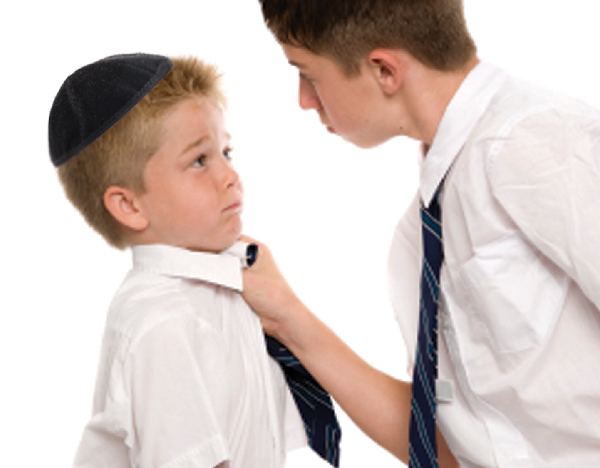
As the saying goes, “kids will be kids.” The implication of this being that behaviors of all types—tantrums at age 2, fighting over toys at age 5, talking back to parents at age 9, fights among friends at age 12, etc.—are really just part of growing and developing and can and should be expected. In reality, this is true. There are social markers for development at all ages that come with the challenges of children navigating relationships of all types while growing up. However, there are limits to the “kids will be kids” statement and we must be careful that it doesn’t become an excuse for lack of parenting and/or lack of school involvement when the behaviors turn into bullying.
What is a “Bully”?
By definition, a “bully” is someone who is overbearing and who habitually badgers, intimidates, and/or excludes others. “Bullying” is the act of intentionally intimidating and berating another person. Professionals have come to understand that in actuality bullies are mostly children and teens who themselves are very insecure, often times experiencing some type of abuse in the home, experiencing some element of trauma (parents divorcing or a death in the family), and have no healthy outlet or source of support to process and manage their feelings and experiences. This does not excuse a bully’s behavior; however it does put it into context and allows us to see the bully as another human being who is troubled and lacking. Thankfully, anti-bullying programs are prevalent and in most schools today there is at least some element of education and awareness on what a bully is, how to deal with one, and how not to become one. These programs are greatly needed, but even more important is both parents’ and schools’ commitments to following through on addressing bullying issues in the school and community. This includes paying attention to any and all student complaints of bullying, providing intervention and remediation when a child is identified as a bully, and creating a joint team effort between home and school to support new, more positive behaviors of the bully.
An important element to examine is that when most people think of bullying they immediately think of schools. However bullying can and does take place in any setting where social interaction takes place: school, synagogue, after-school activity, in the home between siblings, parents bully children, neighborhood activity, and so on. What can also be a challenge is that bullies can be sophisticated in their approach to avoid getting caught. For example, instead of straight-out bullying in the classroom, the incidences take place in the hallway between classes, on the playground, at lunch time, and other times of day when there is not a direct supervisor who can catch and/or hear what is going on. The following are some statistics I pulled from an amazing website called “Make Beats Not Beat Downs” (MBNBD) (www.makebeatsnotbeatdowns.org) which is an organization working against bullying through the use of music and art:
It is estimated that 160,000 children miss school every day due to fear of attack or intimidation by other students. Source: National Education Association.
American schools harbor approximately 2.1 million bullies and 2.7 million of their victims. Dan Olweus, National School Safety Center.
1 in 7 Students in Grades K-12 is either a bully or a victim of bullying.
56% of students have personally witnessed some type of bullying at school.
15% of all school absenteeism is directly related to fears of being bullied at school.
71% of students report incidents of bullying as a problem at their school.
1 out of 20 students has seen a student with a gun at school.
282,000 students are physically attacked in secondary schools each month.
Those in the lower grades reported being in twice as many fights as those in the higher grades. However, there is a lower rate of serious violent crimes in the elementary level than in the middle or high schools.
90% of 4th through 8th graders report being victims of bullying
Among students, homicide perpetrators were more than twice as likely as homicide victims to have been bullied by peers.
Bullying statistics say revenge is the strongest motivation for school shootings.
87% of students said shootings are motivated by a desire to “get back at those who have hurt them.”
86% of students said, “other kids picking on them, making fun of them or bullying them” causes teenagers to turn to lethal violence in the schools.
61% of students said students shoot others because they have been victims of physical abuse at home.
54% of students said witnessing physical abuse at home can lead to violence in school.
According to bullying statistics, 1 out of every 10 students who drops out of school does so because of repeated bullying.
Harassment and bullying have been linked to 75% of school-shooting incidents.
As you can see from these statistics, bullying is no laughing matter and the effects of bullying in its most severe form can be life threatening.
I know what you’re thinking: “My child is a good Jewish boy/girl and/or attends a nice Jewish day school. I don’t need to worry about this.” I’m so sorry to be the one to tell you, but bullying in Jewish schools and/or by Jewish kids is just as common as in secular schools and/or by secular kids. The one advantage we have in the Jewish community is that our value system clearly outlines and supports what derech eretz (“the way of the land”) is and the importance of raising children who respect and uphold our societal values of treating others the way we wish to be treated. We, as a Jewish community, have a built-in platform from which to address bullying in the Torah context. As an educator and therapist, I feel this is simply amazing and something that every Jewish school must strive to highlight.
What Bullying Looks Like
Once again borrowing from the MKNBD website:
“Bullying can take many forms but it usually includes the following types of behavior:
• Physical – hitting, kicking, pinching, punching, scratching, spitting or any other form of physical attack. Damage to or taking someone else’s belongings may also constitute as physical bullying.
• Verbal – name calling, insulting, making racist, sexist or homophobic jokes, remarks or teasing, using sexually suggestive or abusive language, offensive remarks
• Indirect – spreading nasty stories about someone, exclusion from social groups, being made the subject of malicious rumors, sending abusive mail, and email and text messages (cyber bullying).
• CyberBullying – any type of bullying that is carried out by electronic medium. There are 7 types including:
1. Text message bullying
2. Picture/video clip bullying via mobile phone cameras
3. Phone call bullying via mobile phones
4. E-mail bullying
5. Chat-room bullying
6. Bullying through instant messaging (IM)
7. Bullying via websites”
As parents, educators, and community members, it is our obligation and responsibility to educate ourselves about the types of bullying abuse so that we can identify it and intervene immediately upon witnessing it. Our Jewish lifestyle forbids the use of lashon hara (speaking negatively about another person), being verbally or physically abusive, and generally treating others with disrespect. In addition, it is considered a mitzvah to defend those who need help and protect those who may be weaker. In other words, the very essence and core of our belief system is entirely against actions of bullying and gives us the right to act fully and ensure all children can attend school, synagogue, and other activities feeling safe, secure, and happy. It is clearly the parents’ responsibility to ensure this is also happening in the home.
How to Deal With a Bully
Although “how to deal with a bully” is an extremely important topic, I am going to leave this for you to learn through your child’s school. Take the time to investigate what your school is doing to address bullying and educate yourself about ways to assist your child if he or she is being a bully or being bullied. However one final and important element is how to recognize if your child may be the victim of bullying. Taken from Jay McGraw’s Life Strategies for Dealing with Bullies, here are the key signs your child could be suffering:
1. Makes up excuses not to go to school;
2. Is often angry, sad or depressed, withdrawn, self-loathing and emotionally erratic;
3. Frequently hurt by a particular person or group of people;
4. Frequently picked on in the presence of other people;
5. Mistakes are turned into a big deal by someone;
6. Belongings are often stolen or taken;
7. Always being confronted with lies/rumors;
Bullying is unfortunately an existing part of childhood and adolescence—and even sometimes adulthood—however it is not something that must be accepted as “the way it is” and is certainly something that with education and intervention can be minimized. It is our duty in each of our respective communities to ensure our schools are doing all they can to create a healthy, safe, and bully-free environment for our children.
Follow up to ADHD article: My article about ADHD found in Community Links issue #223 discussed the holistic treatment method of Reiki. I would like to clarify that there are two distinct opinions about whether the use of Reiki energy work is “kosher” and allowed according to Jewish law. I encourage you to speak with your Rabbi and to do your own research prior to engaging in Reiki practice as some Rabbis say it is okay while others condemn it. My apologies for not including that information in the original article.
By:Mia Adler Ozair, MA, LPCC, NCC
Mia Adler Ozair, MA, LPCC, NCC is a licensed clinical psychotherapist and educator with a private practice in Beverly Hills, California. Mia is licensed in both California and Illinois and she can be reached through her website at www.bhcounselingcenter.com, e-mail at mia@bhcounselingcenter.com, office 310-464-5226, or followed on Twitter @MiaAdlerOzair