Home Blog Page 1568

Repeat of Newtown, CT

0

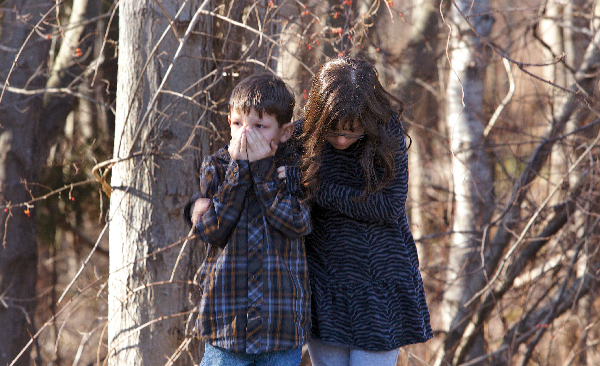
We are saddened by the events in Newtown, CT.  The deaths of 20 children dealt a blow unlike any previous situation in our country.  The acts of heroism committed by the six teachers who died were unbelievable.

In the wake of the events in Newtown, there have been calls for new gun laws.  Should individuals be entitled to carry assault weapons?  Should clips of 30 or more bullets be outlawed?  Should there be semi-automatic weapons in the hands of average citizens which shoot a 30-round clip in about 10 seconds?  Should there be weapons in a family where one of its members has significant mental health problems?  These are some of the questions which have emerged in the aftermath of Newtown.  We expect there to be quite a debate on gun control after Newtown.

But, what about the mental health issues which arise in the aftermath of Newtown?  How was an individual with obvious mental health issues able to carry out the actions of that fateful day?  Were there mental health services available to the mother?  How did this individual escape the attention of authorities?  Was the mother all alone in her efforts to assist her son?  How can we prevent a re-occurrence of these tragic events?

We will face an all-out discussion about the gun control issues and about the mental health issues involved with Newtown.  As President Obama said at the multi-faith memorial service, we simply cannot have this event occur again.

We may not want a repetition of the events in Newtown, but I have a case at the present time which greatly resembles the Newtown case in the kind of danger presented.

I have a case involving a 22 year old who has made active threats against his mother, to the point where she fears for her life.  The last threats were made with the police present, resulting in a forced hospitalization.  This represents the eighth time in the past year that there was a forced hospitalization of this 22 year old young man.  Each time, he gets hospitalized, he takes the medications which are prescribed.  With the medications, he gets stabilized.  Then he gets released.  As soon as he is discharged, he stops taking his medications, as he claims he really does not need them.  He then accuses his mother of having taken away his freedom by getting him hospitalized.  He gets agitated.  He threatens his mother, but also threatens all who around him.  He actually has attacked his mother, but she has been rescued by those around her.  He cannot live with anyone, having attempted to live in half-way homes as well as residential substance abuse settings.  He becomes homeless.  He comes to attack his mother, leading once again to a hospitalization.  This happens every two to three weeks.

The father has written a letter to try to stop these “revolving” hospitalizations.  He reasons that he has been repeatedly hospitalized and released, each time refusing to take his medications.  If released, he will just stop taking his medications again.  He will come after his mother.  The father reasons, declare the young man as needed a conservatorship, to be conserved and maintained in a hospital setting until he improves.

But the psychiatrists treat each hospitalization as a separate event.  The boy starts out in the lowest program as he begins to take medication.  He gradually improves, and he is upped to the next higher level.  As he continues to take his medication, he improves some more, convincing the psychiatrists that he is ready for discharge.  No psychiatrist is willing to go to court on the family’s behalf.  No psychiatrist is willing to go out on a limb to get a conservatorship.  The young man then is released, to repeat the pattern all over again.

The family is left with one option:  File a complaint with the police regarding the making of “terrorist threats” against the young man.  But what if the boy is able to convince the police that he was not really serious and the police merely issue a warning.  Or, if the police arrest the young man and he is later freed.  He will have even more anger against the parents, leading to who knows what.

Here is a case where we know of a danger that a young man represents.  He has actually gone and attacked his mother.  He has threatened others.  Yet, he is about to be released.  He will be free to torment his mother, at best, and at worst, actually attack and kill her and others.

We live in a difficult time.  Steps taken to prevent abuses in hospitalization marked the eighties and nineties.  There were fears of individuals losing their freedom with hospitalizations.  But in these difficult times, do we not need protections against innocent families and others?  Do we not need to protect those whose are threatened and actually harmed?

Can we afford in this age of mass murders to free a potential murderer?  Don’t we need to protect the rights of the innocent against one who makes such threats and actually seeks to harm his mother?  Do we have to wait to see another Newtown, or worse?

It is time that we stop this nonsense.  How many hospitalizations need occur before the system recognizes the danger that exists?  How many times does a parent have to be threatened, and actually attacked, before the system will respond?  There are simply no rights of a parent in regard to a son who has reached his 18th birthday.  The parent must handle all of the danger presented without anyone protecting him or her.

We talk of not repeating Newtown.  But we allow event after event to occur where we can see the potential for a repeat of the tragedy of Newtown.

We must get serious.  We must stop playing games.  We have to weigh the rights of the accused with the rights of a nation that has long been victimized.  And we have to opt for the protection of the threatened.

Here we have a danger presenting itself clearly and definitely.  We can’t tolerate the danger of another Newtown.  Yet, all the rules of our society do nothing to prevent such a recurrence.

When we will get serious?

Robert J. Rome, Ph.D., is a licensed psychologist in clinical practice in Encino, California.  He can be reached at RJRome@aol.com

Debunking Healthy Food Myths – Part 2

0

“Myth #2: Healthy Food Costs an Arm and a Leg”

Myth: Healthy food costs an arm and a leg.

Fact: Packaged, ready-made, anything-with-a-shiny-wrapper costs an arm and a leg, and will put a real and unnecessary drain on your resources. In addition, packaged, ready-made, anything-with-a-shiny-wrapper is not necessarily healthy.

So how do we make healthy food that is economical? Well, let’s first remember our #1 Starting Place. Ask yourself: Would my great-grandmother recognize this and feed it to her family? If the answer is yes, you are onto something good!

Today’s simple example is a delicious, deeply nourishing, and easy-to-make soup.

Cream of Broccoli Soup

In a big pot, sauté onions and celery in Extra Virgin Olive Oil on a medium flame until translucent. Add in salt and whatever spices you like. Chop up broccoli and potatoes into 1-2 inch pieces and throw them into the pot. Add leftover chicken soup broth from Shabbos (or whenever else you made it). Bring it all to a boil, and then simmer until the broccoli and potatoes are soft, about 30 minutes. Then blend it all up with an immersion blender. Cilantro Lovers, you can add in half a bunch of chopped cilantro to the pot a few minutes before you blend it.

If you want it really creamy, you can add a tablespoon or two of coconut cream to each bowl. Serve with a piece of whole grain bread and you’ve got a complete meal.

The soup freezes well and can be brought out again as a super-fast, super-healthy, super-delicious dinner. This is the kind of ready-made that is great!

So what’s so good about it, hmm?

Onions, broccoli, and potatoes are some of the most inexpensive and most nourishing vegetables. Broccoli is high in carotenoids and Vitamin C and contains B-complex, phosphorus, and potassium. It is also rich in chromium, which protects against diabetes, and indoles, which is a potent anti-cancer substance.

Onions contain carotenoids, B-Complex Vitamins, all-important B6 and Vitamin C, calcium, magnesium, potassium, and sulphur compounds. They improve kidney function, lower cholesterol, have anti-bacterial qualities, and are also helpful in breaking up mucus in the throat, lungs, and nasal passageways. Potatoes provide Vitamin C and B-Complex, potassium, calcium, and iron.

Chicken broth is inexpensive to make (and is sort of free is you are using leftovers that would have been thrown out!) and is a real powerhouse nutritionally. Chicken broth, like other meat stocks, contains the minerals from the bones, cartilage, marrow, and vegetables in the form of electrolytes, which makes them very easy to digest and assimilate in the body. It is also rich in gelatin, which aids digestion and has been used to successfully treat many intestinal disorders including hyperacidity, colitis, Crohn’s disease, and many chronic disorders including anemia, diabetes, muscular dystrophy, and cancer. The amino acids that are released from the cartilage into the broth have been used in the treatment of cancer and rheumatoid arthritis. And Rambam and your great-grandmother both prescribed chicken broth as treatment for colds and asthma.

Add it all together and you see that this meal will not cost you an arm and a leg, is delicious, and can be frozen for a quick dinner for when you need it. And is something your great-grandmother and Rambam would be proud of!


By Shaina Kamman, AADP 

Shaina Kamman, AADP is a Board Certified Health Coach supporting you to Transform Your Kitchen into a Haven of Health! Whether you simply recognize the value of robust health and prevention, or you have specific health concerns you want to address, Shaina’s individualized program will make your transition easy, fun, and delicious! You can find more information at www.LifeWithin.info or on www.facebook.com/TheLifeWithin. She can be reached at (973)518-3238 or at  Shaina@LifeWithin.info. Mention this Community Links article for a 10% discount on your initial consultation!


Why Moshe Can’t Read

0

Understanding Why Students Struggle With Hebrew Reading*

KNOWING IS HALF THE BATTLE

As students settle into another school year, it is an opportune time to reflect on an inconvenient truth: Too many children struggle to read Hebrew. Much to teacher’s and principals’ dismay and parents’ frustrations, about 20 to 30 percent of children are not reading on grade level. Schools must invest heavily in an always occupied resource room, and parents are forced to hire tutors, an unwelcome addition to an already high tuition cost. Some of these children will be labeled with colorful acronyms such as ADD, ADHD, or LD, while others will be given medications as they keep getting into trouble by displaying at-risk behavior. Success in Chumash and Gemara will be out of the question, and one need not look far into the future to understand the predicament these children will face. The inability to give children the Hebrew reading skills they need not only damages their self-esteem, it threatens their future involvement in Jewish life. Imagine the terror and panic that seizes a young man who is called up to recite during prayer service before the entire community, or a father who stumbles through Kiddush before his wife and children.

To solve this reading problem, we must have an honest discussion about its origins. It is my contention children are not reading fluently because of a fundamental misunderstanding of what is usually referred to as the “Mesorah Method” (“MM”) , also known as the “Kamatz Aleph UH” method. The Mesora Method that was espoused by all religious rabbis in the past has been inadvertently distorted to mean the exact opposite of what it originally meant, convincing a generation or two that this approach was the only acceptable and kosher way to teach children. This error sentenced — and continues to sentence — thousands of students to undue hardship and confusion.

Before setting the record straight on the MM, a little introduction into the Aleph-Bais is in order. We must first understands the basics of our written code before we understand its reading methods.

 UNDERSTANDING THE Aleph-BAIS

The Aleph-Bais is a difficult, but efficient reading and writing system.

Primitive writing systems are easy because they use pictographs, pictures for words, like a picture of a hand to signify the word “Stop!” The Aleph-Bais is difficult because it forces people to do two things that are unnatural: consciously split the words of speech into their smallest sounds, and imagine that these sounds have shapes. Thus, a word like Torah is split into tiny sounds, T + OH + R + UH. These sounds get their own corresponding symbols and some symbols are blended together: T is blended with OH, R is blended with UH (the final HEH is silent). The upshot is that the Aleph-Bais is efficient because once you have memorized the various sounds and their corresponding symbols — the shapes of the letters and vowels — you can theoretically read and write an infinite number of words. This is a much more efficient method than memorizing different pictographs for each and every word.

This brings us to a startling conclusion: Sounds came first; letters are merely their symbolic representations. Therefore, most students are incorrectly taught how to read. They are introduced to letters first, and are told that these letters have sounds. But this is backwards. Letters don’t exist in nature. Letters don’t have sounds. Sounds of speech do exist in nature, and we symbolically represented them with letters. Only later did we name the letters Aleph, Bais, Gimmel, etc. One thing is clear: when it comes to reading, a letter’s “sound” is more important than its name.

HOW THE “MESORAH” BECAME THE MESORAH

With this knowledge in mind we can reconstruct how reading was once taught by teachers and parents. A teacher would open any book they were lucky enough to possess. They would point to a letter and teach its sound. The teacher would then repeat the process with other letters, and possibly some vowels, teaching the student how to blend sounds together. They would repeat this process with all the letters and vowels until the student grasped the information completely, at which time the student would be an independent reader. The method can be summed up as follows: First teach the student a letter then teach him a vowel, and finally teach him how to blend the two together: “Kamatz Aleph UH!”

All was well until a new trend was introduced by certain educators who made the following observation: Hebrew can be read without vowels. So they concluded that they did not need to teach vowels. Then they went further: Why should we teach the letters, why not simply teach whole words instead? For example, show a student the word “Abba” and tell him that this word says Abba. We can skip teaching letters and vowels if we can just teach entire words. Out of convenience I will refer to this approach as “Whole Language.”

It is unsurprising that the rabbis were horrified by this development. Hebrew was always taught by first teaching the student the small sounds of language and showing him how to blend them together: Kamatz + Aleph = UH. Now they were told to skip the “details” and teach students to memorize “whole” words. No wonder that the rabbis fought this tooth and nail. They argued that their traditional (Mesorah) approach was superior to the new one. Decades of the “Whole Language” experience has proved them right!

Over decades, the Mesorah Method’s original intent was lost, distorted, and misapplied. How did this happen? Answer: It was taken literally! I will refer to this approach by the name: “Literalist MM.”

 THE “MESORAH METHOD” TAKEN LITERALLY

Whole Language never took off within the Frum world, so most Frum people forgot what the “reading war” was about. All that remained was the term “Mesorah Method” or “Kamatz Aleph UH Method,” but most people forgot why this method was developed to begin with. The disaster soon followed: People took the words literally. “Kamatz Aleph UH” no longer meant “teach the student the individual letter sounds and vowel sounds, and then teach him how to blend them together”; instead it was understood to mean “only teach the student the name Kamatz, and only teach the student the name Aleph, make him say the names: Kamatz, Aleph; and only afterwards must the student say: UH!”

So instead of fighting against Whole Language, the MM was misunderstood to mean the following:

  1. When teaching to read, we must follow this order: First the student needs to see and say the Kamatz, then he needs to see and say the Aleph, and only afterwards does he conclude: “UH.”
  2. The letter and vowel “names” are the most important piece of knowledge the student needs to know, as opposed to the letter and vowel “sounds” which are not as vital.
  3. Only a Kamatz and an Aleph together can make the sound UH. Meaning: Letters and vowels on their own have no sounds. Only when they are joined together do they make a sound.

This distorted approach to the MM’s original intent hinders the student’s ability to read properly by artificially creating three basic problems:

  1. Students read upside down.
  2. Teachers teach the letter names and not the actual sounds the letters and vowels make.
  3. Students have to memorize far more information than they would otherwise need to.

The above three points are interconnected and, taken together, they are the main reason that so many of our children cannot read on grade level.

I would elaborate on these points. (For a complete discussion, please see the full article here www.capitlearning.com).

 PROBLEM 1

READING UPSIDE-DOWN
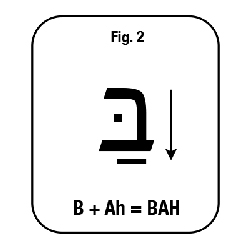
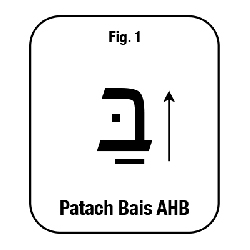
Fig-2 Fig-1

The first and most obvious problem caused by the Literalist MM is that the student is taught to read “upside-down.” When a student is taught “Kamatz Aleph UH,” they take it literally: First they look at the Kamatz, then the Aleph, and then they say them together: “UH.” This process encourage the student to read Hebrew from the bottom to the top, which is wrong (Fig. 1). Hebrew is supposed to be read from top to bottom and right to left (Fig. 2). The “Kamatz Aleph UH” approach reverses the order and forces the student to read upside-down, from the bottom (Kamatz or Patach) to the top (Aleph or Bais).

This leaves the student in a quandary: Does he read from top to bottom, or bottom to top? Most students discover the answer on their own: Hebrew is read from top to bottom. This means that the teacher’s implied direction of “bottom to top reading” must be ignored by the student. While some students figure out that they should be bypassing the teacher’s explicit instructions and read Hebrew “top to bottom,” too many students cannot “reverse engineer” the teacher’s instructions. Any student who fails to do so will end up totally confused by this contradiction.

I would point out that it is only the “Ashkenazy Literalist MM” that suffers from “dyslexia” as it teachers its students to read upside-down. The “Sephardi Mesorah” has it right: “Aleph Kamatz AH,” Aleph before the Kamatz, top to bottom. Could there really be two different traditions here? Of course not! The Mesorah of teaching students to read “Kamatz Aleph AH” was never meant to be taken literally. It originally meant: Teach the students the individual parts of the code before you teach them how to blend these parts together.

PROBLEM 2

WHAT’S IN A NAME?

The Literalist MM insists that teachers must first teach the letter names, and only after the student knows the names can they proceed to learn the sounds that correspond with them. This works for some students, but not all. While students seem to grasp a symbol’s name, many don’t seem to hold on to their corresponding sound. Parents and teachers phrase the problem like this: “The child seems to know their Aleph-Bais, but for some reason they can’t read.” Why is this so?

The explanation is as follows: When it comes to reading, the names of the letters and vowels are a hindrance. Take for example the word “Siddur.” It is unimportant that the “S” sound is called “Samech” and that the vowel underneath it is called a “Chirik.” What matters are the “S” and “EE” sounds, and that together they say “See,” and that they form the first diphone (i.e. consonant + vowel) of the word “Siddur.” The names Samech and Chirik are completely beside the point. One can be a perfect Hebrew reader and never learn the symbols’ names. Most students can hold on to multiple associations (name + sound). But for too many students these multiple associations are a source of confusion.

To be sure, students can and should master the letter’s and vowel’s names. The letters are especially necessary for page numbers and Biblical chapter and verse demarcations. But teaching students the symbols’ names before teaching them the sounds burdens them with information they do not need, and hinders their ability to read.

Still, there will be parents and teachers who insist that letter names be taught before the letter sounds They should be aware of the potential problem this can cause, and be ever vigilant regarding any negative consequences to the student’s ability to read. I recommend that this entire process should take place outside of and before the “K’riah” class. So once a child begins to learn to read, the names of the letters should be dropped, and the sounds should take their place. After the reading class is over, the names can be reintroduced.

PROBLEM 3

INFORMATION OVERLOAD

Hebrew contains 33 consonants and 12 vowels, depending on how you count them. All Hebrew words are combinations of these letters and vowels. If we multiply the number of letters by the number of vowels, we realize that Hebrew contains a few hundred “sound combinations.”

The Literalist MM forces students to memorize not only the (few) consonants and vowels, but also all their possible combination. When a student is taught “BAH” (the Patach under the Bais), the student is forced to memorize the entire combination together. So instead of 2 symbols combined, the student memorizes on big symbol that is made of two parts. There is a reason for this: Patach + Bais cannot equal “BAH.” It doesn’t even sound like BAH. A Patach contains the following sounds: P, T and CH. Where is the P sound, the T sound, the CH sound in BAH? Furthermore, a Bais contains a S sound. But, there is no S sound in BAH either. So the student knows that he must skip the “Patach” & “Bais” sounds and only retain the “BAH.” To repeat: B + AH = BAH. But under no circumstances does BAIS + Patach = BAH.

In other words, the student is not taught to break each word to its smallest components, but rather to recognize consonants with their vowels simultaneously. So instead of the student having to identify 33 consonants and 12 vowels and blend them together, they now need to identity and memorize hundreds of different combinations. This means that students must memorize almost a dozen times more information to be able to read accurately. To add to the confusion, according to the Literalist MM, Hebrew does not have one Patach, but actually over 20 different Patachs: a Patach under an Aleph, a Patach under a Bais, etc. The same would apply to all the vowels. In the same vein, the Literalist MM has more than one Aleph. It has over 10 Alephs: one over a Patach, one over a Kamatz etc.

CONCLUSIONS

Hebrew is a phonetic language that can be mastered by everyone, yet we find so many struggling Hebrew readers. This issue can be avoided if those running our school systems realize that there is a flaw in their teaching method. They have misinterpreted the Mesorah by taking it literally, and consequently developed a completely new and unworkable reading method for the three reasons detailed above.

The good news is that these problems can be avoided. We can stop confusing students with conflicting instructions, information overload, and illogical postulates. We can make learning to read Hebrew simple, easy, and fun. With a little effort, we can minimize the number of children who struggle with Hebrew. For this to happen, we must embrace the original and authentic Mesorah, which always was and will be: Teach your children how to read Hebrew!


Eyal Rav-Noy is director of JLA (Jewish Learning Academy), specializing in adult education and Jewish outreach. He is the author of the book “Who Really Wrote the Bible? And Why it Should be Taken Seriously Again.” He has lectured on the topic of Biblical Literature and Archeology, and made radio appearances all over the US. Together with his wife Tzippy, he founded CAP IT, Inc., a company that offers complete Hebrew reading solutions through its unique curriculums and educational methods. Their reading kits are being implemented in schools around the US and Canada. They offer their services at the CAP IT!® Learning Center, where they evaluate and treat students with learning disabilities and special needs. For feedback regarding this article, he can be reached on his site: www.CAPITLEARNING.com

When the Unthinkable Happens

0

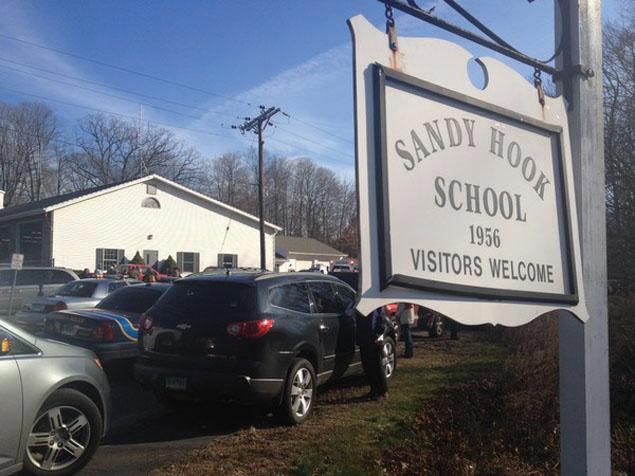
How can it be that a young man, of only twenty-something years old, could enter a school, of all places, and take the lives of so many, let alone the lives of children?  How do we as citizens of this country and in particular as Jews, make sense of the unthinkable?  The reality is quite simple: we don’t.  We can’t.  It is not within the scope of human reason for the majority of human beings to understand or make sense of such actions, and perhaps that is part of what makes a situation like this truly unthinkable.  For those people who believe they can make sense of this in a worldly way are perhaps themselves not quite well.  As Jews who believe in a singular, omniscient G-d, we must come to a place of acceptance that no matter how much we wish to understand, how much we wish to know HaShem’s cheshbonot, calculations, we are not privy to this information.  Perhaps it is in this exact point that our very faith in G-d is tested time and time again.

As a therapist, people come to me in times of pain, confusion, trauma, and despair.  At times I leave my office thinking that even if I try I could not create with my imagination the complicated and devastating situations that people are navigating each and every day in their own lives.  Yet somewhere out there, others can and do come up with unthinkable ways to harm others.  Has v’shalom, to fly an airplane into the Twin Towers, to strap a bomb to a child and say he will be a hero, to drive-by on a motorcycle and shoot innocent children at a school as happened in Europe, and to enter a school in Connecticut with the intention of killing innocent children—all of these are tragic yet very real examples of the unthinkable that was thought of and carried out.  What can we make of it with our limited view? According to the deepest facets of Judaism, we know that there exist two primary forces in G-d’s world—one for Light and one for darkness—and each will be revealed in ways that HaShem determines.  We understand there is a Master Plan in G-d’s creation of this world and it presents us with our ultimate opportunity to trust that His wisdom and plan are ultimately in the best interest of each and every person’s soul.  But in times like these when we mourn for the lost lives of innocent children, this is a difficult pill to swallow, let alone consider, as a part of a Grand Plan.  We feel helpless, shocked, and wonder where to turn and what to do next.

The following are some ideas to help alleviate the pain of this unthinkable circumstance.

  • Trust.  Make the conscious decision that you can and will trust HaShem and His Creation.  Have a conversation with yourself, engage your soul—that higher part of you that can accept this—and let go of the rest of the conversation that triggers personal emotional pain.  Move your focus to the world above us, the spiritual world, which at times can manifest itself in our world in ways we simply cannot intellectualize.
  • Give.  Become heart-centered and use this as a way to enrich your connection with others.  Give tzedaka to those in need—from a large donation sent to people across the country to a one-dollar donation to the soul outside of the market.  Each is valuable and each helps us move a step closer to our hearts and our G-d.
  • Look inward.  Although most of us cannot physically travel across the country to mourn and comfort those in Connecticut, we can in fact comfort those close to us—our parents, our spouse, our children, our friends.  We can hug them a bit tighter.  We can share our appreciation of them with them.  We can choose to let go of our own personal agenda and make the space for those around us to come closer in a meaningful and authentic way.
  • Pray.  Pray for those in pain around the world as the result of unthinkable events.  Pray for those close to you.  Pray for your own strength and courage to be the best you can be in this lifetime.  Prayer is a powerful tool and although our days are packed with demands, prayer can be a comfort to us and those we pray for.
  • Keep your faith.  In times of unthinkable chaos it is quite easy to lay down our faith and call it quits.  However experience proves that from all things negative can rise something positive.  From the scorched earth of a fire rises a richer, more fertile soil.  Hold this dichotomy in mind that while we grieve and heal from the unthinkable, there will eventually be Light revealed, and this is the foundation upon which our faith can make us stronger and more resolute.

In overcoming the specific tragedy of the shooting in Connecticut, please be smart.  Keep your own emotional reactions to a minimum in front of children, and depending upon their age shield them from the details of the events as best as is possible.  If you are having a hard time dealing with your own feelings perhaps speak with your Rabbi, a friend, and/or a counselor.  For as much as we wish these types of unthinkable events would simply not exist, the reality is that they do. The one thing we have in our power is to show the greatest respect for those who have suffered and/or perished by using the tragedy to grow and strengthen ourselves and our communities.


Mia Adler Ozair, MA, LPCC, NCC is a licensed clinical psychotherapist and educator with a private practice in Beverly Hills, California.  Mia is licensed in both California and Illinois and she can be reached through her website at www.bhcounselingcenter.com, e-mail at mia@bhcounselingcenter.com, office 310-464-5226, or followed on Twitter @MiaAdlerOzair.

Debunking Healthy Food Myths – Part 1

0

“Myth #1: Healthy Food Tastes Like Cardboard

There is a myth going around, and it’s been here for a while. I can definitely remember it from when I was a kid. The myth is that healthy food tastes like cardboard. And I think many of us can attest to that. Who remembers eating those fat-free, sugar-free, low-sodium poser “cookies” that taste like cardboard because they are, in fact, basically cardboard? I do.

But there is a catch. Here is the question: Are those fat-free, sugar-free, low sodium poser “cookies” actually healthy? The answer is a resounding no. Those beautifully packaged little cardboard morsels that will last for ten years on a supermarket shelf are not healthy.  After ten years, if the bugs and the bacteria are still not interested in those things, it’s a pretty clear sign that there was nothing of value to begin with. So- not cookies, not healthy, not yummy. What a bargain.

In our current world, with such vast food choices, how does one identify which foods are actually healthy? It’s easy for anyone’s head to spin, even the intelligent and consciously discerning. When I work with my clientele, I ask them to let go of the “____-free” stigma and switch to something more simple, and much, much more accurate: If it is something your great-grandmother would recognize and feed her family, that is a great place to start.

Let’s start with a simple recipe for Garlic Green Beans.

Steam or blanch green beans to your own desired crunchy/mushyness. In a separate pan, gently sauté garlic in Extra Virgin Olive Oil for about ten seconds. Turn off the fire and add in the drained green beans. Toss it all up, add salt, and serve. Could it be easier? Come on! Want to feel good about it?

Green beans are high in calcium, potassium, and B-complex vitamins. Studies show that, along with other green veggies, they reduce the risk of lung cancer.

Garlic is a rich source of dietary sulphur and selenium, and is great for treating blood pressure disorders, infections, headaches, and parasites. Garlic also contains an oil called allyl disulphate that acts as an anti-bacterial agent in the gut. It lowers cholesterol, prevents cancer, protects again blood clotting, aids in treating bronchitis and emphysema, and strengthens the immune system. BOOM! Drop the Bomb!

Extra Virgin Olive Oil is a wonderfully stable monounsaturated fat that is 75% oleic acid, which helps to regulate blood sugar. It is rich in antioxidants and Vitamin E, and above all, it has proven the test of time.

So what do we have here? A delicious, easy to make dish that is incredibly healthy, tastes nothing like cardboard, and is something your great grandmother would be proud of!

Myth #1 has been debunked.

 Shaina Kamman, AADP is a Board Certified Health Coach supporting you to Transform Your Kitchen into a Haven of Health! Whether you simply recognize the value of robust health and prevention, or you have specific health concerns you want to address, Shaina’s individualized program will make your transition easy, fun, and delicious! You can find more information at www.LifeWithin.info or on www.facebook.com/TheLifeWithin. She can be reached at (973)518-3238 or at  Shaina@LifeWithin.info. Mention this Community Links article for a 10% discount on your initial consultation!


Taxing Others

0

During the height of the Soviet Union, a party adherent says to the party leader, “I love the party so much.  If I had two homes, I would give one of these homes to the party.  If I had two cars, I would give the second to the government and party.”  The party leader then said, “What if you had two chickens?”  The adherent responded, “I don’t have a second car or a second home.  I do have two chickens.”

(Thanks to Rabbi Mordy Einbinder for the above story.)

Several years ago, there was a “millionaire’s tax” on the California ballot.  The majority of Californians voted to tax others, those making a million or more, to pay for mental health services in the state.

This year, Californians also voted for Proposition 30 to institute an additional income tax for those who are wealthy, those who make more than $250,000 per year.  Again, this passed.

President Obama wants to increase the taxes also of those earning $250,000 a year.  He claims that he holds a mandate to raise more taxes as he outlined that he would indeed take such action.  There is probably more than 50% of the population who support this tax increase.  After all, it does not apply to them.  Balance the budget, but do so on the backs of others!  So the majority of voters basically approve this tax on others.

The University of California needs money.  Tax the wealthy.  The California State University needs money.  Tax the wealthy.  The Community Colleges need money.  Tax the wealthy.  Schools need funds.  Tax the wealthy.  The U.S. budget needs to resolve the debt problem.  Tax the wealthy.  You can tax the entire incomes of the wealthy and there would still be a budget debt.

Those who oppose these taxes argue that this tax impacts the “job creators.”  They argue that there will fewer jobs if these taxes pass.

But that is not the issue.

There will still be a budget crisis with the passing of Proposition 30.  The money that this proposition will bring in has already been spent.

Do you really think that additional taxes on the 2% of those making more than $250,000 will solve the budget crisis?  The money that will be raised through the imposition of such taxes will not equal one year of debt.  There will still be a debt crisis.

Tax “fairness” does not require the full burden to fall on 2%.  Tax fairness requires that everyone has a stake in the taxes.  We have a progressive system of taxes.  More of the burden will fall on the 2%, but 98% of the people totally escaping the tax is patently unfair.  It is an easy political solution to just tax the 2%.  But the scope of the debt problem requires something more than political expediency.

Do we really want China potentially controlling our economy as they buy up our debt?  Do we want our children each owing $50,000 or more in debt each to the federal government?  Do we really want a budget in which all of the monies received go to the elderly to subsidize Medicare, with no money for education, to serve the disabled, or for the many other beneficial items in the state and federal budgets?

The Simpson-Bowles Commission argued that something bigger was needed.  Instituting taxes on everyone was part of the solution, as were various budgetary cuts.  The Simpson-Bowles Commission may not in the end be the solution, but it is fairer and brings about a bigger fix than simply taxing the 2%.

We need to face our obligations.  We need to establish clear budgetary objectives in this age of too little to support our government.

We need to have 100% involved in the solution.  We will still we have a progressive tax system in which the rich pay more than the poor.  But we cannot get a complete solution just by taxing the 2%.   This is a problem for the 100% of us.

                                   Robert J. Rome, Ph.D., is a licensed psychologist in clinical practice in Encino, California.  He can be reached at RJRome@aol.com

Hidabroot Chanukah’s Seminar at Hilton Irvine

0

Where are you spending your Chanukah weekend this year? Hopefully with us.
Find out the secret to marital bliss? How do you effectively communicate with children these days? Is my income predetermined, luck or due to my efforts? Discover how the hidden secrets of Kabbalah influence my life’s decisions? If you are searching for answers to these life perplexing questions you should attend Los Angeles Hidabroot life changing event at the Hilton Hotel in Irvine.
Come and join a weekend that is relaxing yet thought provoking with scrumptious five star meals and a deep spiritual Jewish discovery.
Our previous seminars were phenomenally successful; we would like to do it again this coming Chanukah with you as our special guest. Come and spend a relaxing weekend at the Irvine Hilton Hotel in Orange County. A vacation like never before that will lift your spirits providing solace to your body and soul.
Enjoy ten exciting lectures led by Rabbi Zamir Cohen, head of Hidabroot and a gifted author arriving from Israel to celebrate Chanukah with all of you. Joining him from New York is Rabbi Yossi Mizrahi a thought provoking lecturer who entertains his listeners in Hebrew and in English. Seminar participants will be able to meet with these amazing rabbis during the breaks. Don’t miss this special opportunity to do so.
For the women seminar participants, Rabbaniyot Nava ben Moshe and Chana Yoshay will provide classes unmasking women inner power.
The seminar offers world class entertainment with stand-up comedian Shimon Peretz who is coming to California armed with a new show featuring a large arsenal of stories and jokes that would keep you rolling with laughter and help you relieve the accumulated tension we all have to deal with these days.
The Hilton luxurious gala room will be the stage on Motzei Shabbat for the main Banquet event of the seminar – Rabbi Zamir Cohen lighting the eighth Chanukah candle, a live show, Barbeque dinner and many more fun surprises.
In order to take full advantage of this remarkable weekend we are providing parents attending the seminar a separate Chanukah children’s program which will be offered parallel to the seminar lectures schedule. The children’s program will be divided into four age groups and held on a separate floor. Each class will have a teacher and assistants who will provide your kids with a spectacular holiday experience: A magician, clowns, yummy Sufganiut and lots more.
This weekend will be catered by our renowned “Morris Catering” chef who will delight you with a vast array of delicious meals with the children enjoying a complete kids menu. Snack stations loaded with coffee, tea and scrumptious cakes will be available for the seminar participants.
If you participated in one of our fabulous weekends in the past you already know that it is a remarkable experience that you should not forego. “We felt like we were transported to heaven and back” said Shmuel Naftali at the end of our seminar “We were lifted to another dimension”
“It felt like a family event” exclaimed another seminar goer and added “This seminar entered my heart and touched every nerve. I highly recommend it. Hidabroot is a very special organization. I finally understand my mother. She is an avid fan of Rabbi Zamir Cohen and she is the one who pushed me to attend this seminar. I finally realized what she was raving about. This Rabbi is phenomenal; words cannot begin to describe his lectures”.
Israel Gad who participated in the last seminar shared his deep intimate feelings “It was like a dream. It was my second time attending a seminar and I was still utterly moved by it. I told Rabbi Zamir that he is getting under my skin nourishing my soul. I used to have such hatred to religion…Thirty five years I was really anti. I was a successful business man until all turned sour and I lost a lot of money. I was contemplating suicide. A friend persuaded me to listen to Rabbi Zamir Cohen’s tapes. For two weeks they were left untouched in my car. One day I decided to put one in my car’s player and listened, I was mesmerized. For four and half hours I just sat there motionless and listened, even when I arrived at my destination I could not leave my car and I ended up staying in the parking lot. Sitting and listening. I thought to myself why commit suicide? Maybe the answer to my life’s problems is right here? I want to thank you from the bottom of my heart. It is sad that many do not understand the amazing work you are doing” concluded Gad with his voice full of emotion.
“We usually hold these seminars on American Holidays” said Erez Mimon the seminar’s organizer – head of “Los Angeles Hidabroot”. “This year we decided to change and hold it during Chanukah with the goal of bringing unity to the Jewish community in Los Angeles and inviting everyone to a splendid Jewish vacation – Ten lectures, Seven Banquet meals, five star accommodations in a luxurious hotel, listening to two phenomenal rabbis in one life changing event”
This seminar sounds like quite a logistical challenge. What is required to make it happen?
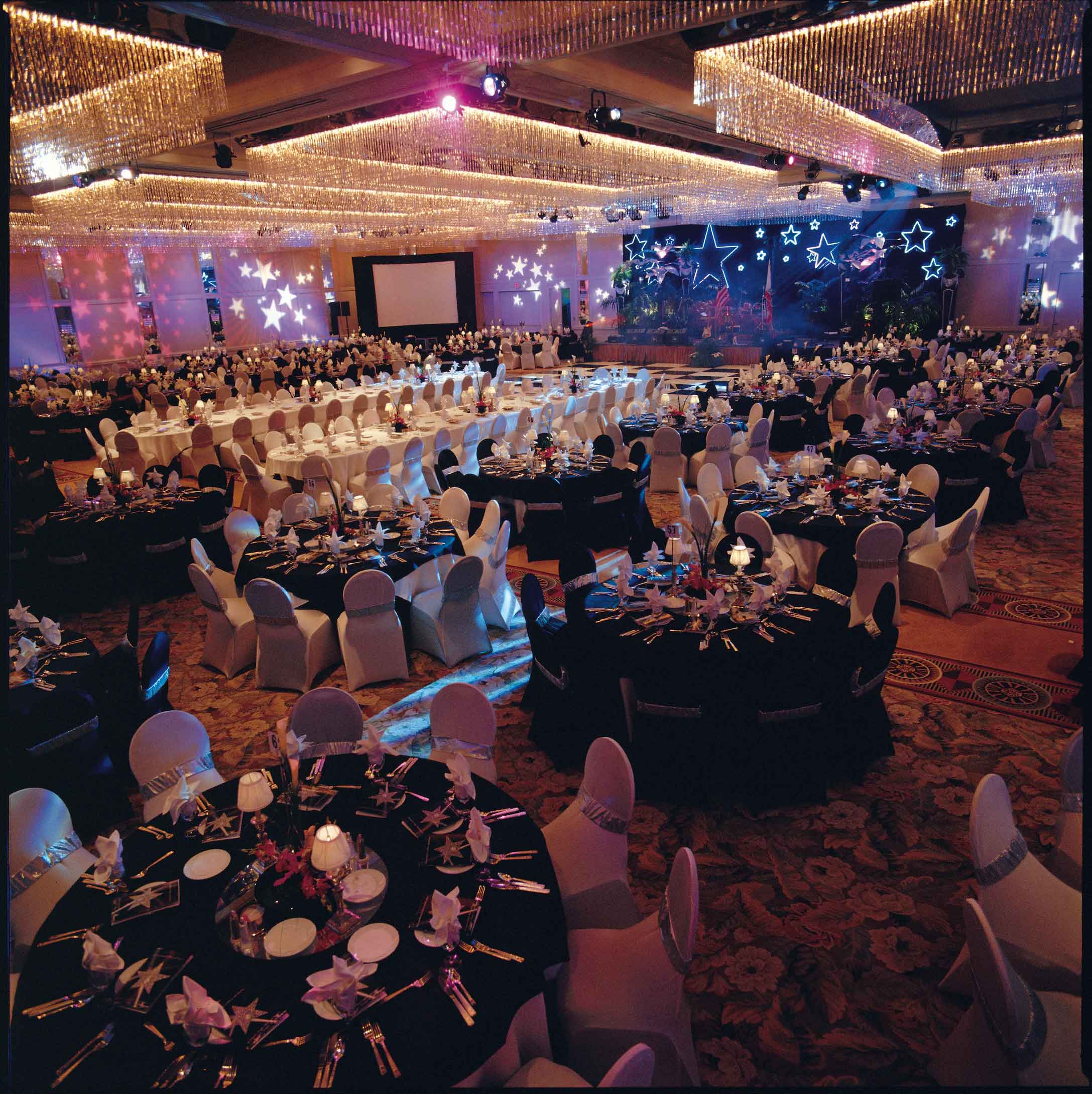
“Wow… I don’t know where to begin describing the complexity of it.. from finding the hotel that fits our needs, the issue of electricity on Shabbat, supplying wash basins for Netilat Yadayim, finding rooms with no sensors, to designing a satisfying menu. We also have to create a thought provoking seminar addressing diverse audience in addition to creating a kids program that entertains all ages. We also employ an organized telemarketing network that accommodates all seminar participants. The Banquet hall gets decorated lavishly almost like it is a wedding. We buy elegant table and chair covers, we install special lighting and bring in a complete synagogue – Shtender, Torah scrolls, Chazzan etc.
Sounds like a huge undertaking. What motivates you to do it?
“Our goal is to provide a positive experience to the Jews living here” said Erez “We work very hard for many days and nights to insure it will run flawlessly. We drive to bring unity to Jews coming from different parts of our community providing all of them with a relaxing tranquil relief from their daily stressful routine. This seminar allows them to dive deeper into Judaism warm embrace.
Seminar participants are limited to 500 people only –First come first serve. For more information check Hidabroot website at www.hidabrootusa.org or call (818) 626-6849

Dr. Lob is a clinical psychologist in private practice in Chicago, working with adults, adolescents, and families, for many years. He lectures and writes extensively on topics relating to psychology, relationships, parenting, education, and Jewish thought.

SPORTS PROGRAM OFFERED FOR JEWISH SPECIAL NEEDS ATHLETES

0

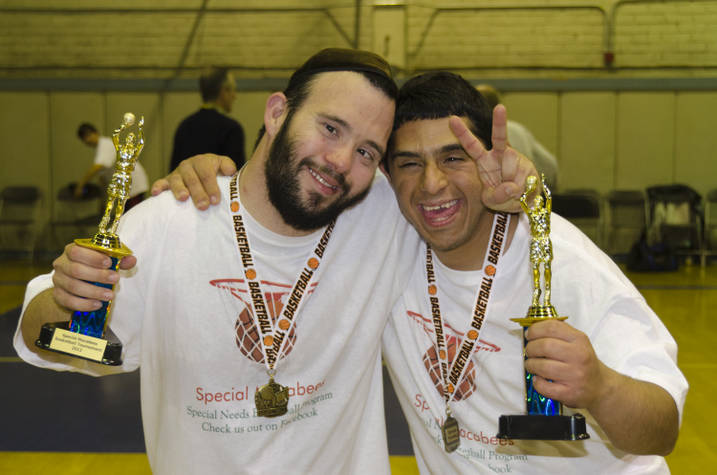
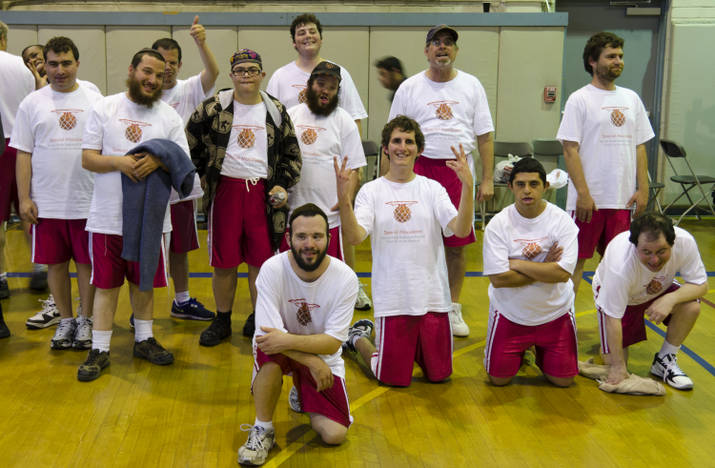
On Sunday, December 2nd, 1:15 PM at the JCC on 5870 West Olympic Blvd. in Los Angeles, organizer Jeff Liss, his coaches and Jewish Men and Women ages 10-60, will begin the 7th year of their Special Macabees Basketball Program.
It all began when Jeff and his wife Liz saw a group of developmentally challenged boys wearing kippot at the Third Street Promenade. It gave Jeff an idea.
Liss, a coach with the Westside Special Olympics, has trained and worked with mentally and physically challenged children for almost twenty years. When he stopped to talk with these Orthodox boys, he thought…why not a Special Olympics-type program for Jewish Children and Adults.
So it was stated and so it began. Athletes ranging in age from 10-60 and their disabilities including Autism, Down Syndrome, seizures and other mentally and physically challenging disabilities, both Male and Female, have been meeting at the JCC for the past 6 years.
Each Sunday’s practice is divided into two sessions…one hour of skill development, followed by a half hour of practice games where the athletes begin to hone their skills in an actual basketball game. During the skill development session, athletes are divided into small groups based on their level of ability. Each group has a volunteer coach, assigned by Liss, to focus on learning and practicing the various basketball skills….passing, catching, dribbling, shooting and playing defense. As Liss stated,” everything is about the athlete, his or her development and having fun.”
The 12-14 week season culminates in a “Finale”, a game between athletes from the Special Olympics playing against the Special Macabees Athletes. Parents, family and friends of all the athletes are invited to the game and last year’s game attracted over 200 in attendance. For most of the parents, it was the first time they ever saw their son or daughter, in full uniform, playing in an organized “real Basketball game”. The thrill of seeing their child/adult shoot and score brought tears and twinkles to many an eye that afternoon. And as Jeff Liss and his coaching staff stated…”it was the most rewarding feeling we’ve ever had.”
Rob Green, one of the coaches stated after the game, “I have seen such improvement and growth from one season to another. Their growth in self esteem and feeling of self worth, as a result of this program, is amazing. They feel part of a group a team, a feeling of being wanted and needed.”
One of our female athletes mentioned how…”I like being treated with respect and how I have learned to dribble properly and now have the skills I need to play basketball…I am so happy to be a part of this program.”
The mother of one of our male athletes, recently said, “my son looks forward to going on Sundays and being a part of the Special Macabees. He doesn’t feel he’s being treated differently because of his special needs”.
Now entering its 7th year, Jeff and his staff of dedicated coaches, Rob Green, Jay Davies, Yossie Bock and others, will be meeting and greeting old and new participants at the JCC on Sunday, December 2nd, from 1:15 – 2:30 PM.
To sign up for this year’s Special Macabees program or for further information on how to get involved contact Jay Davies, at 818-414-5857 or email specialmacabees@hotmail.com
Written by Morris Liss

 Special Macabees 2 Special Macabees

Biale Rebbe Visits Los Angeles

0

News of the upcoming visit of the Biale Rebbe to Los Angeles has been received with great excitement. The Biale Rebbe, shlita, of Bnei Brak, Rebbe Yaakov Menachem Rabinowitz, is well known throughout the world his for his greatness and righteousness, and thousands of Jews seek his advice and blessings.
The Biale Chassidic dynasty stretches ten generations from Rebbe Yaakov Yitzchak of Pshiskhe, zt’l, famously known as the “Yid Hakadosh” (Holy Jew). The Yid Hakadosh was a disciple of the Choize (Seer) of Lublin, the third generation of disciples of the holy Baal Shem Tov. The Chasidic lineage “ben achar ben” of the Yid Hakadosh from Pshiskhe, passed through Biale, Poland, and was regenerated after the Holocaust in Eretz Yisrael, by the Holy Rebbe, Rabbi Yechiel Yehoshua zt’l of Biale. Today the chassidus continues to flourish in Bnei Brak, under the wise direction of Rebbe Yaakov Menachem
Rabinowitz, shlita.
At an early age, the Rebbe, shlita was appointed to direct the holy court after the passing on of his righteous father, the famous Rebbe David, author of Lahavas Duvid of Bnei Brak. The Lahavas Duvid miraculously survived the Holocaust and was one of the known “children of Tehran,” the “yaldei Teheran.” In his youth, he was one of the first disciples of the Ponevezh Gaon, zt’l, and in his righteousness and brilliance, was appointed by his father Rebbe Yechiel Yehoshua to lead yeshivas Biale. After Rebbe Yechiel Yehoshua passed away, the Lahavas Duvid was crowned as a Rebbe, and his son, Rebbe Rabbi Yaakov Menachem, took the helm of the Biale Yeshiva. There he instilled in his talmidim Torah and morals, and despite his young age, became a renowned educator.
Upon the passing on of the Lahavas Duvid, Biale followers turned to Rebbe Yaakov Menachem Rabinowitz, shlita, and adorned him with the cloak of leadership of the dynasty of Biale Bnei Brak.
Upon the inauguration of the Rebbe, shlita, began a new era for Biale Hasidism. New yeshivas, synagogues and Chasidishe shtiblach were founded in the periphery cities. The pinnacle of the activities of the Rebbe is his Chasdei Duvid foundation, to help widows, orphans, and needy families.
Today, under the auspices of the Rebbe are glorious institutions, including yeshivas, kollelim, and shuls in Bnei Brak and Jerusalem. And in Elad, Beit Shemesh, and Beitar Illit are being built shtiblach for the young men of the Chassidus and graduates of the yeshivas.
The Rebbe’s main concern, to which he devotes all his powers, is the program for orphans in the yeshiva in Jerusalem. From when many tragedies came to the attention of the Rebbe, including children whose parents were killed in terrorist attacks, HY’D, and do not have upon whom to rely on for educational and physical needs, the Rebbe ordered the opening of a special department for these orphans. To these poor children are supplied the best teachers and mentors, who act as fathers and mothers for them. These children receive all their needs from the Biale institutions, including clothes and footwear, residence, tuition fees, and all expenses.
Biale advocates tell that one erev Pesach, after the Rebbe returned from a long trip abroad, as soon as he got off the plane he went immediately to visit “his children”—the orphans! The Rebbe, who is himself father to 15 children, bli ayin horah,, and 30 grandchildren, so may they increase, came first to visit the orphans! He immediately convened the staff, and informed them that before the holiday he wants to buy new clothing of superb quality for the orphans. Only after seeing that all the needs of the orphans are taken care of, did he return to his home to his biological children.
Every day, by the Rebbe’s door wait dozens of people from all Jewish backgrounds—Ashkenazim and Sephardim, Chasidic and non-Chasidic, young and old, upper and lower class. To each one, the Rebbe devotes his time and efforts, and all are received with a smile and love.
Also in his visits to the U.S., in New York and Florida, New Jersey, and California, masses horde to the Rebbe’s room for advice and blessings. He receives each one cordially, giving counsel and direction, all in the way of the holy Baal Shem Tov- to see the good in every Jew.
Many stories are narrated by Jews who by virtue of the blessings and advice of the Rebbe, had their lives changed for the better, be it matchmaking, livelihood, or health disorders. There are miraculous stories of Jews who were saved with children or healed from bad diseases.
Just recently, a Jew from Hollywood, Florida invited friends to a shalom zachor. In the e-mail he sent to his friend, he related: Two years ago, The Biale Rebbe came to our neighborhood. Friday night, the Rebbe leads a tish (Oneg Shabbat) in which the whole neighborhood participated, sang songs, and listened to Torah from the Rebbe. Together with some friends I also attended, and suddenly the Rebbe called me to receive a bone of the fish from which he ate. The Rebbe gave me this and said, take a “bain” (Yiddish for bone), which sounds like son—“ben” in Hebrew) After three girls, my wife and I really wanted to be blessed with a boy. Barely a year had passed since I received the Rebbe’s “bain,” and our shalom zachor was held with the participation of the Rebbe who returned for his annual visit to Florida.
Thousands of people who come to be blessed by the Rebbe have similar stories. The Rebbe does not “make discounts” to anyone. From one he demands to keep the Sabbath and from another to put on tefillin. The Rebbe sees himself as a messenger from G d to return the children’s hearts to their parents, as wherever he goes, he is mekarev another and another Jew “under the wings of the Shechinah,” all cheerfully and with love of Israel. Every Jew who enters the Rebbe room (even if at 3 a.m.) feels the great love and the spiritual connection projected to every person of the seed of Abraham, Isaac, and Jacob.
The Rebbe arrived, BS’D, in Los Angeles, Sunday, October 28, and is receive visitors at the residence of Dr. Stoll. 422 S. Las Palmas
Avenue. On Friday night, November 2, the Rebbe will conduct a tish with a large audience at 8:45 p.m. at KOLLEL YECHIEL YEHUDA, 444 N. La Brea Ave. Shachris will be davened in Beis Naftuli, followed by a big Kiddush given by the known president, Andrew Friedman. On Friday night, November 9, the tish will be held at 8:45 in Link Kollel And Shul, 1453 S Robertson Blvd.
If you wish to merit a personal meeting with the Rebbe, call Rabbi Moshe Friedman, the Rebbe’s personal gabbai, at
917-272-4045. Be blessed!

3-Day Housing Fair in USA!

0

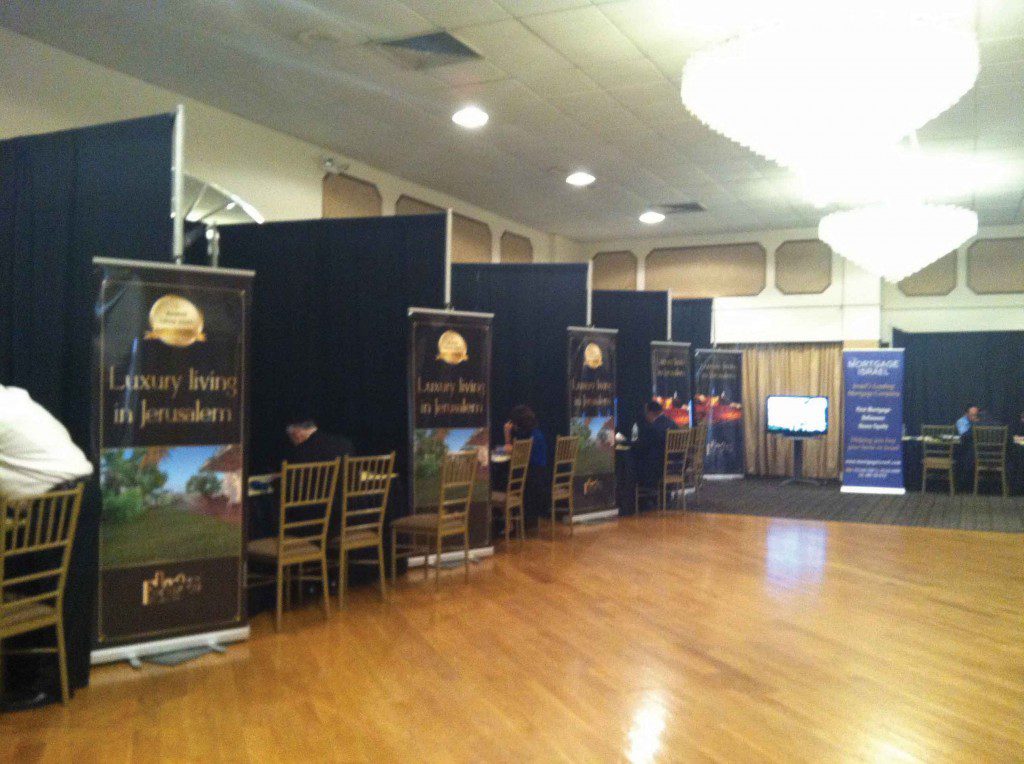
Purchase your dream home in the Jerusalem area! This week, Chish Nofei Yisrael, Ltd. will sponsor a 3-day housing fair in the USA in three convenient locations in Brooklyn, Monsey and Los Angeles. Chish Nofei Yisrael, the leading Israeli housing and development company to represent the orthodox community, has gained worldwide repute for its personal, courteous and reliable service. The upcoming fair, which offers homes for sale in some of the most popular new developments in the greater Jerusalem area, follows similar fairs that met with extreme success among the religious community and resulted in the sale of over 50 housing units within three days.
Available projects for sale include the exclusive Mishkenot Ha’Uma and Sarei Yisrael – two projects in the center of Jerusalem; Top 80 in Neve Yaakov; Givat Zev and Chish Nofei Yisrael’s flagship project, Ramat Givat Zev – both located 15 minutes away from the center of Jerusalem – the first-ever neighborhood in Israel developed specifically to meet the needs of an American Torah-based community. The majority of

homes in Ramat Givat Zev have been purchased by American olim who aspire to combine the best of both worlds. The beautiful neighborhood in pastoral Ramat Givat Zev emphasizes spiritual quality coupled with the warmth and friendliness of an English-speaking community and reflects the values, needs and mentality of orthodox olim acclimating to a new life and country. Housing units in the development include private villas, as well as attractively-designed, spacious apartments that allow orthodox families to make the move to Israel without compromising on their standards.
Special sales and offers will be available at the 3-day fair! Don’t miss this chance to make your dream come true!
The events will take place at the following locations:
•Sunday, Nov. 4 – Monsey 12:00 Noon – 6:00 PM, L’Chayim Manor Wesley Hills Plaza 455 RT 306 Monsey, NY.
•Tuesday, Nov. 6 – Flatbush 12:00 Noon – 6:00 PM, Agudath Israel of Avenue L 2913 Avenue L Brooklyn, NY.
•Sunday, Nov. 11 – Los Angeles 12:00 Noon – 6:00 PM,
Kanner Hall 7269 Beverly Blvd Los Angeles, CA

housing-fair flatbush.pg

WP Twitter Auto Publish Powered By : XYZScripts.com