Home Blog Page 446

Survey: Nearly All Jewish students cite campus anti-Semitism as a ‘problem’

0

Nearly 80% of students experienced or heard first-hand accounts of antisemitic hate speech; 69% avoided certain situations for fear of being outed as a Jew.

By Dion J. Pierre, The Algemeiner

Virtually all Jewish university students and alumni now feel that antisemitism on college campuses is a problem, according to a survey released on Monday by Alums for Campus Fairness (ACF), with nearly half of respondents saying that the issue is worsening.

The survey of 312 enrolled students and 194 alumni of varying Jewish affiliations revealed a “shocking growth of antisemitism,” ACF claimed. 95 percent of respondents said that antisemitism was a problem on their current or former campus, with three-fourths characterizing it as a “very serious” problem.

Nearly 80% of survey respondents reported experiencing or hearing first-hand accounts of antisemitic hate speech; 69% avoided certain places, situations, and events for fear of being outed as a Jew, and 47% believe antisemitism on college campuses is getting worse.

ACF Executive Director Avi D. Gordon called on universities to support Jewish students and “rid their alma maters of hate.”

“These finding illuminate the troubling reality on U.S. campuses — antisemitism is increasingly a pernicious threat, with Jewish students under siege,” he said.

“Today’s universities take great pains to embrace and protect students from all races, religions, and backgrounds,” Gordon continued. “But Jewish students are often left to fend for themselves against discrimination. Administrators must take immediate steps to remedy this situation, and alumni should work with administrators, students, and allies.”

Dubbed “A Growing Threat: Antisemitism on College Campuses,” the ACF survey also included written accounts of anti-Jewish harassment, intimidation, and assault.

Said one state university student in the Midwest, “I was having a conversation with a guy with a guy in my dorm and when I mentioned I was Jewish he made a joke about gassing me and when I explained that it was hurtful and not funny he spit on me.”

“Professors often made out of hand comments that supported antisemitic conspiracy theories against Israel,” said a 25-year-old, who graduated from a private college in the southeast. “[They said] that Israelis harvest Palestinian organs or use Palestinian children as target practice.”

Another alum said her former college refused to punish a professor teaching antisemitic conspiracy theories about 9/11 and the media.

“We received a 1.5 page letter stating that we misconstrued his comments and he did nothing wrong. Then they offered him tenure,” she said.

ACF recommended that colleges address rising antisemitism by adopting the International Holocaust Remembrance Alliance (IHRA) Working Definition of Antisemitism and promptly respond to future complaints of discrimination.

The survey was conducted online between March 25 and June 14, with 18-29 year-old participants recruited by ACF and the student-led group Jewish on Campus.


Source: World Jewish News

US Won’t Seek Death Penalty For California Chabad Shooter

0

Federal prosecutors said they will not seek the death penalty for a 22-year-old former nursing student charged in a deadly shooting at a Southern California Shul on the last day of Pesach.

The decision was disclosed Monday in a one-sentence court filing in federal court in San Diego. It comes less than two months after U.S. Attorney General Merrick Garland halted federal executions while the Justice Department conducts a review of its policies and procedures.

In July, John T. Earnest pleaded guilty to murder and other charges in state court. The San Diego County district attorney’s office said at the time that he agreed to serve the rest of his life in state prison without the possibility of parole. Sentencing is scheduled for Sept. 30.

In the federal case, Earnest submitted a conditional plea agreement for consideration by federal prosecutors in June 4, the terms of which have not been disclosed. A hearing in that case is scheduled Sept. 8.

Earnest opened fire with a semi-automatic rifle during the last day of Pesach in April 2019 at Chabad of Poway. The attack killed 60-year-old Lori Gilbert-Kaye and wounded three others, including an 8-year-old girl and the rabbi, who lost a finger.

Earnest then called 911 to say he had shot up a synagogue because Jews were trying to “destroy all white people,” authorities said.


Source: The Yeshiva World

EU Set to Recommend Reinstating Restrictions on U.S. Travelers

0

Monday, August 30, 2021


BRUSSELS (AP) – The European Union plans to recommend that its member states reinstate restrictions on tourists from the U.S. because of rising coronavirus infection levels in the country, EU diplomats said Monday.

A decision to remove the U.S. from a safe list of countries for nonessential travel would reverse advice from June, when the 27-nation bloc recommended lifting restrictions on U.S. travelers before the summer tourism season.

The guidance could come as early as this week, according to the EU diplomats. They spoke on condition of anonymity because the review process was still ongoing.

Any decision would be nonbinding, however. The EU has no unified COVID-19 tourism policy and national governments have the authority to decide whether they keep their borders open to U.S. tourists.

The European Council updates the list based on criteria relating to coronavirus infection levels. It gets reviewed every two weeks.

The threshold for being on the EU list is having not more than 75 new COVID-19 cases per 100,000 inhabitants over the last 14 days. Coronavirus cases have surged in the U.S. in recent weeks, running at more than 1,100 a day, the highest level since mid-March.

Last week, new cases per day averaged over 152,000, turning the clock back to the end of January, and the number of people in the hospital with the coronavirus was around 85,000, a number not seen since early February.

Newsom Will Be ‘Out Of Here’ On September 14: Larry Elder

0

On Sunday morning, speaking on Fox News’ “Sunday Morning Futures” with host Maria Bartiromo, leading GOP California gubernatorial candidate Larry Elder offered a prediction regarding the September recall vote on California Democrat governor Gavin Newsom: “I believe September 14, he’ll be out of here.”

“Right now, the recall side and the anti-recall side, we are about 50-50,” Elder surmised.

“It takes 50% plus one vote to get this guy out. And about a third of all those who signed the petition to get him out were Independents and Democrats who just voted for him two years earlier. The majority of Hispanics now want him out; the lion’s share of Hispanics who voted for him just two years earlier, Independents also want him out. 53% of all California voters say he does not deserve a second term.”

“They can’t explain why he’s shut down the government while ignoring science, his own kids enjoying in-person private education,” he continued.

“A third of all small businesses are now closed forever because of the way he cut down the state. People are now leaving; crime is up; homelessness is up. The cost of living is out of control. The fires are worse because he’s not properly managed the forest. We’re having rolling brownouts, for crying out loud, in California. You add it all up and many Californians want this man to go.”

“And I believe September 14 he’ll be out of here,” Elder concluded.

Asked by Bartiromo what was most important in terms of his own priorities, Elder answered, “To the extent that there are still mask mandates and vaccine mandates for workers, those are going to be repealed. I also am pushing choice in education. Before the pandemic, Maria, 75% of black boys could not read at state levels of efficiency and almost half of third-graders could not. They were denied a whole year of education.”

Biden breaks promise to ‘stay’ in Afghanistan until every American evacuated

0

President Biden appears to have broken his promise to stay in Afghanistan until every American is evacuated.

Marine Corps Gen. Kenneth F. McKenzie Jr. announced Monday evening that the last of the U.S. troops stationed at the Kabul airport had left, completing the military’s drawdown in the country, even though hundreds of Americans likely remain.

McKenzie, commander of U.S. Central Command, said some American citizens who wanted to leave Afghanistan remain in country.

“We did not get everybody out that we wanted to get out,” he said.

President Joe Biden told ABC News’ George Stephanopoulos during an interview on Aug. 18 that the U.S. military objective in Afghanistan was to get “everyone” out, including Americans and Afghan allies and their families.

“That’s what we’re doing now, that’s the path we’re on. And I think we’ll get there,” he said. “If there’s American citizens left, we’re gonna stay to get them all out.

A senior State Department official told Fox News on Monday that there is still a “small number” of Americans who are in Afghanistan.

That official put the number of Americans at “below 250,” adding that some additional Americans have departed Afghanistan in recent hours. The official added that the State Department is also committed to evacuating “those who worked with us,” referring to Afghan “partners.”

The announced end of the withdrawal comes less than a day before the official deadline agreed to by the Taliban, which was 3:29 p.m. EST Tuesday – 11:59 p.m. local time in Kabul, U.S. defense officials told Fox News.

The Taliban has said they will allow normal travel after the U.S. withdrawal is completed on Tuesday and they assume control of the airport.

(Fox News).

Israeli scientists unlock secret to keeping our immune systems young forever

0

When the body encounters a new pathogen such as a virus or microbe it generates cells called memory B lymphocytes to create a tailor-made response to that pathogen.

Israeli scientists may have figured out a way to keep our immune systems young even as we grow old, potentially eliminating the vulnerability that elderly people have to new diseases.

It is commonly understood that elderly people have a particularly hard time in fighting off new pathogens in the population, making new strains of common illnesses such as cold and flu more dangerous for us to encounter as we grow older.

Now, scientists working at Technion in Haifa, the Israel Institute of Technology, seem to have figured out why that happens, and what can be done about it.

When the body encounters a new pathogen such as a virus or microbe it generates cells called memory B lymphocytes to create a tailor-made response to that pathogen. Their job is to recognize that same pathogen the next time it is encountered, and to deploy antibodies capable of more swiftly countering the threat.

It is this mechanism that vaccines are designed to provoke, by giving the body something that it can create a specified immune response against.

And while it has been known for some time that older people are less effective at creating memory B lymphocytes, scientists were not sure why until now. It was this question that Reem Dowery was able to answer for her doctoral thesis, working under the guidance of Prof. Doron Melamed of the Technion’s Ruth and Bruce Rappaport Faculty of Medicine and his team. Their findings were recently published in the journal Blood.

It turns out that the memory B lymphocytes responsible for immune memory give out hormonal signals to bone marrow cells responsible for new cell production, which impede the creation of new cells. In effect, the body ‘fills up’ with B lymphocytes leaving no room for new ones.

The result is that the older we get, the less we are able to produce new memory cells, causing our immune response to new illnesses to fade over time.

Having discovered the mechanism that caused the problem, the researchers wondered whether it might be possible to counter it. To answer that question, the researchers joined forces with the departments of hematology and rheumatology at the Sourasky Medical Center and the Rambam Health Care Campus, respectively.

One of the treatments for certain medical conditions, such as lupus, lymphoma and multiple sclerosis, is to remove a significant number of memory B lymphocytes from the patient’s body. The result, the research team found, was that these patients were able to produce new, highly potent B lymphocytes once more.

In effect, by clearing space by removing the older B lymphocytes, the body’s immune system had been rejuvenated, allowing it to work more effectively again.

Another potential route to rejuvenating the immune system identified by the researchers was to inhibit one of the hormones involved in suppressing new memory B lymphocytes from being produced by the bone marrow, something that Reem Dowery and Prof. Melamed showed to be possible in their proof-of-concept study.

Not only are the findings a breakthrough in scientific terms, but they mean that future generations could have their immune system kept in tip-top condition throughout their entire life, ending the vulnerability of elderly people to new diseases – and potentially prolonging the lives of the elderly.

(World Israel News).

IDF Soldier, Shot by Hamas Terrorist, Succumbs to Wounds

0

Minister of Defense Benny Gantz eulogized Shmueli as “one of the country’s best sons, who fell in defense of the homeland and the residents of the south.”

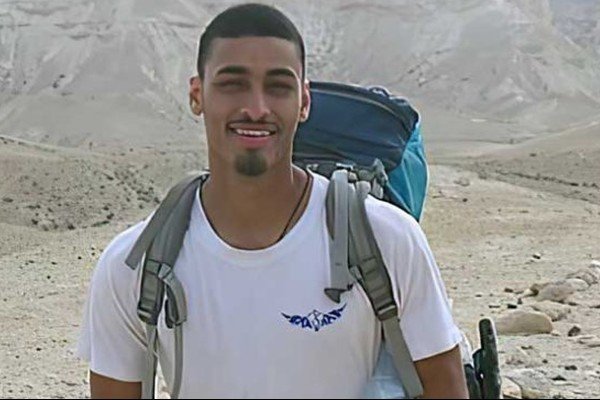
Israeli Border Police troop Barel Achiya Hadarya Shmueli, 21, who was critically injured in the head nine days ago after a Hamas terrorist shot him during riots on the border with the Gaza Strip, succumbed to his wounds on Monday.

Shmueli, a member of an elite undercover unit, was facing hundreds of rioters on August 21 when a Hamas terrorist shot him in the head at close range.

He fought for his life for nine days, underwent several surgeries, and prayer gatherings for his recovery were held across the world.

Minister of Defense Benny Gantz eulogized Shmueli as “one of the country’s best sons, who fell in defense of the homeland and the residents of the south.”

“Just a few days ago I went into his room and prayed in my heart that he would recover, but the hard news came and with it great pain. On behalf of the defense establishment, I send heartfelt condolences to his parents and family,” Gantz said.

Prime Minister Naftali Bennett stated that “there are not enough words to comfort the family in their heavy mourning. Barel was a warrior in his life and a warrior in his death. He fought for his life until the last moment, while the whole nation of Israel offered prayers for him.”

Former Prime Minister Benjamin Benjamin Netanyahu wrote that “we had hoped for a miracle, but unfortunately the worst of all happened. We hug Yossi and Nitza and the whole family.”

Shmueli is survived by his parents Yossi and Nitza, two sisters and a brother.

He will be buried in his hometown of Be’er Yaacov.

(United with Israel).

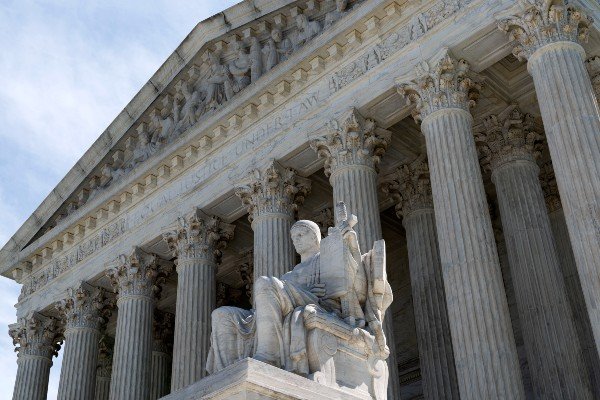
Biden administration losses in Supreme Court continue to mount

The ruling ending the federal ban on evictions is the latest in a string
of judicial setbacks for the White House.

The Biden administration is struggling to find its footing in the Supreme Court.

Thursday night’s decision ending the federal ban on evictions is the latest in a string of judicial reversals for President Joe Biden.

Earlier in the week, the Court ordered the president to maintain the Trump-era “Remain in Mexico” policy for asylum-seekers. This spring, Biden appointees at the Justice Department blundered into a unanimous defeat in a little-noticed criminal sentencing dispute.

In some cases, the errors were self-inflicted. The administration has enacted policies knowing they were on uncertain legal ground, doubled down on assertions picked apart in the lower federal courts, and flipped positions in pending cases only to lose by a lopsided margin.

In an unusual delay, the president did not nominate a solicitor general, the government’s top representative in the High Court, until Aug. 11.

Thursday’s decision followed a June dispute over an earlier iteration of the eviction ban, in which the Supreme Court signaled the moratorium was unlawful. The Centers for Disease Control, with backing from the White House, chose to extend the eviction ban anyway, inviting a high stakes confrontation over the scope of its authority.

The bet was a bad one, as Thursday’s decision will hamstring policymakers going forward. The CDC suspended evictions under a provision of the Public Health Service Act that empowers the agency to stop the spread of communicable diseases among the states.

The High Court construed that provision narrowly on Thursday, saying it only authorizes actions that directly relate to transmission reduction, such as inspections or pest extermination. But it does not, the Court stressed, sanction any policy that conceivably slows the spread of disease.

The administration also seemed to misfire in its emergency appeal over a district court injunction that required it to maintain the Migrant Protection Protocols.

The protocols require asylum-seekers to wait in Mexico while U.S. immigration authorities process their applications. Fighting the injunction before the Fifth U.S. Circuit Court of Appeals, the government accused the district court of ordering it to “reestablish the entire infrastructure upon which [the Migrant Protection Protocols] was built.” It also said the injunction interfered with ongoing diplomatic business with Mexico.

A three-judge panel of the Fifth Circuit picked apart both points in its Aug. 19 decision maintaining the injunction. The court said the first was a “straw man” because the injunction only requires the government to make good-faith efforts at restarting the protocols. It does not mandate full and immediate implementation.

The argument as to interference with foreign policy failed for the same reason, the Fifth Circuit said.

“If the government’s good-faith efforts to implement MPP are thwarted by Mexico, it nonetheless will be in compliance with the district court’s order,” the decision reads.

Nevertheless, government lawyers insisted on both points at the top of their emergency appeal to the High Court. In the opening passages of the appeal, the government claimed the injunction requires it “to abruptly reinstate a broad and controversial immigration enforcement program” that could precipitate “a humanitarian and diplomatic emergency.”

Logistical burdens and foreign policy complications can go a long way toward proving irreparable harm, one of the showings the government had to make to win its appeal. But it was likely a misstep to open by highlighting two arguments the lower court dismissed as intentional misrepresentations.

The administration’s first misstep in the Supreme Court came just two months after taking office in a criminal sentencing dispute. The case, originally set to be argued in April, asked whether low-level crack offenders were entitled to reduced sentences under the First Step Act. The Trump Justice Department had argued they were not.

The Biden Justice Department took a different view and flipped positions, choosing to back the convicts seeking a lighter sentence. The department notified the Court of its change one month before the argument—prompting a rare change to the Court’s schedule—on the same day it was due to submit its main legal brief.

New administrations have some leeway to change the litigation positions taken by their predecessors. But the department’s late-breaking announcement seemed to make waves among the justices at the rescheduled hearing in May. The government lost unanimously.

In a brisk opinion for an eight-justice majority, Justice Clarence Thomas wrote that the government’s revised argument “defies common parlance” and contradicted the “clear text.”

Justice Sonia Sotomayor wrote separately to say the law required the result the Court reached, but she urged Congress to amend the First Step Act and grant clemency to low-level offenders.

The solicitor general’s office was vacant throughout, filled by two different attorneys on an acting basis. The president finally named DOJ veteran Elizabeth Prelogar to the post on August 11. Justice Department colleagues reportedly favored her throughout, but the White House was searching for a “more diverse” candidate.

(World Israel News).


‘Don’t call it peace talks’: Israeli, Palestinian leaders meet, discuss economic policies

A Bennett staffer said the meeting was strictly security-based, and that observers should not interpret the meeting as a sign of warming ties.

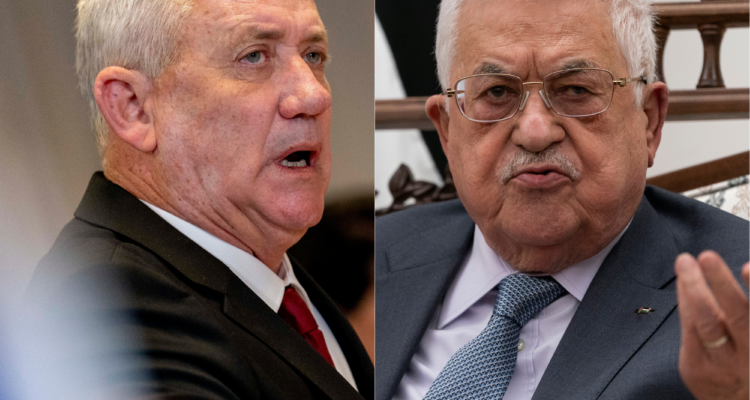
Israeli Defense Minister Benny Gantz met with Palestinian Authority (PA) chair Mahmoud Abbas on Monday evening, marking the highest level discussion between PA and Israeli politicians in over a decade.

Gantz wrote on Twitter that the two men had discussed “security-policy, civilian and economic issues.”

“I told chairman Abbas that Israel seeks to take measures that will strengthen the PA’s economy,” Gantz added.

“We also discussed shaping the security and economic situations in the West Bank and in Gaza. We agreed to continue communicating further on the issues that were raised during the meeting.”

According to Hebrew language media, Prime Minister Naftali Bennett gave the green light for the meeting to take place in Ramallah.

But sources in Bennett’s administration were quick to clarify that the meeting was strictly security-based, and that observers should not interpret the meeting as a sign of warming ties.

“This is a meeting that deals with current issues of the security system with the Palestinian Authority,” a source told Ma’ariv.

“There is no political process with the Palestinians and there never will be.”

Earlier in August, Channel 12 reported that Bennett had refused to grant permission for the meeting, fearing that it would be perceived as a prelude to peace talks.

On the heels of the death of political activist Nizar Banat in PA custody, mass protests and civil unrest have shaken the Palestinian Authority’s grip on the area.

Hady Amr, the U.S. deputy assistant secretary of state for Israeli-Palestinian affairs, warned Israel in a recent meeting that the PA is near collapse, urging the Jewish State to strengthen the ailing government or risk facing a situation in which Hamas and other terror groups come to power.

An Israeli government official told Axios in July that Amr had raised the alarm regarding the PA losing legitimacy in the eyes of the Palestinian public, and said the institution’s loss of control could pose serious security issues for Israel.

“I have never seen the Palestinian Authority in a worse situation,” Amr reportedly told the Israeli official.

Speaking about the economic and political crisis the PA is currently facing, he likened the situation to a “a dry forest waiting to catch on fire.”

(World Israel News).

Taliban: US airstrike hits suicide bomber targeting airport

0

By KATHY GANNON, TAMEEM AKHGAR and JON GAMBRELL


KABUL, Afghanistan (AP) — The Taliban said that a U.S. airstrike targeted a suicide bomber in a vehicle Sunday who wanted to attack the Kabul international airport amid the American military’s evacuation there.

There were few initial details about the incident, as well as a rocket that struck a neighborhood just northwest of the airport, killing a child. The two strikes initially appeared to be separate incidents, though information on both remained scarce.

The attack comes as the United States winds down a historic airlift that saw tens of thousands evacuated from Kabul’s international airport, the scene of much of the chaos that engulfed the Afghan capital since the Taliban took over two weeks ago. After an Islamic State affiliate’s suicide attack that killed over 180 people, the Taliban increased its security around the airfield as Britain ended its evacuation flights Saturday.

U.S. military cargo planes continued their runs into the airport Sunday, ahead of a Tuesday deadline earlier set by President Joe Biden to withdraw all troops from America’s longest war. However, Afghans remaining behind in the country worry about the Taliban reverting to their earlier oppressive rule — something fueled by the recent shooting death of a folk singer in the country by the insurgents.

Zabihullah Mujahid said in a message to journalists that the strike targeted the bomber as he drove a vehicle loaded with explosives. Mujahid offered few other details.

U.S. military officials could not be immediately reached for comment.

The rocket attack meanwhile struck Kabul’s Khuwja Bughra neighborhood, said Rashid, the Kabul police chief who goes by one name. Video obtained by The Associated Press in the aftermath of the attack showed smoke rising from building at the site around a kilometer (half a mile) from the airport.

No group immediately claimed the attack, however militants have fired rockets in the past.

Meanwhile, the family of a folk singer north of Kabul say the Taliban killed him.

The shooting of Fawad Andarabi came in the Andarabi Valley for which he was named, an area of Baghlan province some 100 kilometers (60 miles) north of Kabul. The valley had seen upheaval since the Taliban takeover, with some districts in the area coming under the control of militia fighters opposed to the Taliban rule. The Taliban say they have since retaken those areas, though neighboring Panjshir in the Hindu Kush mountains remains the only one of Afghanistan’s 34 provinces not under its control.

The Taliban previously came out to Andarabi’s home and searched it, even drinking tea with the musician, his son Jawad Andarabi told the AP. But something changed Friday.

“He was innocent, a singer who only was entertaining people,” his son said. “They shot him in the head on the farm.”

His son said he wanted justice and that a local Taliban council promised to punish his father’s killer.

Taliban spokesman Zabihullah Mujahid told the AP that the insurgents would investigate the incident, but had no other details on the killing.

Andarabi played the ghichak, a bowed lute, and sang traditional songs about his birthplace, his people and Afghanistan as a whole. A video online showed him at one performance, sitting on a rug with the mountains of home surrounding him as he sang.

“There is no country in the world like my homeland, a proud nation,” he sang. “Our beautiful valley, our great-grandparents’ homeland.”

Karima Bennoune, the United Nations special rapporteur on cultural rights, wrote on Twitter that she had “grave concern” over Andarabi’s killing.

“We call on governments to demand the Taliban respect the #humanrights of #artists,” she wrote.

Agnes Callamard, the secretary-general of Amnesty International, similarly decried the killing.

“There is mounting evidence that the Taliban of 2021 is the same as the intolerant, violent, repressive Taliban of 2001,” she wrote on Twitter. “20 years later. Nothing has changed on that front.”

Meanwhile on Sunday, private banks across Afghanistan resumed their operations. However, they limited withdrawals to no more than the equivalent of $200 a day.

While some complained of still being unable to access their money, government employees say they haven’t been paid over the last four months. The Afghani traded around 90.5 to $1, continuing its depreciation as billions of dollars in the country’s reserves remain frozen overseas.

___

Akhgar reported from Istanbul, Gambrell from Dubai, United Arab Emirates.


Source: AP

WP Twitter Auto Publish Powered By : XYZScripts.com