Home Blog Page 445

Rabbi Lord Jonathan Sacks zt”l – Defeating Death (Nitzavim 5781)

Only now, reaching Nitzavim, can we begin to get a sense of the vast, world-changing project at the heart of the Divine-human encounter that took place in the lifetime of Moses and the birth of Jews/ Israel as a nation.

To understand it, recall the famous remark of Sherlock Holmes. “I draw your attention,” he said to Dr Watson, “to the curious incident of the dog at night.” “But the dog did nothing at night,” said Watson. “That,” said Holmes, “is the curious incident.”[1] Sometimes to know what a book is about you need to focus on what it does not say, not just on what it does.

What is missing from the Torah, almost inexplicably so given the background against which it is set, is a fixation with death. The ancient Egyptians were obsessed with death. Their monumental buildings were an attempt to defy death. The pyramids were giant mausoleums. More precisely, they were portals through which the soul of a deceased pharaoh could ascend to heaven and join the immortals. The most famous Egyptian text that has come down to us is The Book of the Dead. Only the afterlife is real: life is a preparation for death.

There is nothing of this in the Torah, at least not explicitly. Jews believed in Olam HaBa, the World to Come, life after death. They believed in techiyat hametim, the resurrection of the dead.[2] There are six references to it in the second paragraph of the Amidah alone. But not only are these ideas almost completely absent from Tanach. They are absent at the very points where we would expect them.

The book of Kohelet (Ecclesiastes) is an extended lament at human mortality. Havel havalim… hakol havel: Everything is worthless because life is a mere fleeting breath (Ecc 1:2). Why did the author of Ecclesiastes not mention the World to Come and life-after-death? Another example: the book of Job is a sustained protest against the apparent injustice of the world. Why did no one answer Job to say, “You and other innocent people who suffer will be rewarded in the afterlife”? We believe in the afterlife. Why then is it not mentioned – merely hinted at – in the Torah? That is the curious incident.

The simple answer is that obsession with death ultimately devalues life. Why fight against the evils and injustices of the world if this life is only a preparation for the world to come? Ernest Becker in his classic The Denial of Death argues that fear of our own mortality has been one of the driving forces of civilisation.[3] It is what led the ancient world to enslave the masses, turning them into giant labour forces to build monumental buildings that would stand as long as time itself. It led to the ancient cult of the hero, the man who becomes immortal by doing daring deeds on the field of battle. We fear death; we have a love-hate relationship with it. Freud called this thanatos, the death instinct, and said it was one of the two driving forces of life, the other being eros.

Judaism is a sustained protest against this world-view. That is why “No one knows where Moses is buried” (Deut. 34:6) so that his tomb should never become a place of pilgrimage and worship. That is why in place of a pyramid or a temple such as Ramses II built at Abu Simbel, all the Israelites had for almost five centuries until the days of Solomon was the Mishkan, a portable Sanctuary, more like a tent than a temple. That is why, in Judaism, death defiles and why the rite of the Red Heifer was necessary to purify people from contact with it. That is why the holier you are – if you are a Kohen, more so if you are the High Priest – the less you can be in contact or under the same roof as a dead person. God is not in death but in life.

Only against this Egyptian background can we fully sense the drama behind words that have become so familiar to us that we are no longer surprised by them, the great words in which Moses frames the choice for all time:

See, I have set before you today life and good, death and evil … I call heaven and earth as witnesses today against you, that I have set before you life and death, the blessing and the curse; therefore choose life, that you and your children may live. (Deut. 30:15, 19)

Life is good, death is bad. Life is a blessing, death is a curse. These are truisms for us. Why even mention them? Because they were not common ideas in the ancient world. They were revolutionary. They still are.

How then do you defeat death? Yes there is an afterlife. Yes there is techiyat hametim, resurrection. But Moses does not focus on these obvious ideas. He tells us something different altogether. You achieve immortality by being part of a covenant – a covenant with eternity itself, that is to say, a covenant with God.

When you live your life within a covenant something extraordinary happens. Your parents and grandparents live on in you. You live on in your children and grandchildren. They are part of your life. You are part of theirs. That is what Moses meant when he said, near the beginning of this week’s parsha:

It is not with you alone that I am making this covenant and oath, but with whoever stands with us here today before the Lord our God as well as those not with us here today(Deut. 29:13-14)

In Moses’ day that last phrase meant “your children not yet born.” He did not need to include “your parents, no longer alive” because their parents had themselves made a covenant with God forty years before at Mount Sinai. But what Moses meant in a larger sense is that when we renew the covenant, when we dedicate our lives to the faith and way of life of our ancestors, they become immortal in us, as we become immortal in our children.

It is precisely because Judaism focuses on this world, not the next, that it is the most child-centred of all the great religions. They are our immortality. That is what Rachel meant when she said, “Give me children, or else I am like one dead” (Gen. 30:1). It is what Abraham meant when he said, “Lord, God, what will you give me if I remain childless?” (Gen. 15:2). We are not all destined to have children. The Rabbis said that the good we do constitutes our toldot, our posterity. But by honouring the memory of our parents and bringing up children to continue the Jewish story we achieve the one form of immortality that lies this side of the grave, in this world that God pronounced good.

Now consider the two last commands in the Torah, set out in parshat Vayelech, the ones Moses gave at the very end of his life. One is hakhel, the command that the King summon the nation to an assembly every seven years:

At the end of every seven years …  Assemble the people – men, women and children, and the stranger living in your towns – so that they can listen and learn to fear the Lord your God and follow carefully all the words of this law. (Deut. 31:12)

The meaning of this command is simple. Moses is saying: It is not enough that your parents made a covenant with God at Mount Sinai or that you yourselves renewed it with me here on the plains of Moab. The covenant must be perpetually renewed, every seven years, so that it never becomes history. It always remains memory. It never becomes old because every seven years it becomes new again.

And the last command? “Now write down this song and teach it to the Israelites and make them sing it, so that it may be a witness for me against them” (Deut. 31:19). This, according to tradition, is the command to write [at least part of] a Sefer Torah. As Maimonides puts it: “Even if your ancestors have left you a Sefer Torah, nonetheless you are commanded to write one for yourself.”[4]

What is Moses saying in this, his last charge to the people he had led for forty years, was: It is not sufficient to say, our ancestors received the Torah from Moses, or from God. You have to take it and make it new in every generation. You must make the Torah not just your parents’ or grandparents’ faith but your own. If you write it, it will write you. The eternal word of the eternal God is your share in eternity.

We now sense the full force of the drama of these last days of Moses’ life. Moses knew he was about to die, knew he would not cross the Jordan and enter the land he had spent his entire life leading the people toward. Moses, confronting his own mortality, asks us in every generation to confront ours.

Our faith – Moses is telling us – is not like that of the Egyptians, the Greeks, the Romans, or virtually every other civilisation known to history. We do not find God in a realm beyond life – in heaven, or after death, in mystic disengagement from the world or in philosophical contemplation. We find God in life. We find God in (the key words of Devarim) love and joy. To find God, he says in this week’s parsha, you don’t have to climb to heaven or cross the sea (Deut. 30:12-13). God is here. God is now. God is life.

And that life, though it will end one day, in truth does not end. For if you keep the covenant, then your ancestors will live in you, and you will live on in your children (or your disciples or the recipients of your kindness). Every seven years the covenant will become new again. Every generation will write its own Sefer Torah. The gate to eternity is not death: it is life lived in a covenant endlessly renewed, in words engraved on our hearts and the hearts of our children.

And so Moses, the greatest leader we ever had, became immortal. Not by living forever. Not by building a tomb and temple to his glory. We don’t even know where he is buried. The only physical structure he left us was portable because life itself is a journey. He didn’t even become immortal the way Aaron did, by seeing his children become his successors. He became immortal by making us his disciples. And in one of their first recorded utterances, the Rabbis said likewise: Raise up many disciples.

To be a leader, you don’t need a crown or robes of office. All you need to do is to write your chapter in the story, do deeds that heal some of the pain of this world, and act so that others become a little better for having known you. Live so that through you our ancient covenant with God is renewed in the only way that matters: in life. Moses’ last testament to us at the very end of his days, when his mind might so easily have turned to death, was: Choose life.


[1] Arthur Conan Doyle, “The Adventure of Silver Blaze.”

[2] The Mishnah in Sanhedrin 10:1 says that believing that the resurrection of the dead is stated in the Torah is a fundamental part of Jewish faith. However, according to any interpretation, the statement is implicit, not explicit.

[3] New York: Free Press, 1973.

[4] Mishneh Torah, Hilchot Tefillin, Mezuza, VeSefer Torah 7:1.
Nicotine found in hair of 70% of children whose parents smoke

0

The researchers wanted to examine whether raising awareness of children’s exposure might change their parents’ behavior.

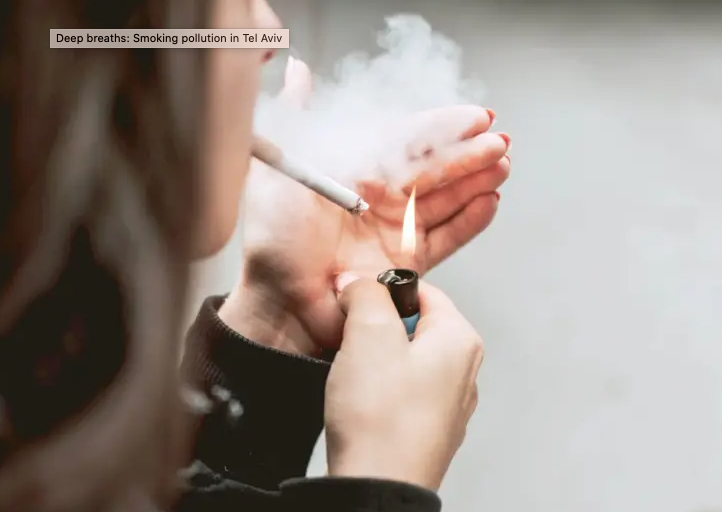
Seventy percent of children with parents who smoke were found to have nicotine residue in hair samples, according to research done by the Sackler Medical School of Tel Aviv University.
The study was peer-reviewed and published in Nicotine & Tobacco Research.
The researchers wanted to examine whether raising awareness of children’s exposure might change their parents’ behavior. About 140 Israeli families, with children up to age 8 where at least one parent smokes, participated in the study.
The smoking average per household was 15 cigarettes per day. A third of the participants reported that they smoke inside the home, and a third said that they only smoke on the porch.
Researchers tested children’s level of exposure via a biomarker: nicotine in hair, testing whether nicotine became an integral part of the strand of hair having originated in the body and not just external precipitate. The nicotine in the inner shaft of the hair represents that which has been absorbed by the child and reached the bloodstream. The external residue was washed off before analysis.
Nicotine residue was found in 70% of the hair tested.
The researchers divided the families into two groups. One had comprehensive instruction about the effects and dangers of exposure to smoke, including feedback and information about the test results, and was also given tools to protect their children from exposure to cigarette smoke and a recommendation to keep their home and car smoke-free. The second group only received feedback about nicotine levels in the children’s hair after six months, at the end of the study.
Six months after the start of the study, the researchers conducted additional nicotine tests on the children’s hair. A statistically significant decrease was found in both groups.
Researchers theorize that knowledge that the children were tested for nicotine exposure, and that additional testing was planned, resulted in the parents changing their behavior and reducing the children’s exposure – regardless of whether they had been coached in the interim.
“To our great dismay, according to Health Ministry data, approximately 60% of small children in Israel are exposed to secondhand smoke and its harmful effects,” according to Prof. Leah Rosen, who ran the study.
“Based on the study’s findings, we believe that conducting nicotine testing for every young child in Israel – in the hair, urine, or using other testing methods – may change parents’ perceptions about exposing their children to tobacco smoke,” she said. “Changing this perception can also result in changing behavior, exposure levels, and even social norms regarding passive exposure to smoking – both exposure of children as well as exposure of adults.
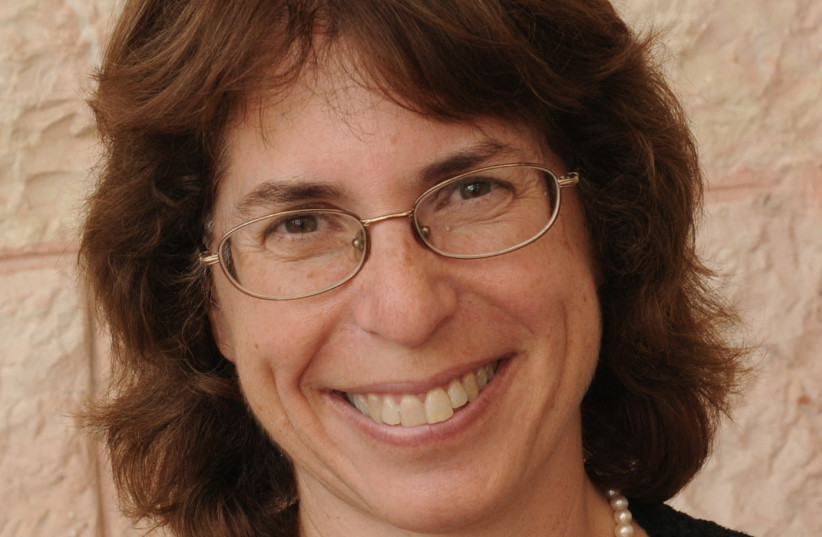
 Prof. Leah (Laura) Rosen (credit: DEBBI COOPER)Prof. Leah (Laura) Rosen (credit: DEBBI COOPER)
Prof. Rosen explained to the Post that exposure to tobacco smoke is dangerous, especially for children who suffer both short-term harm (such as the increased risk of sudden infant death syndrome, bronchitis, ear infections) and long-term harm (delayed lung development, long term damage to the cardiovascular system).
She also explained that most Israelis don’t fully understand the damage from either active smoking, or from secondhand smoke. And they are often not even aware that the exposure is occurring.
“It is critical that they protect their children from tobacco smoke.” Rosen told the Post.  “There should never be smoking inside the house, including at windows or on porches. Besides the immediate exposure, the toxins from the tobacco smoke are absorbed into the walls, carpets and upholstery and are slowly released over time. This is known as thirdhand smoke. Smoking on porches often exposes neighbors – Why should anyone hurt their neighbors?
“We thank the families that participated in the study, and call upon smokers to avoid smoking anyplace where non-smokers could be exposed – in particular, at-risk populations, including children, pregnant women, elderly and those who are ill,” the professor said. “Non-smokers must understand that there is genuine risk in exposure to tobacco smoke, and they must insist upon their right and the right of their children and family members to breathe air that is smoke-free everywhere.
“Of course, the government has a central role in enforcing laws pertaining to smoking in public places and by continuing to enact laws to protect the individual everywhere from exposure to secondhand smoke,” she said.
Natan Rothstein contributed to this report.
Source JPOST

Report: Taliban gives US tanks, military equipment to Iran

0

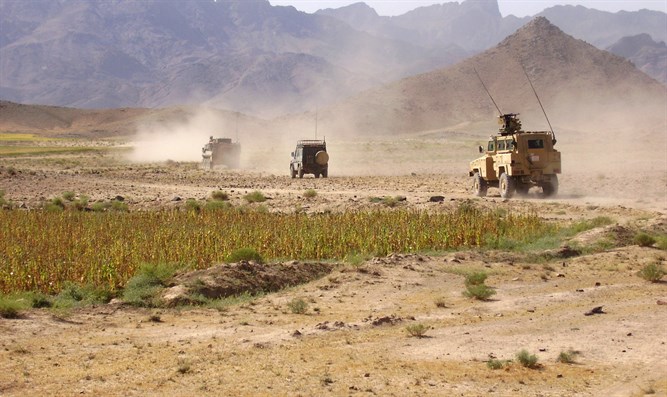
US military equipment from Afghanistan emerges in images
from Tehran.

The Taliban has begun turning over American-made military equipment to Iran, according to a report by Iran International.

According to the report, images on social media show military equipment which was given to the Afghan army by the US in Tehran and other parts of Iran.

Photographs also show armored tanks and Humvees being transported towards Tehran.

Two of the images were posted by acting Defense Minister of Afghanistan Bismallah Mohammadi, who called Iran a “bad neighbor” and said that the country’s “bad days are not eternal.”

Last week, Iran offered to resume fuel shipments to Afghanistan to prevent an economic collapse.

The US left behind dozens of billions of dollars worth of equipment in Afghanistan when it completed its withdrawal from the country Tuesday morning.

(Arutz 7).

Israel Captures Special Equipment Meant for Hamas Tunnels

0
By Aryeh Savir/TPS • 1 September, 2021

Jerusalem, 1 September, 2021 (TPS) — Israel’s security services were successful in thwarting an attempt to transfer advanced filtering equipment from the Hebron area to the Gaza Strip, apparently on its way to be fitted in Hamas’ terror tunnels.

Transit Authority security inspectors at the Tarkumiya crossing near Hebron exposed on Wednesday an unusual smuggling attempt of advanced ventilation systems, which were supposedly intended for the Hamas tunnel project in Gaza.

The shipment included filters, valves and even assembly instructions in Hebrew.

The equipment was seized and an investigation has been launched by Israel’s security establishment.

Israel’s combined security agencies have been successful in thwarting thousands of attempts to smuggle illicit materials and products into the Gaza Strip in the past years.

In many of the incidents, the smuggled materials and products are meant for Hamas’ rocket production program or its military build-up, including its elaborate underground city, dubbed by the IDF as the “Metro.”

Rabbi Jonathan Gewirtz – Better Late than Never

0

Operation Inspiration

OK, what I’m about to say may shock you, but it has to be done. The year ahead will be planned for you not by your social secretary or by your spouse. It won’t even be your employer’s decision. Nope, it will be planned for you by Hashem, on Rosh Hashana.

Yes, on this one magnificent day, (even though it’s so long that it spans two of our calendar days,) Hashem sets the calendars and appointments for every one of His creations. Think you’re going on vacation on December 28? Actually, His calendar says you’ll be attending a wedding that evening. Have your mind set on a quiet evening at home on February 13? It could be that you’ll be attending a shiva house, where it may be quiet, but not what you were planning. Oh, and that day at the amusement park next summer? Hashem’s planner shows you in Gan Eden at that point. You might want to hold off on purchasing tickets.

Of course, these dates and circumstances are not intended for anyone in particular. They are merely for illustration purposes to get us thinking about what really happens on Rosh Hashana. Hashem decides who will live and who will die. He decides who will get stuck in traffic and who will buy a house. He decides whether you will have good health or need to visit doctors. Guess what? Two years ago, on Rosh Hashana, Hashem decided the world would be visited by a little thing called Coronavirus, aka COVID-19. He decided who it would affect and how, and if we’d known then what we know now, don’t you think we might have davened just a little differently that year?

Even when we knew what was going on, by last Rosh Hashana we’d started to see improvement, and felt things were changing. We figured it couldn’t go on much longer and that 5781 would be different whether we prayed about it or not. We relied on that hypothesis so much that Hashem chose to give us resurgences, Delta variant, and continued uncertainty.

So, now that we are aware of it, we should start planning how we will daven on Rosh Hashana to avoid Hashem deciding we need this “gift” for a third straight year. We have to think about how we will change ourselves, since, of course, that is a basic theme of Teshuva, and we have to think about how we will affect others, and they us.

Let’s not forget that COVID isn’t the only thing that can affect us. It may just be the most prominent. But surely we all know people suffering other physical maladies, financial ones, or mental and emotional ones. Most likely, we know people with a combination thereof, and we count ourselves among their number too. So how can we get Hashem to change His plans for us for the coming year?

First of all, Rosh Hashana is the coronation of Hashem as our King. A good king is concerned about the welfare of his subjects and if we place our full trust in Him, Hashem will not let us down. To do so would be a Chilul Hashem. However, if, like the guy who davened for a parking space in a busy city, and when he found one said, “Thanks anyway, G-d, I found one myself,” we believe that we are the masters of our own destiny and Hashem merely plays a supporting role, then we might find ourselves in the spot where Hashem chooses to sit back and see how well we do on our own.

Second of all, we say that on Rosh Hashana, every person passes before Hashem like sheep before a shepherd. Though a shepherd cares about each lamb, he also cares about the overall wellbeing of his flock. If one sheep is sick and infecting others, or butting heads with others, the shepherd is likely to get rid of that one for the sake of the flock. We’re all Hashem’s “only child,” but so is every other man and woman. We need to think about what’s best for everyone and pray for that. Instead of thinking of ourselves, we need to think of Hashem and what is in HIS best interest. Working towards that goal will ensure we’re part of Hashem’s plan for the future and He will likely find ways to make it easier for us to achieve those goals.

One last idea I’ll throw in here is that over the past five years, we’ve seen violent machlokes divide people in areas like politics and medicine. We need to rethink the wisdom of that in light of the fact that peace is the greatest vessel for retaining Hashem’s bracha. Just because you disagree with someone doesn’t mean that you’re right or that they are evil. It also doesn’t give you the right to blast anyone you choose. There are actually HALACHOS about this! The simple rule of thumb is that we are all Hashem’s children and need to get along.

I think I’ve said enough to give you something to think about this Rosh Hashana. As you say selichos this week and next, you’ll be apologizing for missing the big picture, and asking Hashem to give you a chance to be part of His team for the next 4 quarters. When you dip the apple into honey, you’ll realize that both the apple and the honey came from Hashem, and by doing what He wants you to with them, you’ll experience the sweetness He has in mind.

I’m sorry I didn’t say this last year or the year before that, but at least this time we can head into Rosh Hashana armed with this knowledge and try to get in the right mindset. By doing so, may we be inscribed, signed, and sealed in Hashem’s planner for a good year for us, all Klal Yisrael, and all of Creation.


© 2021 – All Rights Reserved

Did you enjoy this column? Feedback is welcome and appreciated. E-mail info@JewishSpeechWriter.com to share your thoughts. You never know when you may be the lamp that enlightens someone else.

Antisemitism: Jews target of 58% of all religiously motivated hate crimes in US

0

Antisemitic attacks in 2020 constitute 9% of all hate crimes in the US nationwide, down from 13% in 2019.

Jews in America are the target of 58 percent of all religiously motivated hate crimes in the US despite constituting a mere two percent of the population, newly released FBI statistics for 2020 have shown.
The data also showed that Jews constitute the third largest target of hate crimes out of all minorities in the entire country, more than, Hispanics, Muslims, Asians, and virtually all other groups.
Only anti-black or African-American, anti-White, and anti-LGBT attacks were more numerous than anti-Jewish ones.
In total, the FBI received information of 7,759 hate crimes committed in 2020, submitted by over 15,000 law enforcement agencies around the country.
Of those, 4,939 attacks were motivated by race or ethnicity, 1,174 by religion and 1,051 by sexual orientation, with the remainder based on hatred for disability, gender, gender identity and multiple biases.
MEGHAN MCCAIN speaks at Sunday’s rally against antisemitism, as Israeli actress Noa Tishby and Arizona State Rep. Alma Hernandez look on at the US Capitol in Washington. (credit: RON KAMPEAS)
Of the religiously motivated hate crimes, fully 676 were committed against Jews, some 58% of all such attacks and 9% of the total number of hate crimes committed across the US in 2020.
Although still high, the 2020 numbers are marginally lower than those of 2019, when anti-Jewish attacks constituted 63% of all religiously motivated hate crimes and 13% of all hate crimes nationwide.

Thousands Face Weeks Without Power In Ida’s Aftermath

0

NEW ORLEANS (AP) — Louisiana communities beginning the huge task of clearing debris and repairing the damage inflicted by Hurricane Ida are facing the depressing prospect of weeks without electricity in the stifling, late-summer heat.

Ida ravaged the region’s power grid, leaving all of New Orleans and hundreds of thousands of other Louisiana residents in the dark with no clear timeline on when the electricity would come back on. Some areas outside New Orleans also suffered major flooding and structure damage.

“I can’t tell you when the power is going to be restored. I can’t tell you when all the debris is going to be cleaned up and repairs made,” Gov. John Bel Edwards said Monday. “But what I can tell you is we are going to work hard every day to deliver as much assistance as we can.”

The storm was blamed for at least four deaths in Louisiana and Mississippi, including two people killed Monday night when seven vehicles plunged into a 20-foot-deep (6-meter-deep) hole near Lucedale, Mississippi, where a highway had collapsed after torrential rains.

On Monday, rescuers in boats, helicopters and high-water trucks brought more than 670 people in Louisiana trapped by floodwaters to safety. An additional 20 people were rescued in Mississippi. Crews planned to go door to door in hard-hit areas to make sure everyone got out safely.

Power crews also rushed into the region. Louisiana’s governor said 25,000 utility workers were on the ground in the state to help restore electricity, with more on the way.

Still, his office described damage to the power grid as “catastrophic,” and power officials said it could be weeks before electricity is restored in some spots.

More than 1 million homes and businesses in Louisiana and Mississippi were left without power as Ida pushed through on Sunday with winds that reached 150 mph (240 kph). The wind speed tied it for the fifth-strongest hurricane ever to hit the mainland.

A giant tower that carries key transmission lines over the Mississippi River to the New Orleans area twisted and collapsed in the storm, and power company Entergy said more than 2,000 miles of transmission lines were knocked out of service along with 216 substations. The storm also flattened utility poles, toppled trees onto power lines and caused transformers to explode.

In New Orleans, city officials told residents without power there was no reason to stay or return, at least for a few days.

Pamela Mitchell said she was thinking about leaving while she waited for the power to come back on, but her 14-year-old daughter, Michelle, was determined to stay and decided to clean out the refrigerator and put perishables in an ice chest.

Mitchell had already spent a hot and frightening night at home while Ida’s winds shrieked, and she thought the family could tough it out.

“We went a week before, with Zeta,” she said, recalling an outage during the hurricane that hit the city last fall.

Hank Fanberg said both of his neighbors had offered him access to their generators. He also had a plan for food: “I have a gas grill and charcoal grill.”

Some places are also facing shortages of drinking water. Eighteen water systems were out, affecting more than 312,000 people, and an additional 14 systems serving 329,000 people were under boil-water advisories, the governor said.

Hurricane Ida blew ashore on the 16th anniversary of Katrina, the 2005 storm that breached New Orleans’ levees, devastated the city and was blamed for 1,800 deaths.

This time, New Orleans, protected by a major overhaul of its levees since Katrina, escaped the catastrophic flooding some had feared.

In Mississippi’s southwestern corner, entire neighborhoods were surrounded by floodwaters, and many roads were impassable. Several tornadoes were reported, including a suspected twister in Saraland, Alabama, that ripped part of the roof off a motel and flipped an 18-wheeler, injuring the driver.

Ida’s remnants continued to bring heavy rain and flooding to parts of the Tennessee and Ohio valleys. Flash flooding and mudslides were possible around Washington on Thursday and in New England on Friday.


Source: Vosizneias

California fire approaches Lake Tahoe after mass evacuation

0

By SAM METZ and JANIE HAR

SOUTH LAKE TAHOE, Calif. (AP) — A huge firefighting force gathered Tuesday to defend Lake Tahoe from a raging wildfire that forced the evacuation of California communities on the south end of the alpine resort and put others across the state line in Nevada on notice to be ready to flee.

The streets of the popular vacation hot spot, normally filled with thousands of summer tourists, were all but deserted after rapid growth of the Caldor Fire forced a mass evacuation of South Lake Tahoe on Monday and triggered hours of gridlocked traffic. The motel parking lots that line the town’s main artery were empty.

At an evacuation center in Nevada, Lorie Major said she had packed a bag in preparation to leave and was at the grocery store when she got the alert on her phone.

“I had to tell myself: ’OK, Lorie: Get it together. It’s time to go,’” she said Tuesday from the Douglas County Community & Senior Center in Gardnerville, Nevada.

She put on headphones, turned on the Grateful Dead’s “Fire on the Mountain” and walked home to an empty apartment complex already vacated by neighbors. She and her mini Australian shepherd, Koda, took a 20-mile (32-kilometer) taxi ride from her South Lake Tahoe apartment to a hotel in Minden, Nevada.

Pushed by strong winds, the Caldor Fire crossed two major highways and burned mountain cabins as it swept down slopes into the Tahoe Basin. More firefighters arrived just after dark Monday, and many were dispatched to protect homes in the Christmas Valley area, about 10 miles (16 kilometers) from the city of South Lake Tahoe.

Thick smoke prevented air firefighting operations periodically last week. But since then, nearly two dozen helicopters and three air tankers dumped thousands of gallons of water and retardant on the fire, fire spokesman Dominic Polito said Tuesday.

The National Weather Service warned of critical fire weather conditions through Wednesday due to strong gusts, very low humidity and extremely dry fuel.

As flames advanced toward South Lake Tahoe, residents just over the state line in Nevada faced evacuation warnings. Nevada Gov. Steve Sisolak on Monday declared a state of emergency, citing the high risk that the California fire would burn into his state.

At a news conference Tuesday in Carson City, which is about 20 miles (32 kilometers) from the fire, he said there was no timeline for when evacuations might be ordered. He noted that ash was falling on his jacket.

“I’m standing here and I’m getting all ash particulates on my jacket, even,” the governor said. “This is serious, folks. This is extremely serious.”

Casino regulators were monitoring operations at the four largest gambling properties in Stateline, the Nevada town adjacent to South Lake Tahoe, said Kelly Colvin, audit chief for the Nevada Gaming Control Board.

Gambling has been significantly curtailed as staffing is limited due to mandatory evacuations in California, board analyst and spokesman Michael Lawton said.

Hotels are housing evacuees and fire crews. In all, Harrah’s, Harveys Lake Tahoe Casino, the Hard Rock and Montbleu Resort have more than 2,200 hotel rooms.

Evacuation shelters at community centers in Carson City and Douglas County were at capacity, officials said Tuesday. Additional sites were open at a park in Carson City, the Reno Sparks Convention Center and a rodeo event center in Dayton and Lyon County fairgrounds in Yerington.

At the senior center in Gardnerville, people had their temperature checked and answered questions about the coronavirus before entering a gymnasium of cots set up by the Red Cross. Outside, evacuees who had stayed in tents sorted through ramen noodles and plastic bags of clothes and keepsakes.

The threat of fire is so widespread that the U.S. Forest Service announced Monday that all national forests in California would be closed until Sept. 17.

“We do not take this decision lightly, but this is the best choice for public safety,” Regional Forester Jennifer Eberlien said.

More than 15,000 firefighters were battling dozens of California blazes, including crews from Utah, Washington, Wisconsin and West Virginia, said Mark Ghilarducci, director of California’s Office of Emergency Services. Crews from Louisiana had to return to that state because of Hurricane Ida, he said.

Only twice in California history have blazes burned from one side of the Sierra Nevada to the other, both this month, with the Caldor and Dixie fires, Porter said.

The Dixie, the second-largest wildfire in state history at 1,215 square miles (3,147 square kilometers), was burning about 65 miles (105 kilometers) north of the Lake Tahoe-area blaze. It prompted new evacuation orders and warnings Monday.

The Lake Tahoe area is usually a year-round recreational paradise offering beaches, water sports, hiking, ski resorts and golfing. South Lake Tahoe bustles with outdoor activities.

The last two wildfires that ripped through populated areas near Tahoe were the Angora Fire that destroyed more than 200 homes in 2007 and the Gondola Fire in 2002 that ignited near a chairlift at Heavenly Mountain Resort.

Since then, dead trees have accumulated and the region has coped with serious droughts, Wallace said. Climate change has made the West much warmer and drier in the past 30 years and will continue to make weather more extreme and wildfires more frequent and destructive, scientists say.

The California Highway Patrol added officers to help guide chaotic traffic out of South Lake Tahoe. Traffic crawled at times Monday on Highway 50, which is the main artery, but had cleared by afternoon.

Just a tiny fraction of city residents — 20 people — refused to evacuate, said Lindsey Baker, South Lake Tahoe spokeswoman. She said the gridlock indicated that people were obeying orders to flee.

The Caldor Fire has scorched nearly 300 square miles (777 square kilometers) since breaking out Aug. 14. After the weekend’s fierce burning, containment dropped from 19% to 16%.

More than 600 structures have been destroyed, and at least 33,000 more were threatened.

___

Har reported from San Francisco. Associated Press writers Jocelyn Gecker in San Francisco; Christopher Weber and John Antczak in Los Angeles; and Ken Ritter and Michelle Price in Las Vegas contributed to this report.


Source: AP


Port Authority Police, Israeli Consulate Hold Ceremony On Yahrtzeit Of 9/11 Victims

0

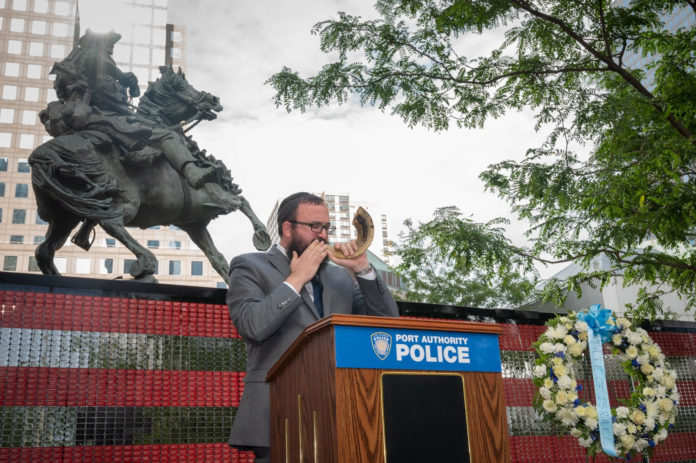
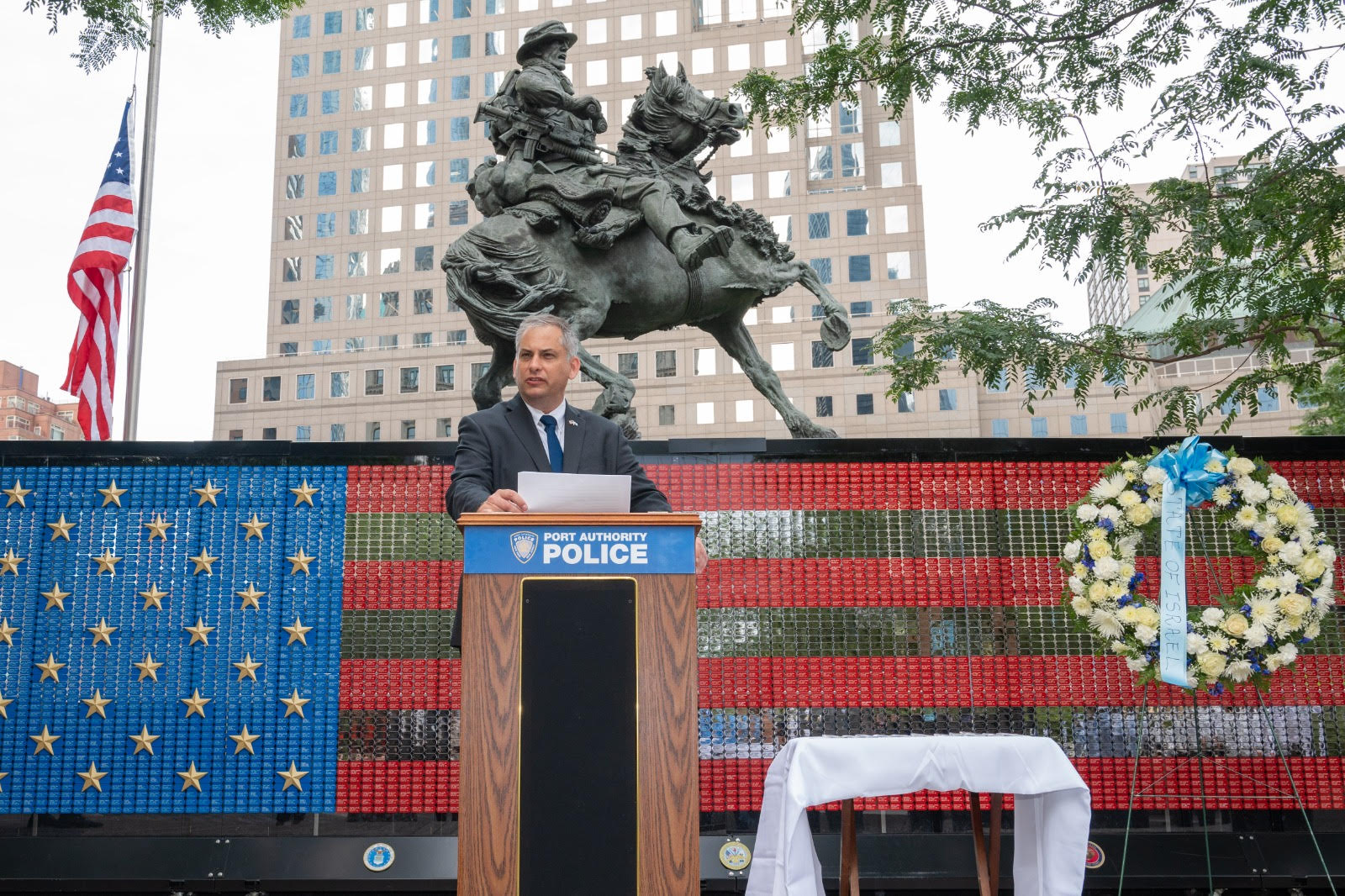
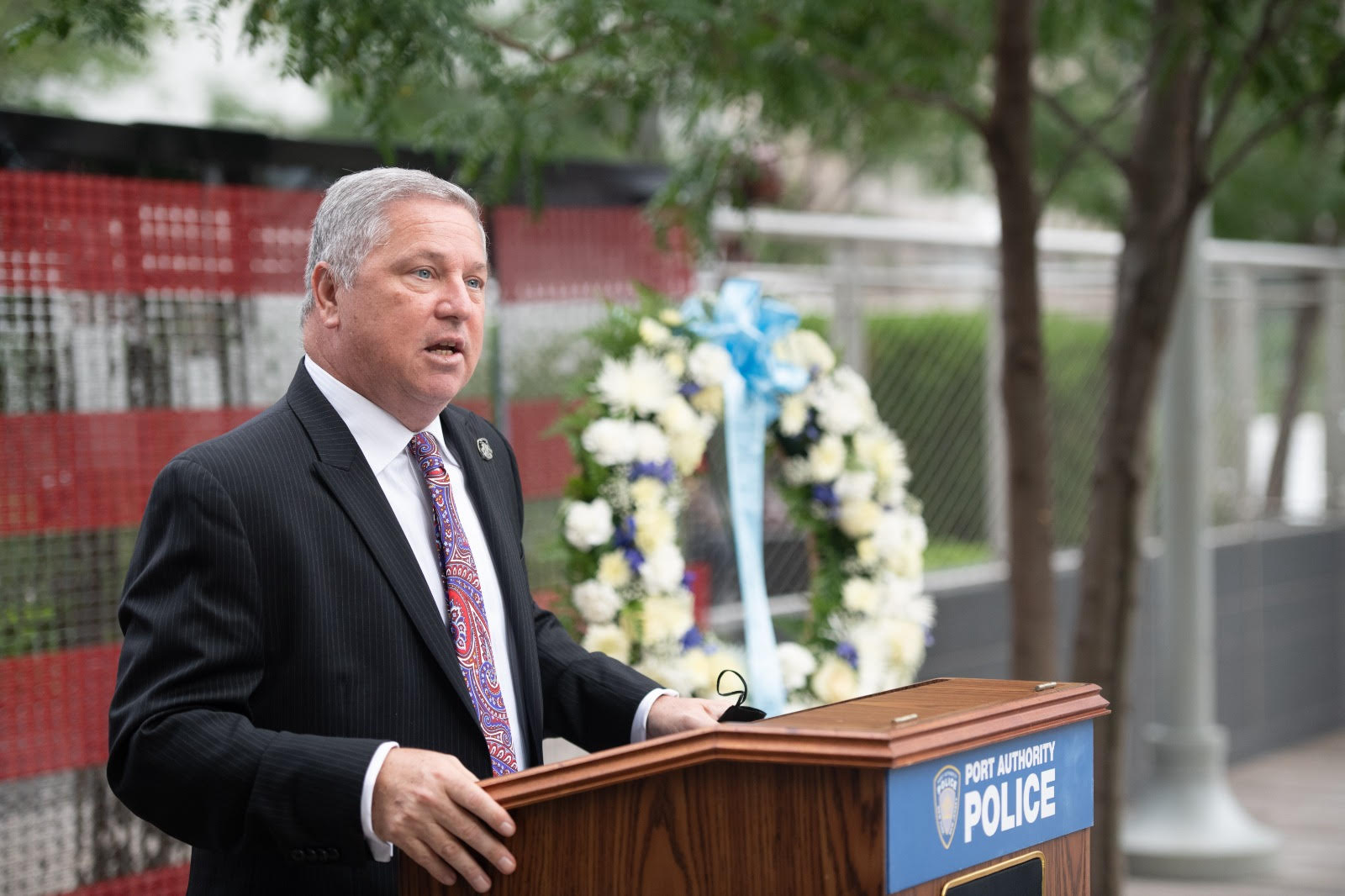
The Port Authority Police Department and the Consulate General of Israel in New York held on Tuesday morning an intimate gathering at the Ground Zero memorial to mark the 20th Yahrzeit (anniversary of death in the Jewish calendar) of the victims who perished on 9/11.

Among the participants were Port Authority Police Superintendent Ed Cetnar; Acting Consul General of Israel in New York, Israel Nitzan; President at UJA-Federation of New York, Amy Bressman; Chief of Department Emilio Gonzalez; Deputy Chief Gloria Frank; Inspector Steve Yablonsky; Lt. Scot Pomerantz; Lt. Thomas Michaels; Chief Deacon George Albin; and Port Authority Chaplain Mendy Carlebach, who led the event.

Port Authority Police Superintendent Ed Cetnar said: “On behalf of all the men and women of Port Authority Police Department, I thank you for this great honor and being with you. It means a lot to us because the significance of everything that’s going on around the world and that we continue to remember and we will never forget. The only other 9/11 memorial in the middle east is in Israel, I’ve been there several times, I laid a wreath each time we have been there, so the honor and the opportunity to do such things it’s been great for us.”

Israel Nitzan, Acting Consul General of Israel in New York, said: “That tragic and devastating day, was an attack on the free world, democracy and the values we all hold so dear.  As terror and suffering continues to grow in this world, Israel and the United States must continue to join forces and fight hate and evil from our midst. We have come a long way and yet have long to go.”

President at UJA-Federation of New York, Amy Bressman:” We will always stand with our community in New York and in Israel in good times and in crisis. Jewish tradition dictates that we remember and find purpose in tragedy — and so may we never forget our sacred obligation to strive together for a better tomorrow.”

Following Nitzan’s address, the Acting Consul General presented the police officials with challenge coins as a token of appreciation for their service.

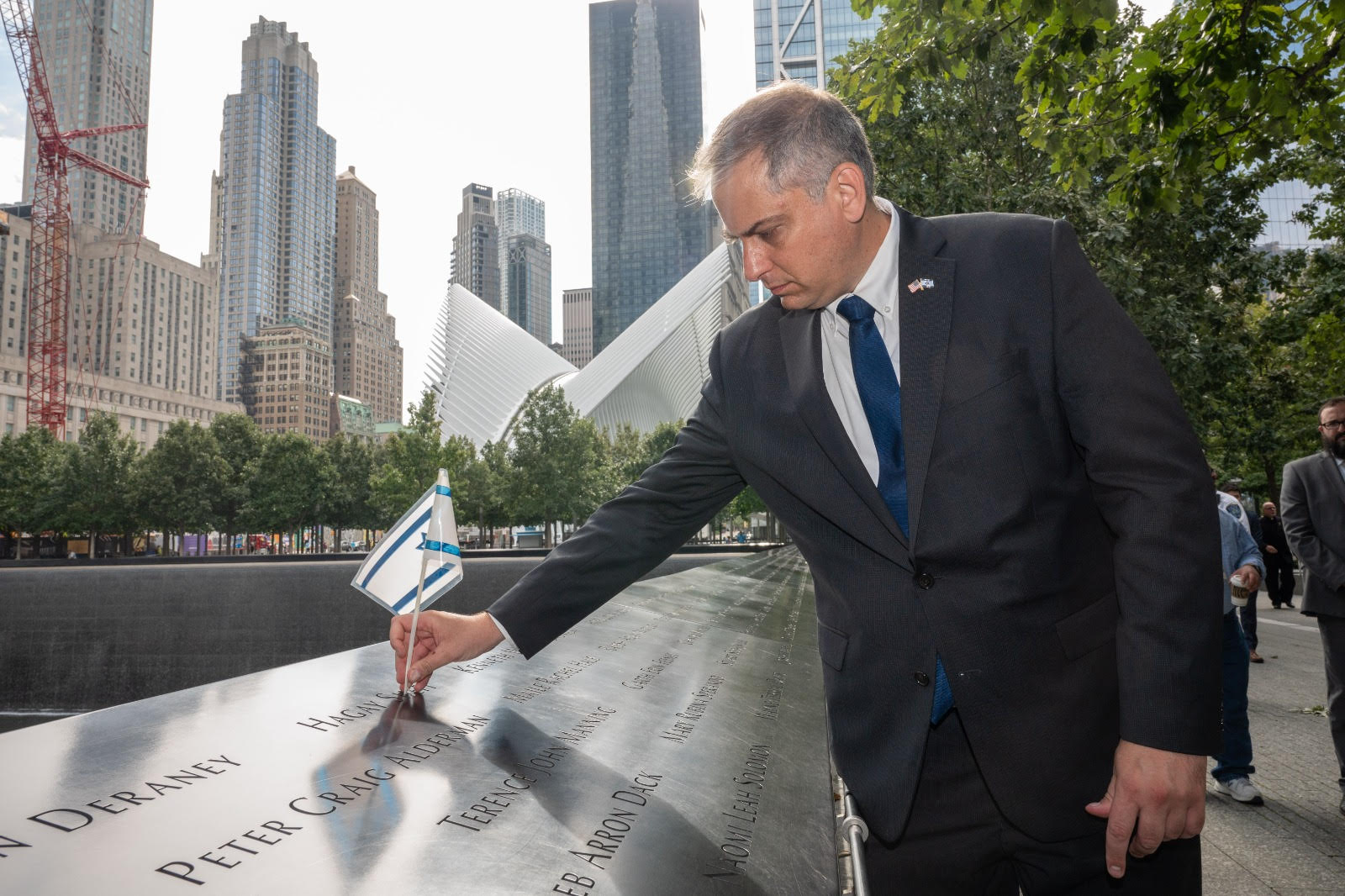
At the end of the program, the participants entered the memorial as Acting Consul General of Israel in New York Israel Nitzan and President at UJA-Federation of New York, Amy Bressman, placed a wreath at the Survivor Tree to honor the fallen. Following that, the group toured the memorial to commemorate the Israeli victims of 9/11, which was led by Executive Vice President of Museum Programs Cliff Chanin.

Source: Matzav

State Department Employees Urge Blinken to Fire Colleague With Antisemitic Blog

0

The letter was organized by Jewish employees of the State Department and U.S. Agency for International Development.

Fritz Berggren, a U.S. foreign service officer, has a private website in which he has published video and audio files attacking Jews  as “vipers” among other hateful statements, and calling for an exclusively Christian state since 2017.

Anger has built over the six months since it was revealed that Berggren had maintained the bigoted website.

“Fritz Berggren’s continued employment is an affront to all of us and the values we share. While there may be HR processes underway, they do not appear to be having an impact and are apparently proceeding very slowly as Berggren has been posting this content since at least 2017.”

“Not only is his propagation of antisemitic ideas highly disturbing and offensive to Jewish and non-Jewish employees alike, but as Jewish employees, we feel his presence at the Department is threatening,” the letter reads.

“It’s really quite appalling and shocking,” a senior State Department employee told Foreign Policy. “They say there are First Amendment issues, but at some point, that can’t be the right answer.”

The letter comes as concerns mount about antisemitism in the State Department; on July 27, a swastika was found carved near the office of the special envoy to combat and monitor antisemitism. The elevator was located within a security perimeter, with security cameras and armed guards at the entrances and exits. The only people allowed in the area are employees or contractors who have passed a security vetting.

Both Blinken and President Joe Biden condemned the hateful incident, and the State Department launched an investigation.

Shortly after the incident, Biden nominated Holocaust historian Deborah E. Lipstadt as the Special Envoy to Monitor and Combat Anti-Semitism, an appointment which has the rank of ambassador.

There is no evidence linking Berggren to the graffiti, but the letter cited the incident as potentially inspired by the lack of consequences he has faced.

“[His] continued employment with seemingly no consequences sends a message of impunity that has undoubtedly contributed to the atmosphere in which someone would dare to do such a thing,” the authors of the letter wrote to Blinken. “The Department should not wait for Berggren to target Jewish employees in the workplace, potentially with violence, before removing him. The security clearance process is meant to assess an employee’s suitability for continued employment with the Department. There is no universe in which Berggren should qualify as suitable.”

Employees have expressed frustration that Berggren had faced no professional accountability. They also posit that he has violated employment policy by signing some of his posts with his official title, which might violate rules against publishing views in a personal capacity while using their State Department affiliation.

“While we understand that you may not be able to share with us particular personnel actions that may have already been taken with regard to Berggren, we believe the only appropriate personnel action is his separation from the Department,” the letter wrote. “No one who so openly and unabashedly promotes these ideas should have a home here, and we believe the Department’s own regulations give ample opportunity to make a case that would result in Berggren’s separation.”

___

smarcus@hamodia.com


WP Twitter Auto Publish Powered By : XYZScripts.com