Home Blog Page 455

Gaza Terrorists Fire Rocket at Israel, First Since May Conflict

0

Islamic Jihad took responsibility for the attack, stating that it was a response to Israel’s “crimes in Jenin.”

Gaza-based terrorists launched a rocket at southern Israel on Monday in mid-day, setting off alarms at several locations surrounding the Strip.

An Iron Dome defense system intercepted the rocket above the city of Sderot. No injuries or damage were reported.

The Islamic Jihad took responsibility for the attack, stating that it was a response to Israel’s “crimes in Jenin,” an incident on Sunday night in which IDF forces arrested a terrorist and killed another four in a gun battle in the city.

This rocket attack is the first since the end of Operation Guardian of the Walls in May. Terrorists have launched arson attacks at Israel’s south.

Israel has yet to respond, but its leaders have recently warned Hamas against renewing its attacks on Israel.

This attack occurred as the factions in the Gaza Strip are set to meet on Monday night to decide on their response following what they allege to be “Israel’s evasion of the agreements that led to the end of Operation Guardian of the Walls.”

The factions in Gaza set an ultimatum to Israel demanding that Israel open the crossings into Gaza and transfer funds from Qatar by Monday night, saying that otherwise they will start another war of attrition.

(United with Israel / TPS).

Poland may put end to Holocaust education trips, claiming anti-Poland ‘propaganda’

0

“The trips do not take place in a proper manner. They sometimes instill hatred for Poland in the heads of young Israelis,” said Deputy Foreign Minister Jablonski as relations with Israel further deteriorate.

As relations between Poland and Israel continue to deteriorate, Poland is reassessing future trips by Israeli students to the country, where they visit concentration camps as part of Holocaust education.

Poland’s president Andrzej Duda signed legislation Saturday that restricts the rights of former Polish property owners, including Holocaust survivors and their descendants, to regain property seized by the country’s communist regime.

Israeli Prime Minister Naftali Bennett and Foreign Minister Yair Lapid slammed the decision, calling it anti-Semitic.

“The new ambassador to Poland, who was supposed to leave soon to Warsaw, will not leave for Poland at this point,” Lapid said.

On Monday, Poland announced that it was recalling its ambassador to Israel and that it was reconsidering any future educational visits by Israeli students to Poland.

Polish Deputy Foreign Minister Pawel Jablonski claimed that the trips promote anti-Polish sentiment among the young participants.

“The trips do not take place in a proper manner. They sometimes instill hatred for Poland in the heads of young Israelis,” said Jablonski.

“This propaganda, based on hatred for Poland, is poured into the minds of young people,” he alleged. “We will examine the issue in depth because it is clear that the way these tours take place is not the right way.”

Each year – other than 2020, due to the COVID-19 pandemic – tens of thousands of Israeli high school students and students from other countries, often accompanied by politicians, religious leaders and Jewish and non-Jewish activists, participate in Holocaust education trips to Poland, where they visit sites of Nazi atrocities.

Most famously they visit the Auschwitz-Birkenau concentration camp, accompanied by educators and Holocaust survivors.

(World Israel News).

Taliban Capture Major City in Northern Afghanistan, Draw Closer to Kabul

0

KABUL, Afghanistan (Reuters) – Taliban forces captured a major city in northern Afghanistan on Saturday, sending Afghan forces fleeing, and drew closer to Kabul, where Western countries scrambled to evacuate their citizens from the capital.

The fall of Mazar-i-Sharif, confirmed by a provincial council official, was another important capture for the hardline terrorists, who have swept through the country in recent weeks as U.S.-led forces withdrew. Kabul and Jalalabad, in eastern Afghanistan, are now the only big cities not in Taliban hands.

The United States and Britain are now rushing several thousand troops back into the country to evacuate citizens amid concern Kabul could soon be overrun.

Security forces from Mazar-i-Sharif were escaping towards the border, Afzal Hadid, head of the Balkh provincial council, told Reuters.

“The Taliban have taken control of Mazar-i-Sharif,” he said. “All security forces have left Mazar city.” The city appeared to have fallen largely without a fight, although sporadic clashes were continuing nearby, he said.

Earlier in the day, the rebels seized a town south of Kabul that is one of the gateways to the capital.

Many Afghans have fled from the provinces to the capital, driven out by fighting and fearful of a return to hardline Islamist rule, as resistance from Afghan government forces crumbles.

As night fell on Saturday, hundreds of people were huddled in tents or in the open in the city, by roadsides or in carparks, a resident said.

“You can see the fear in their faces,” he said.

Residents said many people in Kabul were stocking up on rice, other foods and first aid.

President Ashraf Ghani held talks with local leaders and international partners but gave no sign of responding to a Taliban demand that he resign as a condition for any ceasefire.

His focus was “on preventing further instability, violence and displacement of my people,” he said in a brief media address, adding that security and defense forces were being consolidated.

Qatar, which has been hosting so-far inconclusive peace talks between the Afghan government and the Taliban, said it had urged the insurgents to agree to a ceasefire during a meeting with their representatives on Saturday.

Earlier the Taliban, facing little resistance, took Pul-e-Alam, capital of Logar province and 70 kilometers (40 miles) south of Kabul, according to a local provincial council member, who spoke to Reuters on condition of anonymity.

Police officials however denied reports that the Taliban had advanced closer to Kabul from Pul-e-Alam, which is a staging post for a potential assault on the capital.

The town’s capture came a day after the insurgents took the country’s second- and third-biggest cities. The Taliban says it is close to capturing Maidan Shahr, another town close to Kabul.

An Afghan government official confirmed on Friday that Kandahar, the biggest city in the south and the heartland of the Taliban, was under the terrorists’ control as U.S.-led forces complete their withdrawal after 20 years of war.

The U.S.-led invasion, which ousted the Taliban from power, was launched after the Sept. 11 attacks on the United States in 2001.

Herat in the west, near the border with Iran, also fell to the group on Friday. Outside Kabul, the only major city now still in government control is Jalalabad, near the Pakistani border in the east.

American troops have begun flying in to Kabul to help in the evacuation of embassy personnel and other civilians, a U.S. official said on condition of anonymity.

The Pentagon has said two battalions of Marines and an infantry battalion will arrive in Kabul by Sunday evening, involving about 3,000 troops. An infantry brigade combat team will move to Kuwait to act as a quick reaction force for security in Kabul if needed.

A person familiar with the situation said the Taliban had nearly surrounded Kabul and that there was concern among U.S. embassy personnel that 3,000 U.S. troops would be insufficient security for an evacuation if the Taliban decided to attack.

“The only thing preventing them from threatening the airport and city center is their decision not to,” said the source, who asked not to be further identified.

The Czech Republic said it was evacuating its two diplomats on Saturday and Germany said it would deploy troops to get its diplomats out as soon as possible.

Some embassies have begun to burn sensitive material ahead of evacuating, diplomats said.

Visa applications at embassies were running in the tens of thousands, officials said, and Washington was asking countries to temporarily house Afghans who worked for the U.S. government.

In a statement late on Saturday, the Taliban said its gains showed it was popularly accepted by the Afghan people and sought to reassure both Afghans and foreigners that they would be safe.

The Islamic Emirate (Taliban) “once again assures all its citizens that it will, as always, protect their life, property and honor and create a peaceful and secure environment for its beloved nation. No one should worry about their life,” it said, adding that diplomats and aid workers would also face no problems.

Hospitals were struggling to cope with the numbers of people wounded in the fighting, with 17,000 treated in July and the first week of August in facilities supported by the International Committee of the Red Cross, the aid agency said.

The explosion in fighting has raised fears of a refugee crisis and a rollback of gains in human rights, especially for women. Canada said it would resettle more than 20,000 vulnerable Afghans Friday including women leaders, human rights workers and reporters to protect them from Taliban reprisals.

The speed of the Taliban’s gains has led to recriminations over the U.S. withdrawal, which was negotiated last year under the administration of President Joe Biden’s Republican predecessor, Donald Trump.

Biden said this week he did not regret his decision to follow through with the withdrawal. He noted Washington has spent more than $1 trillion and lost thousands of troops over two decades, and called on Afghanistan‘s army and leaders to step up.

Jews worldwide join Israel’s farm families for challenges and blessings of ‘Shmita’ year

How does resting the land work in modern-day Israel where, even during the other six years, many farm families live hand to mouth?

“Grant blessing on the face of the Earth and from its goodness satisfy us, blessing our year as the best of years. Blessed are you G-d who blesses the years.” — Morning prayers

If you look up the word emunah in a dictionary, you just might find Doron and Ilana Toweg’s pictures there.

Because if these farmers and their four kids living near Beit Shemesh didn’t have emunah—that’s Hebrew for “faith”—they would never have had the courage to take on the mitzvah of shmita.

That’s because shmita—the Torah commandment to let the land rest every seven years—means: no planting or harvesting can be done, effectively putting the farmer out of business for more than a year.

American-born and Canadian-raised, Ilana moved to Israel when she was 18, only taking on the agricultural life after her marriage 25 years ago to her third-generation farmer husband.

“We understood the basics then, but we really didn’t know what we were getting into,” says Ilana with a good-natured sigh. Still, she was determined that her family “would take on a mitzvah that only Israel’s few thousand farmers have the opportunity to keep. I began seeing it as a special blessing to be in the position to do this.”

Nahva Follman (right) of Nshei Keren Hashviis visiting Ilana Toweg at their family farm. Credit: Courtesy.

But back then, her husband was not so easily persuaded. “Doron works from before dawn to late at night—the farm is his life—and the idea of not working for a year and having no income was frightening,” she says.

So what convinced him? Visiting a neighboring farm, he met some yeshivah students picking grapes. “One of them said that for 2,000 years, the Jews were in the galut (‘exile’) waiting to keep this mitzvah,” says Ilana. “And now, we have the opportunity to actually do it.”

But, as they were soon to discover, in addition to abundant emunah, shmita means hard work. Ilana taught kindergarten in the morning and English in the afternoon, and Doron led farm tours, while their kids—then 17, 13, 10 and 3—pitched in at home.

‘Judaism teaches us to respect the earth’

In the Torah portion of Behar, G-d instructs Moses on Mount Sinai to tell the Children of Israel that “for six years you may sow your field and for six years you may prune your vineyard and you may gather in its crop. But the seventh year shall be a complete rest for the land, a Sabbath for Hashem; your field you shall not sow and your vineyard you shall not prune. The aftergrowth of your harvest you shall not reap and the grapes you have set aside for yourself you shall not pick. It shall be a year of rest for the land.”

Besides those like the Towegs who take on the Torah’s commandment of shmita, other farmers choose to “sell” their land to a non-Jew but keep working it.

Though considered acceptable by many, this option contravenes the spirit of the mitzvah that calls for a complete “Sabbath” for the land, notes Hershkowitz. And whatever produce grows naturally? It’s considered hefker—communal property—for anyone to help themselves, but not to be sold.

“The farmers and their families who keep shmita are the real heroes here,” says Rabbi Ezra Friedman, director of the Gustave & Carol Jacobs Center for Kashrut Education at the Orthodox Union in Jerusalem.

“Imagine you have to close your business for a year and watching your old customers walk by to shop somewhere else, wondering if they’ll be back at the end of the year. This takes a lot of courage and faith.”

But how does shmita work in modern-day Israel where, even during the other six years, many farm families live hand to mouth?

The roughly 25 percent of Jewish-owned Israeli farmland that kept shmita seven years ago received a helping hand from an 80-year-old organization named Keren Hashviis (the Foundation for the Sabbath Year).

During the last shmita, Keren Hashviis helped keep 3,452 farmers covering 83,500 acres going, says project manager Dovid Hershkowitz. And this year, with some 40 percent of the land already on board for shmita, Keren Hashviis is working hard to raise money to keep up with the new demand and encourage others to join in the mitzvah, more than doubling its old $25 million budget.

These grants cover 40 percent to 50 percent of a farm’s operating expenses—everything from rent on the land to installment payments on tractors, combines and other pricey equipment and salaries for the skeleton crew who care for the animals and keep the fruit trees hydrated and alive.

This year’s Keren Hashviis goal is an ambitious one: that the majority (51 percent) of Jewish farmland keeps shmita.

Surprisingly, even after more than a year of pandemic lockdowns, including many restaurants and hotels that usually buy farmers’ produce in quantity, and even looking at a 13-month year coming up (added for the Jewish leap year beginning on Rosh Hashanah), Hershkowitz calls the increase in farms primed to keep shmita for the first time “dramatic.”

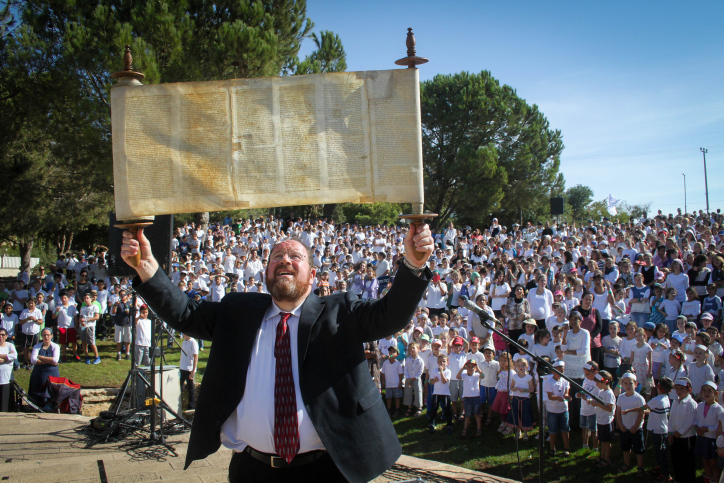
More than 2,000 students attend a ceremony ending the “shmita” year (sabbatical year), in Efrat, on Oct. 11, 2015. It is the seventh year of the seven-year agricultural cycle mandated by the Torah for the Land of Israel. During “shmita,” the land is left to lie fallow and all agricultural activity, including plowing, planting, pruning and harvesting, is forbidden by Jewish law. Photo by Gershon Elinson/Flash90.

These farmers and all those who would jump on the shmita bandwagon if they thought they could afford it keep Keren Hashviis’s American CEO Rabbi Shia Markowitz on the road raising money. So does the memory of a refrigerator he saw seven years ago.

“I was visiting a farm family and happened to see ‘past due’ notices for electricity and phone service stuck on their refrigerator,” he says. “That image is always there to motivate me, knowing that we have it in our hands for more farmers to keep the mitzvah without facing financial ruin.”

“People think it’s a vacation for farmers, but it’s anything but,” he adds. “They have to keep their fruit trees alive, their equipment payments on time, and their families and their animals fed.”

“I’m a little amazed at how many more farmers have already signed on than seven years ago,” says Ehud Alpert, livestock manager and shmita coordinator for the Ministry of Agriculture and Rural Development.

The ministry administers a program of stipends of up to 12 percent of their average year’s income to those farmers who contribute an additional 6 percent from their own earnings. And whereas only 150 benefited from the program during the last shmita, more than 300 have applied and been approved this time around.

“The support is to help them come back strong the next year, so they can go back to the land and continue to produce the excellent fruits and vegetables Israel is known for,” says Alpert, adding his hope that the increased demand will prompt the Treasury Department to approve the request for “an additional budget to help more farmers out.”

One reason they could come back even stronger is the simple act of letting the land take a break from constant productivity. “Judaism teaches us to respect the earth, so with shmita, every seven years we need to give it a rest to recharge and refuel,” says Aharon Ariel Lavi, who directs Hakhel, an intentional community incubator and project of Hazon that, among other things works for environmental sustainability.

“Even with fertilizers and other methods designed to bypass that need, we still need to respect nature not just for what it can do for us, but what we are responsible to do for it.”

Of course, this is just one of a few rational explanations. The most important reason for Shmita, by far, is Hashem’s command. [Ed].

Jewish unity at its best’

But as helpful as it is to have these infrastructure costs at least partially covered, how will the families pay for the increasing cost of food? Shoes for growing kids? Textbooks and backpacks for school? Or that unexpected root canal? How, in fact, will they survive?

That’s where the world’s Jewish women come in.

As the mother of eight, Nahva Follman is no stranger to surprise expenses.

“We also know that it’s the entire family that lives with shmita,” says the native of Brooklyn, N.Y., who now lives in Jerusalem. “And the only way they can do it is if we step up and help.”

So, just as Keren Hashviis takes on much of the big infrastructure expenses, its newly born Nshei Keren Hashviis program aims at helping the keeping the family with the unexpected costs of living for the next year-plus, until the fields begin producing again.

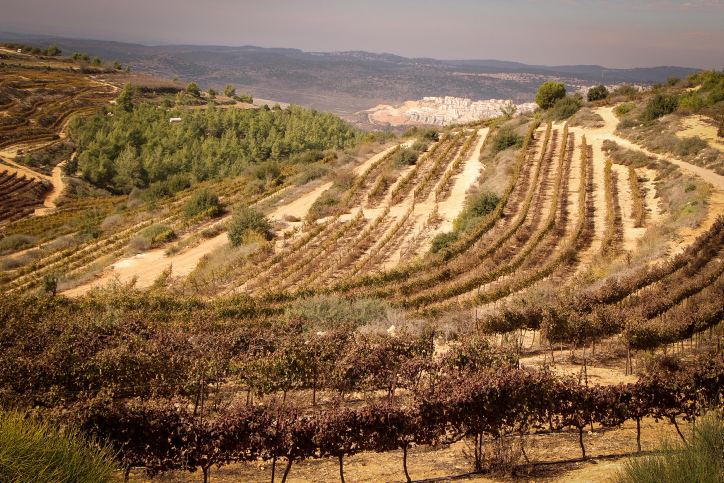
View of vineyards outside of Alon Shvut, in Gush Etzion, November 24, 2020. Photo by Gershon Elinson/Flash90

Working through online giving and through funds being run in various communities, the project is collecting a dollar a day ($365) from women across the globe and aiming for 100,000 of them. “That would help feed thousands of farm families, buy the kids shoes and lunch boxes, and new clothes for school,” says Follman. “We want to put money on their kitchen table and say, ‘We’ve got your back. Since you’re courageous enough to take on this immense mitzvah, you shouldn’t have to lie awake at night wondering how you’re going to pay for everything till the farm starts producing again.’ ”

That safety net is bound to bring a measure of relief, says farmer Ilana Toweg. “And it comes from other Jewish women many of whom have raised families and dealt with the surprise costs you never budget for nor can necessarily afford.”

As N’shei committee chair who’s volunteered to help the farm families afford this mitzvah, at 45, Follman also puts her whole self where her heart is. Three years ago, when her youngest was 4, she donated a kidney to a surgeon who’d made aliyah from Ukraine. “So now, every time he operates on someone,” she says with a grin, “I get part of that mitzvah, too.”

Follman also considers it a mitzvah to empower Jewish farmers to take on shmita. “With so many sitting on the fence, as Rosh Hashanah gets closer they have to decide if they’re going to do itWe want to be there to help that happen, woman to woman.” 

“There’s a reason G-d gave us such a seemingly impossible mitzvah to perform,” says Rabbi Markowitz. “He knew the only way the farmers can succeed at it and survive is if the rest of the Jewish people make the mitzvah work if we do it together. This is Jewish unity at its best.”

Rochel Miller, who’s organized a Nshei fund with the women in her Brooklyn community, is also determined to help enable this mitzvah. “But even with our help and the support from Keren Hashviis, the farmer families will get maybe half of what they earn in a normal year,” she says. “The rest they’ll still have to scramble for.”

Over at the Towegs’ farm, such scrambling will include Ilana taking on more English students, and Doron and the family leading (bilingual) guided farm tours to demonstrate how shmita works.

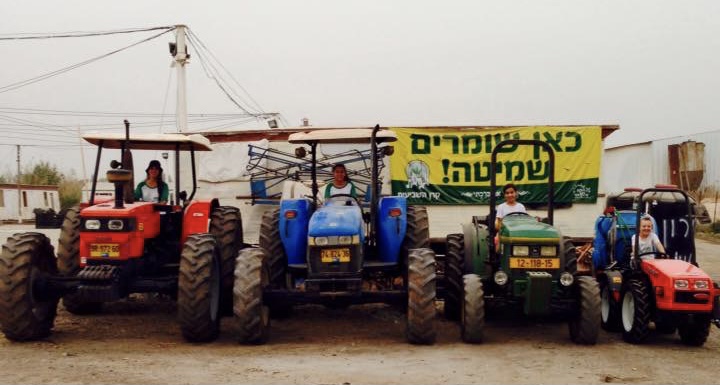
The Toweg children gearing up at the end of the “shmita” year last time around. Credit: Courtesy.

Seven years ago, Ilana also took another job— one that she never applied for and that pays in strictly non-monetary terms. It all began when two young women knocked on the door saying haredi leader Rabbi Chaim Kanievsky had sent them for a blessing to find husbands since “God listens to the prayers of any woman with enough emunah for her husband to keep shmita.

These days, Ilana, who’s not haredi herself, spends hours over her Shabbat candles reciting the names of the thousands of individuals, asking for blessings for everything from healing to financial help to having children to finding their soulmate. And those two young women who’d knocked on her door? Within two months, they were both engaged.

“We feel so supported by the Jewish people that this is something I can do to help them,” she says.

“As scary as it is to turn off your income and lose your contracts for more than a year, shmita is feeling right to us now. This year, instead of growing eggplants for thousands of people, we figure we’re keeping this mitzvah for those same thousands. And everyone who’s helping us, they’re all our partners.”

(JNS).

New report exposes ‘land of tunnels’ in Lebanon, pioneered by Hezbollah

The Alma Center report said they connect entire regions of the country to one another; some tunnels are able to allow pick-up trucks with multi-barrel rocket-launchers to fire, vanish and re-emerge tens of kilometers from the firing point.

A new report released on Thursday by the Alma Center, which researches security challenges to Israel from Lebanon and Syria, exposed what it described as a large-scale inter-regional Hezbollah tunnel system in different parts of Lebanon.

The tunnel system is designed to move personnel and weapons around and out of the sight of the Israel Defense Forces.

Some of the tunnels are large enough for pick-up trucks with multi-barrel rocket-launchers—like the one used by Hezbollah to fire on Israel last week—to move tens of kilometers underground, according to the report.

This means that the truck can fire on Israel, vanish into a tunnel and re-emerge tens of kilometers away.

The network of tunnels could be connecting the Beirut area, Hezbollah’s central headquarters, and the Beqaa area, Hezbollah’s logistical operational rear base, to Southern Lebanon, according to the report.

“In our estimation, the cumulative length of all the tunnels can reach up to hundreds of kilometers,” it wrote. Like Hamas tunnels, the Lebanese tunnels contain underground command and control rooms, weapons and supply depots, field hospitals and shafts used to fire a wide range of rockets and missiles.

The shafts “open for a short period of time for the purpose of firing their armament and are then immediately shut closed for the purpose of reloading the hydraulic launcher with new ordnance,” it added.

‘This has been happening in Lebanon for a long time’

Maj. (res.) Tal Beeri, head of the research department at Alma, said the tunnel network in Lebanon is similar to the strategic network built by Hamas in the Gaza Strip, only larger.

“What we saw in Hamas in Gaza is a small example of what Hezbollah has in Lebanon,” stated Beeri, who served for 20 years in the IDF’s Military Intelligence Directorate.

“Hamas didn’t invent tunnels,” explained Beeri. “Usually, Hamas is the last in the food chain when it comes to new tools used by the radical axis. The discovery of the tunnel network in Gaza leads to the conclusion that this has been happening in Lebanon for a long time.”

“The Iranians and North Koreans are mentors for both organizations. Hamas are the ones copying here. Hezbollah are usually the pioneers. So imagine what is happening in Lebanon now.”

Regarding the Lebanese tunneling network project, said Beeri, “we assess that this began possibly before 2006, but there is no doubt that it gained significant momentum after that year.”

The tunnel project is the result of close cooperation between North Korea, Iran, which paid for the project and supported it, and Hezbollah. The triangle of cooperation between these three entities goes back to the 1980s, added Beeri.

Since 2006, “North Korean advisors significantly assisted Hezbollah’s tunnel project. Hezbollah, inspired and supported by the Iranians, saw North Korea as a professional authority on the subject of tunneling, based on the expansive North Korean experience that has accumulated in building tunnels for military use since the 1950s,” the report stated.

In 2018, the IDF exposed six offensive Hezbollah cross-border tunnels excavated into Israeli territory. Their discovery spelled the end of the concept held by some in Israel that the challenge of breaking rocks in mountainous areas such as in Lebanon was a serious barrier to Hezbollah tunnel building, said Beeri.

A second type of tunnel network, described by Beeri as local infrastructure tunnels, is located within and near the Shi’ite villages that act as Hezbollah’s staging areas.

But the report exposed a new, third type of tunnel, which it called “inter-regional tunnels of enormous magnitude, spanning at least tens of kilometers” across Lebanon.

‘We connected eyewitness reports of the digging work’

“In 2008, we uncovered an indication from Christian Lebanese information source, describing a big project by Hezbollah in whole of areas of Southern Lebanon, which began east of Sidon,” said Beeri.

He then described getting access to eyewitness accounts from local residents who were stopped by Hezbollah from entering certain areas.

“They didn’t understand why Hezbollah was stopping them. What they could see was what resembled industrial work, sand, digging, concrete in the area. But nothing was being built overground. They saw Iranians and foreign nationals that they later realized were North Koreans,” said Beeri.

Later on, Alma got hold of a map of Southern Lebanon divided up into polygon shapes, and within them, circles. “We asked ourselves: ‘Could this be some sort of sketch of a route of a military system? A tunnel system?’ We connected the eyewitness reports of the digging work—the fortification work that could not be seen overground—and the map,” said Beeri.

“According to the indications, Hezbollah carried out fortification work in those geographical areas using large quantities of construction materials, while the work was carried out by a Korean company under the supervision of an Iranian Revolutionary Guard Corps officer,” according to the report.

The report named the North Korean company as the Korea Mining Development Trading Corporation (KOMID), while the actual construction was conducted by Hezbollah’s Jihad Construction Foundation.

The Jihad Construction Foundation reportedly received assistance from companies that acted as civilian cover for the construction of the long tunnels.

One of the suspected companies, said Beeri, is the “Beqaa for Construction and Contracting” company, which was set up in 2005 under the auspices of Iran’s Islamic Revolutionary Guards Corps, and until 2013, headed Maj. Gen. Hassan Shateri, a senior IRGC officer who was mysteriously killed in Syria in 2013.

It is highly likely that Shateri was responsible for carrying out Hezbollah’s tunneling project in Lebanon,” said the report.

It sketched out the route of one tunnel, stretching 45 kilometers south of Beirut, east of Sidon, in an area of Southern Lebanon that Hezbollah describes as its “second line of defense” against a potential Israeli ground maneuver.

Ultimately, said Beeri, the tunnels enable the secretive movement of Hezbollah’s forces and weapons.

(JNS).

CHUTZPA: Ilhan Omar: “Islamophobic AIPAC Ads Put My Life At Risk”

In an incredibly hypocritical claim, a spokesperson for US Rep. Ilhan Omar on Wednesday accused the American Israel Public Affairs Committee (AIPAC) of endangering Omar’s life with their ads on social media.

“The language AIPAC uses in paid ads to smear and vilify Ilhan Omar is virtually identical to the language used in death threats she gets,” Senior Communications Strategist for Omar wrote on Twitter.

“Make no mistake: AIPAC is
putting Rep. Omar’s life
at risk with repeated Islamophobic attack ads.”

In another tweet, he wrote: “It shouldn’t have to be stated, but baselessly linking Muslim-Americans to terrorism is *the* textbook example of Islamophobia and is routinely used to silence advocacy for Palestinian human rights.”

The Facebook ad Slevin was referring to featured a picture of Omar and text stating: “For Ilhan Omar, there is no difference between America and the Taliban. Between Israel and Hamas. Between Democracies and terrorists. Tell Rep. Omar: Condemn terrorists, not America.”

AIPAC retorted to Slevin’s claim by stating: “Your baseless attack on us can’t deflect from Omar’s attack on America and Israel. It is outrageous for Rep. Omar to put the US and Israel on the same level as the Taliban and Hamas. There is no moral equivalence between democratic allies and the terrorists who target them.”

Rep. Rashida Tlaib chimed in to defend her good friend Omar with an exceptionally intelligent statement, saying: “I’m so sick of this ****.”

AIPAC responded to Tlaib: “So are we, Congresswoman. Inciting hate by demonizing Israel and spreading vicious, dangerous lies about our democratic ally Israel doesn’t advance the prospects for peace.”

(YWN Israel Desk – Jerusalem)

At least 304 dead, 1,800 hurt as powerful quake slams Haiti

0

EVENS SANON and TAMMY WEBBER


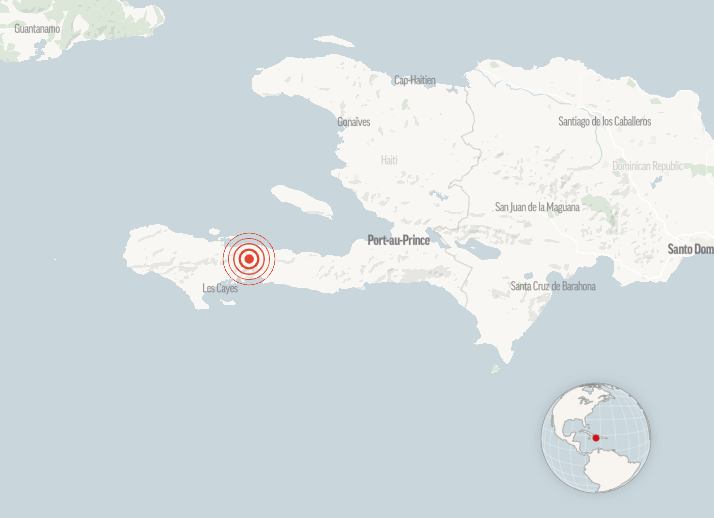
PORT-AU-PRINCE, Haiti (AP) — A powerful magnitude 7.2 earthquake struck southwestern Haiti on Saturday, killing at least 304 people and injuring at least 1,800 others as buildings tumbled into rubble. Prime Minister Ariel Henry said he was rushing aid to areas where towns were destroyed and hospitals overwhelmed with incoming patients.

The epicenter of the quake was about 125 kilometers (78 miles) west of the capital of Port-au-Prince, the U.S. Geological Survey said, and widespread damage was reported in the hemisphere’s poorest nations as a tropical storm also bore down.

Haiti’s civil protection agency said on Twitter that the death toll stood at 304, most in the country’s south. Rescue workers and bystanders were able to pull many people to safety from the rubble. The agency said injured people were still being delivered to hospitals.

Henry declared a one-month state of emergency for the whole country and said he would not ask for international help until the extent of the damages was known. He said some towns were almost completely razed and the government had people in the coastal town of Les Cayes to help plan and coordinate the response.

“The most important thing is to recover as many survivors as possible under the rubble,” said Henry. “We have learned that the local hospitals, in particular that of Les Cayes, are overwhelmed with wounded, fractured people.”

He said the International Red Cross and hospitals in unaffected areas were helping to care for the injured, and appealed to Haitians for unity.

“The needs are enormous. We must take care of the injured and fractured, but also provide food, aid, temporary shelter and psychological support,” he said.

Later, as he boarded a plane bound for Les Cayes, Henry said he wanted “structured solidarity” to ensure the response was coordinated to avoid the confusion that followed the devastating 2010 earthquake, when aid was slow to reach residents after as many as 300,000 were killed.

U.S. President Joe Biden authorized an immediate response and named USAID Administrator Samantha Power as the senior official coordinating the U.S effort to help Haiti. USAID will help to assess damage and assist in rebuilding, said Biden, who called the United States a “close and enduring friend to the people of Haiti.”

A growing number of countries offered help, including Argentina and Chile, which said it was preparing to send humanitarian aid. ?Once again, Haiti has been hit by adversity,? Chilean President Sebastian Piñera said.

Among those killed in the earthquake was Gabriel Fortuné, a longtime lawmaker and former mayor of Les Cayes. He died along with several others when his hotel, Le Manguier, collapsed, the Haitian newspaper Le Nouvelliste reported.

Philippe Boutin, 37, who lives in Puerto Rico but visits his family annually in Les Cayes, said his mother was saying morning prayers when the shaking began, but was able to leave the house.

The earthquake, he said, coincided with the festivities to celebrate the town’s patron saint, adding that the hotel likely was full and the small town had more people than usual.

“We still don’t know how many people are under the rubble,” he said.

On the tiny island of Ile-a-Vache, about 6.5 miles (10.5 kilometers) from Les Cayes, the quake damaged a seaside resort popular with Haitian officials, business leaders, diplomats and humanitarian workers. Fernand Sajous, owner of the Abaka Bay Resort, said by telephone that nine of the hotel’s 30 rooms collapsed, but he said they were vacant at the time and no one was injured.

“They disappeared — just like that,” Sajous said.

People in Les Cayes tried to pull guests from the rubble of a collapsed hotel, but as the sun set, they had only been able to recover the body of a 7-year-old girl whose home was behind the facility.

“I have eight kids, and I was looking for the last one,” Jean-Claude Daniel said through tears. “I will never see her again alive. The earthquake destroyed my life. It took a child away from me.”

The reports of overwhelmed hospitals come as Haiti struggles with the pandemic and a lack of resources to deal with it. Just last month, the country of 11 million people received its first batch of U.S.-donated coronavirus vaccines, via a United Nations program for low-income countries.

Richard Hervé Fourcand, a former Haitian senator, rented a private plane to move injured people from Les Cayes to Port-au-Prince for medical assistance. He told The Associated Press that Les Cayes’ hospital was at capacity.

The earthquake also struck just over a month after President Jovenel Moïse was killed, sending the country into political chaos. His widow, Martine Moïse, posted a message on Twitter calling for unity among Haitians: “Let’s put our shoulders together to bring solidarity.”

Rescue efforts were hampered by a landslide triggered by the quake that blocked a major road connecting the hard-hit towns of Jeremie and Les Cayes, according to Haiti’s civil protection agency.

Agency director Jerry Chandler told reporters that a partial count of structural damage included at least 860 destroyed homes and more than 700 damaged. Hospitals, schools, offices and churches were also affected.

The National Hurricane Center has forecast that Tropical Storm Grace will reach Haiti late Monday or early Tuesday.

“This is likely to make matters worse since the country is on the verge of suffering the effects of two disasters in quick succession, a magnitude 7 earthquake and a looming storm,” Chandler said.

Humanitarian workers said gang activity in the seaside district of Martissant, just west of the Haitian capital, also was complicating relief efforts.

“Nobody can travel through the area,” Ndiaga Seck, a UNICEF spokesman in Port-au-Prince, said by phone. “We can only fly over or take another route.”

Seck said information about deaths and damage was slow coming to Port-au-Prince because of spotty internet service, but UNICEF planned to send medical supplies to two hospitals in the south, in Les Cayes and Jeremie.

People in Port-au-Prince felt the tremor and many rushed into the streets in fear, although there did not appear to be damage there.

Naomi Verneus, a 34-year-old resident of Port-au-Prince, said she was jolted awake by the earthquake and that her bed was shaking.

“I woke up and didn’t have time to put my shoes on. We lived the 2010 earthquake and all I could do was run. I later remembered my two kids and my mother were still inside. My neighbor went in and told them to get out. We ran to the street,” Verneus said.

Paul Caruso, a geophysicist with the USGS, said aftershocks likely would continue for weeks or months, with the largest so far registering magnitude 5.2.

The impoverished country, where many live in tenuous circumstances, is vulnerable to earthquakes and hurricanes. It was struck by a magnitude 5.9 earthquake in 2018 that killed more than a dozen people, and a vastly larger magnitude 7.1 quake that damaged much of the capital in 2010 and killed an estimated 300,000 people.

By Saturday night, the island had experienced four aftershocks stronger than 5.0 and nine above 4.0.

Claude Prepetit, a Haitian civil engineer and geologist, warned of the danger from cracked structures.

“More or less intensive aftershocks are to be expected for a month,” he said, cautioning that some buildings, “badly damaged during the earthquake, can collapse during aftershocks..”

___

Associated Press writer Tammy Webber reported from Fenton, Michigan. AP writers Josh Boak in Washington, Trenton Daniel in New York and Regina Garcia Cano in Mexico City contributed to this report.

Phyllis Shallman – Transforming Your Relationship With Wealth

0

Wealth… how does seeing and hearing that word make you feel?

Excited? Afraid? Disappointed? Nothing?

Those feelings can reveal deeper truths about your relationship with money. And that relationship can influence your financial future.

That’s because, despite what people say, money is often wrapped up in feelings about…

  • Success
  • Status
  • Stability
  • Self-worth

That’s why people’s behavior with money is often not well-reasoned. Instead of making measured decisions based on the numbers, people find themselves on autopilot. In other words, they react instead of respond.

Let’s look at some examples…

Let’s say your relationship with money is primarily fear based. Maybe you saw your parents struggle with their finances, and you constantly worry about reliving their experience.

The autopilot response? Frugality and risk-aversion, even if you earn a comfortable wage.

There’s nothing wrong with either of those qualities in moderation. But taken too far, they may seriously damage your personal relationships and prevent you from taking advantage of financial opportunities.

Plus, the constant stress and fear of losing everything might impact your mental and physical health if not properly managed.

There’s also the opposite extreme. What if you use wealth to establish your social status?

You’ll be far more likely to buy things you don’t need to show off to your peers. You may even begin compulsively shopping to cope with stress.

In other words, you may be using money in unhealthy and damaging ways. And the stress and guilt that come from such behavior can seriously harm relationships and your ability to accomplish your goals.

So what’s the solution? What should your feelings toward wealth be?

The starting point must be that money is primarily a tool. It doesn’t define you. It isn’t evil. It’s simply a tool that empowers you to pursue things that you love.

Simply put, money isn’t an end unto itself. It’s a means to an end.

The question is, then what do you love? What do you want to do and see and pursue? And what role will money play in achieving those goals?

Once you reorder your relationship with wealth along those lines, a whole world of possibility may open up like…

  • Building wealth without guilt
  • Freedom from compulsive and unwise spending habits
  • Leaving your family a financial legacy

But it all starts with understanding your current feelings towards money, and then deciding on what you want your future to look like.

If you need someone to process those feelings with, contact me! I’m here to offer you guidance and support on your journey towards financial stability.

EXPLOSIVE GROWTH! Census Data Shows Massive Population Increase In Frum Communities: Lakewood, Monsey, Kiryas Joel

Newly released data by the Census Bureau showed a massive jump in frum communities in the Northeastern United States. The data released Thursday is the twenty-fourth decennial conducted by the Bureau.

The data showed a residential increase of 45% in Lakewood, 20.7% in the Monsey-Spring Valley area, and a 31.7% in Kiryas Yoel. Toms River and Jackson both saw an increase of about 4,000 residents since the 2010 census.

Lakewood, which according to the 2010 census had 92,843 residences, ballooned to 135,158 people who now call the Township their home. The numbers put Lakewood as the fastest-growing municipality in New Jersey in the past decade, and has now become the state’s fifth-largest city.

According to the 2010 census data, Monsey and Spring Valley had 49,710 combined residents. They now both hold a combined 60,020 residents, according to census data. Rockland County increased to more than 338,300 residents from about 311,700 in 2010.

The census helps our communities determine where to build everything from schools to supermarkets, and from homes to hospitals. It helps the government decide how to distribute funds and assistance to states and localities.

KAEIN YIRBU!

(Yeshiva World News).

`

WP Twitter Auto Publish Powered By : XYZScripts.com