Home Blog Page 460

Iran ‘working systematically to build serious cyber-attack capabilities’

Revelations about malign plans by Tehran’s leaders serve as the latest confirmation of how seriously the Islamic Republic takes cyber warfare, said Professor Col. (res.) Gabi Siboni, an expert on cyber security.

Recent revelations about Iranian cyber-attack plots serve as the latest confirmation of how seriously Iran takes this arena, a leading Israeli cyber expert has said.

On July 26, Sky News reported that classified documents from Iran “reveal secret research into how a cyber attack could be used to sink a cargo ship or blow up a fuel pump at a petrol station.”

The internal files also include information on satellite communication devices used by the global shipping industry and computer systems that control functions such as lighting, heating and ventilation in buildings across the world.

While the report did not reveal new unknown capabilities, they did demonstrate that Iran is “engaging with cyber warfare in a serious manner,” said Professor Col. (res.) Gabi Siboni, an expert on cyber security, military strategy and technology at the Jerusalem Institute for Strategy and Security.

“Such reports are not a surprise, but they do indicate that Iran is working in a highly systematic manner,” said Siboni.

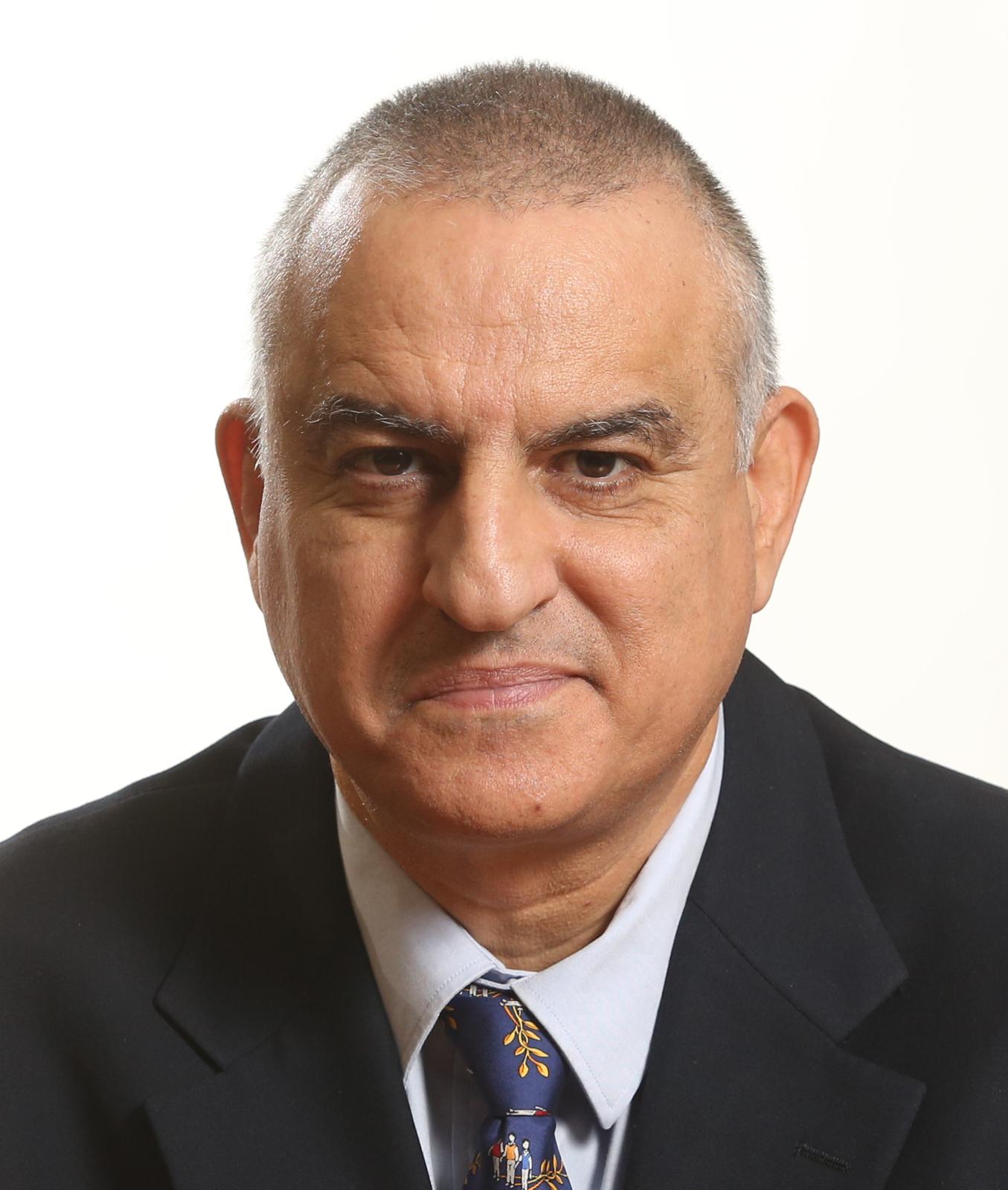
Professor Col. (res.) Gabi Siboni. Credit: Courtesy.

While no state can be totally immune, Israel is highly prepared for state-sponsored, hostile cyber activity, assured Siboni. The Israeli National Cyber Directorate, which ensures that critical private and public sector sites are sufficiently protected, and the Shin Bet intelligence agency, which is involved in preventing cyber attacks, and other organizations are working to keep attackers at bay.

Israel’s cyber-defense organizations are well-drilled and thwart cyber incidents “all of the time,” said Siboni.

The last known major cyber attack occurred in April 2020, when Iran reportedly attempted to poison Israel’s water supply by increasing chlorine levels.

“The Iranians were able to infiltrate in that incident, but they were not able to carry out their plot,” said Siboni. “The level of defense is good, but there is always something to improve. Some countries are more advanced than others when it comes to cyber defense.”

‘The Iranians plots are not theoretical’

Israel’s size and centralized control systems mean that it is easier to defend than large countries with more complex government systems such as the United States, added Siboni.

In June, Italy announced that it was setting up a new national cyber-security agency. Israel set up its own national cyber-defense agency in 2012.

Building suitable defensive capabilities takes time, noted Siboni, and some nations could suffer significantly if targeted by Iran right now.

Iran’s cyber aggression will continue to target not just Israel but other states of conflict, such as Sunni-Arab nations. “It’s an asymmetric weapon. It can be used under the threshold of war, unlike a drone or missile attack on a ship. This makes cyber attacks comfortable to choose [as a recourse]. The Iranians plots are not theoretical,” said Siboni.

Ultimately, there is no clear distinguishing line between cyber and kinetic attacks, argued Siboni.

“Cyber is another tool. Trying to set it apart from other spheres of combat is like trying to differentiate between air power and ground forces,” he said. “One does not only fight an air war. Cyber attacks can deliver results for attackers, but in major wars, it is the kinetic strikes that will continue to dominate for many years.

“Cyber operations will support kinetic attacks,” he continued. “The cyber attacks can cause damage, including physical damage, but it will be the artillery guns and bombs that will do the most damage.”

(JNS).

Ben Shapiro Slams Critical Race Theory, Dismantles ‘Authoritarian’ Left On Real Time With Bill Maher

0

Daily Wire co-founder and editor emeritus, Ben Shapiro, blasted the left’s authoritarianism in an appearance on “Real Time with Bill Maher” alongside MSNBC contributor Malcolm Nance.

Facing a difficult audience, Shapiro took on the left at every available opportunity, blistering the left — and the Democratic Party — for their authoritarian policies aimed at controlling Americans’ lives.

“It is the Democratic Party large scale across the United States currently engaged in mask mandates, vaccine mandates, and lockdowns,” Shapiro argued when asked to defend the premise of his book, “The Authoritarian Moment,” against accusations that the Republicans, not the Democrats, were working to limit freedoms and undermine democracy.

He went on to point out that Americans are clearly responding to the Democrats’ heavy-handed policy — and that the Democrats should expect to learn how Americans feel about COVID-related restrictions in the mid-term elections.

When Nance tried to suggest Republicans had “cozied up” to dictators, Shapiro fired back, reminding the MSNBC contributor that former President Barack Obama stood alongside the head of Cuba’s oppressive regime, even attending a baseball game with Raul Castro, brother and successor to the brutal Fidel Castro.

And when asked to illustrate how the right and the left differ in their approach to control, Shapiro used Nance’s own history against him.

“You’ve tweeted about me, for example, that I’m such a racist I shouldn’t be allowed in Washington, D.C. That sounds rather authoritarian in attitude to me,” Shapiro added. “I’ve never called for you to be kicked off of MSNBC; I’ve never called for anybody not to buy your book.”

Shapiro’s best moments, though, came on the subject of Critical Race Theory, a controversial method of viewing American history through the lens of oppression. In just 65 seconds, Shapiro masterfully dismantled CRT, laying it bare substantively and succinctly.

Critical Race Theory at its core, Shapiro noted, teaches that “all disparity equals discrimination.”

When Nance said that he agreed with the precepts of Critical Race Theory, Shapiro was ready with an answer.

“You seem to be a pretty good beneficiary of the meritocracy because you have merit,” Shapiro told Nance. “If you’re going to criticize the meritocracy as an outgrowth of white supremacy, then you’re going to have to tear down the system you’ve succeeded in.”

Nance could only claim, then, that “Critical Race Theory,” as a term, had been “hijacked and been framed” by the right as a negative, like “Defund the Police” — another concept that the left both embraces and denies embracing.

In a statement to media following the broadcast, Shapiro said he hoped his appearance laid bare the reality of the left’s authoritarianism.

“Tonight, Americans will see the reason the Left plays semantic games when it comes to critical race theory: because when advocates for CRT are confronted with the overt racism of the program, they can’t defend it,” Shapiro said.

“If we’re going to talk about authoritarianism, we must look at who holds institutional power,” he continued.

“The simple fact is that the Left controls the commanding heights of our media, social media, corporate world, scientific institutions, and bureaucracy — as well as the House, Senate, and presidency, at least for now.”

“Americans can feel the danger of creeping authoritarianism each and every day, from evidence-free mask mandates to social media crackdowns on dissent to admittedly unconstitutional edicts from the White House.”

(Daily Wire).

Rabbi Lord Jonathan Sacks zt”l – Defining Reality (Re’eh 5781)

One of the gifts of great leaders, and one from which each of us can learn, is that they frame reality for the group. They define its situation. They specify its aims. They articulate its choices. They tell us where we are and where we are going in a way no satellite navigation system could. They show us the map and the destination, and help us see why we should choose this route not that. That is one of their most magisterial roles, and no one did it more powerfully than did Moses in the book of Deuteronomy.

Here is how he does it at the beginning of this week’s parsha:

See, I am setting before you today the blessing and the curse— the blessing if you obey the commands of the Lord your God that I am giving you today; the curse if you disobey the commands of the Lord your God and turn from the way that I command you today by following other gods, which you have not known. (Deut. 11:26-28)

Here, in even more powerful words, is how Moses puts it later in the book:

See, I set before you today life and the good, death and the bad… I call Heaven and Earth as witnesses today against you, that I have set before you life and death, the blessing and the curse. Therefore choose life, so you and your children may live. (Deut. 30:15, 19)

What Moses is doing here is defining reality for the next generation and for all generations. He is doing so as a preface to what is about to follow in the next many chapters, namely a systematic restatement of Jewish law covering all aspects of life for the new nation in its land.

Moses does not want the people to lose the big picture by being overwhelmed by the details. Jewish law with its 613 commands is detailed. It aims at the sanctification of all aspects of life, from daily ritual to the very structure of society and its institutions. Its aim is to shape a social world in which we turn even seemingly secular occasions into encounters with the Divine Presence. Despite the details, says Moses, the choice I set before you is really quite simple.

We, he tells the next generation, are unique. We are a small nation. We have not the numbers, the wealth, nor the sophisticated weaponry of the great empires. We are smaller even than many of our neighbouring nations. As of now we do not even have a land. But we are different, and that difference defines, once and for all, who we are and why. God has chosen to make us His stake in history. He set us free from slavery and took us as His own covenantal partner.

This is not because of our merits. “It is not because of your righteousness or your integrity that you are going in to take possession of their land.” (Deut. 9:5) We are not more righteous than others, said Moses. It is because our ancestors – Abraham, Isaac, Jacob, Sarah, Rebecca, Rachel and Leah – were the first people to heed the call of the one God and follow Him, worshipping not nature but the Creator of nature, not power but justice and compassion, not hierarchy but a society of equal dignity that includes within its ambit of concern the widow, the orphan and the stranger.

Do not think, says Moses, that we can survive as a nation among nations, worshipping what they worship and living as they live. If we do, we will be subject to the universal law that has governed the fate of nations from the dawn of civilisation to today. Nations are born, they grow, they flourish; they become complacent, then corrupt, then divided, then defeated, then they die, to be remembered only in history books and museums. In the case of Israel, small and intensely vulnerable, that fate will happen sooner rather than later. That is what Moses calls “the curse.”

The alternative is simple – even though it is demanding and detailed. It means taking God as our Sovereign, Judge of our deeds, Framer of our laws, Author of our liberty, Defender of our destiny, Object of our worship and our love. If we predicate our existence on something – some One – vastly greater than ourselves then we will be lifted higher than we could reach by ourselves. But that demands total loyalty to God and His law. That is the only way we will avoid decay, decline and defeat.

There is nothing puritanical about this vision. Two of the key words of Deuteronomy are love and joy. The word “love” (the root a-h-v) appears twice in Exodus, twice in Leviticus, not all in Numbers, but 23 times in Deuteronomy. The word “joy” (with the root s-m-ch) appears only once in Genesis, once in Exodus, once in Leviticus, once in Numbers but twelve times in Deuteronomy. Moses does not hide the fact, though, that life under the covenant will be demanding. Neither love nor joy come on a social scale without codes of self-restraint and commitment to the common good.

Moses knows that people often think and act in short-term ways, preferring today’s pleasure to tomorrow’s happiness, personal advantage to the good of society as a whole. They do foolish things, individually and collectively. So throughout Devarim he insists time and again that the road to long-term flourishing – the ‘good,’ the ‘blessing,’ life itself – consists in making one simple choice: accept God as your Sovereign, do His will, and blessings will follow. If not, sooner or later you will be conquered and dispersed and you will suffer more than you can imagine. Thus Moses defined reality for the Israelites of his time and all time.

What has this to do with leadership? The answer is that the meaning of events is never self-evident. It is always subject to interpretation. Sometimes, out of folly or fear or failure of imagination, leaders get it wrong. Neville Chamberlain defined the challenge of the rise to power of Nazi Germany as the search for “peace in our time.” It took a Churchill to realise that this was wrong, and that the real challenge was the defence of liberty against tyranny.

In Abraham Lincoln’s day there were any number of people for and against slavery but it took Lincoln to define the abolition of slavery as the necessary step to the preservation of the union. It was that larger vision that allowed him to say, in the Second Inaugural, “With malice toward none, with charity for all, with firmness in the right as God gives us to see the right, let us strive on to finish the work we are in, to bind up the nation’s wounds.”[1] He allowed neither abolition itself, nor the end of the Civil War, to be seen as a victory for one side over the other but instead defined it as a victory for the nation as a whole.

I explained in my book on religion and science, The Great Partnership,[2] that there is a difference between the cause of something and its meaning. The search for causes is the task of explanation. The search for meaning is the work of interpretation. Science can explain but it cannot interpret. Were the Ten Plagues in Egypt a natural sequence of events, or Divine punishment, or both? There is no scientific experiment that could resolve this question. Was the division of the Red Sea a Divine intervention in history or a freak easterly wind exposing a submerged and ancient riverbank? Was the Exodus an act of Divine liberation or a series of lucky coincidences that allowed a group of fugitive slaves to escape? When all the causal explanations have been given, the quality of miracle – an epoch-changing event in which we see the hand of God ­– remains. Culture is not nature. There are causes in nature, but only in culture are there meanings. Homo sapiens is uniquely the culture-creating, meaning-seeking animal, and this affects all we do.

Viktor Frankl used to emphasise that our lives are determined not by what happens to us but by how we respond to what happens to us – and how we respond depends on how we interpret events. Is this disaster the end of my world or is it life calling on me to exercise heroic strength so that I can survive and help others to survive? The same circumstances may be interpreted differently by two people, leading one to despair, the other to heroic endurance. The facts may be the same but the meanings are diametrically different. How we interpret the world affects how we respond to the world, and it is our responses that shape our lives, individually and collectively. That is why, in the famous words of Max De Pree, “The first responsibility of a leader is to define reality.”[3]

Within every family, every community, and every organisation, there are tests, trials and tribulations. Do these lead to arguments, blame and recrimination? Or does the group see them providentially, as a route to some future good (a “descent that leads to an ascent” as the Lubavitcher Rebbe always used to say)? Does it work together to meet the challenge? Much, perhaps all, will depend on how the group defines its reality. This in turn will depend on the leadership or absence of leadership that it has had until now. Strong families and communities have a clear sense of what their ideals are, and they are not blown off-course by the winds of change.

No one did this more powerfully than Moses in the way he monumentally framed the choice: between good and bad, life and death, the blessing and the curse, following God on the one hand, or choosing the values of neighbouring civilisations on the other. That clarity is why the Hittites, Canaanites, Perizzites and Jebusites are no more, while the people of Israel still lives, despite an unparalleled history of circumstantial change.

Who are we? Where are we? What are we trying to achieve and what kind of people do we aspire to be? These are the questions leaders help the group ask and answer, and when a group does so together it is blessed with exceptional resilience and strength.


[1] Abraham Lincoln, Second Inaugural Address (United States Capitol, March 4, 1865).

[2] The Great Partnership: Science, Religion, and the Search for Meaning (New York: Schocken Books, 2011).

[3] Max De Pree, Leadership is an Art, New York, Doubleday, 1989, p.11.

‘Serious Constitutional Concerns’: Realtor Group Sues Biden Administration Over Eviction Moratorium

0

A realtor association is filing suit against the Biden administration over its eviction moratorium.

As The Daily Wire reported on Tuesday, the Centers for Disease Control and Prevention issued an order preventing landlords from evicting their tenants — a policy originally passed by the Trump administration under the guise of stopping the spread of COVID-19.

According to the agency, a person violating the order “may be subject to a fine of no more than $100,000 or one year in jail, or both, if the violation does not result in a death, or a fine of no more than $250,000 or one year in jail, or both if the violation results in a death.”

In response, the Alabama Association of Realtors argued in a lawsuit filed Wednesday against the Department of Health and Human Services that the CDC’s order suspends the rule of law:

The CDC caved to the political pressure by extending the moratorium, without providing any legal basis. In substance and effect, the CDC’s latest action is an extension of the same unlawful ban on evictions that has been in effect since September 2020.

The group also asserted that the CDC’s decision was attributable to political reasons:

The Supreme Court ruled that only the Legislative Branch — not the Executive — had authority to extend the moratorium.

Critically, the CDC knew that the White House had repeatedly stated that new legislation was necessary to extend the moratorium, given the absence of executive legal authority. Congress tried, but failed, to enact a legislative extension in reliance on those representations.

Yet rather than accept that as the final word under our constitutional system (which the White House initially appeared to do), the CDC extended the moratorium anyway.

And the CDC did so for nakedly political reasons — to ease the political pressure, shift the blame to the courts for ending the moratorium, and use litigation delays to achieve a policy objective. The Court should block the August 3 extension on an expedited basis to relieve the nation’s property owners of the burden of complying with this unlawful agency action.

The suit noted that the United States District Court for the District of Columbia explained in May that granting an unlimited amount of legislative power to the CDC would “raise serious constitutional concerns,” including the legality of “such a broad delegation of power unbounded by clear limitations or principles.”

(Daily Wire).


Democrat Cori Bush: I Get Private Security To Protect Me, So ‘Suck It Up’ And ‘Defund The Police’

0

Rep. Cori Bush (D-MO) declared during an interview on Thursday that “defunding the police has to happen.”

She made that statement immediately after she told critics to “suck it up” when she was faced with questions about her paying tens of thousands of dollars for private security.

“You faced some criticism in recent weeks over your push to defund the police,” a CBS News host said to Bush. “Campaign records show that you spent roughly $70,000 on private security, and some critics say that move is hypocritical. What’s your response to those critics?”

“I’m going to make sure I have security because I know I have had attempts on my life and I have too much work to do,” Bush said. “There are too many people that need help right now for me to allow that. So, if I end up spending $200,000, if I spend $10 more dollars on it, you know what, I get to be here to do the work.”

“So, suck it up and defunding the police has to happen,” she added. “We need to defund the police and put that money into social safety nets.”

(Daily Wire).

17 Bnei Menashe Couples Who Recently Made Aliiya from India Marry in Group Ceremony in Israel

It is the largest number of Bnei Menashe couples ever to get married at one time!

Ness Ziona, Israel (August 5, 2021) – Seventeen Bnei Menashe couples, all of whom recently immigrated to Israel from northeastern India, were remarried yesterday in a festive and emotional group ceremony at Shavei Israel’s absorption center in Ayanot youth village in central Israel, located near the city of Ness Ziona, after completing their formal conversion to Judaism by the Chief Rabbinate. It is the largest number of Bnei Menashe couples ever to get married at one time. The youngest in the group was a 20-year-old and the oldest was a 79-year-old, both were grooms.

Among the couples who participated are parents and their son, who got remarried on the same day. Betzalel Haokip (43) and Bat Sheva (41) were lucky enough to make Aliyah together and get married with Betzalel’s parents at today’s ceremony. Betzalel’s parents Simeon (73) and Rachel (64) Haokip waited for over 20 years to make Aliyah to Israel. They both wanted to fulfill their parents’ wishes and bring up their children in the land of their ancestors, the Land of Israel.

Another couple in yesterday’s group was Iyov and Sara Tungnung who got married in 1963, almost 60 years ago. They made Aliyah along with their son, a widower, and their four grandchildren. Upon arrival in Israel, the Tungnungs were reunited with their son Daniel Tungnung and grandchildren who made Aliyah six years ago and now live in Safed.

The 17 couples made Aliya along with other Bnei Menashe thanks to the Jerusalem-based nonprofit Shavei Israel and the Minister of Aliyah and Integration Pnina Tamano Shata. The 17 couples hail from the northeastern Indian state of Manipur and plan to settle in the city of Nof HaGalil, formerly known as Upper Nazareth, in the north of Israel.

“We wish the couples a hearty Mazel Tov and much joy, health and success here in their new home,” said Shavei Israel Founder and Chairman Michael Freund. “After realizing their dream of making Aliyah and returning to the Jewish people, these 17 Bnei Menashe couples now have an additional reason to celebrate. Despite the pandemic, they have now been remarried in a traditional Jewish wedding ceremony which symbolizes the new lives they are building here in the Jewish state.”

For the weddings the brides had their hair and makeup done and wore traditional white wedding gowns while some of the grooms wore traditional suits with Bnei Menashe tribal designs. In light of the Coronavirus situation, the ceremonies were conducted in accordance with Health Ministry regulations.

“We were excited to be able to get married according to the laws of Moses and Israel,” said Samuel (38) and Ruth (36) Singson, one of the couples who got remarried today. “There are no words that could describe how happy we are right now.”

“I congratulate the young couples who got married today and rejoice in their happiness,” said the Minister of Aliyah and Integration Pnina Tamano Shata. “I am proud that as Minister I was able to make possible the Aliya of hundreds of the Bnei Menashe tribe, who waited fo so many years to come to Israel. This is a special community with a love of Israel in every sense, a community that has kept the Jewish tradition for many years in faraway India and longs for the day when it will return to Zion,” she noted, adding: “For generations, Israeli governments have pledged to encourage and absorb immigration from all over the world, and I have raised the banner to help as many immigrants as possible who’re facing problems in the process of immigrating to Israel.”

The Bnei Menashe, or sons of Manasseh, claim descent from one of the Ten Lost Tribes of Israel, who were sent into exile by the Assyrian Empire more than 27 centuries ago. Their ancestors wandered through Central Asia and the Far East for centuries, before settling in what is now northeastern India, along the borders of Burma and Bangladesh. Throughout their sojourn in exile, the Bnei Menashe continued to practice Judaism just as their ancestors did, including observing the Sabbath, keeping kosher, celebrating the festivals and following the laws of family purity. They continued to nourish the dream of one day returning to the land of their ancestors, the Land of Israel.

Thus far, Shavei Israel has made the dream of Aliyah, immigration to Israel, possible for over 4,500 Bnei Menashe and plans to help bring more members of the community to Israel. Currently, there are 6,000 Bnei Menashe awaiting their return to the Jewish homeland.


China Seals City As Its Worst Virus Outbreak In A Year Grows

0

China’s worst coronavirus outbreak since the start of the pandemic a year and a half ago escalated Wednesday with dozens more cases around the country, the sealing-off of one city and the punishment of its local leaders.

Since that initial outbreak was tamed last year, China’s people had lived virtually free of the virus, with extremely strict border controls and local distancing and quarantine measures stamping out scattered, small flareups when they occurred.

Now, the country is on high alert as an outbreak of cases connected to the international airport in the eastern city of Nanjing touched at least 17 provinces. China reported 71 new cases of COVID-19 from local transmission Wednesday, more than half of them in coastal Jiangsu province, of which Nanjing is the capital.

In Wuhan, the central city where the first cases of COVID-19 were identified in late 2019, mass testing has shown some of its newly reported cases have a high degree of similarity to cases discovered in Jiangsu province. Those cases have been identified as being caused by the highly transmissible delta variant that first was identified in India.

Meanwhile, another COVID-19 hotspot was emerging in the city of Zhangjiajie, near a scenic area famous for sandstone cliffs, caves, forests and waterfalls that inspired the on-screen landscape in the “Avatar” films.

The city ordered residential communities sealed Sunday, preventing people from leaving their homes. In a subsequent order on Tuesday, officials said no one, whether tourist or resident, could leave the city.

The city government’s Communist Party disciplinary committee on Wednesday issued a list of local officials who “had a negative impact” on pandemic prevention and control work who would be punished.

The city itself has only recorded 19 cases since last week, three of which were people with no symptoms, which are counted separately. However, individual cases linked to Zhangjiajie’s outbreak have spread to at least five provinces, according to the Shanghai government-owned newspaper the Paper.

Far higher numbers were reported in Yangzhou, a city next to Nanjing, which has recorded 126 cases as of Tuesday.

After announcing last week that they were suspending issuance of passports for travelers except for those with an urgent need, officials at the National Immigration Administration reiterated the message again on Wednesday at a press briefing.

As of Tuesday, China has given more than 1.71 billion vaccine doses to its population of 1.4 billion. It’s not clear how many of those are first or both doses, but at least 40% of the population is fully protected, according to earlier announcements.

Chinese companies have not publicly shared real-world data on how effective their vaccines are against the delta variant, though officials have said the vaccines prevent severe disease and hospitalization.

In addition to the 71 cases of local transmission, 25 travelers from overseas have COVID-19 and have entered quarantine, making the total for Wednesday 96 new cases. The National Health Commission also said 15 people tested positive for the virus but have no symptoms.

China has reported 4,636 deaths and 93,289 cases of COVID-19 overall, most of them from the original outbreak in Wuhan that peaked early last year.

(AP)


Source: TheYeshivaWorld

Newsom says recall is ‘unfair’, effects will be felt ‘across the country’

0

The recall election in California will be held on Sept. 14.

California Gov. Gavin Newsom said the recall effort against him is unfair and that its impacts will be felt “across the country.”

“No,” Newsom said during a virtual interview when asked whether he believes his actions and policies have justified a fair recall effort.

“Not at all. Look, if you don’t like me, just vote me out at the start of the primary next year,” he added during the exchange with various California reporters published Thursday.

The recall election will be held on Sept. 14, and if a majority of Californians vote in favor of ousting the governor, the challenger with the most votes will then take office.

Notable candidates include several Republicans, including businessman John Cox, former San Diego Mayor Kevin Faulconer, conservative talk radio host Larry Elder and former Olympian-turned-TV star Caitlyn Jenner.

“My sense is, trying to be as objective as someone who is the target of this recall as I possibly can be, I think it will be quite pronounced for many, many years,” Newsom said in response to what he thinks the consequences of a successful recall will be.

“I think it will be felt all across the country. I think people haven’t really thought that through. … I don’t think the national Democratic Party is asking themselves that question.”

He added that the recall process against him has been weaponized by people with opposing political views.

“I think the opportunity for the Republican Party with the midterm elections coming up, in [Minority Leader] Kevin McCarthy’s backyard, in [House Speaker] Nancy Pelosi’s state, in [Vice President] Kamala Harris’ home state, with California and the values we profess and practice that would be judged in a different light if this was a successful recall — I think it would have profound consequences nationwide,” the governor said.

Newsom named immigration, climate change, health care and the coronavirus pandemic as issues that would be impacted by a recall.

The governor has faced heavy criticism during his time in office over his response to the state’s homelessness crisis, COVID-19 and rising crime in major cities across the state.

The recall push began in June of last year over claims that the governor mishandled the state’s response to the pandemic. The effort was fueled by the state’s COVID restrictions on businesses and houses of worship, school shutdowns and even opposition to the state’s high taxes.

But the effort surged in the autumn after news came to light of Newsom’s dinner at an uber-exclusive restaurant, which – at best – skirted rules imposed by the governor to prevent the spread of the coronavirus.

State election officials announced in April that the recall effort had garnered more than the 1.5 million valid signatures needed to make the ballot.

And a UC Berkeley Institute of Governmental Studies/Los Angeles Times survey released on July 27 found that 47% of likely California voters support recalling Newsom, and 50% oppose the effort. But among the wide pool of all registered voters, support for recalling the governor drops to 36%, with 51% supporting keeping Newsom in office.

Newsom’s office did not return Fox News’ request for comment.

(Fox News).


COVID: 90% of patients treated with new Israeli drug discharged in 5 days

0

The Phase II trial for an Israeli COVID drug confirmed the results
of Phase I, which was conducted in Israel last winter and saw some
29 out of 30 patients moderate to serious recover within days.

Some 93% of 90 coronavirus serious patients treated in several Greek hospitals with a new drug developed by a team at Tel Aviv’s Sourasky Medical Center as part of the Phase II trial of the treatment were discharged in five days or fewer.

The Phase II trial confirmed the results of Phase I, which was conducted in Israel last winter and saw 29 out of 30 patients in moderate to serious condition recover within days.
“The main goal of this study was to verify that the drug is safe,” Prof. Nadir Arber said.
“To this day we have not registered any significant side effect in any patient from both groups.”

The trial was conducted in Athens because Israel did not have enough relevant patients. The principal investigator was Greece’s coronavirus commissioner, Prof. Sotiris Tsiodras.

Arber and his team, including Dr. Shiran Shapira, developed the drug based on a molecule that the professor has been studying for 25 years called CD24, which is naturally present in the body.

“It is important to remember that 19 out of 20 COVID-19 patients do not need any therapy,” Arber said. “After a window of five to 12 days, some 5% of the patients start to deteriorate.”

The main cause of the clinical deterioration is an over activation of the immune system, also known as a cytokine storm. In case of COVID-19 patients, the system starts attacking healthy cells in the lungs.

“This is exactly the problem that our drug targets,” he said.

CD24 is a small protein that is anchored to the membrane of the cells and it serves many functions including regulating the mechanism responsible for the cytokine storm.

Arber stressed that their treatment, EXO-CD24, does not affect the immune system as a whole, but only targets this specific mechanism, helping find again its correct balance.

“This is precision medicine,” he said. “We are very happy that we have found a tool to tackle the physiology of the disease.”

“Steroids for example shut down the entire immune system,” he further explained. “We are balancing the part responsible for the cytokine storms using the endogenous mechanism of the body, meaning tools offered by the body itself.”

Arber noted that another breakthrough element of this treatment is its delivery.

“We are employing exosomes, very small vesicles derived from the membrane of the cells which are responsible for the exchange of information between them,” he said.

“By managing to deliver them exactly where they are needed, we avoid many side effects,” he added.

The team is now ready to launch the last phase of the study.

“As promising as the findings of the first phases of a treatment can be, no one can be sure of anything until results are compared to the ones of patients who receive a placebo,” he said.

Some 155 coronavirus patients will take part in the study. Two-thirds of them will be administered the drug, and one-third a placebo.

The study will be conducted in Israel and it might be also carried out in other places if the number of patients in the country will not suffice.

“We hope to complete it by the end of the year,” Arber said.

If the results are confirmed, he vowed that the treatment can be made available relatively quickly and at a low cost.

“In addition, a success could pave the wave to treat many other diseases,” he concluded.

(JPost).

WP Twitter Auto Publish Powered By : XYZScripts.com