Home Blog Page 544

Elli Schwarcz – Known Caller – Parashat Vayikra – 5781

0

This week’s parashaVayikra, begins with Hashem calling out to Moshe Rabbenu, His voice emanating from His Shechina, which rested in the holiest part of the Mishkan:

And He called to Moshe, and the Lord spoke to him from the Tent of Meeting, saying,

According to our Rabbis, this ‘calling’ of Moshe was significant, because when Hashem “calls” to someone, it is a sign of His love for that person.In fact, this was not a one-time event, but rather one example of many:

This calling is mentioned here because it was the first [of many].
-Ramban

How does Hashem calling someone shows His love?
Let’s take a look at a Midrash:

This can be compared to a king who commanded his servant to build him a palace. On every wall, panel and beam the servant put up, he wrote the name of the king. When the palace was completed and the king entered, he looked and saw that his servant had written his name everywhere. Said the king: ‘My servant has given me such great honor- and I am inside while he is outside?! Call for him that he should enter!’ -So too, when Moshe wrote the Torah, for every part of the Mishkan completed he wrote:
‘just as Hashem had commanded Moshe’.
Hashem said: ‘Moshe gave me such great honor!’ -Immediately, he called to Moshe that he should enter the Holy of Holies…

-Midrash

-Interesting, but what does it mean?

  • Why did the servant write the king’s name all over the palace?
  • Why did the king only comment once he had entered the palace?
  • Even if the servant did honor him, why did the king think it unfair for him to be left out of the palace?
  • The palace was still meant for the king to live in alone, separate from his subjects; couldn’t he have rewarded the servant in a different way?
  • In what way was Moshe writing ‘just as Hashem had commanded Moshe’ an honor of Hashem?

Picture a servant who admires and respects his king very much. You can imagine how honored he feels if he is given the command to build the palace. Understandably, as this dedicated servant goes about his work, his thoughts are  occupied with the king, and he feels a deep sense of privilege and fulfillment in his work. As he finishes building, he begins to decorate the palace- not because he had been asked to do so, but because he wanted to. More than just decorating, he wanted to praise the king, to honor him. Because he valued the king so much, no amount of words could do justice in the servant’s eyes. Instead, he wrote the king’s name- for with that name, in that reference, wouldn’t all praise be self-evident? The mention of his name, then, would clearly be the greatest praise- as if to say that nothing else needed to be said, as the king’s qualities were both obvious and beyond words.

The king enters and sees and understands-because this writing was only on the inside of the walls. It wasn’t done for others to see and surmise that this servant must be faithful- it was rather a natural outgrowth of deep-seated feelings- and intended for himself and the king. The king understands: true, the palace’s function is to strengthen the honor of the king, to differentiate between royalty and the commoners. But for this servantthis function is not necessary, for his every action is clearly with the king’s honor in mind. Such a servant has already learned the lesson of the king’s elevated status, and so there is no reason to keep him out! Moreover, since this servant lives for the king’s honor, what better reward could there be for his faithfulness than to show him that honor? The greatest reward such a person can receive is to be brought inside, to see the king’s honor up close, and to be given more opportunities to serve him.

-So it was with Moshe. He wasn’t told to mention that he had followed Hashem’s command in facilitating the building of the Mishkan and its vessels- yet he did so in his desire to honor Hashem to the best of his ability. He did so by reminding the world that the entire structure came about for one reason alone: because Hashem had willed it. And his, Moshe’s involvement, was simply that of a servant who humbly wished to serve his Master. And within this expression of commitment, he mentioned Hashem’s name:

‘just as Hashem had commanded Moshe’.
-The very mention of Hashem’s name was really all we needed to hear; everything else was already understood, and nothing more needed to be said. In so doing, then, Moshe fulfilled Hashem’s initial command in the highest sense:

“Speak to B’nie Israel, and have them take for Me an offering; from every person whose heart inspires him to generosity, you shall take My offering.”
-????????? ???
and have them take for Me:’For My Name’.
-Rashi-Moshe was the true Servant of God, and Hashem loved him and called to him in recognition of his devotion.

Let’s try to continue this topic next week.

Have a great Shabbat!


Elli Schwarcz is an alumnus of the Toras Moshe, Ner Israel, and Carteret Yeshivos, and has been involved in Jewish outreach for almost 15 years. He is a Hebrew School and English Language Arts teacher, and has a Master’s Degree in Counseling from Johns Hopkins University. Of all his pursuits, Elli most enjoys teaching high-level Jewish thought and Talmud to teenage boys, exposing them to the beauty and wisdom of their heritage while highlighting their own ability to engage in advanced Torah learning. Elli lives in Lakewood, New Jersey, with his wife and children.


Biden calls his second-in-command ‘President Harris’

0

President Biden misspoke again in a speech Thursday offering updates on vaccination progress in the U.S., referring to his vice president as “President Harris.”

“When President Harris and I took …” Biden said, before momentarily pausing, “a virtual tour of a vaccination site in Arizona not long ago, one of the nurses on that tour injecting people, giving vax each shot, was like administering a dose of hope.”

At the same time, the president announced the administration would achieve its goal of 100 million vaccines administered in 100 days on Friday, the 58th day of the new administration. At this point, Biden said, 65% of people aged 65 and older have received at least one dose of a Covid-19 vaccine.

The president has made such gaffes before. In December he mistakenly referred to Harris as “president-elect,” also during a speech on Covid-19 vaccines. “I took it to instill public confidence in the vaccine. President-elect Harris took hers today for the same reason,” Biden said.

Biden also made dozens of other gaffes, earning him widespread mockery and ridicule.

The comments ignited speculation of cognitive decline from the right, following a campaign where Biden repeatedly appeared tongue-tied.

Harris, too, once accidentally dubbed herself commander-in-chief. “A Harris administration, together with Joe Biden as the president of the United States,” she said at a virtual roundtable in September.

“The Biden-Harris administration will provide access to $100 billion in low-interest loans and investments from minority business owners,” she continued.

In a Democratic debate in July 2019, Biden called his opponent Sen. Corey Booker, D-N.J., the president.

While criticizing Booker’s criminal justice plan, he said: “The fact is that the bills that the president, excuse me, the future president, that the senator is talking about, are bills that were passed years ago and they were passed overwhelmingly.”

Booker quipped, “Well first of all, I’m grateful that he endorsed my presidency already.”

(Fox News).

IDF is undergoing a digital transformation that will link air, sea and ground units

0

Instead of taking tens of minutes for ground forces to share target data with the Israeli Air Force, the process now takes seconds, according to Col. Eli Birenbaum.

In the past, when ground units spotted a target and wished to transmit the data to an Israel Air Force aircraft, the process would take tens of minutes and involve an entire chain of command. But in the past year, the Israel Defense Forces has, as part of its ambitious digital transformation program, cut that time down to mere seconds.

“It is with the air force within seconds, and from there, the amount of time it takes for the bomb to reach the target is determined only by physics,” Col. Eli Birenbaum, head of Architecture Department in the IDF’s Digital Transformation Administration, told JNS.

A part of the C4i and Cyber Defense Directorate, the administration’s job is to look at the whole of the IDF and lead its digital innovation programs.

“The administration’s goal is to recruit the technology to fundamentally upgrade work processes, making them more effective and efficient, thereby saving time, resources and achieving a higher level of operational effectiveness,” explained Birenbaum. Within that grand effort, he ensures that new projects and capabilities connect into what he describes as the “IDF’s ecosystems.”

This has seen everything from digital maps to video services coming online across the military and becoming available to all branches. “We live in a single IDF community. It’s like the Internet world,” said Birenbaum.

Flagship projects include the “Operational Internet,” which is designed to act like the civilian Internet and turn every component in the military into a partner that can team up with another partner. “If a business development application is put on a cloud and is made accessible to all smartphones, this is very similar to the Operational Internet,” said Birenbaum.

“We asked ourselves, why stop at the ground forces? Let’s connect this system to other branches.”

It functions on digital infrastructure—a kind of military digital cloud system upon which applications run and made available to, for example, a field commander on the battlefield. The system can be fed with an array of data, which goes far beyond the location of the officer and his unit, and includes intelligence-data-processing tools, the delivery of video broadcasts by a drone overhead and much more.

“Whether I’m a company commander in a village or a brigade commander in headquarters, all will receive the same data,” said Birenbaum.

The Operational Internet can incorporate command networks created by the IDF’s individual services, such as the Ground Forces’ Digital Army Program, which is made by Elbit Systems. This program links together ground units. And it will go further, creating a multi-branch network that links air, sea and ground units into a single network.

“We understand that if the battalion commander is in combat and needs air-force assistance, the ground forces can’t solve this on their own,” stated Birenbaum. “The information has to reach the pilot.”

‘Creating a digital bubble in the battlefield’

Other types of digital combat systems are also joining the wider Operational Internet program. One example is the Fire Weaver system, made by the Rafael defense company, which is in IDF service. Fire Weaver enables an officer or soldier to scan an area with binoculars, spot a target and flag it using augmented-reality technology (AR), and then activating a tank located in another position to fire on the target in seconds.

“We asked ourselves, why stop at the ground forces? Let’s connect this system to other branches. When a platoon commander raises his binoculars, a helicopter or ship can also fire on the target, not necessarily just a tank,” said Birenbaum. “We want to utilize the full power of the military under the slogan of ‘One IDF.’ Each branch tries to maximize its capabilities, and we create an optimal point, defined by the General Staff, where every branch gets the best service.”

Part of this approach rests on a revolutionary concept called the firepower tender. This means that a system such as Fire Weaver, after detecting and confirming a target, issues a “tender” to decide who will strike a target, and the network automatically selects the best-suited responder—a tank, a helicopter, a field unit or others to attack.

“The biggest obstacle is not technology, not the algorithms, but the people.”

Looking ahead, Birenbaum’s department is working towards realizing the slogan of IDF Chief of Staff Lt. Gen. Aviv Kochavi, “connecting everyone to everyone in the combat arena. This interconnectivity and networked approach involves not just ground, air and naval units, but also cyber, underground combat, and the electromagnetic spectrum,” said Birenbaum.

“These are not separate efforts. When we enter an arena, we want the IDF to act as a single fist—for the company and battalion commander to deliver targets to the drones above them. We are creating a digital bubble in the battlefield, where all systems talk to one another.”

Now, he said, the first buds of this concept are appearing as part of a long-term process.

‘Turning into an information-based organization’

Meanwhile, the IDF is looking for a large international high-tech corporation to team up with to build the largest-ever military computing cloud.

“It’s clear that the IDF—no matter how big it develops its digital infrastructure—will always be smaller than Amazon, Google and other tech giants,” said Birenbaum. “These are not equal forces; hence, we want to see how we can get the big world actors to help us” in building a new military cloud.

Future operational abilities will be more dependent on digital networks than on planes and bombs, he argued, so the IDF has begun searching for a large international company that can assist in this project.

“We understand that this is the basis of turning into an information-based organization,” he said.

As for keeping all of that sensitive data secure from the enemy, “information security is a red line,” stressed Birenbaum. “We won’t settle for anything but the most severe supervision and security. The [IDF] Center of Encryption and Information Security is in charge of approving this. We are holding intensive talks on how to do this in the right manner and to ensure that nothing leaks.”

Birenbaum likened it to the model of a smart home, in which a processing unit knows when to switch on the water heater, close the shades and turn on an air-conditioner automatically.

“We live in a single IDF community. It’s like the Internet world.”

“We look at our architecture in the same way,” he explained. “But we understand that the maneuvering forces need much smaller digital processing services. They have to fit on-board a tank; it can’t be a large data center. These tactical processing units will gather information from sensors in the combat arena and then make recommendations or activate firepower, using the central cloud.”

The ability to take data and convert it into insights that can advise anyone from battalion commanders all the way up to the general staff is an important working area.

“If you ask me, the biggest obstacle is not technology, not the algorithms, but the people,” said Birenbaum. “Will a battalion commander trust a machine that advises him to navigate right or left? First, he must understand why he should trust it. We are part of that process of preparing the IDF for information. Not only for technology or data analysis but for training its commanders.”

As part of this learning process, the department has turned to large civilian communities in Israel and abroad to learn how to conduct digital transformation. This included meetings with businesses and seeing how they took the digital plunge.

“We see that after 18 months, the major generals in the general staff are speaking the digital language. There has been a change not only in the messaging but also the intonation; they understand how this benefits them and it can impact operational processes,” he said.

“The challenge is also to get the battalion commander and the squadron commander to make this conceptual shift. It is a big challenge. Hence this is not only about digital innovation.”


Israeli President Rivlin reportedly invited to address Joint Session of Congress

0

Sources say Rivlin may visit the U.S. before the end of his term.

President Reuven Rivlin is reportedly considering a visit to the U.S. prior to the end of his term on July 9, in which he will address a Joint Session of Congress.

Rivlin, 81, was elected the 10th president of Israel on July 10, 2014.

Rivlin received the support of a wide spectrum of legislators, from Arab members of Knesset to those on Israel’s Right. His ability to bridge gaps between different groups has been reflected in his presidency, where he has generally received high marks for embracing all sectors of society, including minorities.

Although the presidency is largely a figurehead position in Israeli politics, it is nevertheless considered an important one.

Currently, Rivlin is in Europe where he met with Austrian Chancellor Sebastian Kurz. He is meeting on Thursday with French President Emmanuel Macron.

In an op-ed in Le Figaro prior to the meeting, Rivlin called on France to oppose the decision of the International Criminal Court to investigate Israel for war crimes. “The decision of the International Criminal Court is morally and legally bankrupt,” Rivlin wrote.

In recent years, Rivlin has warned about the internal dangers Israel faces from the political crisis in which the country finds itself, having held three elections in less than two years, and now heading to a fourth one on March 23.

“The ongoing political crisis does not only strengthen voices that wish to exclude entire groups from Israeli people, but also threatens to erode the trust of the people in national institutions,” Rivlin said at a recent conference.

Jerusalem born and raised, Rivlin served in the Knesset starting in 1988 and became Likud Chairman from 1988 to 1993.

He recently suffered the loss of his wife of many years, Nechama Rivlin, who died in 2019.

(World Israel News).

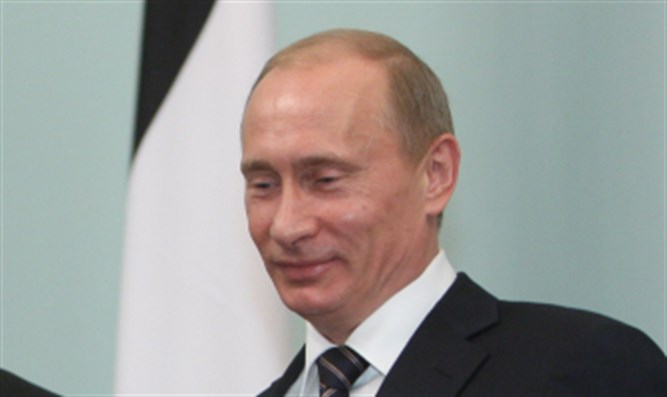
Putin challenges Biden to live debate

0

Russian president calls on Joe Biden to hold online debate, after Biden called Putin ‘a killer’.

RT reported that Russian President Putin challenged Joe Biden to an online debate a day after agreeing with an ABC News anchor that Putin was “a killer.”

“I would like to suggest to President Biden that we continue our discussion, but on the condition that we actually do it live, without any delays, directly in an open, live discussion,” Putin was quoted as telling Russia 24 TV.

Putin warned he “wouldn’t put this off for too long” and suggested Monday as a possible date.

Russia’s US ambassador has been recalled due to rising tensions between the two countries.

(Arutz 7).

Chinese bowl found at yard sale for $35 sells for $722,000

The official purchase price, which included various fees, was $721,800.

An exceptionally rare 15th century porcelain bowl made in China that somehow turned up at a Connecticut yard sale and sold for just $35 was auctioned off Wednesday for nearly $722,000.

The small white bowl adorned with cobalt blue paintings of flowers and other designs — one of only seven such bowls known to exist in the world — was among a variety of Chinese works of art sold by Sotheby’s as part of its Asia Week events. The names of the seller and buyer were not disclosed.

Sotheby’s had estimated the value of the artifact at $300,000 to $500,000. Wednesday’s auction included 15 bids, starting at $200,000 from someone online and ending at $580,000 from another person bidding by phone. The official purchase price, which included various fees, was $721,800.

An antiques enthusiast came across the Ming Dynasty-era piece and thought it could be something special when browsing a yard sale in the New Haven area last year, according to Sotheby’s. The buyer later emailed information and photos to Sotheby’s asking for an evaluation.

“Today’s result for this exceptionally rare floral bowl, dating to the 15th century, epitomizes the incredible, once in a lifetime discovery stories that we dream about as specialists in the Chinese Art field,” Angela McAteer, head of Sotheby’s Chinese Works of Art Department, said in a statement.

Sotheby’s confirmed it was from the 1400s when they were able to look at it in person — there are no scientific tests, only the trained eyes and hands of specialists. The bowl was very smooth to the touch, its glaze was silky and the color and designs are distinctive of the period.

The bowl dates back to the early 1400s during the reign of the Yongle Emperor, the third ruler of the Ming Dynasty, and was made for the Yongle court. The Yongle court was known to have ushered in a new style to the porcelain kilns in the city of Jingdezhen, and the bowl is a quintessential Yongle product, according to Sotheby’s.

The bowl was made in the shape of a lotus bud or chicken heart. Inside, it is decorated with a medallion at the bottom and a quatrefoil motif surrounded by flowers. The outside includes four blossoms of lotus, peony, chrysanthemum and pomegranate flower. There are also intricate patterns at the top of both the outside and inside.

McAteer said only six other such bowls are known to exist, and most of them are in museums. No others are in the United States. There are two at the National Palace Museum in Taipei, Taiwan, two at museums in London and one in the National Museum of Iran in Tehran, according to Sotheby’s.

How the bowl ended up at a Connecticut yard sale remains a mystery. McAteer said it’s possible it was passed down through generations of the same family who did not know how unique it was.

(World Israel News / AP).

Last poll before elections: Who gets the good news?

0

Netanyahu’s strategy of attacking smaller, right-wing satellite parties appears to be working.

With five days to go before the election, the Kantor Institute released its final poll before Election Day (March 23). The winner looks be the Likud party and Prime Minister Benjamin Netanyahu.

According to the poll results, which were published by Kan News, the Likud strengthened to 31 seats; that’s two seats more than the party pulled in a March 11 Kantor poll.

It should be noted that while strengthening in the polls, the Likud party is projected to receive fewer Knesset seats than it currently controls (36).

Netanyahu’s strategy of attacking smaller, right-wing satellite parties, which he began to do in earnest at the tail end of the election campaign, appears to be working. He has struck against the parties of Yemina and New Hope in a bid to draw off votes.

The poll shows that Yemina, led by Naftali Bennett, has weakened to nine seats, down from 12 seats in the March 11 poll. New Hope, another right-wing party led by Gideon Saar, is also down to nine seats, a drop from 11 seats in the March 11 poll.

Netanyahu has attacked smaller right-wing parties ahead of each of the three elections (April 2019, September 2019, March 2020) which Israel has held.

In the first of the elections, April 2019, the tactic backfired as the New Right party, a Yemina precursor, collapsed and didn’t pass the electoral threshold (the minimum number of votes necessary to enter the Knesset), leaving Netanyahu with less than the 61 Knesset seats he required to form a governing coalition.

Had the New Right passed the threshold a right-wing coalition would have been formed and the additional elections would likely not have taken place.

However, as the latest poll shows, it appears that Yemina and New Hope will both pass the threshold. Whether this will help Netanyahu is another question as both have promised during the campaign not to join a Netanyahu-led government.

The poll also shows the next strongest party to Likud is Yesh Atid, led by Yair Lapid, with 19 seats. The party also received 19 seats in the March 11 poll.

The survey was conducted among 1,406 men and women aged 18 and over, in a combined online and telephone sample, including the Arab sector, from March 17 to March 18. The sampling error is 2.6%.

(World Israel News).

Putin recalls Russian ambassador to Washington

0

Russia angered after US President calls Vladimir Putin a “killer” in TV interview.

Russian President Vladimir Putin has recalled the Russian Ambassador in Washington following comments by US President Joe Biden in which called Putin a “killer.”

Ambassador Anatoly Antonov was recalled to Moscow for consultations on “what to do
and where to go in the context of relations with the US.”

In an interview with ABC News host George Stephanopoulos, Biden responded to a question about whether he thought the Russian leader was a killer by saying: “I do.”

Biden’s remarks were met with scorn in Russia. Chairman of the Russian State Duma Vyacheslav Volodin said Biden’s remarks showed “hysteria from impotence” and constituted an insult to the Russian Federation.

Secretary of the General Council of the United Russia party and first vice-speaker of the Federation Council Andrei Turchak said that Biden’s remarks constituted “an extreme degree of aggression caused by impotence.”

“Biden’s statement is just a triumph of the political insanity of the United States and age-related dementia of their leader,” Turchak added, according to the Russian press service.

In the interview, Biden also accused Russia and Putin specifically of interference in the US elections and promised that Putin would pay “a price” for that interference.

(Arutz 7).


Arab Activist Defends Israel at UN Human Rights Council

0

“If the rest of the world would have taken an example from Israel instead of distracting from their failures by attacking Israel, we would already be living in a different reality.”

Representatives from Iran, Qatar, and the Palestinian Authority on Tuesday exploited the United Nations Human Rights Council’s (UNHRC) 46th session to condemn Israel’s policy of vaccinating its population against the coronavirus and received a rebuttal from an Israeli Arab.

Yoseph Haddad, an Israeli-Arab social activist, attacked the representatives who claimed Israel’s program was racist because it allegedly was meant for Jews only, saying that “any attempt to claim that Israel’s vaccination policy is racist is a blatant attempt to defame Israel and distract from the corruption of some countries in this council.”

Haddad, speaking on behalf of UN Watch, noted that he is an Arab from Nazareth who has been vaccinated.

“Accusations have been made against Israel that its vaccination program is racist and that is not true. Like me, my family, friends and hundreds of thousands of other Israeli Arabs have been vaccinated,” he shared.

“The State of Israel is campaigning in Arabic to encourage us Israeli Arabs to get vaccinated and Israel’s Magen David Adom National Rescue Organization, which consists of Jews and Arabs, works directly with Arab communities to vaccinate its residents,” he said.

Haddad also responded to claims that Israel is responsible for vaccinating the Palestinians but is failing to do so, saying that “although we are not obliged to vaccinate them under the Oslo Accords, we are helping. Israel, and not the Palestinian Authority, has vaccinated thousands of Palestinians. And while the Palestinian Authority used vaccines to vaccinate only its associates, it was Israel that established vaccine centers for Palestinians.”

Israel has vaccinated over 50,000 people in the first week of its operation to inoculate workers from the PA who work in Israel against the Coronavirus (COVID-19).

Some 120,000 PA Arabs will be vaccinated by Israeli medical teams with Moderna vaccines, which have been allocated by the state, at eight different locations throughout Judea and Samaria.

Haddad underscored that “any attempt to claim that Israel’s vaccination policy is racist is a blatant attempt to defame Israel and distract from the corruption of some countries in this council.”

“Instead of blaming the Palestinian Authority, you are denouncing Israel. Instead of discussing how Palestinians in Lebanon are discriminated against, you are attacking Israel. Instead of blaming countries for human rights violations, including China, which sits on this council and is currently committing genocide against Muslims, you are defaming my country,” he charged.

In conclusion, Haddad declared that he is “proud to be an Arab and I am proud to be an Israeli because Israel cares for all its citizens and even for others. If the rest of the world would have taken an example from Israel instead of distracting from their failures by attacking Israel, we would already be living in a different reality.”

Haddad is the CEO of “Together – Vouch for Each Other, which was founded in 2018 by a group of young Israeli Arabs – Christians, Muslims, Bedouin and Druze, who felt determined to bring about change in the Israeli-Arab sector and adopt a positive direction vis-à-vis Israeli society and the country.

(United with Israel / TPS).


WP Twitter Auto Publish Powered By : XYZScripts.com