Home Blog Page 703

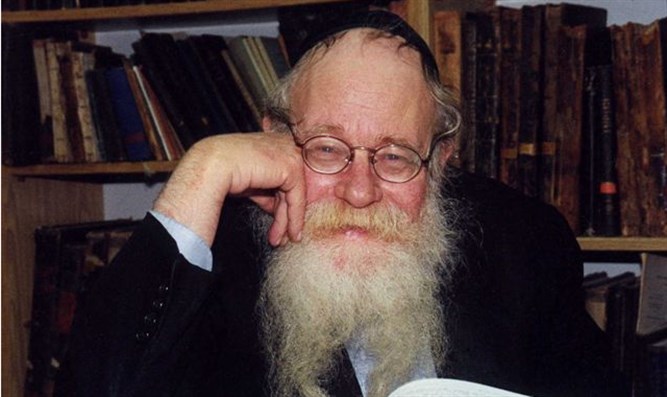
Rabbi Adin Steinsaltz passes away at age 83

0

Israel Prize laureate, known for his translation of the Talmud, dies following hospitalization. PM Netanyahu: ‘Rabbi Steinsaltz’s works
will stand for generations’

Rabbi Adin Steinsaltz, an Israel Prize laureate best known for his translation of the Babylonian Talmud, has passed away, at the age of 83.

The funeral procession was to leave for the Mount of Olives in Jerusalem at 2:00 p.m.

Rabbi Steinsaltz had been hospitalized at Shaare Zedek Medical Center in Jerusalem, where he was being treated for a lung infection not related to the coronavirus.

Along with his translation of the Talmud into modern Hebrew, Rabbi Steinsaltz was also well-known for his writings and commentaries on the Hebrew Bible, the Talmud, and the Tanya.

Prime Minister Binyamin Netanyahu lauded Rabbi Adin Steinsaltz Friday afternoon, hours after the rabbi’s passing, calling him a “Torah genius”.

“From the depths of my heart, I lament the passing of Rabbi Adin Steinsaltz, whose knowledge was vast, a Torah genius and a man of exemplary spirit,” Netanyahu said in a statement.

“Rabbi Steinsaltz’s love of Israel was greatly influenced by his closeness to the Lubavitcher Rebbe and Chabad. The Rebbe’s exceptional personality made a strong impression on him, just as happened to me in my meetings with him. In my view, in both of them – the Lubavitcher Rebbe and his student, Rabbi Steinsaltz – I saw the same great light of love of humanity and love of the Jewish people.”

“I send my deepest condolences to the Steinsaltz family and the Rabbi’s students in Israel and around the world. May his memory be blessed”, the statement ended.

A member of the Chabad Hasidic movement, Rabbi Steinsaltz was president of Yeshivat Makor Chaim and Yeshivat Tekoa.

Born to a secular Jewish family in 1937, Rabbi Steinsaltz, a native Jerusalemite joined the Chabad Hasidic movement as a teenager. He studied at the Chabad yeshiva Tomchei Temimim in Lod, while also studying math, chemistry, and physics at Hebrew University.

In 1965, Rabbi Steinsaltz began work on what came to be known as the Steinsaltz Edition of the Talmud, translating the entire Babylonian Talmud into modern Hebrew and adding technical notes and explanatory material.

The translation was completed in 2010, and has since been translated in part to a number of other languages, including Russian and English.

Rabbi Steinsaltz cofounded the Mekor Chaim yeshiva in 1984 and Yeshivat Tekoa a decade and a half later.

In 1988, Rabbi Steinsaltz won the Israel Prize for Jewish Studies; in 2012, he won the President’s Medal; and in 2017 he was awarded the Worthy Citizen of Jerusalem Prize.

During an attempt to reform the ancient rabbinic court known as the Sanhedrin, Rabbi Steinsaltz was tapped to lead the court.

In 2016, Rabbi Steintsaltz suffered a stroke.

He is survived by his wife, Sarah, their three children, and their eighteen grandchildren.

The Tzohar organization released a statement Friday morning mourning Rabbi Steinsaltz’s death.

“Tzohar was deeply saddened to hear of the passing of Rabbi Adin Steinsaltz, an exceptional leader of both Torah and love for the land. His life’s work opened countless doors for people to study and helped bridge the diverse communities within the Jewish world. He will be forever remembered as a teacher defined by passionate caring for his people and spreading the beauty of Judaism all across the globe.”

(Arutz 7).

Israel: ‘We have a vaccine for coronavirus’

0

PM Netanyahu congratulates director of the Israel Institute for Biological Research on plan to begin human trials for vaccine.

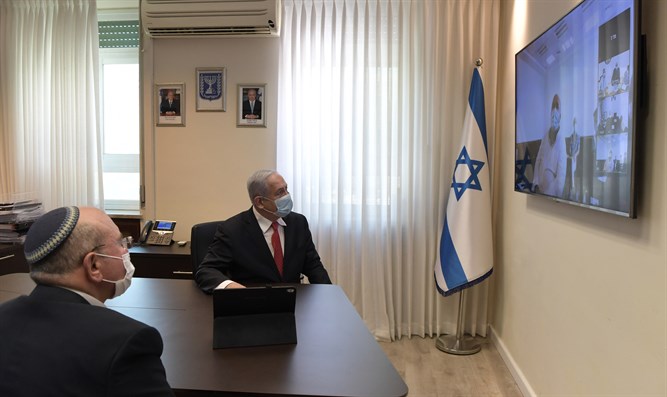
Prime Minister Binyamin Netanyahu spoke Thursday with the director of the Israel Institute for Biological Research, Prof. Shmuel Shapira, to congratulate him on the development of a vaccine for the coronavirus and the beginning of human trials for the vaccine during the Jewish High Holidays.

“I am happy to hear about the progress and I would like to congratulate you on that. Continue on this path, at the maximum speed that you think it scientifically can be done,” Netanyahu said.

The Prime Minister instructed to advance the work of the headquarters to examine the establishment of a plant to produce the vaccine in Israel. “I have directed the opening of
a facility to develop a vaccine here in Israel out of great faith in our people and in our capabilities as a country,” he said.

Prof. Shmuel Shapira told the prime minister: “Six months ago, you sent us on a journey
to bring vaccines and antibodies to the State of Israel. We have fulfilled that task, and are fulfilling it to the best of our ability. We have in our hands an excellent vaccine. This is the first bottle of the vaccine – we have had a vaccine since last Thursday.”

Prime Minister Netanyahu directed that the process be continued ahead of the completion of the trials and the production of the vaccine so that Israel will have safe and effective vaccines for all residents of Israel by the end of the first quarter of 2021. The IIBR’s rate
of progress until now has been in keeping with the timetables determined at the outset by the National Security Council (NSC), the Defense Ministry and the Health Ministry.

Netanyahu also instructed that action be taken toward defining an outline to allow other countries to purchase vaccine options from Israel. The financing thus obtained will be able to assist in the establishment of production capabilities and processes.

IIBR activity to develop a vaccine began immediately with the State of Israel’s preparations to deal with the coronavirus. The Prime Minister set for the IIBR the goal of developing a vaccine or of becoming involved in efforts to develop one. Accordingly, a detailed plan was prepared, resources were allocated and efforts were made by IIBR research teams, with the assistance of the NSC, the Defense Ministry and the Health Ministry. Diplomatic steps were also taken to support some of the actions necessary to secure approval for the vaccine, in order to allow for strict regulation of the experiments carried out by the IIBR.

(Arutz 7).

Trump issues executive order against TikTok

0

Trump’s order bars any transactions between US companies and the Chinese parent company of TikTok beginning in 45 days.

Arutz Sheva Staff , 07/08/20 05:46


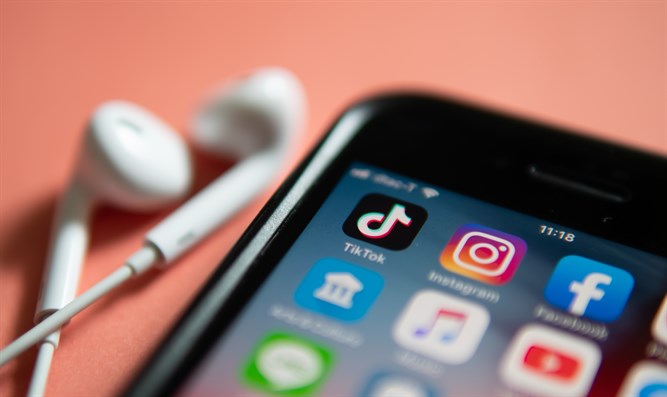
US President Donald Trump on Thursday issued an executive order barring any transactions between US companies and the Chinese parent company of TikTok beginning in 45 days, The Hill reports.

The order essentially forces the parent company, ByteDance, to divest from TikTok, or face a ban from operating in the United States.

The president had previously set a deadline of September 15 for Microsoft or another American company to acquire the viral video app before he moved to ban it from operating in the U.S.

The executive order states that “the spread in the United States of mobile applications developed and owned by companies in the People’s Republic of China (China) continues to threaten the national security, foreign policy, and economy of the United States. At this time, action must be taken to address the threat posed by one mobile application in particular, TikTok.”

Trump, citing the International Emergency Economic Powers Act, declared that any transaction with ByteDance would be prohibited beginning in 45 days, which would be September 20. Any company violating the order could face sanctions.

A TikTok spokesperson did not immediately respond to a request for comment.

The Trump administration has for weeks raised concerns about TikTok and floated the idea of banning the popular social media platform, which allows users to create short videos that often go viral, from operating in the United States.

Officials have cited concerns over its ties to the Chinese Communist Party and alleged the app can be used to access users’ data.

TikTok has pushed back against the concerns raised by the Trump administration and members of Congress.

Israel Builds a Massive Hi-Tech ‘Server Farm’ in Bunker Underneath Jerusalem

Bynet Data Communications is building a 14,000-square-meter bunker to store what will become one of the Middle East’s largest and most sensitive server farms.

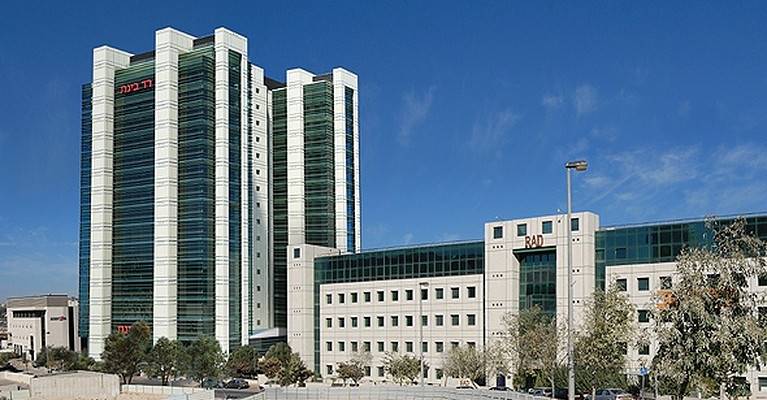
Nine stories below Jerusalem’s Har Hotzvim tech hub, one of the country’s biggest data centers is being completed. Dug into the heart of the hill, which got its name from the stonemasons who quarried rock from it to build the Jewish Temple in biblical times, is an immense server farm that is set to store some of the most sensitive information in the country.

Deep underground, protected from natural disasters, military attacks, and peering eyes Bynet Data Communications Ltd. is building a 14,000 square meter (460,000 square foot) bunker, spanning four floors to store what will become one of the Middle East’s largest and most sensitive server farms.

The site is set to become operational in several weeks, after which it will be sealed off from the world.

The uppermost level, located below five parking levels and a 17-story building, has an eight meter-high ceiling made up of steel-plate coated concrete capable of withstanding a car-bomb explosion. It will be forced to meet the strictest existing survivability standard, capable of sustaining all its needs even if the outside world is disconnected.

A series of government regulators, led by the national cyber administration and the Israeli FBI (the Shin Bet), are overseeing every step of construction and installation.

For customers, it is a critical facility that holds all of their data, whether for backup and disaster recovery or as a central computing site. They may consider their data is stored in the cloud, but in effect, it will be stored on Bynet’s servers, deep under the ground.

When complete, it will store the information of some of Israel’s largest banks, insurance companies, large tech companies, the Israel Electric Company, the Airports Authority, Rafael and other security bodies, and certain IDF units.

Equally interesting are the government servers, for example, that of the Population Registry database, which contains the biometric information of citizens, perhaps one of the most sensitive databases in Israel. All of these are fenced and secured 24 hours a day.

Beyond the imposing physical protection, Bynet also provides the extensive and multi-layer cyber protection for the facility. Moti Shani, Bynet’s Data Center Business Unit manager told Ynet that not a minute or day goes by without attempts to break into one of the systems.

“We constantly receive alerts from the defense establishment calling on us to maintain vigilance because of an attack attempt,” he said. “The Iranians are always trying to breach. They attempted again this week,” he added, noting that Bynet is one of the defense establishment’s 10 strategic service providers.

The data center market in Israel is booming. Microsoft has announced it is investing millions of dollars in building a data center to store its Azure cloud services as is Oracle. Amazon, however, is taking the lead, with plans to construct four giant databases costing billions of dollars.

Shani said it is likely that some of the international companies will offer cloud services to Israel via their storage in Bynet’s facility.

Part of the rush for data center construction is due to a tender process rolled out by the government earlier this year with the goal of transferring all of the government computing services to the cloud in an effort to reduce costs and make data processing more efficient.

Shani explains that the reasons all the data centers are being built here, despite the fact that geographical location shouldn’t matter when dealing with cloud-based storage, is that the closer users are to the physical storage, the faster the connection is, but added that the main consideration is jurisdiction. Government data, for example, has to be stored on Israeli soil.

“It’s not that there is a heightened fear of cyberattacks elsewhere,” he explained. “If the server sits in Italy, for example, it is subject to Italian laws and their laws may authorize the release of information that the Israeli government doesn’t.”

(United with Israel).

Facebook bans pro-Trump super PAC from advertising on its platform

0

Committee to Defend the President chairman Ted Harvey told FOX Business Facebook is “determined to restrict free speech and attack those who dare to support President Trump.”

Facebook announced Thursday that it will ban pro-Trump super PAC, The Committee to Defend The President, from buying ads on its platform.

“As a result of the Committee to Defend the President’s repeated sharing of content determined by third-party fact-checkers to be false, they will not be permitted to advertise for a period of time on our platform,” Facebook Policy communications director Andy Stone told FOX Business in a statement.

The page will lose advertising privileges for a minimum of 90 days. The advertising ban will take effect on August 10, and would end around November 1.

Committee chairman Ted Harvey told FOX Business in a statement that Facebook is “determined to restrict free speech and attack those who dare to support President Trump.”

“When their liberal, Trump-hating ‘fact-checkers’ complained about the Committee’s first ad for correctly calling out Joe Biden, we changed it. When those same ‘fact-checkers’ didn’t bother to check the facts or even watch our second ad, they still banned us,” Harvey said.

“The Committee will not be silenced by ‘woke’ Silicon Valley elites, as we expose the real Joe Biden. We have reallocated our entire Facebook budget to other online platforms, so Americans can see the whole truth—not just Facebook’s truth.”

The Committee to Defend the President Facebook page has nearly 1 million followers and has spent hundreds of thousands of dollars on ads in the last two years on the social media giant.

The move comes a day after the platform removed a video of President Trump which it said “includes false claims that a group of people is immune from COVID-19 which is a violation of our policies around harmful COVID misinformation.”

In the removed video, the president told Fox & Friends that schools should remain open.

“My view is that schools should be open,” Trump said. “If you look at children, children are almost — and I would almost say definitely — but almost immune from this disease.”

He added that children have “much stronger immune systems” and “just don’t have a problem.”

The post, which was also shared to Twitter by the Trump campaign’s account, was also flagged after being “in violation of the Twitter rules on COVID-19 misinformation.” Twitter told FOX News that the video must be removed from the Trump campaign’s account before it can tweet again.

Trump campaign spokesperson Courtney Parella told Fox News that President Trump was “stating a fact that children are less susceptible to the coronavirus.”

“Another day, another display of Silicon Valley’s flagrant bias against this President, where the rules are only enforced in one direction,” she added. “Social media companies are not the arbiters of truth.”

Facebook’s policy to block advertising on pages that “repeatedly share stories marked as false” has been in place since 2017.

According to its website, any page that runs “issue, electoral or political ads without authorization, providing false or misleading information in the authorization process, and other ad policy violations may lead to enforcement action.”

Actions the company will take against pages in violation of its policy include disabling associated pages and existing ads, restricting the ability to run new ads and merge pages, and revoking authorization to run issue, electoral or political ads.

(Fox News).

De Blasio: Cuomo is wrong to ask New York City’s wealthy to return. “Residents shouldn’t buy cars”.

0

‘We’ll go to dinner, I’ll buy you a drink, come over I’ll cook,’ Cuomo
says he tells wealthy New Yorkers.

New York City Mayor Bill de Blasio on Thursday suggested that Gov. Andrew Cuomo was wrong to call on wealthy New Yorkers to return to the city amid the coronavirus pandemic and an uptick in crime.

The Democrat also threatened to tax the wealthy even further if the federal government does not do more to assist the city, which is facing the worst financial crisis in decades.

Cuomo on Tuesday had urged wealthy New Yorkers to return to Manhattan to assist the city with the financial burden caused by the pandemic, saying coronavirus is now “under control.”

Thousands of apartments were vacated as the wealthy fled the city during the pandemic to seek refuge in places such as the Hamptons and Connecticut.

De Blasio said the city was tracking those who’d left. He acknowledged the recent uptick in crime, but said it was “directly related to coronavirus.” He said the crime situation would soon “turn around” as the New York Police Department (NYPD) is deploying new strategies and because “summer will be over soon.”

“To the point of the folks out in the Hamptons… we don’t make decisions based on a wealthy few,” de Blasio said. “I was troubled to hear this concept.”

“There’s a lot of New Yorkers who are wealthy who are true believers in New York City and will stand and fight with us, and some may be fair-weathered friends, but they will be replaced by others,” the mayor continued.

Cuomo in a press conference earlier this week detailed his pleas with the wealthy to return to New York City. “I literally talk to people all day long who are now in their Hamptons house who also lived here, or in their Hudson Valley house or in their Connecticut weekend house, and I say, ‘You gotta come back, when are you coming back?’” the Democratic governor said.

“We’ll go to dinner, I’ll buy you a drink, come over, I’ll cook’,” Cuomo said.

“They’re not coming back right now. And you know what else they’re thinking? ‘If I stay there, I pay a lower income tax,’ because they don’t pay the New York City surcharge,” Cuomo said.

The governor has also been fighting back against recent calls to raise taxes on the wealthy to help with the $30 billion deficit the city has incurred from the pandemic — arguing this will be the nail in the coffin that prompts the wealthy to hold off on returning to the city.

“Our population, one percent of the population [of New York City] pays 50 percent of the taxes. And they’re the most mobile people on the globe,” Cuomo said.

De Blasio, for his part, has pushed for more taxes on the wealthy. “We must build our policies around working people,” he said. “If the federal government fails us we should immediately return to Albany to the discussion put a tax on wealthy New Yorkers.”

“While everyone else is suffering, you see stock markets rising, the rich getting richer. Wealthy New Yorkers, they can pay a bit more so can get through this crisis,” de Blasio continued.

De Blasio during his press conference also advised New Yorkers against buying a car. “My advice to New Yorkers is don’t buy a car, cars are the past, the future is mass transit, biking, hiking,” the mayor said. “Going forward I will never buy a car again.”

The intra-party feud between the mayor and governor has peaked during the coronavirus pandemic and the widespread police brutality protests, though the tension between the two dates back to the ’90s.

Throughout the pandemic, Cuomo repeatedly reminded de Blasio that lockdown decisions needed to be made on a statewide level.

For instance, De Blasio announced in April that public schools would remain closed for the remainder of the school year in the effort to quell the coronavirus spread — only for Cuomo three hours later to refer to it as little more than an “opinion” and hint that a decision had not yet been made by his office.

In July, Cuomo took aim at de Blasio and the city council’s move to cull $1 billion from the NYPD amid the unrest following the death of George Floyd while in the custody of Minneapolis police, saying that he didn’t “know what it means.”

(Fox News).

Lebanon’s leaders face rage, protests, reform calls after blast; 16 port staffers detained.

0

Death toll rises to over 150, over 5000 injured, thousands homeless.
Grief turns to anger as Lebanese fume over negligence, corruption; France’s Macron in Beirut vows support for public; investigators hold workers, officials for questioning.

Lebanon’s embattled leadership, under fire after a massive explosion laid waste to large parts of central Beirut, faced public fury Thursday and stern calls to reform from the visiting French president and the IMF.

Grief has turned to anger in a traumatized nation where over 150 people died and over 5,000 were injured in Tuesday’s colossal explosion of a huge pile of ammonium nitrate that had languished for years in a port warehouse.

To many Lebanese, it was tragic proof of the rot at the core of their governing system, which has failed to halt the country’s deepest economic crisis since the 1975-1990 civil war, plunging millions into poverty.

Crowds of protesters clashed with security forces outside the parliament.

French President Emmanuel Macron, on a snap visit to shell-shocked Beirut, pledged to lead international emergency relief efforts and organize an aid conference in the coming days, promising that “Lebanon is not alone.”

But he also warned that Lebanon — already in desperate need of a multi-billion-dollar bailout and hit by political turmoil since October — would “continue to sink” unless it implements urgent reforms.

Speaking of Lebanon’s political leaders, Macron said “their responsibility is huge — that of a revamped pact with the Lebanese people in the coming weeks, that of deep change.”

The International Monetary Fund, whose talks with Lebanon started in May but have since stalled, warned that it was “essential to overcome the impasse in the discussions on critical reforms.”

The IMF urged Lebanon — which is seeking more than $20 billion in external funding and now faces billions more in disaster costs — “to put in place a meaningful program to turn around the economy” following Tuesday’s disaster.
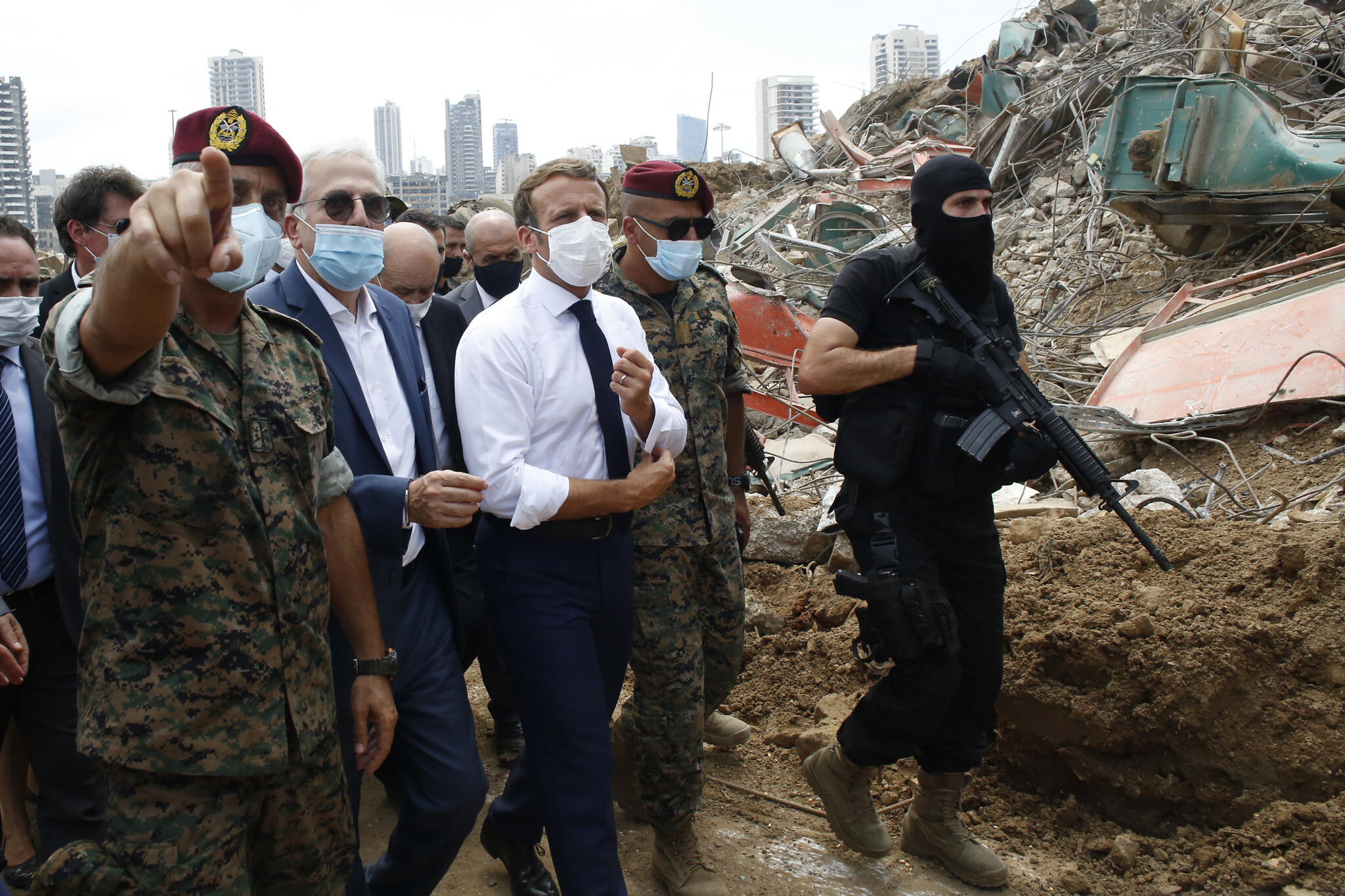
French President Emmanuel Macron, center, visits the devastated site of the explosion at the port of Beirut, Lebanon, August 6, 2020. (AP Photo/Thibault Camus, Pool)

‘I understand your anger’

Macron’s visit to the small Mediterranean country, France’s Middle East protege and former colonial-era protectorate, was the first by a foreign head of state since the unprecedented tragedy.

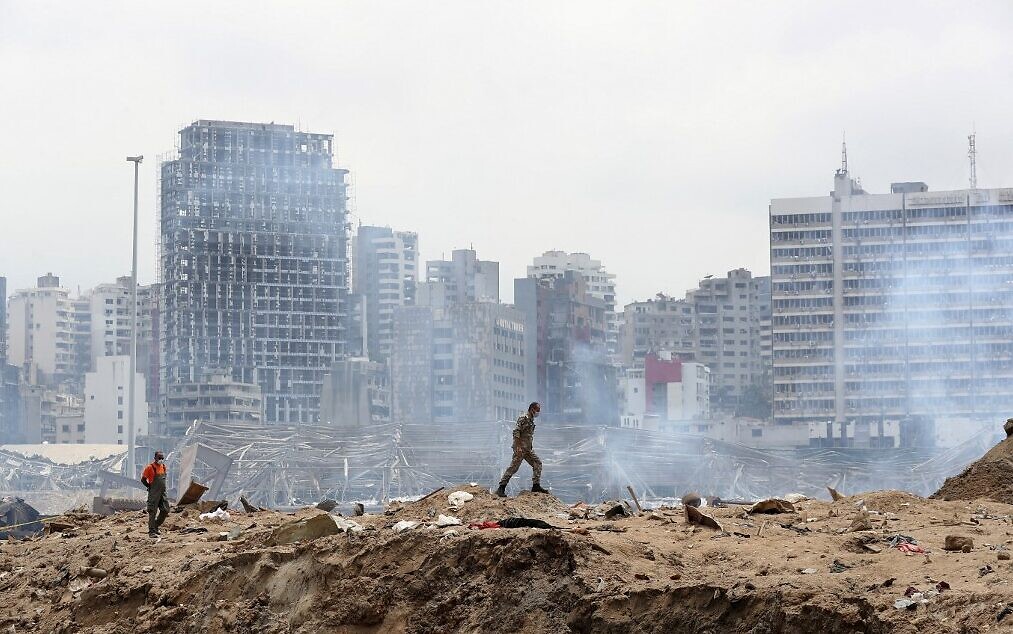
The French president visited Beirut’s harborside blast zone, a wasteland of blackened ruins, rubble and charred debris where a 140 meter (460 feet) wide crater has filled with sea water.

As he inspected a devastated pharmacy, crowds outside vented their fury at the country’s “terrorist” leadership, shouting “revolution” and “the people want an end to the regime!”

Later Macron was thronged by survivors who pleaded with him to help get rid of their reviled ruling elite.

Under the nervous gaze of his suited bodyguards, Macron gave one woman a prolonged embrace triggering wild cheers from the crowd.

“I understand your anger. I am not here to endorse… the regime,” Macron assured the crowd. “It is my duty to help you as a people, to bring you medicine and food.”

Another woman implored Macron to keep French financial aid out of the reach of Lebanese officials, accused by many of their people of rampant graft and greed.

“I guarantee you that this aid will not fall into corrupt hands,” the president pledged.

‘System has to go’

Compounding its woes, Lebanon recorded 255 coronavirus cases Thursday — its highest single-day infection tally — after the blast upended a planned lockdown and sent thousands streaming into overflowing hospitals.

The disaster death toll rose to over 150 on Thursday evening, the health ministry said, and was expected to rise further as rescue workers kept digging through the rubble.

Offering a glimmer of hope amid the carnage, a French rescuer said there was a “good chance of finding… people alive,” telling Macron seven or eight missing people could be stuck in a room buried under the rubble.

Even as they counted their dead, many Lebanese were consumed with anger over the blast they see as the most shocking expression yet of their leadership’s incompetence.

“We can’t bear more than this. This is it. The whole system has got to go,” said 30-year-old Mohammad Suyur.

An injured Lebanese anti-government protester reacts as members of Lebanon’s security forces stand guard in the during a visit by French President Emmanuel Macron, August 6, 2020. (AFP)

A flood of angry posts on social media suggested the disaster could reignite a cross-sectarian protest movement that erupted in October but faded amid the grinding economic hardship and the coronavirus pandemic.

Prime Minister Hassan Diab and President Michel Aoun have promised to put the culprits responsible for the disaster behind bars.

But trust in institutions is low and few on Beirut’s streets held out hope for an impartial inquiry.

Macron told reporters that “an international, open and transparent probe is needed to prevent things from remaining hidden and doubt from creeping in.”

Amid the gloom and fury, the aftermath of the terrible explosion has also yielded countless uplifting examples of spontaneous solidarity.

Business owners swiftly took to social media, posting offers to repair doors, paint damaged walls or replace shattered windows for free.

Lebanon’s diaspora, believed to be nearly three times the tiny country’s population of five million, has rushed to launch fundraisers and wire money to loved ones.

In Beirut, much of the cleanup has been handled by volunteers.

“We’re sending people into the damaged homes of the elderly and handicapped to help them find a home for tonight,” said Husam Abu Nasr, a 30-year-old volunteer.

“We don’t have a state to take these steps, so we took matters into our own hands.”

A soldier walks at the site of the massive explosion at the port of Beirut, August 6, 2020. (Thibault Camus/Pool/AFP)

Port staff detained, assets frozen

Late Thursday a military prosecutor announced 16 port staff had been detained over the blast.

Lebanon’s foreign minister said on French radio Thursday that an investigating committee had been given four days to determine responsibility for the blast, which killed more than 150 people and wounded at least 5,000.

Military prosecutor Fadi Akiki said in a statement that 18 staffers at Beirut’s port had been called in for questioning, 16 of whom remain in custody pending further investigations.

They include port and customs officials as well as maintenance workers and their managers, Akiki said.

His statement came as an official confirmed to AFP that the central bank had ordered an asset freeze for seven port and customs officials, including Badri Daher, director-general of Lebanon’s customs authority.

The official spoke on the condition of anonymity because he is not authorized to speak on the issue.

A banking source confirmed to AFP that all the country’s commercial banks received the order, which also lifts banking secrecy from accounts owned or linked to those in question.

(Times of Israel).
Navarro: Trump to Sign ‘Buy America’ Order on Medicines, Medical Equipment

0

President Donald Trump plans to sign an executive order Thursday that would encourage the production of certain drugs and medical supplies in the U.S., following shortages during the Covid-19 pandemic.

The order urges purchasers to buy American-made products and loosens federal drug-safety and environmental regulations that the administration says disadvantage domestic producers, among other measures.

The drugs and devices covered by the order are expected to include medicines used to respond to a public-health emergency or biohazard attack, among others. White House trade adviser Peter Navarro said on a call with reporters that the Food and Drug Administration will come up with the list of essential medicines covered by the order, but he didn’t say by when.

“We’re dangerously overdependent on foreign nations for our essential medicines, for medical supplies like masks, gloves, goggles and the like, and medical equipment like ventilators” Navarro said on the call. “Across the world we have sweatshop labor, we have pollution havens, we have tax havens which have pulled our manufacturing offshore particularly for pharmaceuticals.”

Health-care providers have struggled to get the drugs or equipment they need during the pandemic because so many are made overseas. Researchers and lawmakers have decried that reliance on foreign suppliers for years, but the public outcry over drug and equipment shortages during the Covid-19 pandemic has increased attention on the issue.

The administration recently awarded a $765 million contract to Eastman Kodak Co. to make ingredients used in key generic medicines and a $354 million contract to generic drugmaker Phlow Corp. to make Covid-19 drugs and build new U.S.-based plants for so-called essential medicines and pharmaceutical ingredients.

Navarro said the order “establishes a base level of demand to attract a level of investment sufficient to provide for the needs we have for these things in times of trouble.”

Trump will travel to a Whirlpool Corp. plant in Ohio Thursday afternoon to sign the order.

The FDA has said about 80% of the key building blocks for medicine, called active pharmaceutical ingredients, come from outside the U.S. A large portion are made in China and India, countries where the FDA has discovered product-quality issues stemming from poor manufacturing practices.

Millions of blood-pressure drugs with ingredients made in China and India were recalled starting two years ago after it was discovered they contained chemicals that can cause cancer.

The Pentagon has also raised concern that relying on China for pharmaceutical ingredients is a national security risk.

In addition, the pandemic has revealed how disruption in other countries can leave Americans vulnerable after China temporarily halted the export of some products that
could be needed to treat Covid-19 patients, as well as other products, and threatened
to block the exports other medical equipment.

(Newsmax / Bloomberg).

Crystal Geyser Bottlers Could Face $5 Million Fine

0

In January, CG Roxanne pleaded guilty to storing and transporting hazardous waste.

By City News Service, News Partner


LOS ANGELES, CA — The family-owned business that bottles Crystal Geyser Alpine Spring Water faces a possible $5 million criminal fine Wednesday in Los Angeles for storing and transporting hazardous waste containing arsenic.

Both the government and defendant CG Roxane agreed to jointly recommend that the court sentence the company to a three-year term of probation, a fine of $5 million, and the implementation of a compliance program.

In January, CG Roxane pleaded guilty in Los Angeles federal court to one count each of unlawful storage of hazardous waste and unlawful transportation of hazardous material.

Two family-owned hazardous wastewater and stormwater transportation companies were each ordered last month to pay a $375,000 fine after they pleaded guilty to violating the Clean Water Act by trucking wastewater produced by CG Roxane without disclosing information about arsenic in the waste transported from the bottling plant in Olancha.

The case focused on the bottling plant’s wastewater, not the safety or quality of Crystal Geyser’s water, prosecutors said.

CG Roxane has been bottling natural spring water in California since 1990. The public was not harmed through the long-discontinued conduct, and the bottler said it is committed to ensuring that its business practices do not create any harm, according to court papers.

Olancha is in Inyo County, about 200 miles north of Los Angeles.


Source: Los Angeles Patch

Now in vending machines at LAX: Masks, gloves, thermometers

In yet another nod to the battle against COVID-19, travelers passing through Los Angeles International Airport can now buy masks, gloves, hand sanitizer and digital thermometers at vending machines in most terminals.

The airport collaborated with travel retailer Hudson Group and PepsiCo Beverages North America to install the machines in pre-security areas on the departures level inside Terminals 1, 2, 4, 5, 6, 7 and the Tom Bradley International Terminal.

The eight vending units offer a touch-free payment option that accommodates tap-to-pay credit card or mobile-payment platforms, including Apple Pay, Google Pay and Samsung Pay. Each machine has an anti-microbial shield installed on hard surfaces.

Justin Erbacci, the airport’s chief executive officer, said the machines are part of the airport’s protocols to keep passengers safe though “rigorous cleanings, new technology and an increasingly touch-free experience from curb to gate.” It also helps travelers comply with LAX’s mandatory facial-covering policy.

Some of the prices include:

  • Two pack of disposable face masks – $4.50
  • Ten pack of nitrile gloves – $7.99
  • Single N95 mask – $6.99
  • Three-pack of N95 masks – $19.99
  • Two-ounce container of hand sanitizer – $3.99
  • Four-ounce container of hand sanitizer – $6.99
  • Digital thermometer – $9.99
  • UVC phone-sanitizing light – $50

The vending machines are restocked on a daily basis, and many of the products also are available at other retail locations beyond the security checkpoints.

Additional safeguards

LAX has implemented a number of other safeguards to provide passengers and employees from the further spread of COVID-19.

Everyone inside public areas of terminals, on ground transportation and in office buildings must wear face coverings, and hundreds of hand sanitizer stations have been installed throughout the airport. Physical-distance floor markings are likewise being added to some passenger areas to ensure appropriate spacing between travelers.

California reported 5,295 new cases of COVID-19 on Wednesday, Aug. 5, bringing the state’s total to 524,722 with 9,703 fatalities.

LAX isn’t the first airport to offer a self-serve option for buying personal protective equipment. McCarren International Airport in Las Vegas began stocking vending machines with face masks, gloves, hand sanitizer and wipes in early May and other airports are expected to follow suit.

Air traffic tailspin

Air traffic has fallen dramatically amid the COVID-19 pandemic as wary leisure travelers postpone vacations and family gatherings and businesses pull back on conventions, trade shows and on-site meetings.

Passenger traffic at LAX saw its deepest year-over-year decline of 96% in April, falling to less than 300,000 compared with 7.2 million a year earlier. Year-to-date travel through June was off by 59%.

“We’ve seen slow but steady growth over last three months, but we’re nowhere near where we were a year ago,” airport spokesman Heath Montgomery said. “People are starting to return to flying … but at a very slow pace.”

A June report from the International Air Transport Association says consumers are still reluctant to travel.

“While business confidence is still an important driver, near-term travel demand will depend (in part) on consumer sentiment which has been subdued,” the association said. “According to the latest passenger survey conducted in June, the majority (55%) of respondents don’t plan to travel in 2020.”

The machines have face coverings, gloves, hand sanitizer and digital thermometers, among other items.


Source: LA Daily News


WP Twitter Auto Publish Powered By : XYZScripts.com