Home Blog Page 708

Elli Schwarcz – Nachamu – Sticks & Stones

0

Based on the elucidations of Rav Yosef Kalatzky, and the sources of Rabbi Ari Kahn

We have left the mourning of Tisha B’av, and now enter into a phase of consolation, NechamahWhereas the theme of the haftarah (the supplemental Torah reading from Prophets) in previous weeks has been one of lament and rebuke, this week’s haftarah speaks of comfortingIt opens with the words,

Nachamu, Nachamu, ami…
“Be consoled, be consoled, My nation!”
-Yeshayah, 40:1 (abridged)

The first of seven weeks in which we hear that our exile is temporary, and that we will be redeemed, this Shabbat has thus come to be known as the Shabbat of ‘Nachamu‘.

The Torah portion the Shabbat following Tisha B’av is always Va’etchanan; thus, this haftarah is linked as much to Va’etchanan as it is to the aftermath of Tisha B’av. The question, then, is what connection exists between Va’etchanan and the Nachamu passage.

Here are some segments of our Parasha’s opening, in which Moshe Rabbeinu told the people that Hashem had rejected his entreaties to be allowed into Israel:

“And I beseeched Hashem at that time, saying:
‘…Let me cross over and I shall see the good land that is on the other side of the Jordan- this good mountain (Yerushalayim) and the Beit Hamikdash…’
Yet Hashem grew angry with me, because of you, and did not listen to me…”
(-See Va’etchanan, 3:23-26)

-Why was Moshe not allowed to enter Israel in the first place, and how were B’nei Israel to blame for it? Moshe actually expressed himself more openly about this in last week’s portion:

And in this matter you have no faith in Hashem your God…And Hashem heard the sound of your words, and became upset and swore, saying,
“Not one man of these men*, this wicked generation, will see the good land that I swore to give to your fathers…”
So too was Hashem angry at me, because of you, saying,
“You too will not come there…”
(-See Devarim, 1: 32-37)

-As you will recall from Parashat Sh’lach, Moshe sent spies to Israel (38 years before this speech to the nation), upon the insistence of B’nei Israel, on a mission to check out the land and its inhabitants. When the men returned with a frightnening report, B’nei Israel cried all night, believing that Hashem was purposely leading the nation to its destruction. Hashem punished the people severely for their basic lack of faith, prohibiting them from entering the Promised Land and sentencing them instead to die out in the desert. The men between 20 and 60 years of age at the time of the crying began to die out on the anniversary of that tragic night, every year by the tens of thousands. Even Moshe was refused entry to Israel, and rightfully blamed B’nei Israel for his fate.

You may know that the date of their misguided crying was… the night of the ninth of Av (‘Tisha b’Av)– a day that would thereafter be reserved for punishment over the millennia:

Rabbah said in the name of Rav Yochanan: That night was Tisha B’Av eve. Hashem said to them: “You cried that night a needless cry, and I will establish it for you as a crying for generations.”
-Gemara Ta’anit 29a

The destruction of the first and second Batei Mikdash would take place on that same date, many hundreds of years later, as well as many terrible tragedies that the Jewish nation would experience.
In fact, the S’forno (Harav Ovadia ben Yaakov S’forno, Italy; 1475-1550) seems to say that the people’s crying was treated exactly according to their misguided fears. They had feared for their own lives should they go to Israel, and so they were sentenced to die out in the desert, denied entry to the Holy Land.
They had also cried for their children, whom they envisioned as helpless pray for the inhabitants of the land- and this sealed the fate of future generations. All of this, he teaches, is spelled out by David Hamelech:

And they despised the pleasant land, they did not believe His word; And they murmured in their tents, and did not listen to the voice of God. And He lifted up His hand against them, to make them fall in the desert- and to make their seed fall among the nations, and to scatter them throughout the lands.
-Tehillim, 106:24-27

-That is to say, included in Hashem’s words regarding that generation was also the painful destruction that would follow in the future, including exile and dispersion.

Perhaps it is with such an approach in mind that Rambam makes a heavy statement about King Solomon:

And at the time Shlomo built the Temple, and knew that it was destined to be destroyed, he built a place in which to hide the Ark below, within deep and twisted underground hiding places.

-Rambam, Beit Ha’bechira 4:1

-Shocking. Shlomo Hamelech knew, even as all rejoiced at the Beit Hamikdash’s dedication, that the holy building would ultimately be destroyed.

We know now that all who accepted the spies’ report would have to die in the desert rather than enter Israel. We also know that Moshe wasn’t either allowed in- for which he blamed B’nei Israel. We know that future generations would also suffer as a consequence of the crying- and that this would be an outgrowth of the destruction of the Batei Mikdash…

-As all of this is taking shape, we must step back to recognize another important point: although the sin of crying over the spies’ negative report was terrible, it did not, Heaven forbid, threaten our existence as a nation; the future of the nation would be spared, as Hashem chose instead to destroy the Batei Mikdash:

 
Hashem spent His anger; he poured His fury and ignited a fire in Zion, which has consumed its foundations.

I sing for Hashem poured His anger on sticks and stones [the Beit Hamikdash], and did not pour His anger on B’nei Israel.
-Midrash

-Apparently, even the very act of tragic destruction was itself our salvation; Hashem allowed the Batei Mikdash to be destroyed rather than His nation. The decree that He had issued in the time of the spies, then, was incredibly an act of mercy. Knowing that His people would deserve a terrible fate, Hashem arranged events- really, the very fabric of history!- so that B’nei Israel would build the Beit Hamikdash while unworthy of lasting success- and this fact itself would ensure that ‘only’ the Temple, not the nation itself- would be destroyed!

The consolation we are now given, and its connection to Moshe’s appeals, are starting to come into focus….

Let’s see if we can pick it up from here next week.

Have a great Shabbat!

Elli

*With the exception of Yehoshua, Caleiv, and others (see the passage there)


Elli is an alumnus of the Toras Moshe, Ner Israel, and Carteret Yeshivos, and has been involved in Jewish outreach for almost 15 years. He is a Hebrew School and English Language Arts teacher, and has a Master’s Degree in Counseling from Johns Hopkins University. Of all his pursuits, Elli most enjoys teaching high-level Jewish thought and Talmud to teenage boys, exposing them to the beauty and wisdom of their heritage while highlighting their own ability to engage in advanced Torah learning. Elli lives in Lakewood, New Jersey, with his wife and children.
Johns Hopkins: Israel’s fatality rate from COVID-19 among lowest in the world

0

The country with the highest fatality rate is Great Britain at 15.2 %.

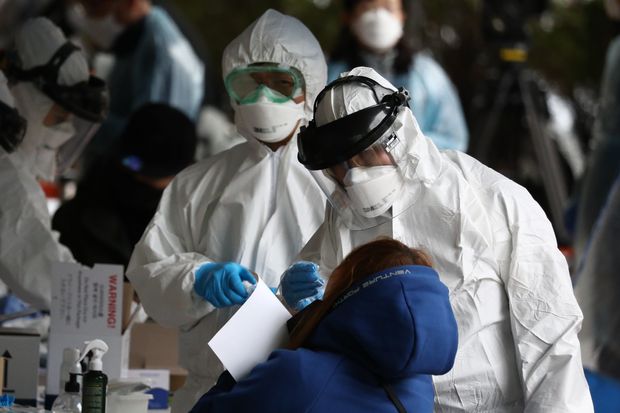
A study released by Baltimore’s Johns Hopkins University revealed on Thursday Israel’s fatality rate from the novel coronavirus is among the lowest in the world.

In the grip of a second coronavirus wave, the country is currently classified as a “red zone”, in other words suffering from a high morbidity (infection) rate.

However, the prestigious medical school notes that the death rate – which takes into account the number of deaths relative to the number of infections – is only 0.7%.

The country suffering from the highest fatality rate is Great Britain at 15.2 percent, the Johns Hopkins study claims.

Mexico is in second place with a rate of 11.1 percent followed by Iran (5.5 percent) and Egypt (5 percent).

“Mortality is one of the most important clues to measure the impact of COVID-19 in a country,” the researchers note in their report.

“Differences in mortality figures between countries can be caused by differences in the number of screenings. The more tests that are carried out, the more cases of contamination are identified, which reduces the fatality rate,” they further indicate.

But researchers note that the Jewish state has a particularly high infection rate of 290.6 per million inhabitants, the fifth-highest in the world.

These figures can be explained in large part by the massive screening campaign led by the Israeli Ministry of Health.

(i24 News).

Knesset stunned as Twitter says Khamenei tweets calling to destroy Israel do not violate policy

0

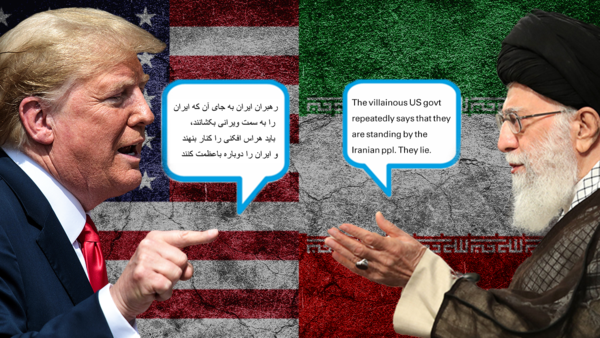
A Twitter official said on Wednesday that Iranian Supreme Leader Ayatollah Khamenei’s calls for the genocide of the Jews do not violate the social media platform’s rules.

A Knesset committee was stunned to learn on Wednesday that while tweets from President Donald Trump are flagged with warning labels by the social media giant, those calling for the destruction of Israel by Iran’s Supreme Leader Ali Khamenei are not.

Speaking with Israel’s Knesset Committee for Immigration, Absorption and Diaspora Affairs, Ylwa Pettersson via video conference, Twitter’s head of Public Policy and Philanthropy for the Nordics and Israel, said, “We have an approach toward leaders that says that direct interactions with fellow public figures, comments on political issues of the day, or foreign policy saber-rattling on military-economic issues are generally not in violation of our rules.”

Her remark came in response to international human-rights lawyer Arsen Ostrovsky, executive director of the Israeli-Jewish Congress, asking why Twitter has recently started flagging U.S. President Donald Trump’s tweets, yet not those of Khamenei.

Ostrovsky had queried Petterson about the fact that Twitter has recently started flagging President Trump’s tweets. “Why have you not flagged the tweets of Iran’s Ayatollah Khamenei, who has literally called for the genocide of Israel and the Jewish people,” he asked.

Blue and White Knesset member Michal Cotler-Wunsh then asked Pettersson, “So, calling for genocide is okay, but commenting on politics is not?”

To which Pettersson replied: “If a world leader violates our rules, but if there is a clear interest in keeping that on the service, we may place it behind a notice that provides some more context about the violation and allows people to click if they wish to see that type of content. That is what happened for the Trump tweet. That tweet was violating our policies regarding the glorification of violence, based on the historical context of the last line of that tweet, and the risk that it could possibly inspire harm and similar actions.”

She continued: “And, as it was in the interest of the public to keep that on the platform, we decided to keep it up, place it behind a notice … to limit the interaction with it, but because it is of importance to have it remain so that the citizens can see what their political figures are commenting and hold them accountable for what they’re saying online.”

Cotler-Wunsh was not impressed by this argument, stating: “I think that what’s come up again and again through different examples is actually a sense of double standards, and I would implore Twitter and other online platforms to ensure … that there is no double standard in the application” of rules.

(World Israel News).

Netanyahu’s five-point battleground to stay in power

0

A look at the simultaneous fronts Netanyahu is fighting both to remain prime minister and strengthen Israel against unforeseen challenges and known enemies.

Since fortifying Israel’s frayed political system with a victory over his political rivals and the formation of a unity coalition in April, governance for Israel’s embattled prime minister has been anything but simple.

Netanyahu is currently fighting on multiple battlefronts, both for his political survival and Israel’s greater well-being:

Coronavirus

Immediately upon the outbreak of the global pandemic, Netanyahu took a military approach to coronavirus response. Borders were shuttered, hospitals were girded, and essential medical equipment was produced and acquired. The nation was successfully locked down, flattening a steep curve to fewer than a dozen new cases of the virus per day.

At that point, the country was reopened with the mistaken hope that we would not enter back into COVID-19’s dreaded curve. Wishful thinking proved just that, and Israel now realizes that the fight against coronavirus is a long-term war.

Transitioning from the first-wave battle tactics to a long-term strategy has been bumpy. The initial mechanisms for deciding on restrictions proved woefully ineffective, with new restrictions approved, then overturned, sometimes on a day-to-day basis.

The restrictions and reversals negatively impacted large segments of the economy that are already struggling and drew ire from the public, which correctly questioned the government’s command of the situation.

The spike in infections led many doctors, including a newly coronated coronavirus commissioner Gabi Barbash, a former Director General of the Health Ministry to push for new national lockdown measures, which the government and the nation were both certain to reject. Almost immediately, Netanyahu replaced Barbash with Ronni Gamzu, CEO of Sourasky Medical Center in Tel Aviv.

Recognizing the need to better control and explain processes, Netanyahu changed procedures for implementing restrictions, putting an instant end to the daily restrictions crises of the past several weeks.

In a recent major press conference Netanyahu, Defense Minister and Vice Premier Benny Gantz, and Gamzu elicited a clear strategy to the nation, promising only to employ lockdowns as a last possible resort. Gamzu also promised that any future restrictions would only come into place if they could be fully and logically explained to the public.

The current strategy Gamzu is leading is to continue to gird the medical system, to prepare for additional outbreaks in the winter and to launch a comprehensive contact tracing initiative. The process, to be led by the Israel Defense Forces, will utilize advanced surveillance technology to track virus carriers and enforce pinpoint lockdowns on individuals who have come in direct contact with those infected.

At the same time, Netanyahu has announced a number of economy-driven measures, including increased unemployment benefits, payments to small-business owners and one-time payment distribution this week to all citizens. While the payments are considerably less than those that have been distributed in the United States, additional payments have not been ruled out.

Iran/Hezbollah

Over the last several weeks, numerous explosions have rocked nuclear and energy infrastructure deep inside Iran. Many have assessed the explosions were caused by Israel, the United States or Iranian dissidents—or some combination of the above.

Of the three, Israel may be the easiest and most popular retaliatory target. It is, therefore, no surprise that Iran’s proxy Hezbollah reportedly staged a cross-border attack this week.

Immediately following the incident, Netanyahu appeared in a public press conference with Gantz, pledging that any escalation would be met with resounding force.

Hezbollah has an arsenal of an estimated 150,000 rockets to target Israel. Yet Israel has been diligently preparing for conflict with Hezbollah since an inconclusive battle in 2006.

As Israel has proven time and again in Syria during Netanyahu’s tenure, the Jewish state is prepared to act when necessary with force to prevent Iran and its proxies from strengthening footholds near Israel’s borders. Israel has similarly proven, with the Stuxnet virus and the raiding of a nuclear facility, that Israel can strike Iran directly as well.

Dissent within the coalition

Netanyahu essentially divided his opposition following three consecutive elections, with primary challenger Gantz opting to form a unity alignment with the prime minister rather than force yet a fourth election.

Yet since tense coalition negotiations, the unity has proven itself to exist primarily on paper.

Netanyahu and Gantz agreed on a rotation arrangement for the premiership with Netanyahu serving first, through November 2021. In addition, Gantz’s Blue and White Party received the same number of executive branch ministries, as Netanyahu’s Likud Party—despite the fact that Likud is more than double the size. Neither party is supposed to advance any legislation without the approval of the other.

With the exception of a controversial initiative to apply sovereignty in Israeli-controlled territories in Judea and Samaria, the agreement stipulates that the government must focus most of its efforts on passing a two-year budget and tackling the coronavirus.

While busy at work fighting COVID, the government has thus far been unable to implement sovereignty or pass a budget. Israel risks losing a generational opportunity to apply sovereignty—with the tacit support of the United States—if it does not move the initiative forward in the coming weeks.

While Netanyahu campaigned on the move and insisted on its inclusion in coalition negotiations, Gantz has thus far rejected sovereignty, despite telling President Donald Trump at the White House in January that he supported the plan.

Similarly, Netanyahu is pressing to alter the agreement and work on the passage of a one-year budget to deal with immediate coronavirus costs, and allowing more time to negotiate a better-educated 2021 budget.

Failure to pass a budget is an automatic trigger for elections. While the country is not prepared yet again to run to the polls, separating the budgets provides a second possible election trigger next year. It is widely believed that Netanyahu will seek opportunities to alter the makeup of the coalition without Gantz or force a new election prior to November 2021, when Gantz is scheduled to become prime minister. Meanwhile, Gantz has not appeared to either Israel’s right or left as a prime minister-in-waiting.

Protesting the coalition

Violent protests have emerged from Tel Aviv to Jerusalem. It is clear from photos of the events that these are far-left protests, intended primarily at removing Netanyahu from office. Since Israel’s media shares the protesters’ desire for a new prime minister, they have been gracious to turn the protests into one of the nation’s lead stories.

The protest initiative is being provoked and organized by former Prime Minister Ehud Barak, whose recently revealed connections to Jeffrey Epstein soured a comeback bid during the first round of Israel’s three-part election cycle, and aspiring prime minister Yair Lapid.

Lapid has continuously warned that the protests would turn violent. And when some protesters themselves were attacked after they shouted at bystanders calling them “Nazis,” Lapid was quick to turn the blame on Netanyahu, while admitting to supporting the protestors. He insisted that he will not stop supporting such protests until Netanyahu is out of office.

However, Israelis can see pictures and videos of crowds, and it is clear to the voting public that those in the streets do not share the same traditional values as most Israelis. Protesters include members of Israel’s Arab Communist Party, pride flags and left-wing youth groups.

And while the protesters claim to be the vanguard of democracy, it’s clear that they thoroughly reject the results of Israel’s elections and the formation of a unity government. Nationally, the groups composing the current protest movement account for an extremely small sector of the electorate. Israel’s right-wing holds a 65-35 percent margin over Israel’s left-wing. And the protestors represent the fringes of Israel’s left, which scored poorly in each of the consecutive elections.

And so while the protests will continue to dominate headlines and may indeed erupt in greater violence, which appears to be a means toward an uncertain end, they are unlikely to change Israel’s political map in any meaningful way.

Legal challenges

Trials are soon beginning in three separate corruption cases against Netanyahu. One of the cases involves approximately $200,000 worth of expensive gifts including champagne and cigars that Netanyahu received from longtime friends over many years.

Two of the cases involve alleged quid pro quos between Netanyahu and the owners of media outlets that have historically promoted anti-Netanyahu coverage. In one of the cases, the prosecution openly acknowledges that the quid pro quo never actually took place. In the second case, the prosecution acknowledges that the actions Netanyahu performed as his part of the alleged quid pro were all legal in nature.

If convicted in either of the cases, it would be the first time in the history of any democracy, that an elected official was convicted of accepting positive media coverage as a bribe. In all of the cases, evidence and witnesses were gathered in an elaborate prosecutorial fishing scheme, which ultimately led to the construction of the indictments.

The indictments are specifically designed to get Netanyahu out of office by hook or by crook. Even with the indictments filed, voters came out in record large numbers to vote in favor of retaining Netanyahu. And Netanyahu remains certain that he will be fully acquitted in each of the cases, due to the flimsy nature of the charges and the processes by which the prosecution acquired its evidence.

And with all of the simultaneous attacks on Israel and its longest-ever serving prime minister, the Jewish state remains largely stable, particularly compared to the United States.

And yet Netanyahu’s most impressive days will need to lie ahead if he is to tackle the challenges he and Israel currently faces and to further propel the startup nation towards the top of a wobbly global economy.

(JNS).

Bennett asks Yifat Shasha-Biton to join Yamina

0

Yamina chairman asks Knesset Coronavirus Committee chair to leave Likud for his party after coalition chairman tries to fire her.

Yamina chairman MK Naftali Bennett met with Knesset Coronavirus Committee Chairwoman MK Yifat Shasha-Biton and invited her to leave the Likud and join her party.

In recent weeks, Shasha-Bitton has been sharply criticized by Prime Minister Netanyahu and senior Likud members after she refused to approve a number of restrictions which had been passed by the government to fight the coronavirus.

Earlier this week, Likud faction chairman MK Miki Zohar announced that he would remove Shasha Bitton from her position as chair of the Corona Committee, but the Blue and White Party made it clear that they would not take part in such a vote.

Shasha-Biton recently explained why she does not accept any decision made by the government, and seeks to discuss it at length in the Coronavirus Committee.

“Of course, together with everyone, we also want to cut off the chains of infection and prevent the virus from spreading,” she said.

“It is important to me that we take a limitation and try to understand what logic and data it rests on and in the end we will make good decisions the public can understand, both healthwise and economically and we will weigh every aspect,” she added.

(Arutz 7).

78% of Americans blame China for its role in the spread of coronavirus, survey finds

0

A new Pew Research Center survey found over three-quarters of American adults blame the Chinese government for the global spread of the coronavirus and over 60 percent of respondents said the country has done a poor job handling the aftermath of the outbreak.

The survey, which polled 1,003 individuals and was conducted from June 16 to July 14, showed 73 percent of U.S. adults have an unfavorable view of China, which marks the most negative rating in the 15 years that Pew Research Center has been conducting polling on the subject, according to a press release.

Negative sentiment has also increased by 7 percentage points over the last four months alone and has gone up 26 points since 2018.

The survey claimed 83 percent of Republicans have an unfavorable view of China compared to 68 percent of Democrats. Republicans are also more likely to publicly say they have a very unfavorable view towards China at 54 percent, versus only 35 percent Democrats.

78 percent place “a great deal or fair amount of blame for the global spread of the coronavirus on the Chinese government’s initial handling of the COVID-19 outbreak in Wuhan.” 64 percent of those surveyed said China has done a poor job dealing with the COVID-19 outbreak.

By a more than two-to-one margin, 68 percent of Americans said the nation’s economic ties to China are bad, while a quarter said they are “very bad.”

Half of Americans think the U.S. should hold China responsible for the role it played in the outbreak of the coronavirus, even if it means worsening economic and trade relations.

When asked if the U.S. should sacrifice economic relations with China or promote human rights, 73 percent choose human rights. About 77 percent of respondents had “little or no confidence” in President Xi Jinping.

News of the survey comes just one day after China garnered negative headlines following a House subcommittee hearing with America’s big tech CEOs.

Rep. Ken Buck, R-Colo., criticized Google on Wednesday for its connections to the Chinese Communist Party (CCP) and told Fox News, “If Google wants to cozy up to Communist China, Sundar Pichai must answer for the atrocities committed by the
Chinese Communist Party.”

This news also comes one day after Sen. Josh Hawley called on NBA commissionerAdam Silver to testify before Congress about the league’s controversial relationship with the CCP.

He said China’s presence within the sport is deepening as they continue to use the NBA
as a platform to push their political agenda.

“The league’s new policy suggests a newfound commitment to enhanced employee expression. But that free expression appears to stop at the edge of your corporate sponsors’ sensibilities,” Hawley wrote in a letter to the league. “And for woke capital
today, profits from the Chinese market are more popular than patriotism…”

“If I am right – if the NBA is more committed to promoting the CCP’s interests than to celebrating its home nation – your fans deserve to know that is your view. If not, prove
me wrong.”

(Fox News).

Pompeo expands scope of sanctions against Iran

0

Secretary of State expands scope of metals sanctions targeting the Islamic Republic’s nuclear, military, and ballistic missile programs.

US Secretary of State Mike Pompeo on Thursday announced he is expanding the scope of the Iran metals sanctions targeting the Islamic Republic’s nuclear, military, and ballistic missile programs.

“Iran’s nuclear, ballistic missile, and military programs pose a grave threat to international peace and security. To address these threats, I am announcing a major expansion of the scope of State Department-administered Iran metals-related sanctions. Today, the State Department is identifying 22 specific materials used in connection with Iran’s nuclear, military, or ballistic missile programs. Those who knowingly transfer such materials to Iran are now sanctionable pursuant to Section 1245 of the Iranian Freedom and Counter-Proliferation Act,” Pompeo said in a statement.

“Under the same provision of law, I am continuing my determination that the Islamic Revolutionary Guard Corps (IRGC) controls Iran’s construction sector. The IRGC’s construction firm and many of its subsidiaries remain sanctioned by the United Nations because they were directly involved in the construction of the uranium enrichment site at Fordow,” he continued.

“As a result of this IRGC determination, any knowing transfer of certain materials, including graphite or raw or semi-finished metals, to or from Iran to be used in connection with the construction sector of Iran remains sanctionable,” the statement concluded.

Since leaving the 2015 nuclear deal between Iran and world powers, the US has continuously reimposed sanctions on Iran.

Iranian leaders have said that the US sanctions “severely hamper” the Islamic Republic’s ability to fight coronavirus.

The latest sanctions come amid continued tensions between the US and Iran. On Tuesday, the Revolutionary Guard launched missiles targeting a mock aircraft carrier in the strategic Strait of Hormuz.

The drill included such a barrage of fire that the US military temporarily put two regional bases in the Mideast on alert amid tensions between the two countries.

The drill — and the American response to it — underlined the lingering threat of military conflict between Iran and the US after a series of escalating incidents last year led to an American drone strike which killed top Iranian general Qassem Soleimani in Baghdad.

Iran retaliated for the killing of Soleimani by launching a barrage of missiles on two Iraqi military bases hosting American troops. 34 service members were diagnosed with traumatic brain injury as a result of the attack.

(Arutz 7).

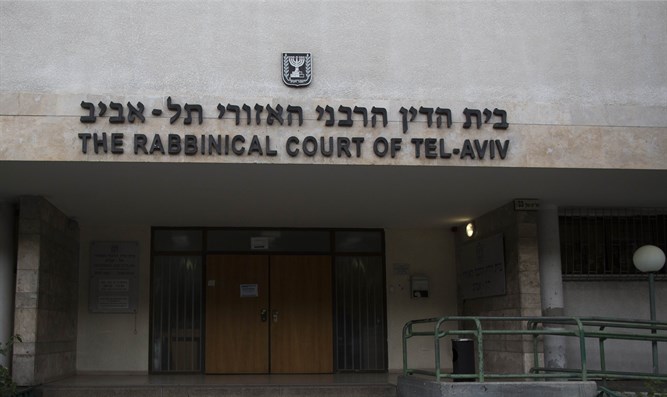
Rabbinical court allows publication of female get-refuser’s personal details

0

In first, Israeli rabbinical court allows publication of female get-refuser’s details. ‘I did nothing wrong,’ woman claims.

The regional rabbinical court in Rehovot in an unprecedented decision permitted the publication of a female get-refuser’s personal details, Kikar Hashabbat reported.

Despite the similar numbers of male and female get-refusers, until now only the details of male get-refusers had been made public, while female get-refusers’ privacy remained protected.

Kobi Nachshoni, who revealed the details to Ynet, said that the judges decided to publish the name and photo of Tal Gil, 26, of Rehovot, so that social pressure might convince her to accept the writ of divorce and free her chained husband from the marriage.

Tal was married to her husband for just three days, and since then has refused to accept the court’s ruling that she must agree to accept the writ of divorce.

Tal’s husband told Ynet: “We tried to do everything to end this difficult saga quickly, and with as little damage to either side as possible, but the injustice, the anguish, and the damage done to me because of her refusal [to divorce] did not leave any options.”

“The State of Israel gives get-refusers the power of a country’s president to grant a person his freedom. It’s not reasonable and it’s not proportional.”

Tal responded: “I am not against receiving the get, but as I told the rabbinical court, according to Maimonides’ Torah law, which is accepted in my family, we need to complete all the other divorce proceedings before I receive the get (writ of divorce). As for the shaming, I did nothing wrong and I have nothing to be ashamed of. The embarrassment belongs to the rabbinical court, in how it handled things. Throughout the process they harmed my rights and my honor while clearly discriminating against me for being a woman and not a man. Were it not for their horrible management, this case would have been over a long time ago.”

At the same time, the rabbinical court in Tel Aviv allowed the publication of the details of Haim Hoffman, a get-refuser from the US, in order to pressure him into granting his wife a religious divorce.

(Arutz 7).

Iran Launches Underground Ballistic Missiles During Exercise

0
Iran’s paramilitary Revolutionary Guard launched underground ballistic missiles Wednesday as part of an exercise involving a mock-up American aircraft carrier in the Strait of Hormuz, highlighting its network of subterranean bases.

Although state television documentaries have focused on operations underground at the bases, all have avoided showing geographic details revealing their locations. Wednesday’s launch from what appears to be central Iran’s desert plateau changes that amid heightened tensions between Tehran and the U.S. over its tattered nuclear deal with world powers and as economic pressures grow.

“We have carried out the launch of ballistic missiles from the depths of the earth for the first time,” Gen. Amir Ali Hajizadeh, commander of the Guard’s aerospace division, told state TV. “That means without utilizing conventional launchpads, the buried missiles suddenly rip out of the earth and hit their targets precisely.”

Drone footage captured by the Guard showed two missiles blasting out from covered positions in the desert early Wednesday morning, with debris flying up into the air in their wake. The Guard did not identify the location of the launch, nor the missiles involved.

The launch, six months after the Guard shot down a Ukrainian jetliner and killed all 176 people on board, appeared geared toward demonstrating the strength of its missile program to a domestic audience, missile expert Melissa Hanham said. The above-ground footage shown on state television, coupled with investigative techniques, make it possible to locate the site, she said.

“Once you find the silo, it’s really not a safe place to keep your missile anymore,” said Hanham, who works as the deputy director of an Austria-based group called the Open Nuclear Network.

Given how corrosive the fuel used for the missiles is and the maintenance required, such weapons can’t simply be buried in the desert and forgotten.

Since its bloody 1980s war with Iraq, which saw both nations fire missiles on cities, Iran has developed its ballistic missile program as a deterrent, especially as a U.N. arms embargo prevents it from buying high-tech weapons systems.

The underground tunnels help protect those weapons, Hanham said.

“What they’re trying to do is increase the survivability of their missile forces,” she said. “They feel that their missile forces are exposed and that they could be taken out preemptively. By building this elaborate tunnel scheme, they’re trying to increase the survivability.”

The drill, called “Great Prophet 14,” also sends a message to the United States. Iran has been firing at a fake aircraft carrier resembling America’s Nimitz-class carriers towed out to the strait by a tugboat. Adm. Ali Reza Tangsiri, the Guard’s naval chief, said its armed drones attacked the bridge of the fake carrier Wednesday, the semiofficial Tasnim news agency reported.

During Wednesday’s drills, footage showed a missile striking a target resembling an American missile defense system known as a Terminal High-Altitude Area Defense, or THAAD.

Tasnim published a graphic overnight that altered the image of an American carrier into the shape of a casket with a set of crosshairs on it, with a caption quoting Supreme Leader Ayatollah Ali Khamenei pledging to seek revenge for the U.S. drone strike that killed a top Iranian general in January.

The drill — and the American response to it — underline the lingering threat of military conflict between Iran and the U.S. after a series of escalating incidents last year led to the January drone strike. Tehran responded to that strike by firing ballistic missiles that wounded dozens of American forces in Iraq.

While the coronavirus pandemic has engulfed both Iran and the U.S. for months, there has been a growing confrontation as America argues to extend the yearslong U.N. weapons embargo on Tehran that is due to expire in October. A recent incident over Syria involving an American jet fighter approaching an Iranian passenger plane also has renewed tensions.

Economic pressure from the collapse of the nuclear deal, caused by President Donald Trump unilaterally withdrawing America from the accord, has seen Iran’s rial currency drastically drop in value. At the time of the deal in 2015, $1 cost 32,000 rial. Today, $1 is worth some 235,000 rials.

Ballistic missile fire detected from the drill Tuesday resulted in American troops being put on alert at Al-Dhafra Air Base in Abu Dhabi in the United Arab Emirates and Al-Udeid Air Base, the forward headquarters of the U.S. military’s Central Command in Qatar, the military said. Troops briefly sought cover during that time.

Both bases are hundreds of kilometers (miles) away from where Iran placed the replica aircraft carrier in the strait, the narrow mouth of the Persian Gulf through which 20% of
all oil traded passes.

(Vosizneias / AP).

WP Twitter Auto Publish Powered By : XYZScripts.com