Home Blog Page 709

Top Twitter Exec Declines to Explain Why Ayatollah Calling for Genocide Is Not Banned

0

A top Twitter executive who took part in a Knesset hearing on Wednesday declined to say why her company had not taken action against genocidal incitement by Iranian Ayatollah Ali Khamenei.

Appearing virtually at the hearing on social media antisemitism, the head of Twitter Policy for the Nordics and Israel, Ylwa Petterson, faced questions on the issue of antisemitism.

She was asked by international human rights lawyer Arsen Ostrovsky why the company had flagged a controversial tweet by US President Donald Trump regarding anti?police brutality protests, but had never censured Khamenei for his numerous calls for the elimination of Israel.

Petterson replied, “So, we have an approach to world leaders that presently say that direct interactions with fellow public figures, comments on political issues of the day, or foreign policy saber-rattling on military-economic issues are generally not in violation of our Twitter rules.”

Blue and White MK Michal Cotler-Wunsh ?? who had convened the hearing ?? chimed in, “Calling for genocide on Twitter is ok?”

Petterson dodged the question, saying, “So, if a world leader violates our rules, but there is an interest in keeping it on the server, we may place a note to provide some more context about the violation that allows people to click through if they wish to see that type of content.”

“And that is what happened for the Trump tweet,” she claimed. “That tweet was violating our policies regarding the glorification of violence based on the historical context of the last line of that tweet, and the risk that it could possibly inspire harm and similar actions.”

“And as it was in the interest of the public to keep that on the platform, we decided to keep it up, place it behind a note, put the label on it, as you might say, to limit the interaction with it, but because it is of importance to have it remain so that the citizens can see what their political figures are commenting and hold them accountable for what they’re saying online,” Petterson added.

In her comments, Petterson did not address the issue of why this had not been done to Khamenei or mention Khamenei’s name at all.

Cotler-Wunsh characterized the lack of action against Khamenei a “double standard.” During the hearing, she also urged Twitter to adopt the International Holocaust Remembrance Alliance (IHRA) definition of antisemitism as a guideline.

The hearing came a day after the end of a 48-hour boycott of Twitter by Jewish groups and their allies, after the platform was slow to take action against an antisemitic rant by British rapper Wiley.

(Algemeiner).

Rabbi Shmuel Kamenetsky: ‘Worrisome’ if Trump not elected

0

Leading Haredi Rabbi endorses Trump. ‘G-d has become a dirty word in much of America, religion and religious institutions are their enemy.’

Rabbi Shmuel Kamenetsky, Rosh Yeshiva of Philadelphia and member of the Moetzes Gedolei Hatorah of Agudas Yisroel of America, said the prospect of Trump not winning in the presidential election was “worrisome.”

“You see the matzav, the anarchy… it’s frightening. G-d has become a dirty word in much of America, religion and religious institutions are their enemy – we need Rachamei Shamayim [heavenly mercy]. If Trump doesn’t win in November, it’s worrisome,” he told Mishpacha magazine.

Asked whether he endorsed Trump for president, he said, “Yes, I think people should vote for him. He’s done a good job. It’s hakaras hatov [gratitude].”

When the interviewer questioned whether Trump was always a positive role model, Rabbi Kamenetsky replied, “That has nothing to do with politics….That’s because he’s a gvir, a wealthy man. Ashir ya’aneh azus — wealthy, powerful people have a way of speaking and acting that is not refined. That’s not a reason not to vote for him.”

(Arutz 7).

Security guard thwarts ax attack at Ukraine synagogue

0

Despite his injuries, the guard at the Jewish house of worship in Mariupol managed to disarm the perpetrator, who then fled the scene.

(July 29, 2020 / JNS) A young man wielding an ax attacked the synagogue in Mariupol, Ukraine, on Tuesday, and fled the scene when repelled by a security guard, reported the United Jewish Community of Ukraine.

Video posted footage posted on the community’s website and Facebook page shows the unidentified man entering the synagogue and striking the guard. Though injured, the guard managed to disarm the attacker, who then fled the scene.

Outside the synagogue in Mariupol, Ukraine. (Credit: Facebook page of the United Jewish Community of Ukraine)
Before assaulting the guard, Richard Anatolievich Golomazov, the perpetrator managed to throw cans, packages, feces, sand and other substances into the synagogue.

Chief Rabbi of Mariupol Mendel Cohen, said “the security guard is a hero. I was in the synagogue at this time while they were fighting.”

Cohen said police are searching for the perpetrator.

Outside the synagogue in Mariupol, Ukraine. (Credit: Facebook page of the United Jewish Community of Ukraine)

Rabbi Lord Jonathan Sacks – The Infinite Game (Va’etchanan 5780)

The popular author and TED lecturer Simon Sinek recently published a book entitled The Infinite Game.[1]Based on the distinction first articulated by James P. Carse,[2] it is about the difference between two types of enterprise. One, a finite game, has a starting and ending point. It obeys rules, recognises boundaries, and has winners and losers. Most sports are like this. So, often, is politics: there are campaigns, elections, rules and regulations, successful and defeated candidates. Businesses can be run this way, when they focus on quarterly profits, share price, market share and the like.

But there are also infinite games. These have no starting point or finishing line, no clear winners and losers, no agreed rules or boundaries. Art is like this. So are music and literature. Beethoven didn’t win. Bach didn’t lose. Great artists change the rules. That is what Beethoven, Schoenberg and Stravinsky did; so too did Van Gogh, Cézanne and Picasso. Politics can be like this when it rises above opinion polls and sets its vision on larger issues of justice, equality and the moral health of society. Education is a finite game when it focuses on exam results and qualifications, or it can be an infinite game when it is about breadth and depth of understanding and character development.

Finite games are played to win. Infinite games are played for their own sake. Finite games are usually performed in front of an audience of some kind. Infinite games are participative. We engage in them because we are changed by them. Van Gogh did not need to sell paintings to regard art as worthwhile. Beethoven was not seeking popularity when he wrote his late sonatas and quartets. James Joyce was not aiming at a bestseller when he wrote Ulysses.

Infinite games are not a means to an end: winning the championship, beating the market, victory in an election. Instead they are what psychologists call autotelic, that is, they contain their purpose within themselves. We do them because the activity is inherently creative, demanding, uplifting and ennobling.

It should be clear by now that these are not simply two types of game. They are two different ways of playing a game. If, in any country at any time, politics is treated as a finite game in which all that matters are popularity ratings and election results, then it quickly becomes superficial, trivial, uninspiring. The quality of leadership declines. The public becomes cynical and disillusioned. Trust is eroded and the social bond becomes frayed. When politics is lifted by a sense of history and destiny on the part its leaders, when it becomes not the pursuit of power but a form of service-to-others and social responsibility, when it is driven by high ideals and ethical aspiration, then leadership becomes statesmanship and politics itself a noble calling.

This is not to denigrate finite games. We need them, because in many spheres of life we need rules, boundaries and time limits. But we must also have space for infinite games because they are among the highest expressions of the human spirit.

These reflections are prompted by two verses in today’s parsha:

Be sure to keep the commandments, decrees, and laws that the Lord your God has enjoined upon you. Do what is right and good in the sight of the Lord… (Deut. 6:17-18)

The problem here is that the first verse seems to cover all 613 of the Torah’s mitzvot. They are commandments, decrees or laws. Why then does the Torah add, “Do what is right and good in the sight of the Lord”? Surely doing what is right and good is no more and no less than keeping God’s commands, decrees and laws. Are these not two ways of saying the same thing?

However, as the Talmud[3] explains: “And you shall do that which is right and good in the eyes of the Lord” means that one should not perform an action that is not right and good, even if they are legally entitled to do so. This is the basis of an important law in Judaism, dina debar metzra, “the law of the adjoining property.” When a landowner comes to sell a tract of land, the owner of the adjacent land has the right to buy it. If it is sold to someone else, the buyer must return the land to the neighbour who then reimburses them for the price they paid for it.

This law is not about land ownership as such. In general, a landowner has the right to sell to whomever they choose. It is about doing “the right and the  good” – what people sometimes call menschlichkeit. To the neighbour, the purchase of the land is an immense good. They can expand without dissipating their landholdings in different locations. To the outsider, losing this purchase is not a significant loss because they can acquire other fields elsewhere. The law of bar metzra departs from the usual principles of law in order to achieve a moral end: helping one’s neighbour.

Rashi, basing himself on this Talmudic passage , says that doing the right and good in the eyes of the Lord means “compromise, acting beyond the strict demands of the law.”[4] Ramban agrees with this but goes on to make a fascinating and fundamental point:

And the intention of this is that from the beginning God said to keep God’s commandments, testimonies, and laws as God has commanded them. And now, it says: even regarding what God did not command, pay attention to do what is good and right in God’s eyes, because God loves goodness and righteousness. This is important because it is impossible to mention in the Torah all the details of people’s behaviour with neighbours and friends, or business conduct or local ordinances. The Torah mentions many such laws, such as: “Do not gossip”, “You shall not take vengeance or bear a grudge”, “You shall not stand idly by the blood of your neighbour”, “You shall not insult the deaf”, “You shall rise before the aged”, and so on. Now it states generally that one should do what is good and right regarding everything, including compromise and acting beyond the strict demands of the law.[5]

Ramban seems to be concurring with Rashi, but actually he is making a somewhat different point. Rashi is saying: keep the law and go beyond it. Ramban is saying that there are some things that cannot be specified by law: “because it is impossible to mention in the Torah all the details of people’s behaviour.” The Torah gives us specific examples: don’t gossip, don’t take revenge and so on. But the rest depends on the situation, the circumstances, and the person or people you are dealing with.

In the terms we encountered at the beginning of this essay: not all the Torah is a finite game. Much of it is. There are rules, commands, decrees and laws. There is the halachah. There are boundaries: milk, meat, public domain, private domain. There are beginnings and endings: the earliest time to say the morning Shema and the latest time. There are successes and defeats: either one does or doesn’t complete the counting of the Omer. All of this is finite even though it is dedicated to the One-who-is-Infinite.

Ramban’s point however (made also by the Maggid Mishneh[6]) is that there are significant areas of the moral life that cannot be reduced to rules. That is because rules deal in generalities, and human lives are particular. We are all different. So is every situation in which we find ourselves. Good people know when to speak, when to be silent, when to praise, when to challenge. They hear the unspoken word, sense the concealed pain, focus on the other person rather than on themselves, and are guided by a deeply internalised moral sense that leads them instinctively away from anything less than the right and the good. The “right and the good in the sight of the Lord” is about the part of the moral life that is an infinite game.

There is a fine account of such a person in Psalm 15: “One whose walk is blameless, who does what is righteous, who speaks the truth from their heart… who does no wrong to a neighbour, and casts no slur on others;… who keeps an oath even when it hurts, and does not change their mind… Whoever does these things will never be shaken.”

I believe that we make a fundamental error when we think that all we need to know and keep are the rules governing interactions bein adam le-chavero, between us and our fellows. The rules are essential but also incomplete. We need to develop a conscience that does not permit us to wrong, harm or hurt someone even if the rules permit us to do so.[7] The moral life is an infinite game which cannot be reduced to rules. We need to learn and internalise a sense of “the right and the good.”

Shabbat Shalom

[1] Simon Sinek, The Infinite Game, Portfolio Penguin, 2019.

[2] James P. Carse, Finite and Infinite Games, Free Press, 1986.

[3] Baba Metzia 108a.

[4] Lifnim mishurat hadin actually means “within” not “beyond” the strict demands of the law. The meaning is: I have certain rights in law but I may decide not to exercise them because someone else’s welfare may be damaged if I do. “Within” means “I do not go up to the boundary in pressing my legitimate claim. I choose to forego my right.”

[5] Ramban Commentary to Deut. 6:18; see also his commentary to Lev. 19:2 where he makes a similar case.

[6] See Maggid Mishneh to Rambam, Hilchot Shechenim 14:3.

[7] Ramban developed for this and similar cases the idea of naval bi-reshut ha-Torah. See His commentary to Lev. 19:2.

Halle synagogue door that saved 52 Jews to become part of memorial

0

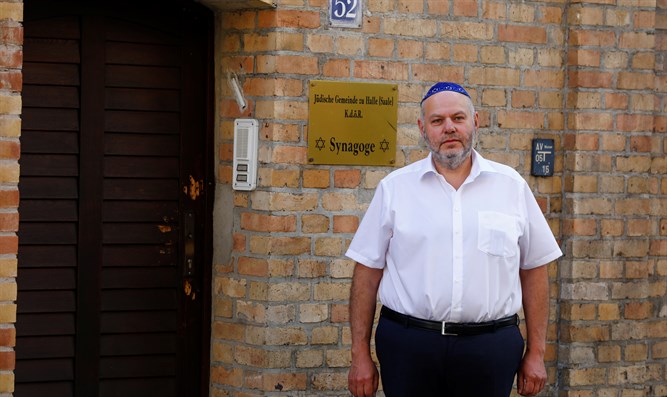
Now pockmarked with bullets, the door of the synagogue in Halle, Germany, that held out a far-right gunman last October was replaced on Tuesday.

The heavy wooden door will become the centerpiece of a memorial to the attack and the two bystanders killed by the assailant, The Associated Press reported.

Its removal comes as the suspect, Stephan Balliet, is standing trial at the state court in Naumburg.

The gunman tried but failed repeatedly to force his way into the synagogue in Halle, in eastern Germany, with 52 worshipers inside during High Holiday services before opening fire near the synagogue and at a kebab shop, killing two. The assailant said that Jews are “the root of all problems.”

A manifesto believed to be written by the alleged attacker was posted online before the shooting and distributed by sympathizers on the messaging app Telegram. Written a week before the shooting, the manifesto said his objective was to “kill as many anti-whites as possible, Jews preferred.”

On the first day of the trial, which began a week ago, Balliet repeated anti-Semitic conspiracy theories and anti-immigrant statements, and showed no remorse, Deutsch Welle reported.

Tensions high in Israel’s north as IDF expects Hezbollah to strike again

0

“Complex and tense days are ahead of us,” says IDF’s spokesman.

Tensions remain high on Israel’s border with Lebanon after a foiled Hezbollah infiltration attempt on Monday. The terror group vows it still plans revenge for the killing of one of its members last week.

Hours after the incident, Hezbollah said its planned retaliation will “surely come.”

“Our response is yet to come – the Zionists must only wait for punishment for their crimes,” it also said, part of a series of threats it made following the attack.

Hezbollah denied the infiltration on Monday ever took place. “Everything that was reported in the Israeli media – is not true. This is an invention,” it said in a statement.

Pro-Hezbollah elements even suggested that Israel had invented the incident to give the terror group the chance to take credit for an operation and announce that it had taken revenge without having to do so.

On Monday afternoon around 3:30 p.m., Israel reported a group of three-to-four Hezbollah terrorists tried to cross the border. According to Israel’s Channel 12, they were spotted by an alert soldier at an IDF outpost – a fresh, 19-year-old female recruit.

IDF reinforcements were quickly called to the area and engaged the Hezbollah forces. Reports on the Lebanon side said the terror cell fired a Kornet anti-tank missile at an Israeli tank, but this has not been independently confirmed.

The IDF then covered the area with smoke projectiles as a screen to prevent Hezbollah from targeting the IDF. One of the projectiles reportedly hit a house in the Shebaa Farms area on the Lebanon side. No injuries were reported.

After the incident, Prime Minister Benjamin Netanyahu warned that Hezbollah’s leader Hassan Nasrallah was “playing with fire.”

“Any attack against us will be met with great strength,” he said.

IDF Spokesman Hedi Zilberman said following the incident, “complex and tense days are ahead of us, we continue to work to defend the sector – IDF forces are ready and willing to continue as needed.”

Hezbollah says it wants revenge for the killing of Ali Kamel Mohsen Jawad in a July 20 airstrike in Damascus attributed to Israel.

(World Israel News).

Pence rips House Judiciary Dems over Barr hearing: They ‘wanted to be heard more than they wanted to listen’

0

VP pans mail-in voting, tells ‘The Story’ potential for ‘widespread fraud is very real’.

Vice President Mike Pence strongly criticized Democrats on the House Judiciary Committee Tuesday after they engaged in often heated questioning and commentary directed at Attorney General William Barr.

Pence told “The Story” host Martha MacCallum that the panel’s majority, led by Chairman Jerrold Nadler, D-N.Y., “wanted to be heard more than they wanted to listen.”

“Bill Barr is leading the Justice Department in this country with great integrity and brings a lifetime commitment to the rule of law,” the vice president said. “But to see it today, in the little bit that I was able to watch, it was clear that the Democrats wanted to hear themselves talk more than they wanted to hear from the attorney general of the United States.”

Pence specifically called out Nadler’s claim during the hearing that the Federal Protective Service dispatched agents to Portland, Ore., to quell violent rioting because “the president wants footage for his campaign ads.”

Since July 1, the vice president said, the Department of Homeland Security has reported that 188 federal law enforcement officials have been injured by protesters, who have used kerosene, rocks, explosives and lasers to cause physical harm to those agents.

“President Trump has made it clear, we will have law and order in our streets,” Pence said. “With [presumptive Democratic nominee] Joe Biden and the radical Democrats, they want to defund the police. We are going to fund law enforcement [and] we are going to stand up for law and order and that begins right in Portland.”

He also responded to Rep. Greg Stanton, D-Ariz., after the Phoenix lawmaker claimed during the hearing that Barr and Trump are fabricating and advancing “false conspiracy theories” about the pitfalls of large-scale mail-in voting.

“The integrity of the vote is paramount … the right to vote is at the heart of this democracy, and absentee balloting is a time-honored tradition,” Pence told MacCallum. “But what you see across this country, in Democrat-led states, is an effort for universal distribution of ballots without the accountability you have with absentee balloting. And when you combine that with states like California that actually allow what is called vote bundling or vote harvesting, you see where the entire ability for widespread fraud is very real.”

“[Y]ou will continue to hear from this administration a commitment to protect the ‘one person, one vote’ integrity of our election system…”

Turning to the subject of whether schools should reopen for in-person instruction this fall, Pence said it was important that the U.S. move in a “measured way,” while respecting the fact that in-person learning is crucial to a child’s education.

“Martha, I’m married to a school teacher and she is getting ready to be back in the classroom this fall,” the vice president said. “We’ve got to get our kids back to school. There are going to be some states — and we follow the data on the White House coronavirus task force county by county and city by city –there are going to be some areas that will want to move in a more measured way and we will respect governors and states as they make those decisions.”

“[The] CDC put out guidance last week that recommended we get our kids for economic well-being and their health and well-being back into the classroom. We know the risk of the coronavirus to healthy children is very low. We know that there are real costs [to] disrupting education for special needs kids and disrupting nutrition. The reality is that our kids will be better off in school.”

(Fox News).

Israeli Tech Sector Saw 52% Rise in Number of Haredi Jews Employed Since 2014, Report Shows

0

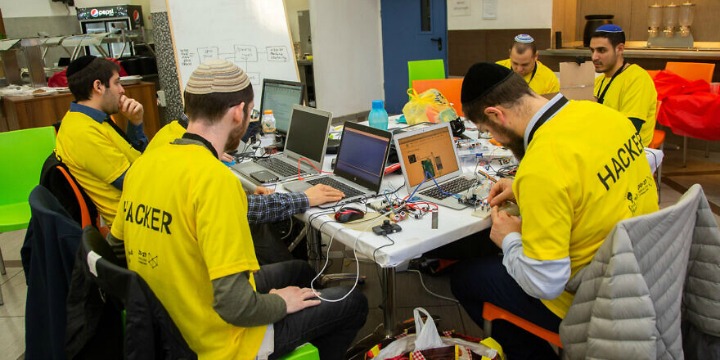
The number of ultra-Orthodox (Haredi) Jews working in the Israeli tech sector grew by 52% between 2014 and 2018, according to a new report released Tuesday.

The report was published by Israel Advanced Technology Industries (IATI), an umbrella organization of the tech and life science industries in Israel, and KamaTech, a nonprofit organization working to integrate Israel’s ultra-Orthodox population into its technology industry.

According to the report, the number of Haredim studying tech-related subjects, working in the sector, or starting their own companies is on the rise, yet their average salaries are significantly lower than the industry standard.

As of 2018, the report showed, the number of Haredim employed in the tech industry was 9,700. This still amounts to just around 3% of the total number of employees in the sector, while Haredim amount to some 12% of Israel’s population.

The rise in the number of Haredi tech employees goes hand in hand with a growing number of Haredi students in universities and colleges majoring in tech-related subjects. In 2014, 1,050 Haredi students studied tech-related subjects, amounting to 3.8% of students in the field, compared to 1,417 and 4.1% in 2018. This represents a 35% increase in the number of Haredi tech students.

When taking into account the number of graduates the leap is far more significant. According to the report, in 2008, only 19 ultra-Orthodox Jews graduated from an academic institution with a degree in a tech-related subject. This number multiplied by more than 11 in 2018, with 216 graduates.

In recent years, more and more Haredi women have entered the workforce, with 76% of working-age Haredi women employed in 2018, a slightly higher rate than 74.2% among the non-Haredi population. The number of employed ultra-Orthodox men, on the other hand, was just 51.7%, compared with 86.9% among the general population.

As of 2018, 71% of Haredi tech employees, 6,900, were women, compared to just 2,800 men. Of the total number of ultra-Orthodox female employees, 5% work in tech, slightly lower than 6.5% among non-Haredi women. Among Haredi men that are employed, just 3.6% work in tech, compared to 10.4% in the general population.

According to data from the Israel Tax Authority, the average salary of a Haredi tech employee is NIS 10,830 (approximately $3,170) a month, compared to an average monthly wage of NIS 22,479 (approximately $6,585) among non-Haredi tech workers. Haredi tech workers without an academic degree make an average of NIS 9,786 (approximately $2,870) a month, Haredim with a college degree in a relevant field make an average of NIS 16,692 (approximately $4,900) a month, and Haredi workers with university degrees in relevant fields make an average of NIS 25,698 (approximately $7,530) a month.

The report offers several explanations for the wage gap between Haredi and non-Haredi tech employees. As women account for the majority of the ultra-Orthodox tech workforce, the report suggests the gap results from these employees’ preference to work shorter hours and remain within a Haredi environment, which limits their employment options. Also, the report claims, Haredi women tend to be less career-oriented and more focused on providing for their families.

The good news appears to be that the wage gap narrows with experience. Comparing the wages of Haredi and non-Haredi women in tech suggests an NIS 1,986 (approximately $580) monthly gap for fresh graduates, an NIS 1,628 (approximately $480) gap one year after graduation, and a gap of just NIS 610 (approximately $180) four years after graduation. In addition, the wages of non-Haredi women see a slight decrease two years after graduation while the wages of Haredi women remain in a constant upward trend as experience accumulates.

According to a survey conducted by the Haredi Institute for Public Affairs, the majority of Haredi seminar (ultra-Orthodox high schools for girls) graduates in other sectors make less than NIS 6,000 (approximately $1,760) a month — these include 97% of Haredi women employed as secretaries, 82% of those employed in education, and around half of those working in accounting. In tech, however, just 10% of Haredi female employees make less than NIS 6,000 a month. Of all Haredi women in tech, 21% make NIS 6,000-NIS 7,999 (approximately $1,760-$2,340) a month, around 25% make NIS 8,000-NIS 10,000 (approximately $2,340-$2,930) monthly, and 44% make over NIS 10,000 a month.

According to data from Israeli government investment arm the Israel Innovation Authority (IIA), since it launched a special program for young companies, 100 startups founded by Haredi entrepreneurs applied and 33 received a grant, while, among the general population, around 42% of applications are approved for a grant. According to IIA, 5%-9% of the applications it receives now come from ultra-Orthodox entrepreneurs.

IATI and KamaTech’s report was presented to Israeli President Reuven Rivlin in a meeting at his residence Tuesday. “This report indicates tech is the optimal sector for integrating the Haredi population into the Israeli workforce, as it is a group focused on education and learning and is highly committed and dedicated,” Rivlin said in a statement. “There are no magic solutions when it comes to training,” Rivlin added, “and it is crucial to make sure that Haredi candidates do not fall short in skills compared to their peers in the general population.”

According to Rivlin, the integration of the Haredi population into the general workforce is in the direct interest of the State of Israel, whose continued prosperity depends upon it.

Especially at a time like now, when Israel is in a deep financial and employment crisis, it is crucial to accelerate the integration of Haredi workers within the country’s tech and general workforce, KamaTech CEO Moshe Friedman said in a statement. “With the right investment and budgets, it is possible to significantly strengthen the integration trend and the Israeli economy with it,” he said.

Any future plan should focus on increasing wages and improving tech training among the Haredi population, he added.

(Algemeiner).

Hundreds picket minister’s home after he tells cops to quash anti-PM rallies

0

Protesters also block main highway in Tel Aviv; attorney general sends letter to acting police chief, telling him not to cave to political pressure.

Hundreds of protesters gathered on Tuesday evening outside the Tel Aviv home of Public Security Minister Amir Ohana after he was recorded pressuring police brass to step up enforcement against demonstrators rallying against Prime Minister Benjamin Netanyahu.

The demonstrators then moved to block the Ayalon Highway, forcing police to redirect traffic.

Outside the Likud minister’s home, protesters stood behind a barricade chanting slogans against Ohana, the government, and police, while blowing vuvuzelas. They shouted, “Police, who do you protect?” “Shame,” “Who will protect us from the police?” and other slogans against the cops.

A neighbor of Ohana’s told The Times of Israel that the protest was larger than others that have been held outside his home in a Tel Aviv high-rise, though smaller than other recent anti-government protests.

Meanwhile, hundreds of people protested outside Netanyahu’s official residence in Jerusalem, pressing forward with a more than month-long campaign calling on the longtime leader to step down.

Demonstrators chanted the slogan that has become the rallying cry of the protests against Netanyahu while he stands trial on corruption charges: “Capital! Regime! Underworld!”

Netanyahu is on trial for a series of cases in which he allegedly received lavish gifts from billionaire friends and traded regulatory favors with media moguls for more favorable coverage of himself and his family.

The prime minister has denied any wrongdoing, accusing the media and law enforcement of a witch hunt to oust him from office, and has refused to leave office.

Protesters have also turned their attention to Ohana after he was reported to have pushed for police to crack down on demonstrations in Jerusalem outside Netanyahu’s official residence.

According to leaked recordings aired Sunday by the Kan public broadcaster, Ohana is seeking to challenge a High Court of Justice ruling that allowed the continued protests in Jerusalem against Netanyahu, and is applying immense pressure on police to handle demonstrators more severely.

In response to the leak, Attorney General Avichai Mandelblit sent a letter to acting police commissioner Moti Cohen Tuesday telling him to only make decisions based on professional considerations.

“Decision-making in regards to dealing with protests has been granted to the police under your leadership; only with your professional judgement and without [unrelated] considerations,” the Mandelblit wrote.

Protests have been held repeatedly over the past week near the Prime Minister’s Residence. The protests have drawn thousands of Israelis angry at government corruption, the handling of the coronavirus crisis, and other ills. There have been occasional scenes of violence at recent protests, often from police officers attempting to disperse the demonstrators, videos from the scene have shown.

Netanyahu and some of his supporters have spoken out against the protesters as “anarchists.”

Ohana has previously been reported to be pushing for the Jerusalem demonstrations to either be banned or relocated away from their usual site outside the official residence.

The recordings broadcast Sunday were from closed meetings attended by Jerusalem Police chief Doron Yadid, other top police officials and Ohana, whose ministry oversees the police.

“We cannot continue with this mess,” Ohana can be heard saying, referring to the protests. “We cannot continue with this anarchy. There is a difference between a protest and the events we have seen over the last few weeks.”

The High Court has approved the ongoing protests near the prime minister’s official residence in Jerusalem’s Rehavia neighborhood, angering some local residents who have petitioned the court to ban them, saying they have been disrupting their daily lives.

“I wish to challenge that ruling by the court,” Ohana told the top police officials. “Whoever wants to protest can protest, no problem. But not to make the lives of residents miserable.

“[The protesters] are taking over the sidewalks with sleeping bags and mattresses. I don’t know how to explain to the public why we forbid prayer and culture and art events but we don’t forbid this,” he said, referring to restrictions imposed to stem the coronavirus outbreak.

“Yesterday [we handed out] 160 fines for not wearing masks in the protest, which isn’t common,” Yadid can be heard saying. “Usually at protests [we] avoid that.”

However, that didn’t seem to satisfy Ohana.

“District commander, you know I appreciate you, but vandalism isn’t only smashing glass,” Ohana said. “Vandalism is also making residents’ lives miserable, desecrating state symbols, as happened yesterday, blocking the entrances to the Knesset, blocking roads, and of course violence against police officers. It is not something you can accept.”

The Israel Police commented on the report by insisting that despite the words of its district commander, it enforces mask wearing “also in protests, without discrimination and without any connection to the identity of the protesters or the subject of the protest.”

(Times of Israel).

WP Twitter Auto Publish Powered By : XYZScripts.com