Home Blog Page 1128

Malmo – Swedish Officials Shutter Malmo’s Only Kosher Meat Shop, Citing Health Reasons

0
Malmo – The health department in Malmo has shut down the Swedish city’s only supply of kosher meat, citing food sanitation reasons.


Inspectors this week raided the ICA Kvantum Malmborgs Limhamn shop, which for the past 20 years has sold frozen kosher meat per an agreement with the leaders of Malmo’s Jewish community of about 800 people, the Sydsvenskan daily reported Tuesday.

The reason given, according to Ilana Edner, a prominent member of the community, was that the Jewish community is not licensed to import food products. The inspectors cleaned out the small kosher department at ICA Kvantum and confiscated the products.

Sweden is one of only five countries where the slaughter of animals without prior stunning – a requirement for producing kosher and halal meat – is illegal. Since 2013, Sweden has also seen attempts to outlaw the import of kosher meat.

Some Swedish opponents of slaughter without stunning say it’s cruel, while others, often opponents of Muslim immigration, decry it as a custom that is foreign to Swedish traditions.

Malmo, where a third of some 350,000 residents are immigrants from Muslim-majority countries, has a disproportionately high prevalence of anti-Semitic attacks. Its anti-Semitism problem, which began in the early 2000s, has led hundreds of Jews to leave the city. Financial and employment considerations have also contributed to this trend.

Until the mid-1980s, the Jewish community sold meat products directly in a kosher shop it had in the city’s center. Amid downsizing, however, the shop was closed and the arrangement with ICA Kvantum reached.

“It was convenient to go Limhamn and buy kosher products there,” Edner said, naming the Malmo district where the shop that was raided sold meat. “Now we can’t do that anymore.”

Edner, a teacher, added that she has “no problems eating vegetarian, even vegan” in the absence of kosher meat.

“What I have a problem with is being forced to do so,” she said.


Source: VosIzNeias


Rabbi Lord Jonathan Sacks – Unfinished Symphony (Vezot Habracha 5779)

0


Each year, as we near the end of the Mosaic books and Moses’ life, I find myself asking: Did it really have to end that way, with Moses denied the chance to even to set foot on the land to which he led the people for forty tempestuous years? In the Heavenly Court, could Justice not have yielded to Mercy for the few days it would have taken Moses to cross the Jordan and see his task fulfilled? And for what was Moses being punished? One moment’s anger when he spoke intemperately to the Israelites when they were complaining about the lack of water? Can a leader not be forgiven for one lapse in forty years? In the words of the sages: Is this the Torah and this its reward?[1]

The scene in which Moses climbs Mount Nebo to see in the distance the land he would never enter is one of the most poignant in all Tanakh. There is a vast midrashic literature that turns Moses’ request “Let me cross over to see the good land beyond the Jordan” (Deut. 3:25) into high drama, with Moses mounting argument after argument in his defence only to be met by unbending refusal from Heaven: “Enough from you; do not speak to me of this matter again”. (Deut. 3:26) Why?

This is the man who, eighteen times in Tanakh, is called “God’s servant.” No one else is so described except Joshua, twice. His own obituary in the Torah reads: “Never again did there arise in Israel a prophet like Moses” (Deut. 34:10). Why was he treated so seemingly harshly by God among whose attributes are forgiveness and compassion?

Clearly the Torah is telling us something fundamental. What, though, is it? There are many explanations, but I believe the most profound and simplest takes us back to the beginning of beginnings: “In the beginning God created Heaven and Earth.” There is Heaven and there is Earth, and they are not the same.

In the history of civilisation, one question has proved hardest of all. In the words of Psalm 8: “What is man that you are mindful of him?” What is it to be human? We are an infinitesimal speck in an almost infinite universe of a hundred billion galaxies each with a hundred billion stars. We know that our lives are like a bare microsecond set against the almost-eternity of the cosmos. We are terrifyingly small. Yet we are also astonishingly great. We dominate the planet. We have ever-increasing control over nature. We are the only life form thus far known capable of asking the question, ‘Why?’

Hence the two temptations that have faced Homo sapiens since the beginning: to think of ourselves as smaller than we actually are, or greater than we actually are. How are we to understand the relationship between our mortality and fallibility and the almost-infinities of space and time?

Civilisations have regularly blurred the line between the human and the divine. In myth, the gods behave like humans, arguing, fighting and contending for power, while some humans – the heroes – are seen as semi-divine. The Egyptians believed that pharaohs joined the gods after death; some were seen as gods even during their lifetime. The Romans declared Julius Caesar a god after his death. Other religions have believed that God has taken human form.

It has proved exceptionally difficult to avoid worshipping the human founder of a faith. In the modern age, the blurring of boundaries has been democratised. Nietzsche argued that we would have to become like gods to vindicate our dethroning of God Himself. The anthropologist Edmund Leach began his Reith Lectures with the words, “Men have become like gods. Isn’t it about time that we understood our divinity?” As Jews we believe that this is too high an estimate of our, or anyone’s, humanity.

In the opposite direction humans have been seen, in myth and more recently in science, as next-to-nothing. In King Lear, Shakespeare has Gloucester say, “As flies to wanton boys are we to the gods. They kill us for their sport.” We are the easily discarded playthings of the gods, powerless in the face of forces beyond our control. As I pointed out in an earlier essay, some contemporary scientists have produced secular equivalents of this view. They say: there is nothing qualitatively to distinguish between Homo sapiens and other animals. There is no soul. There is no self. There is no freewill.

Voltaire spoke of humans as “insects devouring one another on a little atom of mud.” Stephen Hawking said that “the human race is just a chemical scum on a moderate size planet, orbiting round a very average star in the outer suburb of one among a billion galaxies.” Philosopher John Gray wrote that “human life has no more meaning than that of slime mould.” In Homo Deus, Yuval Harari states that, “Looking back, humanity will turn out to be just a ripple within the cosmic data flow.”[2]

Judaism is humanity’s protest against both ideas. We are not gods. And we are not chemical scum. We are dust of the earth, but there is within us the breath of God. What is essential is never to blur the boundary between Heaven and Earth. The Torah speaks only obliquely about this. It tells us that there was a time, prior to the Flood, when “the sons of God saw that the daughters of man were lovely, and they married whomever they chose” (Gen. 6:2). It also tells us that, after the Flood, humans gathered in a plain in Shinar and said, “Come, let us build ourselves a city and a tower that reaches heaven, and make a name for ourselves” (Gen. 11:4). Regardless of what these stories mean, what they speak of is a blurring of the line between Heaven and Earth – “sons of God” behaving like humans and humans aspiring to live among the gods.

When God is God, humans can be human. First, separate, then relate. That is the Jewish way.

For us as Jews, humanity at its highest is still human. We are mortal. We are creatures of flesh and blood. We are born, we grow, we learn, we mature, we make our way in the world. If we are lucky we find love. If we are blessed, we have children. But we also age. The body grows old even if the spirit stays young. We know that this gift of life does not last forever because in this physical universe, nothing lasts forever, not even planets or stars.

For each of us, therefore, there is a river we will not cross, a promised land we will not enter and a destination we will not reach. Even the greatest life is an unfinished symphony. Moses’ death on the far side of the Jordan is a consolation for all of us. None of us should feel guilty or frustrated or angry or defeated that there are things we hoped to achieve but did not. That is what it is to be human.

Nor should we be haunted by our mistakes. That, I believe, is why the Torah tells us that Moses sinned. Did it really have to include the episode of the water, the stick, the rock and Moses’ anger? It happened, but did the Torah have to tell us it happened? It passes over thirty-eight of the forty years in the wilderness in silence. It does not report every incident, only those that have a lesson for posterity. Why not, then, pass over this too in silence, sparing Moses’ good name? What other religious literature has ever been so candid about the failings of even the greatest of its heroes?

Because that is what it is to be human. Even the greatest human beings made mistakes, failed as often as they succeeded, and had moments of black despair. What made them great was not that they were perfect but that they kept going. They learned from every error, refused to give up hope, and eventually acquired the great gift that only failure can grant, namely humility. They understood that life is about falling a hundred times and getting up again. It is about never losing your ideals even when you know how hard it is to change the world. It’s about getting up every morning and walking one more day toward the Promised Land even though you know you may never get there, but knowing also that you helped others get there.

Maimonides writes in his law code that, “Every human being can become righteous like Moses our teacher or wicked like Jeroboam.”[3] That is an astonishing sentence. There only ever was one Moses. The Torah says so. Yet what Maimonides is saying is clear. Prophetically, there was only one Moses. But morally, the choice lies before us every time we make a decision that will affect the lives of others. That Moses was mortal, that the greatest leader who ever lived did not see his mission completed, that even he was capable of making a mistake, is the most profound gift God could give each of us.

Hence the three great life changing ideas with which the Torah ends. We are mortal; therefore make every day count. We are fallible; therefore learn to grow from each mistake. We will not complete the journey; therefore inspire others to continue what we began.

[1] Berakhot 61b.

[2] Covenant and Conversation, Chukkat 5778.

[3] Hilkhot Teshuvah 5:2.


Source:  Covenant and Conversation


Jerusalem: Hit & Run Victim Identified as Pianist Chaim Tukachinsky Z”L; Driver to Remain Incarcerated

0

Jerusalem: Hit & Run Victim Identified as Pianist Chaim Tukachinsky Z”L; Driver to Remain Incarcerated


The Jerusalem District Court on the first day of Chol Hamoed Sukkos accepted an appeal filed by Israel Police. As a result, Spanish journalist visiting in Israel, Julio De LaGuardia, will remain incarcerated and will not be released to house arrest. The lower Jerusalem court ruled that De LaGuardia may remain under house arrest in the Spanish Consulate, but the District Court overturned that ruling at the behest of police.

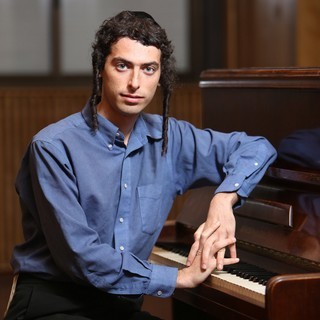
De LaGuardia, 59, is the hit-and-run driver who struck and killed chareidi pianist Chaim Tukachinsky z”l. Police report De LaGuardia has admitted to operating a vehicle while intoxicated. The accident took place during the first night of Yomtov in the area of Paris Square in Yerushalayim, as reported by YWN-Israel.

Tukachinsky was heading back from the Kosel when the fatal accident occurred. Police have determined that De LaGuardia was intoxicated while operating the vehicle, and he fled the scene, only to be arrested about 90 minutes later by police in the Mt. Scopus area of the capital.

According to other reports, Tukachinsky was the son of a Kiryat Motzkin chareidi family and the 30-year-old pianist was a prodigy, having begun his musical career in the Kiryat Motzkin music conservatory. He was also a graduate of the Jerusalem Academy of Music and Dance, in both piano and composition. He was also a winner of the America-Israel Cultural Foundation (AICM) award for the years 2007-2009.

A published bio on the late young pianist adds, “Since 2012 Chaim is involved in musical theatre productions in Israel. Musically directed ‘Seussical’, ‘Peter Pan’, ‘The Producers’ (for Israel Musicals), ‘Next to Normal’, ‘First Date’, ‘Merrily we Roll Along’, ‘Ordinary Days’ (AACI Jerusalem), ‘the Sound of music’, ‘Singin’ in the Rain’, as well as several Broadway reviews. Played in productions of ‘Cats’, ‘Little night Music’ and others.

“Chaim’s output as a composer spreads upon wide and diverse spectrum of genres: music for solo instruments, chamber music, vocal music, choral and orchestral music, as well as music for the stage. Some of his works were performed by leading Israeli ensembles, such as the ‘Caprisma’ ensemble and the Beersheva Sinfonietta.”

BeChadrei Chareidim spoke with the niftar’s mother, Yael, who explained “He wanted to make a Kiddush Hashem with his music”. She stated strongly that the driver should remain in custody for killing such a musical neshama.

Yael added her late son attended yeshiva ketana in Kiryat Motzkin but did not want to continue in yeshiva gedola. He realized his musical talents at a young age and wanted to realize these talents by pursuing a musical career. She added that he had a chavrusa to continue daf yomi, adding “I hope he goes directly to Gan Eden. He recited slichos in Elul at the Kosel and had an aliyah on Yom Kippur. He went to mikve before Sukkos and davened at the Kosel. He is mamosh pure and holy.”

She added that he used to live in Geula but moved to Yaffo Street to be closer to the Kosel, where he davened every morning and night. Yael explained “he had a special connection to the Kosel”.

The levaya began on Tuesday, 16 Tishrei, at 3:00PM at Shamgar in Jerusalem and kvura was in Har HaZeisim.

Written & published on the first day of Chol Hamoed Sukkos in Yerushalayim.

(YWN Israel Desk – Jerusalem)

UK exports to Israel soar 75 percent in first half of 2018

0

UK exports to Israel soar 75 percent in first half of 2018

By Mara Vigevani/TPS • 25 September, 2018

As Britain prepares to leave the EU, its exports to Israel for the first half of 2018 were up 75 percent, according to a statement by the British Embassy in Israel published Tuesday, based on  Israeli Central Bureau of Statistics.

UK Exports to Israel totaled $3.45 billion between January and June 2018, up from $1.97 billion in the first half of 2017.

The figure makes the UK Israel’s largest trade partner in Europe (though not the EU), and second in the world after the U.S.

In June alone, UK exports to Israel grew from $335.7 million in 2017 to $606.2 million this year.

Leading export sectors from the UK to Israel were mineral products up by three times to   $428.3 million and machinery and electrical equipment up 75% to $62.4 Million in the period from January to June.

Exports of animal products and live animals, however, were down by 80 %.

According to the data of the Israeli Central Bureau of Statistics total UK-Israel trade grew by 17%, on top of record levels in 2016 and 2017 from $3.66 billion in 2016 to $4.30 billion in 2017.

Bilateral trade between the UK and Israel has grown by 8% in the first half of 2018 – from $4 billion in 2017 to $4.33 billion in 2018.

Commenting on the figures Barry Grossman, Director of International Trade at the British Embassy in Israel, said: “The new figures reflect what we see on the ground: more British companies are interested in the Israeli market, and many Israeli companies realize that the next year presents a huge opportunity to create new business contacts in the world’s fifth largest economy and its biggest financial hub”.

British Prime Minister Theresa May  in a speech in London during September underlined the importance of economic relations with Israel

“As the United Kingdom forges a bold new future outside the European Union, we will be seeking free trade deals with our partners around the world. And as a great start-up nation, an engine of enterprise, a world leader in technology, and a great friend of Britain, I want to see an ambitious free trade deal between our countries,” she said.

Since Britain voted in June 2016 to leave the EU, scheduled for March 29, 2019, Israeli investment in Great Britain has boomed despite overall fears about the impact that London’s coming exit from the EU will have on the country’s economy. Israeli investment in the UK increased by 33% since the vote.

“But Israelis do particularly well when there are unknown factors,” Hugo Bieber, chief executive of UK Israel Business, a bilateral chamber of commerce, told TPS.

Trump says ‘two-state solution works best’

0

Trump says ‘two-state solution works best’

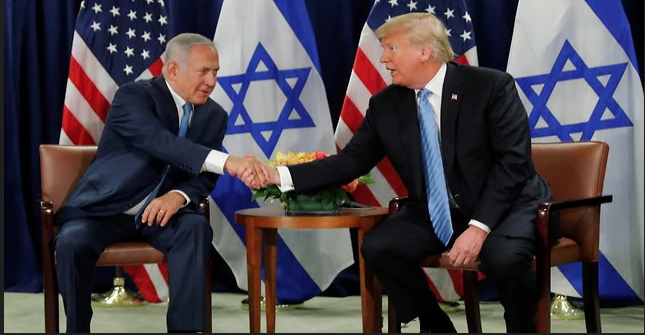
In meeting on sidelines of UN General Assembly between Netanyahu and Trump, US president states publicly for first time that he ‘likes the two-state solution’, says it’s his dream to strike peace deal before end of his first term.


US President Donald Trump said on Wednesday that he believes that the two-state solution “works best”, in what was a first public endorsement of the idea since entering the White House.

The remarks, which were made during a meeting with Prime Minister Benjamin Netanyahu on the sidelines of the UN General Assembly in New York, shed light on the possible basis of a long-awaited peace initiative to be launched by the US administration between Israel and the Palestinians.

“I like a two state solution. That’s what I think works best … That’s my feeling,” said Trump.

Trump also said he wanted to unveil a peace plan in the next two to three months.

“It is a dream of mine to get that done prior to the end of my first term,” Trump said. “I don’t want to do it in my second term. We’ll do other things in my second term,” he said. “I think a lot of progress has been made. I think that Israel wants to do something and I think that the Palestinians actually want to do something.”


Netanyahu has said that any future Palestinian state must be demilitarized and must recognize Israel as the nation state of the Jewish people.

“I really believe something will happen. They say it’s the toughest of all deals,” Trump said.

Asked what Israel might have to give up in return for the embassy’s move to Jerusalem, Trump replied: “I took probably the biggest chip off the table and so obviously we have to make a fair deal, we have to do something. Deals have to be good for both parties … Israel got the first chip and it’s a big one.”

Trump gave his endorsement of the two-state solution moments after Netanyahu praised the American-Israeli alliance as never being stronger “under your leadership.”

“I want to thank you for the extraordinary support that you have shown for Israel in this building in the UN. No one has backed Israel like you do and we appreciate it,” Netanyahu told the president in his opening remarks.

“This it the first time we are meeting after the American Embassy has been moved to Jerusalem,” he added. “You’ve changed history and you’ve touched our hearts.”

Trump’s statement also comes in stark contrast to the response given to whether he supports the two-state solution during a meeting between the two leader in Washington in February 2017 when he avoided explicitly backing the idea.

“I’m looking at two-state and one-state and I like the one that both parties like. I’m very happy with the one that both parties like,” he said at the time.

On Tuesday, Trump indicated in a speech to the UN General Assembly that his peace initiative was moving away from the two-state solution.

“America’s policy of principled realism means we will not be held hostage to old dogmas, discredited ideologies and so-called experts who have been proven wrong over the years time and time again,” he said in a 35-minute speech.

Speaking shortly after Trump, Jordan’s King Abdullah told the UN General Assembly that “only” a two-state solution based on the pre-1967 borders with east Jerusalem as the capital of a future Palestinain state could produce comprehensive peace deal between Israel and Palestinians.

The sentiment of clinging to the two-state solution was then echoed by Egypt’s President Abdel Fattah Sisi at the UN.

Doubts have mounted over whether Trump’s administration can secure what he has called the “ultimate deal” since December, when the US president recognized Jerusalem as Israel’s capital and then moved the US Embassy there.

“It is a dream of mine to get that done prior to the end of my first term,” Trump said of an agreement on the conflict.

Jerusalem is one of the major issues in the Israeli-Palestinian conflict. Both sides claim it as a capital. Trump’s move outraged the Palestinians, who have since boycotted Washington’s peace efforts, led by Trump’s son-in-law and advisor, Jared Kushner.

Source: YNET News.  Reuters contributed to this report.

Belgium suspends aid to PA education ministry for naming schools after terrorists

0

Belgium suspends aid to PA education ministry for naming schools after terrorists


The Belgian Ministry of Development Cooperation has announced that “the glorification of terrorism or perpetrators of terrorist acts is not acceptable under any circumstances.”


In response to a report that the Palestinian Authority had named two schools after terrorist Dalal Mughrabi, Belgium has severed all financial support to the P.A. Ministry of Education. Palestinian Media Watch (PMW) exposed that Belgium had forced the P.A. to rename a school funded by the Belgian government due to it being named after a terrorist, but on the very same day, the P.A. had named two other schools in the same neighborhood after the same terrorist.

In response to the P.A.’s mockery of Belgium, the Belgium Ministry of Development Cooperation has cancelled all funding of P.A. schools until no schools are named after terrorists, not only those funded by Belgium.

“Belgium regrets the naming of the two other schools, which were not built with Belgian funds. The glorification of terrorism or perpetrators of terrorist acts is not acceptable under any circumstances. Our country has repeatedly conveyed the Belgian position to the Palestinian Ministry of Education. As long as terrorism is glorified through school names, Belgium cannot continue to cooperate with the Palestinian Ministry of Education and budgets for school building will be suspended.”

In September 2017, Palestinian Media Watch published a special report exposing that the P.A. Ministry of Education systematically name schools after terrorists and has named at least 32 schools after terrorists and three after Nazi collaborators. Some 41 school names glorify “Martyrs” and “Martyrdom.”

PMW also reported that one of the schools named after Dalal Mughrabi, a terrorist who led the murder of 37 civilians, was built using money from the Belgium government. Initially the school was named “The Beit Awaa School,” and subsequently was renamed the “Dalal Mughrabi Elementary School” without the Belgium donors being notified.

The government of Belgium immediately condemned the use of its funding for the purpose of glorifying terrorists, and demanded that the name of the school it had funded be changed.

Almost a year later, in July 2018, PMW found and exposed that despite Belgium’s complaints, the school was still named after terrorist Dalal Mughrabi. PMW’s report led to further pressure from Belgium, and the P.A. finally changed the name of the school last month to “The Belgian School.”

However, in a show of contempt for Belgium, the P.A. simultaneously renamed a nearby school after the same terrorist, giving it the name “The Martyr Dalal Mughrabi Elementary School.” In addition, it publicly laid the foundation for another school named “The Second Dalal Mughrabi Republic School.”

Belgium has since responded with a full cancellation of all funding of P.A. schools until no schools are named after terrorists, not only those funded by Belgium.

Source: JNS

Bnei Brak: Quadruplets Born to Newly Married Chareidi Couple

0

Bnei Brak: Quadruplets Born to Newly Married Chareidi Couple


A young avreich and his wife, married 13 months ago, became the parents of quadruplets on erev Sukkos; three girls and a boy. All appeared healthy, B”H.

During the pregnancy, the couple was reportedly told they will be having twins and the birth of quadruplets came as a surprise.

The avreich’s parents are from Bnei Brak and his wife’s parents live in Yerushalayim. The quads were born in Beilinson Hospital in Petach Tikvah a few hours before candle lighting for the first day of Sukkos. They have since been transferred to Schneider Children’s Hospital in the city for observation.

The avreich on Yomtov davened in Beit Knesset Ishei Yisrael in Bnei Brak on the first day of Yomtov, asking the gabbai to make a mi’sheberach for his four children. The young couple has yet to decide on names for the girls, which they hope will take place in the coming days.

A friend of the avreich told Kikar Shabbos News they are planning a large Bris to show hakoras hatov to HK”BH. The new mom remains in the hospital, and plans to take her four children and rest in Telshe Stone when they are released. She hopes that during her stay, she will also receive advice as to how to become an instant mother of four.

The girls weighed in at 1.5 kilograms (3.3 lbs.) at birth and the boy was 1.2 kilograms (2.6 lbs.).

Source: (YWN Israel Desk – Jerusalem)

US Removing Some Missile Systems from Middle East

0

US Removing Some Missile Systems from Middle East


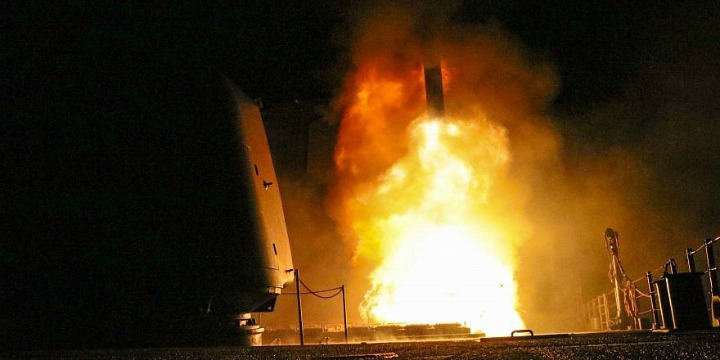
The United States is pulling some of its anti-aircraft and missile batteries out of the Middle East, The Wall Street Journal reported on Wednesday, citing US military officials.

The Pentagon will pull out four Patriot missile systems from Jordan, Kuwait, and Bahrain next month, the report said, adding that the realignment step marks a shift of focus away from long-lasting conflicts in the Middle East and Afghanistan to tensions with China, Russia, and Iran.

Two Patriot missile systems will be redeployed from Kuwait, and one each from Jordan and Bahrain, the report said. Patriots are mobile missile systems capable of shooting down missiles and planes.

The report comes amid rising rhetoric against Iran from the United States, which earlier this year pulled out of the Joint Comprehensive Plan of Action, the 2015 deal in which Tehran agreed to curb its nuclear work in return for the lifting of most Western sanctions.

Meanwhile, Russia and the United States have been facing diplomatic rifts over Russia’s 2014 annexation of Crimea from Ukraine, involvement in the Syrian conflict, and alleged meddling in the 2016 US presidential election.


Source:   Reuters and Algemeiner Staff

Dozens of Israelis trapped in India after fierce storms

0

Dozens of Israelis trapped in India after fierce storms

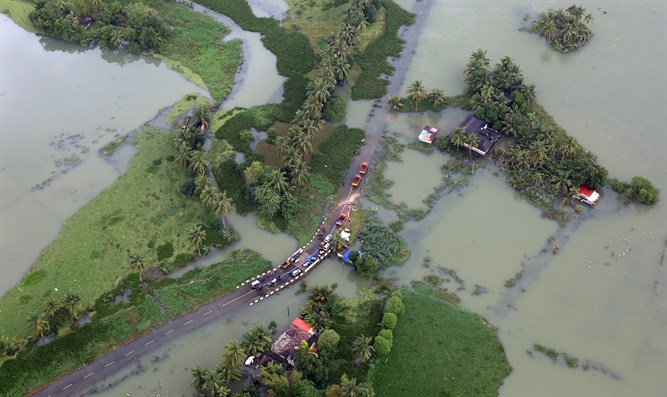
Israelis await rescue by helicopter after floods, landslides trap them in and around Manali, India.


Dozens of Israeli tourists have been stranded in Manali in northern India after a storm caused massive flooding and landslides.

The Israelis have reported power outages, communication problems and particularly cold weather.

Two Israelis, aged 28, were evacuated Wednesday by a civilian helicopter with the help of their insurance company after suffering from altitude sickness.

In addition, several Israelis were stuck at a roadside inn along with another 30 jeeps that had to stop until the storm died down. At the moment there is no communication with the Israelis but a civilian helicopter is on scheduled to rescue them.

In the Sisi area, nine Israeli travelers are waiting for military jeeps that are supposed to arrive from Manali and rescue them, because the roads in the area are not suitable for regular vehicles.

There are about 20 Israelis in Kaza, but since the basic living conditions there are relatively good, they were asked to wait until the main roads are cleaned and opened in the next two days. If necessary, their rescue will also be carried out with helicopter assistance.

The Foreign Ministry stated that at this point there is one detached connection in the North India region.


Source: Israel National News

WP Twitter Auto Publish Powered By : XYZScripts.com