


A Jewish couple who recently moved to a small town in New Mexico believe they were targeted with a burning cross on their lawn because of anti-Semitism.
Tom and Merrie Bigham moved to Mountainair, New Mexico, which has about 850 residents, a year and a half ago.
According to KRQE, on August 19, while taking an early morning walk with the family dog, Tom Bigham said that he discovered a burned cross in their yard.
They contacted the local police to file a report. There are no suspects so far. The couple believe they were targeted for being Jewish as a burning cross – which the ADL describes as “one of the most potent hate symbols” – has long been identified as a form on intimidation against Jews and African Americans used by the Ku Klux Klan.
The police report stated that the vandalism is being investigated as a hate crime. Tom Bigham also contacted the FBI.
“He walked around with me, he took some pictures. I don’t feel safe here at all,” he said.
The couple also detailed being harassed at night by someone who repeatedly drove by their house and flashed their headlights at them. The incidents led them to put up a fence.
We’re fairly new residents here,” Merrie Bigham told KRQUE. “It’s important for us to just feel safe.”
Source: Arutz Sheva

NEW YORK (VINnews) — An Israeli citizen was stabbed to death in the Moroccan city of Tangier on Wednesday, according to a report by ZAKA, the Israeli rescue group which was working to bring the body of the victim to Israel for burial.
Reports in Morocco say the victim, identified as the 36-year-old owner of a kosher restaurant in the city, was apparently giving food to a homeless person whom he was acquainted with when he was attacked and stabbed with a small knife. The assailant attempted to escape but was apprehended by police.
The victim died on the way to the hospital.
Police are also investigating the possibility that the attack, which comes a few months after Israel established formal relations with Morocco, stemmed from antisemitic or nationalistic motives. In the wake of the establishment of the bilateral diplomatic relations, Algeria decided to cut of ties with Morocco.
ZAKA reported that “an Israeli citizen was stabbed to death in Morocco. The circumstances are being investigated by the local police. The Foreign Ministry and ZAKA are working to bring his body to Israel.”
Source: Vosizneias

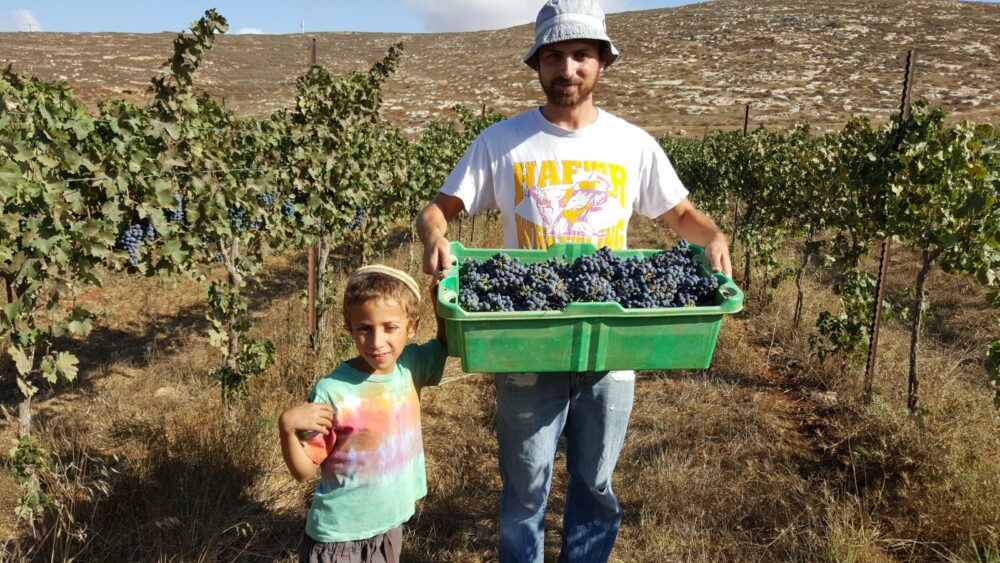
(August 26, 2021 / Israel21c) Starting the second week of September, Israeli organic farmer Ben Rosenberg will stop planting in the field. He will grow his veggies in raised containers inside fabric-covered hothouses until next September.
The hothouse setup was expensive, and he will only be able to grow about half the usual 40 seasonal varieties he raises in the field during a normal year. But it’s not going to be a normal year. The year 5782 on the Jewish calendar—starting at sundown on Sept. 6—is a sabbatical year for the land.
Any previously planted vegetable, flower or fruit that grows in the soil during the sabbatical year has a special sanctity. It must not be wasted or sold—it should be made available freely to anyone, in acknowledgment that the land is God’s, not ours.
Farmers choosing to practice shmita more literally can use various methods to continue providing produce to the market. One option is to grow hydroponically or in raised containers, as Rosenberg does.
His quarter-acre of shmita hothouses were built under rabbinical supervision to ensure the plants have no contact with the soil in his three-acre field.
“The ground is the best way to grow food because it’s the natural environment, but there’s no doubt that if the land rests it replenishes itself. I saw that when I started growing here 13 years ago,” he said.
Simple crop rotation could accomplish that goal, but shmita is a larger concept and is meaningful to this transplanted American.
“It’s an emotional thing for me,” said Rosenberg. “To be able to do a mitzvah [commandment] that is connected to the land is very special.”
‘A wonderful experience’
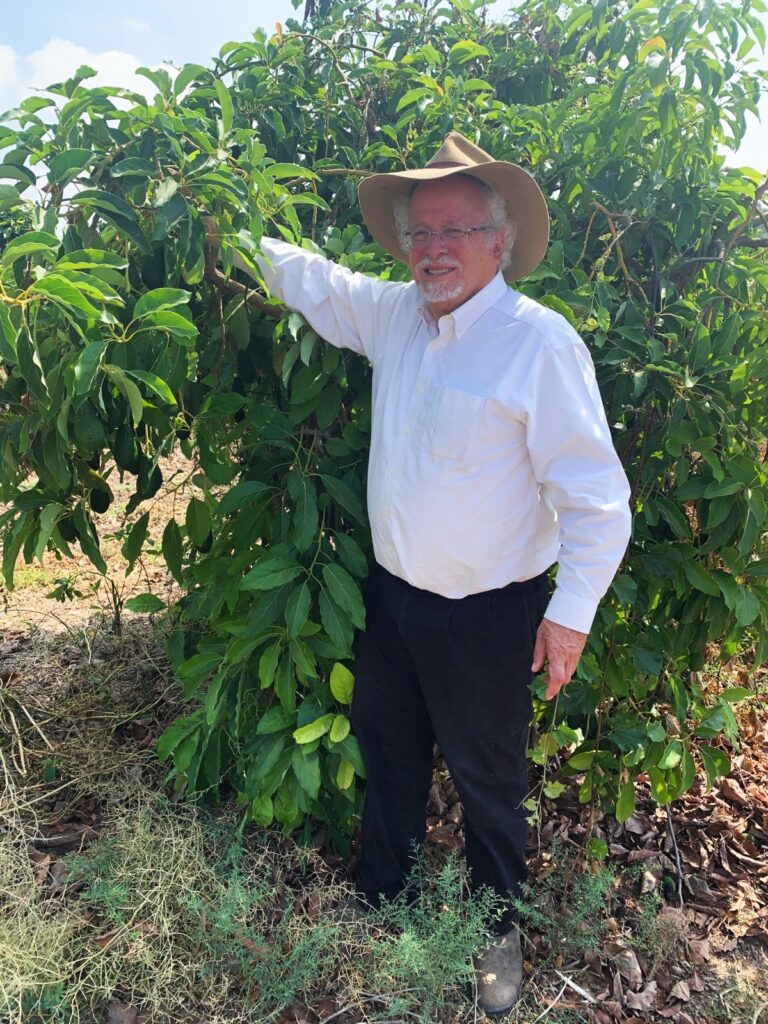
Rehovot-based patent attorney Sandy Colb agrees.
Colb’s charity farm, Hatov V’hameitiv, provides 50 tons of fruits and vegetables each week from approximately 200 acres of leased, bought and borrowed fields. The harvest is distributed to 35 social-service agencies for allocation to nutritionally challenged Israeli populations.
In sabbatical years, he and his farm team consult with a local rabbi to make sure they strictly adhere to rules about resting the soil.
“I think shmita is a great mitzvah, and we do it right. It’s rather complex, but it forces you to do things in a different way,” said Colb. “You just have to plan it very carefully and, with the proper attitude, it’s a wonderful experience.”
Much of his acreage is devoted to fruit trees that produce perennially.

“Citrus and most other tree crops form before shmita begins and can be picked during the shmita year,” he explained.
Fruit that forms during the sabbatical year will have the special sanctified status even though it will be picked after shmita is over.
He added that “vegetables are different” because they must be planted anew each season.
Some field crops can be planted early to avoid planting during the seventh year. Colb raises veggies such as tomatoes and cucumbers in greenhouses, disconnected from the ground.
He makes a point not to furlough any employees during shmita, “but we will use contractors less toward the end of the year because we won’t be planting.”
Ag-tech for shmita
In the late 1950s, the Israeli Ministry of Agriculture established a Unit for Agriculture According to the Torah at the ministry’s Agricultural Research Organization-Volcani Center.
Pioneered by Moshe Sachs, a founder of Kibbutz Shaalbim, this unit experimented with solutions for growing crops without violating shmita rules, such as raising roses in hay-bales rather than in the ground.
Joshua Klein took over the unit in 1989. Arriving with a Ph.D. in plant science from Cornell University, Klein began introducing techniques for managing fruit orchards and vineyards during shmita.
One innovation is chemical thinning, which reduces the number of flowers to promote bigger, higher-quality fruit without performing any prohibited pruning.
Another project was developing seedling treatments to induce drought resistance so that crops can be sown early, before shmita and the rainy season begin.
“We have an experiment funded by the chief scientist of the Ministry of Agriculture on early [vineyard] pruning in the fall before Rosh Hashanah of a shmita year, rather than the usual timing in the spring, if you want to have a yield of grapes during shmita,” said Klein.
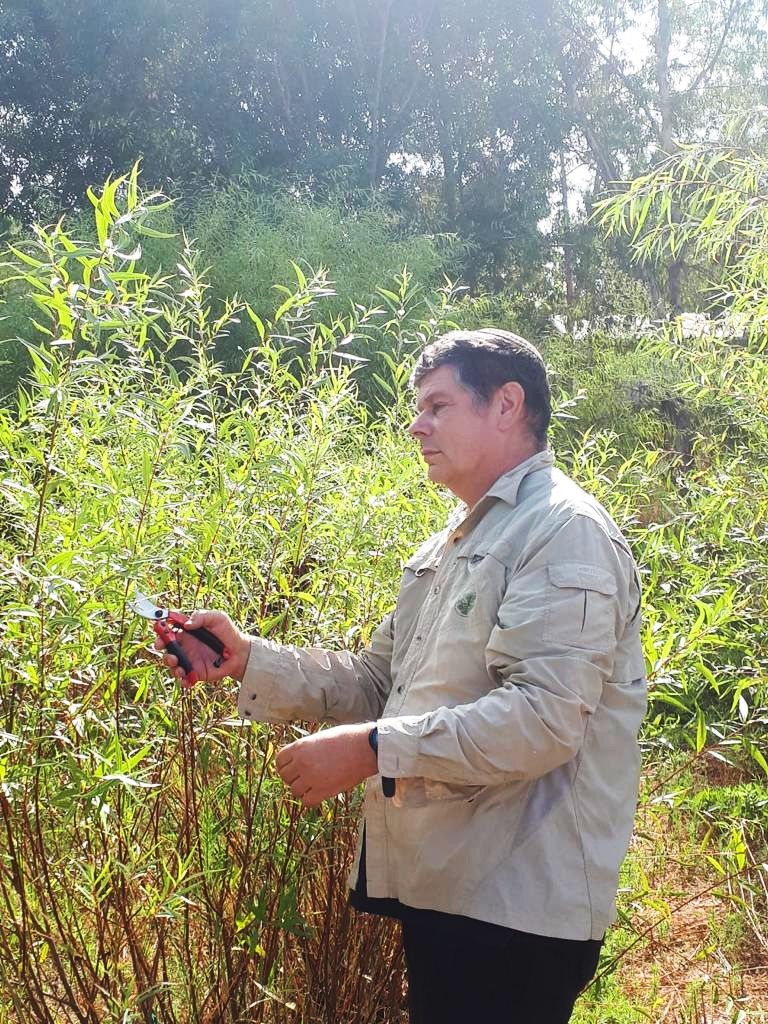
“If you don’t want to have a yield at all, you can do extreme pruning and the vines will only yield in the eighth year while renewing the vineyard.”
The unit’s plant scientists also are trying to extend the storage of produce harvested in the sixth year so that it can be sold in the seventh year.
Experimental approaches range from wrapping in plastic (partially successful with citrons) to spraying with mint oil (more successful for potatoes than carrots).
“All of these projects have relevance to farmers who don’t keep shmita, as well as to farmers outside Israel,” emphasizes Klein, who lectures across the world and answers questions from agriculture students, farmers and rabbis.
He explains that shmita applies only within the borders settled by the ancient Israelites upon their return from Egyptian slavery. This excludes the southern Arava Valley and large portions of the Negev, where farming continues as usual.
Advantages and disadvantages
According to Klein, the main ecological advantage of letting the land lie fallow for a year is that diseases cannot infect unplanted soil.
“Nematodes—worm-like animals that live in the ground and chew on roots, and thus damage and infect plants with disease—die from lack of food. The same can happen with other diseases because, with no food, there is no place for the disease to remain established, so you start the eighth year with a cleaner slate,” said Klein.
“On the other hand, letting weeds grow freely during shmita consumes water stored in the ground that could otherwise be used for crops after shmita, and makes for a very large investment in time and money to return the field to a productive state,” he added. “We developed methods of managing weeds in fallow fields to save water and effort.”
There is another advantage, that he can’t prove scientifically.
“I do not understand the reason, but wine from the grape harvest of shmita has been a superior vintage in four out of the five shmita years I have been in Israel,” he says.
Grape giveaway
Ari Pollack is a partner in Tom Winery, founded after the sabbatical year that concluded at Rosh Hashanah 2008.
The boutique operation produces about 4,500 bottles annually from its cabernet sauvignon, cabernet franc, merlot and shiraz grapes.
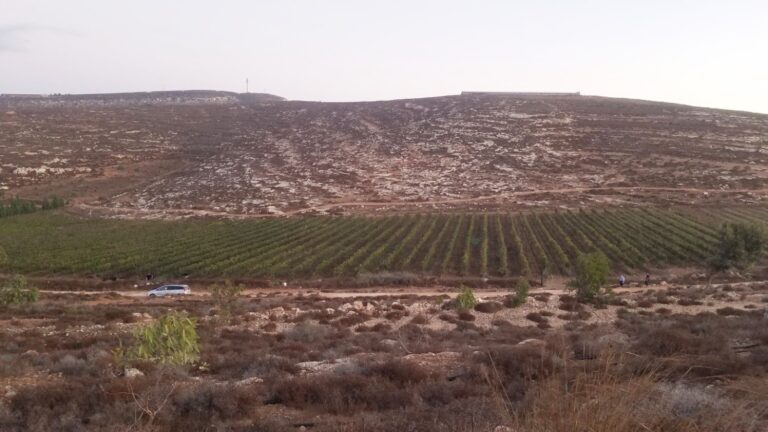
When their first shmita approached in 2014, Pollack and head grape-grower/winemaker Tomer Pnini pruned the vines in their seven-and-a-half-acre Kerem Meirav vineyard just before Rosh Hashanah.
“It’s risky to do it before the fall because the vineyard can ‘wake up’ early, but we were okay,” says Pollack, who works in high-tech on the side.
The partners took seriously the Bible’s admonition not to sell or waste the shmita fruit.
“When our grapes were ready, we sent messages on Facebook and email that anyone could come pick for free, and we would help them make wine from the grapes they picked,” Pollack said. “Everything was picked.”
A powerful message
To prepare for the coming shmita, Pollack and Pnini stepped up wine production by 50 percent to 70 percent as a hedge against lost income in the seventh and eighth years.
But pre-shmita pruning may not be possible, because Rosh Hashanah comes early this year.
“We might still be harvesting the sixth year after the holiday. If so, we won’t be able to prune for a long time because the point of pruning is to get better fruit and you can’t do that after shmita begins,” explained Pollack.
To find a solution, they may consult with experts such as Yishai Netzer from the chemical engineering department of Ariel University, who is testing methods of pruning before shmita.

“It’s a big test of faith to take a break from working the land,” Pollack admitted. “Especially in today’s global market where you can get anything anytime.”
Yet he and Pnini find shmita meaningful.
“Everyone is talking about social justice and bridging gaps between poor and rich, and here we have something every seven years where there is no rich and no poor; everyone is equal. To remember that the land is His, not ours—it’s a pretty powerful message,” says Pollack.
Shmita innovations
Agronomists from the nonprofit Institute for Torah and the Land of Israel (Machon HaTorah Ve’HaAretz) teach Israeli municipalities how public gardening can follow shmita rules.
Prior to the sabbatical year, they switch from annuals to perennials and perform seasonal treatments. During the year, they only preserve and maintain existing trees and plants.
The institute also educates the public about home gardening during shmita, and mechanisms for distributing, acquiring and handling seventh-year produce.
“It is very important that in our gardens we let the land rest and acknowledge that the fruits are not ours. We may maintain our gardens but allow everyone to come and harvest what was planted before shmita,” says Rabbi Moshe Bloom of the institute’s English-language department.
To ensure seeds planted early before Rosh Hashanah don’t sprout and die before the rainy season, the institute advises farmers to sow more densely and deeply and avoid watering. This way, the seeds will sprout only after the early fall/winter rains arrive.
One of the institute’s agronomists bought a special refrigerator in Europe and found a unique use for it in Israel—keeping heads of bug-free cabbage fresh for three months. This enables farmers to plant extra cabbage, pick it just before shmita begins, store it and sell it for the first three months of the sabbatical year.
“Maybe these technologies are the fulfillment of the Torah’s promise of a surplus in the sixth year,” said Bloom. “We won’t have to rely on sources outside of Israel and we will have enough to eat in the seventh and eighth years.”
The Institute for Torah and the Land of Israel offers tours of its innovations regarding shmita and other biblical agricultural laws. Click here for information.
This article was first published by Israel21c.

Video released by a team of federal investigators shows more evidence of extensive corrosion and overcrowded concrete reinforcement in a Miami-area condominium that collapsed in June, killing 98 people.
The National Institute of Standards and Technology also announced Wednesday it will conduct a five-pronged investigation into the Champlain Towers South collapse, which will be led by Judith Mitrani-Reiser. She is a Cuban-born engineer who grew up in Miami.
“We are going into this with an open mind and will examine all hypotheses that might explain what caused this collapse,” Mitrani-Reiser said. “Having a team with experience across a variety of disciplines, including structural and geotechnical engineering, materials, evidence collection, modeling and more, will ensure a thorough investigation.”
The video shows densely packed steel reinforcement in various sections of the building, along with extensive corrosion where one column met the building’s foundation.
“The corrosion on the bottom of that column is astronomical,” Dawn Lehman, a professor of structural engineering at the University of Washington, told the Miami Herald. She said that amount of corrosion should have been obvious and documented as part of the 40-year inspection that was ongoing when the building in Surfside, Florida, collapsed June 24.
“If there’s that amount of corrosion, this should have been fixed,” she said.
The images show beams, walls and columns that appear to be overcrowded with steel reinforcement, which suggests potential weaknesses, she explained.
“There is no reason there should be that kind of bar congestion,” Lehman said.
The risk posed by “congested” vertical rebar in columns would have been even worse in spots where the rebar overlapped, which is known as “lap splice” regions, Abieyuwa Aghayere, a Drexel University engineering researcher who also reviewed the video, told the newspaper.
While it’s already congested with rebar, at the splice regions, it would have been “even further congested,” Aghayere told the Herald.
He said he was struck by how “powdery” and white the concrete in columns appeared in the newly released video. Stone-like aggregates used to strengthen concrete during construction typically remain visible but they were not in the images from the collapse site.
“The white color just stuns me,” Aghayere told the newspaper. He added that instead of seeing aggregate material mixed into the concrete, “it’s just homogenous,” which is likely indication of saltwater damage.
He said it is impossible to tell from just the images whether the concrete used in original construction was weaker than the designs called for, or whether the apparent weakness was due to damage over time.
“It doesn’t look like normal concrete to me. What’s going on?” Aghayere said.
(AP)

By Associated Press
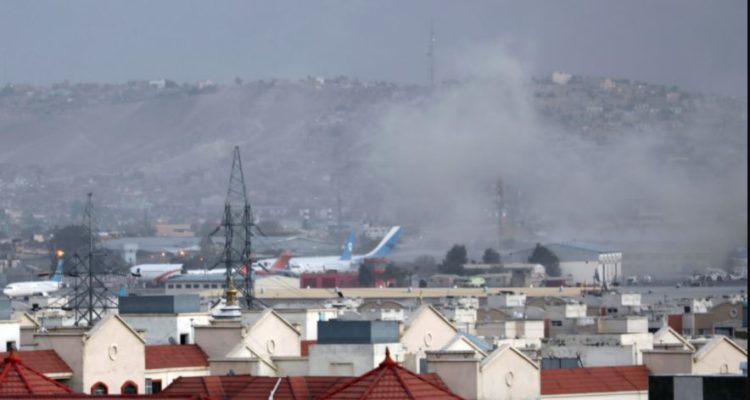
Two suicide bombers and gunmen attacked crowds of Afghans flocking to Kabul’s airport Thursday, transforming a scene of desperation into one of horror in the waning days of an airlift for those fleeing the Taliban takeover. At least 13 people were killed and 15 wounded, Russian officials said.
One of the bombers struck people standing knee-deep in a wastewater canal under the sweltering sun, throwing bodies into the fetid water. Those who moments earlier had hoped to get on flights out could be seen carrying the wounded to ambulances in a daze, their own clothes darkened with blood.
A U.S. official said the complex attack was believed to have been carried out by the Islamic State group. The IS affiliate in Afghanistan is far more radical than the Taliban, who recently took control of the country in a lightning blitz and condemned the attack.
A source told Fox News that there are hundreds of Islamic States fighters in the vicinity and warned that attacks are “likely to continue.”
Western officials had warned of a major attack, urging people to leave the airport, but that advice went largely unheeded by Afghans desperate to escape the country in the last few days of an American-led evacuation before the U.S. officially ends its 20-year presence on Aug. 31.
At least 13 people died and 15 were wounded, according to Russia’s Foreign Ministry, which gave the first official casualty count.
Adam Khan was waiting nearby when he saw the first explosion outside what’s known as the Abbey gate. He said several people appeared to have been killed or wounded, including some who were maimed.
The second blast was at or near Baron Hotel, where many people, including Afghans, Britons and Americans, were told to gather in recent days before heading to the airport for evacuation.
A former Royal Marine who runs an animal shelter in Afghanistan says he and his staff were caught up in the aftermath of the blast near the airport.
“All of a sudden we heard gunshots and our vehicle was targeted, had our driver not turned around he would have been shot in the head by a man with an AK-47,” Paul “Pen” Farthing told Britain’s Press Association news agency.
Farthing is trying to get staff of his Nowzad charity out of Afghanistan, along with the group’s rescued animals.
He is among thousands trying to flee. Over the last week, the airport has been the scene of some of the most searing images of the chaotic end of America’s longest war and the Taliban’s takeover, as flight after flight took off carrying those who fear a return to the terrorists’ brutal rule. When the Taliban were last in power, they confined women largely to their home and widely imposed draconian restrictions.
Already, some countries have ended their evacuations and begun to withdraw their soldiers and diplomats, signaling the beginning of the end of one of history’s largest airlifts. The Taliban have insisted foreign troops must be out by Aug. 31 — and the evacuations must end then, too.
In Washington, U.S. President Joe Biden spent much of the morning in the secure White House Situation Room where he was briefed on the explosions and conferred with his national security team and commanders on the ground in Kabul.
Biden was scheduled to meet with Israeli Prime Minister Naftali Bennett late Thursday morning. The meeting has been postponed until Friday due to the attacks.
“On behalf of the people of Israel, I share our deep sadness over the loss of American lives in Kabul. Israel stands with the United States in these difficult times, just as America has always stood with us. Our thoughts and prayers are with the people of the United States,” Bennett stated.
Overnight, warnings emerged from Western capitals about a threat from IS, which has seen its ranks boosted by the Taliban’s freeing of prisoners during its advance through Afghanistan.
Late Wednesday, the U.S. Embassy warned citizens at three airport gates to leave immediately due to an unspecified security threat. Australia, Britain and New Zealand also advised their citizens Thursday not to go to the airport.
Taliban spokesman Zabihullah Mujahid denied that any attack was imminent at the airport, where the group’s fighters have deployed and occasionally used heavy-handed tactics to control the crowds. After the attack, he appeared to shirk blame, noting the airport is controlled by U.S. troops.
Before the blast, the Taliban sprayed a water cannon at those gathered at one airport gate to try to drive the crowd away, as someone launched tear gas canisters elsewhere.
World Israel News contributed to this report.
However, the talks were postponed due to the emergency. To date, 12 US Marines are among at least dozens of dead victims.
Prime Minister Naftali Bennett, currently in Washington for talks with the American president and senior government officials, is planning to present an alternative to re-entering the 2015 Iran nuclear deal.
Another priority regards strengthening the Israeli military superiority against regional threats.
Fighting the COVID-19 pandemic, particularly the new Delta strain, is another issue on the agenda.
The Israeli Prime Minister already met Wednesday separately with Defense Secretary Lloyd Austin and Secretary of State Antony Blinken, stating ahead of the meeting with the latter: “We’re going to be talking about a bunch of issues, primarily how do we fend off and curtail Iran’s pursuit to dominate the region and its race to a nuclear weapon…”
“We will also talk about regional stability and climate change, which is an issue for all of us.”
The meeting with Biden, however, originally scheduled for mid-day Thursday, was postponed to two suicide bombings carried out by Islamic State terrorists near the Kabul airport. To date, at least 10 US Marines are among dozens of dead victims and many wounded.
Two suicide bombers and gunmen attacked crowds of Afghans flocking to Kabul’s airport Thursday, transforming a scene of desperation into one of horror in the waning days of an airlift for those fleeing the Taliban takeover. At least 13 people were killed and 15 wounded, reports indicate.
A source told Fox News that there are hundreds of Islamic States fighters in the vicinity and warned that attacks are “likely to continue.”
Overnight, warnings emerged from Western capitals about a threat from IS, which has seen its ranks boosted by the Taliban’s freeing of prisoners during its advance through Afghanistan.
Shortly before the attack, the acting U.S. ambassador to Kabul, Ross Wilson, said the security threat at the Kabul airport overnight was “clearly regarded as credible, as imminent, as compelling.” But in an interview with ABC News, he would not give details.
Late Wednesday, the U.S. Embassy warned citizens at three airport gates to leave immediately due to an unspecified security threat. Australia, Britain and New Zealand also advised their citizens Thursday not to go to the airport.
Taliban spokesman Zabihullah Mujahid denied that any attack was imminent at the airport, where the group’s fighters have deployed and occasionally used heavy-handed tactics to control the crowds.
After the attack, he appeared to shirk blame, noting the airport is controlled by US. troops.
(United for Israel).

Howard Gardner, professor of education and psychology at Harvard University, is one of the great minds of our time. He is best known for his theory of “multiple intelligences,” the idea that there is not just one thing that can be measured and defined as intelligence but many different facets – which is one dimension of the dignity of difference. He has also written many books on leadership and creativity, including one in particular, Leading Minds, that is important in understanding this week’s parsha of Ki Tavo.[1]
Gardner’s argument is that what makes a leader is the ability to tell a particular kind of story – one that explains ourselves to ourselves and gives power and resonance to a collective vision. So Churchill told the story of Britain’s indomitable courage in the fight for freedom. Gandhi spoke about the dignity of India and non-violent protest. Margaret Thatcher talked about the importance of the individual against an ever-encroaching State. Martin Luther King Jr. told of how a great nation is colour-blind. Stories give the group a shared identity and sense of purpose.
Philosopher Alasdair MacIntyre has also emphasised the importance of narrative to the moral life. “Man,” he writes, “is in his actions and practice, as well as in his fictions, essentially a story-telling animal.”[2] It is through narratives that we begin to learn who we are and how we are called on to behave. “Deprive children of stories and you leave them unscripted, anxious stutterers in their actions as in their words.”[3] To know who we are is, in large part, to understand the story or stories of which we are a part.
The great questions – “Who are we?” “Why are we here?” “What is our task?” – are best answered by telling a story. As Barbara Hardy put it: “We dream in narrative, daydream in narrative, remember, anticipate, hope, despair, believe, doubt, plan, revise, criticise, construct, gossip, learn, hate and love by narrative.”[4] This is fundamental to understanding why Torah is the kind of book it is: not a theological treatise or a metaphysical system but a series of interlinked stories extended over time, from Abraham and Sarah’s journey from Mesopotamia to Moses’ and the Israelites’ wanderings in the desert. Judaism is less about truth as system than about truth as story. And we are part of that story. That is what it is to be a Jew.
A large part of what Moses is doing in the book of Devarim is retelling that story to the next generation, reminding them of what God had done for their parents and of some of the mistakes their parents had made. Moses, as well as being the great liberator, is the supreme storyteller. Yet what he does in parshat Ki Tavo extends way beyond this.
He tells the people that when they enter, conquer and settle the land, they must bring the first ripened fruits to the central Sanctuary, the Temple, as a way of giving thanks to God. A Mishnah in Bikkurim[5] describes the joyous scene as people converged on Jerusalem from across the country, bringing their first-fruits to the accompaniment of music and celebration. Merely bringing the fruits, though, was not enough. Each person had to make a declaration. That declaration become one of the best known passages in the Torah because, though it was originally said on Shavuot, the festival of first-fruits, in post-biblical times it became a central element of the Haggadah on Seder night:
My father was a wandering Aramean, and he went down into Egypt and lived there, few in number, there becoming a great nation, powerful and numerous. But the Egyptians ill-treated us and made us suffer, subjecting us to harsh labour. Then we cried out to the Lord, the God of our ancestors, and the Lord heard our voice and saw our misery, toil and oppression. So the Lord brought us out of Egypt with a mighty hand and an outstretched arm, with great terror and with signs and wonders. (Deut. 26:5-8)
Here for the first time, the retelling of the nation’s history becomes an obligation for every citizen of the nation. In this act, known as vidui bikkurim, “the confession made over first-fruits,” Jews were commanded, as it were, to become a nation of storytellers.
This is a remarkable development. Yosef Hayim Yerushalmi tells us that “only in Israel and nowhere else is the injunction to remember felt as a religious imperative to an entire people.”[6] Time and again throughout Devarim comes the command to remember: “Remember that you were a slave in Egypt.” (Deut. 5:15; 15:15; 16:12; 24:18; 24:22); “Remember what Amalek did to you.” (Deut. 25:17) “Remember what God did to Miriam.” (Deut. 24:9) “Remember the days of old; consider the generations long past. Ask your father and he will tell you, your elders, and they will explain to you.” (Deut. 32:7)
The vidui bikkurim, though, is more than this. It is, compressed into the shortest possible space, the entire history of the nation in summary form. In a few short sentences we have here “the patriarchal origins in Mesopotamia, the emergence of the Hebrew nation in the midst of history rather than in mythic prehistory, slavery in Egypt and liberation therefrom, the climactic acquisition of the land of Israel, and throughout – the acknowledgement of God as lord of history.”[7]
We should note here an important nuance. Jews were the first people to find God in history. They were the first to think in historical terms – of time as an arena of change as opposed to cyclical time in which the seasons rotate, people are born and die, but nothing really changes. Jews were the first people to write history – many centuries before Herodotus and Thucydides, often wrongly described as the first historians. Yet biblical Hebrew has no word that means “history” (the closest equivalent is divrei hayamim, “chronicles”). Instead it uses the root zachor, meaning “memory.”
There is a fundamental difference between history and memory. History is “his story,”[8] an account of events that happened sometime else to someone else. Memory is “my story.” It is the past internalised and made part of my identity. That is what the Mishnah in Pesachim means when it says, “Each person must see themselves as if they (personally) escaped Egypt.” (Mishnah Pesachim 10:5)
Throughout the book of Devarim, Moses warns the people – no less than fourteen times – not to forget. If they forget the past they will lose their identity and sense of direction and disaster will follow. Moreover, not only are the people commanded to remember, they are also commanded to hand that memory on to their children.
This entire phenomenon represents a remarkable cluster of ideas: about identity as a matter of collective memory; about the ritual retelling of the nation’s story; above all about the fact that every one of us is a guardian of that story and memory. It is not the leader alone, or some elite, who are trained to recall the past, but every one of us. This too is an aspect of the devolution and democratisation of leadership that we find throughout Judaism as a way of life. The great leaders tell the story of the group, but the greatest of leaders, Moses, taught the group to become a nation of storytellers.
You can still see the power of this idea today. As I once wrote,[9] if you visit the Presidential memorials in Washington, you will see that each carries an inscription taken from their words: Jefferson’s ‘We hold these truths to be self-evident . . .’, Roosevelt’s ‘The only thing we have to fear, is fear itself’, Lincoln’s Gettysburg Address and his second Inaugural, ‘With malice toward none; with charity for all . . .’ Each memorial tells a story.
London has no such equivalent. It contains many memorials and statues of historical leaders, each with a brief inscription stating who it represents, but there are no speeches or quotations. There is no story. Even the memorial to Winston Churchill, whose speeches rivalled Lincoln’s in power, bears only one word: Churchill.
America has a national story because it is a society based on the idea of covenant. Narrative is at the heart of covenantal politics because it locates national identity in a set of historic events. The memory of those events evokes the values for which those who came before us fought and of which we are the guardians.
A covenantal narrative is always inclusive, the property of all its citizens, newcomers as well as the native-born. It says to everyone, regardless of class or creed: this is who we are. It creates a sense of common identity that transcends other identities. That is why, for example, Martin Luther King Jr. was able to use it to such effect in some of his greatest speeches. He was telling his fellow African Americans to see themselves as an equal part of the nation. At the same time, he was telling white-Americans to honour their commitment to the Declaration of Independence and its statement that ‘all men are created equal’.
England does not have the same kind of national narrative because it is based not on covenant but on hierarchy and tradition. England, writes Roger Scruton, “was not a nation or a creed or a language or a state but a home. Things at home don’t need an explanation. They are there because they are there.”[10] England, historically, was a class-based society in which there were ruling elites who governed on behalf of the nation as a whole. America, founded by Puritans who saw themselves as a new Israel bound by covenant, was not a society of rulers and ruled, but rather one of collective responsibility. Hence the phrase, central to American politics but never used in English politics: “We, the people.”[11]
By making the Israelites a nation of storytellers, Moses helped turn them into a people bound by collective responsibility – to one another, to the past and future, and to God. By framing a narrative that successive generations would make their own and teach to their children, Moses turned Jews into a nation of leaders.
[1] Howard Gardner in collaboration with Emma Laskin, Leading Minds: An Anatomy of Leadership, New York, Basic Books, 2011.
[2] Alasdair MacIntyre, After Virtue, University of Notre Dame Press, 1981.
[3] Ibid.
[4] Barbara Hardy, “An Approach Through Narrative,” Novel: A Forum on Fiction 2 (Durham, N.C.: Duke University Press, 1968), 5.
[6] Yosef Hayim Yerushalmi, Zakhor: Jewish History and Jewish Memory, Schocken, 1989, 9.
[7] Ibid., 12.
[8] This is a simple reminder, not an etymology. Historia is a Greek word meaning inquiry. The same word comes to mean, in Latin, a narrative of past events.
[9] Jonathan Sacks, The Home We Build Together: Recreating Society (London: Bloomsbury Academic, 2009).
[10] Roger Scruton, England, an Elegy, Continuum, 2006, 16.
[11] See “We, the People”, the Covenant & Conversation essay on Behar-Bechukotai, for further discussion on the power of this phrase.
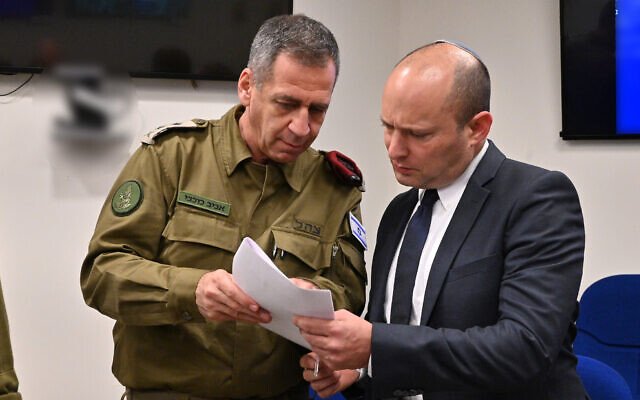
Israel’s military is working hard to develop plans to strike Iran’s nuclear facilities, the IDF Chief of Staff revealed on Wednesday, as Israel’s Prime Minister Naftali Bennett made his way to Washington to discuss the Islamic Republic’s nuclear capabilities with U.S. President Joe Biden.
His comments came as Defense Minister Benny Gantz warned that Iran was just two months away from developing the materials required for nuclear capability.
Military experts are warning that it would take just a few more months to assemble them into a nuclear threat.
Gantz’s and Kochavi’s remarks can be understood as messages to Iran, President Biden and other global powers.
Since taking the reins in January, the Biden administration has been seeking a joint return by the U.S. and Iran to the 2015 nuclear deal, known as the Joint Comprehensive Plan of Action, with indirect negotiations taking place via Vienna.
Biden’s predecessor, Donald Trump, pulled out of the deal in 2018, saying that it had done nothing to prevent Iran from developing nuclear capabilities. Iran also exited shortly thereafter.
However the Vienna talks stalled over the summer, in part due to the election in Iran of hardliner Ebrahim Raisi, leaving the Israeli military with little confidence in the process.
“The progress in the Iranian nuclear program has led the IDF to speed up its operational plans, and the defense budget that was recently approved is meant to address this,” IDF Chief of staff Aviv Kohavi said. Last month’s NIS 58 billion ($18 billion) overall defense budget for the coming year included NIS 2billion ($620 million) line for operations against Iran.
Addressing foreign diplomats at a briefing on Wednesday, Gantz issued a similar warning, saying: “The State of Israel has the means to act and will not hesitate to do so. I do not rule out the possibility that Israel will have to take action in the future in order to prevent a nuclear Iran.”
He added: “Iran is only two months away from acquiring the materials necessary for a nuclear weapon. We do not know if the Iranian regime will be willing to sign an agreement and come back to the negotiation table and the international community must build a viable ‘Plan B’ in order to stop Iran in its tracks towards a nuclear weapon.”
The allocated funds are intended to purchase equipment and munitions for an attack on Iran’s nuclear facilities, which are spread across the country and are shielded by an advanced air defense system, according to Israeli media.
The last time Israel prepared for a direct attack on Iranian sites was in 2011/12, when the government allocated some NIS 11 billion ($3.4 billion) for such a purpose.
More recently, Israel’s counter measures have focused more on Iran’s proxies in Syria and Lebanon. Some 31 strikes have been carried out against Hezbollah targets in Syria over the last two and a half years, of which roughly half were against weapons depots and the reminder against Hezbollah’s positions in the Golan Heights.
“The IDF is operating constantly and in a variety of ways in order to minimize Iran’s influence in the Middle East,” Kohavi said.
Bennett will meet with Biden on Thursday, where he is expected to advise against re-entering the JCPOA, having previously spoken out against a new accord between Tehran and the international community. He has also indicated that any agreement with Tehran must put the brakes on Iranian belligerence in the region.
Explaining Israel’s reasoning to the gathering of some 60 foreign ambassadors and envoys, Gantz said: “Iran has the intention to destroy Israel and is working on developing the means to do so,” he said. “Israel has the means to act and will not hesitate to do so. I do not rule out the possibility that Israel will have to take action in the future in order to prevent a nuclear Iran.”
The defense minister added: “All of Iran’s acts of aggression so far have been conducted without nuclear capabilities. Imagine what will happen if Iran achieves nuclear capabilities!”
(World Israel News).

The US Army has decided not to buy Israel’s Iron Dome to counter aerial threats, despite the United States military having successfully carried out a first live-fire test of the missile defense system, according to a report in Defense News.
According to the report, the US Army chose Leidos-owned Dynetics’ launcher after a shoot-off between the two systems last month at White Sands Missile Range in New Mexico.
The Dynetics system, called Enduring Shield, has 360-degree detection and can fire at multiple threats simultaneously. The system is simple to operate and can be fully integrated with the army’s Integrated Air and Missile Defense Battle Command System.
Israel’s Defense Ministry and Rafael Advanced Defense Systems told The Jerusalem Post that they would not be commenting on the Defense News report, but if confirmed, it is expected to be a significant setback for the ministry.
According to a report in Calcalist the average price of an Iron Dome system is around NIS 27 million ($8,400,000). Israel Aerospace Industries said that each system is customized according to need, and it therefore does not have a fixed price.
IAI, which manufactures the radars for Iron Dome, made a record $4.2 billion in 2020 in international sales from the multi-mission radar. Some 150 MMR radars, the brains of the system, have been sold to customers around the world, Calcalist said.
The US Army purchased two off-the-shelf batteries from Rafael in August 2019 that were delivered in late 2020. The army has since been in the process of examining and building training systems for the batteries.
The purchase of those batteries included 12 launchers, two sensors, two battle management centers and 240 interceptors.
(JPost).