Home Blog Page 541

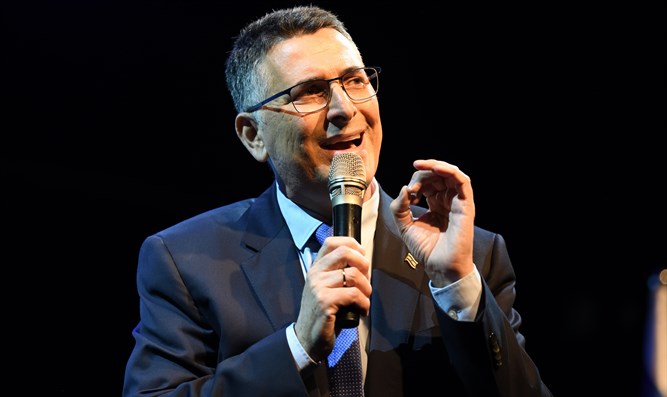
Likud sources: ‘Sa’ar can have any senior position he asks for’

0

‘Rare opportunity to form stable right-wing nationalist government, like we always hoped for,’ Likud official says.

The Likud party is searching for deserters from the “anyone but Netanyahu” camp, but have not yet been successful, reports said.

At the same time, it is not clear that MK Naftali Bennett’s Yamina will join a government led by Israeli Prime Minister Binyamin Netanyahu, or that the other partners in such a government would agree to its relying on the United Arab List (Ra’am) to pass legislation.

Sources in the Likud told Israel Hayom that they “cannot understand” New Hope chairman Gideon Sa’ar. “There is a rare opportunity here to form a stable right-wing nationalist government, like we always hoped for, with the Likud, Sa’ar, Bennett, Religious Zionism, and the haredim.”

“Gideon Sa’ar is right-wing, all of his people are former Likud members, right-wing people and nationalists. He has to stop this stupid boycott. There is right-wing nationalist ideology to advance.”

“He can buy his world in one hour, he can receive any senior position he asks for – in his merit a right-wing government will be formed. This could be, for him, a huge springboard for the day after Netanyahu. Failing that, he will be flattened now beneath [Yesh Atid chair MK Yair] Lapid and Bennett, he’ll join the left-wing bloc, and he’ll disappear from the [political] map within a year or two.”

Last week, it was reported that associates of Netanyahu approached Sa’ar and promised him that if he joins the government, Netanyahu would resign a year later, allowing Sa’ar to be appointed as Prime Minister. Sa’ar, however, refused the offer.

(Arutz 7).

Photos show Biden ‘cheat sheets’ during first formal press conference

0

President Biden referenced “cheat sheets” detailing key policy points and the identities of attending journalists when he conducted the first formal press conference of his presidency on Thursday.

Photos taken at the event showed Biden holding a card labeled “infrastructure,” with key statistics and talking points. One bullet point noted that “China spends 3 times more on infrastructure than U.S.”

In another photo, Biden was seen consulting a sheet that appeared to show the pictures and news outlets of journalists who attended his press conference. Some of the pictured reporters had a circled number next to their images.

Just 25 reporters were permitted to attend the press conference. Biden took a limited number of questions from a list of pre-selected reporters before leaving the podium. Fox News’ Peter Doocy was not among the reporters who were permitted to ask a question.

Biden answered questions related to the ongoing crisis at the southern border, his view on calls to end the filibuster, and an array of other topics. The president said he intends to run for reelection in 2024.

Critics of the Biden administration have called on administration officials to make Biden available to the press on a regular basis. White House Press Secretary Jen Psaki holds daily briefings.

The use of note cards is not unprecedented at press conferences. In November 2019, Trump held a notebook with handwritten prompts during a press conference on testimony delivered at his first impeachment hearing.

(Fox News)

UK Jews Banned From Holding Family Sedarim For 2nd Consecutive Year

0

UK Jews will not be legally allowed to celebrate Pesach Sedarim with extended family members this year, the second year in a row that a lockdown interferes with Pesach celebrations.

“It’s very painful for us,” Chief Rabbi Ephraim Mirvis told the PA news agency. “It is very difficult.”

People will be celebrating “in a pretty lonely way” for the second year in a row, Rabbi Mervis said.

“But we respect the regulations that are given to us and preservation of life must be the top priority, and always acting in a legal way, respecting the Government’s wishes. This is our top priority.”

Lockdown restrictions in the UK will begin to be lifted on March 29, the second day of Pesach, with two families or a group of six allowed to congregate outdoors.

(YWN Israel Desk – Jerusalem)

ORLANDO INSANITY: Double Booking Nightmare Continues; People Finding Out Two Days Before Pesach

0

Two days ago YWN published an article about many people who booked homes in Orlando for Pesach only to have their homes cancelled or double booked.

Some people – including one website – accused YWN of fear-mongering, over-playing and exaggerating the situation on how many people were actually double-booked. One website – known for publishing fake news for years – went so far as to publish a story headlined “rumors of widespread cancellations false”.

Strangely, but not surprisingly, this website then ran an article a day later advising people of recourses. We can now report that the amount of cancellations are exactly as we originally reported – and possibly worse. YWN has been inundated with email after email sent by victims of double-bookings and nightmarish situations.

In fact, late Wednesday midnight, YWN was still receiving emails from people who were learning of their cancelations when arriving at their homes just two days before Yom Tov!

The following are just four of the latest cases, some of them simply heartbreaking – as people arrived after driving 20 hours to find out that another family was in their home.

The following emails sent to YWN have not been edited in any way, and are being published exactly as YWN has received them:

REAL STORY SENT TO YWN: “I am a family with 6 children and literally just pulled into my rented house driveway 15 minutes ago in Orlando (after a 19 hour drive) and our boxes which were delivered by a truck, were in a pile outside — and another family was living inside the house!”

REAL STORY SENT TO YWN: “We just drove 20 hrs and got here and we’re shocked to find out our house was “double booked. We have been in contact with the company for weeks and they did not mention a thing. We literally pulled in and asked for the house code and we’re told I’m sorry your reservation no longer exists. This is truly a disaster for us.”

REAL STORY SENT TO YWN: “My children flew in from Israel to be in Orlando and we booked tickets to be with her. We haven’t seen them in a year and half. Our home was confirmed, airlines tickets car rental food was ordered. Two weeks later our villa was cancelled saying credit card invalid. There was already a charge put through….”

REAL STORY SENT TO YWN: “I got scammed. Booked in January, just got cancelled today. Booked via VRBO, property #8123377ha, Host name Kevin Henry, Booked January 6th, Canceled March 23rd.”

REAL STORY SENT TO YWN: “I booked a house on Airbnb. When I heard about the double booking, I told my cousin who was there already to check and to make sure the house empty. When he got to the house some was there already for month. I tried to contact the host but they did not answer my messages. I called airbnb and they credit me back, but in the mean time my packages were on the way there. And we are stuck.”

[READ ALSO: Klal Yisroel Descends En Masse on Orlando, with 100K Expected for Pesach]

(YWN World Headquarters – NYC)

Wisconsin Assembly Authorizes Investigation of 2020 Presidential Election

0

Biden won the state by 20,682, or 0.63% of the more than 3.2 million votes cast.

The Wisconsin Assembly has passed a resolution authorizing an investigation into the 2020 presidential election that President Joe Biden won, but former President Donald Trump sued over, forcing the state into a recount.

In the end, Biden won by 20,682, or 0.63% of the more than 3.2 million votes cast.

The resolution, opposed by every Democrat, gives Republicans, who control the chamber, authority to issue subpoenas to compel testimony and gather documents, said Rep. Joe Sanfelippo, the vice-chairman of the Assembly elections and campaign committee.

Trump and his allies claim there was voter fraud and other irregularities in the state, but those claims were rejected by state and federal courts.

The U.S. Supreme Court also refused to hear the case, and “no significant problems were found with the state’s voting machines after audits and recounts in both 2016 and in 2020,” The Associated Press reported.

“Republicans said they wanted to gather more evidence to see if laws were broken, but Democrats said they were trying to score political points, undermining the public’s faith in elections and insulting election clerks, poll workers and others who ran the election,” wrote the AP.

“Earlier this month, Republicans raised new questions about how the election was administered in Green Bay. The Assembly elections committee held a hearing on those issues but did not invite any election officials accused of wrongdoing to testify. Green Bay Mayor Eric Genrich called it a ‘Stalinist show trial’ and defended his city’s handling of the election.”

After his loss, Trump repeatedly claimed that voter fraud and ballot irregularities cost him the 2020 presidential election. But a recount in a key county in Wisconsin, a battleground state Joe Biden won by about 20,000 votes, found that the Democrat actually got more votes than originally reported.

Out of about 460,000 ballots cast in Milwaukee County, Biden picked up an additional 132 votes. Before the recount, Biden had 317,270 votes to Trump’s 134,357. After the recount, it was 317,527 for Biden and 134,482 for Trump, which meant Biden gained 257 votes and Trump added 125.

Milwaukee County Clerk George Christenson, a Democrat, said the recount showed that elections in the county are fair, transparent, accurate and secure.

“I promised that this would be a transparent and fair process, and it was,” Christenson said. “There was an examination of every ballot by election workers, a meticulous recounting of every ballot that was properly cast, a transparent process that allowed the public to observe, a fair process that allows the aggrieved candidate who sought the recount an opportunity to observe and object to ballots they believe should not be counted.”

But Trump continued to insist that he won the state. “Look at what’s going on in Wisconsin. Wisconsin, they’re finding tremendous discrepancy. You just take a look at that. Tremendous discrepancy,” the president said on Thanksgiving.

“In Wisconsin, you all said I was going to lose — or the polls said — certain polls: Washington Post, ABC — said I was going to lose by 17 points. Think of how dishonest. I thought I was going to win it. And essentially, I did win it. It’s very, very close. It’s very, very close.”

(Daily Wire).

Israel’s COVID reproduction rate drops to 0.59

0

Meanwhile, IDF Military Intelligence Directorate reports that variants of the virus are on the rise in Brazil, Eastern Europe and New York.

Israel’s coronavirus reproduction rate continues to drop, according to Health Ministry data released on Wednesday, and now stands at 0.59.

Of the 41,443 COVID-19 tests that the ministry conducted on Tuesday, 679 came back positive, placing the infection rate at 1.7 percent.

There are currently 14,403 active cases in Israel. Some 762 Israelis are hospitalized; 500 are in serious condition; and 207 are on ventilators.

Of those hospitalized: 74 percent are not vaccinated; 15 percent have received their first jab; and 11 percent have been fully vaccinated. Of those on ventilators: 76 percent are not vaccinated; 16 percent have been partially vaccinated; and 8 percent have been fully vaccinated inoculated.

Nineteen children under the age of 18 are hospitalized, among them three newborns. Of those, one is in critical condition, five are in serious condition, and the rest exhibit minor symptoms.

Twelve pregnant women are hospitalized, and nine women who gave birth tested positive for the virus. Three of the women are on ventilators and one is connected to an ECMO machine. None is fully vaccinated.

Israel has reported 829,832 cases and 6,131 deaths since the outbreak of the pandemic last year. To date, 809,298 Israelis have recovered from the virus.

As for the vaccination drive: 5,191,761 Israelis have received their first jab and 4,608,229 Israelis have been fully vaccinated, which constitutes 49.55 percent of the population. Together with those who recovered from COVID, almost 6 million Israelis have antibodies against the virus.

Meanwhile, the Israel Defense Forces Military Intelligence Directorate (MID) reported that several countries are experiencing spikes in infection rates.

“There is a morbidity spike in Brazil, where the Brazilian mutation that was identified in the city of Manaus is spreading throughout the country. Infection spikes are recorded in Eastern Europe, with the British variant is expanding across the continent. In New York, a new variant of the virus continues to spread and carries a mutation that has been linked to re-infecting those who had already recovered. A significant outbreak of the virus is also detected in Jordan these days,” stated the MID.

The mutations are being researched by scientists, as they might have the ability to continue to mutate and not only re-infect those who had already recovered from the virus, but also weaken the effects of the vaccine.

“Therefore, the recommendation is to minimize as much as possible the various mutations that are brought to Israel from abroad, as well as variants that have already been identified in Israel, such as the South African mutation, which hasn’t spread widely yet, and therefore its significant spread can be prevented in Israel through supervised entrance into the country and joint efforts in testing, isolation and responsible behavior to minimize the risk,” the MID said.

The MID recommends that Israelis who return from abroad be cautious, even with family members, and get tested for COVID-19 even if their test results at the airport are negative.

The current assessment is that the Pfizer vaccine seems to be effective against the South African strain, at least for preventing severe illness, added the MID.

(JNS / Israel Hayom).


Colorado Terrorist Targeted Kosher Friendly Store Days Before Passover, But Mainstream Media Ignored This

0

NEW YORK (VINnews) — Investigative journalist Laura Loomer has revealed that Ahmad Al Aliwi Al-Issa, the terrorist who perpetrated Monday’s deadly attack in a Boulder, Colorado supermarket, was actually inspired by ISIS and targeted the supermarket, King Soopers, because it is kosher friendly. The supermarket keeps lots of kosher foods and is known as a place where Jews will be present to purchase such foods.

Despite this, none of the mainstream media outlets have emphasized this fact, even though King Soopers advertises itself on its website as “Your One-Stop Shop For Kosher Groceries.” Moreover this week marks the advent of the Passover festival and Jews around the world are crowding kosher stores shopping for groceries and supplies.

Al-Issa, a Syrian immigrant during the Obama years, pledged allegiance to ISIS before carrying out the attack. Previously he had expressed hatred for former President Donald Trump and his “anti-Islamic” immigration policies. However the timing of the attack demonstrates that it was no mere venting of Islamic fury but was meant to target Jews preparing for Passover. On a number of occasions Al-Issa also expressed his anti-Jewish sentiments.

Al-Issa allegedly had failed attempts at terror attacks previously. He had planned to target a Trump rally which took place prior to coronavirus in February 2020 at Colorado Springs but then decided to wait for the next rally in Denver scheduled for March of that year. However that rally was eventually cancelled due to COVID-19.

Al-Issa also had a previous criminal record, having been arrested  in 2017 for third degree assault after he beat another student in his high school unconscious and continued punching him afterwards. Last week, just 6 days before the attack, he purchased a Ruger AR-556 pistol, which is designed to operate like a rifle. Issa also owned an A15 assault rifle which was found on him after the shooting.

The shooting also came 10 days after a judge blocked a ban on assault rifles passed by the city of Boulder in 2018. That ordinance and another banning large-capacity magazines came after the 2018 mass shooting at Marjory Stoneman Douglas High School in Parkland, Florida, that left 17 people dead.

Loomer demonstrated that Islamic radicalism presents a threat to all Americans, adding that “It won’t be until American schools start properly teaching the truth about Islam and it won’t be until we have full blown immigration moratorium that attacks like the one that just happened in Boulder, Colorado end.” Her Telegram page also stated that “A source tells me the shooter carried out the attack in the name of ISIS. Biden administration has already given orders to keep it under wraps to avoid conversation in the media about Islamic terrorism and reversal of Trump’s travel ban, which the terrorist was opposed to.”

Source: VosIzNeias

With 88% of votes tallied, both pro- and anti-Netanyahu blocs lack majority

0

Election still in the balance as incomplete results show no clear path to coalition; Islamist Ra’am party defies exit polls, makes it into Knesset; final tally expected Friday


The new potential kingmaker, Ra’am party leader Mansour Abbas, continues to remain vague on who he might cooperate with to form a coalition amid the elections that hand no bloc a clear majority.

Arab parties have only been part of a coalition once, in the 1990s, to help pass the Oslo Accords with the Palestinians. But the current deadlock could force collaborations that were unthinkable until not long ago.

If Prime Minister Netanyahu manages to get Ra’am to join, it would be an almost fantasy coalition, consisting of members of the Islamic Movement alongside the neo-Kahanist and anti-Arab Itamar Ben Gvir.

Asked by Channel 12 news about such a potential scenario, Abbas answers: “Ra’am’s approach is to not rule out anyone who doesn’t rule us out. If a ruling party makes contact, Ra’am will hold the process appropriately and respectfully, our partners would be a ruling party and a candidate for prime minister, not their satellite candidate.”

He says he hasn’t yet been contacted by Netanyahu.


Source: The Times of Israel

Rabbi Lord Jonathan Sacks zt”l – The Courage of Identity Crises (Tzav 5781)

Rabbi Sacks zt’’l had prepared a full year of Covenant & Conversation for 5781, based on his book Lessons in Leadership. The Rabbi Sacks Legacy Trust will continue to distribute these weekly essays, so that people all around the world can keep on learning and finding inspiration in his Torah.


Good leaders know their own limits. They do not try to do it all themselves. They build teams. They create space for people who are strong where they are weak. They understand the importance of checks and balances and the separation of powers. They surround themselves with people who are different from them. They understand the danger of concentrating all power in a single individual. But learning your limits, knowing there are things you cannot do – even things you cannot be – can be a painful experience. Sometimes it involves an emotional crisis.

The Torah contains four fascinating accounts of such moments. What links them is not words but music. From quite early on in Jewish history, the Torah was sung, not just read. Moses at the end of his life calls the Torah a song.[1] Different traditions grew up in Israel and Babylon, and from around the tenth century onward the chant began to be systematised in the form of the musical notations known as ta’amei ha-mikra, cantillation signs, devised by the Tiberian Masoretes (guardians of Judaism’s sacred texts). One very rare note, known as a shalshelet (chain), appears in the Torah four times only. Each time it is a sign of existential crisis. Three instances are in the book of Genesis. The fourth is in our parsha. As we will see, the fourth is about leadership. In a broad sense, the other three are as well.

The first instance occurs in the story of Lot. After Lot separated from his uncle Abraham he settled in Sodom. There he assimilated into the local population. His daughters married local men. He himself sat in the city gate, a sign that he had been made a Judge. Then two visitors come to tell him to leave, for God is about to destroy the city. Yet Lot hesitates, and above the word for “hesitates” – vayitmamah – is a shalshelet. (Gen. 19:16). Lot is torn, conflicted. He senses that the visitors are right. The city is indeed about to be destroyed. But he has invested his whole future in the new identity he has been carving out for himself and his daughters. The angels then forcibly take him out of the city to safety – had they not done so, he would have delayed until it was too late.

The second shalshelet occurs when Abraham asks his servant – traditionally identified as Eliezer – to find a wife for Isaac his son. The commentators suggest that Eliezer felt a profound ambivalence about his mission. Were Isaac not to marry and have children, Abraham’s estate would eventually pass to Eliezer or his descendants. Abraham had already said so before Isaac was born: “Sovereign Lord, what can You give me since I remain childless and the one who will inherit my estate is Eliezer of Damascus?” (Gen. 15:2). If Eliezer succeeded in his mission, bringing back a wife for Isaac, and if the couple had children, then his chances of one day acquiring Abraham’s wealth would disappear completely. Two instincts warred within him: loyalty to Abraham and personal ambition. The verse states: “And he said: Lord, the God of my master Abraham, send me…good speed this day, and show kindness to my master Abraham” (Gen. 24:12). Eliezer’s loyalty to Abraham won, but not without a deep struggle. Hence the shalshelet (Gen. 24:12).

The third shalshalet brings us to Egypt and the life of Joseph. Sold by his brothers as a slave, he is now working in the house of an eminent Egyptian, Potiphar. Left alone in the house with his master’s wife, he finds himself the object of her desire. He is handsome. She wants him to sleep with her. He refuses. To do such a thing, he says, would be to betray his master, her husband. It would be a sin against God. Yet over “he refused” is a shalshelet, (Genesis 39:8) indicating – as some rabbinic sources and mediaeval commentaries suggest – that he did so at the cost of considerable effort.[2] He nearly succumbed. This was more than the usual conflict between sin and temptation. It was a conflict of identity. Recall that Joseph was living in a new and strange land. His brothers had rejected him. They had made it clear that they did not want him as part of their family. Why then should he not, in Egypt, do as the Egyptians do? Why not yield to his master’s wife if that is what she wanted? The question for Joseph was not just, “Is this right?” but also, “Am I an Egyptian or a Jew?”

All three episodes are about inner conflict, and all three are about identity. There are times when each of us has to decide, not just “What shall I do?” but “What kind of person shall I be?” That is particularly fateful in the case of a leader, which brings us to episode four, this time with Moses in the central role.

After the sin of the Golden Calf, Moses had, at God’s command instructed the Israelites to build a Sanctuary which would be, in effect, a permanent symbolic home for God in the midst of the people. By now the work is complete and all that remains is for Moses to induct his brother Aaron and Aaron’s sons into office. He robes Aaron with the special garments of the High Priest, anoints him with oil, and performs the various sacrifices appropriate to the occasion. Over the word vayishchat, “and he slaughtered [the sacrificial ram]” (Lev. 8:23) there is a shalshelet. By now we know that this means there was an internal struggle in Moses’ mind. But what was it? There is not the slightest sign in the text that suggests that he was undergoing a crisis.

Yet a moment’s thought makes it clear what Moses’ inner turmoil was about. Until now he had led the Jewish people. Aaron had assisted him, accompanying him on his missions to Pharaoh, acting as his spokesman, aide and second-in-command. Now, however, Aaron was about to undertake a new leadership role in his own right. No longer would he be one step behind Moses. He would do what Moses himself could not. He would preside over the daily offerings in the Tabernacle. He would mediate the avodah, the Israelites’ sacred service to God. Once a year on Yom Kippur he would perform the service that would secure atonement for the people from its sins. No longer in Moses’ shadow, Aaron was about to become the one kind of leader Moses was not destined to be: a High Priest.

The Talmud adds a further dimension to the poignancy of the moment. At the Burning Bush, Moses had repeatedly resisted God’s call to lead the people. Eventually God told him that Aaron would go with him, helping him speak (Ex. 4:14-16). The Talmud says that at that moment Moses lost the chance to be a Priest: “Originally [said God] I had intended that you would be the Priest and Aaron your brother would be a Levite. Now he will be the Priest and you will be a Levite.”[3]

That is Moses’ inner struggle, conveyed by the shalshelet. He is about to induct his brother into an office he himself will never hold. Things might have been otherwise – but life is not lived in the world of “might have been.” He surely feels joy for his brother, but he cannot altogether avoid a sense of loss. Perhaps he already senses what he will later discover, that though he was the Prophet and liberator, Aaron will have a privilege Moses will be denied, namely, seeing his children and their descendants inherit his role. The son of a Priest is a Priest. The son of a Prophet is rarely a Prophet.

What all four stories tell us is that there comes a time for each of us when we must make an ultimate decision as to who we are. It is a moment of existential truth. Lot is a Hebrew, not a citizen of Sodom. Eliezer is Abraham’s servant, not his heir. Joseph is Jacob’s son, not an Egyptian of loose morals. Moses is a Prophet, not a Priest. To say ‘Yes’ to who we are, we have to have the courage to say ‘No’ to who we are not. Pain and struggle is always involved in this type of conflict. That is the meaning of the shalshelet. But we emerge less conflicted than we were before.

This applies especially to leaders, which is why the case of Moses in our parsha is so important. There were things Moses was not destined to do. He would never become a Priest. That task fell to Aaron. He would never lead the people across the Jordan. That was Joshua’s role. Moses had to accept both facts with good grace if he was to be honest with himself. And great leaders must be honest with themselves if they are to be honest with those they lead.

A leader should never try to be all things to all people. A leader should be content to be who they are. Leaders must have the strength to know what they cannot be if they are to have the courage to be truly their best selves.


[1] Deuteronomy 31:19.

[2] Tanhuma, Vayeshev 8; cited by Rashi in his commentary to Genesis 39:8.

[3] Zevachim 102a.


New Chabad Haggadah becomes No. 1 bestselling Jewish book on Amazon

The Passover Haggadah has seen more editions than any other Jewish book in history.

Still, the recently released Chabad.org Haggadah, which is faithful to tradition, has already set a new standard for the times.

Written and designed by the staff, it was created in the wake of the coronavirus pandemic as so many were suddenly tasked with making seders for the first time, and with many Jews still homebound and planning to hold Passover alone or just with immediate family.

The illustrated Haggadah provides extensive notes about the seder and an easy-to-understand English translation with commentary.

It is available in PDF format for free downloading and printing in advance of Passover, which is celebrated this year from Saturday night, March 27 through Sunday, April 4.

Since its launch mid-month, the softcover holiday text has been downloaded nearly 100,000 times, and become the No. 1 bestselling Haggadah and No. 1 bestselling Jewish book on Amazon.

“The response has been tremendous—well beyond what we anticipated,” says Rabbi Motti Seligson, associate director of Chabad.org, who led the design concept of the Haggadah. “It seems that this Haggadah is exactly what so many were waiting for to help guide their Passover seder and make it that much more meaningful.”

Plans are in the works for an upgraded, hardcover version to be released in 2022.

(Vosizneias / JNS).

WP Twitter Auto Publish Powered By : XYZScripts.com